Re-Sight Round Up: American Oystercatcher Edition

Posted on
As snowstorms and frigid temperatures take over New Jersey, I’ve been thinking a lot about how our beach nesting birds are doing in their more southern (and hopefully much warmer!) wintering grounds. Thanks to recorded sightings of banded birds, we’ve been able to learn a significant amount about American oystercatcher movement and track birds to their wintering locations. In this Re-sight Round Up, we’re catching up with three of CWF’s recently banded American oystercatchers to see how they’re spending the cold winter months.
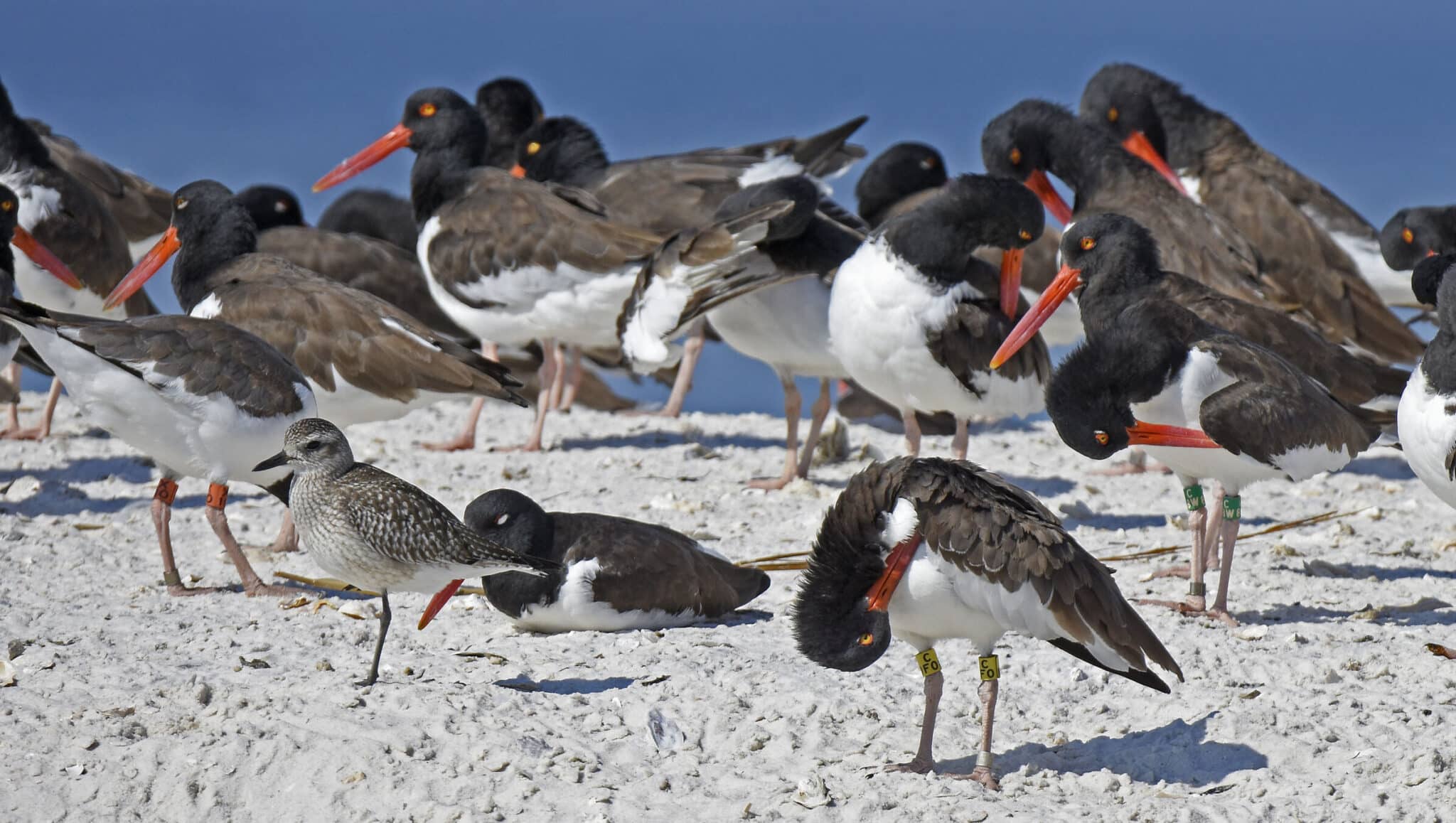
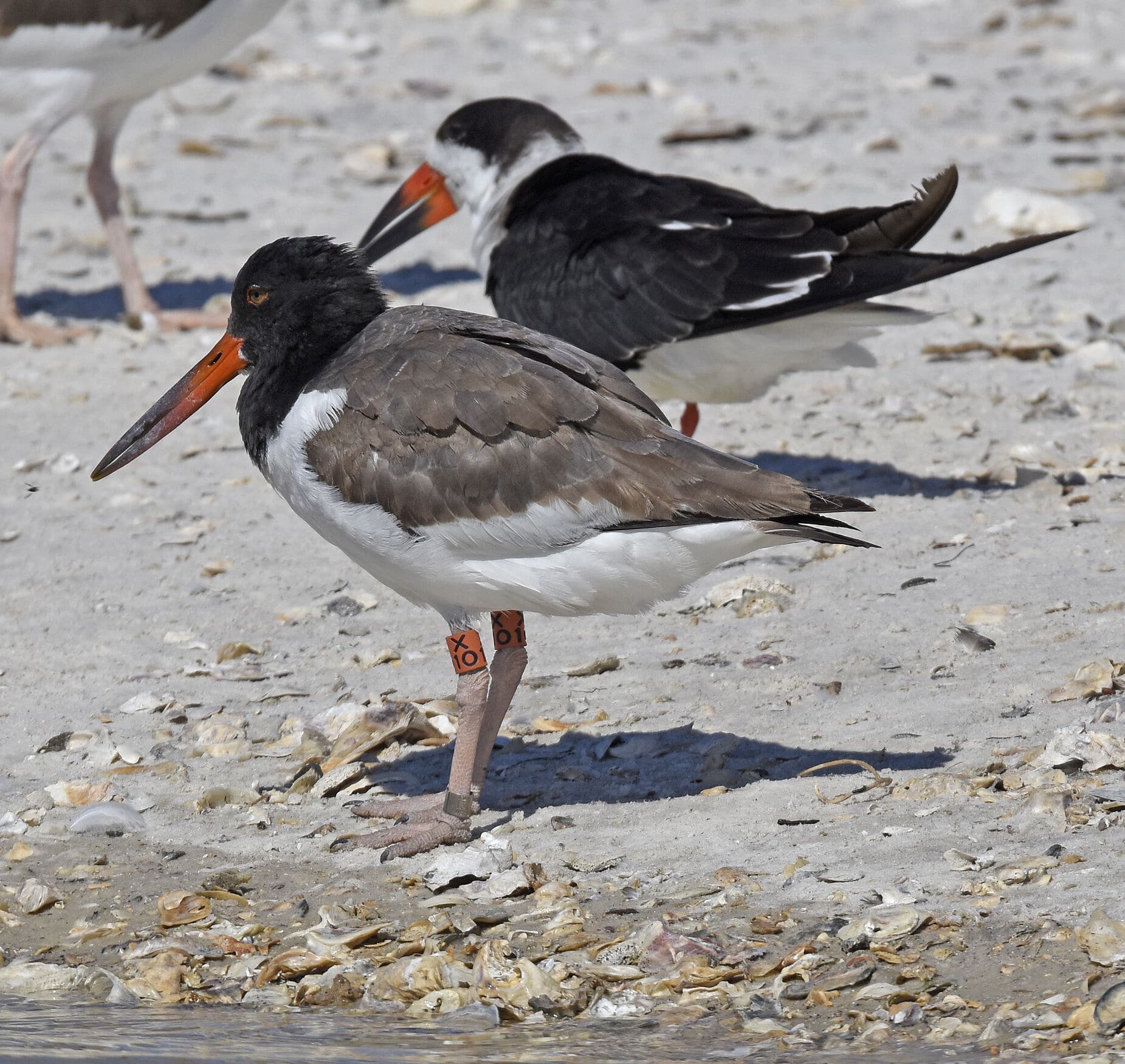
Orange X10 “Professor X”
In November of 2025, we were excited to receive a reported sighting for Orange X10 (aka, “Professor X”), who was banded by CWF staff as a chick in July 2025 on Horseshoe Island, along with its siblings Orange X11 (“Storm”) and Orange X12 (“Wolverine”). Professor X is the first fledgling from the X-Men themed brood to be sighted away from its natal grounds.
As a fledgling, Professor X traveled around 900 miles from Horseshoe Island down to Cedar Key, Florida, where it was recorded by Pat and Doris Leary. The Cedar Key area, located on the northwest coast of Florida, is recognized as a critical wintering location for American oystercatchers, hosting around 10% of the total U.S. population. When the Leary’s spotted Professor X on McClamory Key, it was in a roosting flock of 700 oystercatchers!
Orange C59 “Saltwort”
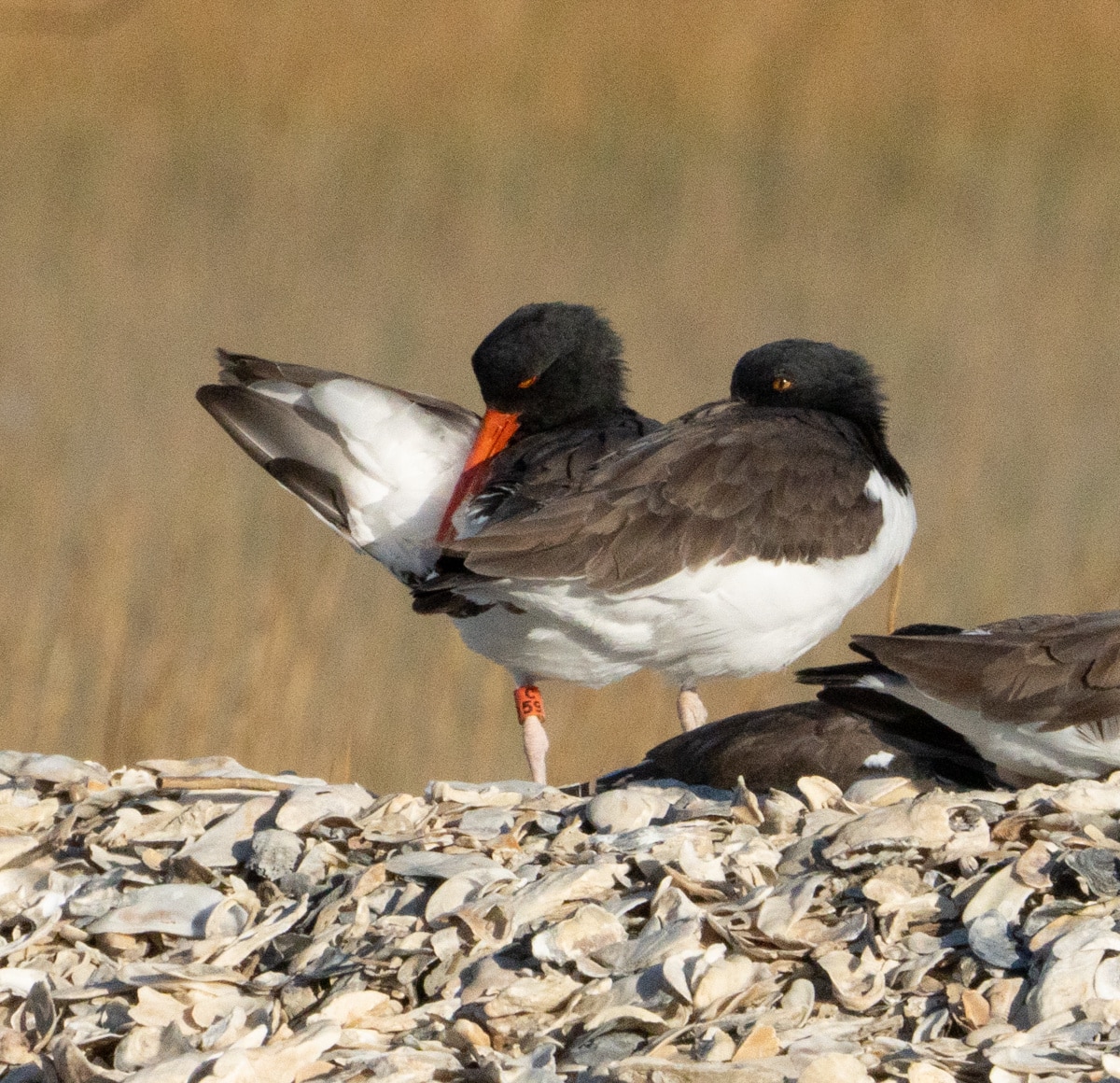
Our second update comes from South Carolina, where Orange C59 (aka “Saltwort”) was recently spotted this past Fall. Saltwort was banded at Goshen Beach on the Delaware Bay in June 2025. He and his mate made two nesting attempts at Goshen Beach during the 2025 season, but both nests were unfortunately lost to flooding.
Since mid-September, Saltwort has been re-sighted in large roosting flocks (around 500 oystercatchers) around Big Hill Marsh and Dewees Island, two sites that make up the southern end of the Cape Romain – Santee Delta Region, a critical habitat for migratory shorebirds including American oystercatchers. In fact, the region is estimated to support approximately 15% of the U.S. Atlantic and Gulf Coast oystercatcher population during the winter. Saltwort is the first oystercatcher banded on the Delaware Bay that has been recorded utilizing this important habitat in South Carolina.
Fun Fact: The name Saltwort was inspired by the Salicornia genus of succulent plants that are commonly found in the salt marshes around the bayshore beaches of the Delaware Bay. Other common names for plants in this genus include pickleweed, glasswort, and sea asparagus.
Orange C35 “Flash”
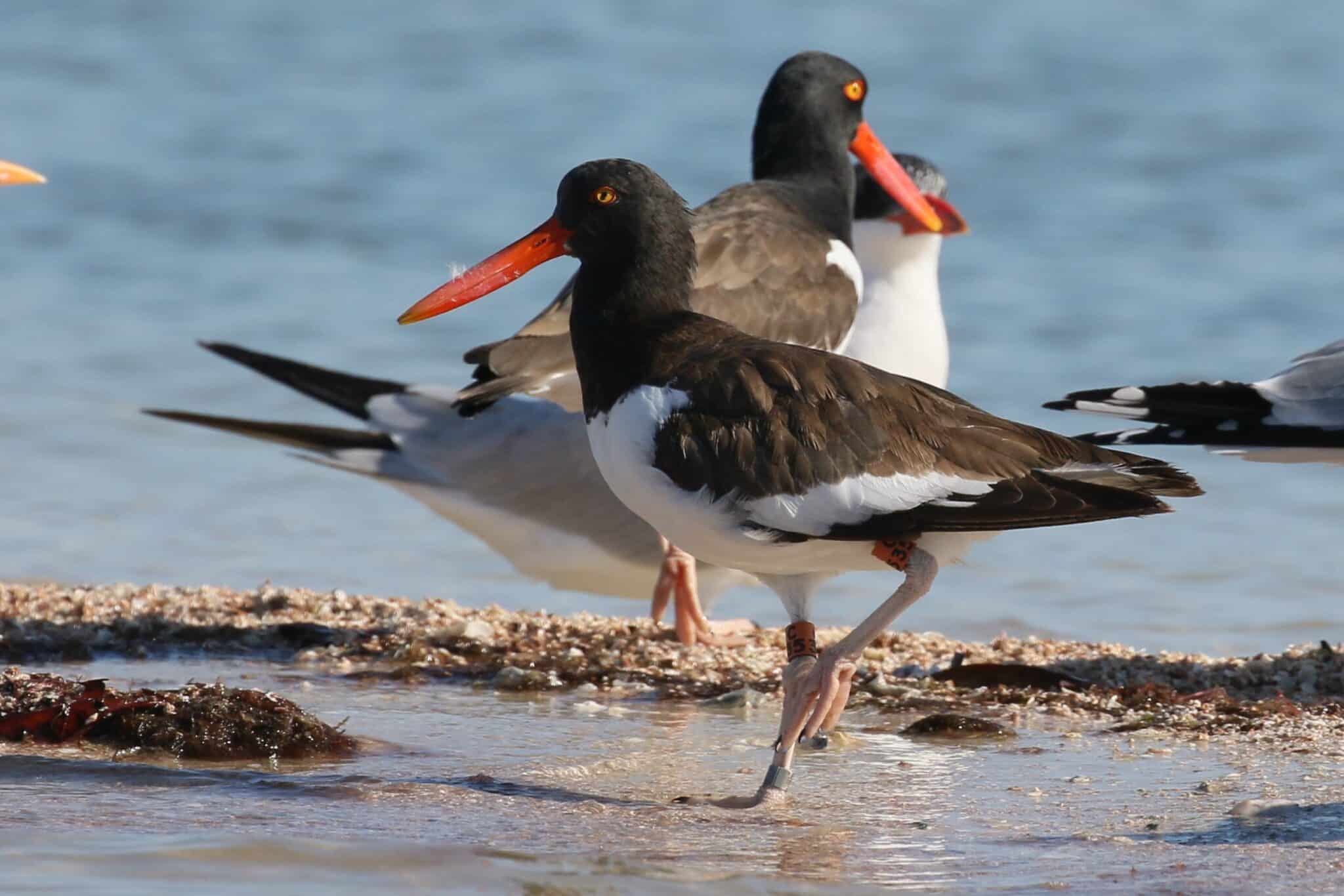
Last, but not least, an update on Orange C35 (aka, “Flash”), the first chick to be banded as part of the CWF-led Delaware Bay American Oystercatcher Project. Flash was banded in 2023 at Moores Beach, and was one of only four chicks to fledge that year on the Bayshore. Since then, Flash has been re-sighted nearly 20 times, primarily in Florida. Shortly after fledging in 2023, Flash flew around 1000 miles south all the way down to Ten Thousand Islands on Florida’s southwest coast. Sighting records suggest that Flash stayed in Florida until the spring of 2025, when it traveled north and was spotted on Assateague Island, MD in June.
Oystercatchers take around 3-4 years to reach sexual maturity, which means Flash is now reaching the age where it may begin to breed. Right now, it is back on its wintering grounds in Florida, but we are very curious to see where it chooses to settle down in the spring. Will it return to its natal grounds on the Delaware Bay, or will Assateague be its new summer home?
Discover more from Conserve Wildlife Foundation of NJ
Subscribe to get the latest posts sent to your email.
Leave a Comment
Great information! So glad to see NJ’s newly formed island nesting ground is proving to make a difference in promoting a healthy habitat for these species.
Comments are closed.