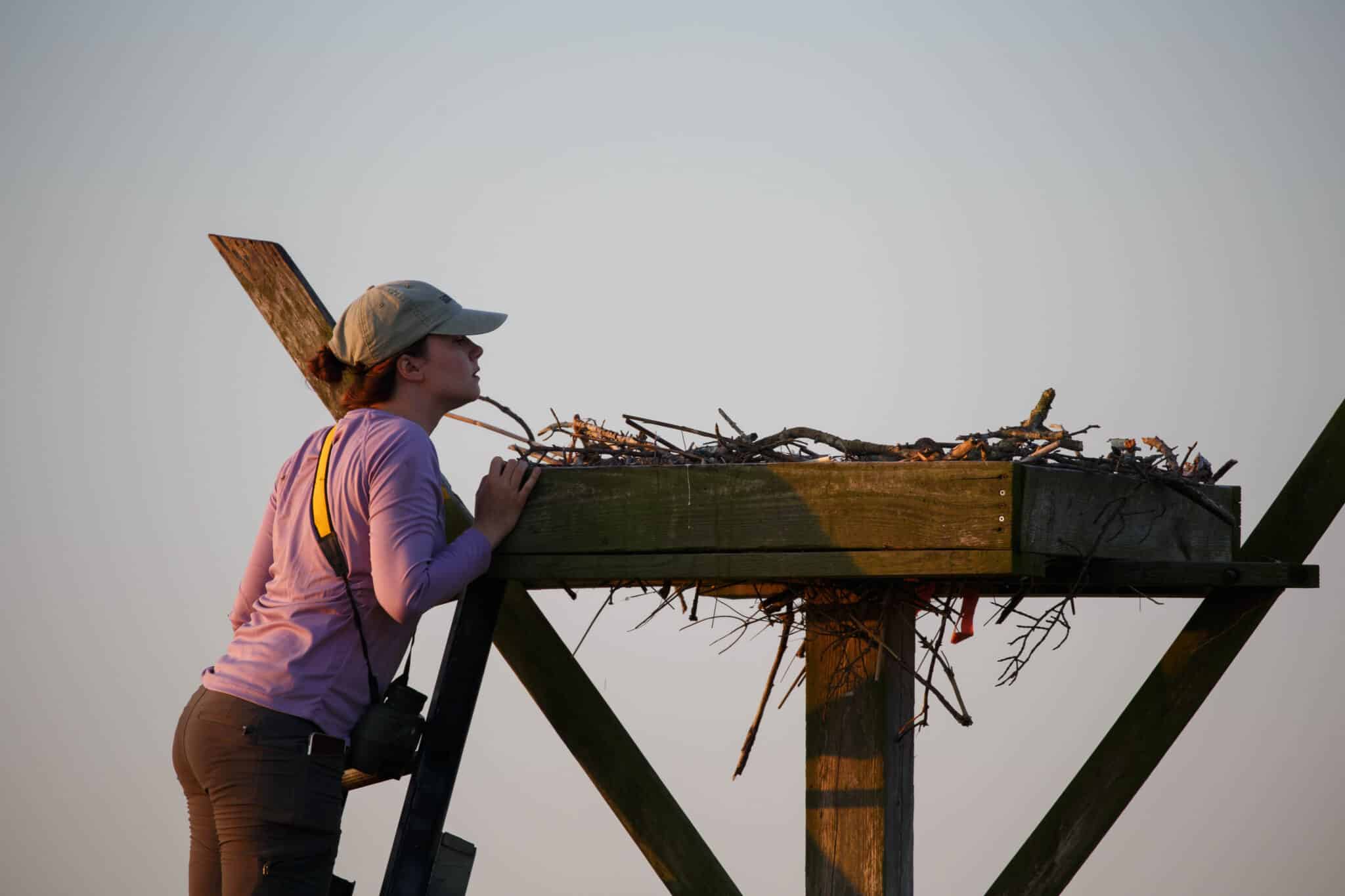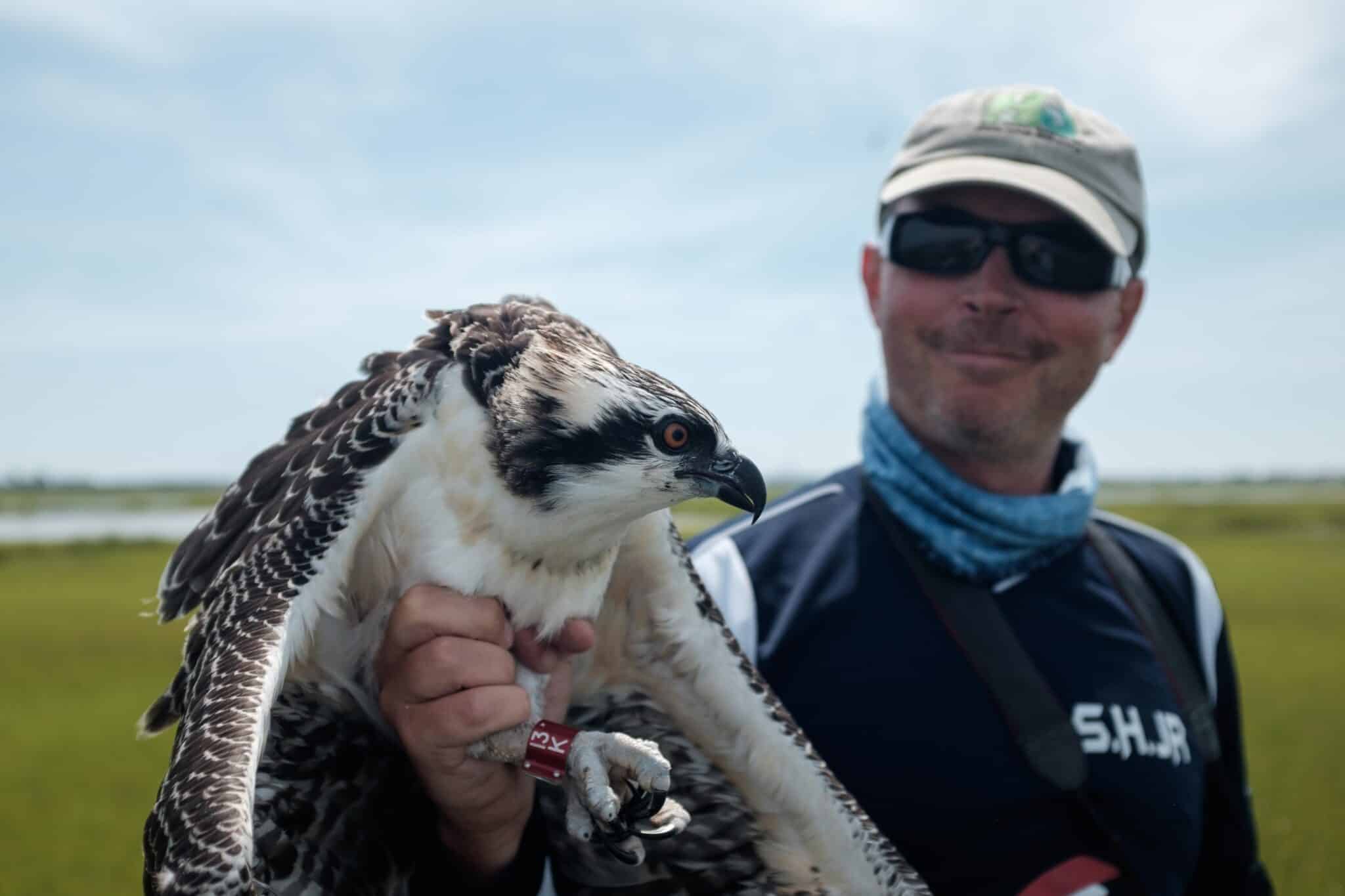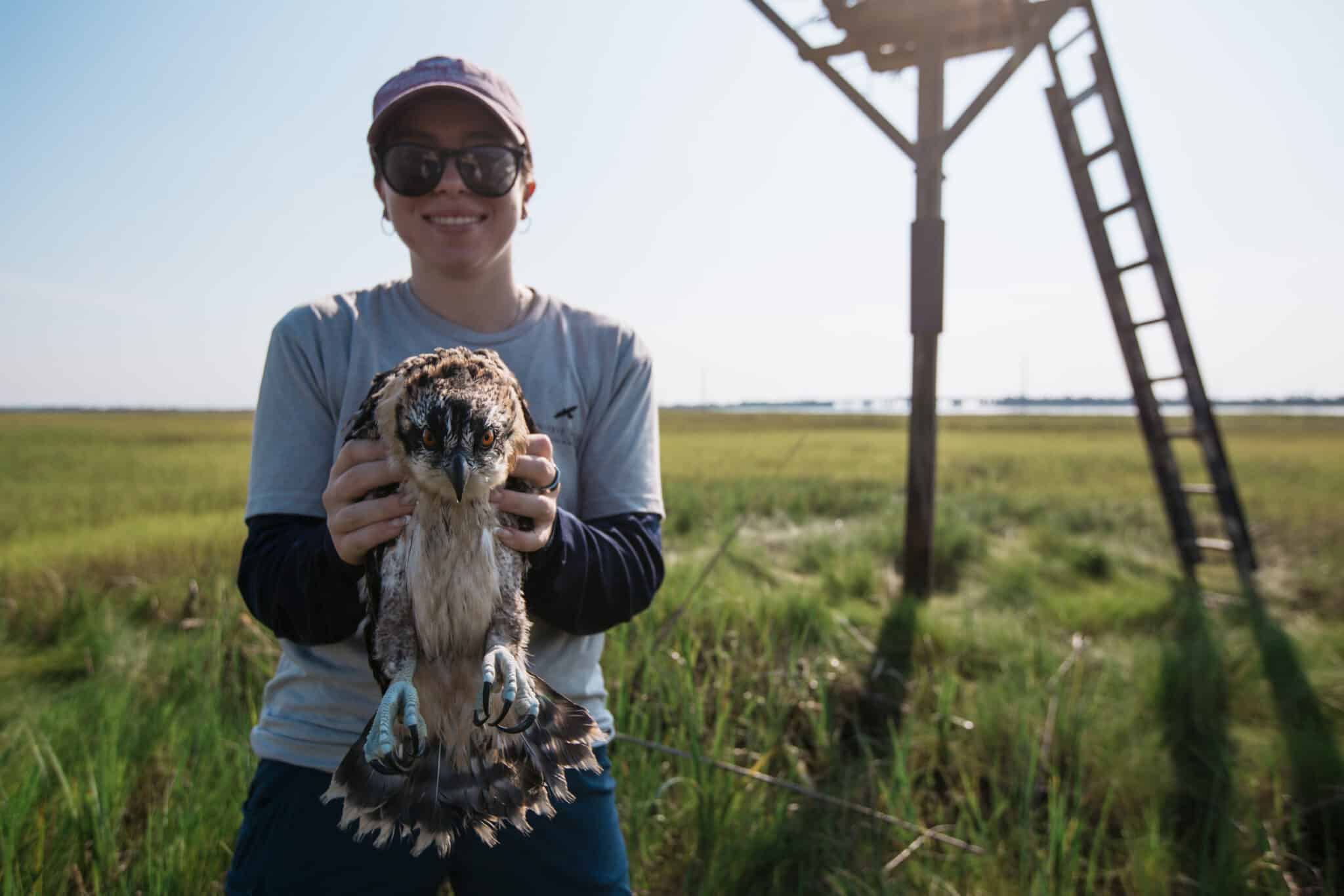
2025 NJ Osprey Project Intern Marlee Canale w/ an osprey nestling.

2025 NJ Osprey Project Intern Marlee Canale w/ an osprey nestling.

Join the CWF Team

At Conserve Wildlife, it is our duty and our privilege to protect the rare and endangered species of New Jersey. We gather the best science, tried and true conservation techniques, innovative education activities, and an engaged corps of willing volunteers in pursuit of the right combination of activities that will preserve a species before it disappears from our state.

Thanks for your interest in joining the CWF team. Below you will find current job opportunities, including seasonal paid positions and volunteer internships. In the coming weeks, we will be posting seasonal field based positions for these projects: 2026 New Jersey Osprey Project Field Technician and 2026 LBIF Summer Field Technician.

CWF Careers, Seasonal Positions + Internships

2026 Seasonal Positions

American Oystercatcher Monitoring Technician

Conserve Wildlife Foundation of New Jersey (CWF) is seeking one seasonal field technician to assist with CWF’s ecological projects in the Delaware Bay region of New Jersey (primarily Cape May and Cumberland counties). The majority of fieldwork will support the Delaware Bay American Oystercatcher Project. The position may also include occasional assistance with other CWF projects (e.g., marsh restoration monitoring, marsh-nesting oystercatcher monitoring, shorebird/seabird banding, etc).

Duties:

  • Conduct biological monitoring of approximately 19 breeding American oystercatcher pairs on bayshore beaches of the Delaware Bay
  • Track nest/chick success by determining pair territory, locating nests, and performing regular nest/brood checks from the egg laying stage to fledge
  • Band re-sighting and assistance with oystercatcher banding efforts/GPS transmitter deployment
  • Monitor nest predation through the use of trail cameras
  • Conduct foraging behavioral surveys
  • Data collection and management
  • Additional tasks: Installation of symbolic fencing, vegetation and habitat assessments, some public outreach

Details:

Position is near full-time (28-35 hours/week, dependent on monitoring needs) and runs from April through mid August. Start and end dates are somewhat flexible. Some weekend work may be required. Communal housing in Cape May Point may be provided (reach out for details). Applicants must provide their own transportation; travel will be reimbursed at the current standard rate at the time. Data collection requires regular use of personal smartphone devices and binocular optics in the field. Spotting scopes are provided. Position requires regular use of kayaks in calm creeks and some more open bay waters, so being comfortable on the water is a must.

Qualifications:

  • Bachelor’s degree in biology, wildlife ecology or related field preferred
  • Experience working in the field with shorebirds preferred
  • Excellent observational skills and attention to detail
  • Meticulous data collection skills
  • Must be willing to work long hours outside under physically demanding conditions (hot, humid, biting insects, mud)
  • Ability to walk extensively on soft substrates (sand beaches)
  • Ability to kayak for extended periods (1-3 miles a day)
  • Ability to lift and carry heavy equipment of 50 pounds or more
  • Ability to work independently with minimal supervision. Initial training will be provided.

Compensation: ~$18/hour DOE

Please submit an application package including your resume, a letter of interest, and contact information for three references all in one file (Word doc or PDF) with the file title “LastName_FirstName_DelBayAMOYTech” to Emmy Casper at emmy.casper@conservewildifenj.org. View on the Ornithology Exchange Job Board.

Deadline to apply is February 28, 2026.

Applications will be evaluated on a rolling basis when they are submitted.


Beach Nesting Bird Field Technician

Monitor and manage beach nesting birds, including piping plover, American oystercatcher, least tern, black skimmer, common tern, and royal tern at the Holgate and Little Beach Units of the Edwin B. Forsythe NWR and Horseshoe Island from ~ April 1 – August (exact end-date determined on a rolling basis, as nesting season dictates). Will work as part of a team, under the supervision of a field crew leader and senior biologist, to locate breeding pairs, find nests, determine nest outcomes, and track chicks to fledgling stage. Weekly colony counts. Additional surveys of habitat quality and predators are also completed. Band re-sighting is a daily part of job. Field data is collected electronically using a phone-based app. Will assist with data entry, mapping, and reporting, as needed. May participate in some bird banding, but it is not a primary or frequent part of the job. The sites are closed to the public so outreach is not part of the daily tasks, but interactions with public/boaters at Horseshoe Island is expected.

Requirements:

Degree in biology, ecology, environmental science, or related is highly preferred, but will consider students currently enrolled in those studies. Previous experience with nesting shorebirds is a big plus. MOCC boat certificate a potential plus for some candidates. Ability to work well both independently and as part of a team. Tolerance to work in sometimes harsh conditions – hot, buggy, walking long distances in soft sand. Must have reliable transportation. Must use a personal smart phone during work to collect field data. Transport to sites is typically by boat in a coastal marine environment. Free housing is available. Must be available to work periodic weekend days from late May-August. View and apply on The Wildlife Society job board.

Details:

Job type: Temporary

Duration: 3-6 months

Salary: $16-18/hour

Minimum Education: BA/BS/Undergraduate

Submit letter of interest, resume, and 3 references to Todd Pover by February 28: todd.pover@conservewildlifenj.org


New Jersey Osprey Project / Summer Field Technician

Conserve Wildlife Foundation of NJ plays an integral role in the monitoring and management of breeding ospreys, now listed as a stable species in New Jersey. We have been working with ospreys since 2004 and over the past decade our leadership role has grown. While working in close partnership with the NJDEP Fish & Wildlife, each summer we coordinate surveys of nests during spring and summer months. The goal is to determine the number of occupied nests (new and existing) and the number of young produced to determine the overall size and health of the population.

Job Description:

The role of this summer field technician with the New Jersey Osprey Project will be to assist the project leader. The day to day tasks will vary depending on the time of the osprey nesting season. In spring, they may be asked to help with the repair or replacement of nest platforms. This can be as simple as carrying equipment and tools or as hard as helping to physically lift a 300 lb. wood osprey platform. During the nesting season the field tech will assist with osprey surveys by boat and help navigate to locations, carry ladders, survey nests and record data. You will also be assigned to survey nests by land, using your personal vehicle to drive to nest sites and use optics to record sightings at nests in different regions of the state, from the Raritan Bay and Sandy Hook, to Cape May and the Delaware Bayshore. Lastly, you will help enter data and summarize results for annual reporting.

Timeframe: May – August.

Hours/Week: Number of hours will vary per week, depending on tasks, and will not exceed 350 hours for the season. May be required to work early/late and weekends and holidays, as needed.

Compensation: $18/hour with mileage being reimbursed for fieldwork.

Location: S. Ocean County.

Duties:

  • Communicate with volunteers/partners on seasonal updates, data collection, submittal
  • Conduct outreach to promote volunteer opportunities, especially with citizen scientists using Osprey-Watch.org
  • Assist with osprey nest surveys by boat (MayJune/July)
  • Conduct ground surveys of active osprey nests using optics (May – July)
  • Record/organize/summarize data

Qualifications:

  • Must have a driver’s license and a vehicle for transportation
  • Must be physically fit, able to carry heavy items, climb ladders, wade in waist deep water and traverse uneven ground for long hours
  • Ability to work outside in adverse conditions
  • Experience with nature/wildlife/bird photography preferred
  • Knowledge of navigating coastal waters and traversing saltmarsh preferred
  • Experience with bird identification and behavior preferred
  • Ability to work as a team or individual with little supervision
  • Must be able to provide own equipment, including boots and binoculars
  • Ability to use a GPS and experience using Google Earth, ArcMap
  • Competent in using Microsoft Word/Excel/Google Docs/Sheets

All applicants should send a cover letter with interest, qualifications and availability; resume and three references to Ben Wurst: ben.wurst@conservewildlifenj.org by March 1, 2026. Please use your full name in the file name of the document(s). Applications will be reviewed when received and position may be filled before closing date.