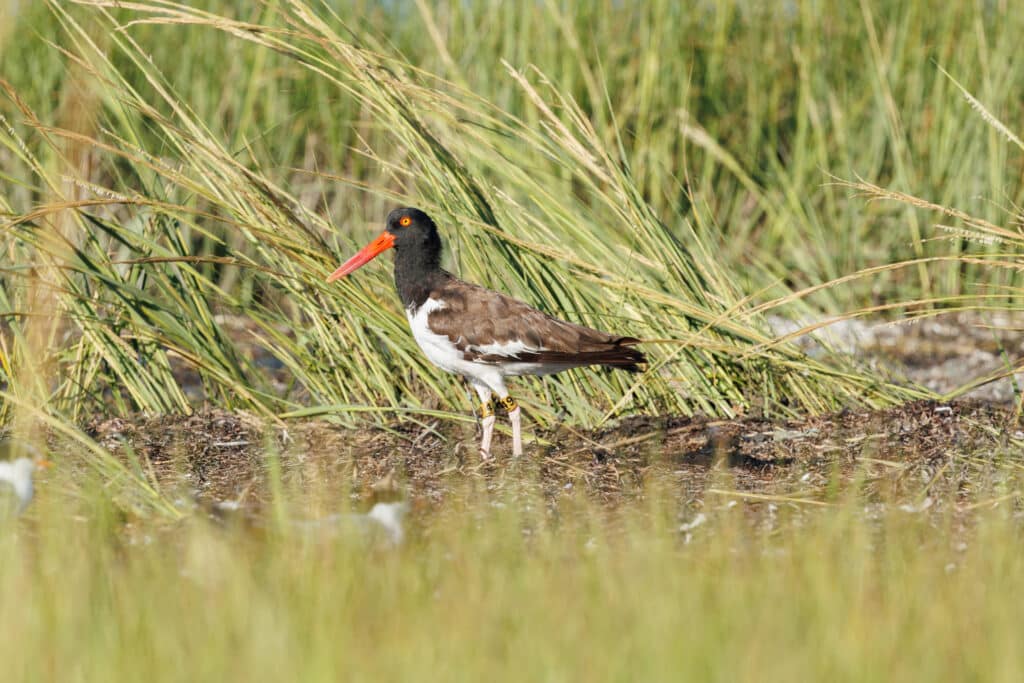
Re-sight Round Up: American Oystercatchers at Holgate

In our last American oystercatcher Re-sight Round Up, we checked in with some NJ breeders on their wintering grounds further south. This time, we’re switching gears to focus on some recent banded bird sightings in New Jersey! New Jersey hosts both staging and wintering oystercatcher flocks, and is generally considered to represent the northernmost boundary of the wintering range for oystercatchers on the East Coast. This fall, CWF biologists and volunteers conducted weekly ground surveys to track locations and numbers of the staging/wintering roost of American oystercatchers at Holgate Unit of Edwin F. Forsythe National Wildlife Refuge (“Holgate”) as part of a new NFWF-funded pilot study that includes researching marsh-nesting oystercatchers in the surrounding back-bay marsh habitats within Great Bay Boulevard Wildlife Management Area. 

We identified 25 unique banded individuals throughout the course of the survey period, many of which were recorded in the roost multiple times from October to December. Of the 25 banded individuals, most birds were originally banded in New Jersey and New York (nine birds from each state), five were banded in the South (three in Virginia and two in Georgia), and two were banded in New England states. This Re-sight Roundup highlights just some of the interesting stories we were able to uncover in the band record database. 
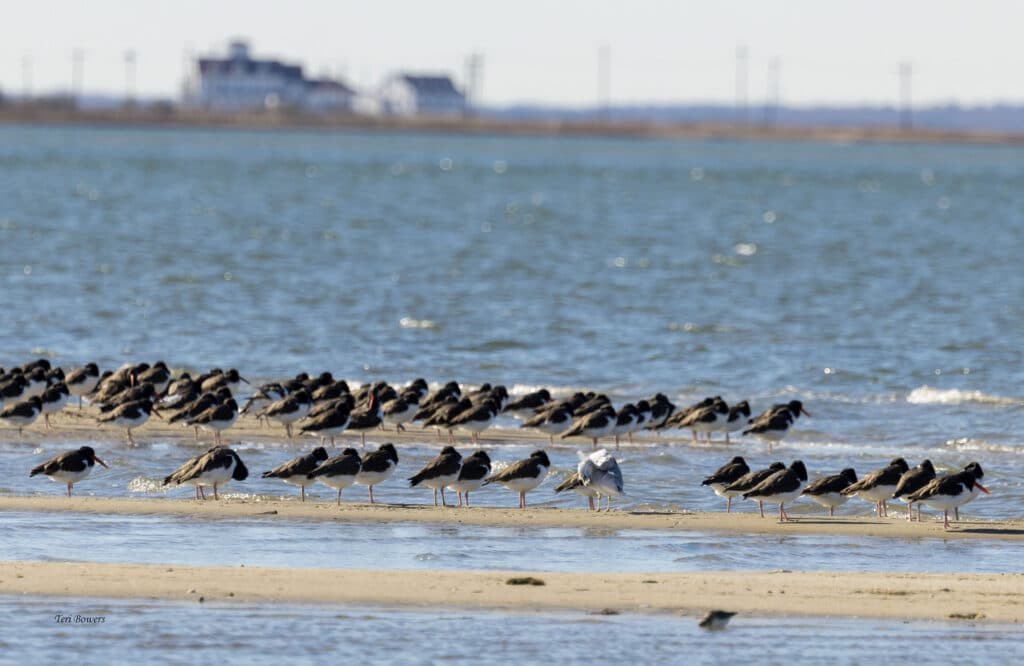
Roosting American oystercatchers during high tide at Holgate Unit of Edwin B. Forsythe National Wildlife Refuge. During low tides, the roost could be seen foraging at nearby marsh habitats like the marsh surrounding Rutgers University Marine Field Station, which can be seen along the horizon in this image. Photo courtesy of Teri Bowers.

Continue reading “Re-sight Round Up: American Oystercatchers at Holgate”

Re-Sight Round Up: American Oystercatcher Edition

As snowstorms and frigid temperatures take over New Jersey, I’ve been thinking a lot about how our beach nesting birds are doing in their more southern (and hopefully much warmer!) wintering grounds. Thanks to recorded sightings of banded birds, we’ve been able to learn a significant amount about American oystercatcher movement and track birds to their wintering locations. In this Re-sight Round Up, we’re catching up with three of CWF’s recently banded American oystercatchers to see how they’re spending the cold winter months.

Continue reading “Re-Sight Round Up: American Oystercatcher Edition”

New NFWF-funded collaboration with The Wetlands Institute targets New Jersey’s marsh-nesting American oystercatchers

This October, CWF biologists began work on an exciting new pilot project led by The Wetlands Institute to help fill knowledge gaps in the breeding productivity and habitat use of American oystercatchers across New Jersey.

While a significant portion of New Jersey’s oystercatchers nest in marsh habitats, intensive monitoring has historically focused on beach-nesting pairs along the Atlantic Coast due to logistical and resource constraints. In recent years, CWF has played a leading role to gradually expand monitoring to include previously unmonitored sites along the Delaware and Raritan Bays. Now, through this new collaboration with The Wetlands Institute, we are extending our efforts to the estuarine islands and marshes within the Great Bay Boulevard Wildlife Management Area.

Over the next year, CWF biologists will work closely with The Wetlands Institute to survey, monitor, and band oystercatchers in these marsh systems to better understand their breeding productivity, habitat needs, and the conservation challenges they face. As sea-level rise, flooding, and erosion threaten the health and resilience of our state’s marsh ecosystems, understanding the needs of marsh-dependent species like oystercatchers is becoming increasingly important. The findings of this pilot effort will help refine monitoring strategies for marsh habitats and guide future management decisions, ultimately contributing to more comprehensive management of New Jersey’s oystercatcher population.

Want to help? If you’ve spotted an oystercatcher around the Barnegat Bay, we want to hear from you! CWF recently launched an Oystercatcher Tracker to document AMOY sightings throughout the marshes of Barnegat Bay. Every report helps us better understand oystercatcher distribution and habitat use across the region. Click here to access the survey.

Funding for this project is made possible through the National Fish and Wildlife Foundation’s Atlantic Flyway Shorebird Initiative.