New Jersey Osprey Project
Monitoring + Managing a Sustainable Osprey Population
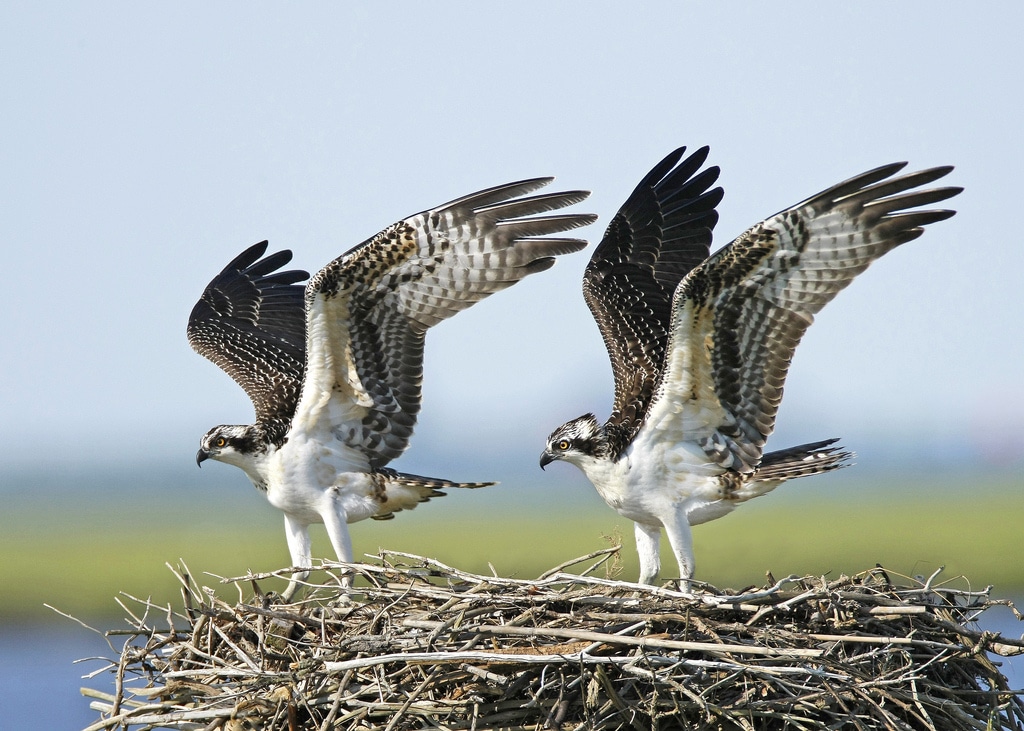
In 2026, the crisis continued along the coast. Preliminary statewide survey results documented 850 territorial nesting pairs and 476 young produced, but coastal productivity averaged just 0.75 young per active nest, compared with 1.71 inland. At Sedge Island, a historically productive Barnegat Bay colony, 18 pairs laid eggs or produced young, but only two young survived to fledge.
Similar concerns have emerged throughout the Mid-Atlantic, particularly in the Chesapeake Bay, where poor osprey breeding performance and concerns about the availability of Atlantic menhaden, the primary prey of nesting ospreys, have drawn attention to the health of the coastal food web.
As fish-eating predators that depend on plentiful, accessible prey to raise their young, ospreys can serve as important indicators of marine ecosystem health. Their reproductive failures do not prove that the harvest of menhaden is responsible, but the persistent pattern of poor breeding success raises serious concerns about prey availability and warrants precautionary action to protect this foundational forage fish.
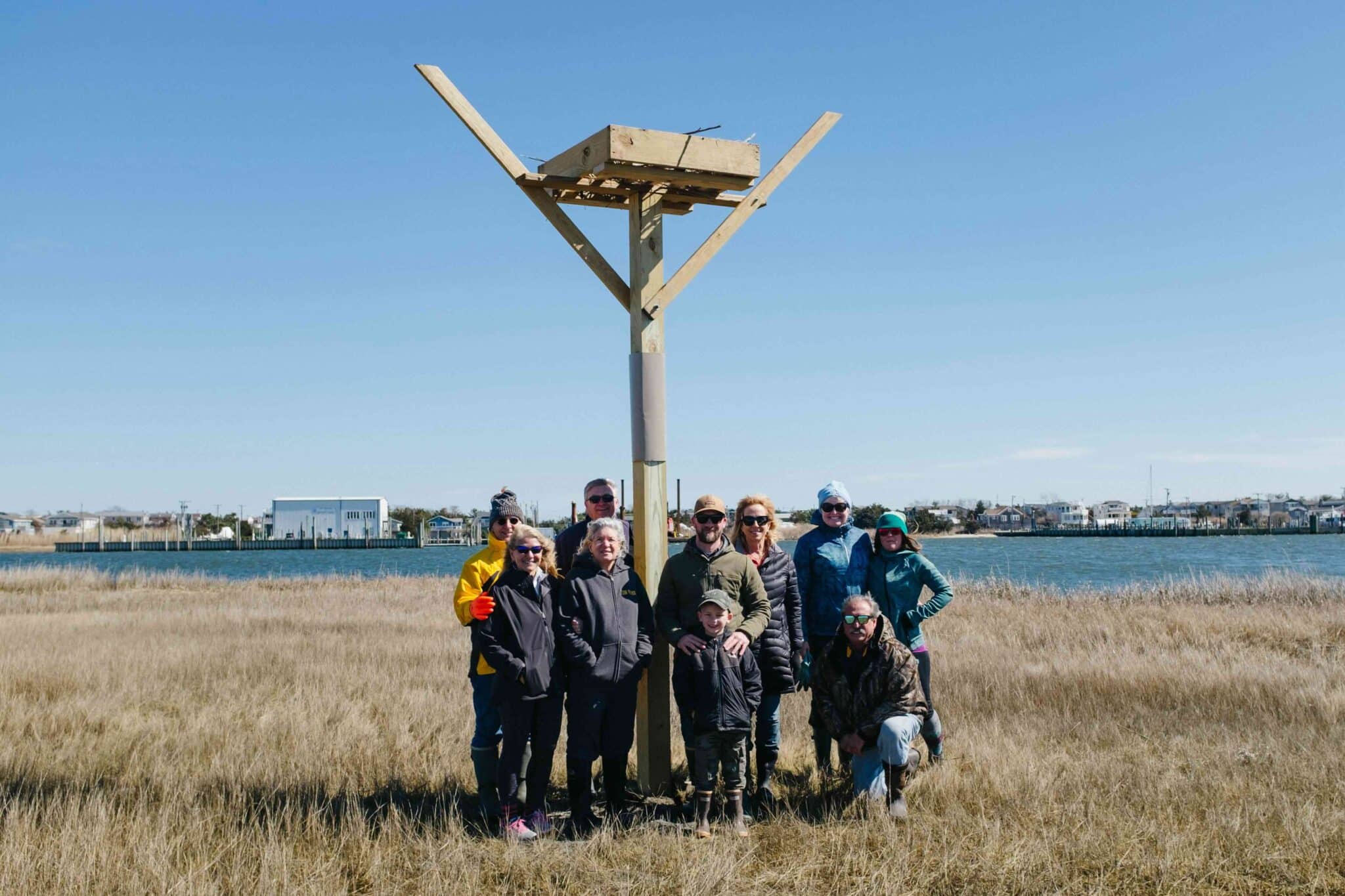
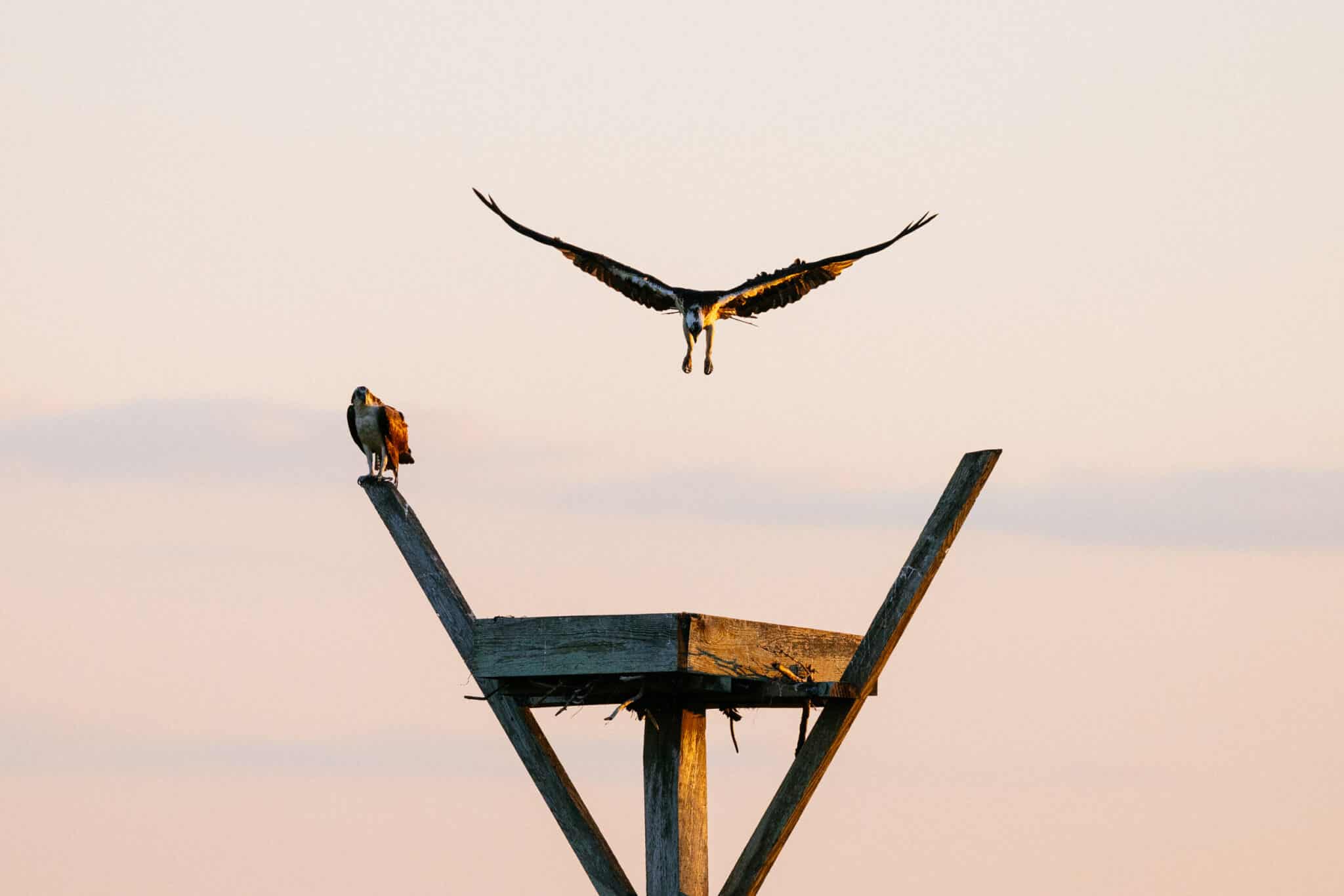
For more than two decades, Conserve Wildlife Foundation of New Jersey (CWF) has monitored nesting ospreys to track the health of New Jersey’s breeding population. What began as documenting one of the state’s greatest wildlife recovery stories has become an early warning for the health of our coastal ecosystem.
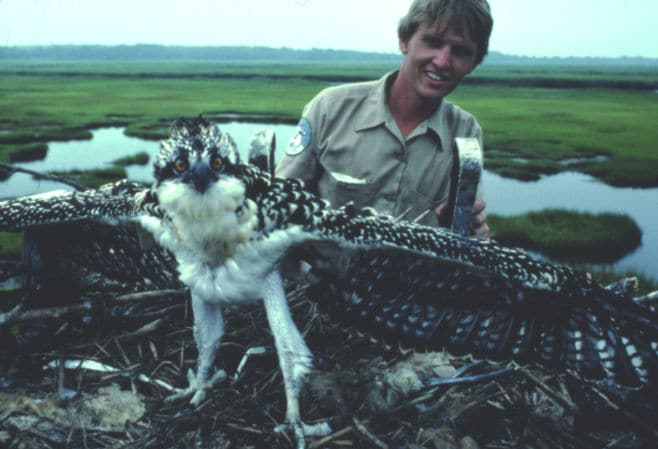
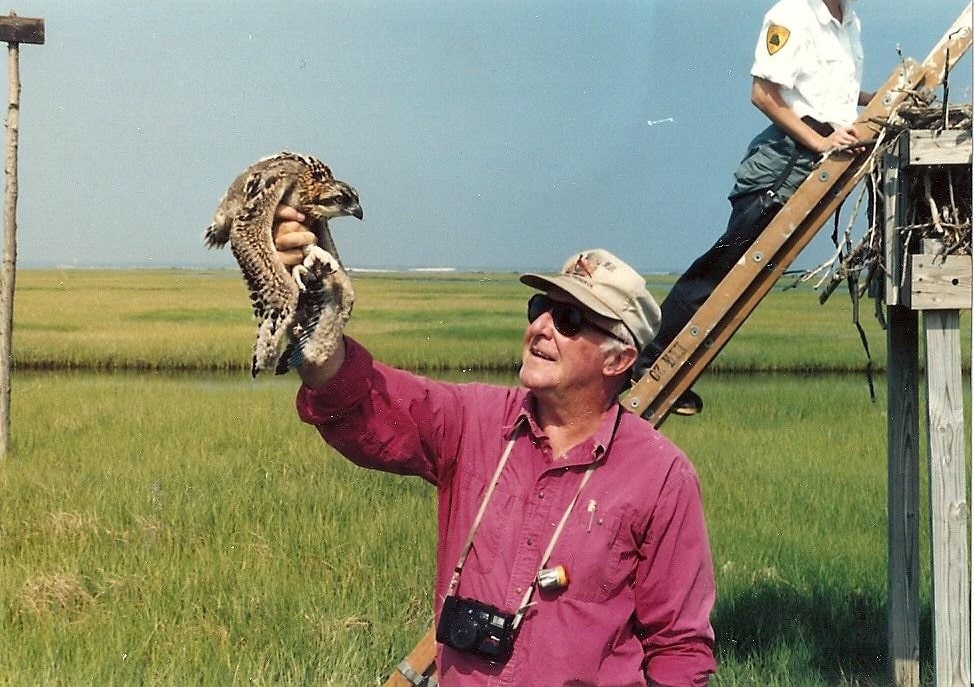
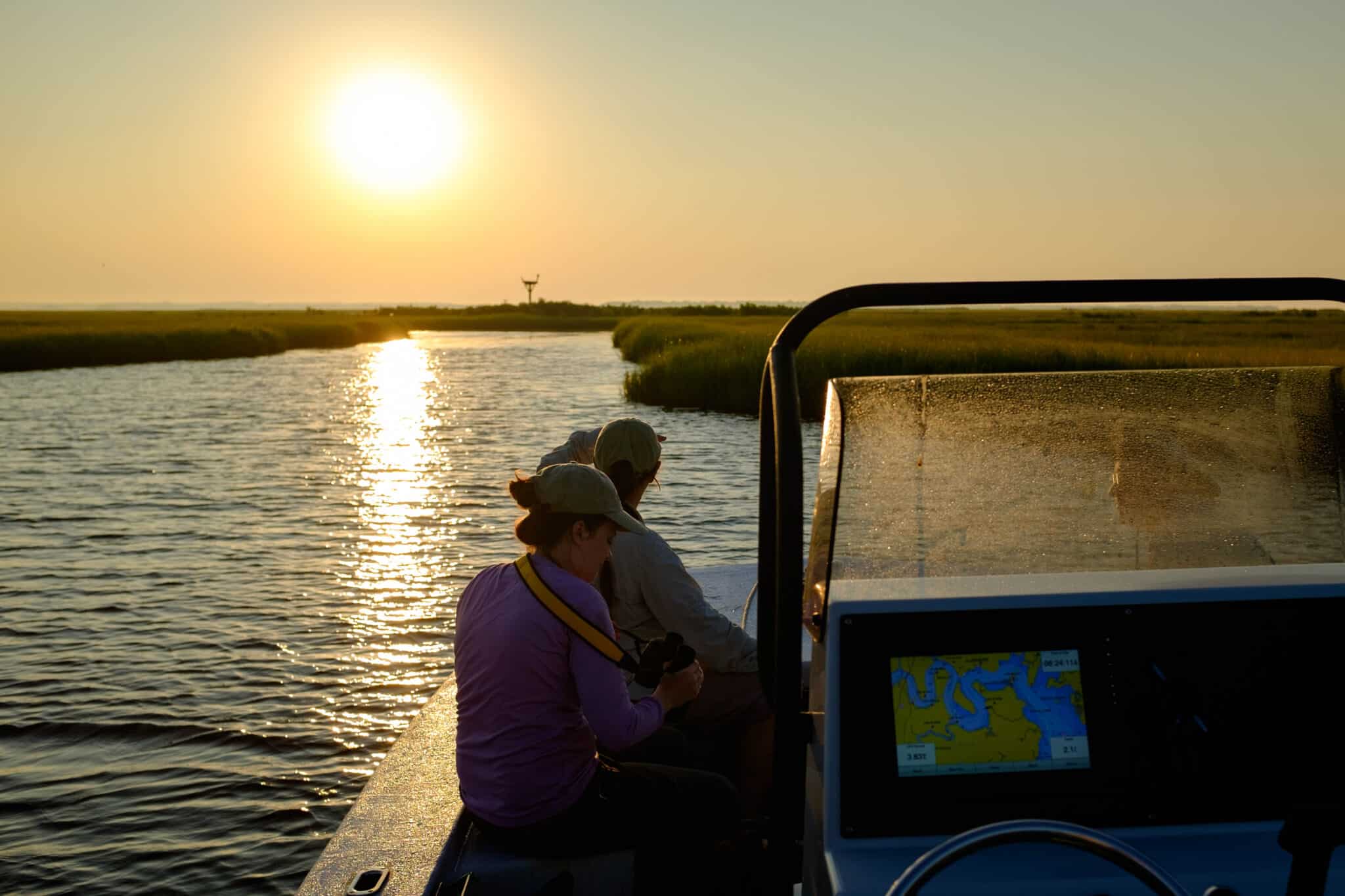
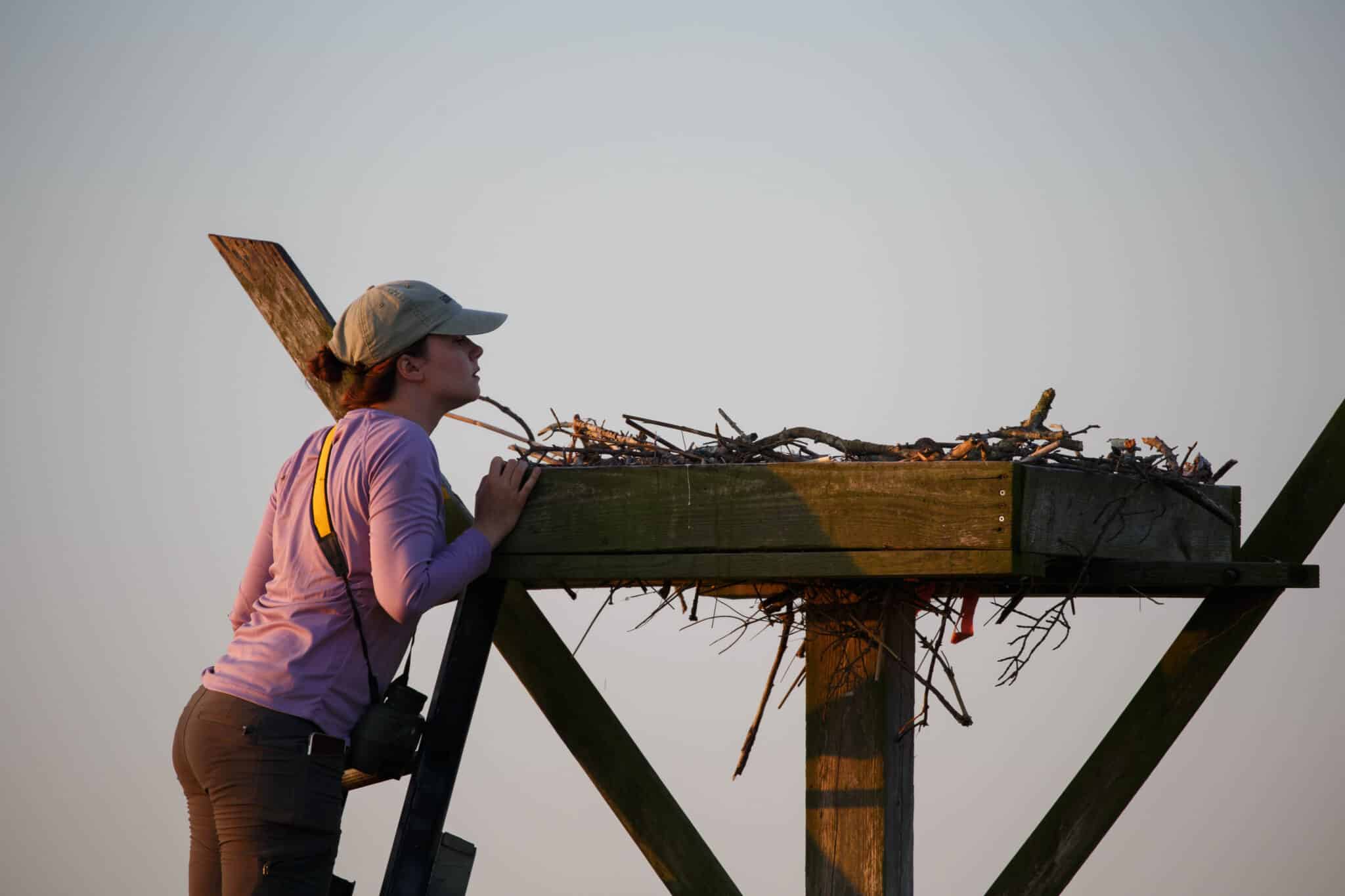
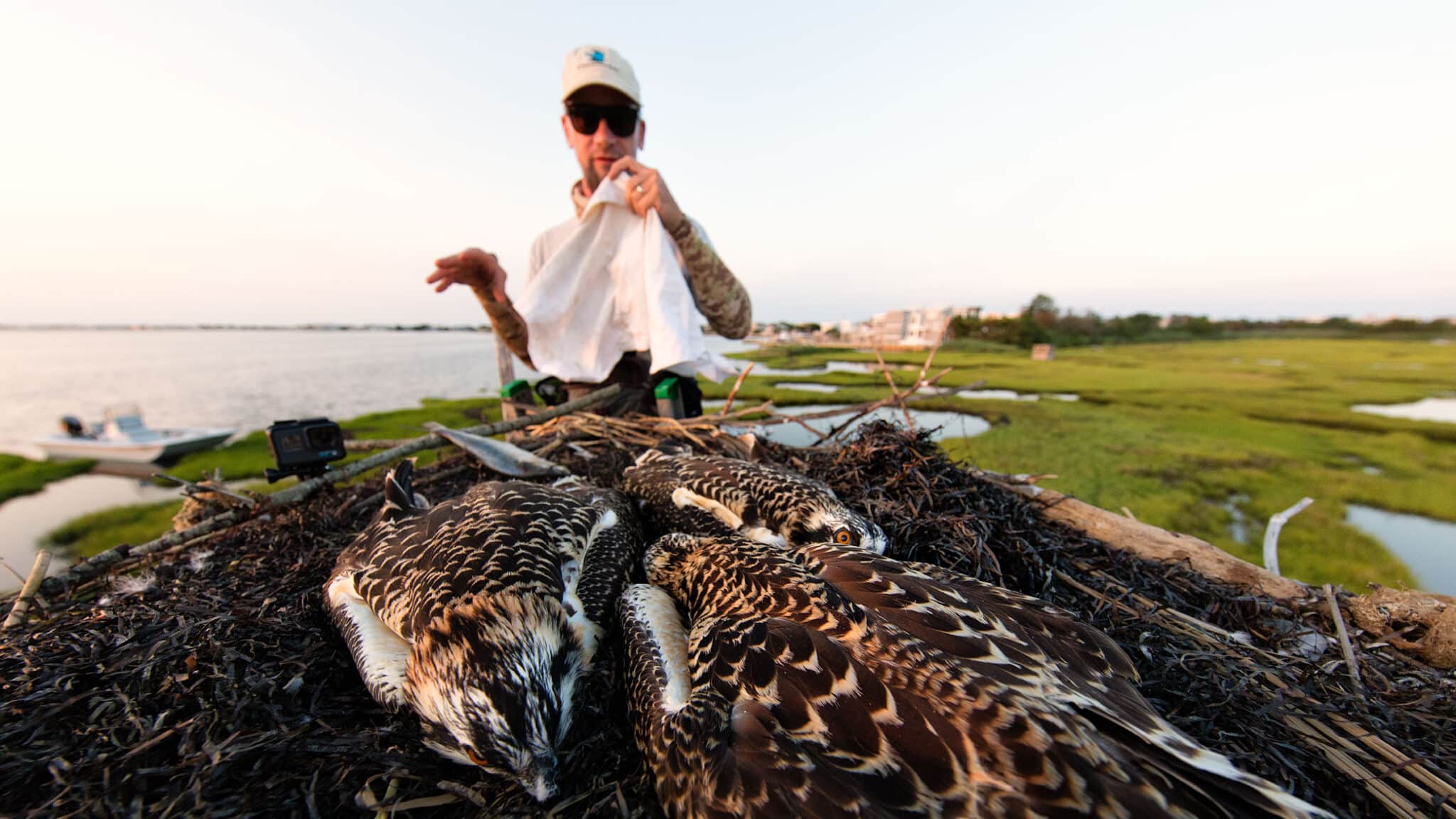
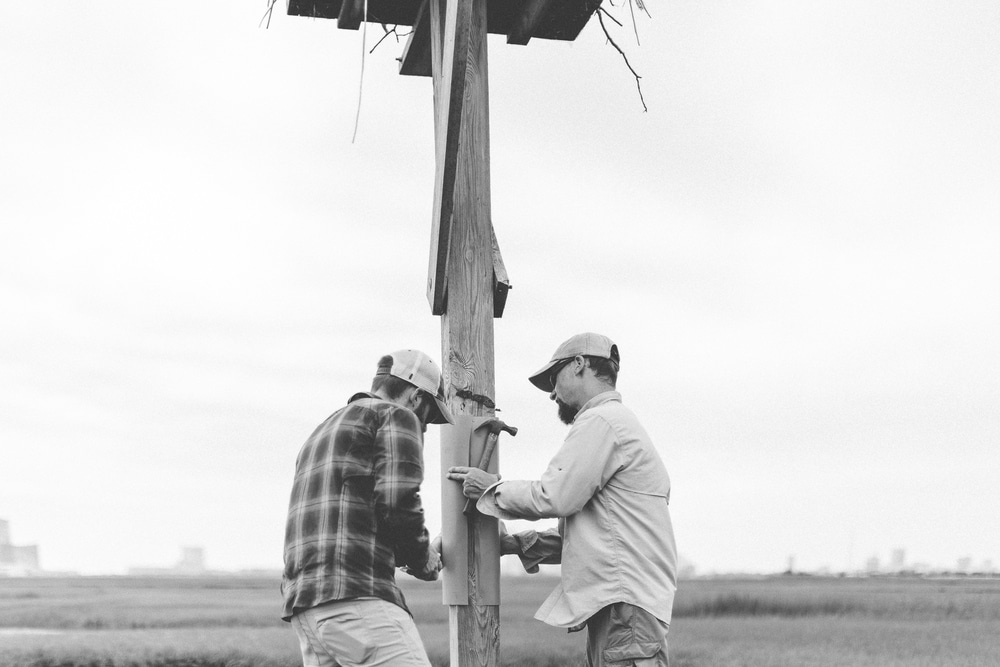
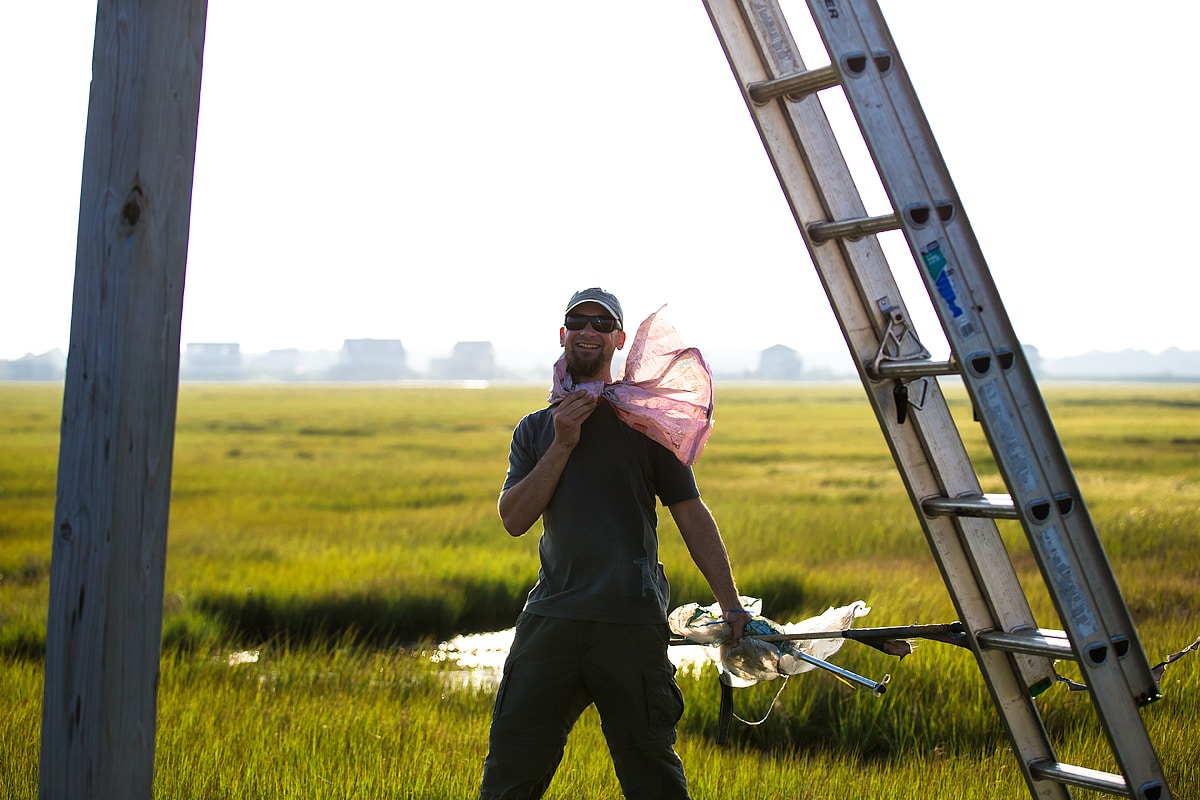
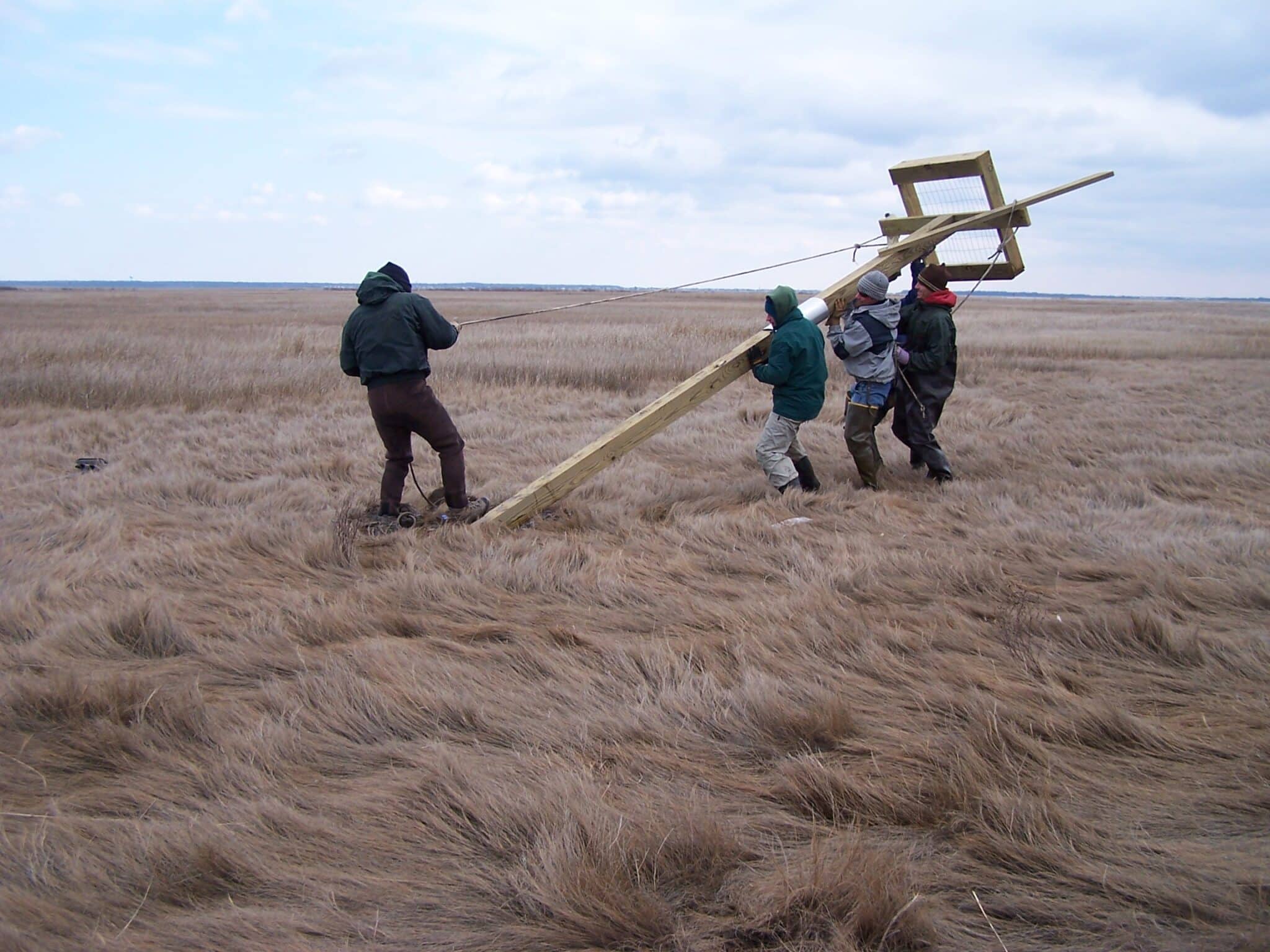
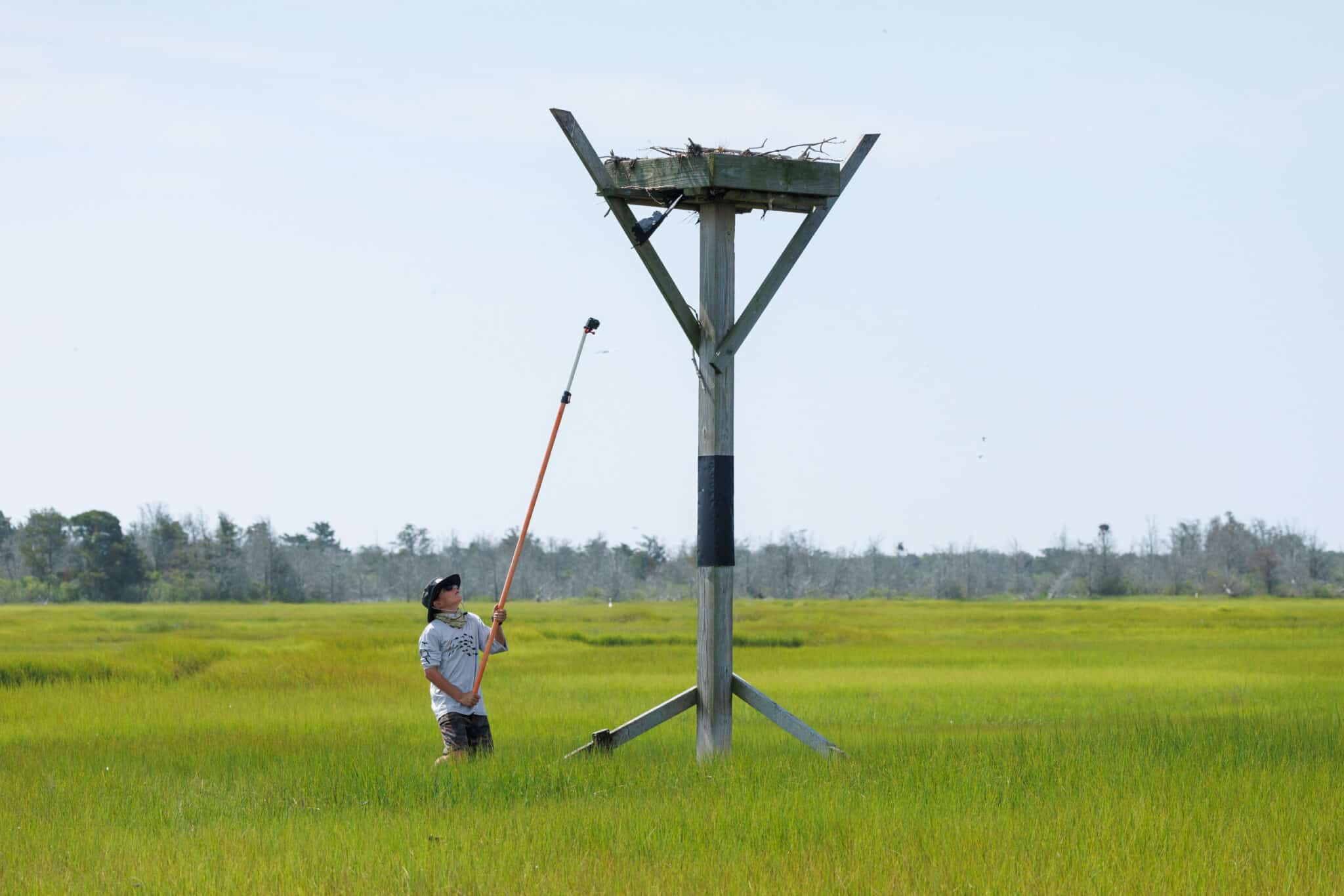
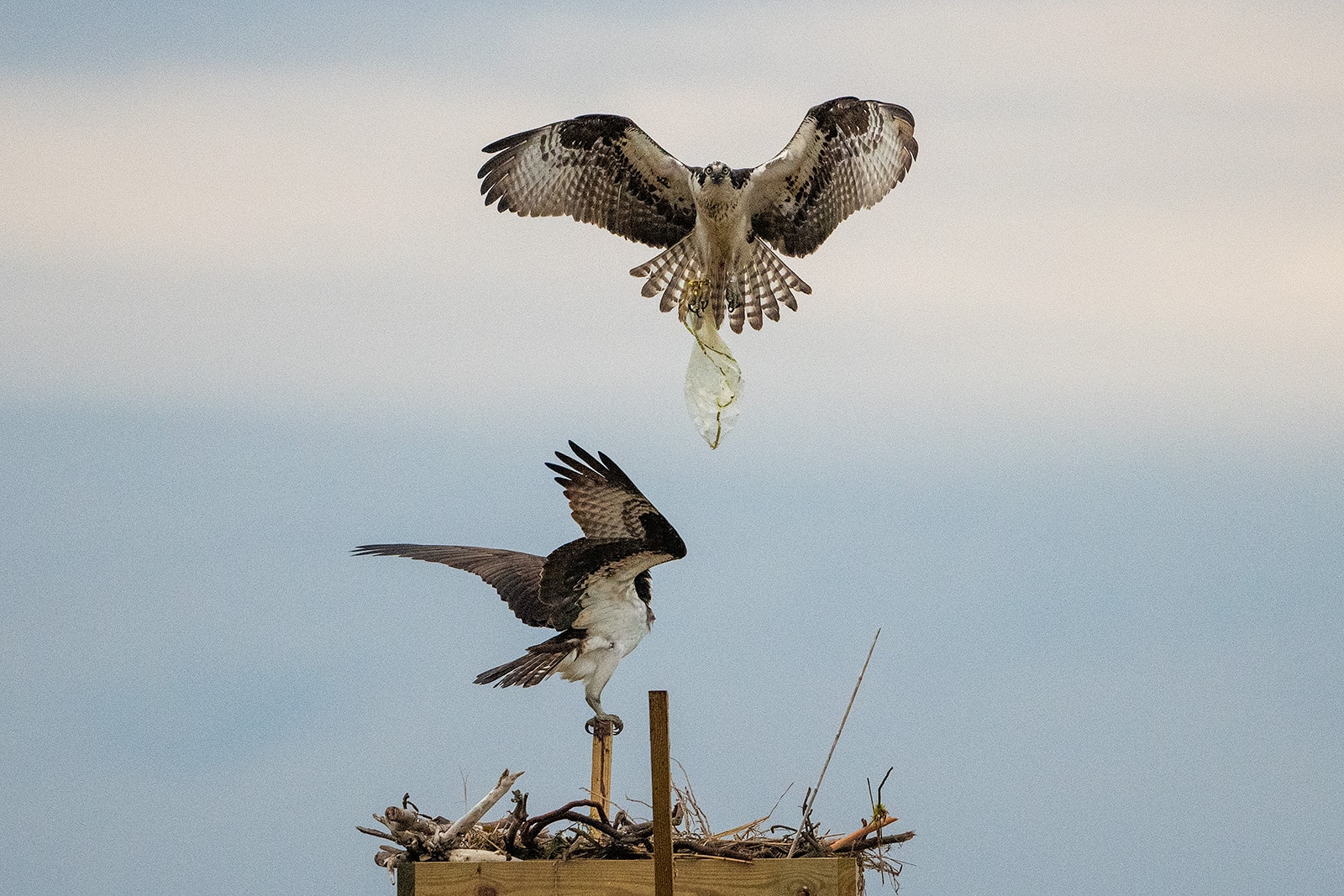
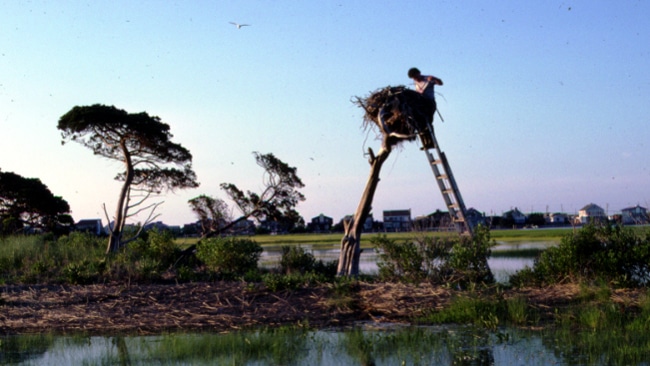
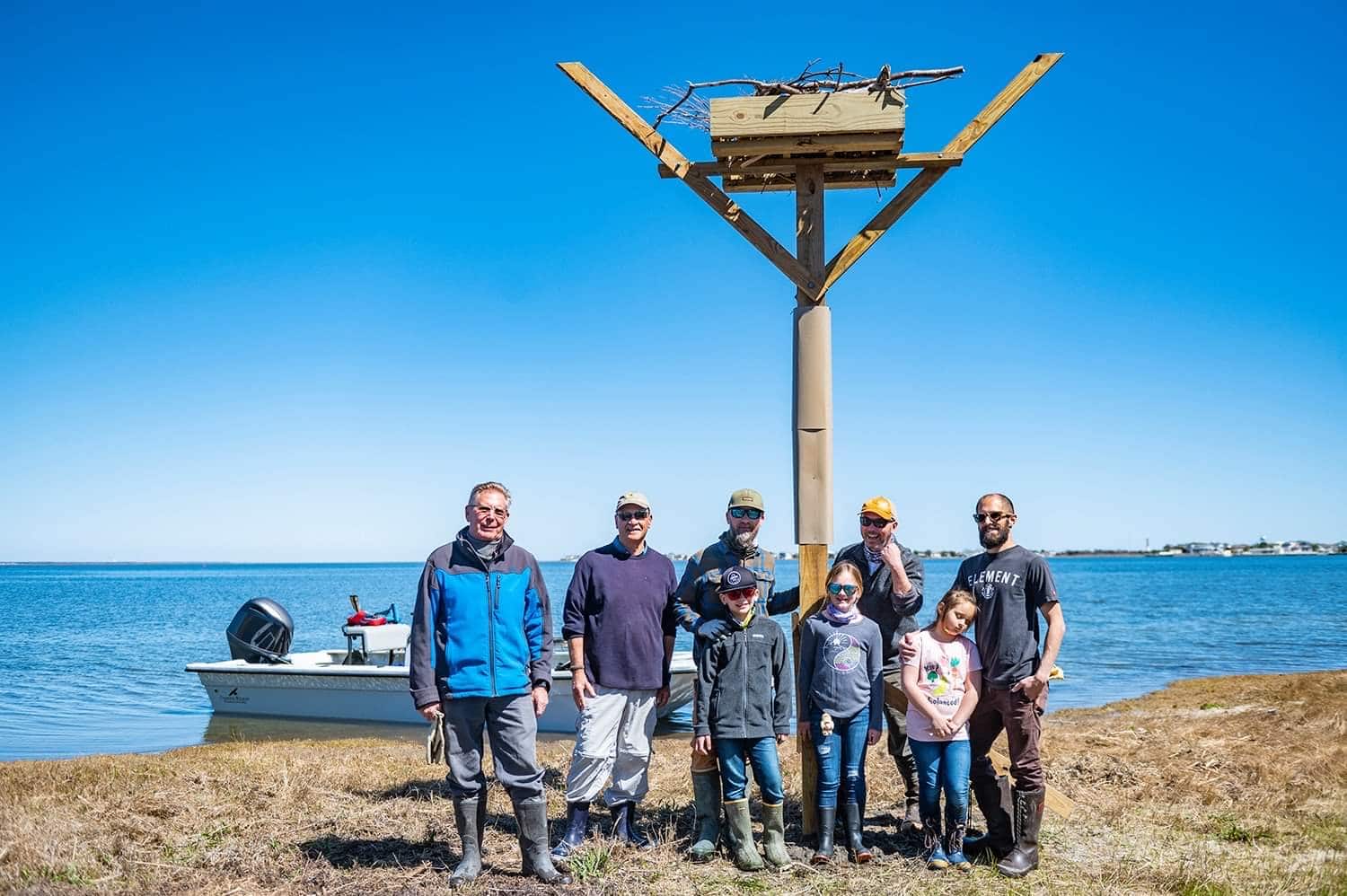
Each spring and summer, CWF coordinates surveys of osprey nests across New Jersey with the help of dedicated volunteers and partner organizations. During the peak of the nesting season, biologists access nests by boat using ladders, pole-mounted mirrors, or small cameras to determine breeding success, band nestlings for future tracking, remove dangerous plastic marine debris, and collect data that helps us understand the status of the population. Nest visits are brief and carefully timed to minimize disturbance while providing critical information on the health of New Jersey’s ospreys.
Unfortunately, the data tell a troubling story.
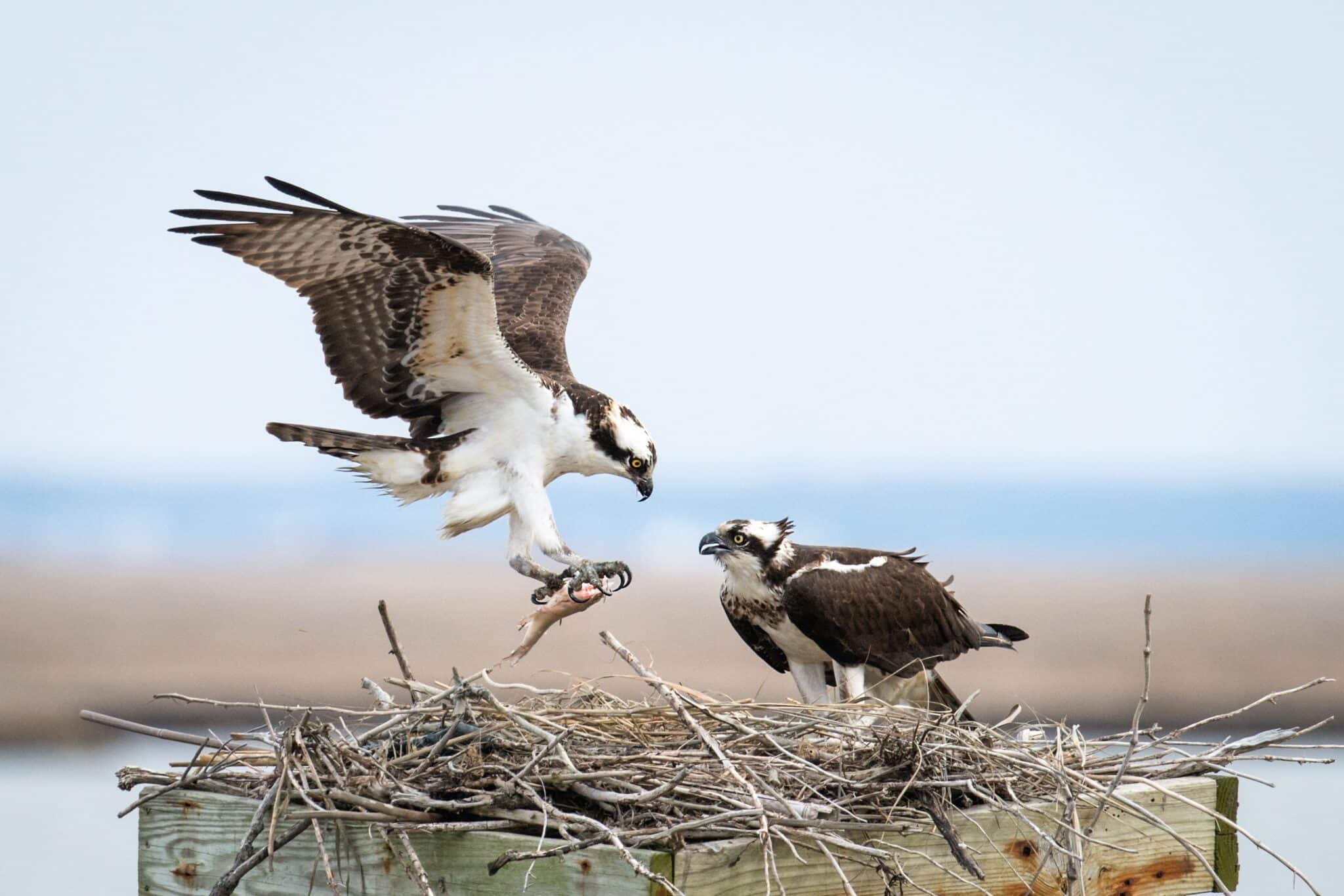
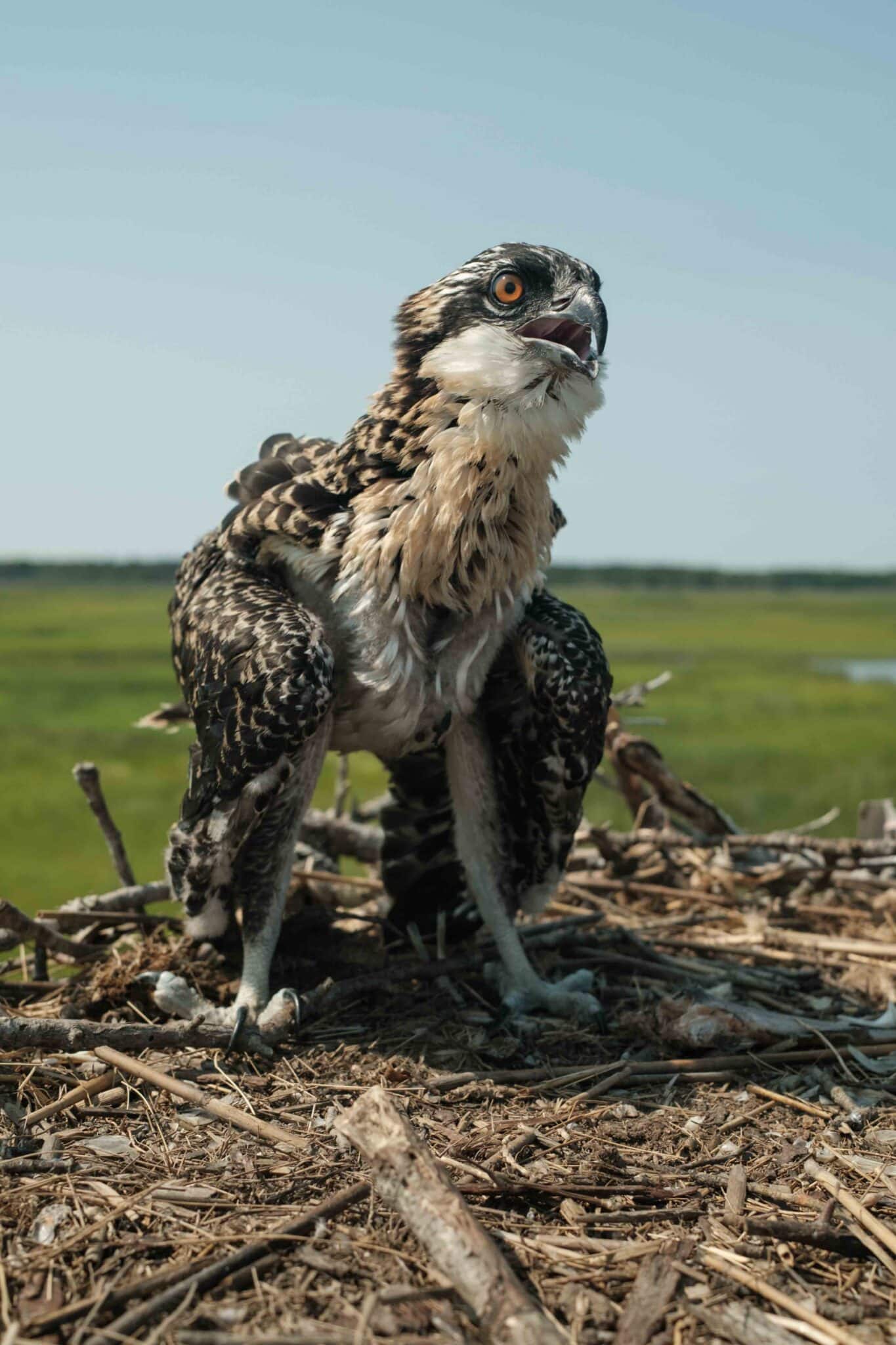
Over the past decade, we have documented an increase in brood reduction, lower reproductive success, and more nest failures in many coastal colonies. These are signs of food stress. Along New Jersey’s coast, Atlantic menhaden, the osprey’s primary prey and one of the most important forage fish in the marine food web, have become increasingly scarce in nearshore waters during the nesting season. Without abundant menhaden, adults must spend more time searching for food, deliver smaller and fewer fish to their nests, and often cannot raise all of their young.
The 2025 breeding season was the clearest warning yet. Although New Jersey’s osprey population was officially reclassified from threatened to stable after decades of successful conservation, breeding success reached its lowest level in more than 30 years. CWF and our volunteers monitored 689 nests statewide and determined the outcome of 507 active nests. Of those, 288 nests (57%) failed to produce any young — nearly three times the long-term average. Only 352 young were produced statewide, a 56% decline from the previous five-year average of 805 young, and statewide productivity fell to just 0.69 young per active nest, below the 0.80 young per nest generally needed to sustain a healthy population.
New Jersey is not alone. Across the Mid-Atlantic, particularly in the Chesapeake Bay, scientists are documenting similar declines in osprey productivity. The Chesapeake Bay supports roughly 10,000 nesting pairs and has long been considered the global stronghold for ospreys. Recent research has linked poor breeding success in many parts of the bay to a shortage of Atlantic menhaden, mirroring the same patterns we are now documenting in New Jersey.
As top tier predators that feed exclusively on fish, ospreys are important bioindicators of the health of our coastal ecosystem. Their breeding success reflects the availability of the forage fish that support not only ospreys, but also striped bass, bluefish, weakfish, tuna, whales, dolphins, seals, and countless seabirds. When ospreys struggle to find enough food to raise their young, it signals that the marine food web may no longer be functioning as it should.
CWF and volunteers continue to monitor osprey populations, document these alarming trends, and work with researchers, fisheries managers, and conservation partners to better understand the causes and advocate for healthy, resilient marine ecosystems. The story of the osprey has always been one of resilience and recovery. Ensuring that forage fish remain abundant and available for wildlife is essential if that success story is to continue.
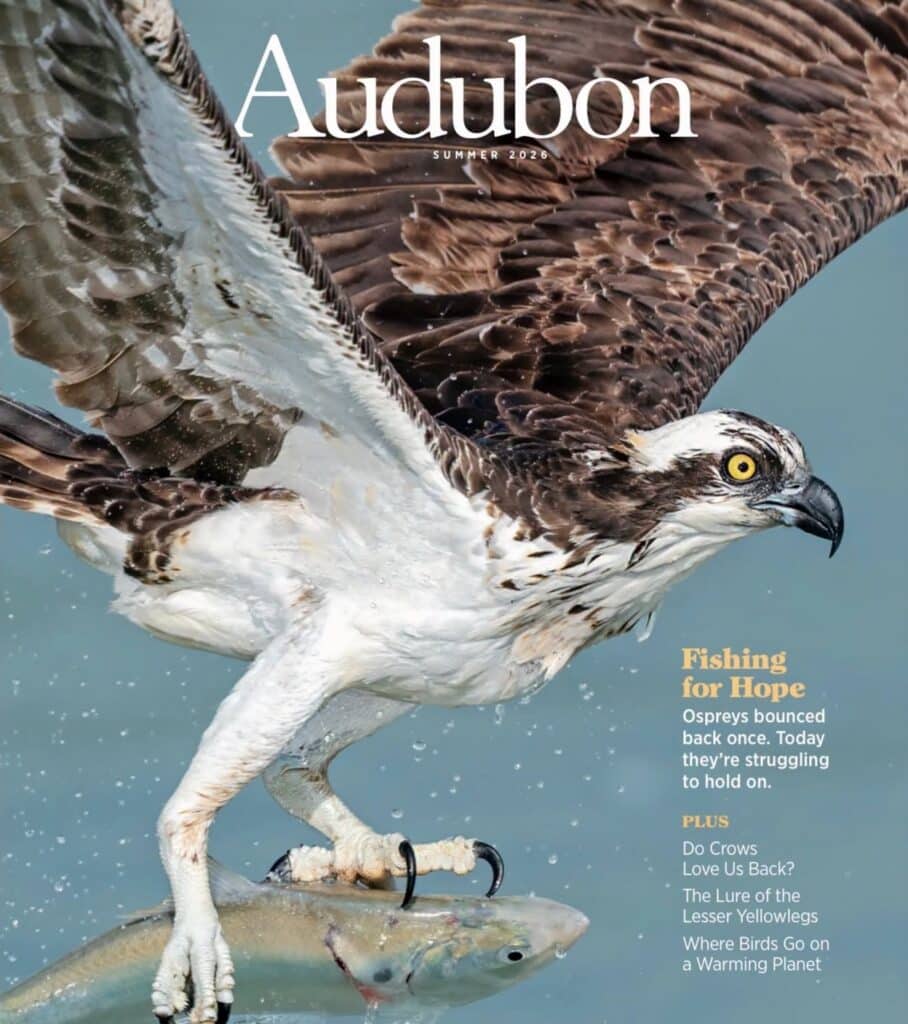
You can read more on this very important topic in the summer edition of Audubon magazine.
Why Menhaden Matter
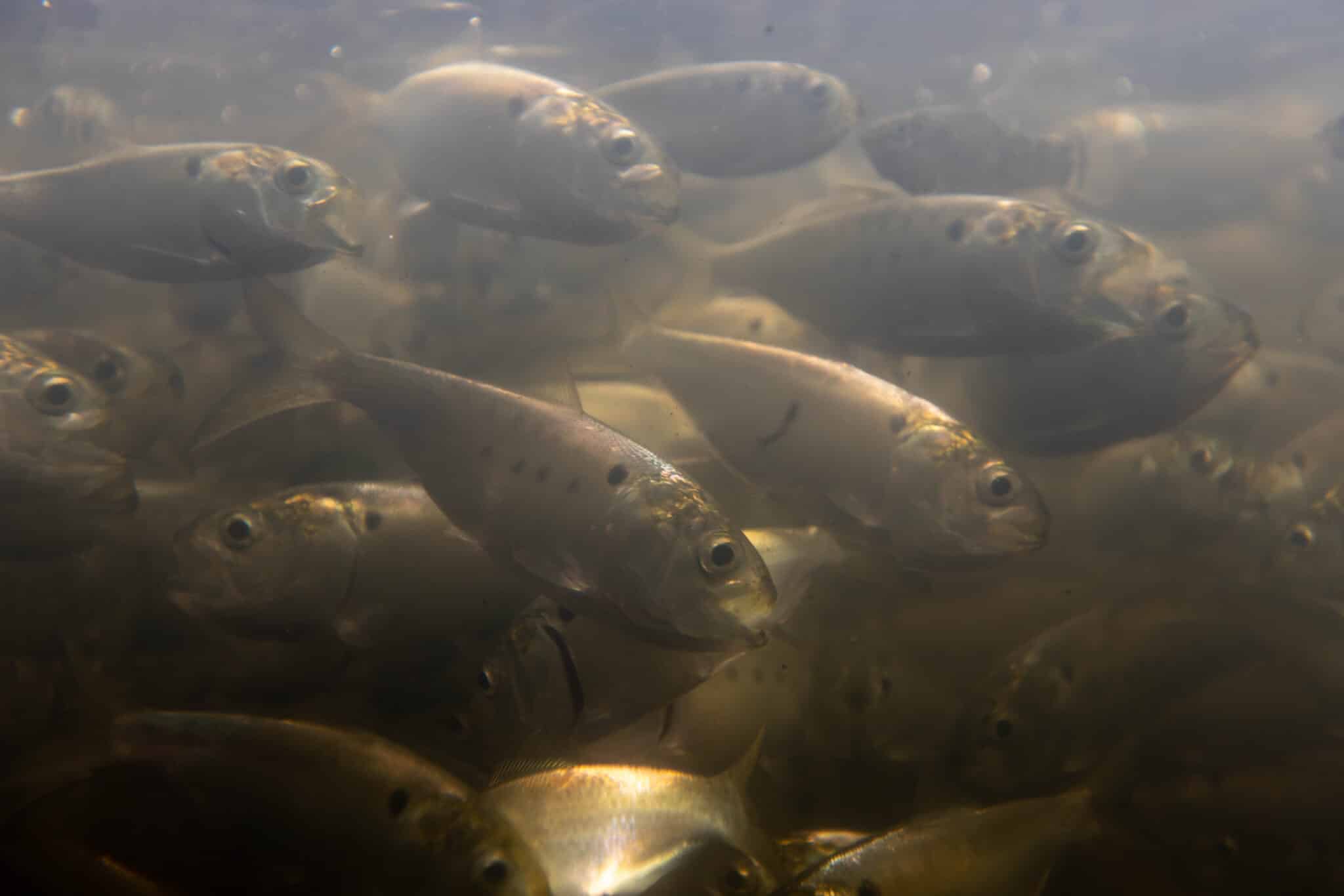
Atlantic menhaden are the foundation of the coastal food web. They are filter feeders which convert microscopic phytoplankton into energy that supports striped bass, bluefish, weakfish, tuna, whales, dolphins, seabirds, and ospreys. Menhaden are rich in oil and contain twice as many calories as other fish. When they become scarce in nearshore waters during the breeding season, the effects ripple throughout the ecosystem.
The menhaden fishery is also the largest industrial fishery by volume on the East Coast. Unlike most commercial fisheries operations, menhaden are not caught for human consumption. Instead, they are processed into fish meal and fish oil, which are used in aquaculture feeds, livestock and pet foods, nutritional supplements, fertilizers, and a variety of industrial products. A significant portion of these products enter global markets. They are also caught and used as bait for many commercial and recreational fishing activities. As other forage fish have declined in abundance, more pressure to harvest menhaden to fill these voids has increased harvest for bait. New Jersey is allocated approximately 44.9 million pounds of Atlantic menhaden in 2026 -or- 11% of the coastwide quota.
While these products have economic value, menhaden also have immense ecological value as one of the most important forage fish in the ocean. They transfer energy from phytoplankton to top-tier predators in the food web, while improving water quality along the coast. Balancing the industrial harvest of menhaden with their essential ecological role is one of the greatest fisheries management challenges today.
How to help ospreys
Many people have asked what they can do to help New Jersey’s ospreys as we continue to document widespread food stress, brood reduction, and nest failures along the East Coast.
While we cannot intervene at individual nests to supplement prey (a supplemental feeding policy will be released soon), we can work together to address the underlying issues through ecosystem and food source management. One urgent concern is the availability of Atlantic menhaden, a critical forage fish for coastal nesting ospreys.
Healthy menhaden populations are essential not only for ospreys, but also for whales, dolphins, striped bass, bluefish, seabirds, and many other predators. As filter feeders, menhaden also filter plankton and organic particles from the water, contributing to the health of our coastal waters and estuaries.
In New Jersey, menhaden have helped fuel the remarkable recovery of ospreys, a symbol of a healthy coast. These species have a long-standing ecological relationship, linking the health of our forage fish to the survival of the predators that depend on them.
Why this matters
Similar concerns about osprey breeding performance and menhaden availability have emerged throughout the Mid-Atlantic, particularly in the Chesapeake Bay.
These observations are not meant to prove that the harvest of menhaden is responsible. However, persistent reproductive failures warrant serious attention to forage fish availability and more adaptive, precautionary management.
A healthy coast is also vital to New Jersey’s economy. In 2025, the state welcomed more than 124 million visitors who spent nearly $52 billion, supporting more than 514,000 jobs. Our beaches, bays, fisheries, and abundant wildlife help draw visitors to the Jersey Shore and sustain coastal communities.
When forage fish become scarce, the impacts can ripple throughout the food web, with consequences for wildlife, recreational fisheries, tourism, and the people whose livelihoods depend on a healthy coast.
Use your voice
The Atlantic States Marine Fisheries Commission (ASMFC) will consider management decisions affecting Atlantic menhaden at its November 2026 Annual Meeting, including the coastwide Total Allowable Catch (TAC) for 2027–2028.
The TAC determines how much menhaden can be harvested coastwide. It is an important opportunity to consider not only the needs of the fishery, but also the forage needs of ospreys and other predators throughout the marine food web.
We urge the ASMFC to adopt a precautionary approach that:
- Accounts for the ecological needs of predators, not just the amount of fish available for harvest.
- Strengthens monitoring of menhaden abundance, distribution, and availability to predators.
- Uses wildlife indicators, including osprey breeding performance, alongside fisheries data to identify potential ecological stress.
- Adapts management as new evidence emerges about localized prey shortages and ecosystem health.
The ASMFC has also considered separate measures under Draft Addendum II to reduce the Chesapeake Bay reduction fishery cap by up to 50% and distribute harvest more evenly throughout the fishing season. Although the public comment period for that proposal closed on October 9, the upcoming coastwide TAC decision is a separate management issue. The Board’s November meeting provides an important opportunity to consider the ecological needs of menhaden predators in setting future harvest limits.
We cannot afford to wait until wildlife populations are in crisis before taking action to protect the food web they depend on. Protecting menhaden is an investment in healthy fisheries, abundant wildlife, resilient coastal ecosystems, and the communities that depend on them.
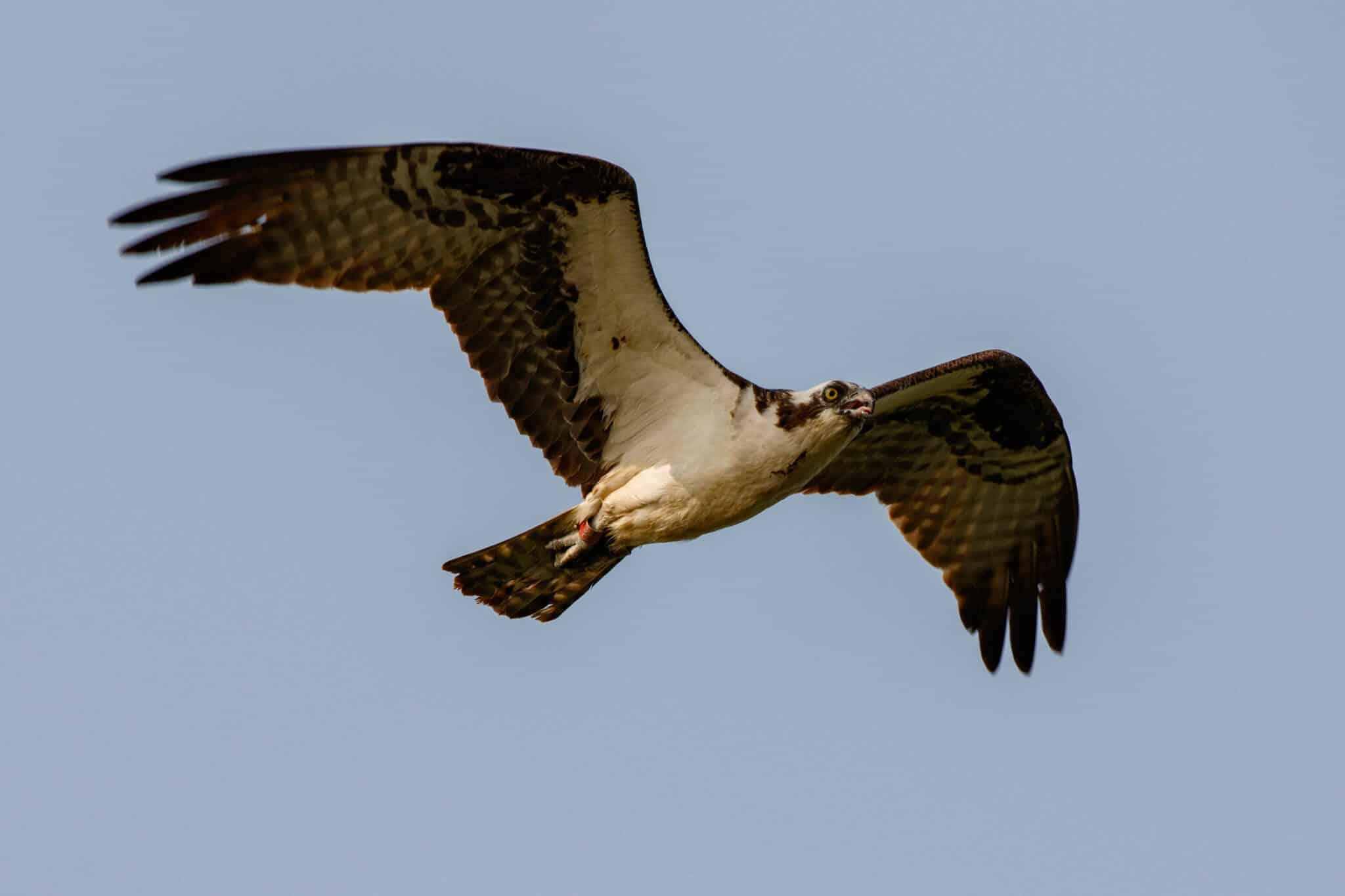
To help engage citizen scientists and for the first time in over 25 years, young ospreys have been marked with an auxiliary band in New Jersey. The new band, which is a red anodized aluminum rivet band bears an alpha-numeric code that allows birders, osprey watchers, and wildlife photographers the ability to identify these individual birds by their bands. The Project Redband initiative is focused on ospreys that nest in the Barnegat Bay watershed from Brick Township to Little Egg Harbor. The main goals of the project are to engage the public in osprey management and conservation along the Jersey Shore. At the same time, while collecting data from re-sightings, we will learn about their dispersal, foraging habits, site fidelity, migration routes, and their life span.
In addition to Project Redband, CWF also engages the public through our Barnegat Light Osprey Cam, which launched in 2019 at a nest in Long Beach Island. This cam, along with our osprey project as a whole, was made possible through the generous support of the Osprey Foundation, the Zoological Society of New Jersey, Atlantic City Electric, and generous individual donors.
Thank you to our project donors and sponsors