Notes from the Field: Marsh American Oystercatcher Edition
Biological Technician
Posted on
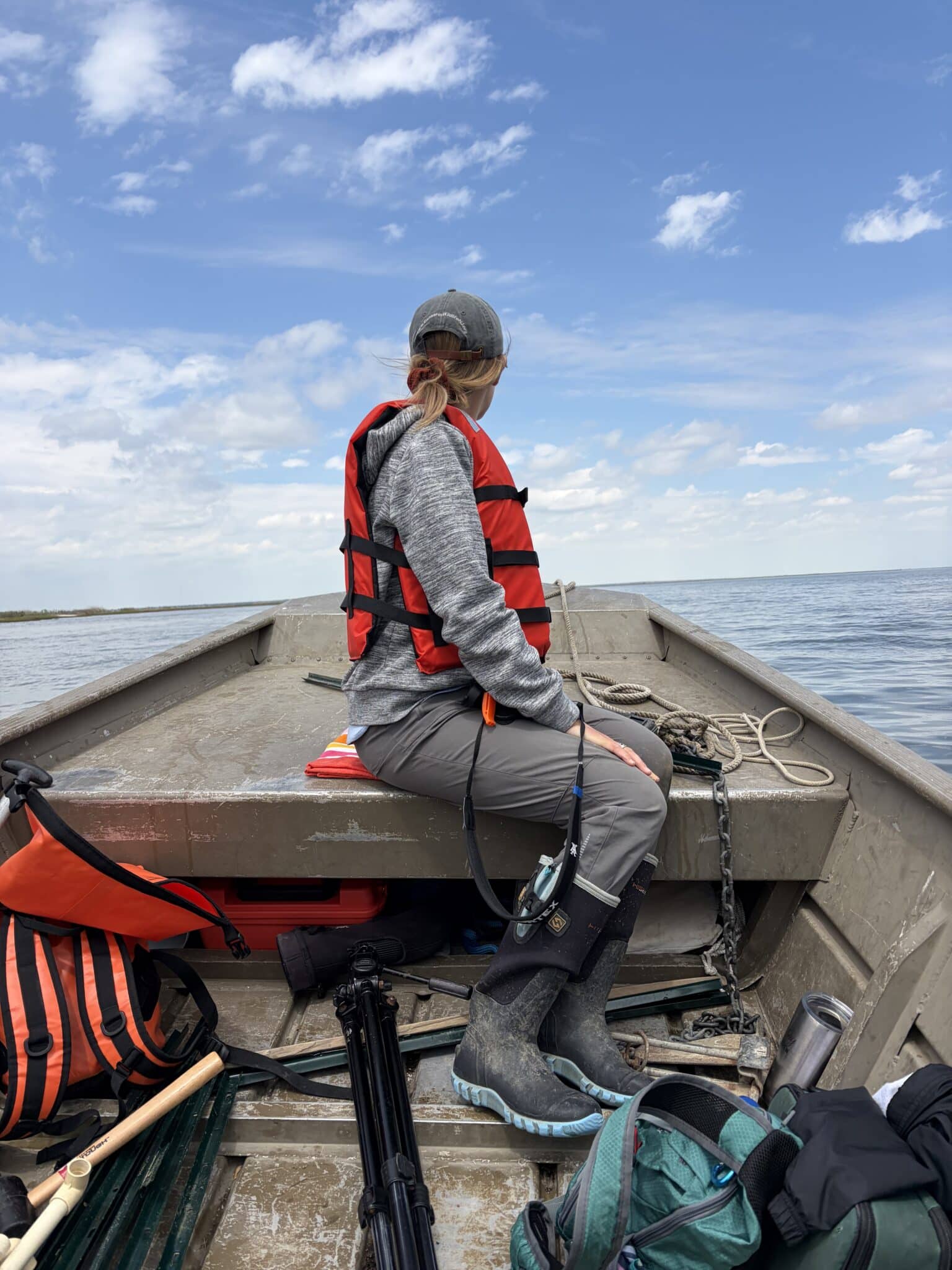
It’s 7 a.m. at Captain Mike’s Marina in Tuckerton, New Jersey and all is calm along the Great Bay Boulevard Wildlife Management Area. Red winged blackbirds and clapper rails are sounding off, while herring gulls drop clams from the sky in the hopes of cracking open their breakfast. After studying a map of the area, I hop into the boat with Conserve Wildlife Foundation (CWF) biologist Emmy Casper – bags packed with trail cameras, quadrats, scopes and measuring tape – and we carefully jet off to our first marsh island of the day. We’re tracking one of New Jersey’s most iconic shorebirds: the American oystercatcher.
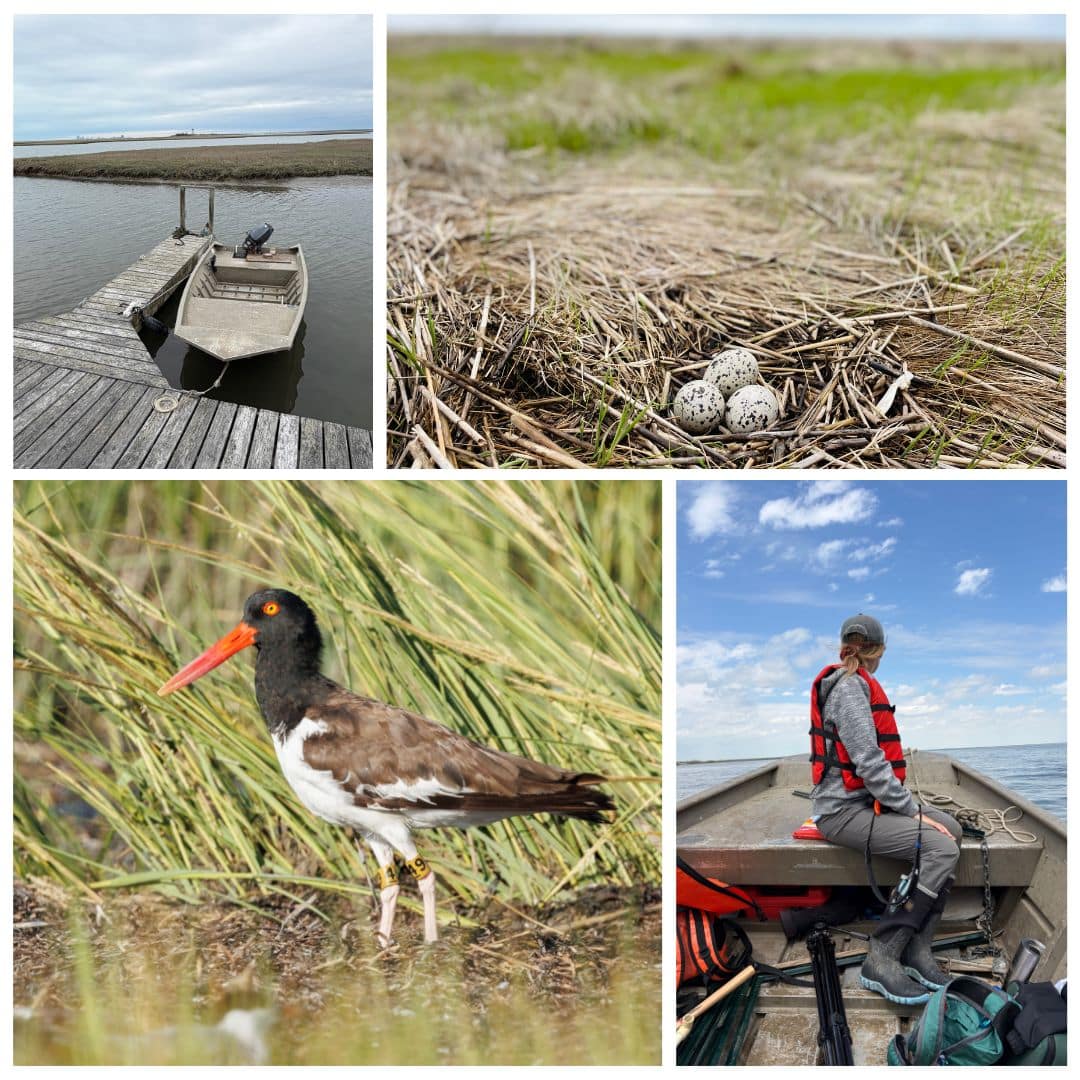
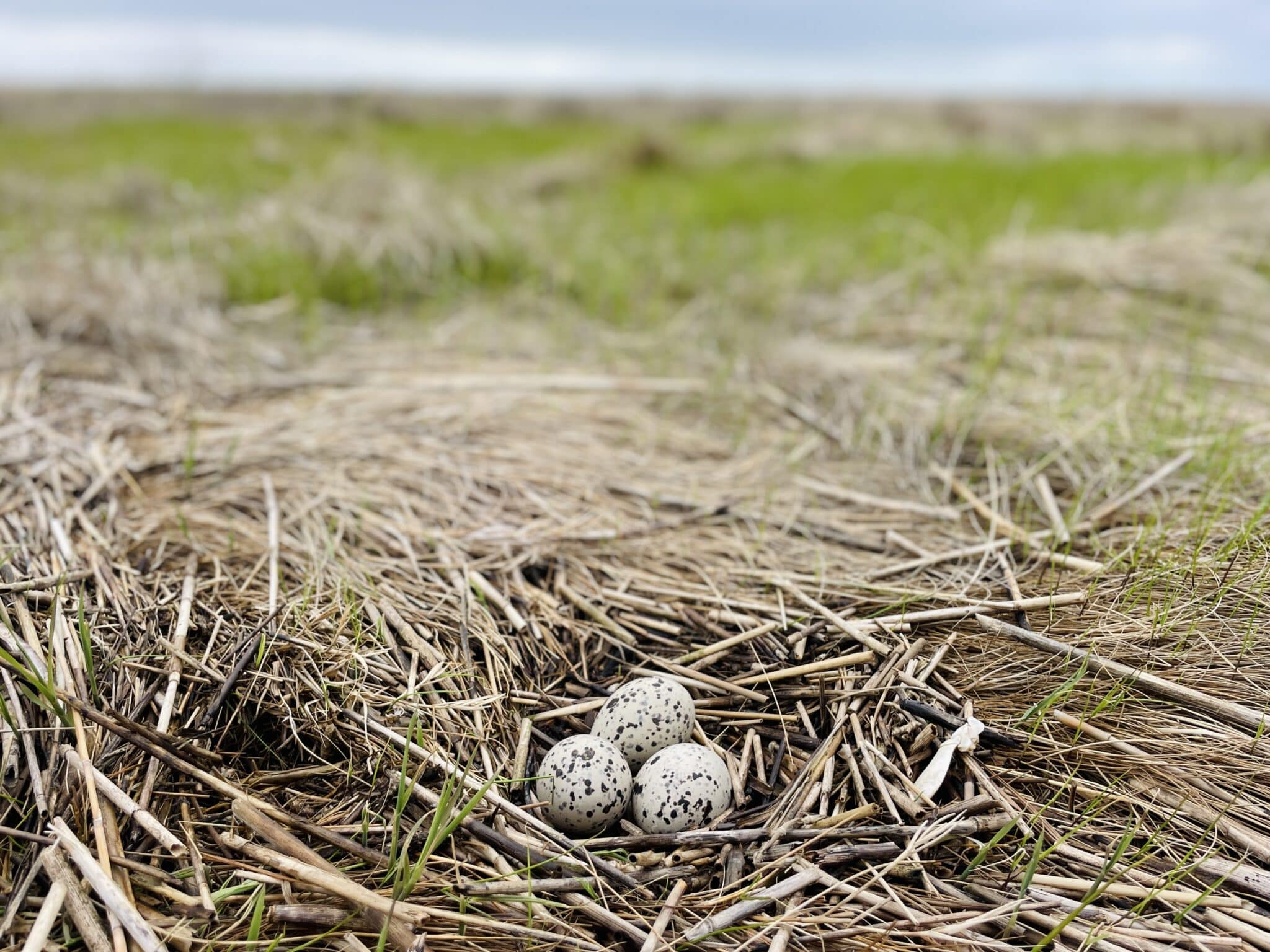
Known for nesting on New Jersey beaches in the summer months, not much is understood about the subpopulation of American oystercatchers (AMOY) utilizing marsh islands to raise their chicks, but Emmy and I are on the case! In my previous work with New Jersey Fish and Wildlife (NJFW) as a shorebird field technician, I had the opportunity to collect data on oystercatchers that nest on beaches. Here’s the catch: beach and marsh habitats are vastly different. On beaches, shorebirds can be tracked by their footprints in the sand, making nests easier to locate. Marshes, however, are densely vegetated with salt meadow hay, smooth cordgrass, and wrack piles, offering far fewer visual clues and making nest detection much more challenging.
As a result, Emmy and I first set out by boat in mid-April on one of Stockton University’s research vessels to assess the presence of breeding oystercatcher pairs on marsh islands adjacent to Great Bay Boulevard. We passed several islands and identified pairs by sight and auditory cues from the birds alone—no tracks involved. Once breeding pairs were recorded with GPS locations, we were able to start returning to these sites multiple times a week. Special thanks to Elizabeth and Nate from Stockton University’s Marine Field Station for providing us with survival suits to fend off the thirty-degree windchill during our initial survey.

Fast forward to present day, and Emmy and I are landing at each nesting site with our small skiff and supplies at the ready. With no way to see AMOY tracks on the marsh, we’re looking and listening for two key indicators that an oystercatcher pair may have a nest:
Vegetation: We know that AMOY typically choose higher ground to lay their eggs to avoid high tide flooding. Luckily, marsh vegetation tells us a lot about elevation! There are two key players here that serve as classic examples of how elevation shapes coastal marsh ecology: Spartina patens (Salt Meadow Hay) and Spartina alterniflora (Smooth Cordgrass). Salt meadow hay is a wiry, meadow-like grass with a ‘cowlick’ appearance that grows at higher elevations farther inland and floods less frequently. Smooth cordgrass, by contrast, is tall and densely packed, occurring along lower-elevation marsh edges that flood daily at high tide. It is also worth mentioning that AMOY sometimes lay eggs on elevated wrack piles that get pushed onto marsh islands during extreme high tides. This can be another indicator of higher ground!
Behavior: When nesting, American oystercatchers become highly territorial, alert, and vocal. Their behavior changes noticeably once they have a nest. Alarm calling is the first telltale sign, characterized by sharp, repeated piping calls when something approaches their established territory. Calls often intensify as a threat gets closer. Next is defensive behavior, noted by adults circling overhead, flying at intruders, or performing distraction displays to draw attention away from the nest. Last, and most definitive, is incubation posture. When sitting on a nest, adults settle low into the nest bowl, often lifting their head frequently to monitor surroundings. Even from a distance, we can often tell whether birds are relaxed, suspicious, or alarmed based on posture, calling frequency, and flight patterns.
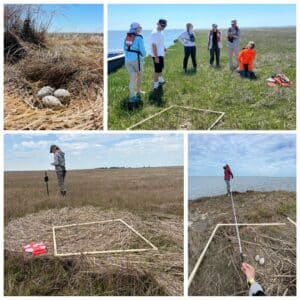
If we suspect that a pair might have a nest, we set out on foot to investigate, paying close attention to vegetation zones and bird behavior. When a nest is located, Emmy and I collect habitat data, photo documentation, GPS coordinates, and a series of measurements to better understand how these birds are utilizing marsh habitat. Using a quadrat, we record vegetation composition surrounding the nest and measure factors such as distance from the marsh edge and nest elevation, both of which may influence flooding risk and nesting success. A trail camera is also strategically deployed to document flooding events, predation, and human disturbance throughout the nesting season. Each nest tells us a little more about how this subpopulation of American oystercatchers is adapting to life on New Jersey marshes and provides valuable insight into how marsh habitat may support future conservation efforts for the species. We look forward to continuing this work throughout the season and will report back mid-season with more findings—stay tuned!
Want to help support the effort? Submit your AMOY sightings to our NJ Oystercatcher Tracker!
This project is a pilot study led by The Wetlands Institute and funded by the Fish and Wildlife Foundation’s Atlantic Flyway Shorebird Initiative.
Discover more from Conserve Wildlife Foundation of NJ
Subscribe to get the latest posts sent to your email.