Photo from the Field: Signs of Food Stress

Posted on
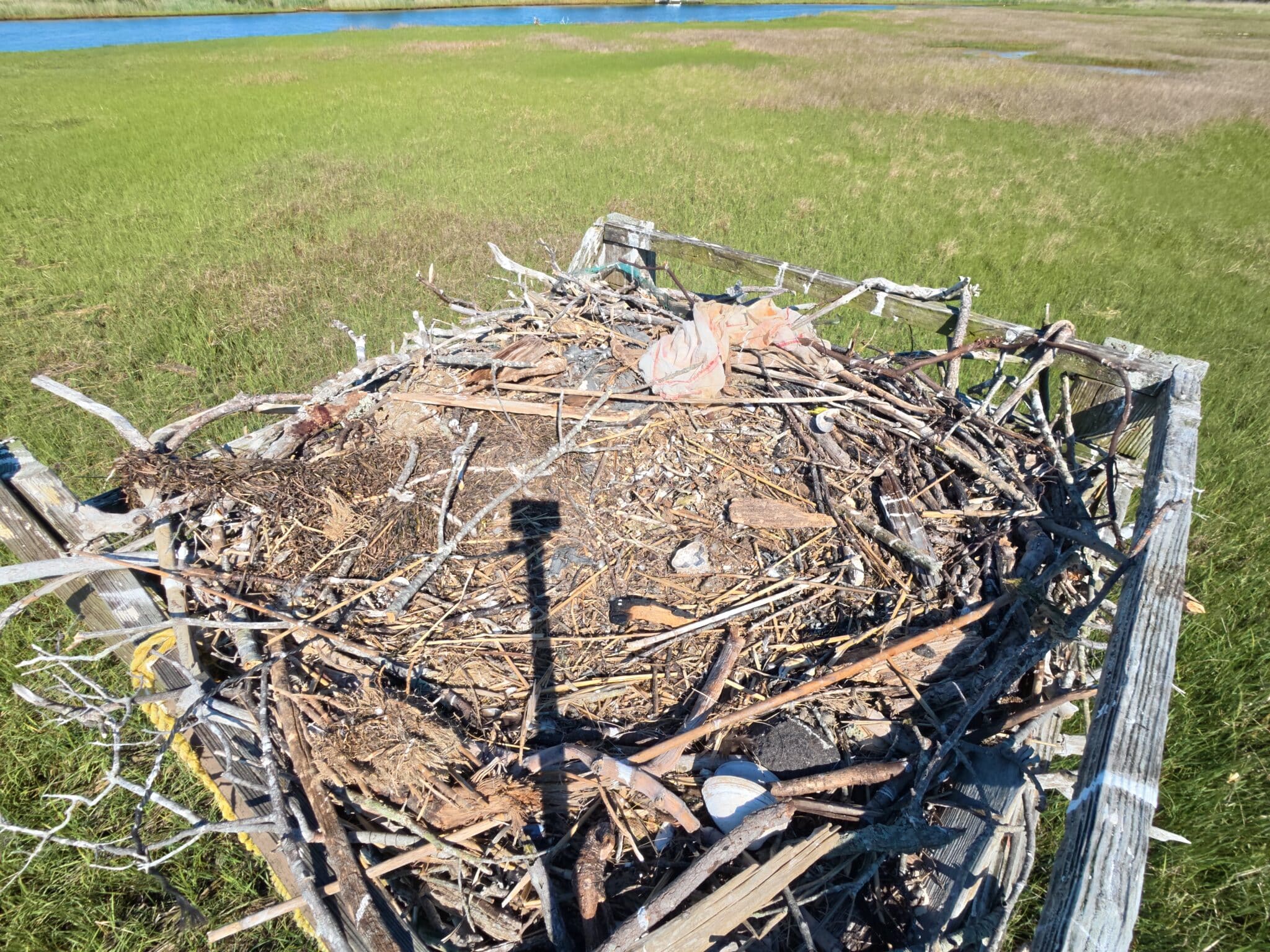
This spring, we have been conducting osprey nest surveys to better understand nesting outcomes across New Jersey’s coast. These surveys are focused on coastal colonies, where signs of food stress have become increasingly evident in recent years due to the scarcity of Atlantic menhaden, the primary prey of nesting ospreys.
During these surveys, dedicated volunteers and staff assess nests to determine whether they are occupied and if they contain eggs, young, or neither. Alarmingly, many occupied nests surveyed this spring contained no eggs or young.
At Sedge Island WMA, a long-recognized bellwether for the health of ospreys on Barnegat Bay, 11 of 22 occupied nests surveyed (50%) contained no eggs or young. This is a strong indicator of food stress occurring early in the breeding season, affecting the ability of females to reach breeding condition and successfully lay eggs. Similar patterns are being observed in several other coastal nesting colonies this year.
These findings highlight why long-term wildlife monitoring is so important. As bioindicators, ospreys can provide valuable insight into the health of coastal ecosystems. The abundant nearshore schools of Atlantic menhaden that helped fuel the osprey’s recovery over the past several decades appear to be less available to nesting birds in some areas. Osprey researchers and observers throughout the Mid-Atlantic are reporting similar concerns, with the Chesapeake Bay currently facing some of the most significant challenges for nesting ospreys.
By monitoring ospreys, we can better understand changes occurring in our coastal ecosystem and help inform future conservation and management efforts.
Discover more from Conserve Wildlife Foundation of NJ
Subscribe to get the latest posts sent to your email.