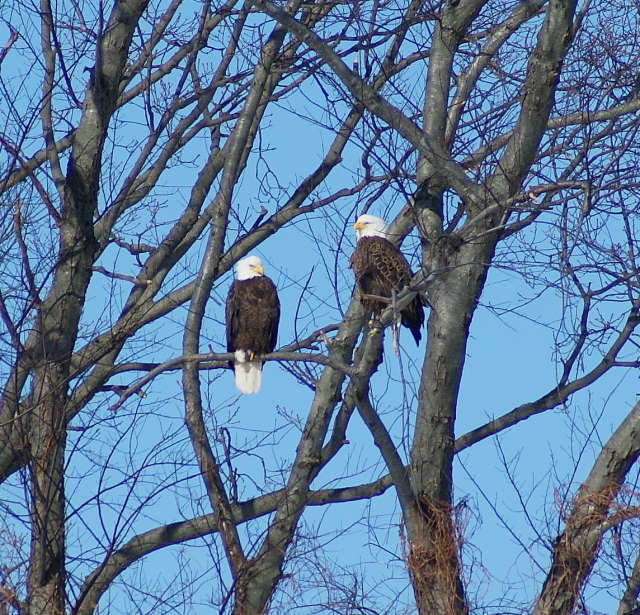
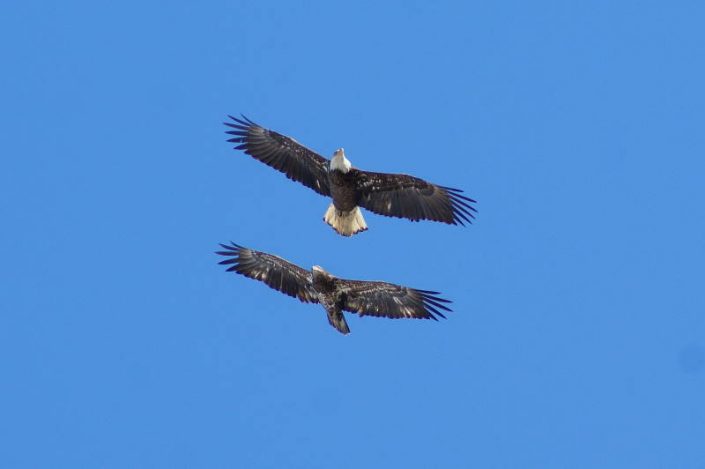
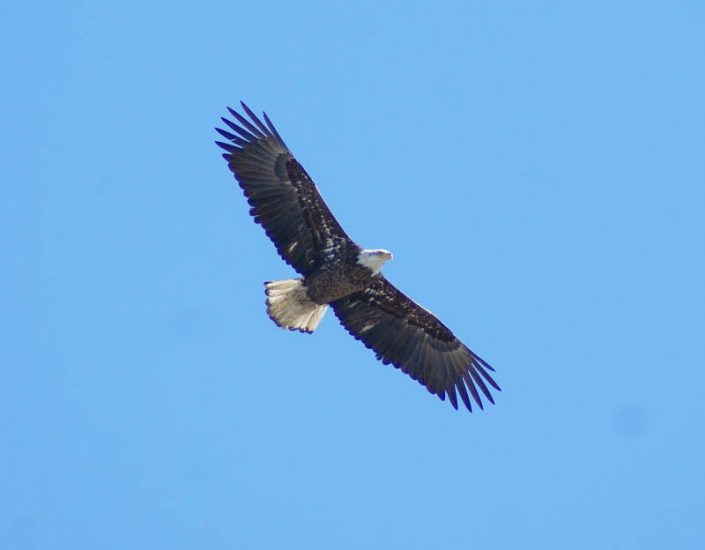
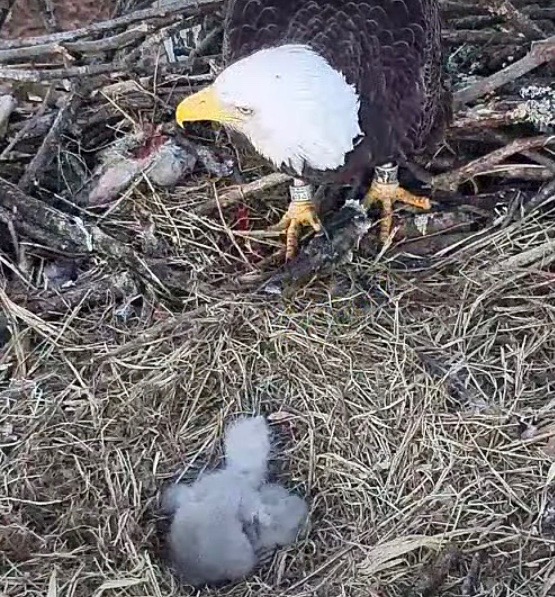
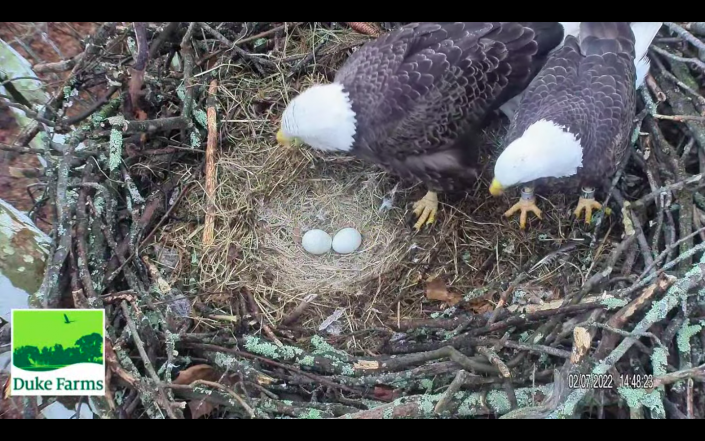
The Duke Farms eagle cam is extremely popular and just this week viewers watched as two chicks hatched. These two chicks will be watched by a multitude of viewers over the next few months as they grow to become juveniles and leave the nest. As with anything in Nature, this pair has had it’s ups and downs. I wanted to summarize the history of this pair and nest. The male is a NJ banded bird (A/59) and has been in the pair from the beginning, he is 23 years old. Interestingly, there have been several females in the pair over the years. Thank you to Duke Farms for hosting the cam and their tech team that keeps it running smoothly when issues arise. The cam location has changed as well as the cam itself over the years and the quality of the picture has improved.
photo by NJ Eagle Project Nest Monitor, Paul Lenzo
Conserve Wildlife Foundation of New Jersey and the New Jersey Department of Environmental Protection’s Fish and Wildlife have released the 2022 New Jersey Bald Eagle Project Report. The 2022 eagle nesting season was a record year for New Jersey’s nesting eagle population with 250 active nests identified.
The 250 active nests (meaning the nests produced eggs) represent an increase of 28 active nests since 2021. Of those nests, 83 percent were successful and collectively produced 335 offspring. The productivity rate for nests with known outcomes was 1.42 young per nest, which is above the range required to maintain healthy population numbers. The 2022 NJ Bald Eagle Report includes details on the nesting season, resightings and recoveries.
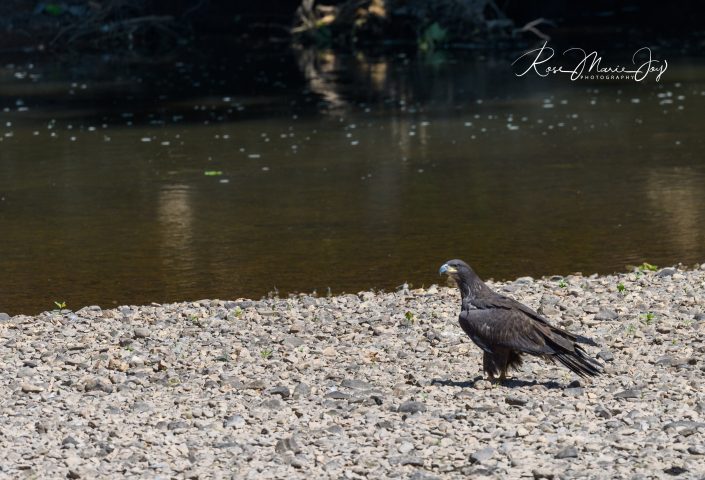
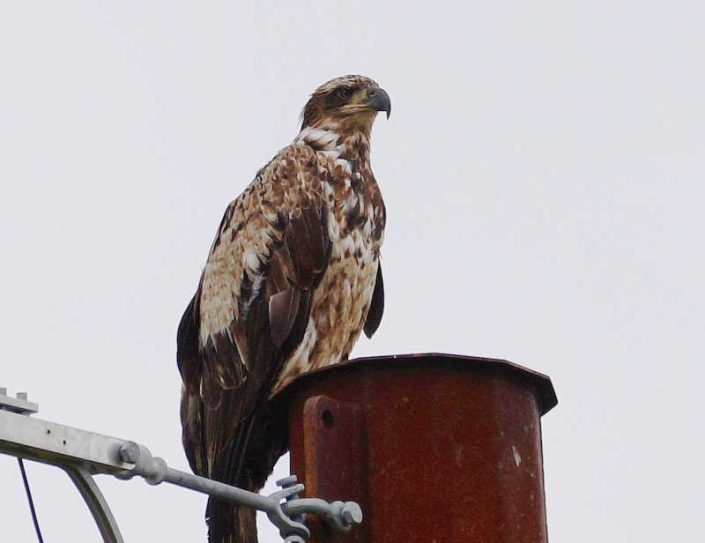
One of the three fledges from the 2022 Manville nest: photo by NJ Nest Monitor, Rose Joy
These numbers could not have been achieved or documented without the dedicated efforts of the 150 New Jersey Eagle Project volunteers who conduct the majority of the nest-observation work vital to tracking the population and nest distribution of our state’s Bald eagles in all 21 counties. CWF is honored to manage these volunteers in partnership with the Endangered and Nongame Species Program and thanks them for their invaluable service.
CWF would also like to thank our partners, who make our bald eagle conservation work possible, including PSE&G, Wells Fargo Advisors, Wakefern Food Corp./ShopRite Stores, Mercer County Parks, Wildlife Center Friends, the American Eagle Foundation, and the Zoological Society of New Jersey.
New Jersey Eagle Project nest monitors Cathy and Jeff White have been volunteering with the program since 2009. The 2022 eagle nesting season was officially their last as they will be “retiring.” When they started with the bald eagle project, they had two eagle nests that they monitored in Southern New Jersey. As of 2022 they were monitoring 25 eagle nests. That is a lot of nests to keep straight! During their 14 years of observing nesting behavior to determine egg laying, hatching, and fledging, a total of 244 eagle chicks fledged from their nests. The Whites have witnessed the eagle population grow over the years and have played a large role in the success of the eagles, including many rescues of both chicks and adults. Their dedication to the eagles through both the good and bad outcomes, is commendable and they are irreplaceable.
They have done so much for the eagle project and will be greatly missed. Thank you!
Photos taken by the Whites throughout their years of monitoring eagle nests.
As I write this there are two fluffy little chicks in the Duke Farms nest. They will have an audience of millions of eagle cam viewers watching them as they grow and fledge. As the adult eagles step around the nest, look closely and you will notice that one of them is banded. The male is A/59 and he is twenty-two years old. Twenty-two years ago I began my career with the Conserve Wildlife Foundation working with the New Jersey Eagle Project. In March 2000, A/59 hatched in a nest located in Greenwich, Cumberland County. When he was two weeks of age, he was fostered into a nest along the Rancocas River in Burlington County. The Rancocas pair had failed to produce their own young for a few years and fostering a healthy chick into the nest would help to keep the pairs fidelity to the nest site.
On May 15, 2000, he was banded and a radio transmitter was attached with a harness which was designed to eventually fall off. A/59 fledged on June 3 and was tracked until the transmitter’s signal was last recorded on October 22. You can read more details about the telemetry in the 2000 Bald Eagle Report.
February 7, 2022
In 2000, when he hatched and I started working with eagles there were 25 nesting pairs of eagles that fledged 29 young. Compare that to last year’s numbers of 247 pairs we monitored and 296 young fledged. As the number of eagles increases in New Jersey so does the competition for nest sites. A/59 has been able to defend and hold onto his territory at Duke Farms since 2009.
It’s very interesting to know the history of this eagle. I feel a bond with him since we both started our “eagle” journey at the same time.
E/63 along Hackensack Jan. 28, 2022 photo by Lisa Katz
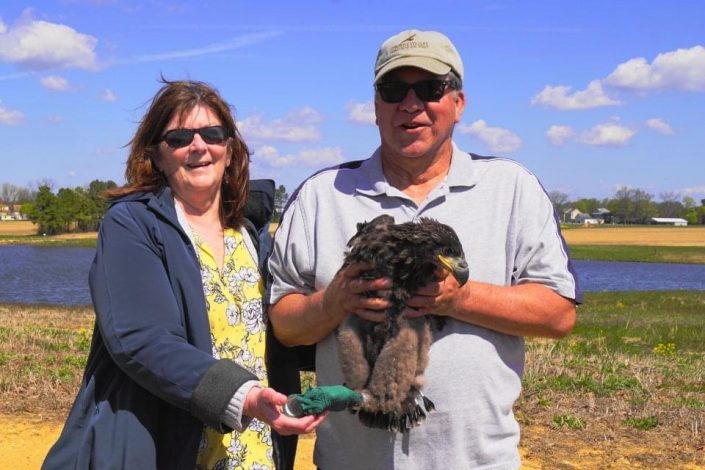
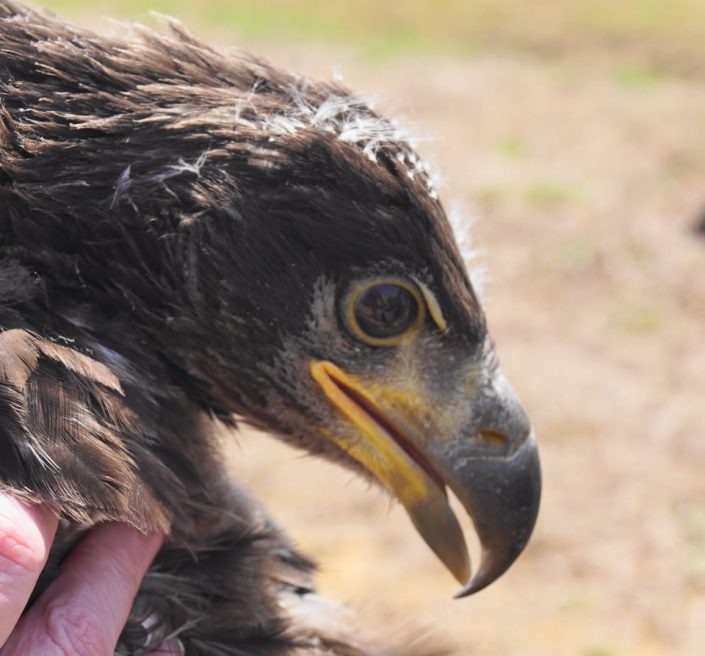
Each year biologists with NJ Fish & Wildlife’s Endangered and Nongame Species Program & CWF venture out to eagle nests to band the chicks, take blood samples and measurements. The chicks are banded with a green NJ band that has a specific code and a silver federal band. At the time of banding the chicks are approximately six weeks old and have a few weeks left in the nest before they fledge. In 2018, we started to publish the re-sightings in the Annual Eagle Report. In 2022, we have already received quite a few re-sightings. E/63 is one of those eagles.
The 2021 nesting season was another successful one for New Jersey’s bald eagles, with the statewide population remaining stable at 247 nest sites. Of these nests, 222 were active (with eggs) with 296 young produced. Twenty-seven new eagle pairs were found.
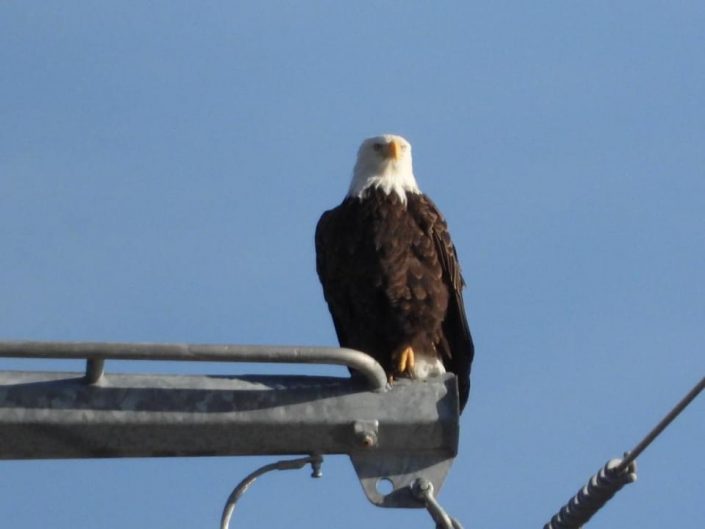
Three Bridges adult perched on tower December 5th 2021 by Lisa Romero
We are happy to announce that the Three Bridges Eagle Cam will go live on December 15th. This fall, the nesting platform atop the transmission tower received some improvements from PSE&G. The perches were moved for a better camera view and replaced with wood to provide better perches for the adults and a second wooden perch was added along one of the sides. A foam baffle was added to the microphone to help buffer wind noise. These improvements will make the platform better for the eagles as well as enhance the viewing experience.
The 2021 New Jersey eagle nesting season was another good year for NJ’s eagle population. The final numbers and details will be available in the 2021 Annual Bald Eagle report published in December. There are over 100 eagle project volunteers who monitor eagle nests/s during the season. They are an extremely dedicated group who not only monitor eagle nests but help to protect the nests. Volunteers become familiar with their pairs and get to witness all kinds of eagle (and other wildlife) activity. I asked the volunteers to send me their one favorite photo from this season.
“Jersey Girl” is a NJ banded eagle (B/64). She was reported to us in 2014 by Linda Oughton, who has been keeping track of her and her mate since 2010. They nest is in Montgomery County, Pennsylvania. B/64 was banded in 2004 at a nest in Cumberland County NJ, located along the Cohansey River. ‘Jersey Girl” is seventeen years old.
The Associated Press released a video story exploring how the rise in popularity of live streaming bald eagle nest cameras has revealed the diversity of personalities and behaviors of the U.S. national symbol.
Conserve Wildlife Foundation executive director David Wheeler and New Jersey Eagle Project volunteer Kevin Buynie are featured.