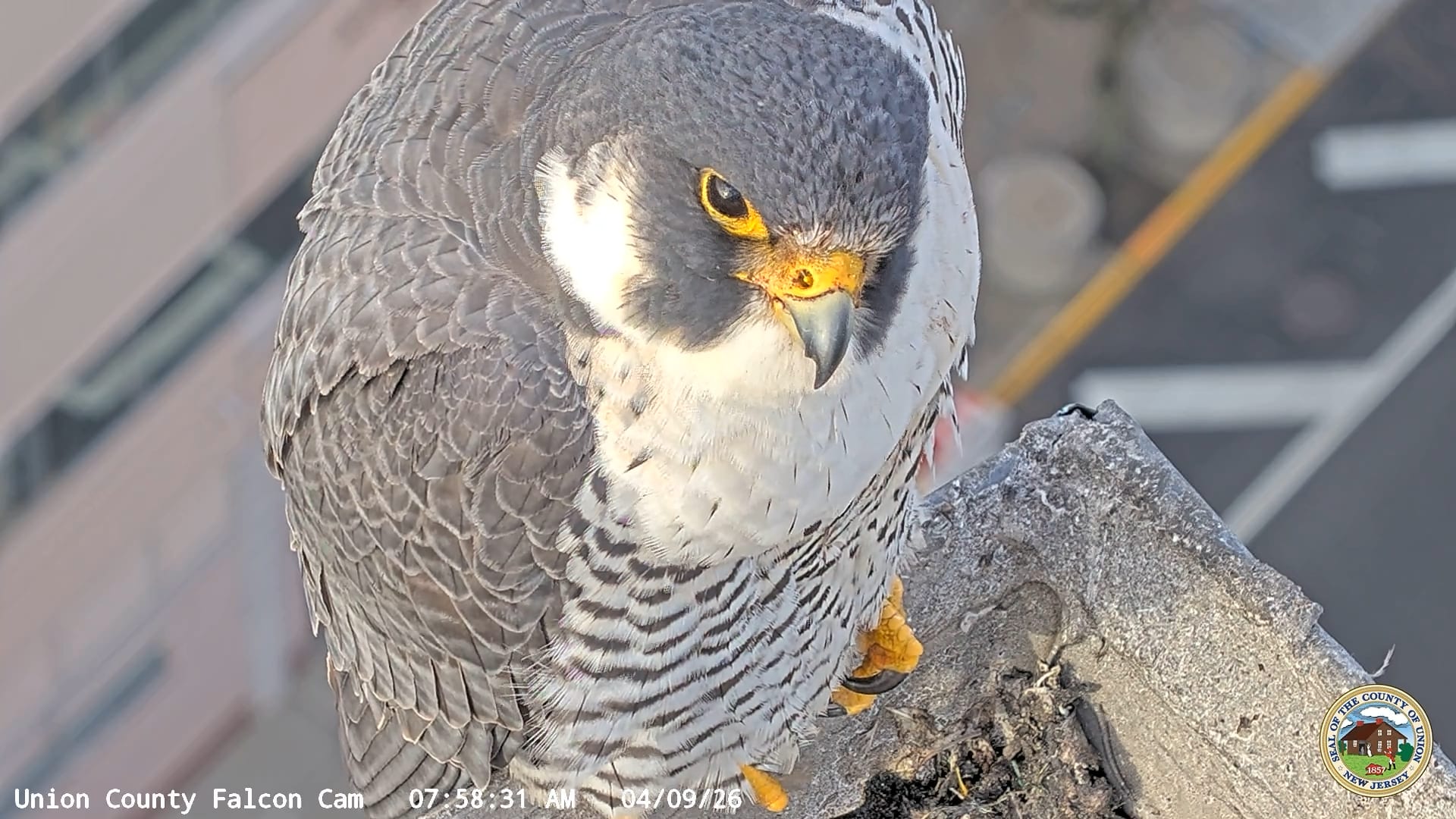
Each spring, wildlife enthusiasts across New Jersey — and beyond — tune in to watch one of the state’s most exciting conservation success stories unfold in real time: the Union County Falcon Cam. This season, viewers witnessed an unusual change when the nesting female was replaced mid-season. What makes this especially remarkable is that the new female is now incubating the five eggs laid by the previous female.
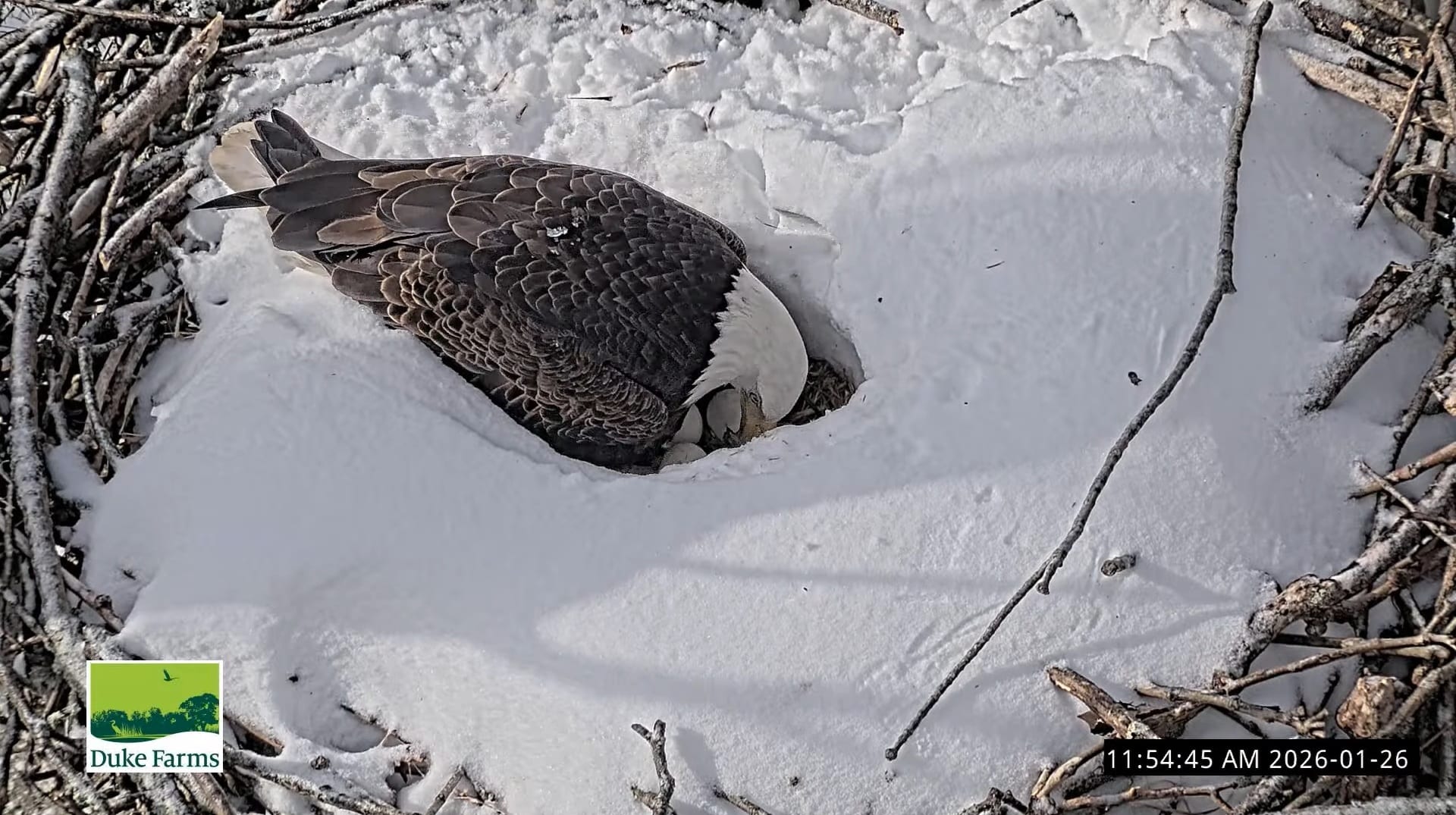
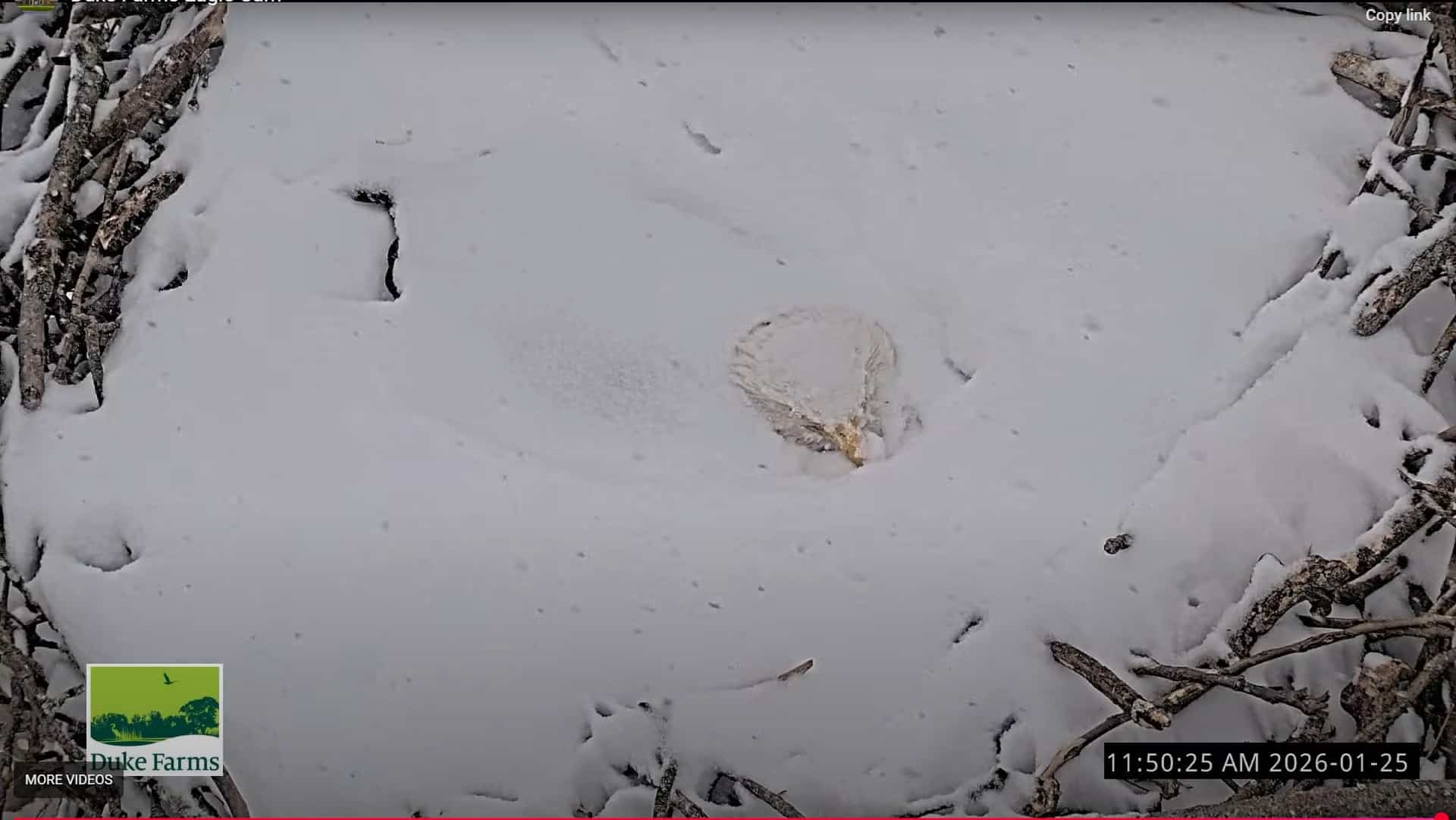
Duke Farms eagle incubates their three egg clutch, despite the snow surrounding the egg bowl 1_26_26
The Duke Farms eagle pair are the stars of their own reality show. The pair has a huge following who tune in each season to watch with anticipation as the pair lays eggs and wait for hatching and fledging. This cam views a pair of eagles on Duke Farms property in Hillsborough, New Jersey. Duke Farms has hosted the cam since 2008. Over the years there has been drama and heartbreak at the nest, but despite this viewers tune in to watch the pair every year. To learn about the history of the cam please see the Conserve Wildlife Foundations Duke Farms webpage and scroll down to Duke Farms Eagle Cam FAQ’s
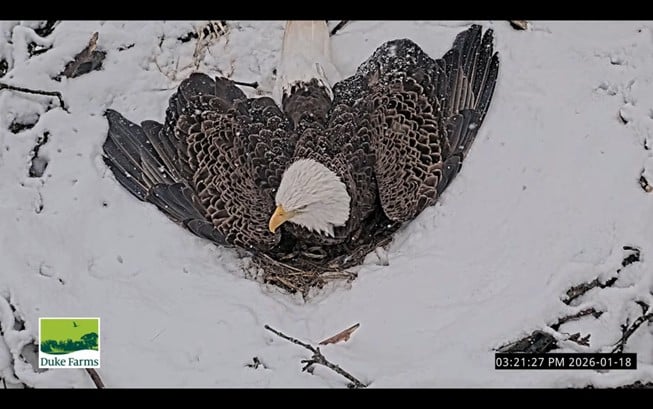
This year the female laid the first egg on January 12th, the earliest for the Duke Farms pair and one of the earliest eagle pairs in NJ in 2026 to begin incubation. The second egg was laid on January 15th and a third egg was laid in the snow on January 18th.
The female laid her third egg during a snowstorm 1-18-2026
Eagle cam viewers watched in amazement as the pair incubated during the recent snow and ice storm.
Nest monitor, Diane Cook, writes informative and interesting updates on the Duke Farms pair. Some of the updates include, “Eggs and Cold Winter Weather” and “How to tell the male and female apart”. When on the CWF Duke Farms cam scroll down to the 2026 Nest Updates
Eagles incubate the eggs for 35-40 days and the eggs hatch in the order in which they were laid. Cam viewers can start to watch for hatching around February 16th.
When will the first egg hatch contest
Conserve Wildlife Foundation is holding a contest to guess when the first egg will hatch. The person who guesses the closest date and time to when the chick is fully out of the egg shell will win a CWF hat and eagle sticker.
Please email Larissa.Smith@conservewildlifenj.org with your guess of date and time am or pm.
All entries must be submitted by February 13th at 12pm
Thank you to Duke Farms and all the eagle cam viewers.
Highly pathogenic avian influenza (HPAI) is circulating once again this winter and has already been confirmed in New Jersey in Canada geese, Snow geese, and Bald eagles. This virus primarily affects birds and can spread quickly among species that congregate in large numbers or come into close contact with one another.
Waterfowl and raptors — especially scavengers like bald eagles — are particularly vulnerable. Eagles are often exposed when feeding on infected waterfowl or carcasses, which increases the risk of illness and mortality. Monitoring and reporting cases is critical for tracking the spread of the disease and protecting both wildlife and domestic animals.
Members of the public are urged to report sick or dead birds, especially waterfowl and raptors.
Sick or dead bald eagles should be reported immediately to the NJDEP at 1-877-WARN-DEP (1-877-927-6337).
Please remember that precautions should always be taken when encountering sick or dead birds, particularly during the winter months. Avoid direct contact whenever possible. If handling is unavoidable, wear a face mask and disposable gloves, and be sure to disinfect boots and equipment afterward.
Staying informed and reporting observations helps wildlife agencies respond effectively and protects New Jersey’s birds during this ongoing outbreak. For more information, visit the NJ Department of Agriculture’s HPAI page.
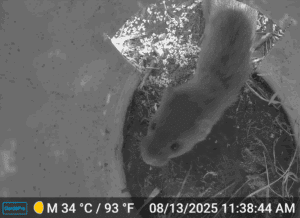
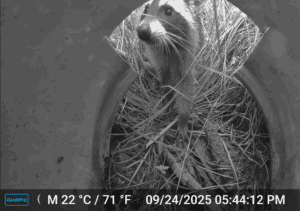
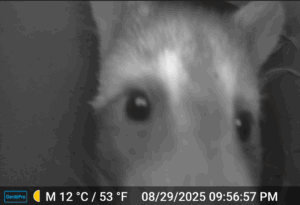
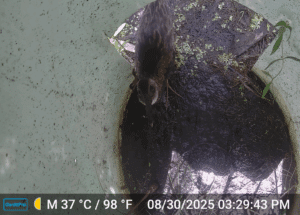
A collection of some of my favorite camera trap photos from the field, capturing candid moments of New Jersey wildlife and offering a glimpse into the species we encounter through our monitoring work.
Enjoy!
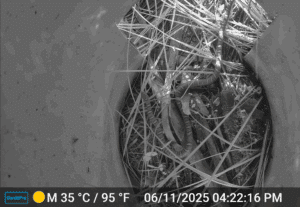
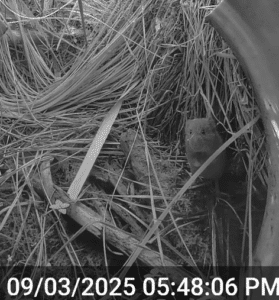
Short-tailed weasel with a moleShort-tailed weaselAmerican minkAmerican minkRaccoonRaccoonVirginia RailEastern milk snakeA meadow vole
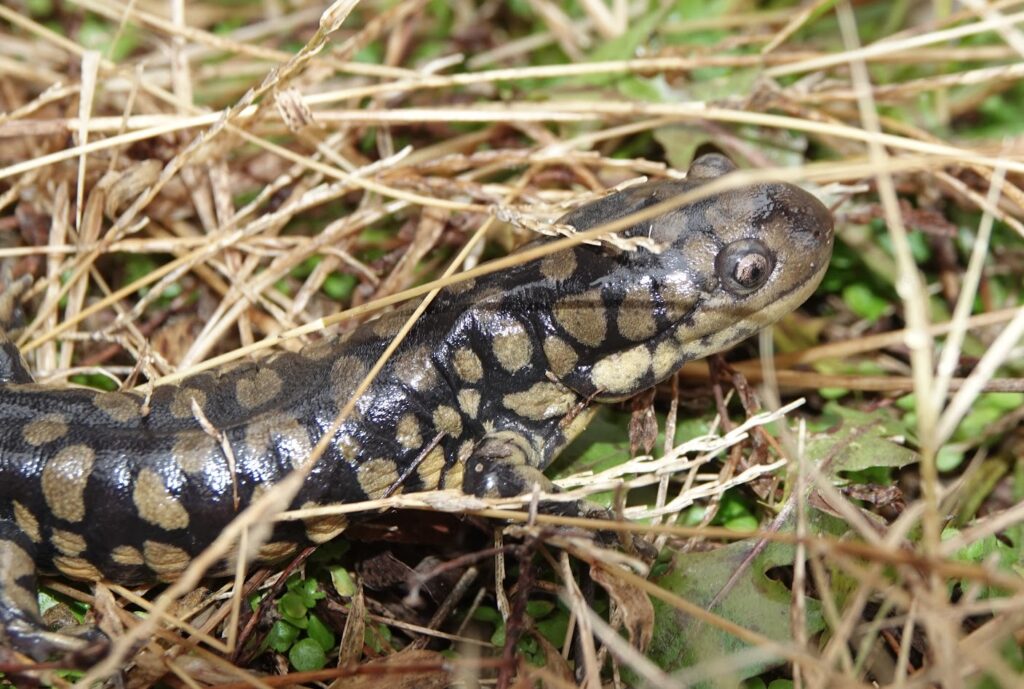
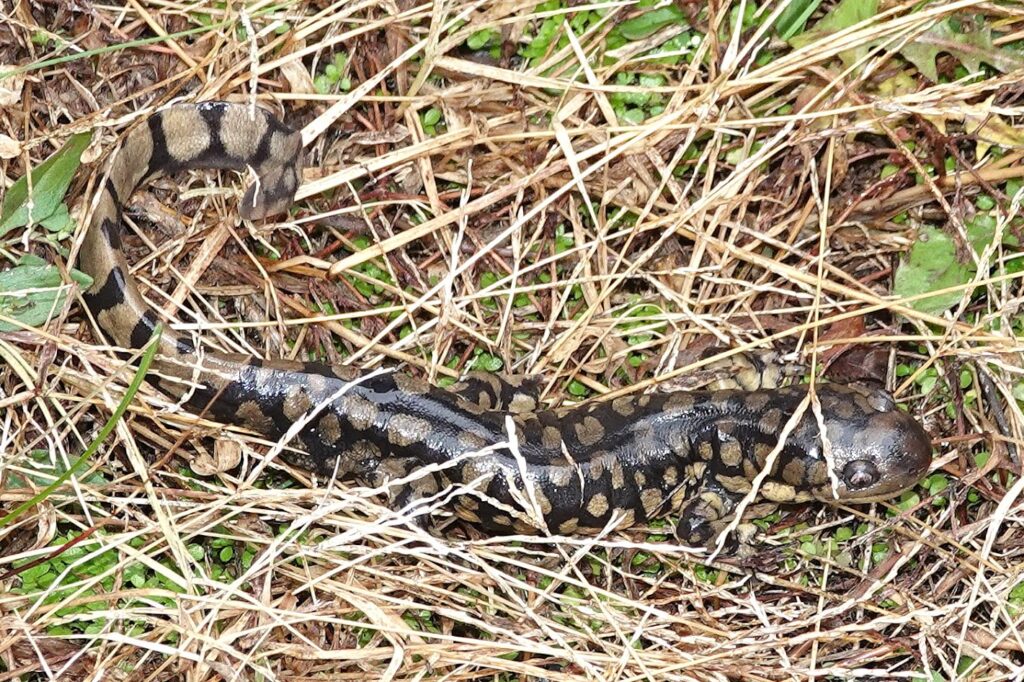
Eastern Tiger Salamander 11/22/25 photo by Tony Klock
This time of year most wildlife is hunkering down for the winter either in New Jersey or migrating to southern destinations until the next breeding season. One New Jersey salamander is just getting started, The Eastern Tiger Salamander(ETS) is the largest salamander species found in New Jersey and a state Endangered species. ETS are found in only a few locations in southern NJ. Conserve Wildlife Foundation works with the NJ Endangered and Nongame Species program to monitor ETS breeding pools and populations. ETS spend most of their adult lives in underground borrows they will emerge to breed on warm wet nights beginning in December through February. The females lay egg masses in vernal pools and then return to their burrows. CWF’s website has detailed information on the ETS lifecycle
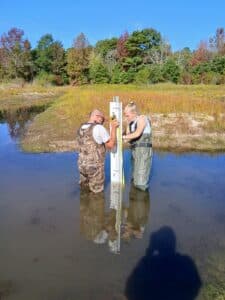
ENSP Senior Zoologist Bill Pitts and Darby Brant install a water gauge at a ETS breeding pool.
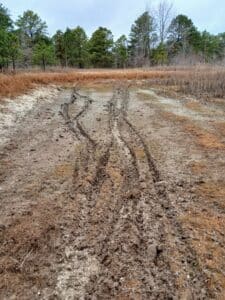
Off road vehicle disturbance to a ETS breeding pool.
These vernal breeding pools are a necessity for the ETS population to survive in New Jersey. In 2025 due to low water levels from a drought, only a few of the deeper breeding pools had enough water for ETS breeding activity. These breeding pools not only face threats from climate change but also from pollution, habitat loss and disturbance from off road vehicles.
It’s important to identify new ETS breeding pools so that they can be monitored and protected. Some exciting new projects are in the future for the ETS project including collecting habitat and water quality data, eDNA study and a VIE (visible implant elastomer) study.
You can help by reporting any Eastern Tiger Salamander Sighting to the NJ Wildlife Tracker
We’re thrilled to see the fourth and final peregrine falcon egg hatch atop the Union County Courthouse in Elizabeth via the Union County Falcon Cam. The nest is now bustling with activity as proud parents Frida and Mango care for their four fluffy eyases.
The first three chicks, now nearly a week old, are growing rapidly—peregrine falcon chicks can double their weight within just six days of hatching. The newest hatchling, only a day old, is already being attentively brooded and fed by the adult. At this early stage, the chicks are covered in soft white down and rely entirely on their parents for warmth and nourishment.
Over the coming weeks, these eyases will continue to grow quickly, developing juvenile feathers and strengthening their muscles in preparation for fledging. Typically, peregrine falcons fledge around 6 to 7 weeks of age, so we can expect these chicks to take their first flights in early to mid-June.
Stay tuned to the Union County Falcon Cam to witness these remarkable developments in real-time. It’s a fascinating glimpse into the life cycle of one of nature’s most formidable aerial predators!
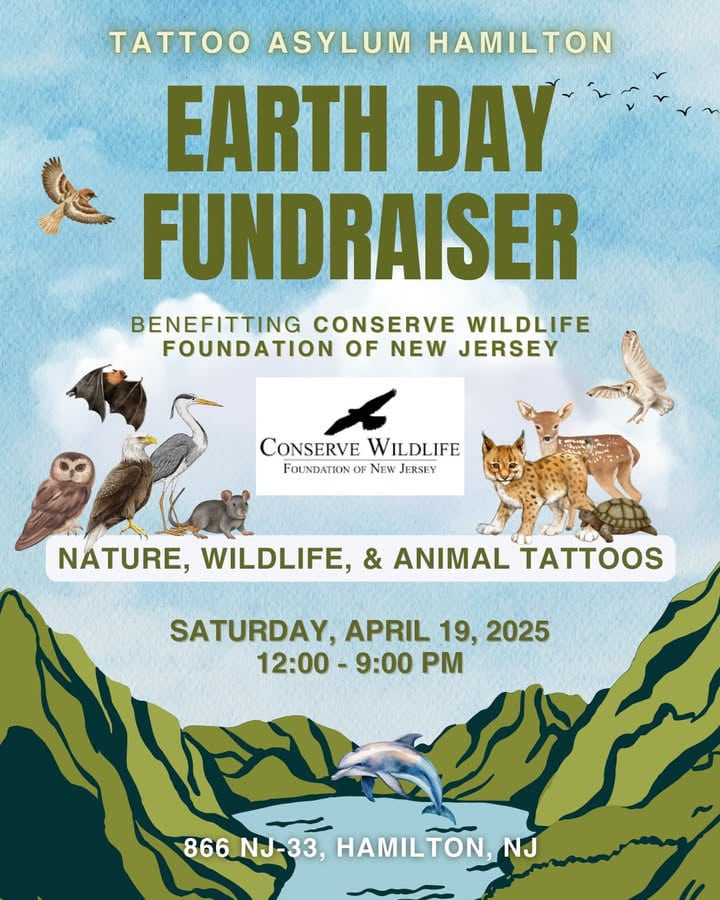
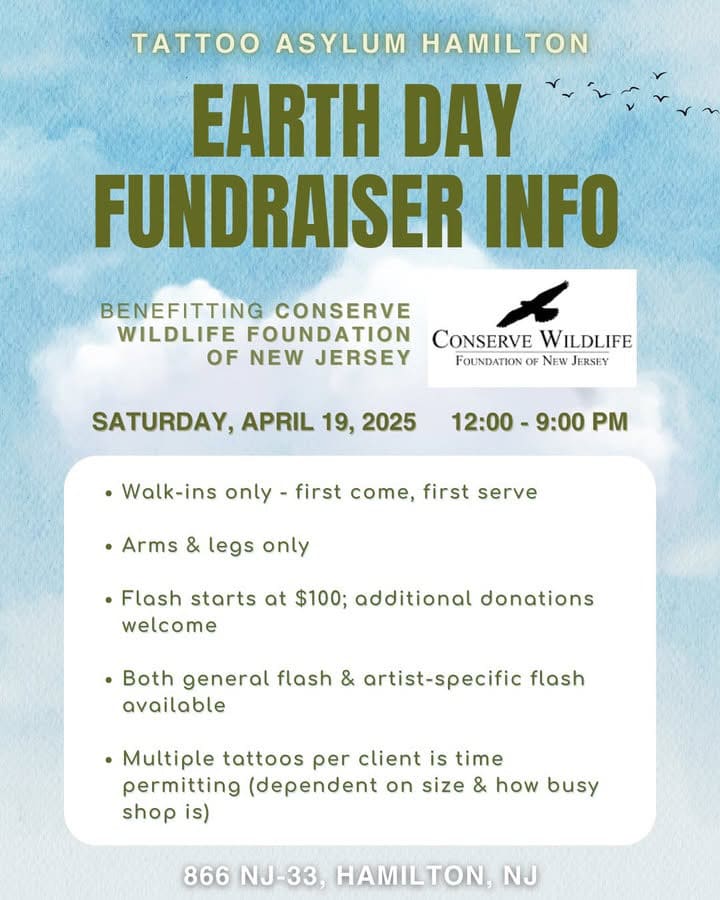
CWF is excited to partner with Tattoo Asylum in Hamilton, NJ on a wildlife themed Earth Day Tattoo Fundraiser event on April 19, 2025. Flash art tattoos will start at $100 with additional donations welcome. Flash art will be shared soon on social media. You can follow Tattoo Asylum-Hamilton on Instagram @tattooasylumhamltn.
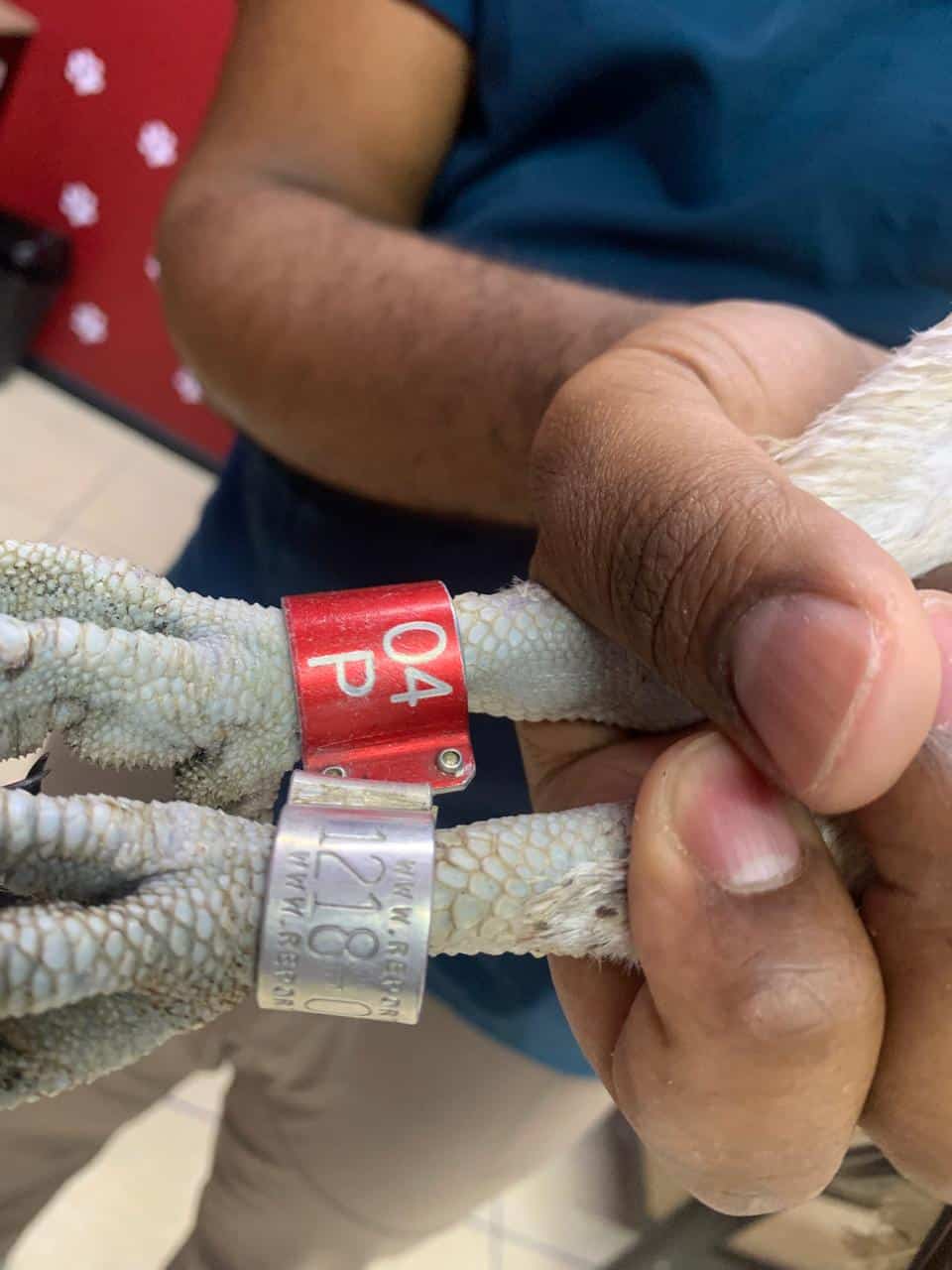
Banding and re-sighting birds is such a rewarding experience. You never know where and when a bird that you banded will show up and what you will learn from that encounter. Banding is a method for biologists to track migratory birds and gain valuable information about them through band re-sightings or encounters. Each year, around 10-20% of young ospreys that are documented during nest surveys in New Jersey are banded with USGS bird bands for future tracking. On Barnegat Bay, through Project RedBand, young ospreys are also banded with red auxiliary, or “field readable” bands. Since 2014, over 600 red bands have been deployed and in recent years we have had more re-sightings of birds that are alive as opposed to those that were found dead. In 2024, we identified 30 ospreys in New Jersey by their red bands.
In late 2024 we closed out our third year of comprehensive monitoring and management of nesting and migratory birds at Horseshoe Island. The recently formed island, situated just outside the southern edge of Little Egg Inlet, has quickly become one of the most important beach nesting bird sites in New Jersey.
Each year has presented new challenges and changes on the island and in 2024 there were a number of “firsts” to report. Piping plovers had previously utilized the island to rest and forage during both the migration and breeding seasons, this was the first year that they nested there. Adding any new nesting site for piping plovers in New Jersey is big news, adding three pairs was even more exciting. Although all three pairs hatched young, no chicks successfully fledged from the island, but we hope to build on that initial success next year.
Horseshoe Island is home to the northernmost royal tern colony in the hemisphere and the colony has grown in size each year. In 2024, CWF joined New Jersey Fish and Wildlife (NJFW) and The Wetlands Institute (TWI) to band royal tern chicks, the first time that royal terns have been banded in the state. With their newly minted blue field readable bands, we are now able to track movements and longevity of “our royals.” Under NJFW’s direction, adult piping plovers were also banded at Horseshoe for the first time this year. Lastly, led by TWI, black skimmer chicks were once again banded on the island.
Royal terns nesting at Horseshoe Island, the northernmost colony in the hemisphere. Photo credit: Emmy Casper
The island grew exponentially this year, it is now at least twice the size it was when monitoring began in 2021. The birds took advantage of the expanded habitat, upwards of 1400 state endangered black skimmers nested there in 2024, easily making it the largest skimmer colony in the state. And nearly 600 skimmer chicks fledged from the site, making it the most successful year to date for skimmers on Horseshoe Island. Large least and common tern colonies were also present. And American oystercatchers have increased from 6 to 16 breeding pairs since 2021; 2024 being the most productive year yet with 24 fledglings being recorded. Nearly every part of the island was in use, even more so if you factor in migratory and staging shorebirds that often crowd the tidal zones on the outer edges of the island and the interior lagoons for foraging.
Aerial view of Horseshoe Island in May 2024, looking east. Photo credit: Sam Galick
Monitoring and management of the island is done as a partnership between CWF, NJFW, and Edwin B. Forsythe National Wildlife Refuge. For more information about the island, read the recently released 2024 report.