Month of the Falcon – Bonus shots
by Ben Wurst, Habitat Program Manager

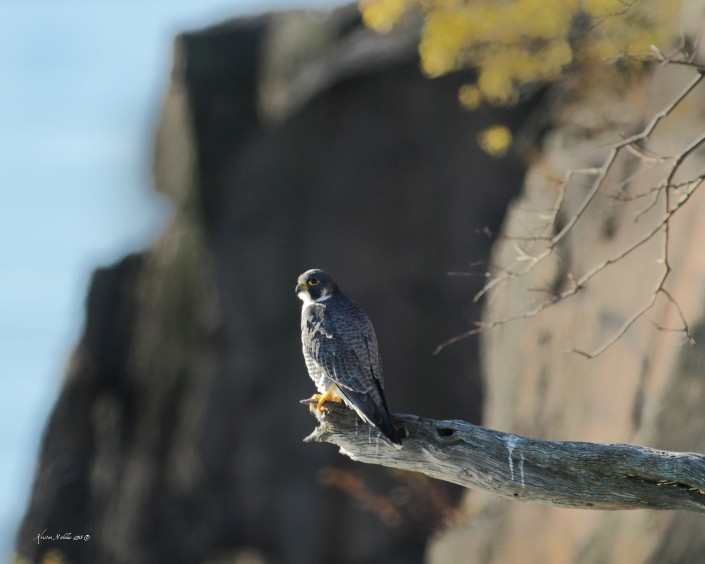
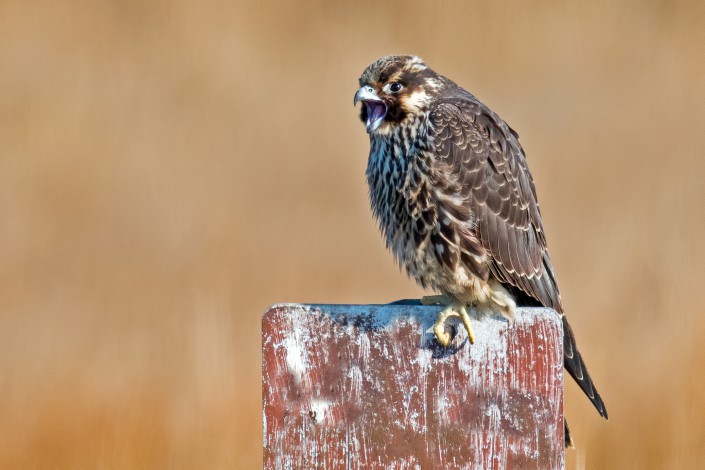
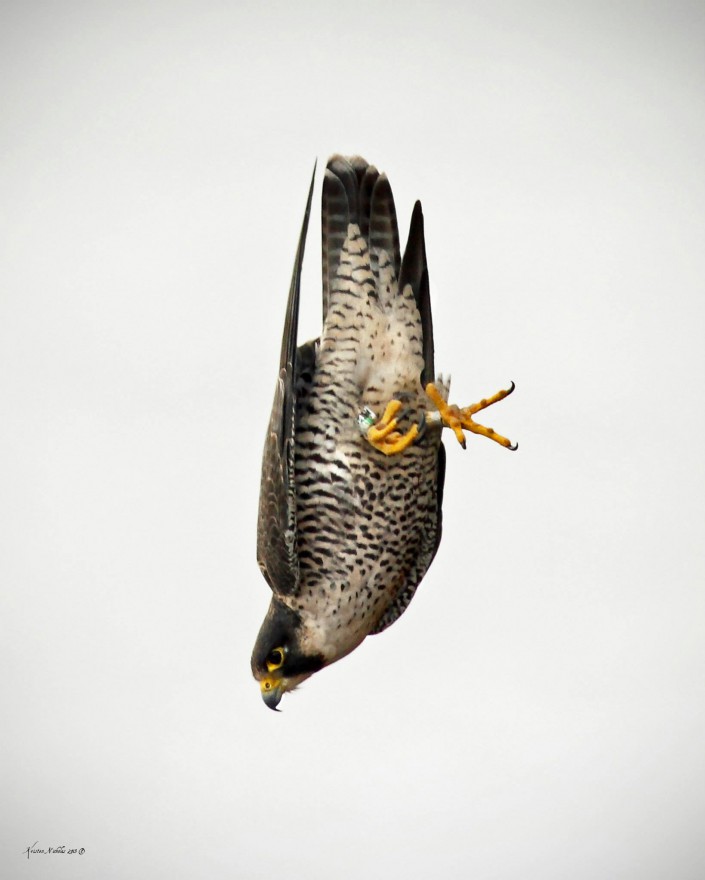
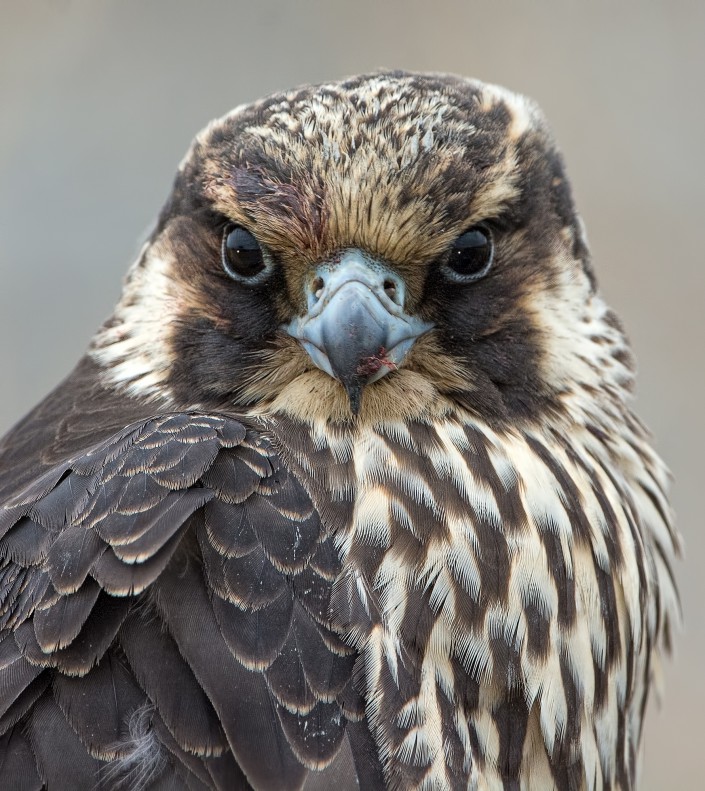
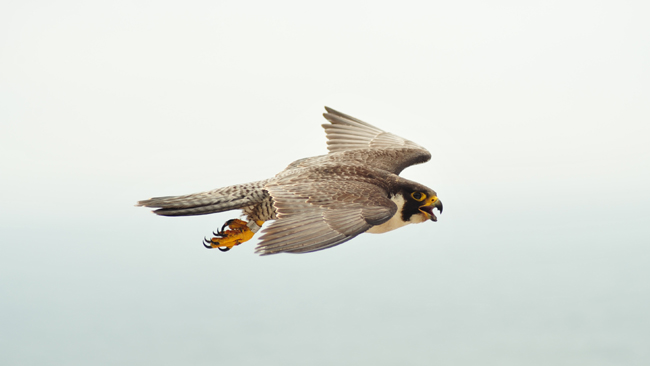
Peregrine falcons are top tier, aerial predators that are capable of reaching speeds faster than any other animal in the world. In a stoop (a rapid dive) to catch prey, they can reach speeds over 200 mph (top recorded speed of 242 mph)! Even military aircraft, like the F-22 Raptor and SR-71 Blackbird, have been designed to mimic the special traits that falcons have to fly faster and be more maneuverable at top speeds.
Both falcons and F-22s are light weight, have extreme maneuverability, fly at high speeds, and have stealth-like flight to avoid detection from prey (or enemies).
Peregrines are also unique because they are only one of two species of birds (do you know the other one?) that are found worldwide and nest on every continent (besides Antarctica).
They mate for life and (Jersey birds) do not make long distance migrations.
Lastly, peregrine falcons are top tier predators and are an indicator species. The health of their population can tell us a lot about the health of our environment, which is one of the most important reasons for protecting them.
They have made a remarkable recovery in New Jersey. Forty years ago these aerial predators were missing from our skies… they were extirpated from all native nesting territories that were east of the Mississippi River by 1964.
After the NJ Endangered Species Conservation Act was passed in 1973, a plan to re-establish them was made. Young birds were “hacked” at artificial nest sites throughout the state from 1975 to 1980.
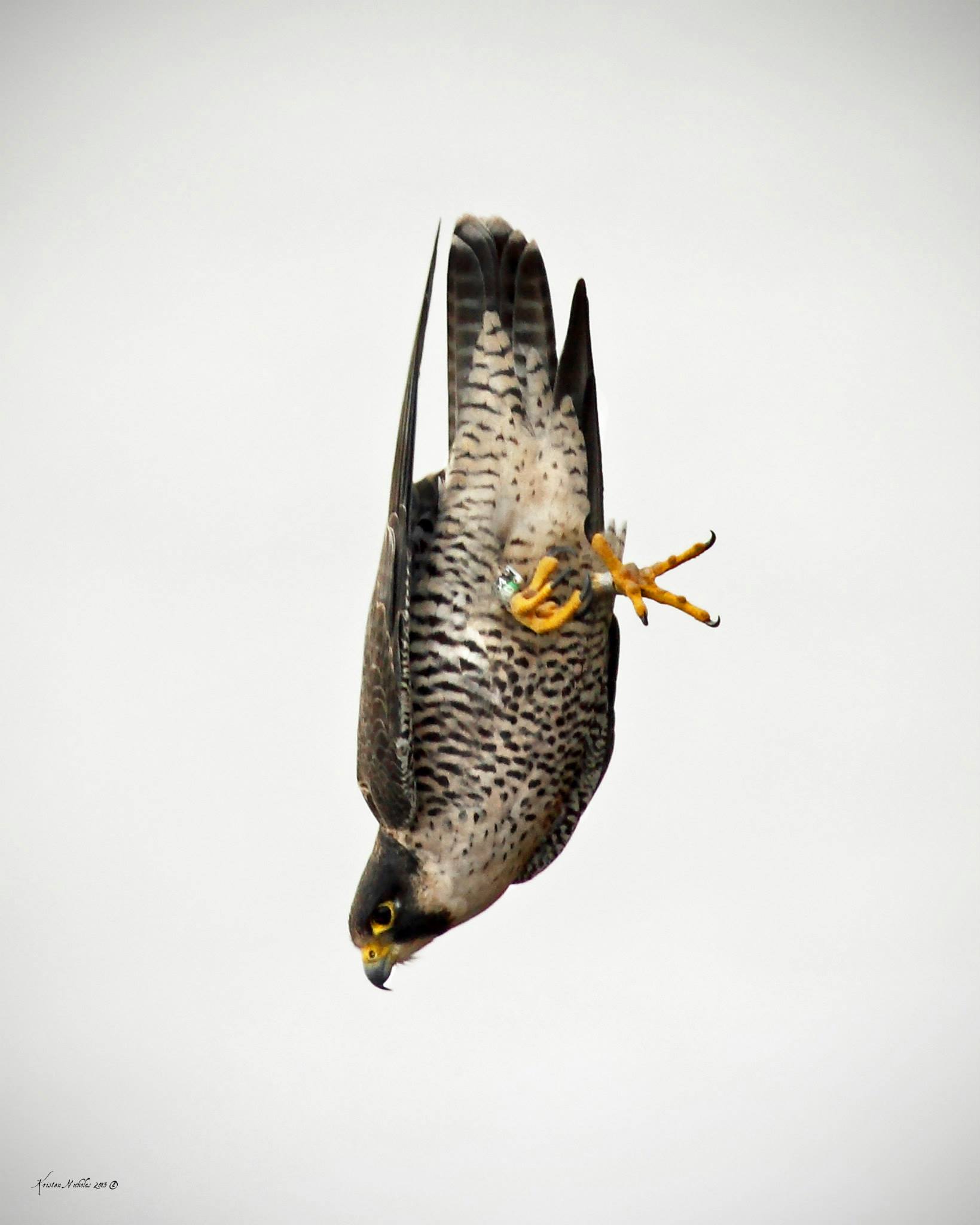
The innovative program was a success! Wild nesting of peregrines first occurred in 1980 at Edwin B. Forsythe National Wildlife Refuge. Since that time the population has steadily increased and in 2003, peregrines nested on the natural cliffs of the New Jersey Palisades.
New Jersey is the most densely populated state, but peregrines don’t mind. Cities and urban areas actually provide suitable habitat for peregrines. Since they’re top tier predators and nest near areas with large numbers of prey, like pigeons, they provide a service by controlling their population.
Urban areas have two components necessary for peregrines: abundance of prey and ledges to nest on. One city is Jersey City. Since 2000 peregrines have nested on the roof of 101 Hudson St. The Jersey City nesting pair has been very productive over the years.
Their annual life cycle has been streamed online for the public to view and learn about their natural history. With your support we can keep the Falcon Cam streaming in homes, offices and classrooms to educate viewers about endangered species conservation in New Jersey. Donate to the project and be entered into a drawing to attend the banding of young falcons in 2014!
Stay tuned for Part II next week to learn about the recovery of peregrine falcons in New Jersey.
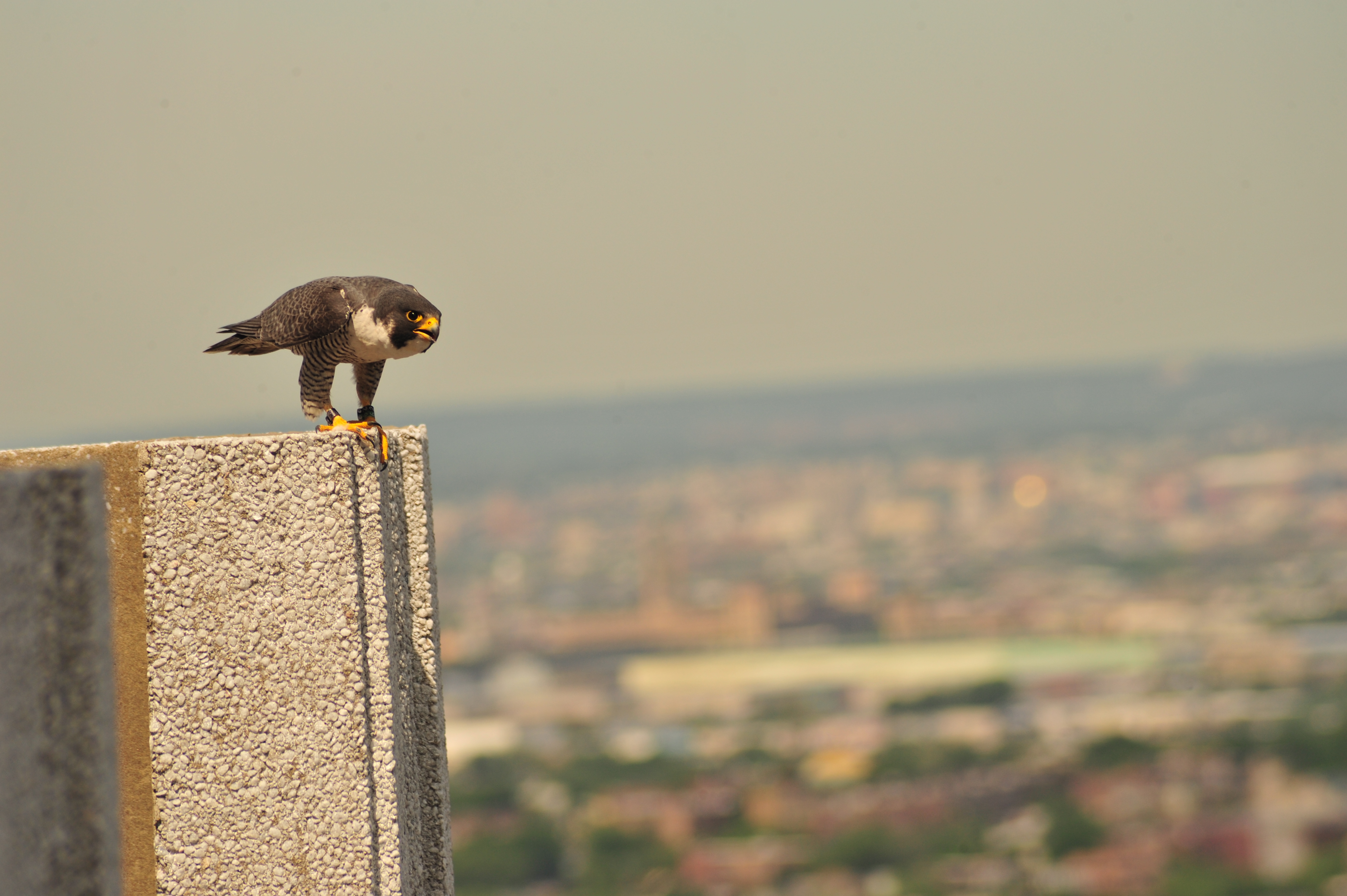
Since 2000, a pair of state endangered peregrine falcons have nested on a building in Jersey City, New Jersey. Peregrine falcons are drawn to urban areas since there are high levels of prey (pigeons) and suitable areas to nest (building ledges and outcrops). To follow along with their daily life cycle a webcam was first installed in 2001. Since then it has broadcast their success and struggles over the years to reproduce and help bolster the population in the state.
Peregrines have made a remarkable recovery in New Jersey since their reintroduction in the 1970s, and the Falcon Cam has allowed us to help raise awareness for their conservation. This past year we learned that the NJ Division of Fish and Wildlife, who hosted the camera since it’s installation, no longer has funding to maintain the webcam. Over the next month we’ll be fundraising to help keep the webcam online! At the same time we’ll also be featuring a weekly series “The Month of the Falcon” with insight from biologists and awesome photos of peregrines from New Jersey.
by Ben Wurst, Habitat Program Manager
Peregrine falcons are the largest falcon in New Jersey. They are found world-wide and are the fastest bird. They were once extirpated from the state (and all areas east of the Mississippi River) by 1964, after DDT decimated their population. A recovery program spearheaded by The Peregrine Fund helped to re-establish the eastern population by releasing captive bred birds. The birds were “hacked” on towers on the coastal saltmarsh where prey was readily available and predators (great horned owls) were minimal. The program was successful and by 1980 the first wild nesting of peregrines occurred at Edwin B. Forsythe National Wildlife Refuge in Oceanville. Since then the population has steadily increased because of the dedicated biologists and volunteers who help to monitor and manage them. Continue reading “Jersey City’s Peregrine Falcons”
by Ben Wurst, Habitat Program Manager
Earlier this week two 3 week old peregrine falcon nestlings were banded by Kathy Clark, Supervisory Zoologist with NJ Fish & Wildlife. We checked this nest for hatching after earlier visits revealed that the pair had only began laying eggs when all other nests had young that were 3-4 weeks old in June. We’re really not sure when they were so late this year. Kathy had to wait for temperatures to fall before banding the young, since extreme temperatures only stress out adults in addition to the stress of us humans checking on their nests.

by Ben Wurst, Habitat Program Manager
Last year 26 nesting pairs of peregrine falcons were monitored in New Jersey. The core of the state population nests on towers (old hacking towers) and on buildings in urban areas. Each spring we assist NJ Division of Fish & Wildlife’s Endangered and Nongame Species Program to help monitor the core of the population by performing nest checks and by installing a remote, motion-activated “spy” cam in nests to record the adults as they enter and exit nests. The footage captures the legs of peregrines. Why? Many peregrines are banded before they can fly with a federal USGS bird band and a state bi-color, alpha-numeric band. The state bi-color band can be read from the video captured by the camera. The information that these identifications provide is immensely valuable for relating peregrine origin and age to nest success, site fidelity and turnover rate in the population.
Here is a short clip from a nest site in Ocean Gate and the bird in the video was identified as a male (*8/*5, black/green) that was banded in 2005 at Sedge Island.
by Ben Wurst, Habitat Program Manager
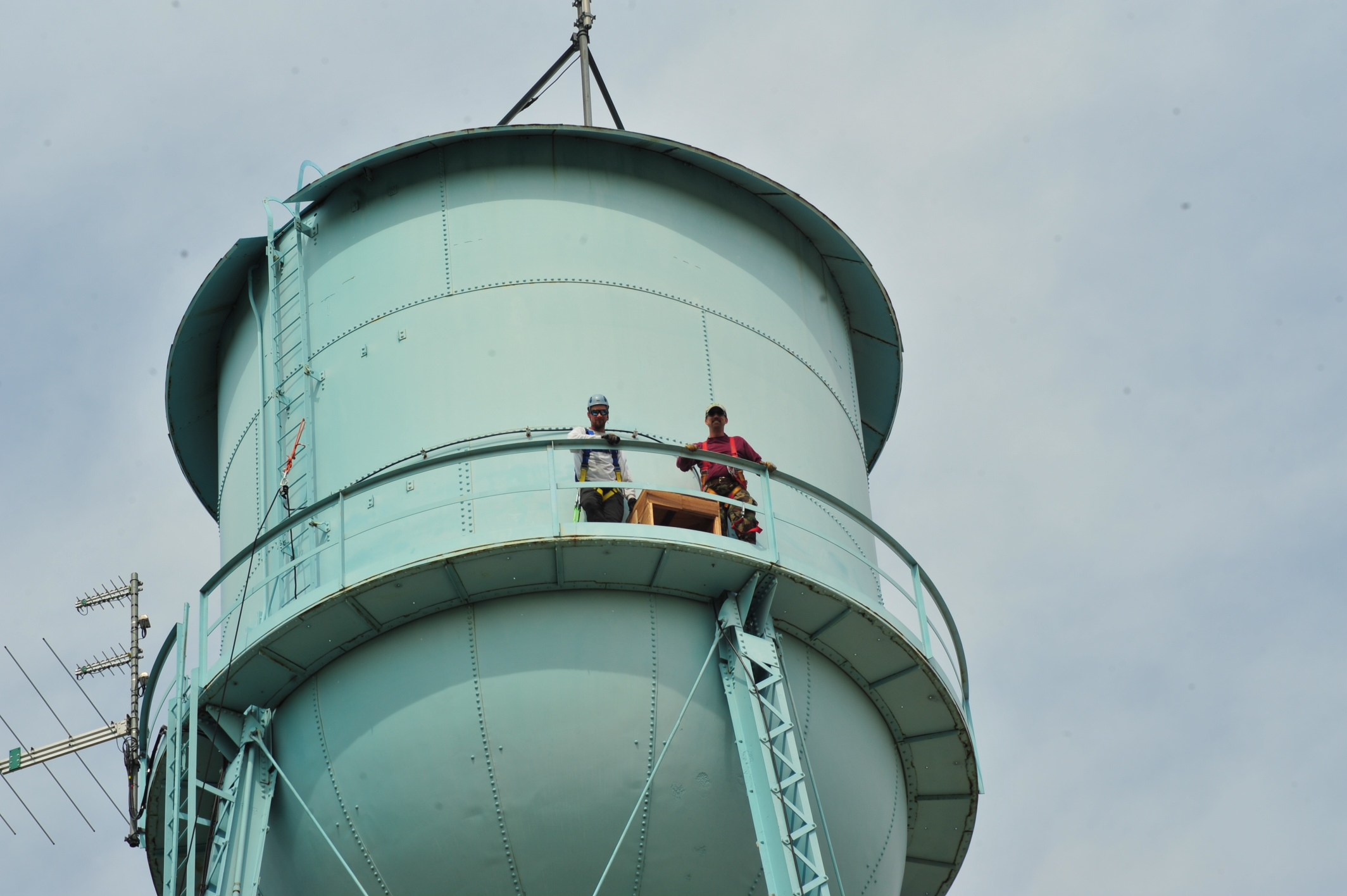
The installation of a custom made nestbox on a water tower is no easy task. Just climbing this tower is a scary feat. First off the tower is over 70 years old and has little safety features on it. You rely on your own climbing gear and strength to safely climb this tower. After several delays, we successfully got the nestbox up on the water tower where we hope to get peregrines from another nest site to nest.
This site was chosen because it is suitable habitat for peregrines to nest and there are adequate prey resources in the area (pigeons, starlings, and doves). Peregrine nest sites were once along the D. Bayshore in this area, but a recent study conducted in coastal Virginia found that peregrines there were negatively influencing the behavior of migratory shorebirds. This spring the decision was made to remove a nestbox that was located along the Bay to help protect species like the endangered red knot while they feed on horseshoe crab eggs.
I constructed the nestbox from salvaged wood from the Forest Resource Education Center’s sawmill. It’s a mixture of white cedar, western red cedar, and scrap plywood (from construction of bat houses). Reusing salvaged wood is something I am really passionate about. I make all sorts of things from it including picture frames that I sell, furniture, and osprey platforms.
by Ben Wurst, Habitat Program Manager
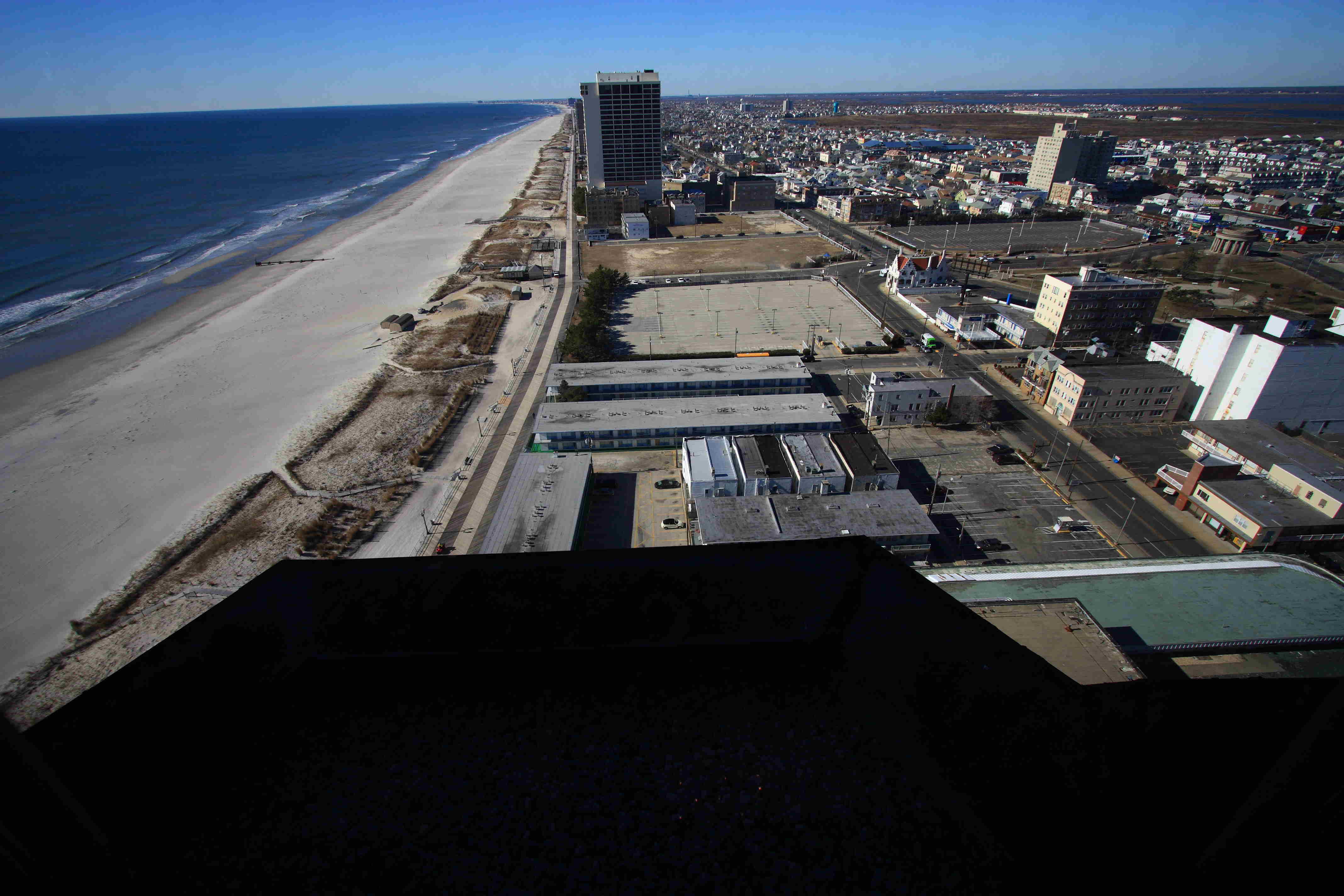
Since 1985, one boardwalk casino has been home to a pair of peregrine falcons. On the 23rd floor of the Hilton (originally named as the Golden Nugget, then Bally’s Grand, The Grand) in Atlantic City a pair of peregrines have nested since 1988. Since then only two females have ever occupied the territory there. The first female nested there until 2002. In October of that year she was found injured after it was believed that she had struck an object. She was transported to The Raptor Trust for treatment, but unfortunately died later that night. She was the oldest nesting peregrine in New Jersey at the time (she was born in 1985 at a nest site in Sedge Island WMA) and was a NJ native falcon. She raised a total of 25 young during the 15 years that she nested there. She was known for her tenacious attitude and brave assaults on biologists and photographers by dive-bombing them “fighter jet style” to protect her young.
Here is an excerpt from the article “Storied A.C. Peregrine Dies: State’s oldest nesting falcon was N.J. native” in our old Conserve Wildlife newsletter from 2002:
“She’d been around nearly as long as I’ve been a biologist,” says Clark. “I felt a kinship from our many years at her nest, banding her young.”
Last June, as Clark was returning the bird’s two chicks to the ledge after she had banded them inside the penthouse suite, the biologist noticed the fierce female accidentally glance one of the building’s structural columns. But Clark will remember more all the times the bird was at her fighterpilot best, strafing Clark, her assistants and the news photographers who bravely clambered out onto the narrow ledge to record what had become a much publicized, annual banding ritual. In fact, in 1997 within a span of several minutes the bird was able to strike the heads of both an assistant biologist and a photographer. That’s why Clark, since then, had been banding the chicks inside.
Ironically, it took her death to solve the final mystery of her existence. In 1994, thanks to a remote-controlled camera, Clark was able to read all but the last digit on her leg band. The numbers confirmed her 1985 hatch date, but without that missing digit she could have been fledged anywhere from Maine to Virginia.
When Clark recovered the fatally injured bird, she recorded the entire banding number, and quickly learned the female had been hatched atop a nest tower erected in Barnegat Bay’s Sedge Islands Wildlife Management Area, just 25 miles north of Atlantic City. One of the first offspring of restored, wild-nesting peregrines in New Jersey, she had been a lifelong resident of the Garden State.” written by Bruce Beans.
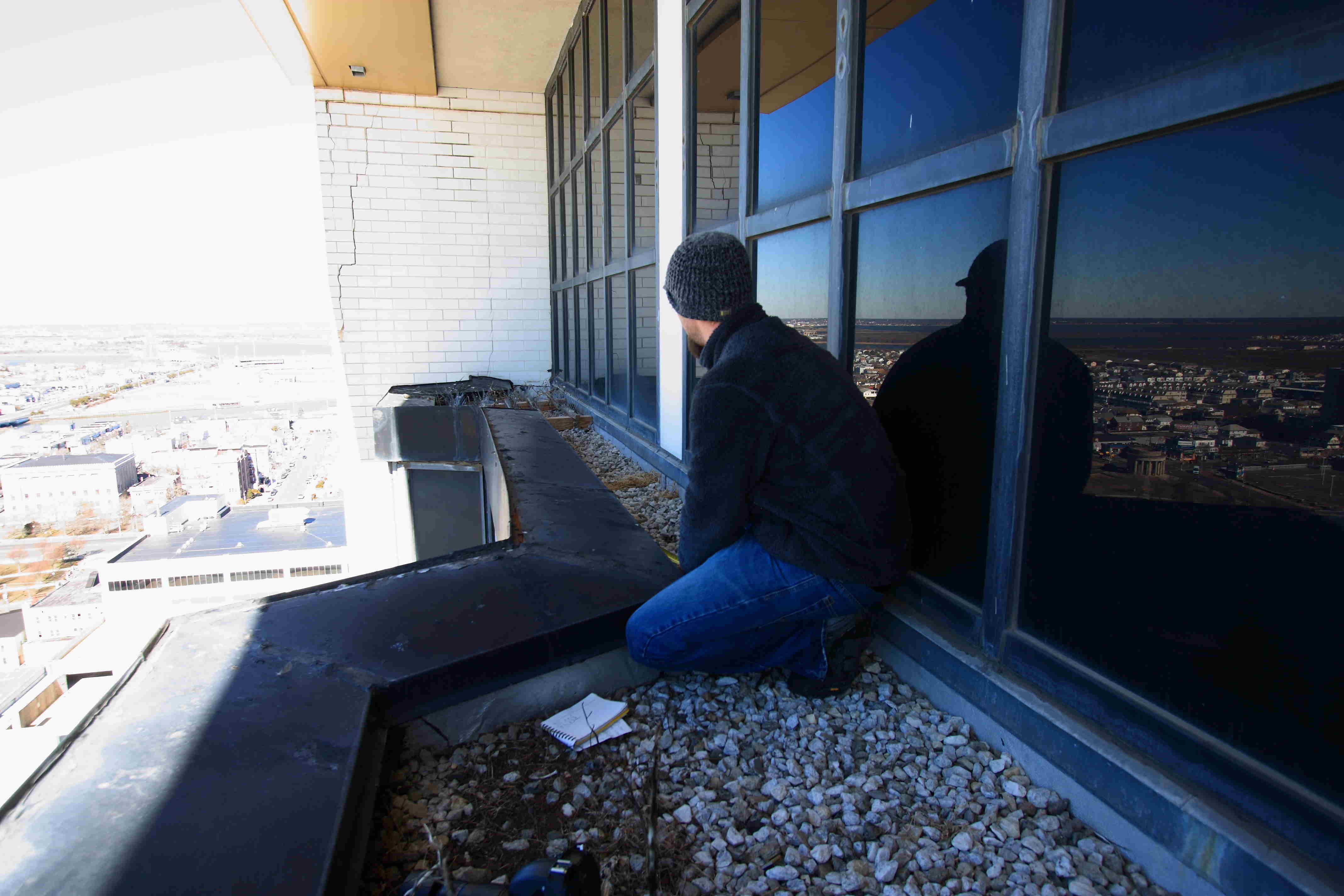
Today, the only other female peregrine to nest on the ledge of the penthouse floor will be 13 years old this summer. She originated from a nest site in coastal Virginia in 1998. In early 2009 we placed a deterrent (wood and pigeon spikes) along a portion of the ledge to deter the pair from nesting. The preferred nest site is a nest tray where the pair can be more closely monitored by casino staff and butlers (Mel and Pete) on the penthouse floor and it also has more protection from harsh weather conditions. The deterrent worked quite well last year, but it wasn’t quite large enough. The female proceeded to nest directly next to our deterrents (see photo below). She was allowed to nest there, but after her young were banded, they were placed in the nest tray on the west side of the building.
Yesterday Kathy Clark, zoologist with the Endangered and Nongame Species Program, and myself visited the site to measure the ledge where additional deterrent will be placed next week. The nesting pair was present and aggressive as usual. The female dove at us both as we were out on the ledge. The spirit of the old “storied” peregrine has certainly been passed on to this bird. The new deterrents will be installed next week. Peregrines begin nesting in March.
Biologists with the Conserve Wildlife Foundation of New Jersey help monitor and manage many endangered and threatened species in New Jersey. We work very closely with the Endangered and Nongame Species Program in the NJ Division of Fish and Wildlife. Each year we summarize the results of many surveys and monitoring programs to show the most current information about the status of New Jersey’s wildlife. Whether good or bad news, we like to share this information with the public to make them aware of the conservation needs and successes.
Weather had a huge impact on wildlife this past year. The cold winter lead to a higher than normal loss of young bald eagles while the hot dry summer was favorable to those species impacted by coastal floods, the piping plover, least tern and black skimmer. The hot dry climate also helped ospreys produce a record high number of young. However, disease still impacts our state’s bats and disturbance by people or predators plays a role in fledging success. Check out the full report for detailed information for over 15 species listed as endangered or threatened in New Jersey.
by Ben Wurst, Habitat Program Manager

While cold temperatures may have many people enjoying some time getting office work done, I enjoy working outside despite temperatures in the 30s. Yesterday, with help from Bill Pitts, a wildlife technician with NJ Division of Fish and Wildlife’s Endangered and Nongame Species Program and Alf Breed, a seasonal technician with Conserve Wildlife Foundation we set out on the Delaware Bay to install a set of new predator guards on a peregrine falcon nesting tower near Heislerville. The new predator guards require little maintenance and more importantly help protect their nestlings from being predated by ground predators, like raccoons.
No doubt it was cold and windy. The small creek where we launched our boat already had ice on it! An uncommon sight in early December. This was a clear indication that winter is here to stay, but that it didn’t dampen our mood. So we launched boat and set out to the nest site. After a short boat ride we arrived at the site. One adult peregrine (a female) was perched on the tower. In New Jersey, nesting pairs are territorial throughout the year. She called to defend her nest site and flew off and watched us from a nearby perch. We unloaded gear and started removing the old predator guards.

In 2009, I began to install these new inverted cone predator type guards on peregrine nesting towers. The guards were custom fabricated by Babbitt Manufacturing, Inc. in Vineland. The new cones replace antiquated metal sleeve type predator guards which required annual maintenance during the non-breeding season. We first installed a prototype on a nest tower located inside Forsythe NWR in Oceanville. The new cone passed the test by withstanding 70 mph wind gusts during the winter of 2009. A complete set (of four cones) was then installed there and at another nest site on the saltmarsh in Manahawkin.
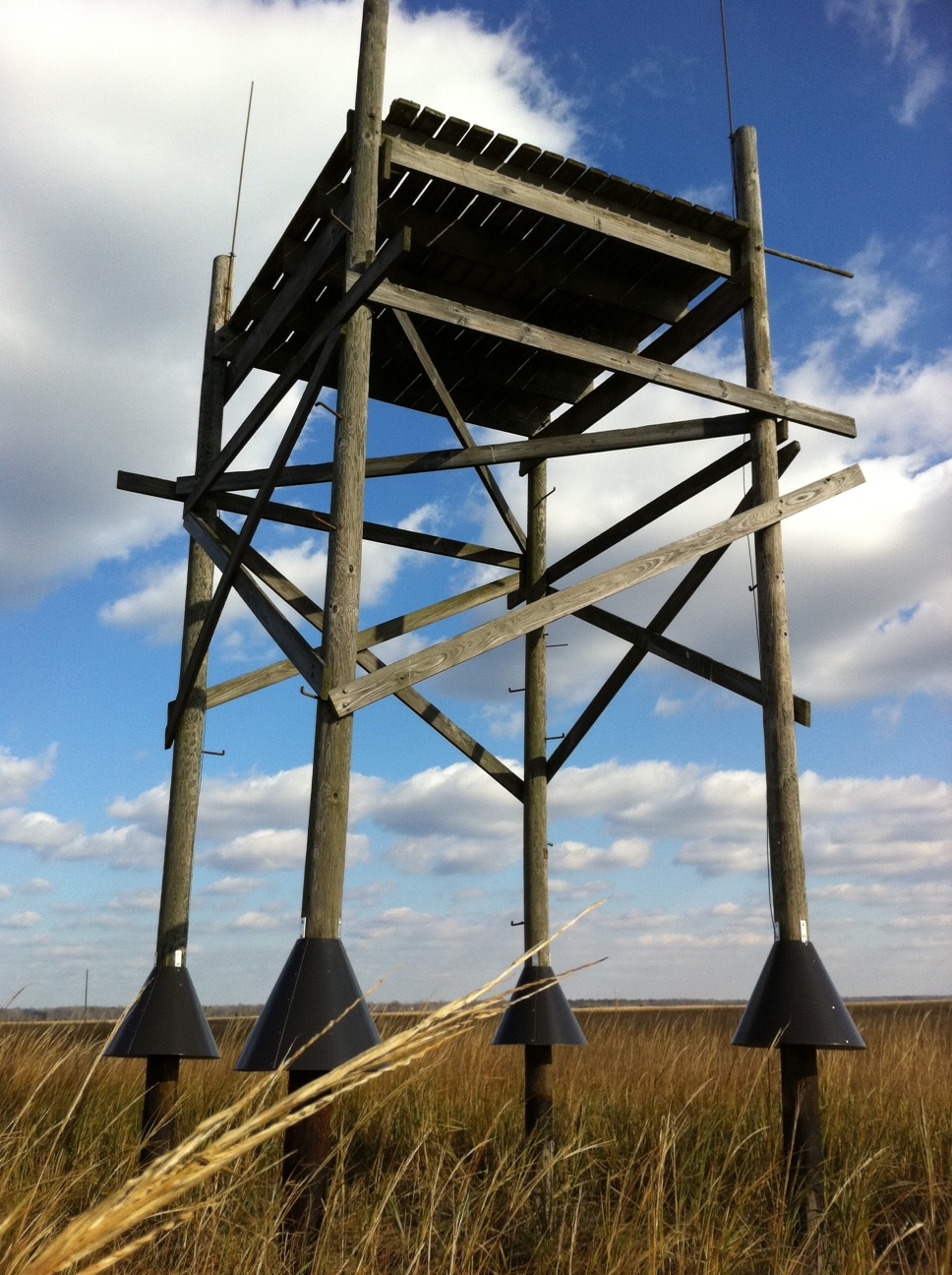
There are nine towers where peregrines nest along the coast of New Jersey. After the peregrine population was decimated by DDT in the 1960s, efforts were made to help re-establish the population. It began in the 1970s after the federal ban of DDT in 1972. The first tower was installed in 1975 inside Sedge Island Wildlife Management Area. The Peregrine Fund and the NJ Division of Fish and Wildlife began to “hack” peregrine falcons at this site to help re-establish breeding pairs to New Jersey and the Mid-Atlantic region. In the following years the program was expanded, and in 1980 a pair of wild peregrines nested on a tower. Since then, the population has slowly rebounded. Today, peregrines nest on a variety of structures in New Jersey including buildings, bridges, natural cliff sites, and these old “hacking” towers. In 2009, a total of 14 pairs nested in New Jersey.
