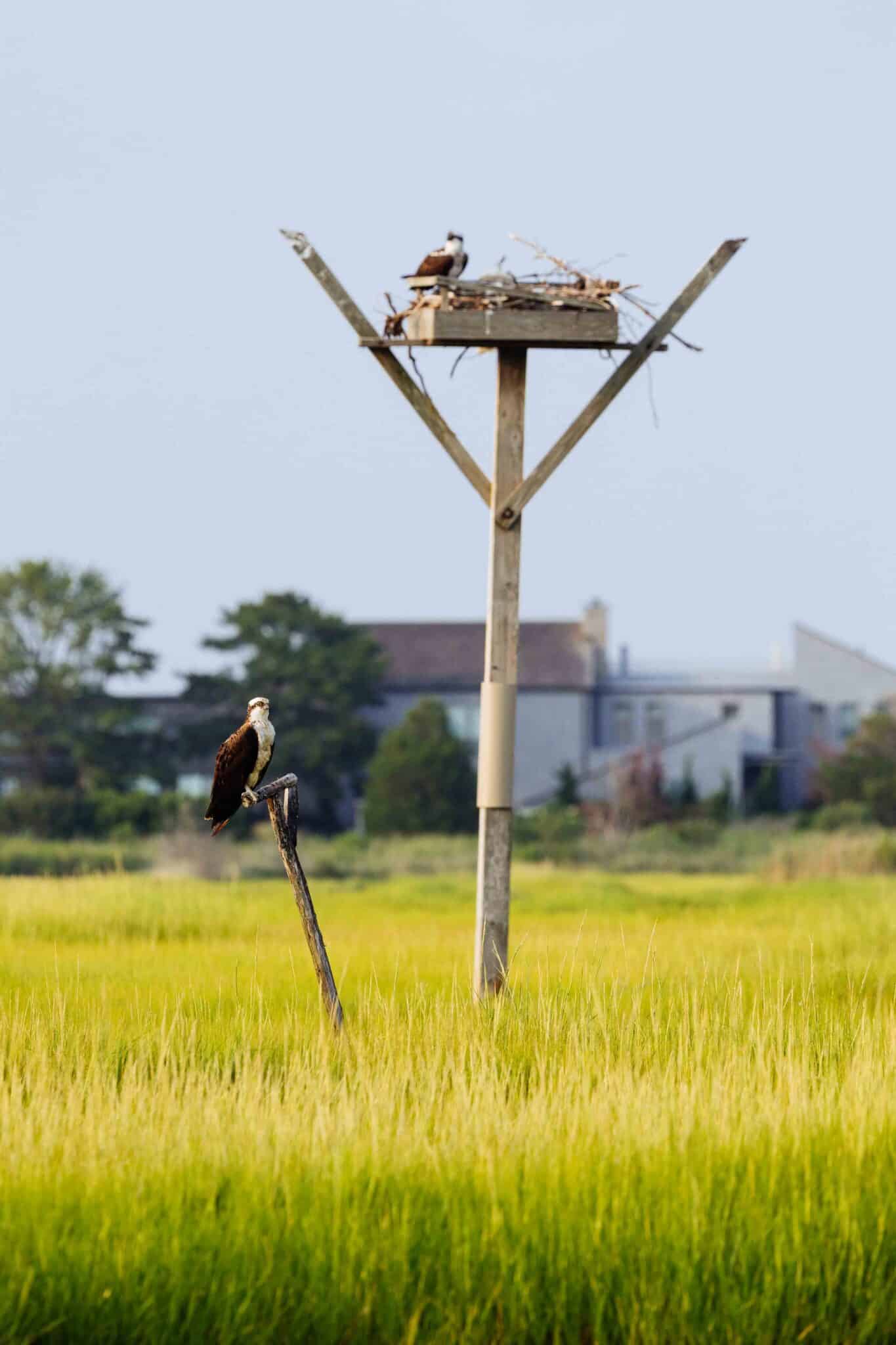
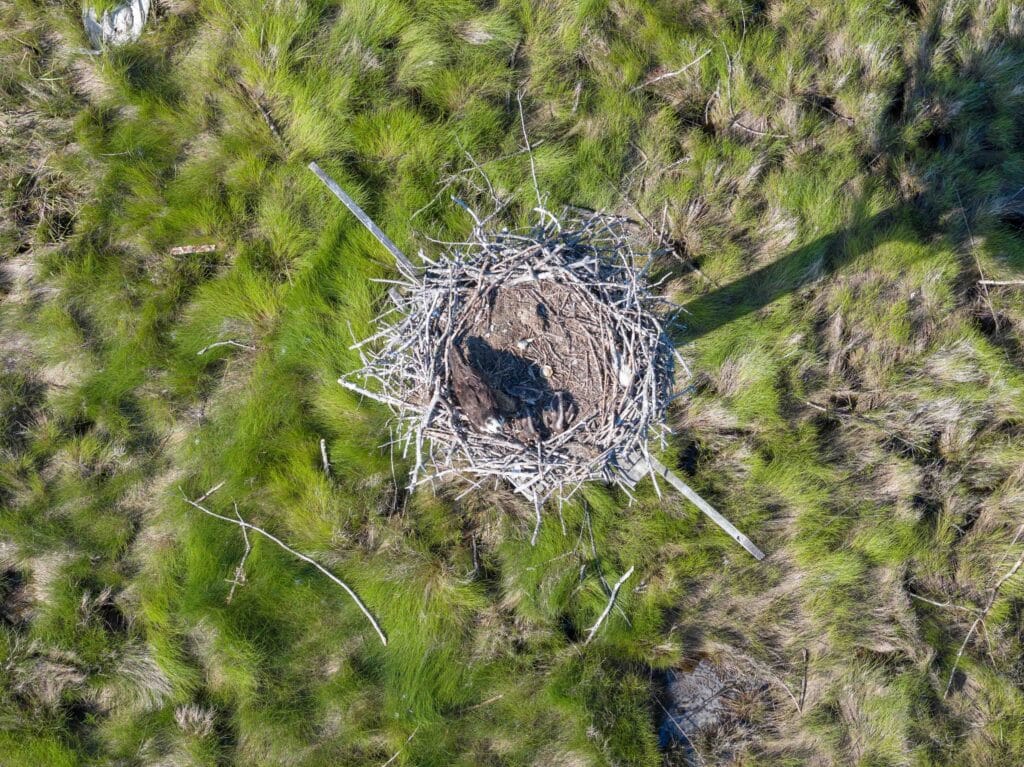
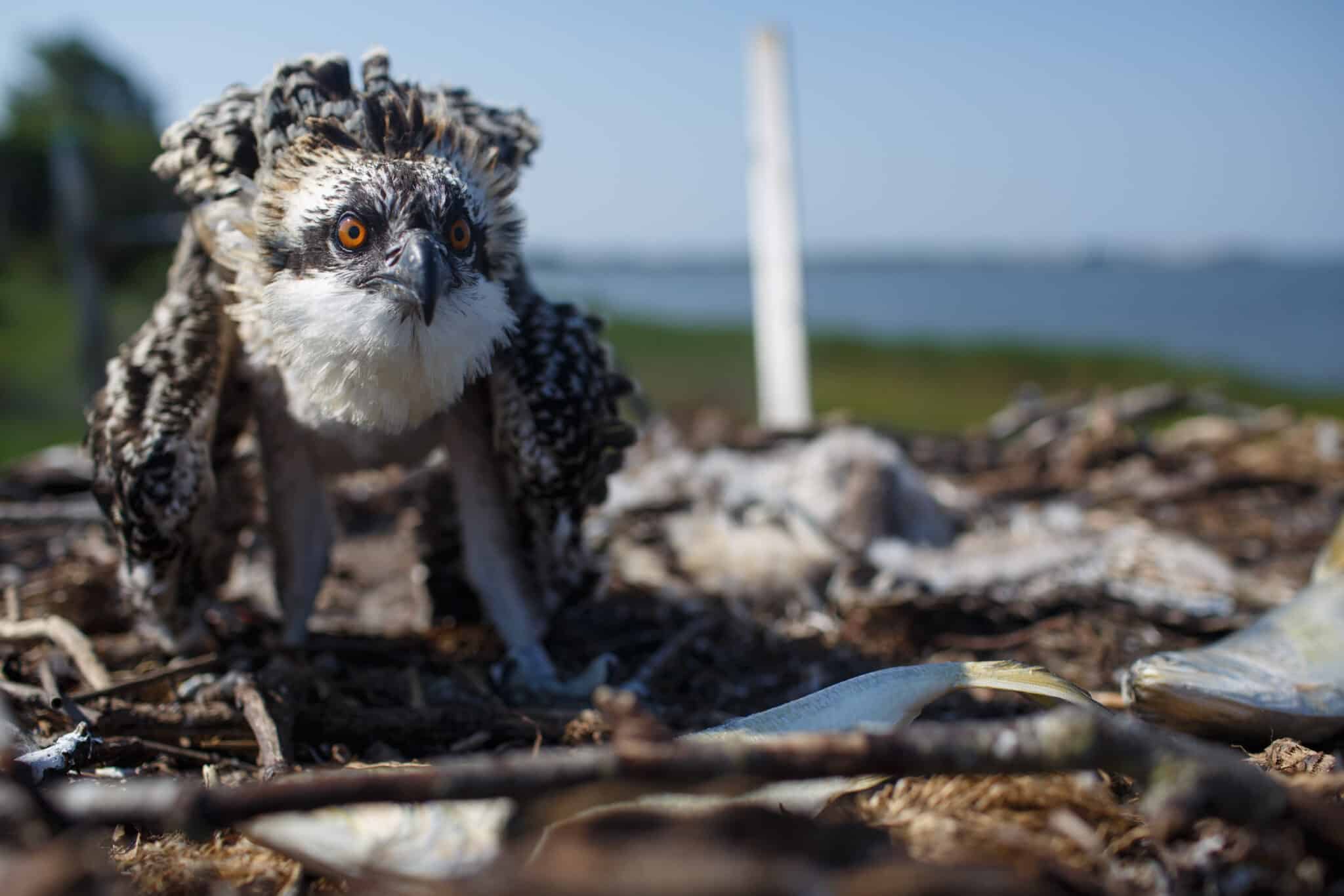
Three nestlings. Approximately 2.5-3 weeks old. June 17, 2026
My summer has been filled with death and despair.
Every. Single. Day. I have seen or heard about osprey pairs that lost young to starvation. I now carry their stories with me, hoping that somehow they will be okay.
It is not okay.
Ospreys are now in decline in New Jersey. Their remarkable recovery, made possible by reducing pollution, protecting nesting habitat, and conserving our natural resources, is now in jeopardy. We are not alone. At nests all along the mid-Atlantic coast, ospreys are no longer producing enough young to sustain the statewide population, largely because of the scarcity of their primary prey: Atlantic menhaden.
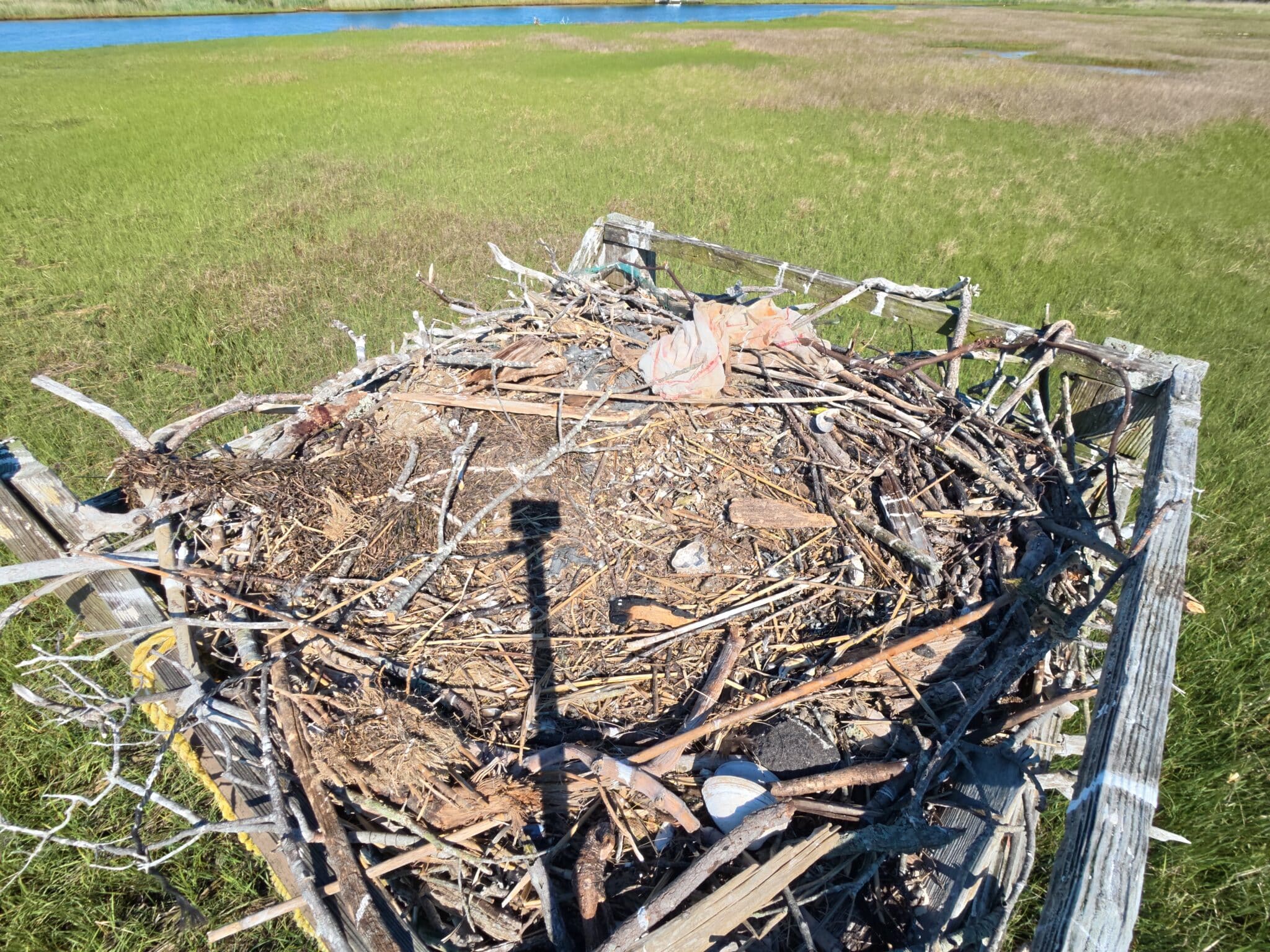
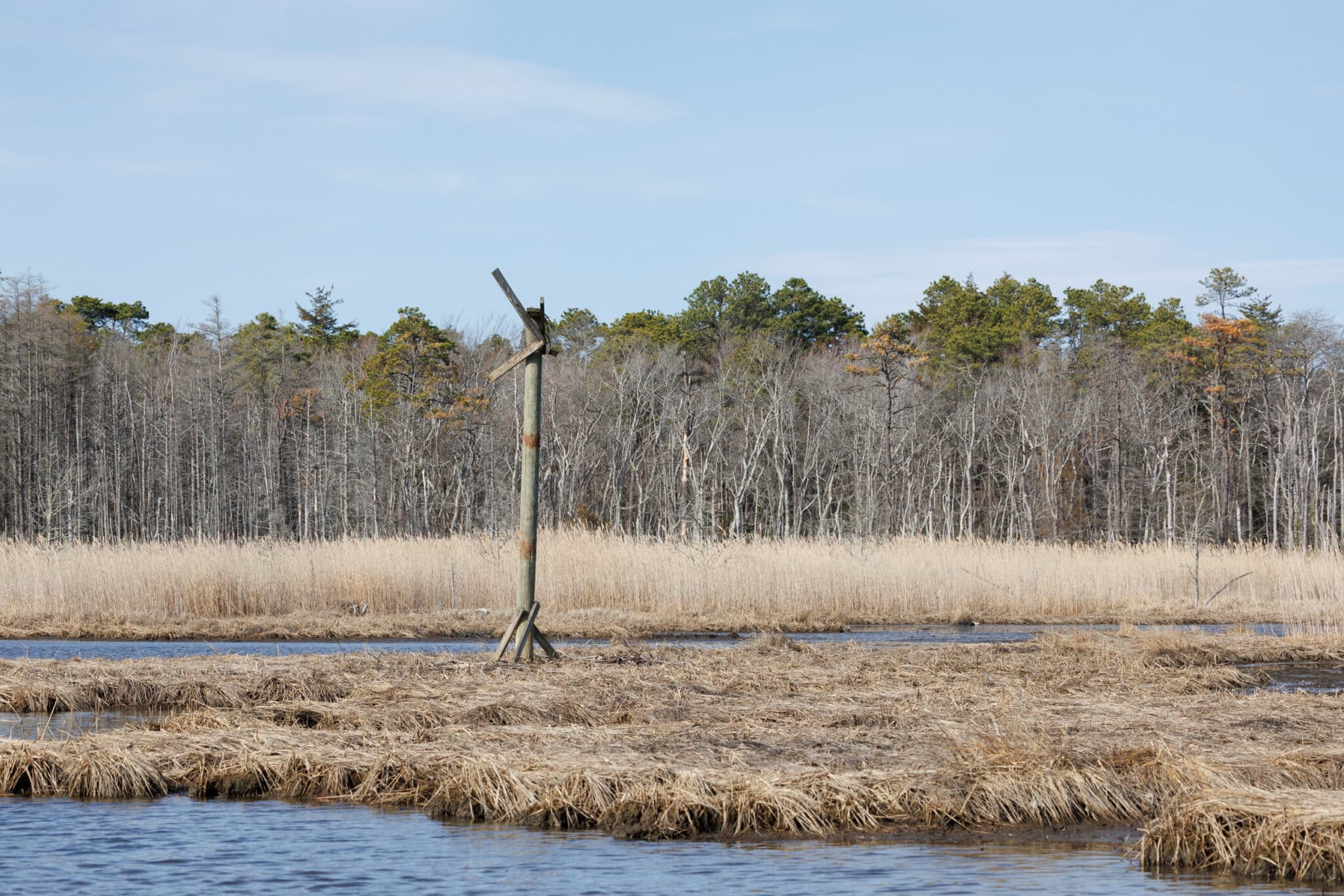
An occupied but empty osprey nest at Sedge Island WMA as viewed by a small action camera.
This spring, we have been conducting osprey nest surveys to better understand nesting outcomes across New Jersey’s coast. These surveys are focused on coastal colonies, where signs of food stress have become increasingly evident in recent years due to the scarcity of Atlantic menhaden, the primary prey of nesting ospreys.
The 2025 nesting season for ospreys in New Jersey began as others. Breeding adults returned to their nests in March and April, pairs reunited, and nesting activity got underway on schedule. But as the season progressed, it became clear that this year would be anything but typical.
A nor’easter in late May marked a turning point. Lasting nearly three days, the storm brought strong winds, heavy rain, and coastal flooding. Conditions that made it extremely difficult for ospreys to find food. As observed in previous years, these types of storms are known to disrupt foraging in the ocean, and in many cases, lead to brood reduction or nest abandonment. However, weather alone does not explain what we observed.
As I finalize our annual report summarizing last year’s data, I often find myself looking back to reflect and compare trends over time. I’ve worked with ospreys long enough to have witnessed their population in New Jersey more than double. Their recovery has long been a clear sign of improving ecological health in our coastal waters.
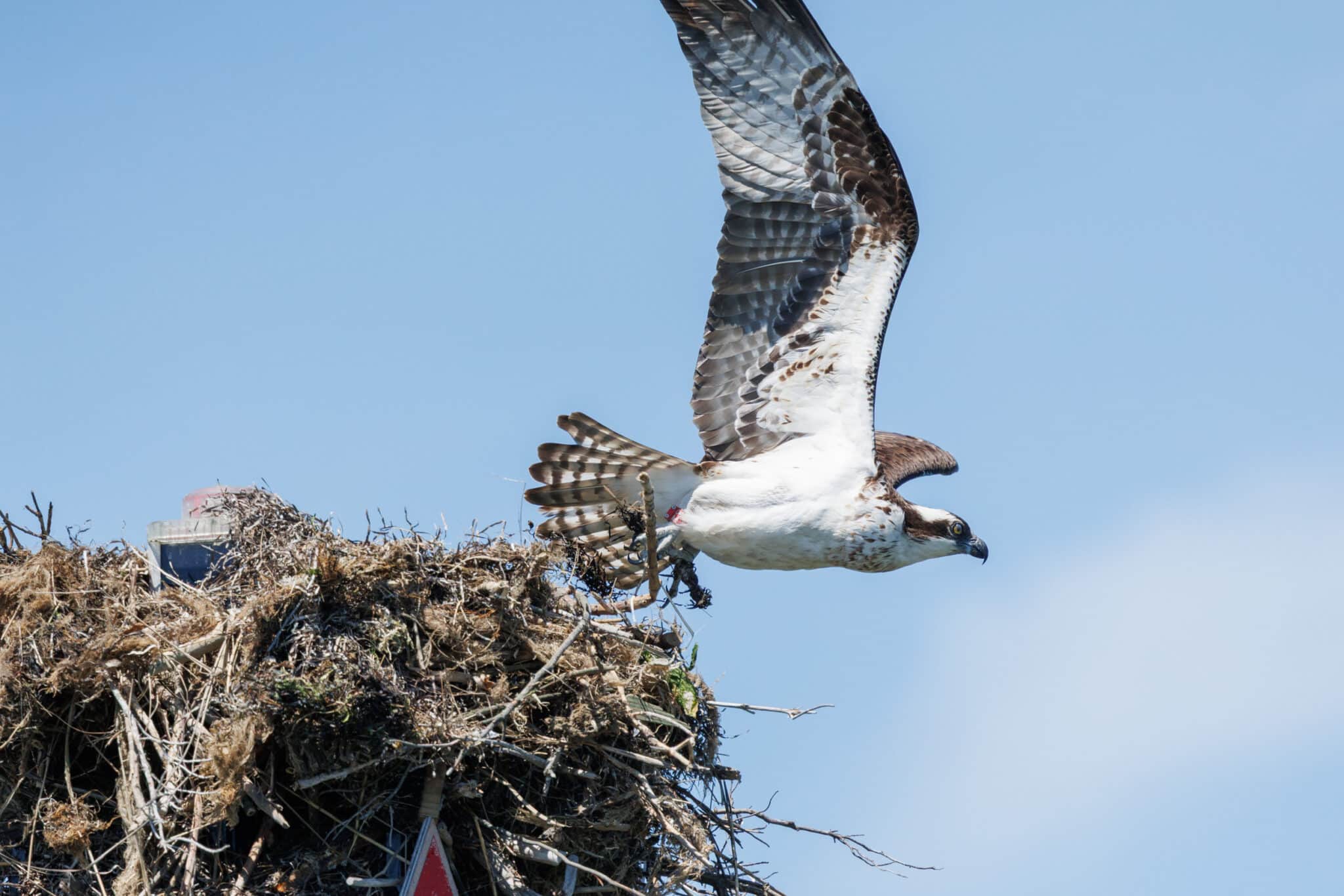
Lift off. 04/M takes off from a channel marker nest on Barnegat Bay.
During our osprey nest surveys we are always looking for auxiliary banded birds. Last summer over 40 red banded ospreys were re-sighted, which is the most ever encountered in a single year. The majority were breeding birds, photographed on their nests and others were photographed in flight or perched, often with prey. Some were even re-sighted several times throughout the year.
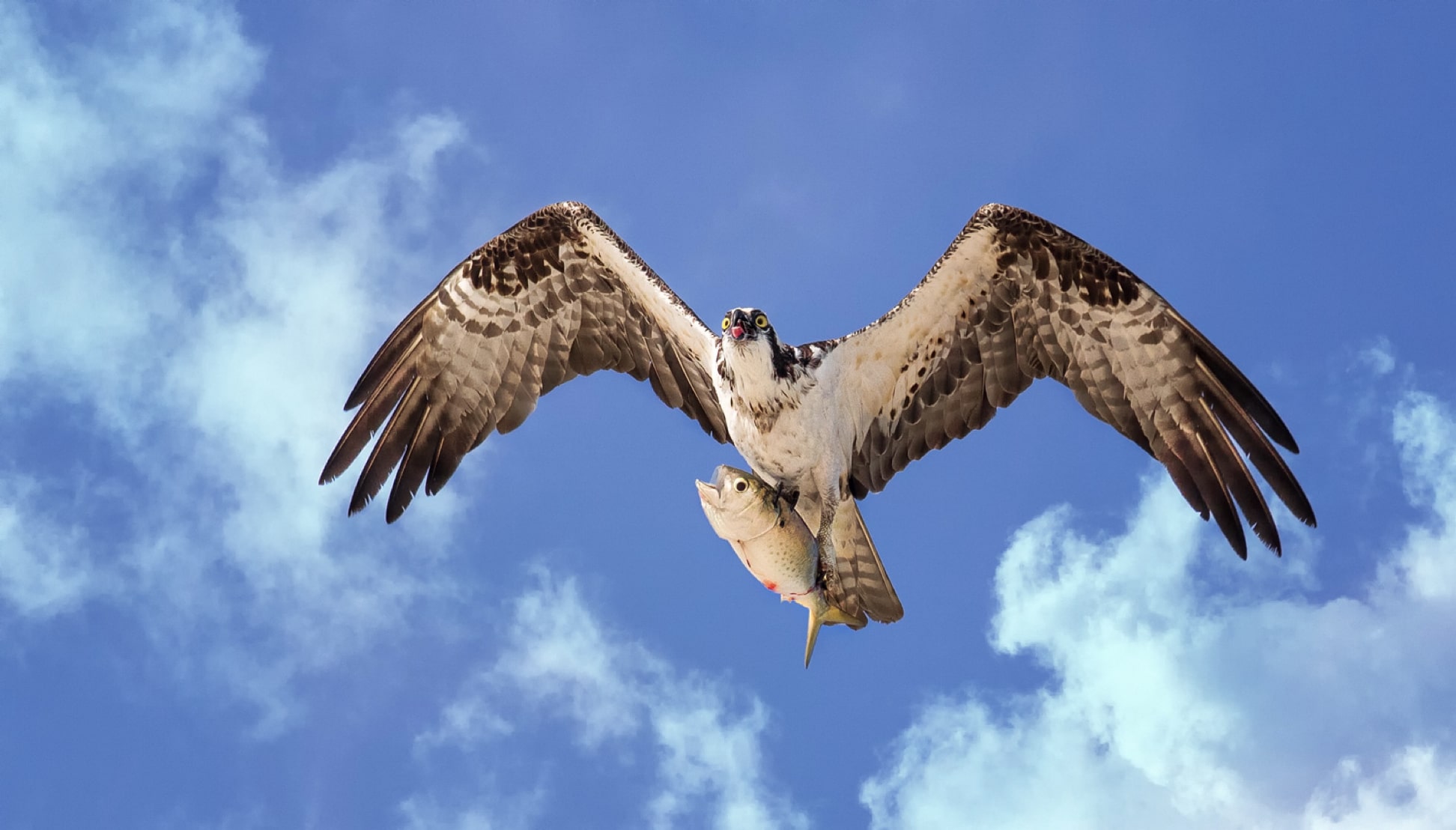
Osprey carrying a large adult menhaden. Long Beach Island. August 14, 2016. Photo by Jim Verhagen.
Over the past twenty years, I’ve had the privilege of watching New Jersey’s osprey population more than double—from roughly 400 nesting pairs to over 800. While our work to protect and expand nesting habitat has played a role in their comeback, the true foundation of their recovery has been a healthy marine ecosystem and an abundance of prey.
A six week old osprey nestling, emaciated with no adults present, stands next to its dead sibling (two fish left at nest during nest check). July 25.
Since my last post on June 25, where I said this year was shaping up to be a “terrible one” for ospreys in New Jersey has held true. Since then I’ve watched as nestlings are abandoned and left to starve by their parents and die from starvation via live streaming cameras. It is heartbreaking. We’re seeing nest failure rates higher than they have ever been in most coastal colonies. Even worse, many others monitoring ospreys in surrounding states are reporting similar outcomes. Atlantic menhaden—typically a staple in the osprey’s diet—are far less abundant this season.
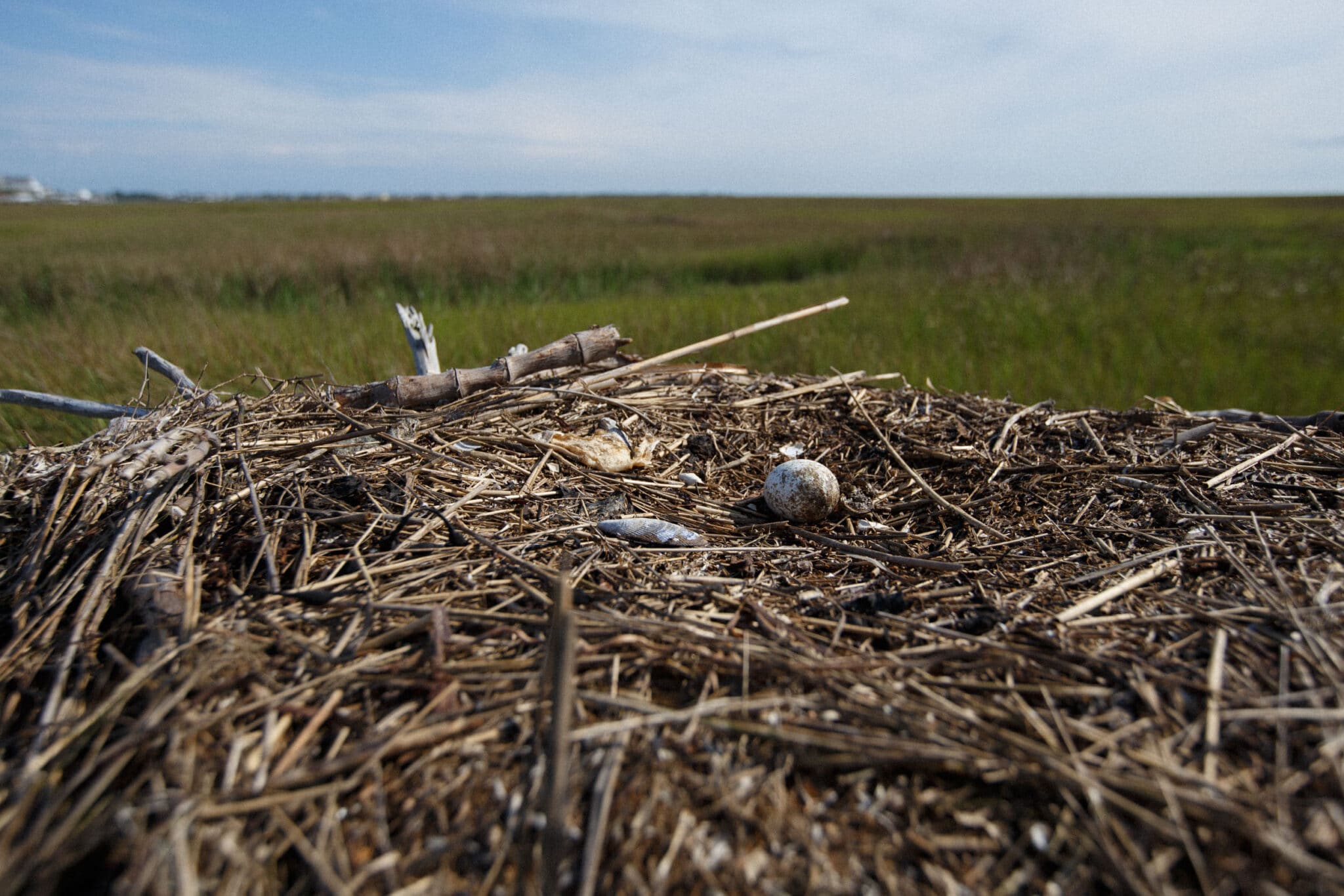
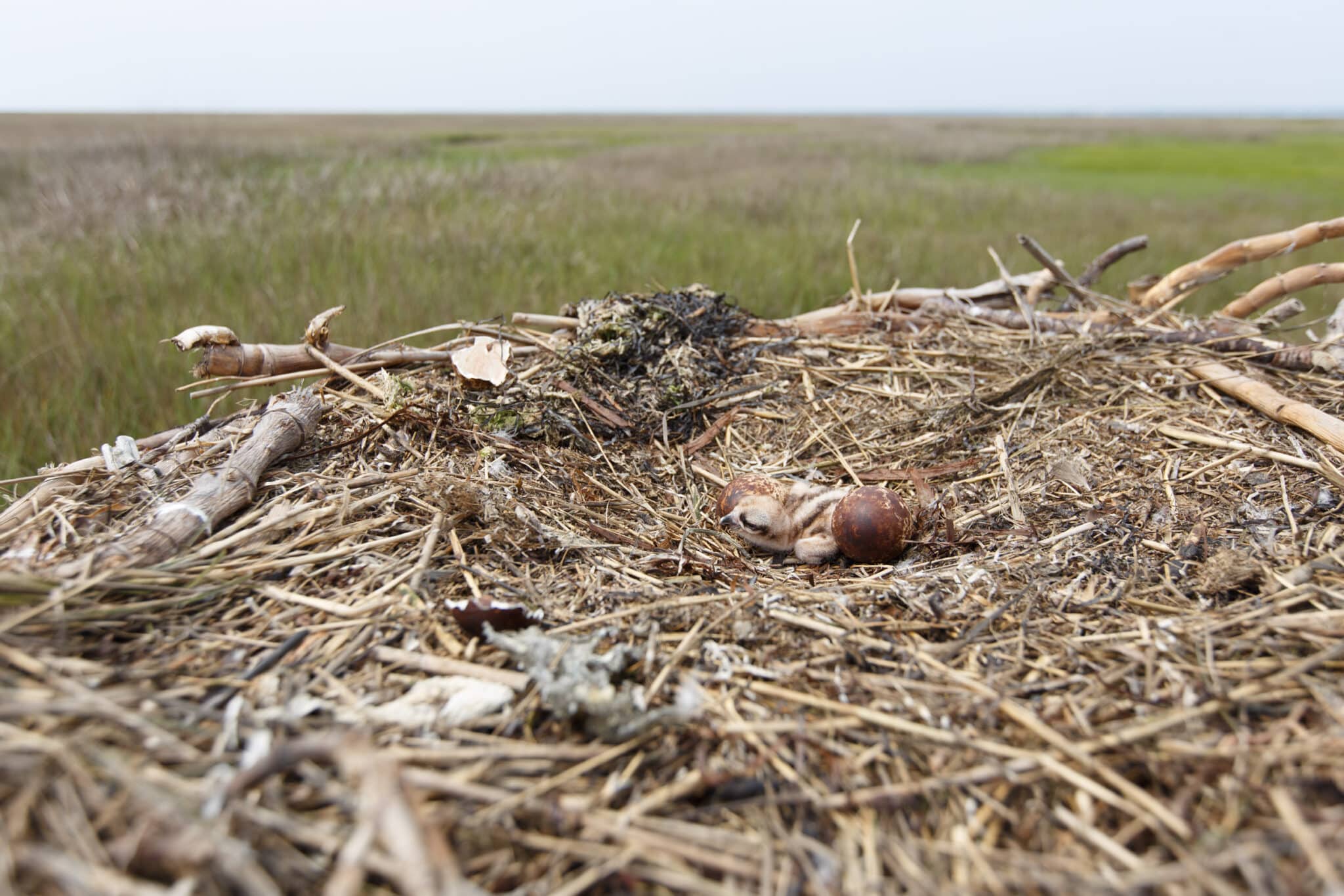
A hatchling osprey with two unhatched eggs. June 13, 2025.
This year is shaping up to be a terrible one for ospreys in New Jersey. Early season surveys, which we began to conduct more of in recent years, after nor’easters and shortages of prey caused nesting pairs fail to produce young. These early surveys provide valuable data on the outcomes of nests and insight on nest failures.
This spring and early summer, we have observed a high number of nest failures in an area around Long Beach Island on Barnegat Bay. This has also been observed directly through live streaming osprey cams from Cape May to Oceanville and reported by some of our dedicated volunteers in other areas. Right now all signs point to lack of food, which either caused adults to abandon incubation or starvation of their young.
A crucial prey item for ospreys is Atlantic menhaden, a forage fish that is found in the ocean and estuaries. They are found all along the Atlantic coast and are widely considered to be the most important fish in the sea. Not only are they filter feeders but they are food for a very wide variety of wildlife, from humpback whales and dolphins to ospreys, loons, tuna and striped bass, etc. They are also a very valuable fish that is used as whole bait, meal (solids, mainly for use in aquaculture as food for farm raised fish) and oils. In 2016, over 323 million pounds of menhaden was landed in Virginia alone. In coastal Virginia, osprey populations have collapsed and the likely culprit is lack of prey.
This spring adult menhaden were not very plentiful, especially after a nor’easter impacted the coast in late May. Observations of ospreys showed some were still catching menhaden but much smaller fish. Since then it has been a cascading effect of adult male ospreys not being able to find enough food to feed their mates and their young. When they can’t find food, they spend more time and energy searching and hunting and less time at their nests, leaving their mates to do more incubation and often times starving. This is when incubating females have to leave their nests and then their eggs or young are exposed to predators or harsh environmental conditions like extreme heat, which results in nest failure. There are still plenty of fish available to ospreys but fewer adult menhaden, which ospreys are more dependent upon, especially during this time of year when they are foraging more frequently to provide for their families. As a bioindicator species, ospreys showing us the shortage of menhaden in real time through the lens of their failed reproduction.
We hope learn the full extent of food stress on ospreys this year during upcoming nest surveys. For those who watch a nest or have a pair that nest near your home, you are encouraged to report osprey nesting activity online, via Osprey Watch. Since ospreys were recently upgraded to stable as their conservation status, we are concerned about their long term stability in a rapidly changing world. Your support to help us monitor ospreys during this time is crucial, as we do not receive any state or federal funding to carry out this important fieldwork.
Exciting news for osprey watchers—Duke has returned! This morning, the longtime male of our Barnegat Light Osprey Cam returned to his home on Long Beach Island after an incredible journey south for the winter. After months of migration, crossing thousands of miles between New Jersey and the tropics, Duke is back to reclaim his territory. But this year, there’s a twist—a new female is waiting for him!
His previous mate, Daisy, has not yet been spotted, and while we don’t know much about this new female (since she’s unbanded), we’ll be closely observing her iris and feather patterns to track her identity. Today, Duke wasted no time settling in—he was seen feeding on his perch, interacting with the newcomer, and lounging in the nest bowl (classic Duke). If Daisy doesn’t return, he will likely form a new pair bond with this female, marking a fresh chapter in his long and successful life.