2025: A Year of Challenges for Coastal Nesting Ospreys

Posted on
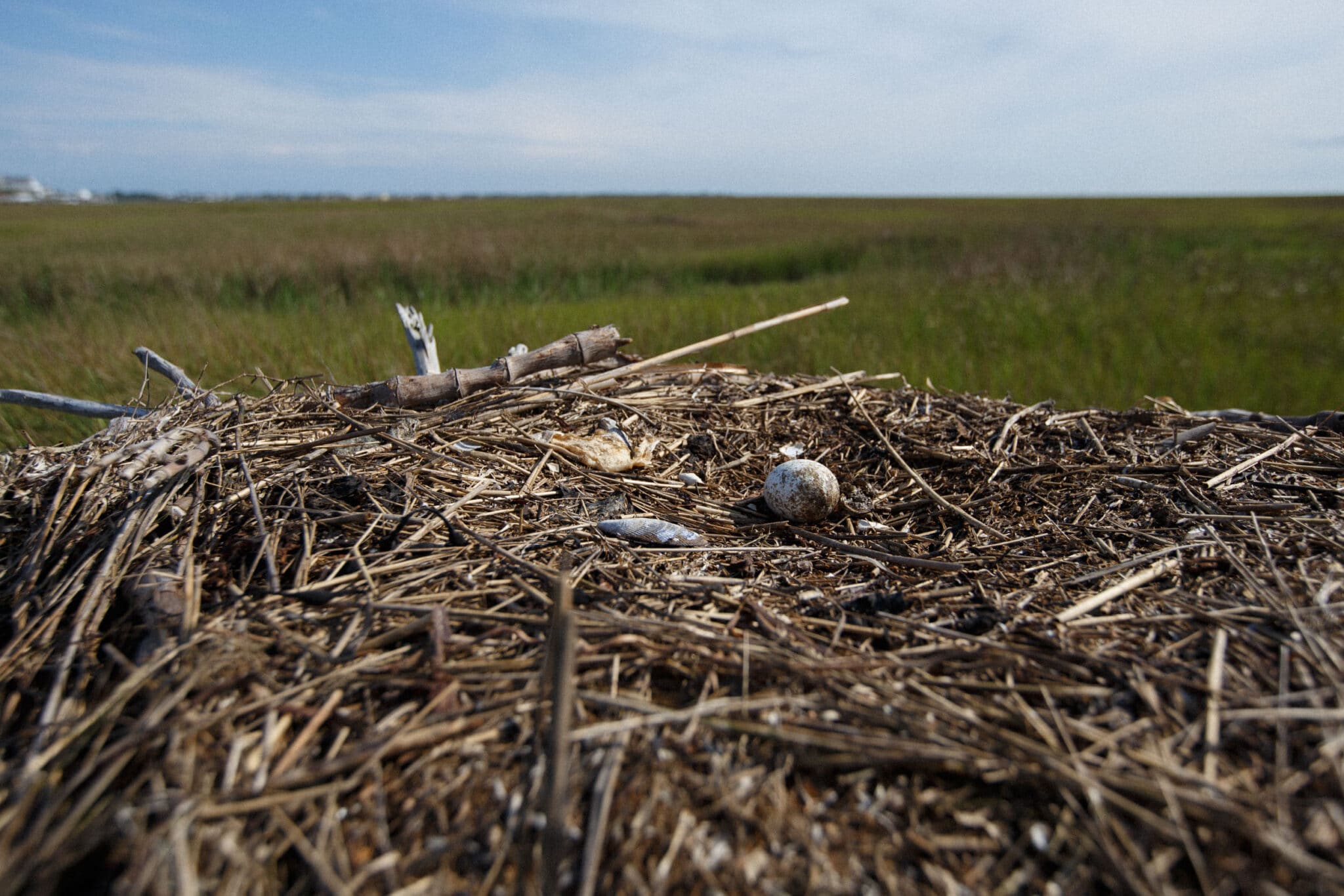
The 2025 nesting season for ospreys in New Jersey began as others. Breeding adults returned to their nests in March and April, pairs reunited, and nesting activity got underway on schedule. But as the season progressed, it became clear that this year would be anything but typical.
A nor’easter in late May marked a turning point. Lasting nearly three days, the storm brought strong winds, heavy rain, and coastal flooding. Conditions that made it extremely difficult for ospreys to find food. As observed in previous years, these types of storms are known to disrupt foraging in the ocean, and in many cases, lead to brood reduction or nest abandonment. However, weather alone does not explain what we observed.
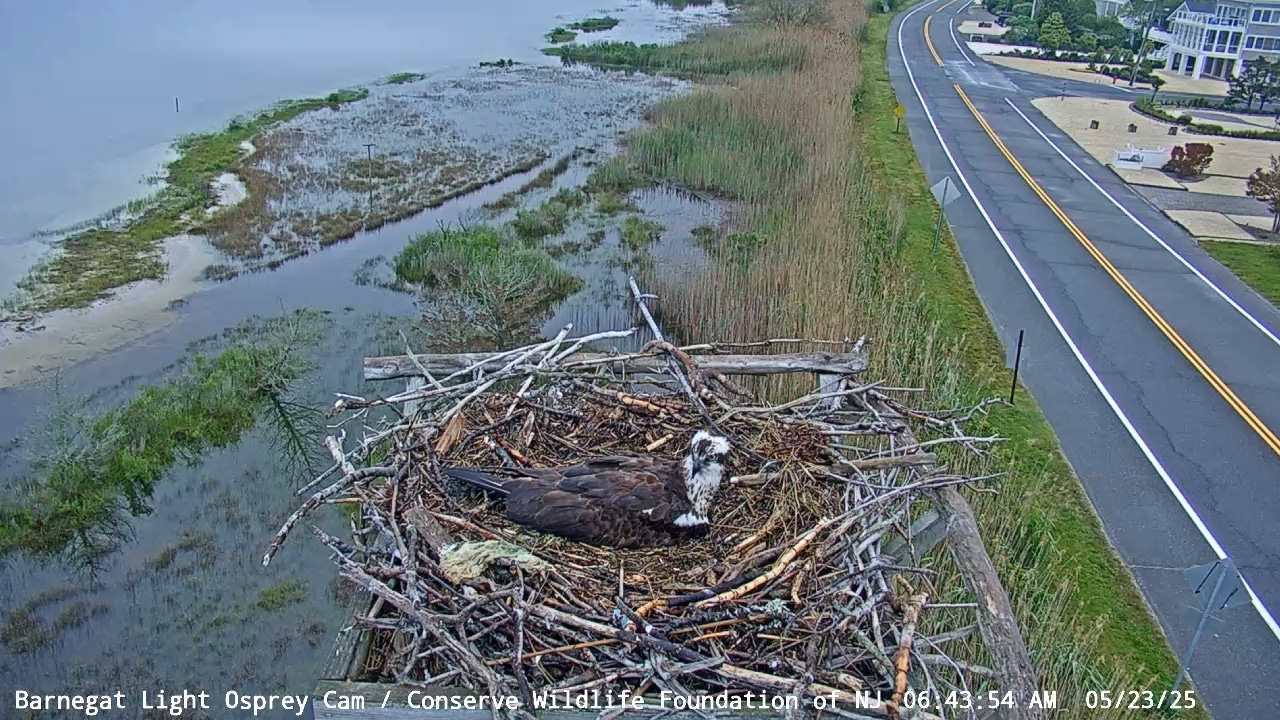
Across the state, osprey reproductive success dropped to its lowest level in decades.
- A total of 689 nests were surveyed
- Outcomes were determined at 507 nests (74%)
- These nests produced just 352 young
- This represents a 56% decline from the recent 5-year average
Most concerning, 57% of active nests failed to produce any young, which is nearly three times higher than the long-term average of about 20%.
Statewide productivity fell to 0.69 young per active nest, below the 0.80 threshold needed to sustain the population.
Prey Availability Emerges as a Key Factor
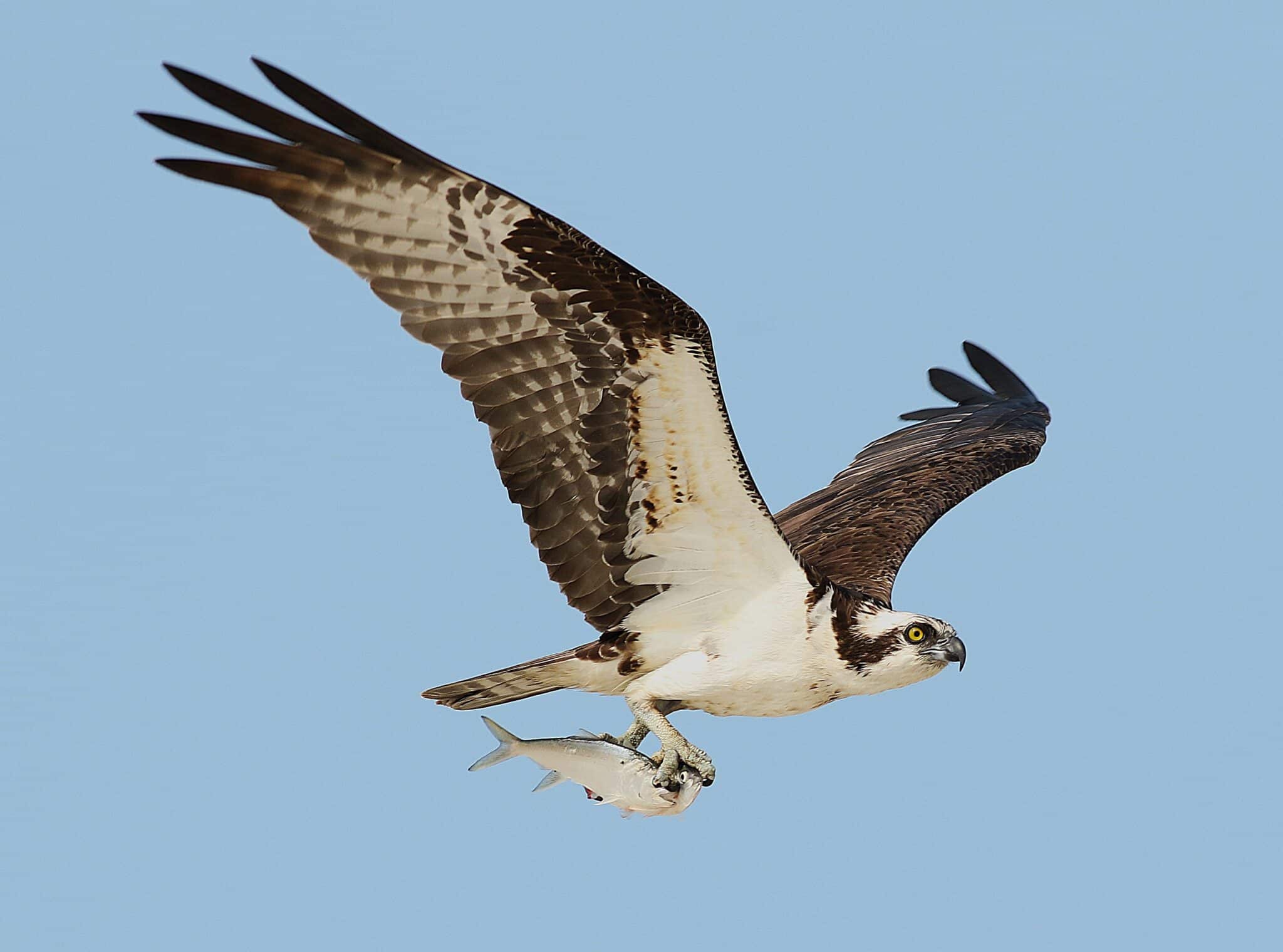
While storms played a role, a more consistent and widespread issue was the apparent lack of prey, particularly Atlantic menhaden, a critical food source for ospreys. Menhaden are typically abundant in nearshore waters, making them an accessible, energy-rich food for nesting ospreys. But in 2025, reports from field staff, photographers, and local fishermen all pointed to the same conclusion: menhaden were scarce. During and after storm events, these fish are known to move offshore or deeper in the water column. Combined with increased water turbidity and runoff, this likely reduced their availability to hunting ospreys.
The result was clear across many nests:
- Coastal ospreys struggled to find abundant prey
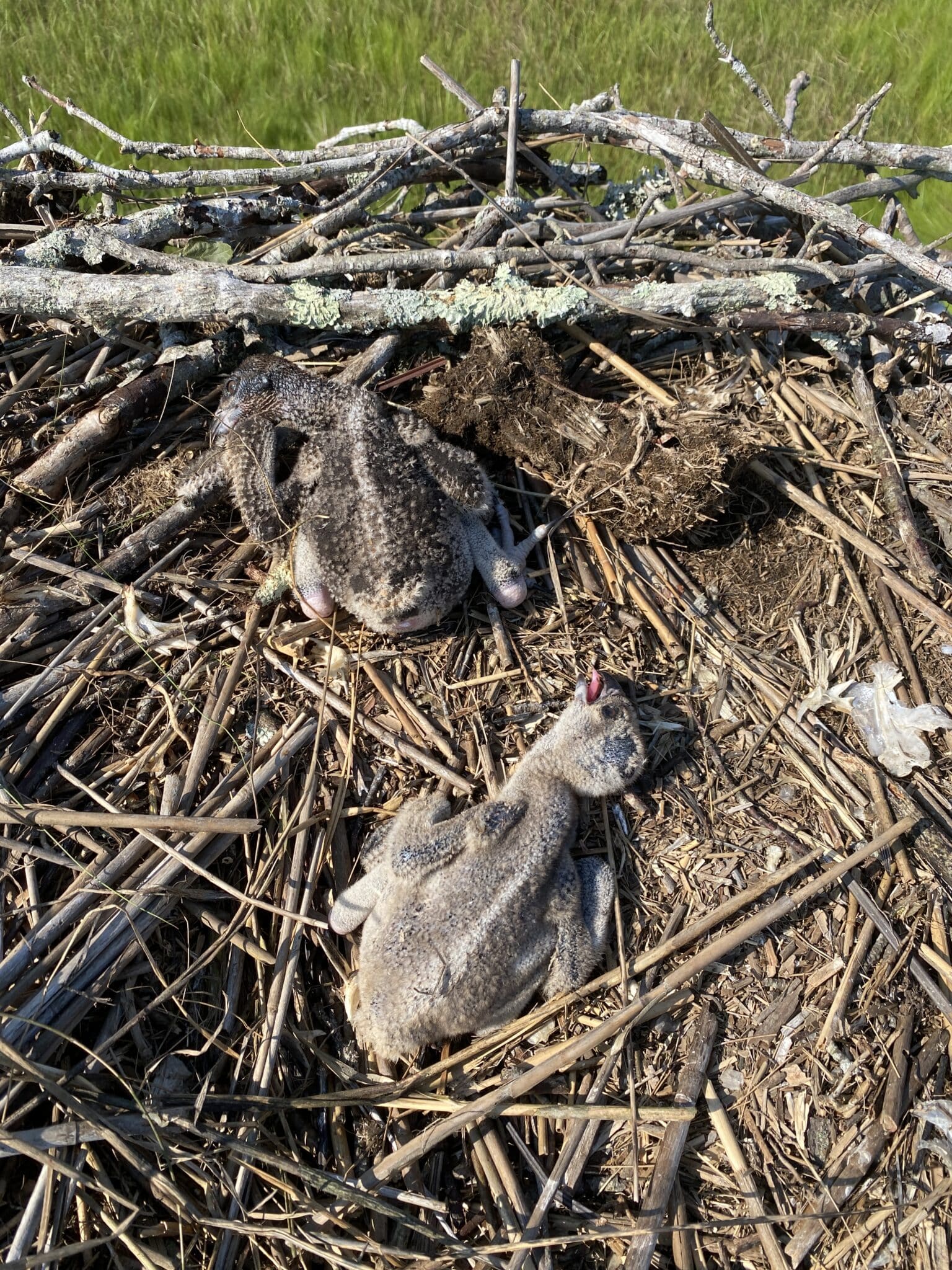
- Food stress highly visible by asymmetric growth of nestlings
- Brood sizes were reduced and/or nests were abandoned

Regional Impacts Were Severe
Some of the most dramatic declines occurred along the coast:
- Barnegat Bay: 121 pairs produced just 36 young
- Sedge Islands WMA: 37 nests produced only 5 young
- Delaware Bayshore: Productivity fell below sustainable levels for the first time
Even typically productive areas experienced widespread nest failure and brood reduction.
Fewer Large Broods, More Failures
Long-term trends also point to increasing food stress:
- Fewer nests are producing three young
- More nests are producing only one young
- Nest failures have increased significantly over the past decade
In 2025, only 4.3% of nests produced three young, well below the 10-year average of 22.7%.
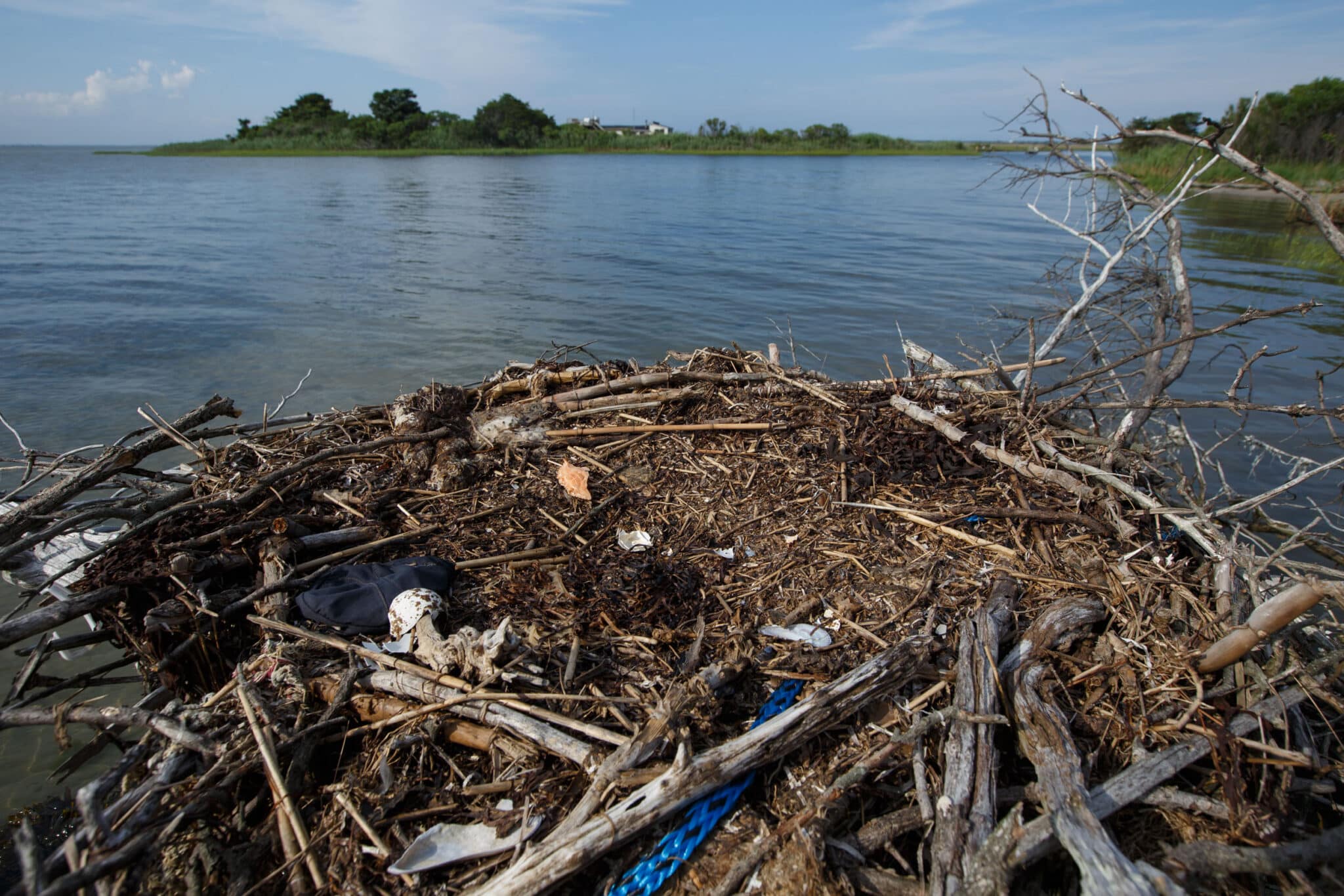
What This Means for the Future
Ospreys are considered an indicator species, meaning their success reflects the health of the broader coastal ecosystem. When they struggle to find food, it may indicate deeper ecological changes. Although Atlantic menhaden are currently not classified as overfished, their local availability, especially in nearshore waters, appears to be changing in ways that could impact not just ospreys, but many other species as well.
Looking Ahead
In response to these findings, efforts in 2026 will focus on:
- Increasing the number and frequency of nest surveys
- Improving data on nesting outcomes
- Expanding volunteer-based monitoring
- Investigating links between prey availability and nesting success of banded males
Despite the challenges of 2025, ospreys remain an important conservation success story in New Jersey. Continued monitoring will be essential to understanding and responding to the changes now underway.
Discover more from Conserve Wildlife Foundation of NJ
Subscribe to get the latest posts sent to your email.