An Unusual Season for Union County’s Falcons
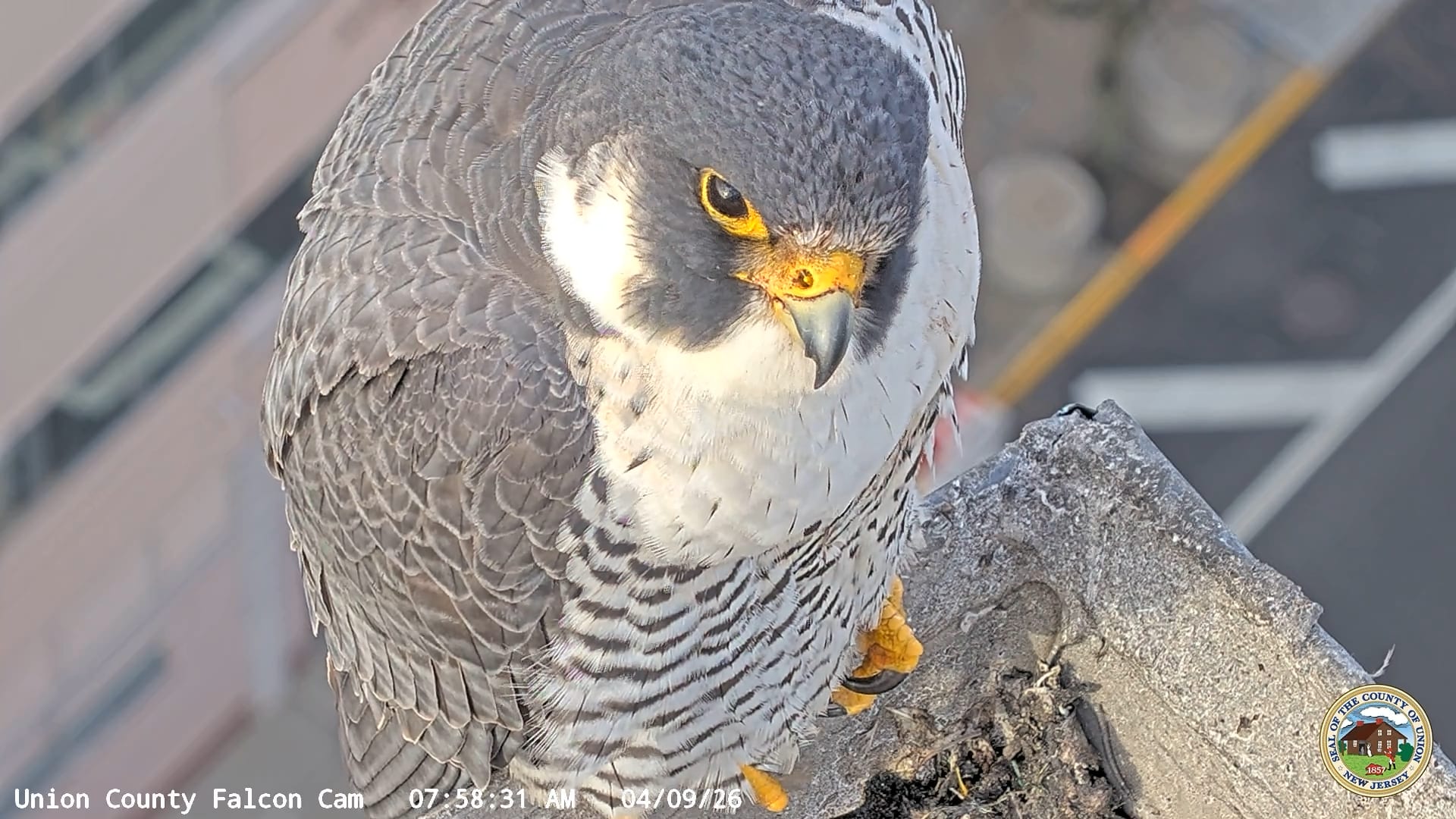
Each spring, wildlife enthusiasts across New Jersey — and beyond — tune in to watch one of the state’s most exciting conservation success stories unfold in real time: the Union County Falcon Cam. This season, viewers witnessed an unusual change when the nesting female was replaced mid-season. What makes this especially remarkable is that the new female is now incubating the five eggs laid by the previous female.
Hosted by the Conserve Wildlife Foundation of New Jersey in partnership with Union County, the Falcon Cam offers a live look at a nesting pair of peregrine falcons as they court, lay eggs, and raise their young.
Peregrine falcons are the fastest animals on Earth, capable of diving at speeds over 200 miles per hour. Once extirpated from New Jersey and east of the Mississippi River, these raptors have made a remarkable comeback thanks to decades of conservation efforts. Today, urban nesting sites like this play an important role in their continued recovery.
The nest in Elizabeth, atop the Union County Courthouse, provides a rare opportunity to observe behaviors up close — from courtship, incubation, and caring for their young as they grow and prepare for their first flights. But this season has brought an unexpected twist.
This year, “Lizzie” the female that replaced “Frida” last season, was herself replaced after laying a full clutch of five eggs. While turnover at established nests is becoming increasingly common throughout New Jersey and the Mid-Atlantic region, it is rarely witnessed in real time on a live-streaming camera. Even more remarkable, the new unbanded female is now incubating the eggs laid by her predecessor.
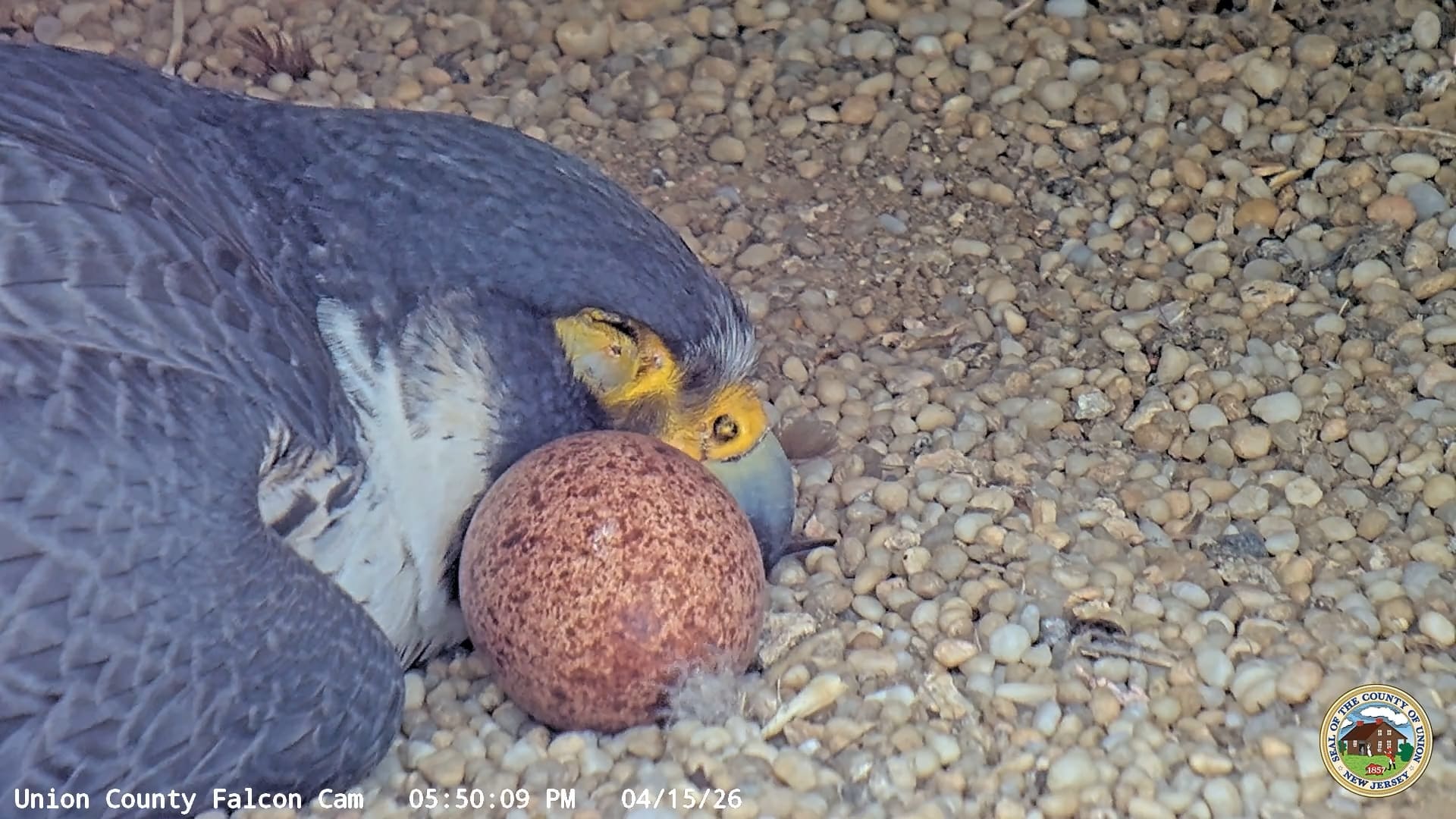
In addition, viewers have noticed that some eggs have occasionally been outside of the scrape, the shallow nest bowl where they are kept warm. This has occurred at times while Mango, the resident male, has been incubating. Because he is smaller than the female, it can be more challenging for him to fully cover all five eggs. At times, the new unbanded female has also been observed not incubating all eggs.
As part of normal development, eggs must be regularly shifted and rolled, but consistent warmth is critical. With some eggs receiving uneven incubation, it’s possible that not all embryos have developed as they typically would.
The last egg was laid on April 2. Under normal circumstances, hatching could begin around this time. However, given the disruptions in incubation, the timeline may be delayed. We are still hopeful that some of the eggs will hatch.
For now, it’s a waiting game. Staff and viewers are watching closely as the season continues to unfold.
Beyond the uncertainty, the Union County Falcon Cam remains a powerful connection to wildlife. It offers a real-time look at both the triumphs and challenges of nesting peregrine falcons, reminding us that nature doesn’t always follow a script.
Whether you’re a longtime bird enthusiast or just discovering these incredible raptors, the Union County Falcon Cam provides a front-row seat to their story, one that continues to evolve each day.
Discover more from Conserve Wildlife Foundation of NJ
Subscribe to get the latest posts sent to your email.
Leave a Comment
Why was Lizzie replace? Does the male decide this?
The male just goes along with the turnover that happens on nests. The reason females get replaced is mainly b/c there are more females and they are seeking out existing nest sites like this one.
Comments are closed.