Menhaden Management: What’s at Stake for New Jersey’s Ospreys?

Posted on
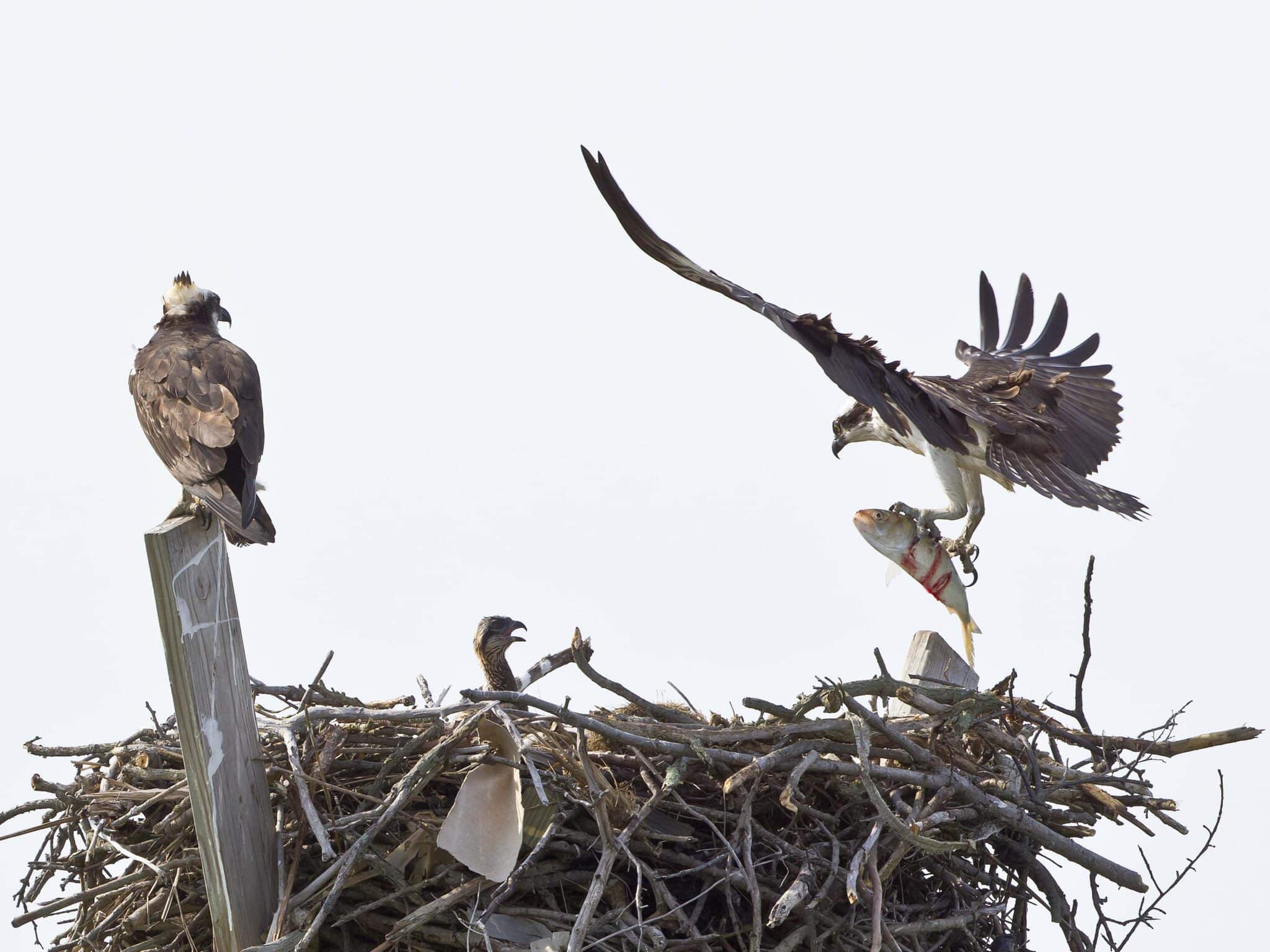
Earlier this month, the Atlantic States Marine Fisheries Commission (ASMFC) Atlantic Menhaden Management Board met to establish the coastwide harvest quota (Total Allowable Catch or TAC) for the next two years and consider management measures on the Chesapeake Bay (Draft Addendum II to limit the harvest on the Bay). The Bay has long been considered the most productive nursery area for Atlantic menhaden, contributing substantially to the coastwide population. These decisions will help determine how many of these important forage fish remain in the water to support the broader marine ecosystem. Overall, the Board voted to reduce the coastwide menhaden harvest by approximately 9% in 2027 and another 9% in 2028. They also voted to enact a more conservative harvest on Chesapeake Bay and link it to the coastwide harvest.
These reductions in harvest may sound good for the ecosystem but in 2025, only 63% of the coastwide quota was actually harvested. In Virginia, the reduction industry harvested 95,000 metric tons. Their new quota is still above what was harvested in 2025, as they typically get around 75% of the coastwide quota. In 2027, that means that their quota or Total Allowable Catch (TAC) will be around 114,000 metric tons.
The new TAC for 2026 and 2027 are also 30% above what was recommended by the ASMFC Technical Committee to have a 50% probability of keeping fishing mortality at or below the Ecological Reference Point (ERP) target. The ERP framework, which was enacted by the Menhaden Management Board in 2020, accounts for the vital role of menhaden as a forage fish an recognizes the need to maintain sufficient abundance to support predators throughout the ecosystem. This represented an important shift in fisheries management: recognizing that menhaden have value far beyond their commercial uses. Maintaining a fish population that is not technically overfished is not necessarily the same as maintaining sufficient forage to support a healthy and productive ecosystem.
The ERP model does not evaluate osprey breeding performance or localized food stress, although it does recognize ospreys as an ecologically sensitive predator. It specifically incorporates the forage needs of Atlantic striped bass, the focal predator in the assessment, which was a more consistently sensitive predator of menhaden. Basically, when fishing mortality exceeds the level associated with this target, more fish are removed from the ecosystem, leaving fewer available to support predators such as ospreys, whales, striped bass, tuna, seals, and other wildlife.
Throughout the meeting, fisheries managers devoted considerable attention to the socioeconomic impacts that meaningful harvest reductions could have on the industrial reduction fishery and lobster industry. These are legitimate considerations, but the Board ultimately chose a more moderate reduction rather than the substantially larger cut indicated by the scientific projections. The ecological needs of the marine ecosystem and the broader public benefits of maintaining abundant forage fish deserve equal consideration. Read the full recap from the American Saltwater Guides Association.
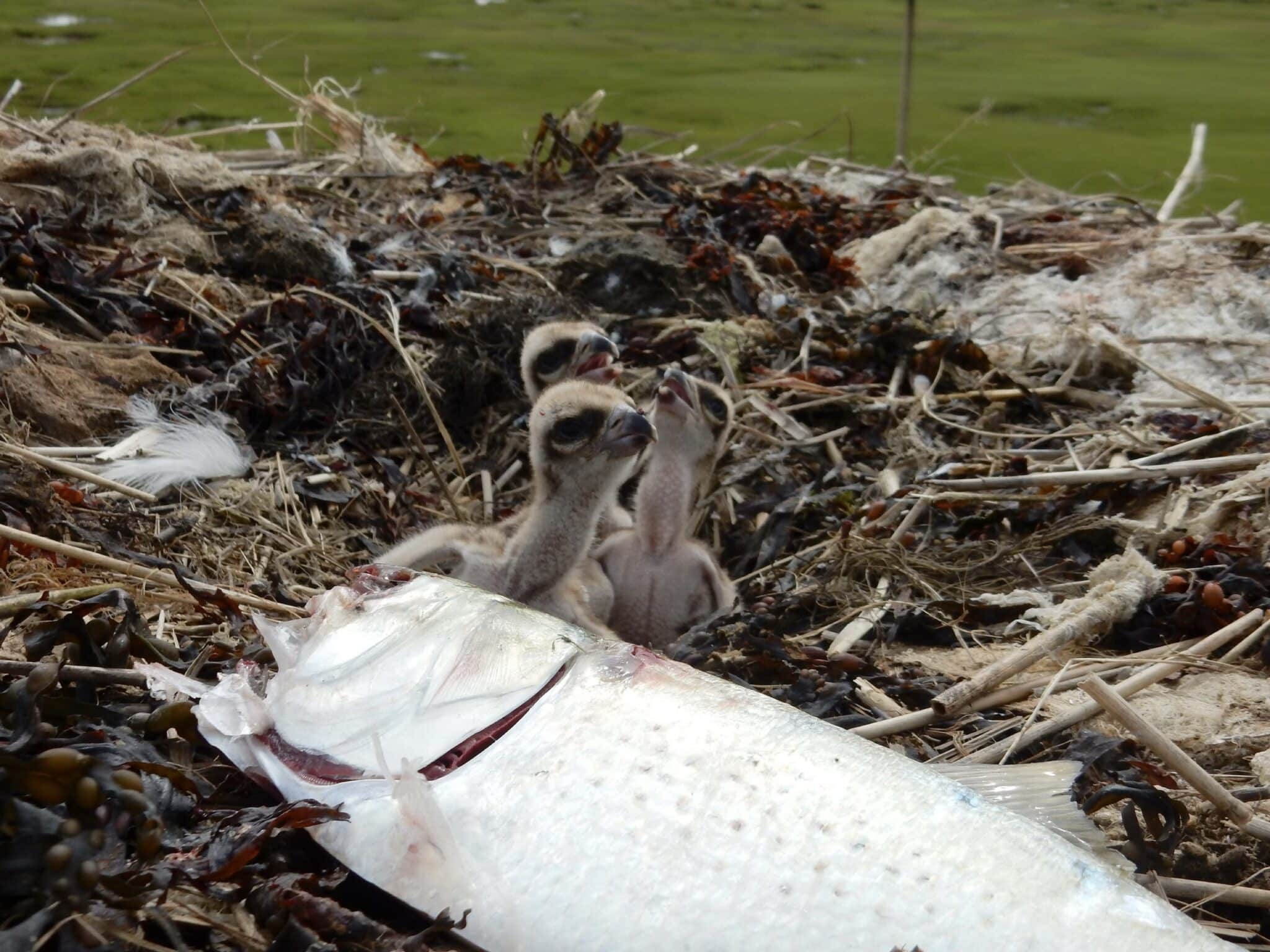
Just because there has been a reduction in the TAC, does not mean more fish will be available to ospreys when they return in the spring. We expect food stress among coastal nesting ospreys to continue into next year, and potentially into 2028, unless conditions improve. Dr. Bryan Watts of the Center for Conservation Biology has estimated that, in the Chesapeake Bay, “if these (breeding) deficits continue, populations are expected to decline at an average rate of ~10%/year.”
Here in New Jersey, where the majority of our ospreys nest along the coast and have historically relied on menhaden as a plentiful food resource, continued declines in reproductive success could eventually translate into a considerable decline in the breeding population.

Ospreys are long-lived birds that may continue to occupy territories for several years even when they are not reproducing at a level to sustain the population. Reproductive productivity, measured by the number of young produced per active nest, is a much more meaningful indicator of population health. We should not assume that our osprey population is stable simply because the number of nesting pairs remains high.
Ospreys are highly visible, fish-dependent predators and valuable bioindicators of the health of our coastal ecosystems. Right now, their reproductive success is providing an early warning of problems within the marine food web. Ensuring the availability of adequate forage fish is an important management objective if we want to protect the long-term future of New Jersey’s ospreys.
Finally, we are incredibly grateful to the volunteers who work on the front lines of monitoring osprey nests throughout New Jersey. Their dedication, countless hours in the field, and careful reporting make this work possible. Without their efforts, we would have a much more limited understanding of the challenges facing ospreys and the marine environment in an increasingly changing world. Their contributions are essential to documenting these changes and ensuring that the information needed to make better management decisions is available to the public and decision-makers.
Discover more from Conserve Wildlife Foundation of NJ
Subscribe to get the latest posts sent to your email.
Leave a Comment
THESE MENHADEN LIMITS ARE DISASTROUSLY TO MEAGER! DO WHATEVER YOU CAN TO PRESERVE MENHADEN ASAP! WE ARE LOSING OUR BLESSED OSPREY, ADULTS AND YOUNG!