Morning After Migration

POST #2 ON THE 2013 AMPHIBIAN MIGRATION

by MacKenzie Hall, Amphibian Crossing Project Coordinator


The past week has been like a wild trip through biomes and time zones.  A half-foot of wet snow buried NJ on Friday, but it didn’t stand a chance against a  sunny weekend above 50˚F and the valiant arrival of Daylight Savings Time.  Bam!  Spring.  Suddenly birds were singing, crocuses were blooming, and salamanders were stretching their hamstrings for the journey ahead.

Throughout the day on Monday (March 11) a long wall of rain crept eastward across the US.  It couldn’t possibly miss NJ, and the temperature would hold around 50˚F overnight – excellent predictors for a migration.  The question was when the rain would hit and whether a rainfall starting very early in the morning would trigger many amphibians to move.  There seem to be almost unlimited permutations for how the important factors of ground thaw, temperature, rainfall, date, and time of night can converge, and after almost 10 years with the Amphibian Crossing Project I still learn new and surprising things. 
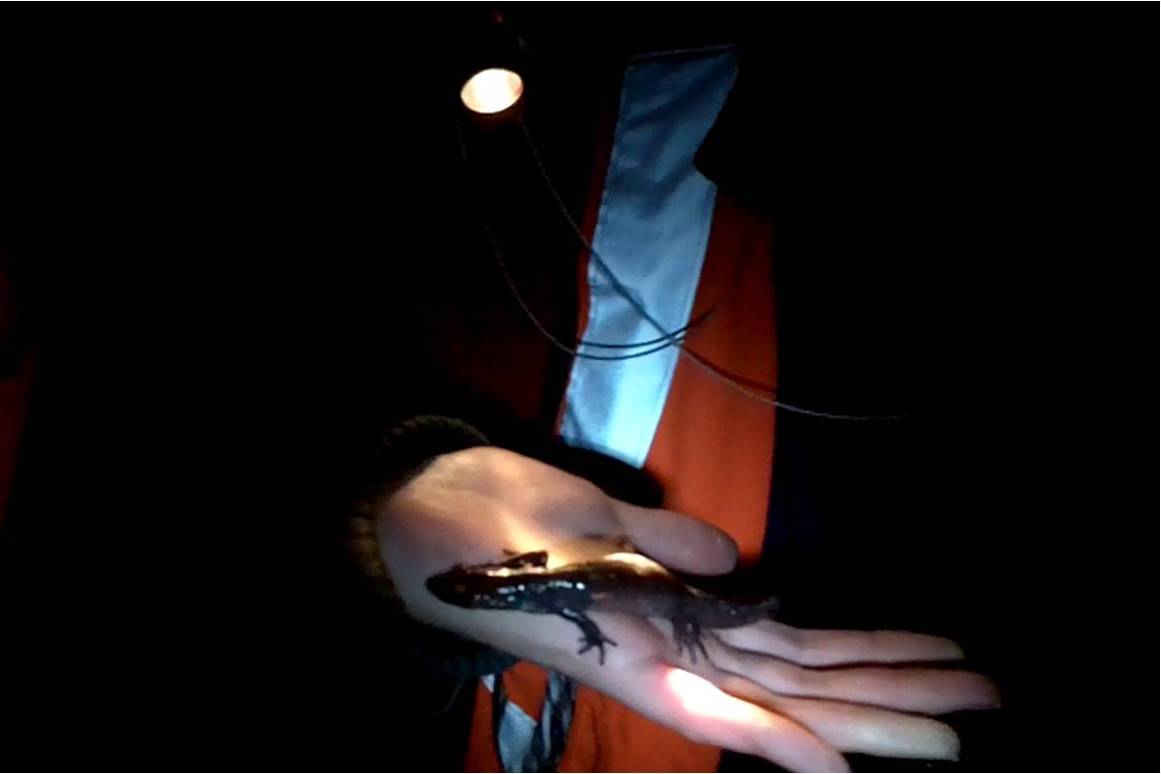
 

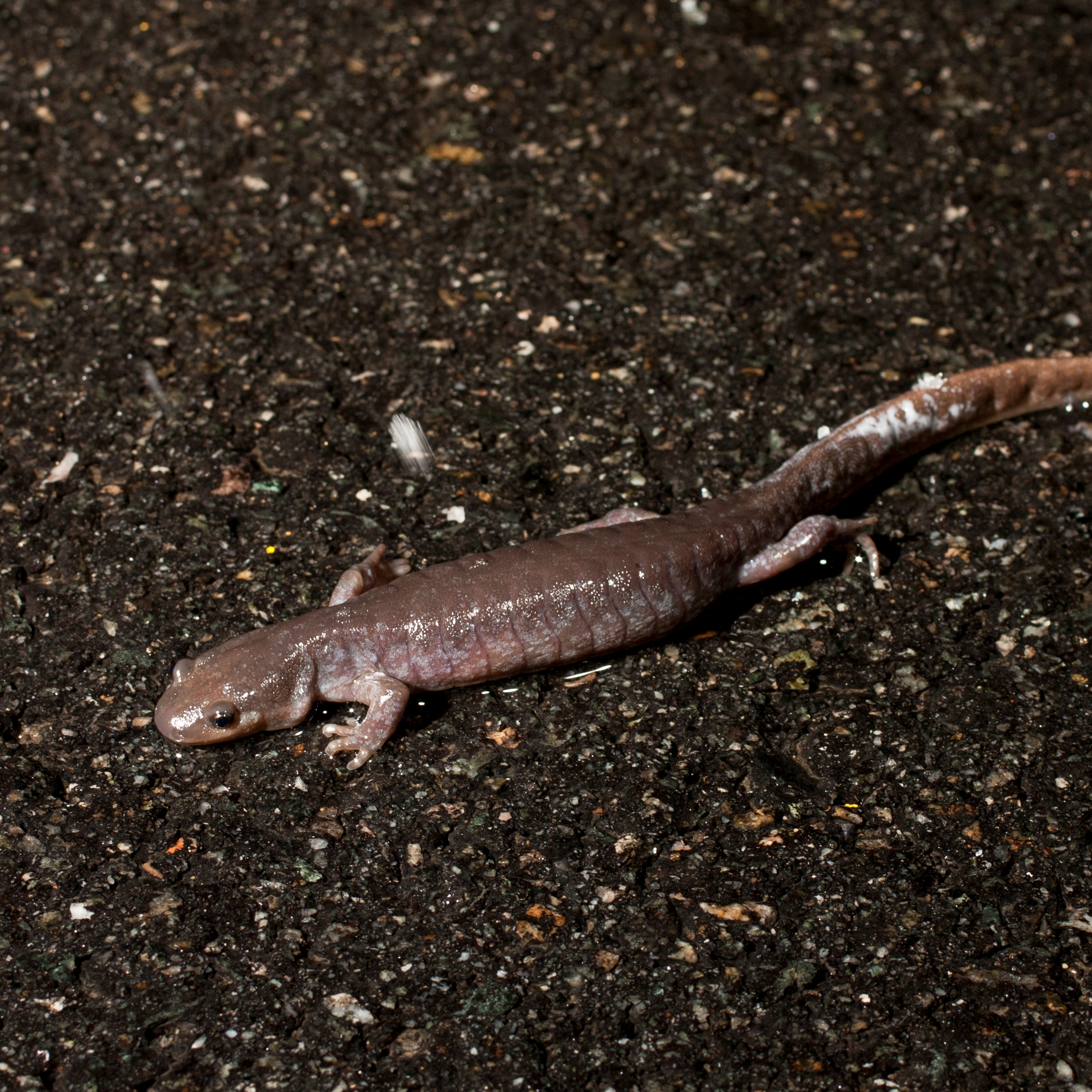
Snapshot of a Jefferson salamander being helped across the road.

A handful of us chose to wait out the rain at one of our big road-crossing sites in Byram (Sussex Co.).  At least 3 hours before the rain even started, someone noticed a salamander crossing the dry road.  We spread out to cover more ground and kept counting.  By the time the first raindrops hit we had already tallied (and ferried) 190 salamanders and 20 frogs across the asphalt threshold dividing their forest habitat from the breeding pool below.  We were all pretty surprised and excited by what we were seeing.

The rain came around 2:30 am, and in the 4 hours before dawn the road was swimming with frogs and salamanders.  We did our best to keep up with the count, and the rescue, especially as vehicle traffic picked up toward dawn.  Eight cars per hour around 3:00 am, then 10 cars per hour, then 26.  By 6:15 it was hard for the last of us – Bob Hamilton and I – to keep our feet on the pavement as the vehicle count crested 100 per hour.  We also started to lose the battle against roadkill – as many animals were getting hit as we could save.  Luckily it was just a short period, and at dawn the migration would pause.   Our totals for that night:  1,119 salamanders and frogs, 954 of which made it to their destination!

Our “scouts” all across northern & central NJ had similar reports.  A big migration had happened before dawn, and there was some roadkill as evidence.  But you can listen for a happier kind of evidence – the honking and peeping of those who made it to their pool.  The harbingers of spring are arriving.
Morning After Migration

POST #1 ON THE 2013 AMPHIBIAN MIGRATION

by MacKenzie Hall, Amphibian Crossing Project Coordinator

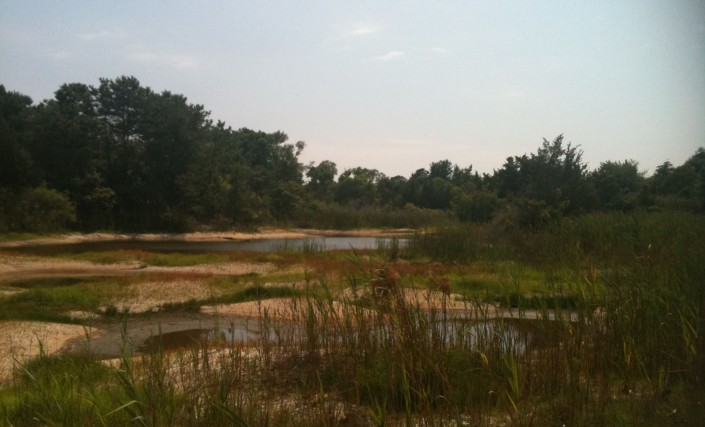
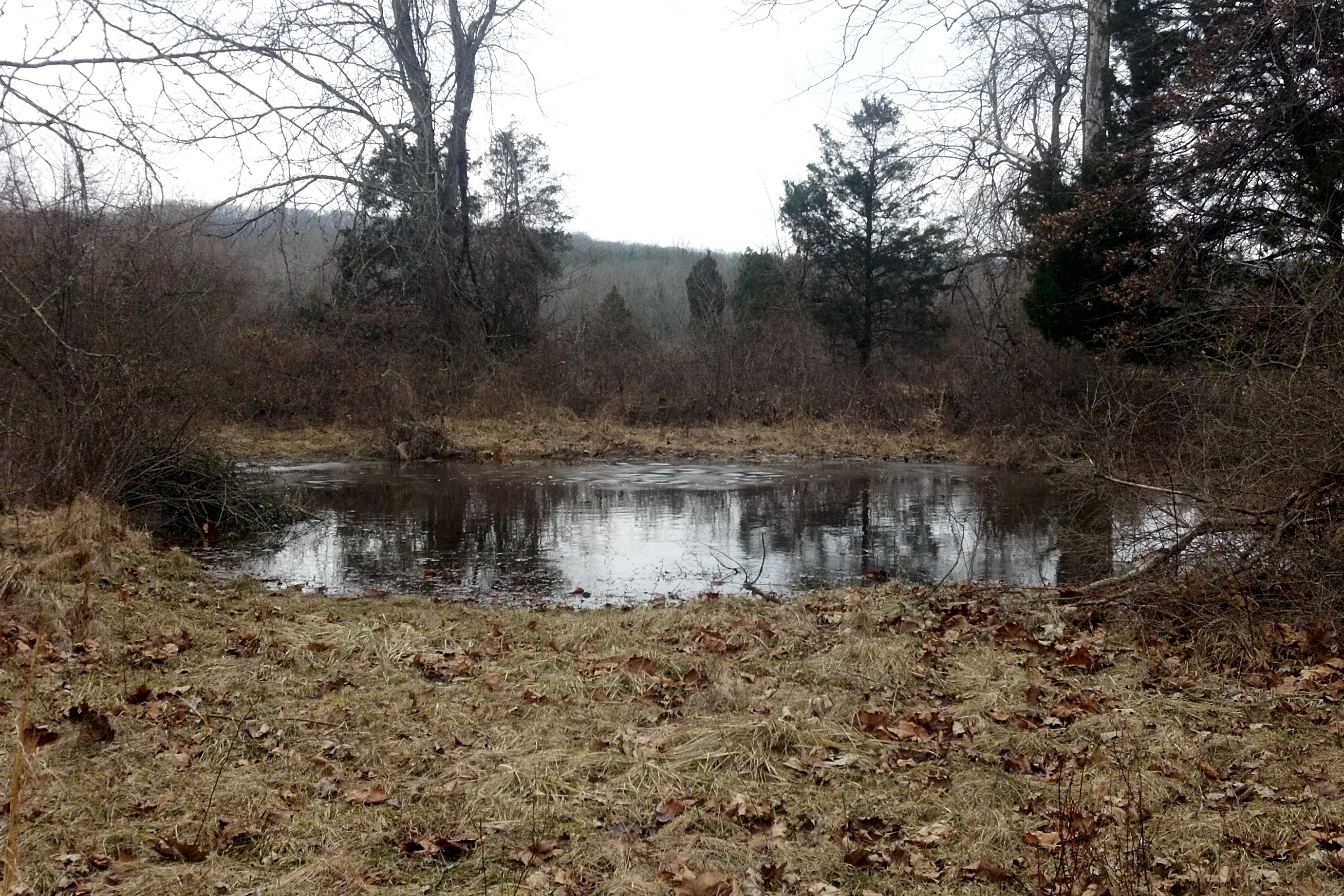
This small vernal pool in Hopewell is ready for things to start hoppin'.
This small vernal pool in Hopewell is ready for things to start hoppin’.

For the 98 volunteers signed on to help with this year’s amphibian road-crossing efforts, yesterday brought on the first flurry of excitement.  Forty degrees!  The promise of nighttime rain!  Saturday’s soaker had helped to get the ground thawing, though many of the amphibians’ breeding pools were still capped in ice.  The conditions weren’t going to be perfect, but surely some eager salamanders would be enticed to come out from their winter burrows and set off on migration.  And when their tiny feet hit the pavement of peril, we were gonna be there gosh dernit!

So our “scouts” got ready for night (and rain) to fall, to go check on a dozen or so road-crossing hot-spots in northern and central NJ.  Then, as volunteer Phil Wooldridge of Warren County put it, we experienced a little deja-vu.  The rain started later, the temperature was colder.  North of Route 80, snow and sleet fell instead.  We amphibian crossers have gotten used to the shakiness of weather forecasts, and to the somewhat complex combination of triggers that set an amphibian migration in motion.  At any rate, we basically got skunked last night.

The only sign of life came from Hampton, in Sussex County, where Sharon and Wade Wander found a single Jefferson salamander crossing the road to his ice-covered breeding pool.  Tough little salamanders, those Jeffs.  Our first one of 2012 came out during a wet snowfall, too, around 2:00 am on February 24th. 

The town of East Brunswick was also counting on last night’s forecast when they decided to close Beekman Road – a town road bisecting an amphibian migration path.  The town’s Environmental Commission has coordinated the closure for the past 10 years to protect the spotted salamanders, wood frogs, and other migrants on 4 to 10 nights every spring (read about it here).  Even there, only one male spotted salamander was seen making his way to the pool.

So, we’ll keep doing our best to predict the amphibian migration and to be in the right places when it happens.  Clearly the big long nights are still in front of us.

To learn more about our Amphibian Crossing Project and experience the migration through video, please visit our “Amphibians Crossing!” webpage.

Report local amphibian crossings during spring migration!

Every spring, vernal pool breeding amphibians migrate from upland wintering habitats to their spring breeding pools.  Many of these ancestral migratory paths are bisected by roads, creating a barrier that not only disrupts natural migration and fragments habitat but often proves impenetrable, limiting gene flow and disconnecting populations.   Our Amphibian Crossing Project works to protect these migration corridors through coordinated volunteer rescue efforts that move amphibians safely across the road during these annual mass migration events.  Currently, our efforts are focused on select sites in northern New Jersey but we want to expand our database to document these migratory paths across the state.

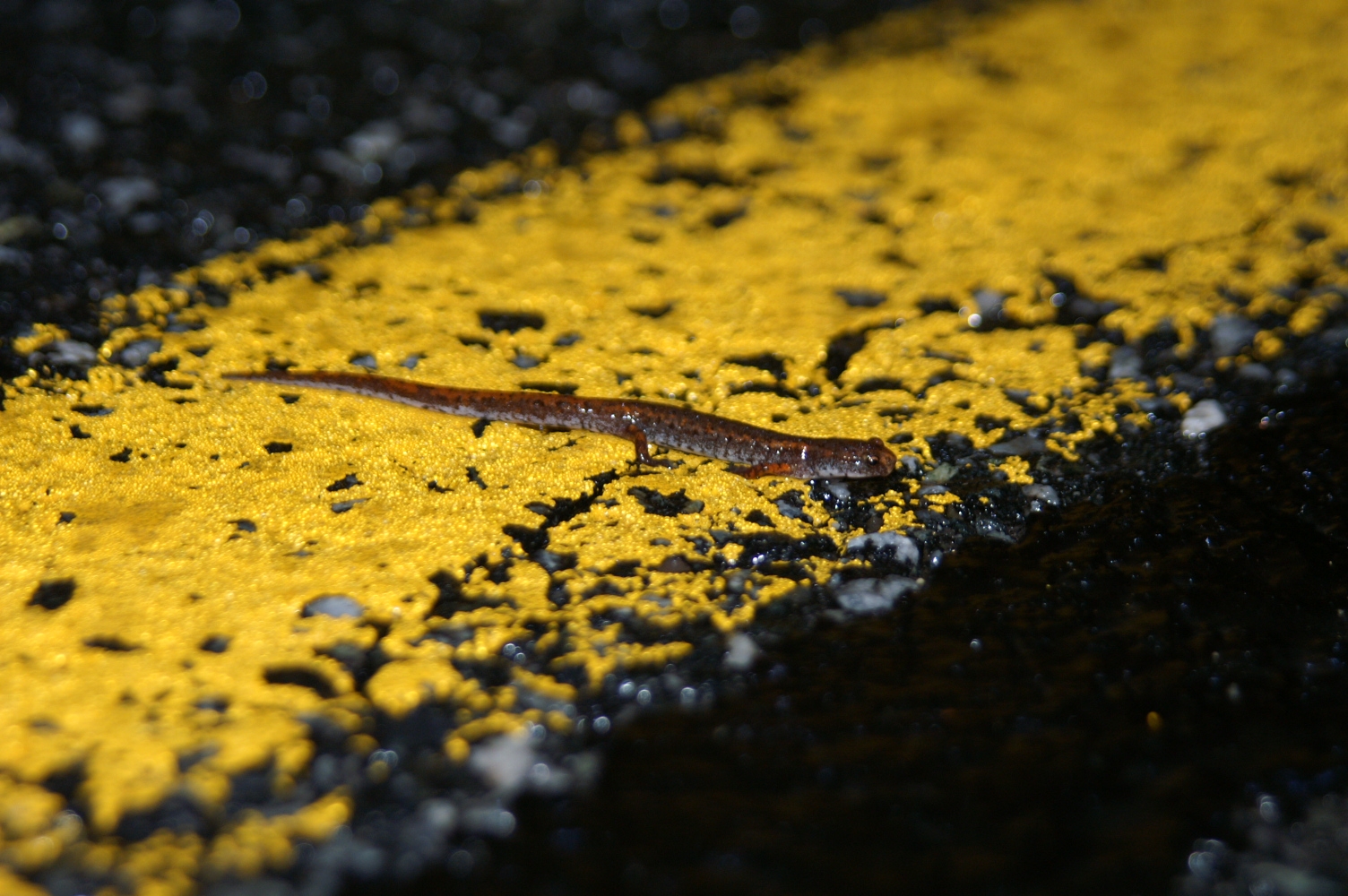
Four-toed salamander (c) MacKenzie Hall


If you would like to report an amphibian crossing near you, please email us with:

-Location of the crossing marked clearly on a map

-List of species seen crossing or DOR (dead on road)

-Date(s) of occurrence and any other pertinent information you may have


*We ask that you only report known crossings and do not attempt to locate more by driving around on rainy spring nights.  Increased vehicular traffic will increase mortality of amphibians during their annual spring migration!


Photos From the Field

Oystercatcher Technician shows diversity of tasks in wildlife conservation

By Alfred Breed, CWF Technician

My official job title with Conserve Wildlife Foundation of New Jersey is  “American Oystercatcher Technician”.  As such I am tasked during nesting season with monitoring Oystercatcher nesting sites, and during migratory season with locating flocks of Oystercatchers, counting them, resighting marked birds in each flock, recording data of field survey results and reporting our NJ counts and resights to a central database that holds data from the other reporting states in the migratory flyway.

As is usually the case in any job that has a “description”, the phrase “and other such tasks as assigned” is included as a catch-all for things that aren’t specifically listed in the description, but can be an important part of the duties of the position nonetheless. In my case these ancillary tasks are different each day, and often involve three of my favorite things: wildlife (of course!), science, and gear.  Working around my Oystercatcher surveys, which can only be conducted at high tide, I might be tasked to go to a location anywhere in the state and survey for a particular species of plant or animal; or to site select, construct, install, use, maintain, and troubleshoot various types of data collection or other equipment throughout South Jersey.

Trucks, trailers, boats and kayaks are the big-ticket items that I use every day, but I’m lucky enough to use a large variety of other cool tools and equipment as well. Driving is often a big part of my day, with travel times between sites eating up significant portions of the workday.  Sometimes I’m a wildlife EMT or ambulance driver, saving sick or injured animals from their immediate predicament and/or transporting them to various certified rehabilitation facilities located throughout the state.

Best of all is when I’m asked to assist visiting scientists or other conservation partners in their work, which can mean bio-sampling or banding.  Direct human/wildlife interaction is only appropriate when it is  for valid scientific or conservation management purposes, and is sanctioned and a permit issued by the appropriate governing body.  To be a staff member and so to be included in these sanctioned and permitted activities is a rare privilege indeed.

Each day is different, always interesting, occasionally exciting, and always personally rewarding as I play a small part in the management of threatened and endangered wildlife and the habitat that we share.

CWF VOLUNTEERS GO “CAMP” ing

RESULTS FROM THE 2012 SURVEY SEASON.

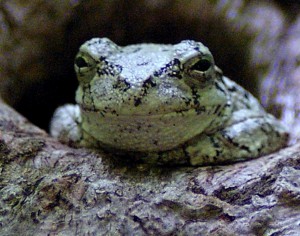
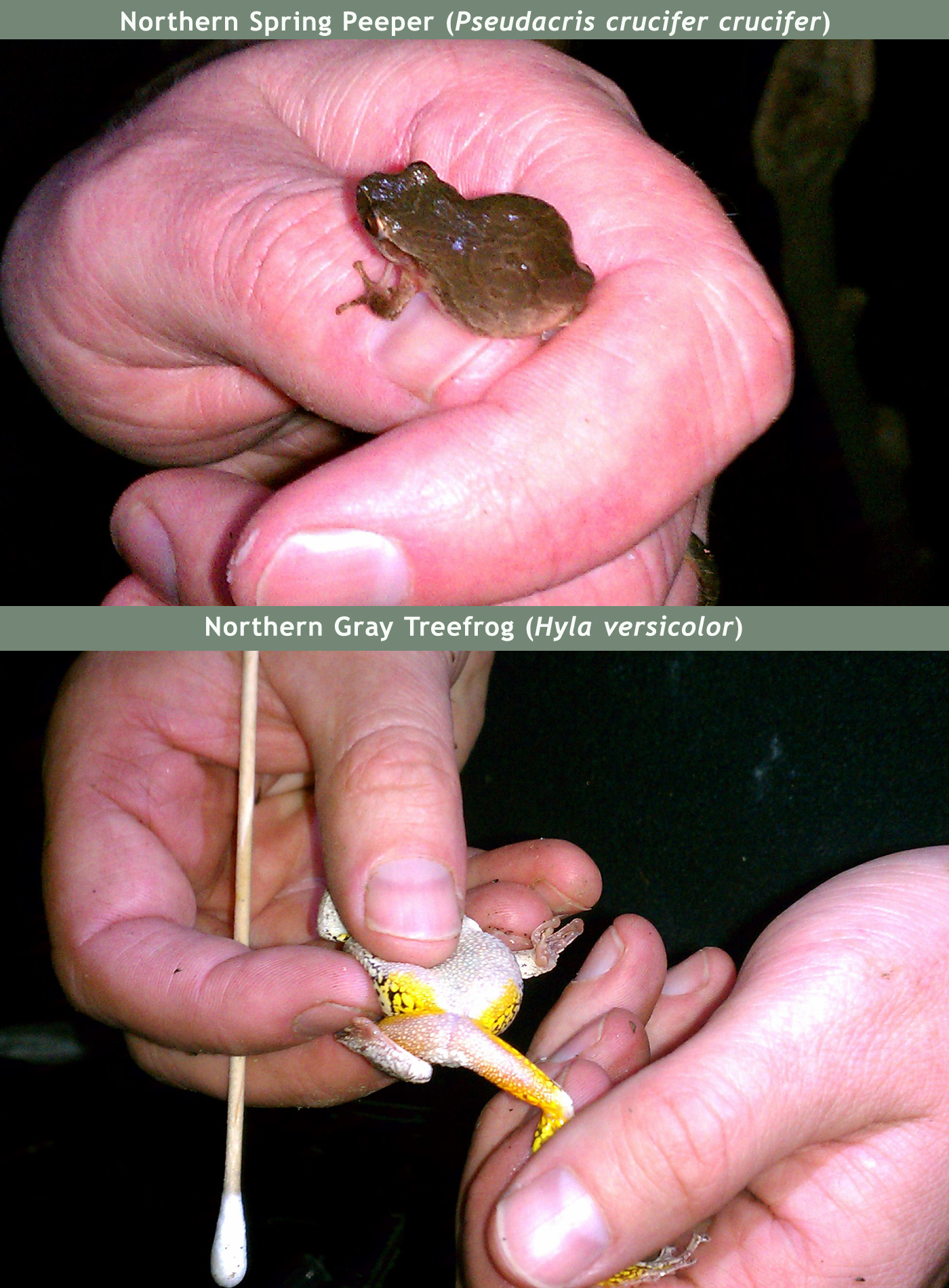
Northern Gray Treefrog © Thomas Gorman

By: Larissa Smith: Wildlife Biologist/Volunteer Manager

When people first hear the word CAMP they might think of going out in the woods and setting up a tent, but CWF’s CAMP project is all about monitoring New Jersey’s amphibian population. CAMP stands for the Calling Amphibian Monitoring Project.

In 2012 33 volunteers participated and surveyed a total of 33 routes out of 63. Volunteers conduct roadside surveys (after dusk) for calling amphibians along designated routes throughout the state. Each 15-mile route is surveyed three times during the spring. Each route has 10 stops, where volunteers stop, listen and record all frog and toad calls for 5 minutes.

In 2012 15 out of the 16 New Jersey amphibian species were detected. The only species not detected was the Eastern Spadefoot.  Northern Spring Peepers were the most common species detected on 31 of the routes while Green Frogs were detected on 22 routes.  Both the American Bullfrog and Southern Leopard Frog were heard on 16 of the routes.

In NJ there are four frog and toad species of conservation concern; the Southern gray Treefrog  is a state endangered species, the Pine Barrens Treefrog  is a state threatened species, and the Carpenter Frog and Fowler’s Toad are both  special concern species. The Southern Gray Treefrog was detected on 2 of the CAMP route, the Pine Barren Treefrog on 3 of the routes, the Fowler’s Toad on 13 of the routes and the Carpenter Frog on 7 of the routes.

CAMP data is entered into the North American Amphibian Monitoring  Program (NAAMP)  database housed by the USGS Patuxent Wildlife Research Center. All of the occurrence data for these species is  extracted from the NAAMP database, quality checked for validity, and entered into the Biotics database by CWF & ENSP staff. These data will then be used in future versions of the Landscape Project maps.  These maps are used by planners in various state, county, municipal and private agencies to avoid conflict with critical wildlife habitat.

Thank you to all CAMP volunteers!

WOULD YOU LIKE TO HELP IN 2013?

  • Twenty-five routes are available for the 2013 season
  • For more information on volunteering e-mail:  Larissa.Smith@conservewildlifenj.org


Observations of Rare Species Wanted!

NATURE WATCHING ISN’T JUST FUN, IT CAN BE USEFUL TOO

By Michael Davenport, Marine Species & GIS Programs Manager

Like many birdwatchers, although I still enjoy seeing the neighborhood cardinal in my yard, it’s the sightings of rarely encountered species, especially those classified as endangered, threatened, or special concern, which really keep my eyes scanning around during a hike.

Observations of Special Concern species, such as this Eastern Box Turtle, may be reported to the NJ Endangered Species Program. Photo by Mike Davenport.

Many birdwatchers, or nature enthusiasts of other species groups such as reptiles or butterflies, share their encounters with rare species on websites or bulletin boards.  In addition, several organizations, such as the Cornell Lab of Ornithology or NJ Audubon, recruit “citizen scientists” who collect species observation data and submit that data electronically via websites such as eBird.  That data is important for those organizations’ scientific research and assists scientists in analyzing population trends over years.  However, more often than not, it never finds its way to New Jersey’s state biologists nor the state regulators whose task it is to protect rare species habitat in the state.

The New Jersey Endangered and Nongame Species Program (ENSP) collects data for, not just rare birds, but all of the state’s endangered, threatened, and special concern species.  A Rare Wildlife Sighting Report Form is available on ENSP’s website for download as well as instructions for completing the form.  A complete list of all of the species tracked by the state can be downloaded here.

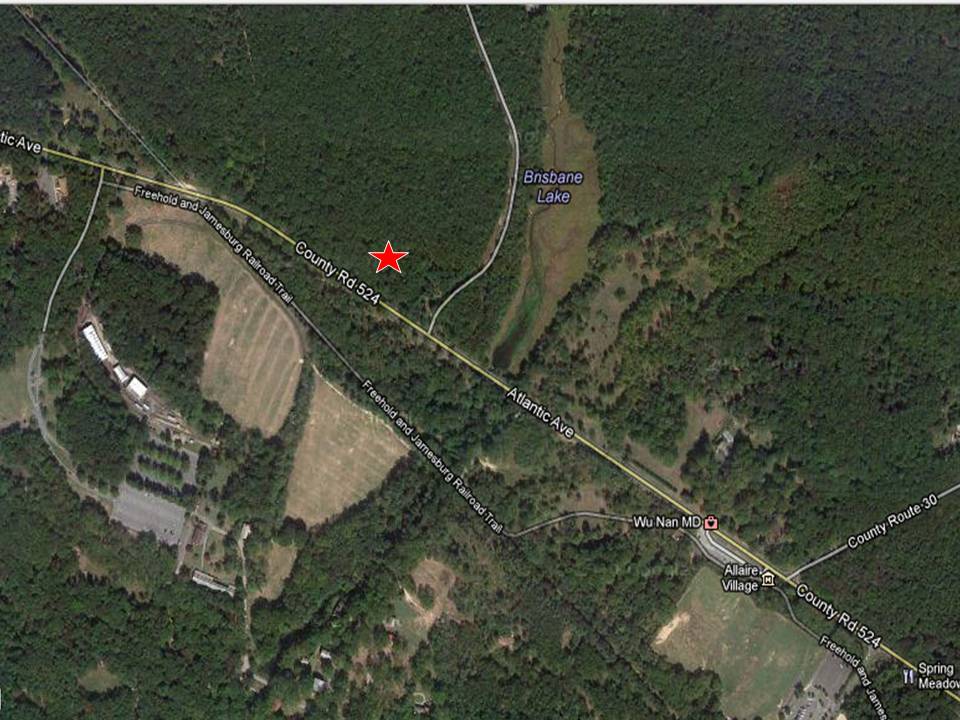
A map of the location of your observation, such as this one, should be sent with your Rare Wildlife Sighting Report Form.

Rare species data within the state’s database plays a critical role in wildlife and habitat conservation. It is the foundation of the NJ DEP’s Landscape Project, a GIS product that maps critical areas for imperiled species based upon species locations and land-use classifications. The resulting maps allow state, county, municipal, and private agencies to identify important wildlife habitats and protect them in a variety of ways. This information is used to regulate land-use within the state and assists in preserving endangered and threatened species habitat remaining in New Jersey.

Reporting your rare wildlife observation is easy.  Simply complete the form, attach a map of where the animal was observed, as well as any photographs taken, and then mail or e-mail the form and map to ENSP at the address provided on the form.  For more details about the state’s rare species mapping, please visit our webpage.

Photo from the Field

HEADSTARTED EASTERN TIGER SALAMANDERS INTRODUCED INTO VERNAL POOL COMPLEX IN CAPE MAY
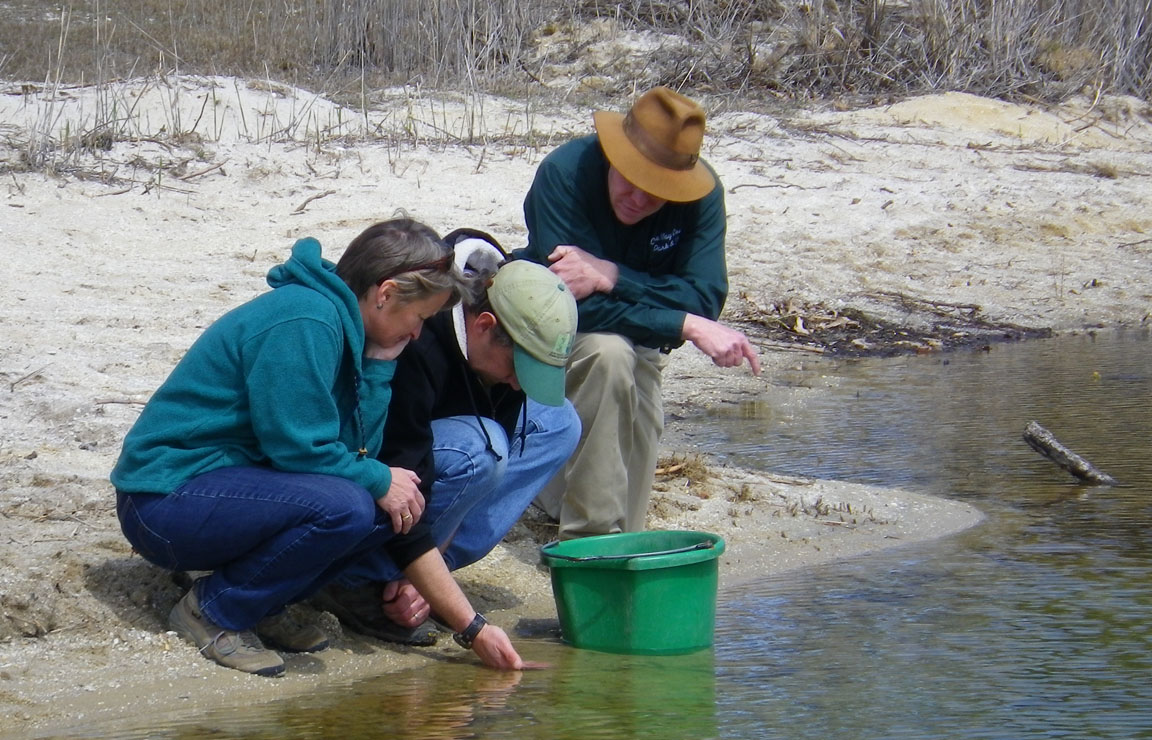
Kim Korth and Dave Golden with Kevin Wilson from the Cape May County Zoo

Eastern tiger salamander larvae, hatched at the Cape May County Zoo, were released into our enhanced vernal pool complex in Cape May this month.   Continued monitoring and genetic analysis of this population will determine survivorship of headstarted egg masses versus those placed in predator-exclusion cages in the pool.

On The Lookout For Amphibian Diseases

We need your help! 

Spring is here and amphibians all across the state making their way to their breeding grounds.  Unfortunately, there are two emergent diseases, chytridiomycosis and Ranavirus, that have caused devastating declines in amphibian populations worldwide. New Jersey is not exempt – there have been confirmed cases of both here in the Garden State.  CWF, the NJ Division of Fish & Wildlife, and Montclair State University, are working together to track the occurrences of these diseases in the state and are seeking information about any potential outbreaks.

If you see any wild amphibians (frogs, toads, salamanders, newts), or even reptiles, that appear to be acting abnormally or have visible lesions on them, or if you witness any mass die-offsk, we ask you to please report them to us.  This includes tadpoles, which are the main target of some strains of Ranavirus.  Please e-mail us and describe your observations (photos are helpful); do not send samples without first contacting us.

Please contact either:

Lisa Hazard (hazardl@mail.montclair.edu) OR Kirsten Monsen-Collar (monsenk@mail.montclair.edu)

Department of Biology and Molecular Biology, Montclair State University

Amphibians on the March – in February!

2012 MIGRATION SEASON BEGINS

by MacKenzie Hall, Biologist

Jefferson salamander - Bob Hamilton
A Jefferson salamander gets an early start on spring (Feb 24). Photo by Bob Hamilton

After the wimpy winter (which I quite enjoyed), we knew the amphibian migration could start a little earlier than normal this season.  The ground has been thawed since mid-February across most of NJ, leaving only a reasonably warm nighttime rain to propel frogs and salamanders into their annual breeding frenzy.

And in an oddly symbiotic way, their frenzy becomes ours as well.  This year, the Amphibian Crossing Project covers 6 road rescue sites in Warren, Sussex, and Passaic Counties – more than we’ve ever done before – and includes monitoring at a number of amphibian road-crossings in the Sourland Mountains region.  More than 130 trained volunteers are part of the migration survey, which aims to 1) help amphibians survive the dangerous cross-road journey to their breeding pools, and 2) collect data to find out which sites are most important and which populations are most threatened by traffic.  With all the new sites, new helpers, and big plans for the data we collect this year (stay tuned…), a lot is riding on the weather.  We and our scouts have been out in every little nighttime rainfall over the past month that’s been anywhere near 40 degrees.

Gene & Ginger
New volunteers Gene & Ginger Martel show that they're ready for migration! Photo by Ginger Martel

My first salamander of the season came out of the woods at 2:00 am on February 24th at a crossing in southern Sussex County, as light rain turned to snow in 37 degree air.  Aside from the three bulky humans watching him labor across the road, this Jefferson salamander had a quiet and uneventful trip.  No cars passed through; the only thing coming down on his cool skin was the occasional snowflake.  If you’re a slow, small amphibian, a middle-of-the-night migration is the way to go.  Your chance of survival is slim in the earlier evening’s traffic.

The nights of February 24th, 29th, and March 2nd were also rainy and just warm enough to draw some eager amphibians to the surface.   Jefferson salamanders are famously cold-hardy and have made a big push to their pools.  Spotted salamanders, wood frogs, and even a few spring peepers have taken advantage of the early thaw as well.  Peak migration is still ahead of us in northern NJ, though, so we’ll continue watching the weather and waiting for our next night out in the rain.

Spotted female
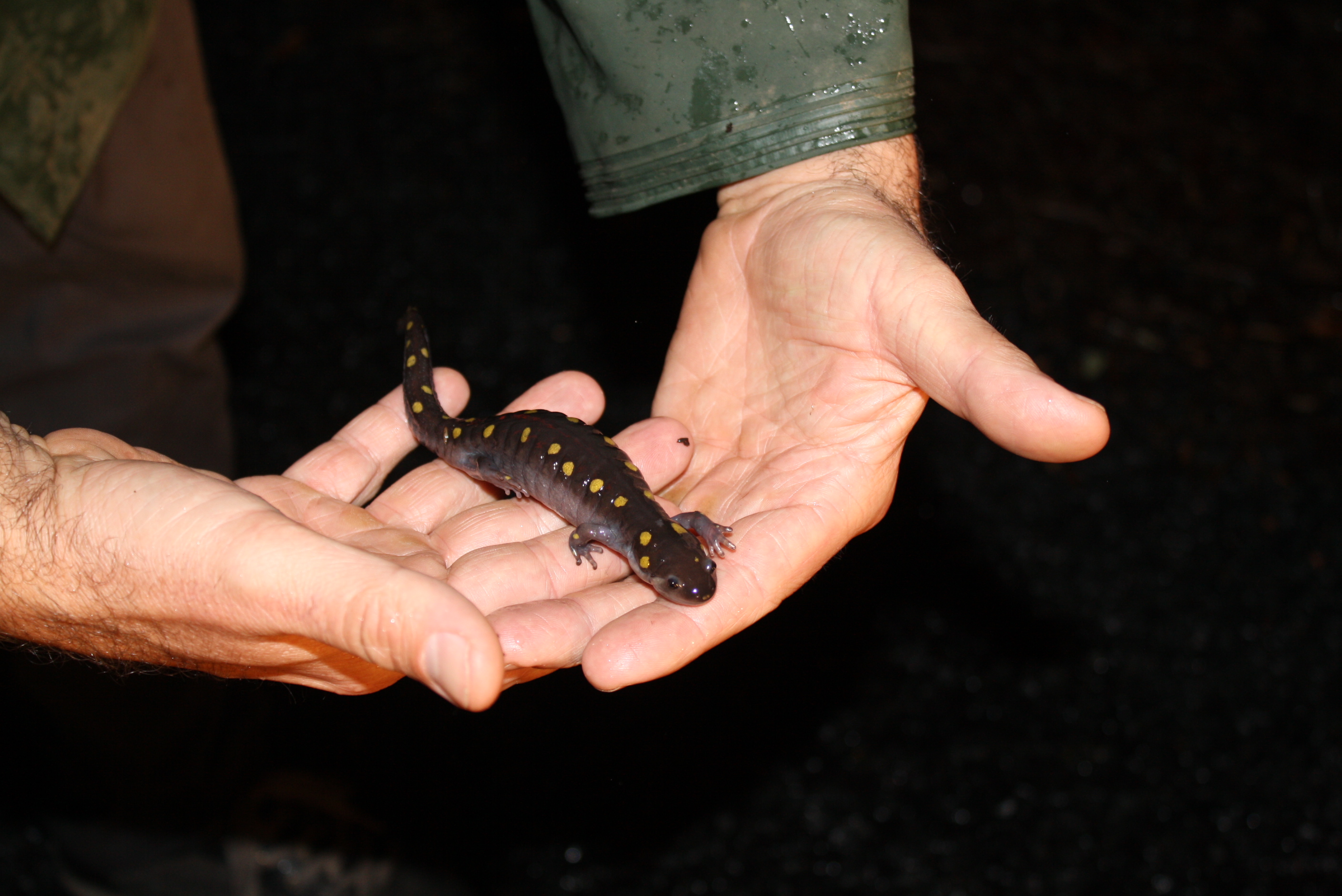
A large female spotted salamander, heavy with eggs, gets help crossing a Hunterdon County road (Feb 29). Photo by MacKenzie Hall

SALAMANDERS ARRIVE AT ENHANCED VERNAL POOL COMPLEX IN CAPE MAY

by Karena DiLeo, Wildlife Biologist

Newly excavated vernal pools © Dave Golden

This fall ENSP, in partnership with CWF, completed a project to enhance a complex of vernal pools in Cape May County, creating habitat for state-endangered eastern tiger salamanders and other vernal pool breeding amphibians.  Since excavation of these twelve interconnecting pools was completed in October, and eastern tiger salamanders return to vernal pools to breed in early winter, we were unsure the salamanders would find our new pools in time to breed this year.  But on December 14th, as we were adding leaves and debris to provide attachment points for the salamanders to lay their eggs, we noticed eastern tiger salamander egg masses in our pools!  The salamanders not only found our pools but found the only three sticks in the pool to attach their eggs!

To supplement this population and increase genetic diversity, egg masses collected from other sites have been introduced into these pools.  Egg mass were also collected as part of a headstarting program at the Cape May County Zoo.  Amphibians are very vulnerable to predation during their egg and early larval stage so by headstarting these salamanders and raising them in a safe environment, like special tanks at the Zoo, we are able to release larger individuals into the pools and increase survivorship.

This enhancement is part of a larger project to create an eastern tiger salamander stronghold in New Jersey by linking sites where this state-listed species are found and creating new metapopulations that allow for migration between sites.  Increasing connectivity of vernal pool habitat also allows us to plan for climate change and possible sea level rise by assisting these species’ migration towards more upland habitats.