CWF Honors Four Inspiring Leaders at 12th Annual Women & Wildlife Awards

Former Gov. Kean delivers stirring keynote speech before 200 people at Duke Farms event
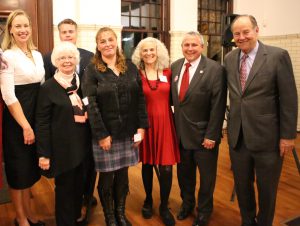
 

Kelly Mooij, Jeannie Geremia, CWF Executive Director David Wheeler, Hazel England, Amy S. Greene, Honorable Kip Bateman, and Honorable Tom Kean.

Hillsborough, NJ – The nonprofit Conserve Wildlife Foundation of New Jersey (CWF) celebrated their 12th annual Women & Wildlife Awards on November 1 before over 200 people at Duke Farms in Hillsborough, New Jersey.


The 2017 honorees include Hazel England of the Great Swamp Watershed Association, Jeannie Geremia of the Garden Club of New Jersey, Kelly Mooij of New Jersey Audubon, and Kris Schantz of the New Jersey Endangered and Nongame Species Program.
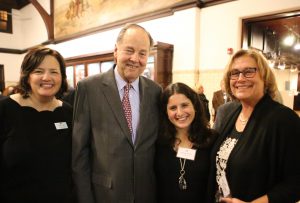
 

CWF Development Director Liz Silvernail, The Honorable Tom Kean, Yasmine Pessar from Dewberry, and Betty Ann Kelly from Union County Dept. of Parks and Recreation.


“Tonight we are recognizing four great women who have accomplished wonderful things and who have worked in their own way to make this world and this state a better place,” said former New Jersey Governor Tom Kean in his keynote speech. “They have worked to do what is necessary to make sure that when we pass this planet down to our children and our grandchildren, it is not worse than what we received. These four women show us what great things an individual can do for all of us.”


Since 2006, CWF’s Women & Wildlife Awards have recognized special individuals for their achievements on behalf of New Jersey’s wildlife and the advances they have made in professions in which women have long been underrepresented.
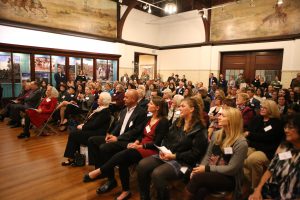
 

“All too often, young girls are turned away from promising careers in the STEM fields – Science, Technology, Engineering, and Mathematics,” said David Wheeler, CWF Executive Director. “Yet here in New Jersey, wildlife conservation efforts benefit from a strong and inspiring core of female scientists, educators, advocates, researchers, and rehabilitators who serve as role models for the next generation. Thanks to our Women & Wildlife honorees, today’s young girls can feel confident in pursuing science and conservation as careers with limitless and exciting possibilities.”


Hazel England, Great Swamp Watershed Association Director of Outreach and Education, was honored for bringing environmental education programs about our local ecosystems and habitats to students and teachers of all ages.


“I am honored to have received the Educator Women & Wildlife Award from Conserve Wildlife Foundation. It was truly humbling to be in the company of such inspirational women who are working in the field of conservation,” said England. “I’m thrilled that my two daughters got to experience this event with me; learning about the great work these other remarkable women are doing, and gaining some very direct political insight from Governor Tom Kean. It was a real privilege to hear him speak and a highlight of the night for me.”


Jeannie Geremia, Great Swamp Watershed Association Director of Outreach and Education, was honored for bringing environmental education programs about our local ecosystems and habitats to students and teachers of all ages.

Service honoree Jeannie Geremia with friends and family.

“Receiving the Conserve Wildlife Foundation’s Women in Wildlife 2017 Award for Service is one of the highlights of my life and I am humbled by the august company of outstanding women who were similarly honored,” said Geremia. “Nature is our passion and working to ensure that our imperiled wildlife species, including our pollinators, survive and thrive is the common goal.  Joining dedicated individuals and organizations in a united effort of educating and inspiring people to action will accomplish these mutual goals of a healthy environment for all living creatures.  Governor Kean said it all so eloquently as he invoked the spirits of Rachel Carson and Helen Fenske in his heartfelt keynote speech, setting the tone for this memorable event.”


State Senator Kip Bateman presented Jeannie Geremia with her award.


“Jeannie, you really have dedicated your life to making a difference, and it’s so important what you’ve done,” said Senator Bateman. “It’s a real pleasure to be here to honor four outstanding women who have truly made a difference in New Jersey. Each of you is so deserving of this award.”


Kelly Mooij, New Jersey Audubon Vice President of Government Relations, was honored for her strong leadership on a number of successful watershed protection, open space preservation, and wildlife funding campaigns.


“I’m honored to have received this recognition from the Conserve Wildlife Foundation, a wonderful partner in protecting our amazing wildlife throughout the State,” said Mooij. “Educating decision-makers and supporting science-based policy is one of the most effective and efficient ways to protect wildlife and preserve habitat and I’ve been so fortunate in my career to be able to work with amazing non-profit colleagues and to use the powerful tool of advocacy to make NJ a better place for people and wildlife.”


Kris Schantz, principal zoologist with the New Jersey Department of Environmental Protection’s Endangered and Nongame Species Program, was honored for her work protecting the endangered timber rattlesnake and other at-risk reptiles.
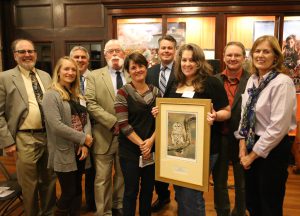
Inspiration honoree Kris Schantz with NJDEP supporters with CWF Executive Director David Wheeler.


“I am truly honored to have received this award from the Conserve Wildlife Foundation, as there are so many deserving women doing invaluable conservation work within New Jersey,” said Schantz. “We must all – women, men, children – continue to strive to make NJ a better place for our citizens and future generations through the protection and nurturing of our natural resources.”


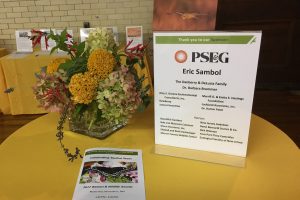
Event sponsors included PSE&G, Eric Sambol, The Danberry and DeLucia Family, Dr. Barbara Brummer, Dewberry, James Fiorentino, Amy S. Greene Environmental Consultants, Inc.,  Lackland Associates, Inc., Merrill G. & Emita E. Hastings Foundation, Dr. Kumar Patel.


Patrons included Bountiful Gardens, Bob and Maureen Coleman, Glenn Insurance, Inc., Elwood and Ruth Kerkeslager, Mercer County Wildlife Center, New Jersey Audubon, Renzi Bernardi Suarez & Co., Rick Weiman, Your Part-Time Controlled, and Zoological Society of New Jersey.
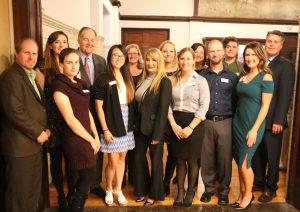
Conserve Wildlife Foundation staff with former New Jersey Governor Tom Kean.


For more information on the 2017 Women & Wildlife Awards, please visit www.ConserveWildlifeNJ.org/getinvolved/event/women/.

To learn more about CWF, please visit www.ConserveWildlifeNJ.org.


The short biographies for the honorees follow:


HAZEL ENGLAND: EDUCATION

Hazel England has spent 24 years as an enthusiastic environmental educator and naturalist in New Jersey, bringing education programs about our local ecosystems and habitats to students and teachers of all ages. Since 2004, Ms. England has led educational and stewardship programs at the Great Swamp Watershed Association as the Director of Outreach and Education. She is a state-certified facilitator for many nationally acclaimed environmental education curriculums, including Project WILD, WET, WOW, PLT HWHP, and Bridges to the Natural World.

Ms. England has a Bachelor of Science in Zoology and Botany from the University of Dundee, as well as a Master’s degree in Ecology and Environmental Management from the University of Aberdeen in Scotland. She sets an excellent model for other women to follow by being an accomplished natural scientist who brings her passion to life for people of all ages.


JEANNIE GEREMIA: SERVICE

For the past decade as the Vice President for the Garden Club of New Jersey, Jeannie Geremia has followed her passion for protecting pollinators by leading, inspiring, and educating others on the importance of pollination and wildlife habitat gardens. Ms. Geremia championed the designation of the Black Swallowtail Butterfly as the New Jersey State Butterfly. Her action earned her recognition from both the New Jersey Senate and the General Assembly.

Ms. Geremia created attractive Pollinator Education Signs that are displayed statewide at local plant nurseries, horticulture garden visitor centers, and a variety of education centers. She has also created and presented over 75 Pollinator Education programs, and has written 89 articles – and counting – for Gardener News on wildlife preservation, conservation, and growing our decimated pollinator population.


KELLY MOOIJ: LEADERSHIP

Since 2008, Kelly Mooij has dedicated herself to utilizing the tools of law, policy, and government affairs to protect our state’s wildlife as Vice President of Government Relations at the NJ Audubon.

Ms. Mooij helped lead the formation of the multi-state Coalition for the Delaware River Watershed to protect the watershed that provides drinking water for 16 million people and support hundreds of miles of vital fish and wildlife habitat. In coordinating the Keep It Green Coalition for open space preservation, Ms. Mooij helped lead the passage of two state-wide bond measures totaling $600 million dollars. The 2014 permanent source of open space funding will bring $1 billion to the state every ten years.

Ms. Mooij also leads the annual lobbying efforts of New Jersey’s environmental organizations for the State and Tribal Wildlife Grant Program, which provide an average of $1 million dollars in federal grant funds to state fish and wildlife agencies. Ms. Mooij earned her Juris Doctorate and Master of Studies in Environmental Law, focusing on marine biodiversity and land and water use issues.


KRIS SCHANTZ: INSPIRATION

Kris Schantz works with one of New Jersey’s most underappreciated and persecuted species: the timber rattlesnake. Ms. Schantz developed the Venomous Snake Response team of volunteers and professionals in law enforcement, animal control, and parks management who safely remove venomous snakes from areas where they pose a risk – while also protecting these endangered reptiles.

Her field studies have expanded to include other vulnerable snake species, such as the corn snake, northern pine snake, and scarlet snake. Ms. Schantz has also led the development of the department’s Wildlife Action Plan, transforming and bettering the wildlife conservation agency’s work. She earned her Masters of Science degree from Rutgers University. Ms. Schantz has gained the deep respect of the nearly everyone who works with imperiled snakes in New Jersey, and she serves as an example of passion, enthusiasm, and commitment in her field.
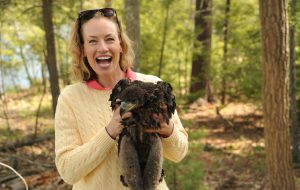
NEW JERSEY AUDUBON’S KELLY MOOIJ HONORED FOR LEADERSHIP IN CONSERVATION

By Mara Cige

Kelly Mooij, 2017 Leadership Award Honoree

As Vice President of Government Relations for New Jersey Audubon, 2017 Women & Wildlife Leadership Award Honoree Kelly Mooij works to promote and secure a legal and regulatory framework that supports habitat conservation, open space preservation, and species protection and recovery in New Jersey. She has dedicated her time and efforts in utilizing the tools of law, policy, and government affairs to protect our state’s wildlife.

Ms. Mooij earned her Juris Doctorate and Master of Studies in Environmental Law, focusing on marine biodiversity and land and water use issues, and has worked for New Jersey Audubon since 2008. Her efforts often center on bringing interested parties together to support efforts to protect the region’s wildlife. In 2012, Ms. Mooij helped lead the formation of the multi-state Coalition for the Delaware River Watershed. This coalition seeks to protect the watershed that provides drinking water for 16 million people, supports hundreds of miles of vital habitat for fish and wildlife, and is critical to the economic well-being of the mid-Atlantic region. Continue reading “NEW JERSEY AUDUBON’S KELLY MOOIJ HONORED FOR LEADERSHIP IN CONSERVATION”

GREAT SWAMP WATERSHED ASSOCIATION DIRECTOR HAZEL ENGLAND HONORED FOR EDUCATION EFFORTS

Hazel England, 2017 Education Award Honoree

As Director of Education & Outreach for Great Swamp Watershed Association, 2017 Women & Wildlife Education Award Honoree Hazel England has spent 24 years as an enthusiastic environmental educator and naturalist in New Jersey, bringing education programs to students and teachers of all ages about our local ecosystems and habitats. Her work focuses on providing powerful learning experiences for educators, encouraging youths to explore and understand New Jersey’s incredible biodiversity, and partnering with agencies to open up more environmental opportunities for students of all ages.

Since 2004, Ms. England has dedicated herself to developing, coordinating, and implementing a wide variety of educational and stewardship programs and activities at the Great Swamp Watershed Association as the Director of Outreach and Education. She currently focuses on creating programs about water quality and conservation, ranging from curriculum development, to watershed-wide issues, to local resident workshops. Continue reading “GREAT SWAMP WATERSHED ASSOCIATION DIRECTOR HAZEL ENGLAND HONORED FOR EDUCATION EFFORTS”

DEDICATED VOLUNTEER JEANNIE GEREMIA HONORED FOR HER SERVICE

By Mara Cige

Jeannie Geremia, 2017 Service Award Honoree

As Vice President for the Garden Club of New Jersey, 2017 Women & Wildlife Service Award Honoree  Jeannie Geremia has followed her passion for protecting pollinators by leading, inspiring, and educating others on the importance of pollination and wildlife habitat gardens for the past decade. She works to engage others in gardening for pollinators, as well as ensuring funding to support these efforts.

One of Ms. Geremia’s most notable accomplishments is her leadership in the designation of the Black Swallowtail Butterfly as the New Jersey State Butterfly. She spoke to many members of the New Jersey State Legislature, and recruited legislators with her enthusiasm and vast knowledge on the species. Her action earned her recognition from both the New Jersey Senate and the General Assembly. Continue reading “DEDICATED VOLUNTEER JEANNIE GEREMIA HONORED FOR HER SERVICE”

Grassland birds of New Jersey

Part I: The Importance of Grassland Habitat

By Meghan Kolk, Wildlife Biologist

In this blog series, my goal is to examine the importance of grassland habitat in our state, introduce CWF’s new habitat restoration project, and highlight many of the species of grassland birds our project aims to benefit. So, first I’ll start off with a little background information about grasslands and why we need to preserve, restore and create more of this critical habitat. Continue reading “Grassland birds of New Jersey”

Helping wildlife at home

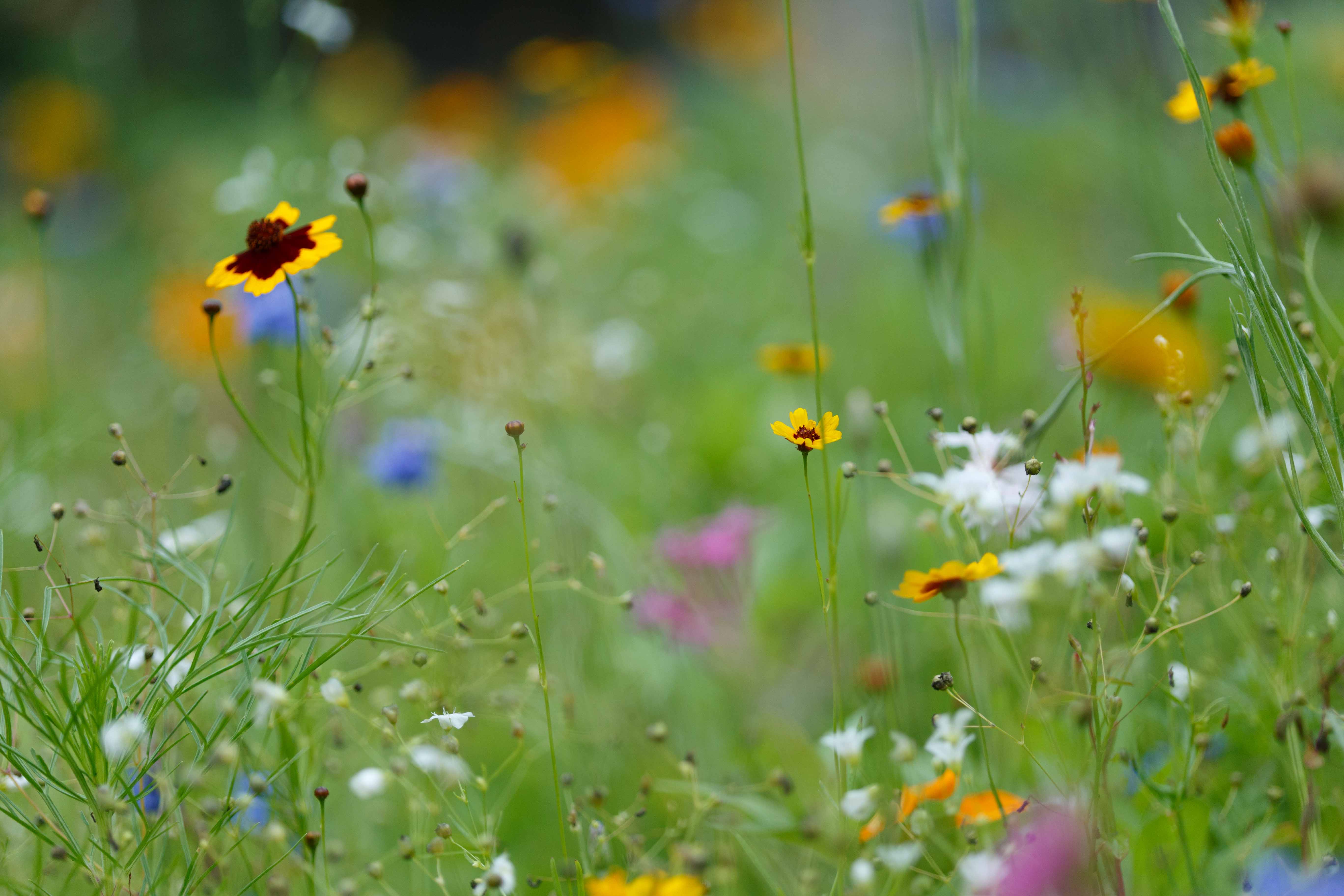
Create a wildflower meadow to attract butterflies, bees and birds

by Ben Wurst, Habitat Program Manager

Annual wildflowers provide a big “bang for your buck” in backyard habitats.

Providing habitat for wildlife in your own backyard can be a very rewarding experience for your entire family. My kids love to help prep the soil and broadcast seeds, while my wife loves cutting some flowers that are produced. Beneficial habitat can be as simple as choosing to plant native instead of non-native plants in your yard. If you want to go all out, then consider replacing part of your lawn with a wildflower meadow. Colorful wildflowers add aesthetic beauty to your yard while providing food for pollinators and songbirds. Continue reading “Helping wildlife at home”

Oceans Deeply Blog: Ghost gear busters save marine animals

Conserve Wildlife Foundation’s Barnegat Bay ghost crab pots project is featured in this blog story covering a wildlife threat killing millions of marine animals every year. Read the full story here

Photo by: AFP/NOAA via NewsDeeply Oceans Deeply blog

Shorebirds lift off to an uncertain end from Delaware Bay

By Dr. Larry Niles, LJ Niles Associates, LLC

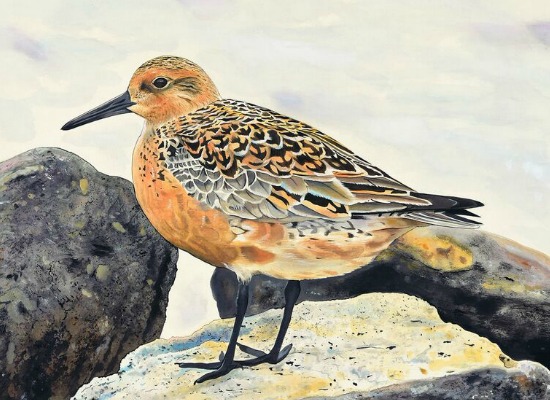
Red knot by James Fiorentino.

I am reviewing a new paper by Sjoerd Duijns, a student working on the benefits of being a fat shorebird. Still, a draft, the paper analyses data from radio-tagged red knots leaving the Bay in good condition (i.e. fat) and finds they may leave later from Delaware Bay than lighter birds but arrive earlier in the breeding grounds because they can pick the best time to leave. They are also more likely to breed successfully and survive the Arctic breeding season to the following fall. In other words, being a fat knot on Delaware Bay makes life good.

So, in light of this new information, how did the red knots and other shorebirds fare in this year’s Delaware Bay Stopover?  One must not be firm, with so many unknowns, but here’s a working biologist’s best guess.

By all accounts it was one of the worst years in recent memory, but with a twist that offers a glimmer of hope.

First, the Bay’s water reflected an unusually cool May and never really warmed to the levels necessary for a really good horseshoe crab spawn until the very end. This caused odd occurrences of crab spawning. For example, crabs bred in greater densities at the southern beaches this year, more than in previous years. The spawn at Norburys Landing, just south of the commercial oyster aquaculture development zone (ADZ), was one of the best this year, and knots and other shorebirds used the area in great number. One can only guess the water temperatures warmed over the wide inter-tidal flats provided just enough to elicit spawning. The same process was true of all the creeks on the Bay.

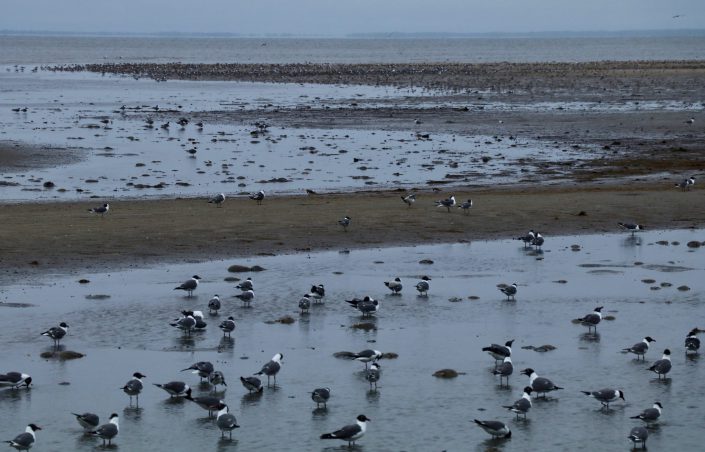
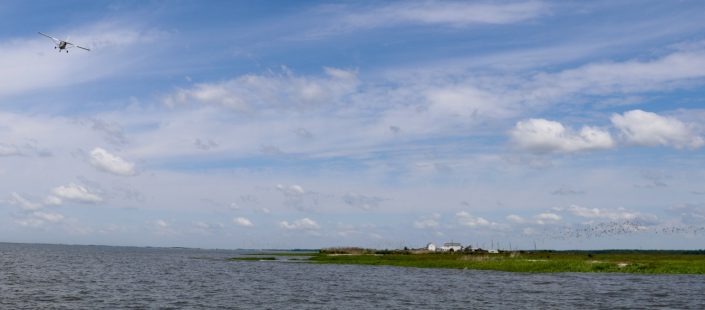
Laughing Gulls and shorebirds feast on horseshoe crab eggs at Norbury’s Landing just south of the Aquaculture Development Zone. (below)The southern portion of the bay was much more important this year because waters warmed faster on the large inter tidal shelf of this portion of the bay.

Second, the knot numbers never really climbed to the levels of the last three years. I’m guessing this was illusory, a consequence of the count being done on two days at the peak. It’s likely many more birds came to the Bay and seeing many birds for too few eggs, left for better resources elsewhere. Those that left were probably short distance winterers – those from relatively close in Florida and other nearby areas. The Bay’s horseshoe crab eggs would help them too, but they can get by on Atlantic Coast clams and mussels. The long-distance birds are the ones that need the Bay’s resources.

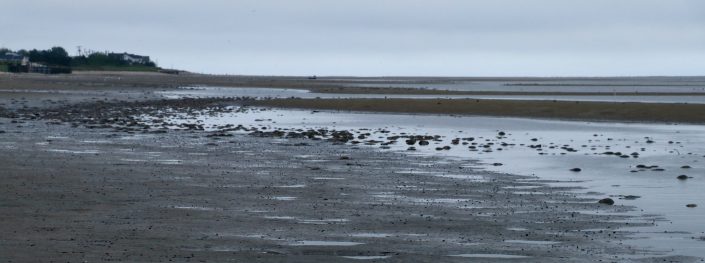
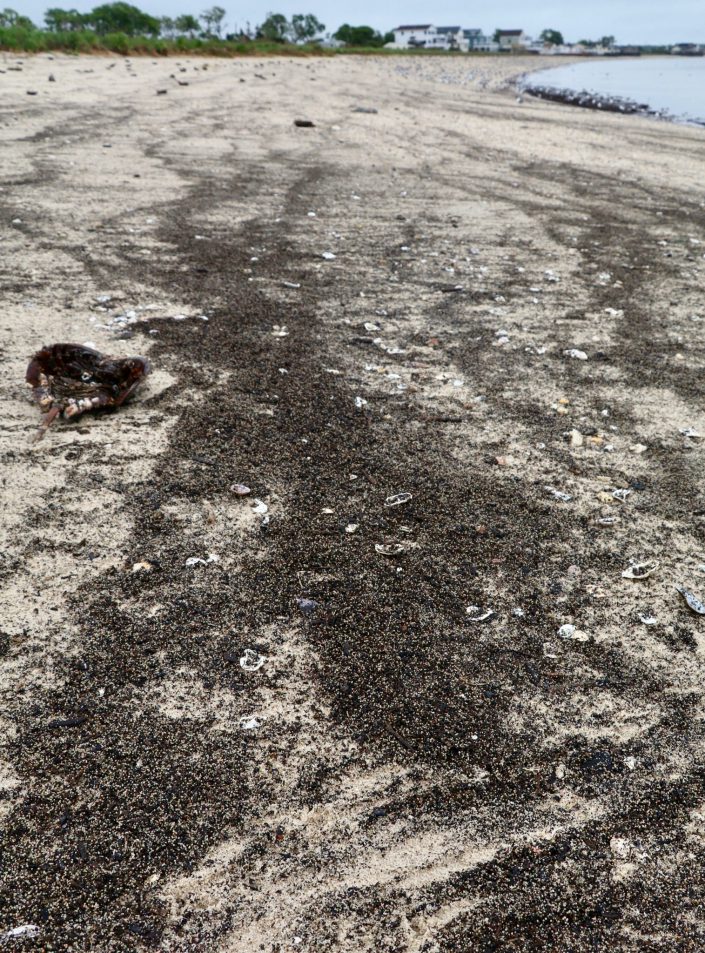
Third, when finally, the spawn got underway, a freak concurrence of wind and tide killed many thousands of crabs, potentially damaging the population and very likely ending any possibility of a really great spawn. The cobblestone road of crabs on the water’s edge. We saw none of that this year. Not once.


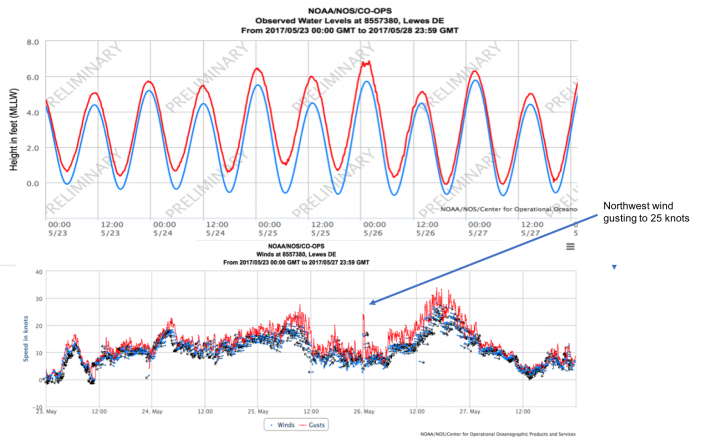
The upper graph compares predicted high tides ( in blue) with the actual high tide (in Red). On the night of 26 May. This occurred during the lunar spring tide, the highest in May. Finally, a brief burst of NW wind pushed the abnormally high tide into waves breaking across the beach berm, carrying with it tens of thousands of horseshoe crabs.
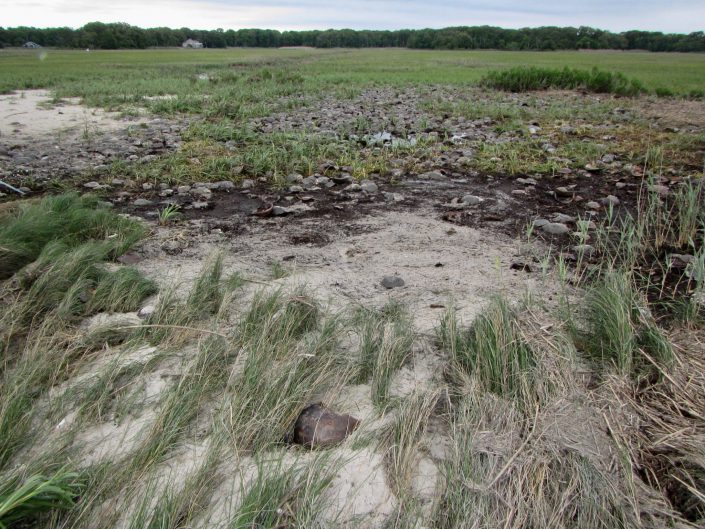
In a freak concurrence of wind and tide, waves pushed horseshoe crab over the beach into the marsh by the thousands.

Grim results, but here’s the twist. In good years, knots leave near the 27th of May. One day they jam the beach gobbling up eggs, the next day there gone. In bad years, they linger. In 2003, we caught birds on the June 10th.  There’s a cost to this of course, in lower survival and failing production. This year was a new in between. By the time of departure on May 27th, less than a quarter of the knots were prepared to leave. But they hung on until the 30th, blessed with a new flush of horseshoe crab eggs created by a middling spawn and a northwesterly wind churning up the beaches and exposing deeply buried eggs. Did the birds gain enough weight?

It’s hard to say, our last catch of just 33 knots suggests they might have, but an end-of-the-season catch makes a poor assessment. Once birds start leaving, the ones behind could be the light birds not ready to leave, or the heavy birds waiting for better weather. We won’t really know until the fall counts in the southbound stopover or the winter count in Tierra del Fuego.

This, our 21st season of intense research and conservation on Delaware Bay by all accounts will be like no other. Throughout all of it, the team of scientists and volunteers remained inspired, energetic and resourceful. In this one month, we conducted more scientific investigation and conservation than most projects do in an entire year. Whatever the outcome of this year’s stopover season, our team can look hopefully to the north and know that all that could be done for the birds was done.

Those of us that were paid for our time sincerely thank those who volunteered their time including; the stewards that manned the closed beaches helping hundreds of people understand why closures were needed; the volunteers in the banding team who endured long hours of preparing equipment, making bands, sewing nets and keeping cages and of course counting, catching and processing birds; the volunteers who doggedly pursue opportunities to resight flagged birds to estimate numbers and yearly survival; the volunteers that provided meals every single night, a welcome relief from a hard day’s work; and finally, the volunteers that went out all over the Bay to save horseshoe crabs in weather both good and bad. We all did our best. God help the birds and horseshoe crabs.

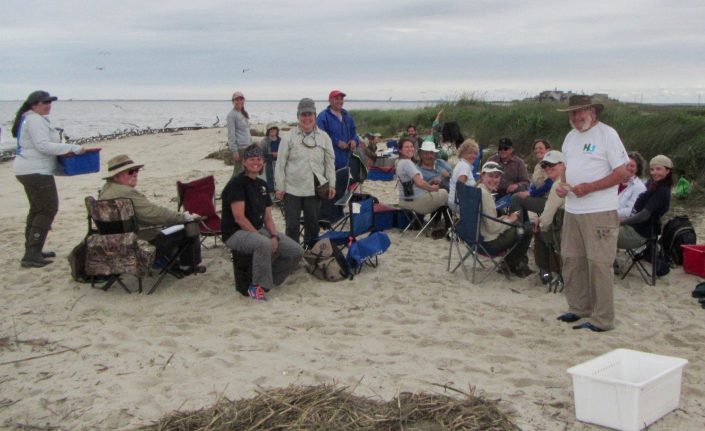
Our banding team on a catch at South Reeds.

Dr. Larry Niles has led efforts to protect red knots and horseshoe crabs for over 30 years.


LEARN MORE


Scarcity and Abundant – Shorebirds Near the Finish Line on the Delaware Bay

By Dr. Larry Niles, LJ Niles Associates, LLC

Our latest catch of red knots and ruddy turnstones two days ago (May 27) suggests 2017 to be one of the most challenging years for our 20 years of work on Delaware Bay. It challenged the birds for certain.

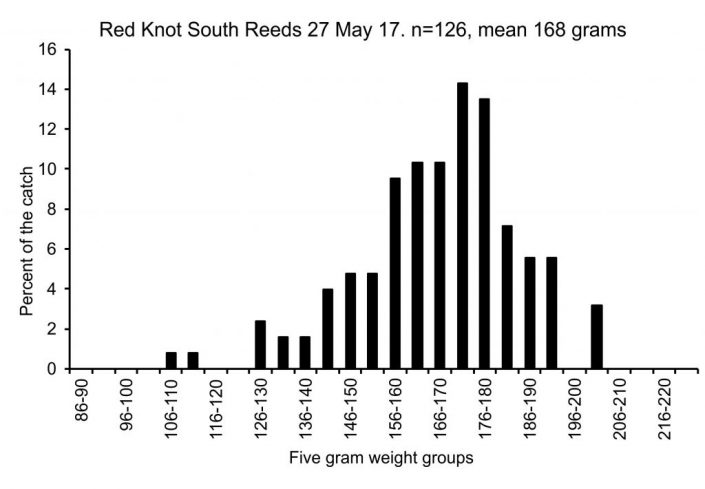
For example, as of two days ago (May 27), the average weights of red knots remain mired in the mid 160’s when it should be in the 180-gram range. This seems a minor difference but to red knots it means a flight through the cold and often inhospitable north country of Canada and dropping out of the sky never to be seen again or landing and never attempting to breed. We really don’t know for sure what happens to ill-prepared shorebirds, except they are less likely to be seen ever again. In 2017 most birds will be ill prepared.

This histogram of the red knot catch made on May 27, 2017 shows the range of weights and the number of birds in each weight category. The average of 168 is far lower than the 180-gram threshold necessary for a successful flight to the Arctic.

This season also challenged our understanding because it lies so far outside the norm. To be sure the cause of this dramatic scarcity of horseshoe crab eggs springs from the cold weather this May. We started with a good crab spawn in the first week of May, when water temperatures rose somewhat faster than normal, a consequence no doubt of one of the warmest winters on record. Then cold and wet weather dogged the Bayshore until the day of this post. Today, temperatures will rise no higher than 70 degrees Fahrenheit and the prospects for warmer weather are unlikely for the rest of the week. The cold air temperatures forced down the bay temperature in the second week and although it has gradually improved it is still low by normal standards.

The Delaware Bay water temperature as measured by the bour off Lewis Delaware. The Bay warmed early until the second week of May when cold weather chilled the Bay.

All of this led to generally diminished horseshoe crab eggs especially on the beaches, the mainstay of most stopovers of the past. This year crabs mostly spawned in the creek mouth and outer creeks shoals, mostly spurred to spawn by tidal waters warmed by the movement in and out of the small estuarine systems. Water moves in with the tide and out again to the creek mouths twice a day warming the shoals.

The Importance of Tidal Creek Mouths and Shoals

A shoal at the mouth of BayCove creek and the crab spawn on Reed creek.

The creeks also accumulate sand leaving them loose and perfect for crab spawning. Even in good years, egg densities in the creeks top all beaches, no matter where they occur. The sands of the shoals loosen by the waves of the Bay and release more buried eggs than those buried in the beaches, making more available to the birds. The creek mouths on the Cape May peninsula from Green Creek to Moores Creek saved the birds from an even worse fate this year and the best were those that benefited from the restoration of Reeds, Cooks, Kimbles and Pierce Point Beaches. As it happens a major portion of the Bay’s knots stayed in this area throughout the entire month but flying widely in search of pockets of good spawning in other places. This year Norbury’s in the south and Goshen in the north stood out, and extended the core stopover area.

Horseshoe crabs breeding at Reeds South shoal.

Spawning Starts Again

Then in the last three days all changed. The new moon tides, reaching around 8 feet for four nights in a row, spurred spawning despite the relatively cool water. Today, May 29, the crabs shifted into high gear.

It takes a lot of crabs breeding to bring eggs to the surface on the beaches, there must be enough breeding for one crab to dig up the eggs of another. For the first time, this occurred in the last few night and we finally saw green eggs on the sand. A welcoming sight for the birds, who could barely stand still and gobble up the fat producing eggs. With most of these Arctic nesting shorebirds remaining in the Bay and apparently feeding right into the night, they still might reach the fat gain finish line and only lose a few days reaching the Arctic. The next few days will tell.

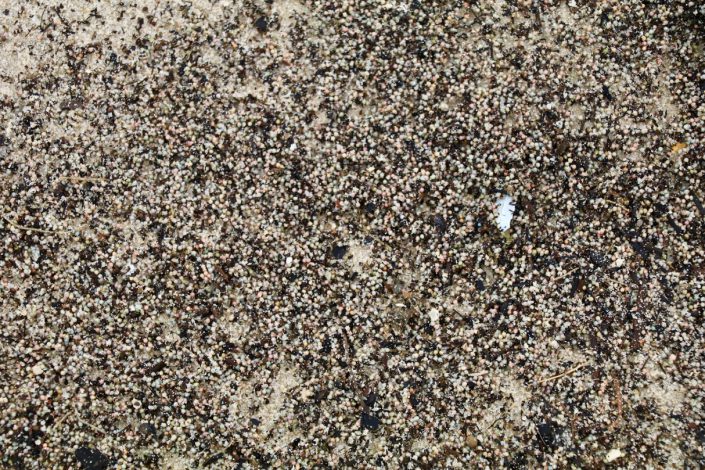
Horseshoe crab eggs litter the surface of North Reeds Beach.
A close up of the same beach. The immense number of eggs on the surface of the beach is in part due to the number of crabs spawning and the wave action of the Bay.
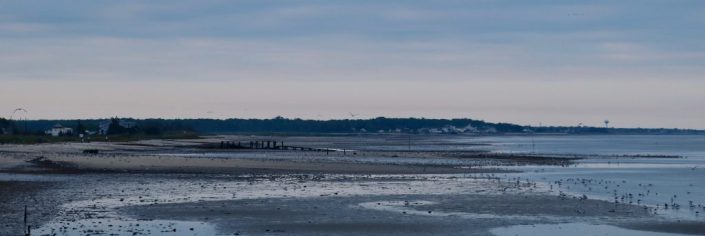
Shorebirds and Gulls feeding near dark in the intertidal flats and creek shoals of Reeds, Cooks, Kimbles and Pierce Point Beaches.

Can they though? A good question and just one of the many that have challenged our team’s knowledge of this well-known stopover. With literally centuries of combined experience (many of our team, including this author, are long in the tooth as the Brits would say) we still kept guessing what would happen next throughout the season. Would the birds suffer mighty declines as a consequence of the generally diminished spawn of horseshoe crabs?  Or will they build weight in time to get to the Arctic in good condition? This is usually the central question.

Why Are There Fewer Knots?

An equally intriguing question, however, is why have red knot numbers in Delaware Bay declined this year? We estimate shorebird numbers in two ways, direct observation by aerial and ground counts and a statistically derived estimate based on the resighting of birds flagged with unique IDs. Our aerial and ground counts tell us how one year compares to another because we have been doing shorebirds counts by airplane, boat and on the ground since 1981. This year the number fell dramatically.

Guy Morrison, Christian Friis and Joe Smith survey shorebirds by airplane near Egg Island Point.

At the start of our project on Delaware Bay in 1986, we had nearly 100,000 knots on the Bay and nearly 1.5 million shorebirds of all species. The number of knots declined to around 15,000 in the mid-2000’s, then jumped to over 24,000 over the last four years. This year our best estimate is around 17,969, a 5,000-bird decline. Why did this happen?

One must always consider the possibility of a large group of birds dying. But this is not likely.

More likely, some portion of the knot flock came to the Bay, and on finding too few eggs or too much competition, moved on to better places. The ones moving on could have been the short distance migrants, those who spent their winter in Southeast US or the Caribbean. These birds travel a shorter distance and so have a longer time and lower energy needs than those that winter in South America. These long-distance migrants would have a very difficult time gaining weight on anything other than crab eggs (I explained this in a previous post). There are two reasons to believe the short distance birds moved on from the Bay this year.

The first is the discovery of birds banded in Delaware Bay this year and reported elsewhere. I reported on Mark Faherty’s Ebird report of a knot he saw in Cape Cod, that was flagged by the Delaware Bay Shorebird Team on May 16, 2017. The second line of evidence is the 1,300 birds seen by our team feeding on a 10-mile stretch of the Atlantic Coast marsh from Cape May to Stone Harbor. Play this out over the entire coast of New Jersey and other places with sand and marsh, like Cape Cod, and one could easily imagine 5,000 knots using other places.

About 200 knots feeding and roosting on the inter-tidal shoal of Hereford Inlet on the Atlantic coast.

But this reduction in population also suggests an explanation for the sudden rise in numbers found in 2013. Did the restoration of habitat on the Delaware Bay coast bring back knots that once used the Bay but stopped because of the lack of available eggs? In other words, did the increase in numbers seen in the Bay reflect a return of birds and not a population increase? This year’s loss may simply be a result of those returning birds, leaving once again.

Let’s hope so. At any rate, eggs are now available to all birds in the Bay and we should start seeing them leave for the Arctic. Let’s hope for that too.

Dr. Larry Niles has led efforts to protect red knots and horseshoe crabs for over 30 years.


LEARN MORE


In Dangerous Territory on the Delaware Bay

By Dr. Larry Niles, LJ Niles Associates, LLC

Four days ago, the shorebirds of Delaware Bay could look forward to a bright future. But in the last week their chances for survival and good production have diminished. In fact, they are as dismal as the cold drizzle pockmarking the murky water in front of our house on Reeds Beach.

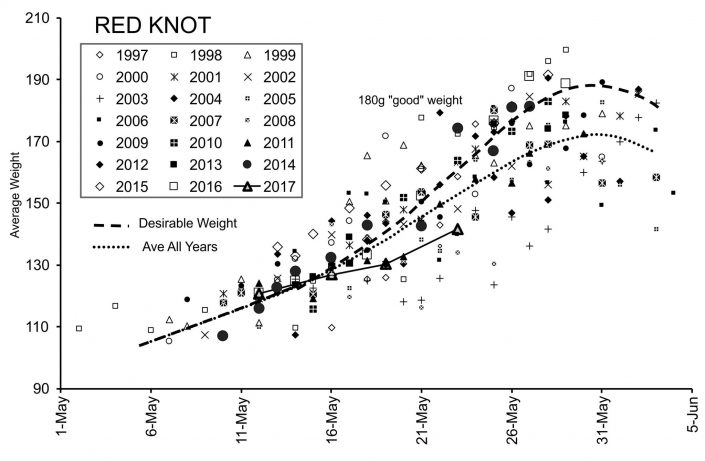
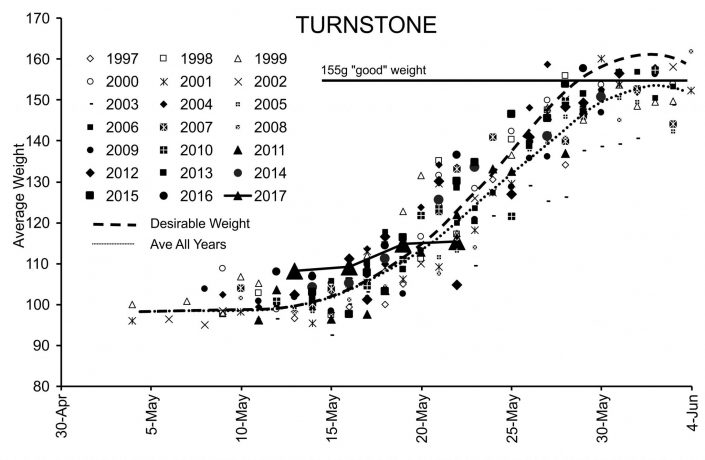
The following two graphs tell the story. We captured red knots on May 12 and 16 that showed a normal, although not spectacular progression. Then we made a catch of knots on the 19th and again today on the 23rd, and in total they gained only 2 grams of fat per day. With an average weight of 144 grams at this late date and only 7 days to go before they must leave for the Arctic, their future looks bleak. If current conditions hold, the knots will suffer their worst year in 14 years. Turnstones fared no better gaining less than a gram per day on average.

The graph plots all the average weights of all the catches of red knot our team has made since 1997. The average weight of our catch on May 23 suggests trouble is brewing for these birds.


The graph plots all the average weights of all the catches of ruddy turnstones our team has made since 1997. The average weight of our catch on May 22 suggest trouble for both species.

So why this dismal report? Several factors are at work that were covered in my last post. The water temperature of the bay has only just exceeded the threshold for horseshoe crabs to start breeding in earnest. But the nights are cold and the water temperature remains cold. Last night was the first good crab spawn since the birds arrived and it was lackluster. Although there is some spawning in the creek mouth shoals and the lower beaches near Norburys Landing and Villas, our most productive beaches remain nearly devoid of crabs and crab eggs.

The second problem is still a mystery. At this stage only about half of the red knots have found their way into the bay. Weather patterns in the southern US could have been blocking migration for the last 5 days because adverse winds, poor visibility and rain impedes birds progress and could stop northward movement. The conditions have finally let up, so it possible a new cohort of birds might arrive any day. If so they will face a true food fight with many birds already here and desperate for eggs.

Laughing Gulls, Red Knots, Ruddy Turnstones, Sanderlings and Semipalmated Sandpipers struggle to find horseshoe crab eggs on the shoals of South Reeds Creek. Eggs are scarce because cool water temperatures prevent crab spawning.

However, it may not be the adverse weather but choice that is keeping the population down. Today we learned of a red knot banded on May 16 this year by our counterparts in Delaware that was resighted in Cape Cod by Mark Faherty, the senior scientist for Massachusetts Audubon in Cape Cod. In other words, red knots and other shorebirds are coming to the bay finding too little food or too much competition for the food now available and choose to move on. This is very possible for the short distance migrants because they arrive earlier and have less weight to gain before leaving for the Arctic. Knots wintering in Tierra del Fuego, arrive later and in much worse condition, often times lose muscle mass to get here. They cannot recover that loss and still gain an extra 80 grams on their normal diet of mussels and clams.

We tried to test this second possibility today (May 23) after our red knot catch this morning. Humphrey Sitters, Amanda Dey and I surveyed the intertidal mud flats of the Atlantic Coast from Cape May to Stone Harbor looking closely at the mussel beds. We know that every year red knots, especially short distance birds, use mussels and to some extent clams, rather than come to the bay and feast on horseshoe crab eggs – simply because they can. We found 1700 knots, so it possible even more are spread out further up and down the coast.

In the end, it may turn out to be both explanations. The short distance knots are using the Atlantic Coast and the long-distance birds have yet to arrive. One should remember that the knot is federally listed in both Canada and the US primarily because of the dramatic declines in the long-distance winters. There is still a small window for a successful outcome. The next few days will tell the full story.

Dr. Larry Niles has led efforts to protect red knots and horseshoe crabs for over 30 years.


LEARN MORE