Calling all Osprey Lovers!

Citizen Scientists Needed to help collect data on nesting ospreys

by Ben Wurst, Habitat Program Manager

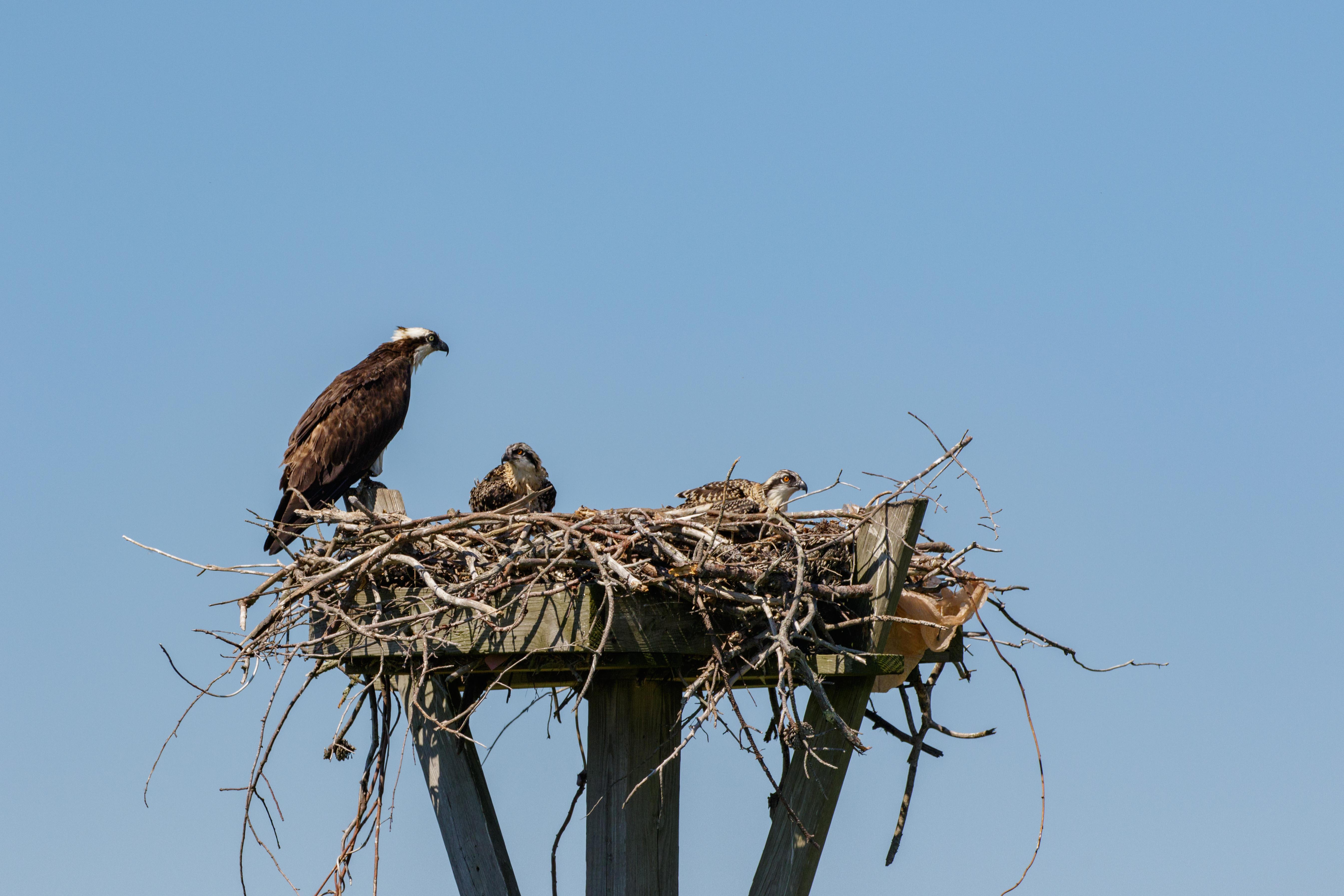
Two young ospreys and an adult on a nest in Ocean County.

This year we are hoping to get a better estimate of the size and health of the osprey population in New Jersey. Up from only 50 pairs in the early 1970s to an estimated 600+ pairs today. Ospreys are an indicator species and as top tier predators, they show the effects of contaminants in the environment before many other long lived species. They are our new age “canary in the coal mine” so keeping tabs on the health of their population is key to assessing the health of our estuarine and marine ecosystems. Continue reading “Calling all Osprey Lovers!”

Beach Plants Need Love, Too

by Meghan Kolk, Wildlife Biologist

As part of the Beach Nesting Birds team last season, I had grown accustomed to scouring the beach daily for signs of birds:  tracks, scrapes, nests and eventually adorable chicks.  On my free time, my beach walks are spent combing the beach for various treasures.  Yesterday, I had a new reason to walk the beach and I had to re-train my focus to something that never caught my interest before.  It was my first survey for the endangered beach plant, seabeach amaranth (Amaranthus pumilus). Continue reading “Beach Plants Need Love, Too”

Newsworks: Why the Red Knot lives and dies by what happens in NJ

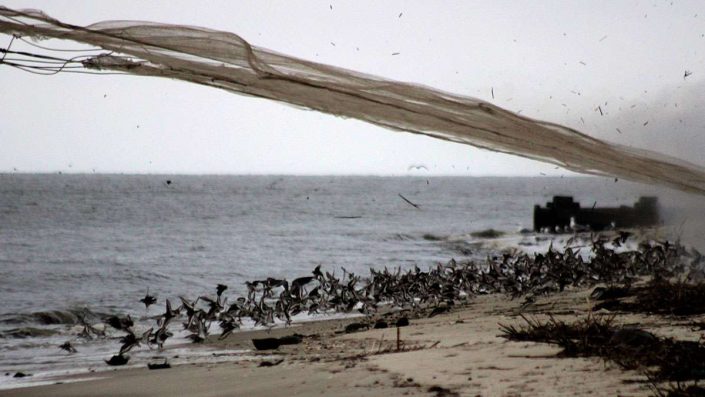
NewsWorks ran a feature story on red knots and the incredible team of international volunteers who make Conserve Wildlife Foundation’s past two decades of scientific surveys possible.

Read the full story here.

Firing the net so that the shorebirds can be tagged and released. Photo by Bill Barlow.


Dick Veitch (left) and Dr. Larry Niles (right)


“Jersey Girl” Update

B/64 and mate have a successful 2017 nesting season.

CWF Biologist: Larissa Smith

B/64 & mate@ L. Oughton

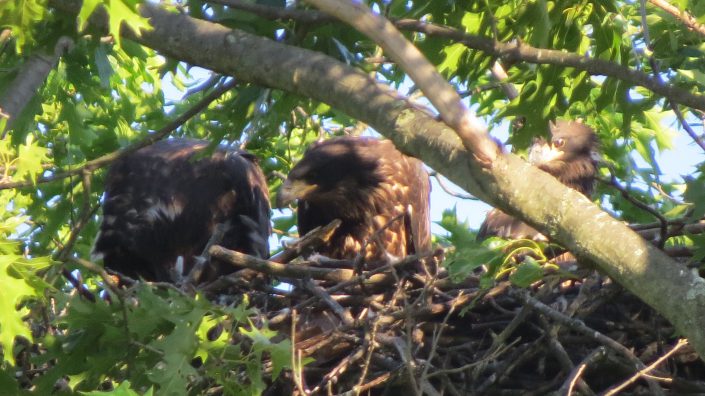
In 2014 I first heard from Linda Oughton who watches an eagles in nest near Montgomery, PA. The female in the pair is a NJ banded bird, B/64, nick named “Jersey Girl”. She was banded in 2004 at the Hopewell West nest along the Cohansey River in Cumberland County.

This season Jersey Girl and her mate raised and fledged three chicks. Linda reports that they have fledged a total of 14 chicks since they first started nesting in 2010. It isn’t often that we know what happens to one of NJ eagles and we can only know if they were banded as chicks.  Unfortunately many of the NJ banded eagles that are reported to us are either injured or dead. But in recent years re-sightings of green banded NJ birds are more common and we are aware of NJ banded eagles nesting in NJ as well as NY and CT.

B/64’s 3 chicks in nest 6/1/17 @L. Oughton

To Learn More:

Star Ledger: The Endangered Species of NJ

Image by NJ.com

NJ Advance Media reporter Michael Sol Warren highlighted 17 endangered species in an insightful story looking at what can be done to save New Jersey’s rare wildlife. Conserve Wildlife Foundation has long focused on many of these species – from the piping plover and the bobcat to the bog turtle and the Pine Barrens tree frog – through monitoring and surveys, habitat restoration, and public engagement.

Read the story at NJ.com, then learn more through our online field guide.

Video: ‘Rare Wildlife Revealed’ brings art, wildlife to audiences around region


Conserve Wildlife Foundation’s “Rare Wildlife Revealed: The James Fiorentino Traveling Art Exhibition” can be found at the famed Hiram Blauvelt Museum in Oradell with a free reception this Friday night, May 19 from 6 to 8 PM. Former Governor Tom Kean will join nationally renowned artist James Fiorentino and CWF Executive Director David Wheeler for brief remarks, and guests will also be served refreshments.

The Hiram Blavelt Museum was established in 1957 as a natural history museum to garner support for wildlife conservation. Today, it is one of only five museums in the United States to exclusively display wildlife art. The museum is located at 705 Kinderkamack Road, Oradell, NJ 07649.

This innovative three-year exhibition is spotlighted in a nine-minute video by videographer Ed English focusing on a previous stay at the Studio 7 Fine Art Gallery in Bernardsville. The exhibition has also been featured at D&R Greenway in Princeton, the Mayo Performing Art Center in Morristown, the Flying Fish Brewing Company in Somerdale, the Salmagundi Art Museum in New York City, and the Princeton Environmental Film Festival in Princeton.

Rare Wildlife Revealed will be shown at Hiram Blauvelt Museum through July 30, 2017.

To learn more about hosting a future showing of Rare Wildlife Revealed – whether for an extended exhibition or a single night’s event – please contact Liz Silvernail, CWF Director of Development at 609.292.3707.

Oystercatcher nesting season is underway

By Emily Heiser, Wildlife Biologist

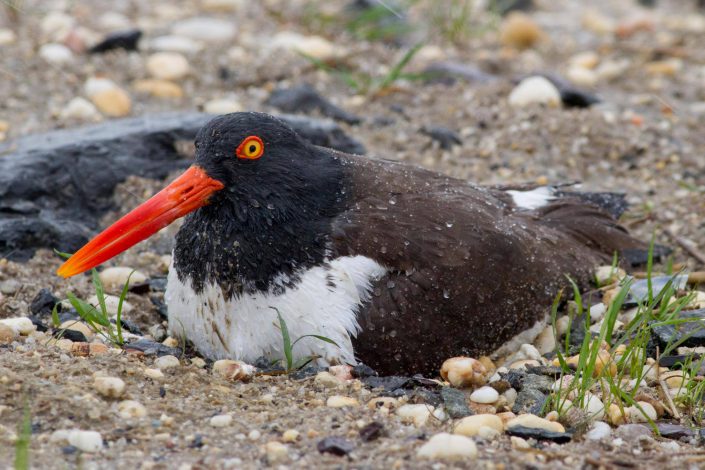
Many piping plover and American oystercatcher pairs have been busy laying their eggs over the last few weeks. As beach nesting bird biologists, we invest a lot of time into every pair at our sites. We revel in their successes and feel defeated at their losses. Unfortunately, many nests did not fare well in the April 25th Nor’easter that was coupled with new moon tides. Luckily, it is early enough in the season that all of them have begun, or will soon begin, attempting new nests.

The breeding habitat of the American oystercatcher in New Jersey consists of coastal beaches, inlet systems, and salt marshes.  Population estimates in New Jersey suggest 350-400 breeding pairs can be found here from March through August. Much of the monitoring and research done with American oystercatchers in New Jersey takes place on the coastal beaches where other beach nesting birds, such as piping plovers, least terns and black skimmers, are found. In 2016, more than 120 breeding pairs of beach nesting American oystercatchers successfully fledged 83 chicks. This was an especially productive year for those pairs and productivity levels were well above the target goal of .5 chicks per pair.

Photo courtesy of Sam Galick.

Oystercatchers arrive back on their breeding grounds here in New Jersey in early March to set up breeding territories and begin nesting.  Once paired up, adults typically lay one to three eggs.  Both the male and female will take turns incubating the nest for 28 days.  Once chicks hatch, they are semi-precocial, which means they are born in an advanced state, but are still reliant on adults for food and protection.  Oystercatcher chicks are fledged (or able to fly) 35 days after hatching.  After fledging, most Oystercatchers migrate to the southeast, but a wintering population does remain here in New Jersey.

American oystercatchers are listed as a Species of Special Concern in New Jersey.  A “Species of Special Concern” is a status determined by the New Jersey Division of Fish & Wildlife and applies to species that have an inherent threat to their population or have evidence of recent population declines.  Since American oystercatchers share the same habitat as other endangered or threatened beach nesting birds (piping plovers, least terns, and black skimmers), they also share the same threats to their nests and young.  Human disturbance, a host of predators, and flooding events, such as the one that took place last week, are just some of the many threats beach nesting birds face daily.

The Conserve Wildlife Foundation of New Jersey has long partnered with the New Jersey Division of Fish and Wildlife’s Endangered and Nongame Species program in the monitoring and management of New Jersey’s endangered beach nesting birds.  Fencing and signage are placed in nesting areas to alert beachgoers to the presence of nesting American oystercatchers and other beach nesting birds.  Throughout the summer, CWFNJ and partners will be out on the beaches monitoring and collecting data that will be used to track population trends and identify threats to oystercatchers and their young.

Emily Heiser is a wildlife biologist for Conserve Wildlife Foundation of New Jersey.


LEARN MORE


LBIF Earth Day Native Plant Sale: The Leftovers

Give back to nature by planting native this spring!

by Ben Wurst, Habitat Program Manager

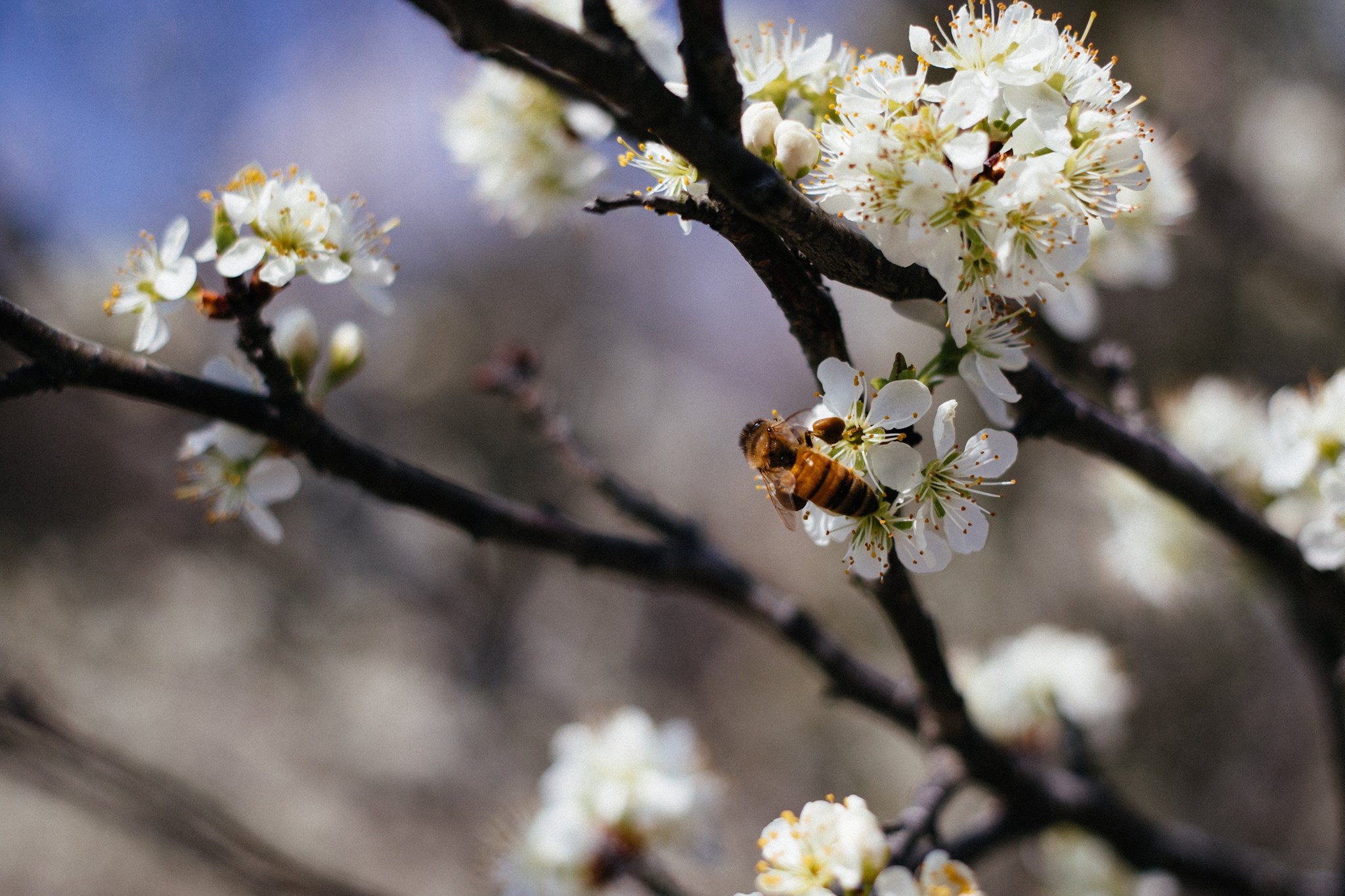
Beach plum (prunus maritima) trees act as great source of food for pollinators when in bloom in late April.

This past weekend we held our second annual native plant sale, in partnership with the Long Beach Island Foundation of the Arts and Sciences in Loveladies, NJ. Despite some light rain, we had a great turnout at the event. All of the plants that we offered for sale were grown in New Jersey and without the use of harmful pesticides and herbicides. They also provide a great source of food and cover for wildlife, especially pollinators.

If we all reduced the amount of lawn that we maintain and planted native, then in turn, our local environment would benefit. With the native plant sale at LBIF, we stress the need to plant native to help provide habitat for wildlife and reduce runoff to Barnegat Bay. If we all do a little, then our combined efforts will make an impact.

The perennials, shrubs, and trees that we sold were hand selected for their environmental benefits and aesthetic beauty. Without being sure what people wanted, we sold out some some species very quickly, so we are looking into holding a follow up sale at LBIF next month.

If you missed out on the sale and are still interested in purchasing some plants, here is what we have left:

Perennial wildflowers Quantity left
Solidago sempervirens Seaside goldenrod 7 Quart Quarts = $5
Baptisia tinctoria Wild yellow indigo 0 Quart #1 = $10
Eupatorium perfoliatum Common boneset 3 Quart #2 = $15
Solidago canadensis Canada Goldenrod 0 Quart
Helenium autumnale Common sneezeweed 10 Quart
Liatris spicata Dense blazing star 0 Quart
Lobelia siphilitica Blue lobelia 0 Quart
Rudbeckia laciniata Cutleaf coneflower 8 Quart
Symphyotrichum novi-belgii  New York Aster 3 Quart
Shrubs
Baccharis halimifolia Groundsel tree 2 #1
Iva frutescens High tide bush (marsh alder) 0 #1
Prunus maritima Beach plum 0 #2
Rhus copallinum Winged sumac 2 #2
Trees
Cercis canadensis Eastern red bud 0 #2
Acer rubrum Red maple 0 #2
Betula populifolia Gray birch 1 #2
Pinus virginiana Virginia pine 0 #2
Quercus phellos Willow oak 0 #2
Scientific name Common name   Size container

All plants are available for pickup in the S. Ocean County/N. Atlantic area. Please email Ben Wurst if you are interested in purchasing any of these plants!


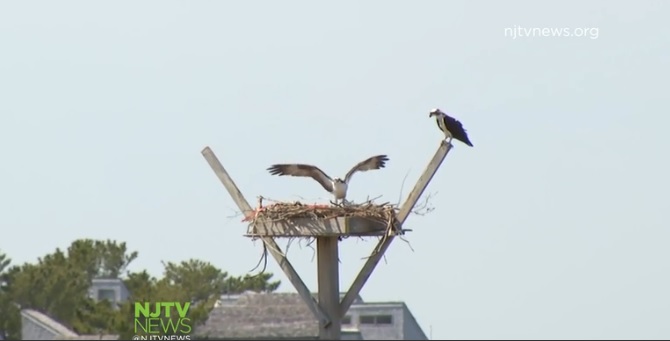
NJTV: Osprey population continues to rebound in NJ

NJTV News recently covered the continuing recovery of ospreys in the Garden State by visiting the nesting pair at Long Beach Island Foundation for the Arts & Sciences. CWF’s Ben Wurst and David Wheeler joined NJTV for this inspiring video and accompanying story.


LEARN MORE


Shorebird Expedition Brazil: The rights of traditional communities

By Larry Niles, LJ Niles Associates LLC

Over the last few days of our expedition, we left the state of Para and flew to Sao Luis in the adjacent state of Maranhao. There we began the next phase of our work, trapping red knots, ruddy turnstones and other species, as we have done since 2014.


But prior to leaving Para, while we stayed in the village of Apiu Salvatore, the fishermen asked to meet with Max. He hadn’t planned it, so at first, the reason was unknown. The fishermen of the village knew Max represented ICMBio, and that Apiu Salvatore fell within Resex Gurupi-Piria, one of the Brazilian agency’s many extractive or Resex reserves. As I described in the previous post, ICMBio conserves natural resources in each reserve for the benefit of traditional communities, such as this one. So Max had a good idea what the community had on their mind.


David and Danielle prepare for the meeting with the fishermen of Apiu Salvadori.


We entered the large open meeting space under a thatch roof with a good breeze cooled by a sudden evening downpour. The association leader, Antonio, got down to business. He explained the problem of immense ships lurking offshore, spreading giant purse seines or immense lines of baited hooks, and stealing all the fish. It threatened their own lives, not only their livelihoods but their very existence. One could see very clearly how vital fish were to these fishermen. The community consumed virtually no goods; most of their daily needs came from the sea or their backyards. Chickens, pigs, even lambs filled backyards.  Fruit like mangos and avocados literally fell from the trees. I saw no washing machines, microwaves, coffeemakers, or nearly any of the appliances that litter a typical U.S. kitchen.


There was one modern device found in every hut and cabin, no matter how small or dilapidated. All had TVs.  How, I imagine, can they fit in this primitive world while gapping at the lives of the rich and famous? These were not people ignorant of the world, but unfortunately, they could be innocent as lambs when faced with the greedy schemers and politicians of Brazil. And as the ongoing corruption scandals here evolve, it seems like nearly every politician serves their own or other greedy interests.


So it is understandable that the fishermen’s first thought was to go to the Catholic Church. But then we came. So they asked for Max’s advice.


The people of the village live simply with no luxuries except TVs. The town, located on a small island has no electricity except when the community generator is turned on at night. (Photo by C. Buiden.)

He quickly determined the fisherman had no idea they had legal rights to the fishery. He patiently explained the concept of ICMBio reserve system, the system of which they are a part. In theory, they could unify and certify their observations, take it to a judge and get a decision that would force the government to stop the theft by the international fishing fleet, at least in principle. Max and Danielle explained these rights and the group seemed sufficiently inspired. At least they left happy.


Why did they not know their rights? Max explained to me that the reserve manager for this area covered 60 other villages and that ICMBio has suffered 3 years of budget cuts. He reminded me how long it took to get to this village. So it’s the usual story familiar to U.S. agency biologists.  Here, as it is in rural U.S., but with a more obvious impact, starving good government often only starves the people who live on the land, the land itself and the wildlife, who depend upon it.


For me, it meant something more. We proposed this project to create better protection for shorebirds. We took the usual approach. First, do the surveys then will create scientifically defensible descriptions of the habitat’s value.  Finally, we overlay the threats: shrimp farming, oil spills, human disturbance, predators etc. then develop counter-measures.


I learned that nigh there is only one threat in this, one of the most important shorebird habitats in the world. It looms large above all others – if you erode ICMBio’s system of protection all the other threats will grow and decimate the fragile ecology of the area. Grow the ICMbio system and the traditional communities will enforce their legal right to conserve. They can monitor the threats and work with the agency to stop them. The laws already exist. The monitoring system is already in place. But this meeting pointed out they need more help.


Photos by C. Buiden.


Dr. Larry Niles has led efforts to protect red knots and horseshoe crabs for over 30 years.