ACTION ALERT: Support ecological management of the most valuable public resource for our coastal ecosystem and economy
by Ben Wurst, Habitat Program Manager
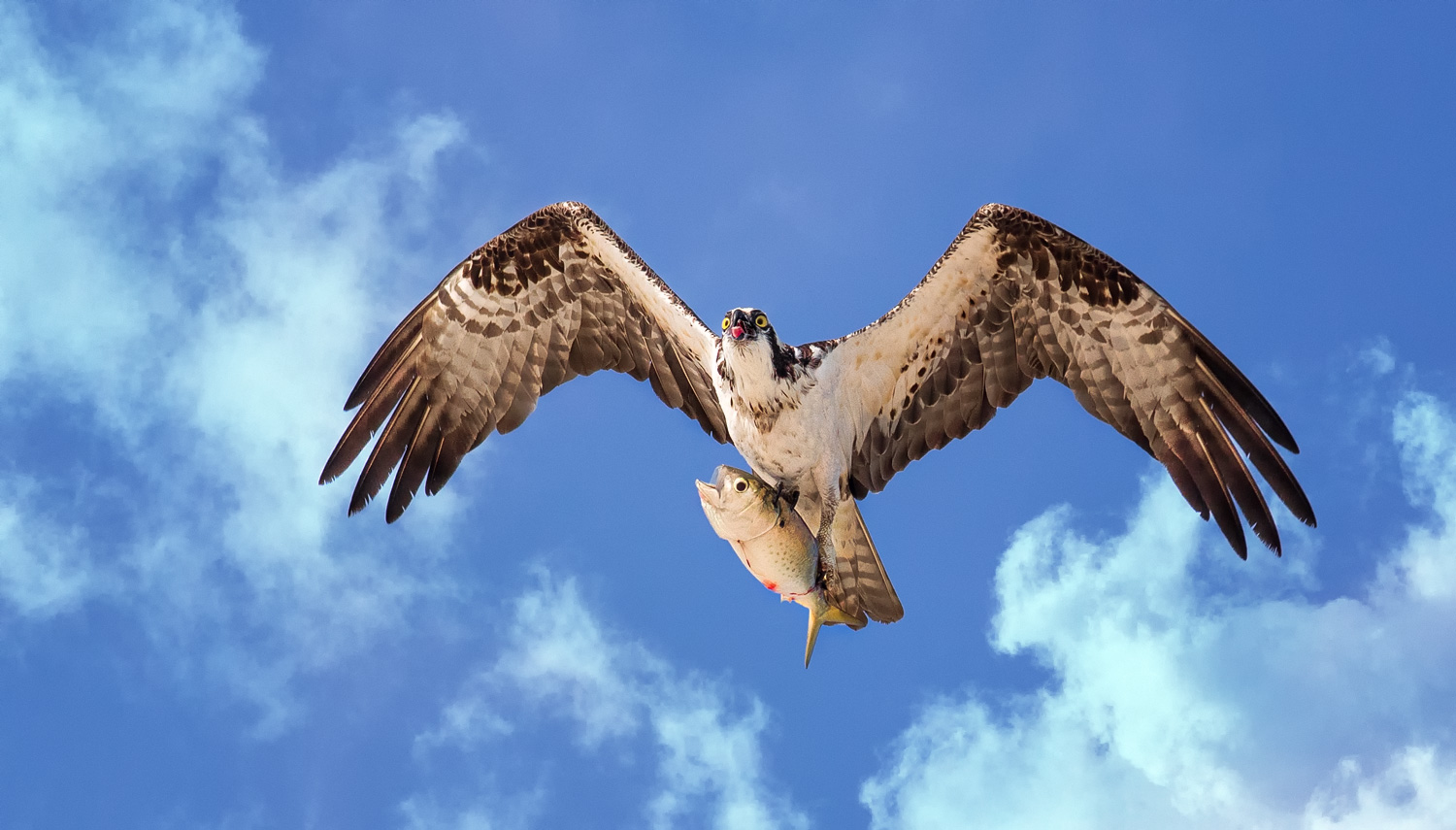
Menhaden is a common food source for ospreys during their nesting season in New Jersey. Photo by Northside Jim.
The Atlantic States Marine Fisheries Commission is accepting public comment on the establishment of ecological management of Atlantic menhaden (Brevoortia tyrannus), which is a keystone species. Basically, a keystone species is one that plays a large role in the ecosystem where it lives. If a keystone species is lost then the ecosystem would dramatically change or cease to function, causing widespread effects to other species that benefit. In New Jersey, ospreyshave largely benefited from a healthy menhaden population as we’ve had relatively high reproductive rates (more than double what’s needed to sustain population) over the past decade. From 2006 to 2016, the population has grown by 30% and above the pre-DDT, historic milestone of over 500 nesting pairs. Around 82% of the state population of ospreys nests along the Atlantic Coast and we observe menhaden at a huge number of nests during our mid-summer surveys. If menhaden numbers drop, then we will likely see osprey numbers follow suite, as reproductive rates will decline, as they are in the Chesapeake Bay.
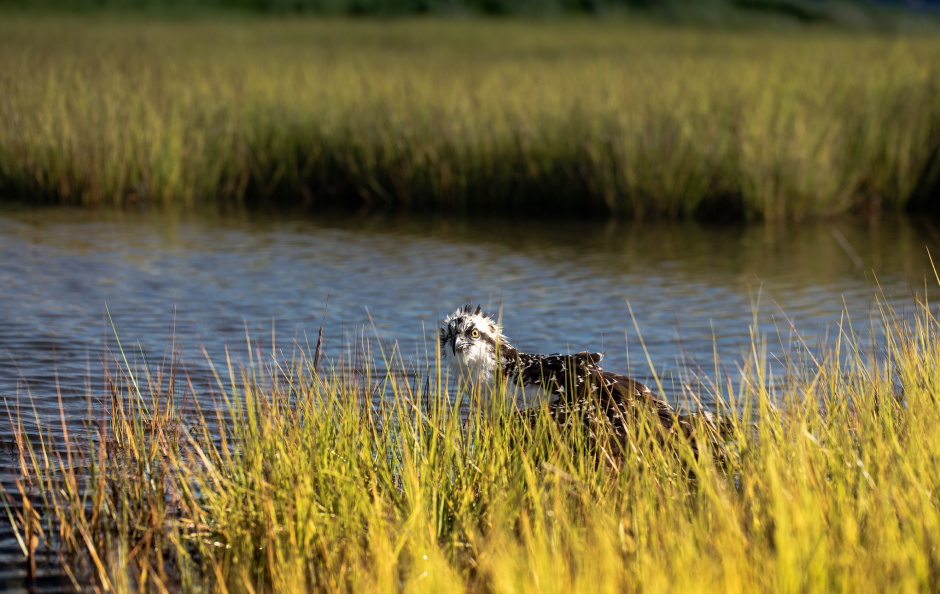
I would like to take the time to share a noteworthy event from last week, as well as highlight a CWF volunteer who deserves recognition for his dedication to wildlife. CWF received a call last Friday from a concerned citizen about an osprey chick that had fallen from its nest in Avalon. Osprey chicks are extremely vulnerable to summer storms, and are often blown right from their nests in strong winds. The storm that pushed through the area Thursday night had likely blown this chick out of its nest onto the marsh below. This particular nest had just been surveyed on July 6 and had contained three young chicks.
osprey chick down on marsh after severe storms
Often when staff members are not available to respond to calls like this, we rely on our volunteers to represent us. In this case, when CWF volunteer John King got the call, he hooked up his boat and immediately headed out to assess the situation in hopes of making a rescue. When he arrived on the scene, John realized that there were actually three osprey chicks on the ground below the nest; however, two of them were unfortunately already deceased. The parents were also sitting on the ground with the one surviving chick when he arrived. John picked up the chick and examined it for injuries. When he determined it was in good condition, he carried it up a ladder and placed it back into the nest as the parents circled and screamed above him. As he left the site, the parents immediately returned to the nest to check on their chick.
Osprey chick returned to the safety of it’s nest
Even though John was only able to save one of the three chicks, this was still a success story that would not have been possible without the help of a devoted volunteer. The concerned citizens who had called in the emergency watched the whole rescue from across the lagoon and reported back the following day that the chick was sitting up in the nest looking healthy. CWF also greatly appreciates citizens who care enough to observe wildlife responsibly and report wildlife emergencies when necessary.
Adult returns to nesting platform after chick is safely returned to nest.
John King has been volunteering for CWF for many years and has worked on several projects including the Calling Amphibian Project, NJ Tiger Salamander project and the NJ eagle project. He has been very involved with the NJ osprey project, headed by CWF’s Ben Wurst, assisting with osprey surveys during the breeding season and helping to construct and erect nest platforms over the winter. In addition to CWF, John also volunteers with many other conservation organizations and is always happy to lend a hand. Although he is retired, his volunteer work is practically a full time job. I sincerely admire John’s continued enthusiasm and his dedication to wildlife, and I believe the world would be a better place if there were more people like him.
Conserve Wildlife Foundation of NJ thanks you, John!
Citizen Scientists Needed to help collect data on nesting ospreys
by Ben Wurst, Habitat Program Manager
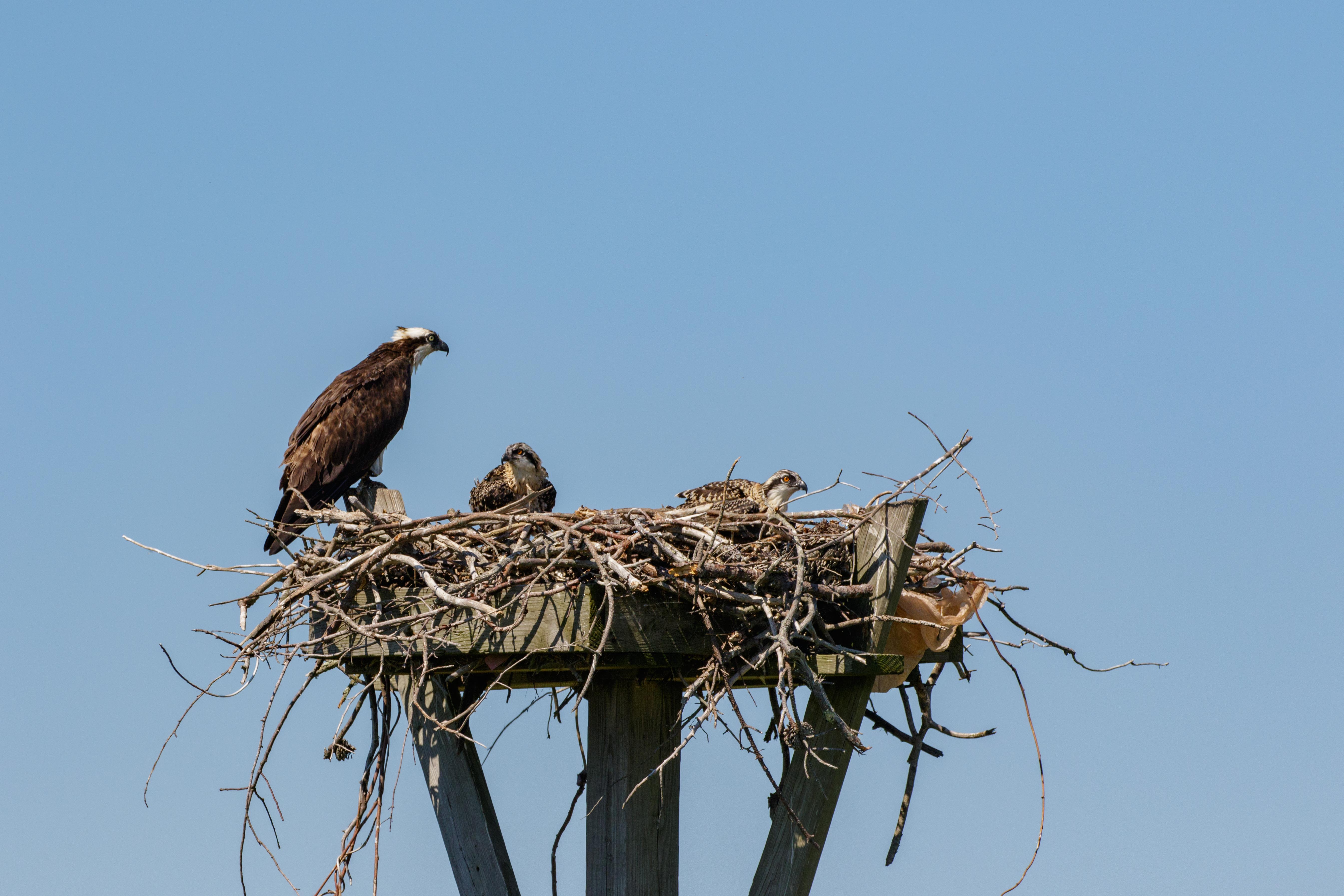
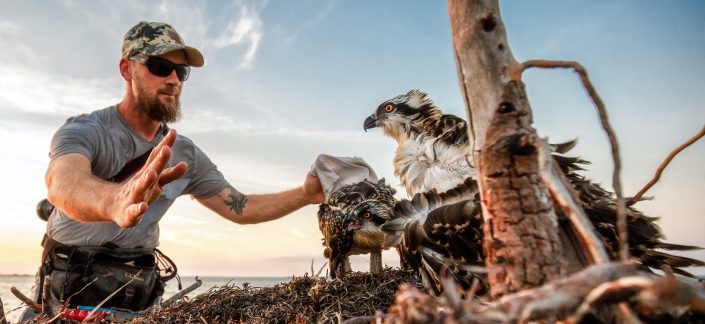
Two young ospreys and an adult on a nest in Ocean County.
This year we are hoping to get a better estimate of the size and health of the osprey population in New Jersey. Up from only 50 pairs in the early 1970s to an estimated 600+ pairs today. Ospreys are an indicator species and as top tier predators, they show the effects of contaminants in the environment before many other long lived species. They are our new age “canary in the coal mine” so keeping tabs on the health of their population is key to assessing the health of our estuarine and marine ecosystems. Continue reading “Calling all Osprey Lovers!”
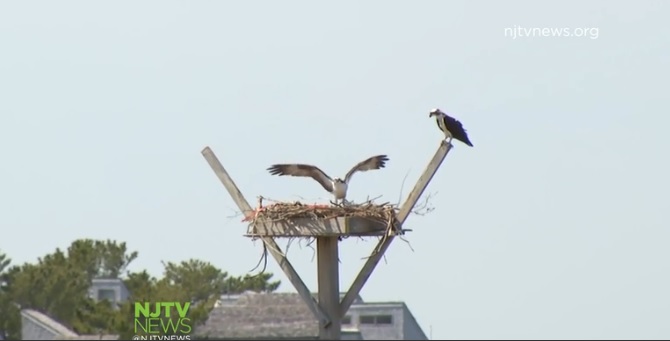
NJTV News recently covered the continuing recovery of ospreys in the Garden State by visiting the nesting pair at Long Beach Island Foundation for the Arts & Sciences. CWF’s Ben Wurst and David Wheeler joined NJTV for this inspiring video and accompanying story.
Braving the Caribbean Sea to Survey Turneffe Atoll
Jay T. loads gear into Horace’s boat on Sittee River.
For the final leg of our survey of Ridgway’s ospreys in the northern most part of our study area, we set out for Turneffe Atoll. Turneffe Atoll is an archipelago of mangrove islands and coral reef that’s approximately 20 miles east of Belize City. It’s 30 miles long and 10 miles wide and Belize’s largest coral atoll. Luckily, it was declared a marine reserve in 2012, which protects it from future development. Turneffe is an amazing assemblage of different marine habitats which provide habitat for a variety of many different species of wildlife, including American crocodiles (more on this later!), conch, spiny lobster, manatees, dolphins, sea turtles, and many species of birds, coral and fish. The mangrove islands are large with taller trees on the interior of the island. This is where most, if not all, the ospreys nest. We left on Monday, February 20th. Continue reading “Studying the Ridgway’s Osprey of Belize: Part III”
February 18: Second Survey of nests surrounding Placencia
Our second survey began from Placencia, a small beach resort town on the southern coast of Belize, which is a beautiful place to visit if you’re planning a trip to Belize. It was flat calm that morning, which made for great boating, but it was extremely hot! Life in the tropics was finally setting in… We headed towards the first nest location, which was last surveyed in 2016 by Paul and his team. Paul and Alan have been surveying osprey nests in Belize since 2014, so all known nests have been mapped and surveyed over the past couple years. Through the continued surveys of these nests we should be able to determine if the low productivity of Ridgway’s (around .3-.4 young/active nest) can sustain the population in Belize (the southern most nesting colony of Ridgway’s throughout their range). The work performed as a part of these surveys is critical to their long term survival in Belize. The first nest we visited was very unkept; however a pair was present. This ended up being quite the common sight during this survey. Continue reading “Studying the Ridgway’s Osprey of Belize: Part II”
CWF contributes to conservation of Belizean ospreys
A male Ridgway’s osprey perched near its nest on a snag off Blue Ground Caye. Photo by Ben Wurst
When I first learned of the work being done by Dr. Paul Spitzer and Alan Poole to study the breeding population of Ridgway’s ospreys (Pandion haliaetus ridgwayi) in Belize, I was instantly captivated. I first met Paul at the Raptor Research Foundation Conference in Cape May last October where he explained the study and the need for partners to assist with this years survey. Some of the aspects that immediately drew my attention was the fact that the estimated size of the population there was around 50 pairs, that those pairs nest exclusively on the coastal cayes (mangrove islands), and that their estimated productivity rate was around .3-.4 young/active nest. The coast of Belize is approximately 170 miles long and protected by barrier reefs and these mangrove islands. Continue reading “Studying Ridgway’s Osprey of Belize: Part I”
Results from the 2016 nesting season show very positive results. Statewide census planned for this year.
by Ben Wurst, Habitat Program Manager
Ben Wurst prepares to band two young ospreys. Photo by Northside Jim
New Jersey’s ospreys continue to defy my expectations. Since being tasked with coordinating the NJ Fish & Wildlife’s Osprey Project, I have witnessed the population grow from around 400 nesting pairs to an estimated 600. That’s a 30% increase in the overall state population. In addition, the productivity rate (a measure of the health for the population) has remained at level consistent with an increasing population. The results from last year were positive throughout almost all major nesting colonies that were surveyed. I’ve never been more amazed by the shear resiliency and adaptability of a species.
Volunteers brave rain and high water to benefit ospreys!
by Ben Wurst, Habitat Program Manager
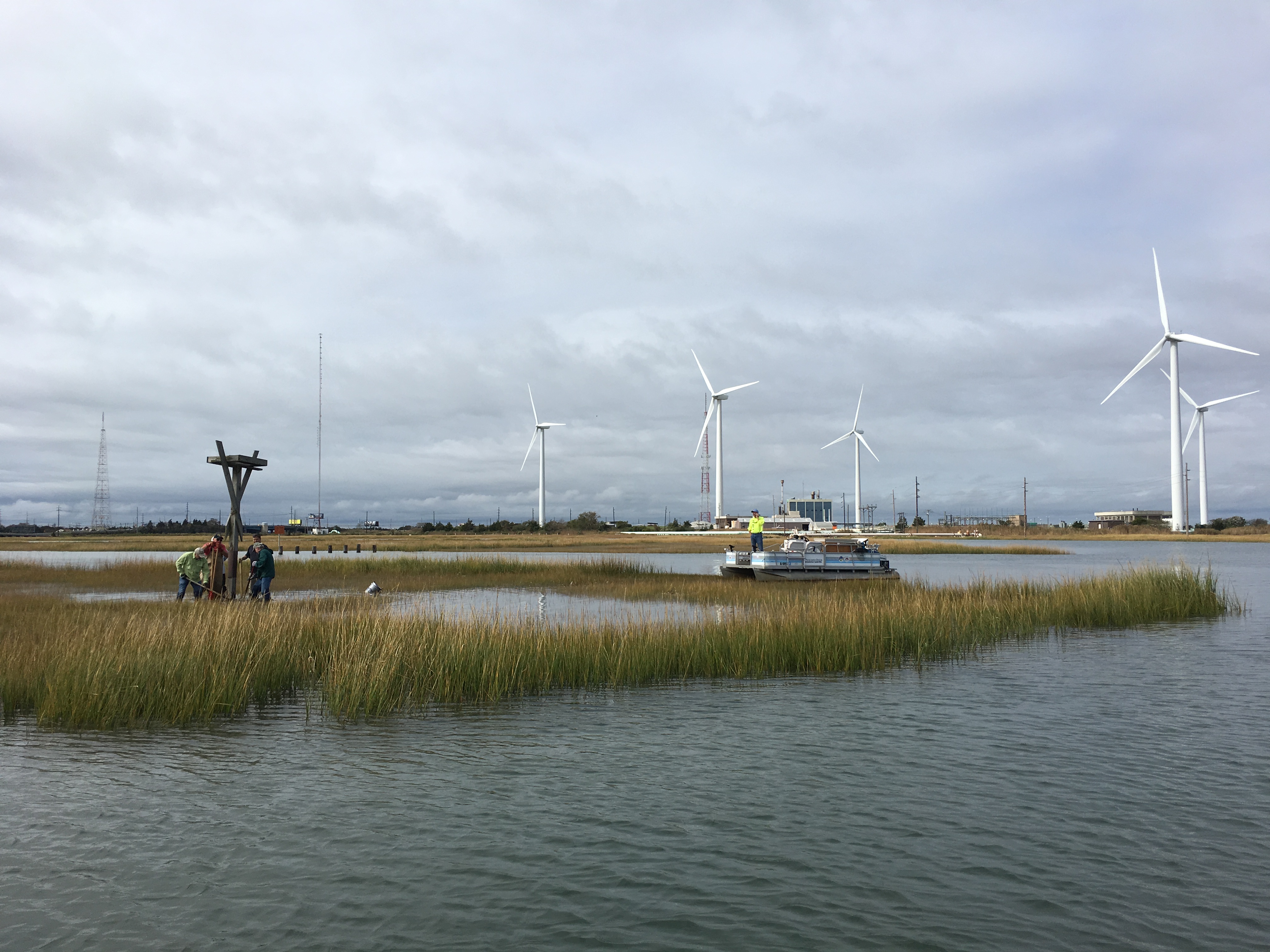
Volunteers work on a flooded saltmarsh to remove an osprey nesting platform in Atlantic City.
I’ve been surveying osprey colony on Absecon Bay since 2008, after I moved to the local area. It’s been an area with a small but slowly growing colony. In 2008 there were a total of 11 active nests. This year there were 23 active nests. Productivity has been good with an average of 1.72 young/active (known-outcome) nest over the past nine years (more than double what’s needed to sustain the population). Many of the nests in this area were installed in 2005 for mitigation for nests that were removed when the ACUA installed large wind turbines off Route 30. But, some platforms that were placed near the turbines, have been slowly abandoned by ospreys. This year only one nest was occupied there and it did not produce any young. Continue reading “Giving Absecon’s ospreys a boost”