My Summer of Death and Despair
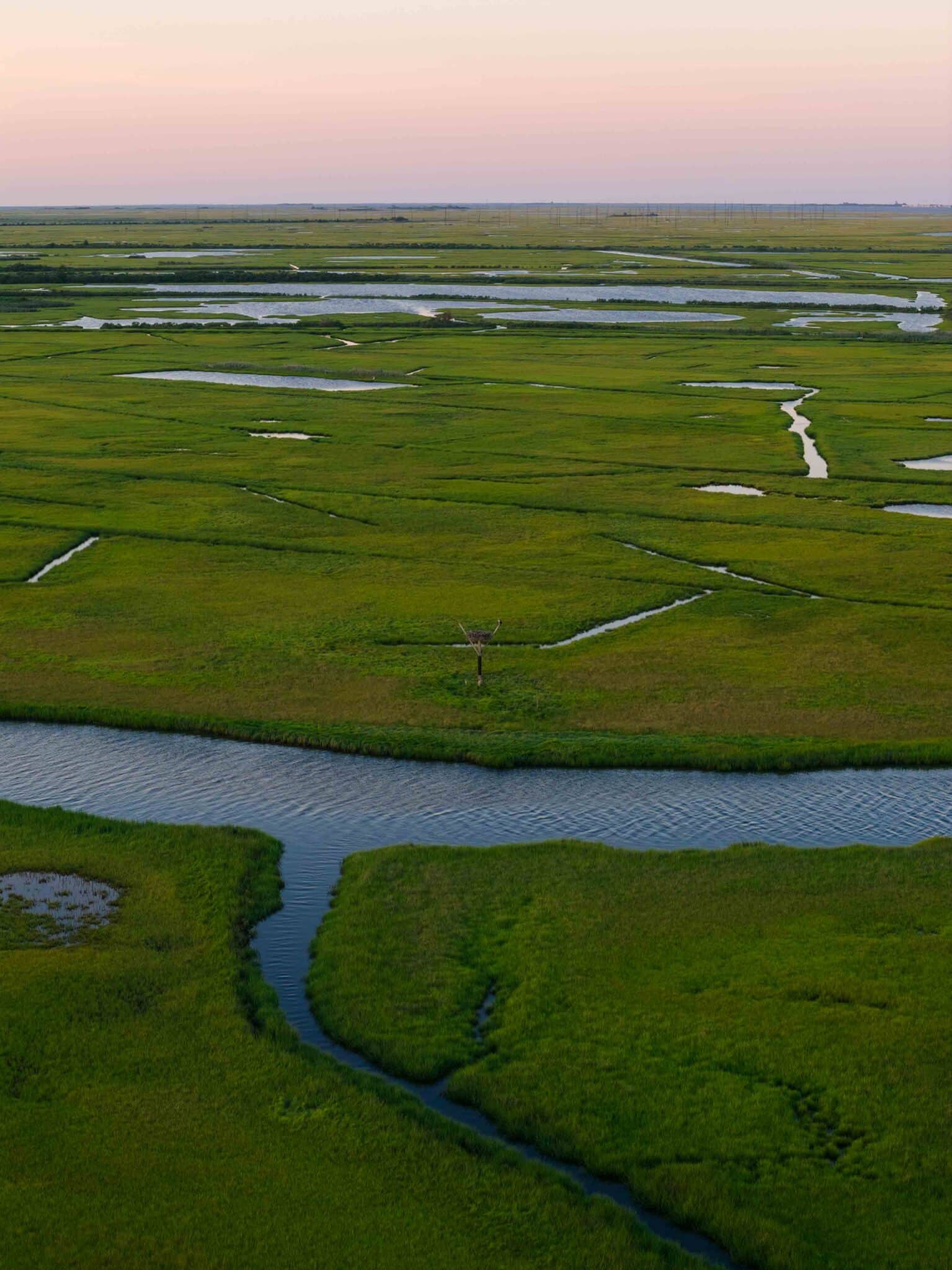

Posted on
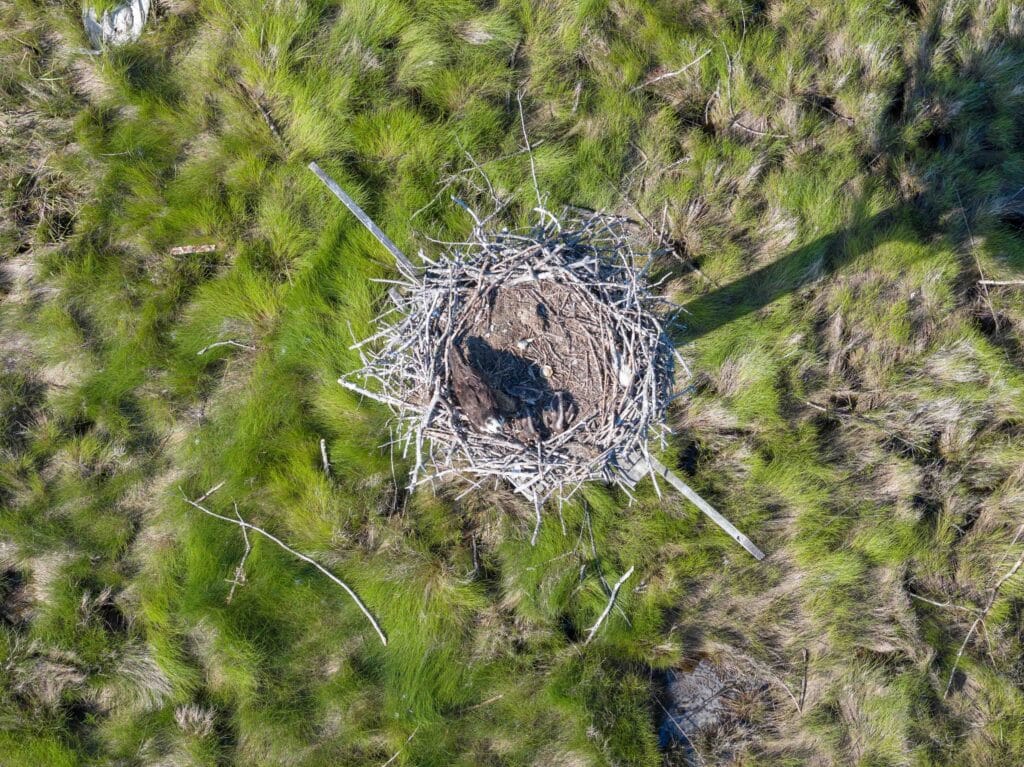
My summer has been filled with death and despair.
Every. Single. Day. I have seen or heard about osprey pairs that lost young to starvation. I now carry their stories with me, hoping that somehow they will be okay.
It is not okay.
Ospreys are now in decline in New Jersey. Their remarkable recovery, made possible by reducing pollution, protecting nesting habitat, and conserving our natural resources, is now in jeopardy. We are not alone. At nests all along the mid-Atlantic coast, ospreys are no longer producing enough young to sustain the statewide population, largely because of the scarcity of their primary prey: Atlantic menhaden.
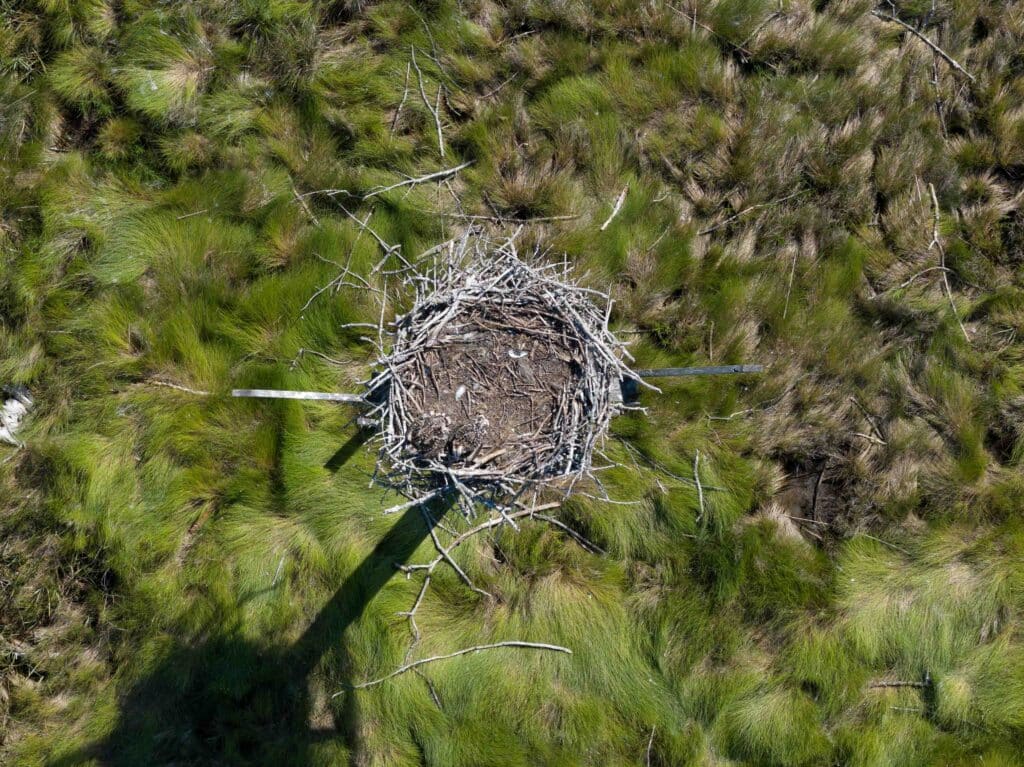
One nest, just 2.3 miles from my house, across from Mud City Crab House, in Stafford Township, is one that I watched very closely. The pair consists of a male that I banded as a nestling in 2017 at Sedge Island (37/H) and an unbanded female. They began incubating in late April and successfully hatched three young. At first, everything appeared normal, but as the nestlings grew, the signs of food stress became increasingly clear.
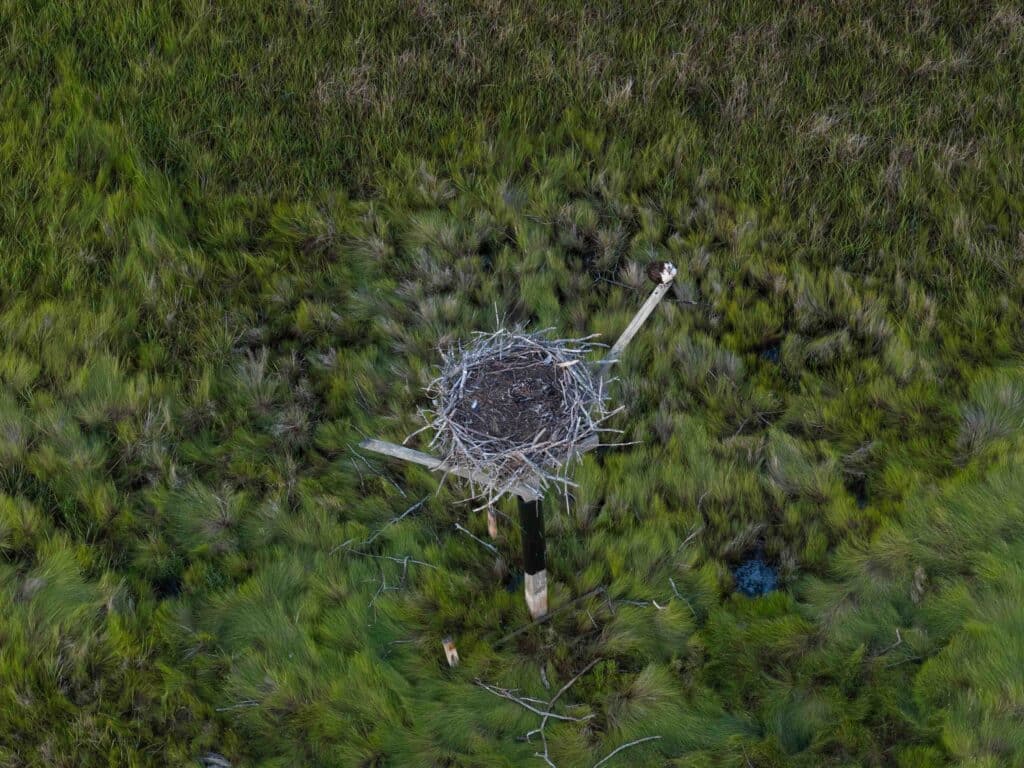
During my nest checks, I documented brood reduction, a natural response to food shortages where the youngest nestlings do not survive when prey is scarce. But at this nest, the situation became even more devastating. The pair lost all three young.
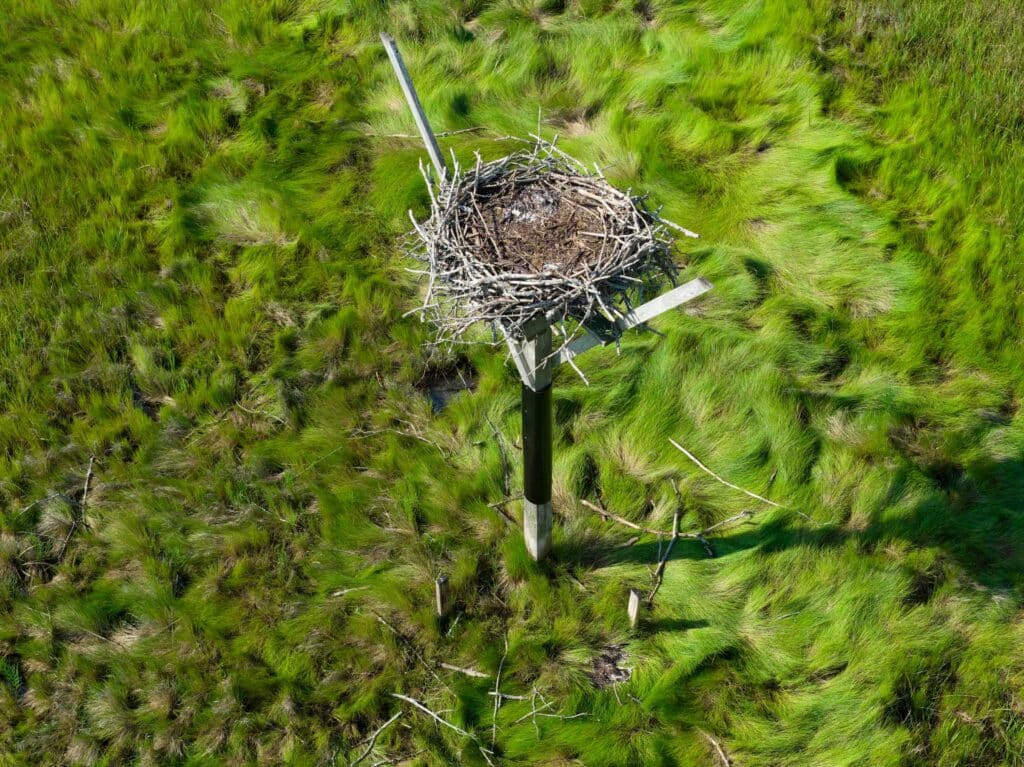
On my last survey, only one nestling remained alive, lying beside its dead sibling. I knew the odds of its survival were very low. As the sun set that evening, one of the adults left the nest and flew to a nearby forest to roost for the night rather than remain at the nest. It was a behavior I had not witnessed before and one that reflects the difficult conditions many ospreys are facing this season. Like so many other pairs, they tried their best to raise their young in an environment where food simply wasn’t abundant enough.
Scenes like this have become heartbreakingly common across coastal New Jersey this summer.
Please donate to support our work with ospreys
Ben Wurst has been a licensed unmanned pilot since 2012 and has a Special Use Permit from NJDEP Fish & Wildlife to operate a sUAS over WMAs in S. Jersey. No ospreys are disturbed by these unmanned aerial operations.
Discover more from Conserve Wildlife Foundation of NJ
Subscribe to get the latest posts sent to your email.
Leave a Comment
This is really sad. I remember being at Cheesequake Park a few years ago. There were dead fish all over. I forget the bacteria which caused it. But the osprey there would not touch the fish. On another note, though I have a garden full of host plants for Black Swallowtail butterflies. I raise them from when they lay eggs. I have seen only 1, no eggs. Normally by now I have released 40+ butterflies. I just can’t explain what has happened.
So sad, how can we help?
Ben, that makes me really sad! Ospreys are such appealing and interesting raptors. I love them. If it makes you feel better, know that the nests I check in the northwest quadrant of NJ are doing o.k. The production does seem to fluctuate up and down, but they usually have 2 or 3 chicks. Of course, I don’t see them when they are tiny because the nest towers here are so high and I have no drone!!
Hi Ben, this is truly devastating. Thanks for the link to the article. Will read that next. Thanks for everything you do to protect New Jersey’s wildlife.
I am so sorry to hear about the plight of Ospreys in NJ! That’s a terrible tragedy for these birds and their chicks. Are there any other bird species affected? Bless them all💞🇨🇦🇨🇦
Comments are closed.