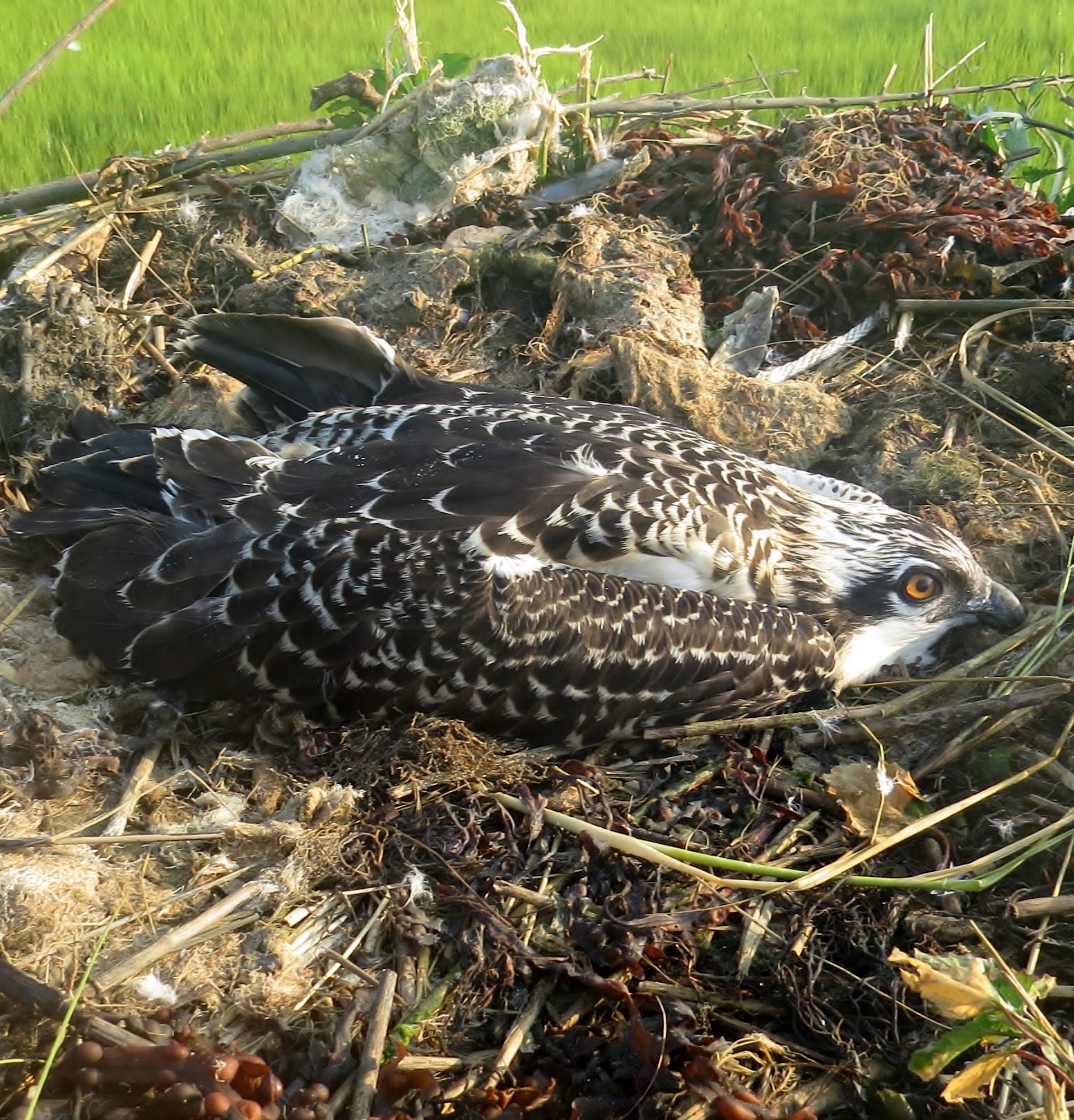
“Tiny” has another successful nesting season in Connecticut
By: Larissa Smith: CWF Biologist
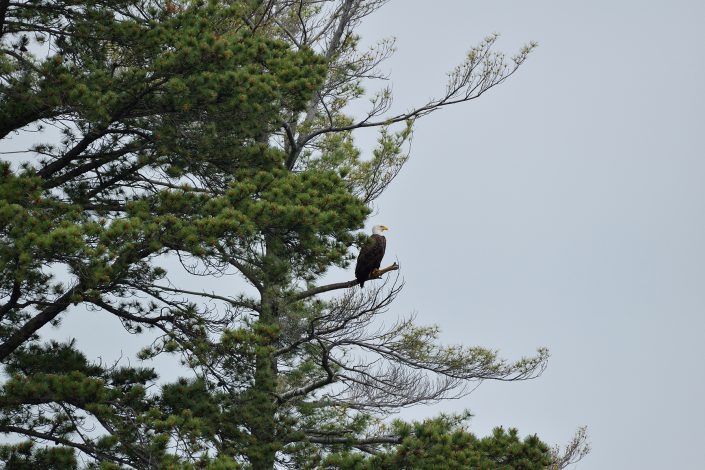
C/94 “Tiny” keeps a watch over nest in CT; 6/3/2016@ C.Pratt Didan
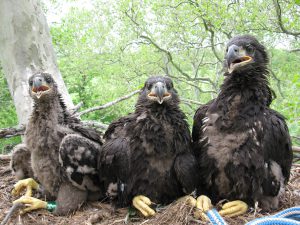
In 20015 we were contacted by Cyndi Pratt Didan regarding a pair of nesting eagles she has been observing in CT about 150 miles from Duke Farms. She was able to get a reading of the green band on the male C/94. It turns out that C/94 is a Duke Farms eagle from the 2009 nesting season. In 2009 there were three chicks in the nest and all were male. C/94 was the youngest and considerable smaller in the beginning as he was a week younger than the oldest chick and got the nick name “Tiny”.
May 18, 2009, C/94 after banding with siblings @M.Valent
His mate is also a banded bird from Massachusetts banded on June 11th, 2008. The pair nested in 2014 fledged two chicks and fledged one chick in 2015.
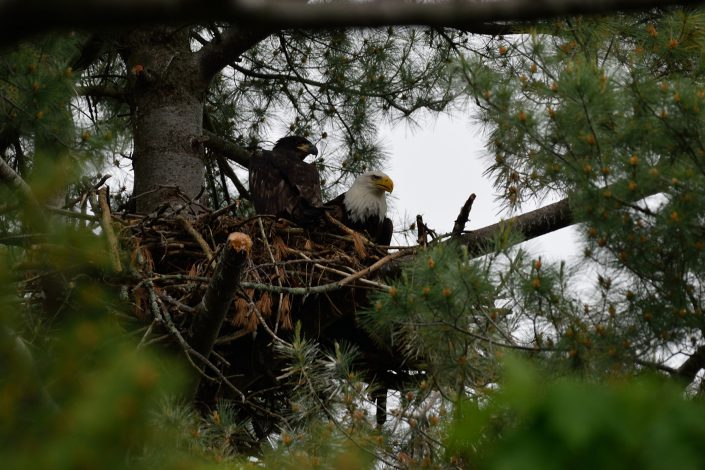
Cyndi reports that the pair built a new nest seven miles away from their old nest. This nest is in a pine tree on an island in a Reservoir. This season they fledged two young birds.
We thank Cyndi for keeping us updated on this NJ bird. It’s always good to get news about one of “our” chicks.
“Tiny” with one of the chicks 6/3/2016@ C.Didan Pratt
Since the spring of 2014 CWF and the NJ Endangered and Nongame Spieces Program have been tracking a transmittered eagle named “Nacote”, D/95. He fledged from the Galloway nest (Atlantic County) in the summer of 2014 and made a trip up to Canada, he returned to NJ in Mid-October of 2014 and has been in southern NJ ever since, spending most of his time in Cape May and Atlantic Counties. He spend some time in April near his nest of origin at Forsythe NWF where he was photographed.
D/95 “Nacote” at Tuckahoe Lake 7/21/16@ Kathy Clark
In the past few weeks he has been in Upper Cape May County spending time at the county landfill and he even made an appearance at Tuckahoe Lake behind our office. NJ ENSP biologist, Kathy Clark was able to get a photo of him perched by the lake.
Another eagle we are tracking “Oran”, fledged from the Egg Island nest, Cumberland County along the Delaware Bay in the summer of 2015. In Mid-November he headed south and spent the winter down in the Chesapeake Bay area and returned to southern NJ in the spring 2016. “Oran” spent most of his time ranging around Cumberland County until making a bold move north in Mid-July. He flew to Maine in two days and then north into Canada, south of Quebec City. He has been out of range and the last signal received was July 18th when he was at the Maine/Canadian Border.
So far this Eagle Nesting season 82 young eagles have been reported to have fledged (taken their first flight). Juvenile eagles will spend the next few weeks in the nest area strengthening their flying and hunting skills. The first year morality rate for first year eagles is high due to their inexperience. We wish all the NJ fledglings safe travels, and look forward to some returning to NJ to nest in the future.
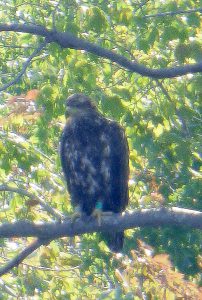
recent fledgling from Swimming River nest 6/26/16@Randy Lubischer
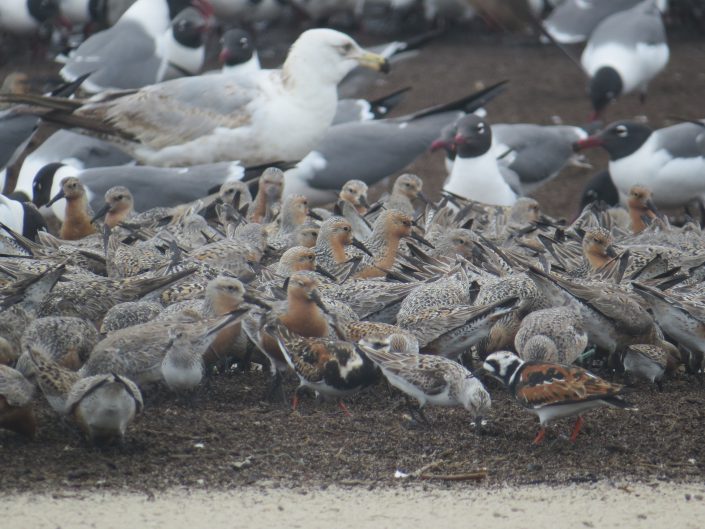
CWF’s Shorebird Stewards Protect Delaware Bay Shorebirds and Educate the Public
by Larissa Smith, wildlife biologist
Shorebirds at Reed’s Beach Photo by Bob Bocci
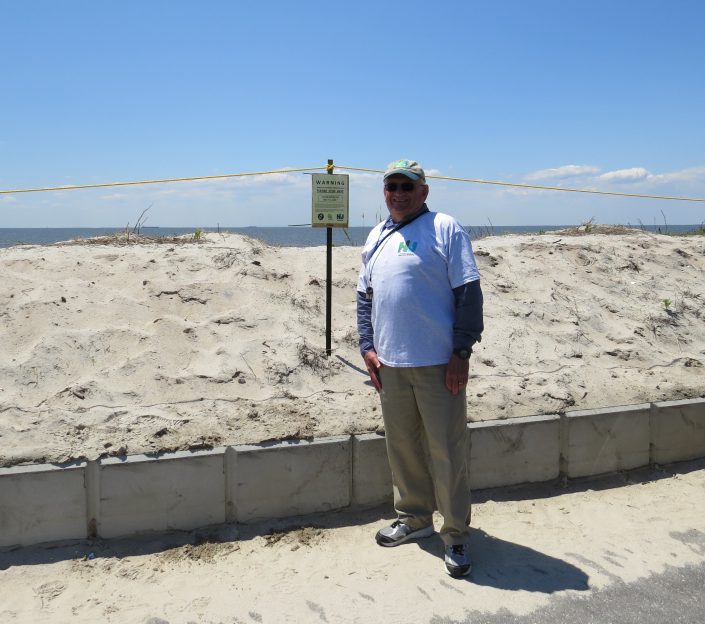
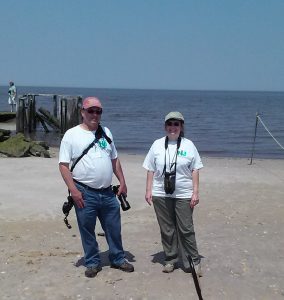
This shorebird season, twenty-one stewards helped to patrol the closed shorebird beaches in Cape May and Cumberland Counties. Stewards not only make sure that no one is entering the closed areas but also educate beach goers about the shorebirds and horseshoe crabs.
Thank you to all Shorebird Stewards!
Steward Bob Bocci at Fortescue Photo by M. TribulskiStewards Dan & Cheryl Alexander at Cook’s Beach
Tracking Young Bald Eagle “Nacote” throughout the Garden State
by Larissa Smith, wildlife biologist
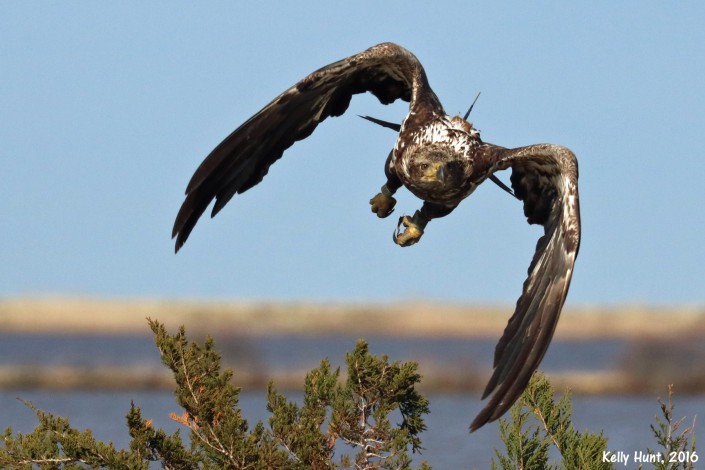
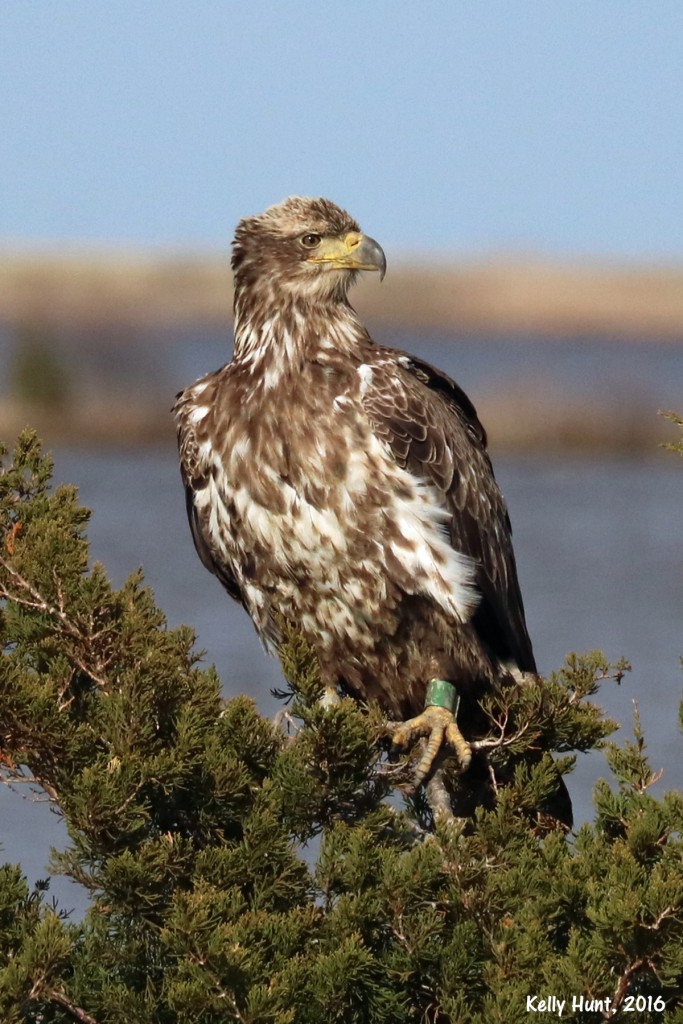
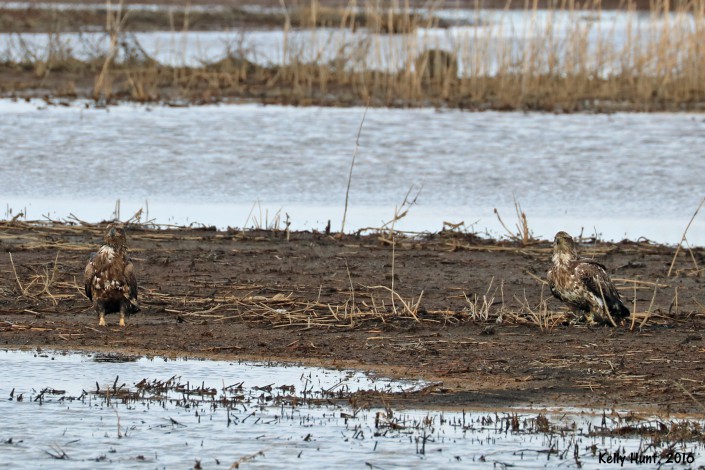
Nacote 4/8/2016 Photo by Kelly Hunt
On April 8th, Kelly Hunt was photographing four bald eagles at Forsythe National Wildlife Refuge (NWR), two adult birds and two immature birds. When she got home and looked at the photos she realized that one of the young birds was banded and had a transmitter. It was “Nacote” back in his home area. “Nacote” was banded and outfitted with a transmitter on May 6, 2014 at the Galloway nest. Since then we have been trackinghis movements on the CWF website. These photos give a great look at what the plumage of a bald eagle going into its third year looks like. You’ll also notice that the eyes and bill haven’t yet turned yellow.
‘Jersey Girl’ and Her Mate Rebuild Nest for the 2016 Nesting Season
by Larissa Smith, wildlife biologist
‘Jersey Girl,’ B-64, New nest 2016 Photo by L. Oughton.
We continue to follow the story of “Jersey Girl” B-64. She was banded in Hopewell, Cumberland County, New Jersey in 2004 and this is the fifth season her and her mate have nested in Montgomery County, Pennsylvania. In 2015 after successfully raising three chicks, their nest collapsed due to rain and wind at the end of June, but luckily the three chicks had already fledged.
Nest observer Lind Oughton reported, “Well our great ‘Jersey Girl’ and mate have done it again. They built a brand new nest in the same tree but about 15 feet lower that the first nest. It is much more secure where it is now.” She reported incubation on February 12th and hatching around March 18th. On April 1st, she saw one chick in the nest. We will continue to follow “Jersey Girl’s” story and keep you updated.
“Jersey Girl”, B-64, 2016 new nest. Photo by L. Oughton
Photo Captures Beautiful Eaglets of Different Sizes
by Larissa Smith, Wildlife Biologist
Photo by Kathy Clark
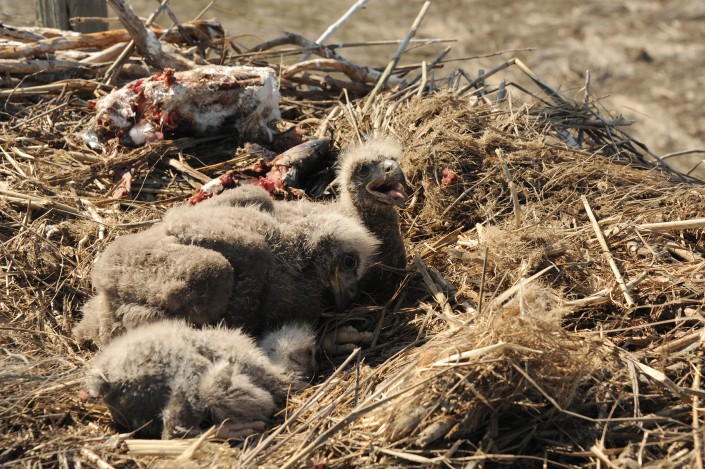
Conserve Wildlife Foundation’s partner biologist — Principal Zoologist with Division of Fish and Wildlife’s Endangered and Nongame Species Program (ENSP) — Kathy Clark checked on an eagle nest built on a structure only accessible by boat. This photograph shows the three chicks and the difference in their sizes. The youngest chick is approximately 2.5 weeks old, while the oldest is around 3.5 weeks of age.
Biologists and volunteers survey for New Jersey Eastern Tiger Salamanders
by Larissa Smith, biologist/volunteer manager
It’s the time of year when Conserve Wildlife Foundation biologists and volunteers along with Endangered and Nongame Species biologists start to survey for New Jersey’s “tigers,” and by tigers I don’t mean the big striped cats, we’re talking about the Eastern Tiger Salamanders. These large mole salamanders spend most of their life burrowed under the ground and in December begin to emerge to migrate to vernal pools and breed. Eastern Tiger Salamanders are endangered in New Jersey and only found in 15 pools in the most southern part of the state.
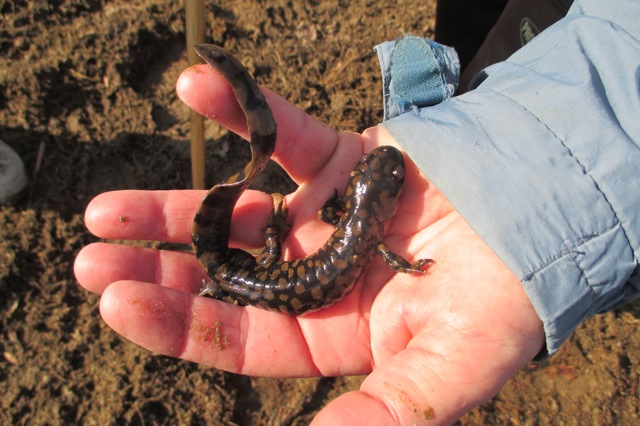
Last week dedicated volunteers Wayne Russell, John King and myself went out to check on a few known breeding pools. The water level in the ponds was lower than usual due to the lack of rain, but John found an adult male in one of the pools.
Tiger Salamander found 12/9/15 Photo by W. Russell
We were delighted to find a male in the pool so early in December. At another known breeding pool we found the partial remains of two Eastern Tiger Salamanders that had obviously been eaten by a predator. But the good news was that we also found two tiger salamander egg masses in the same pool.
Predation is just one of the challenges that these salamanders face. Tiger Salamanders themselves are targeted by collectors for the pet trade which is why their breeding locations are kept a secret. Their habitat is declining due to habitat loss and fragmentation, development, pollution, changes in hydrology, and climate change.
Volunteers and Students from Cape May County Technical School
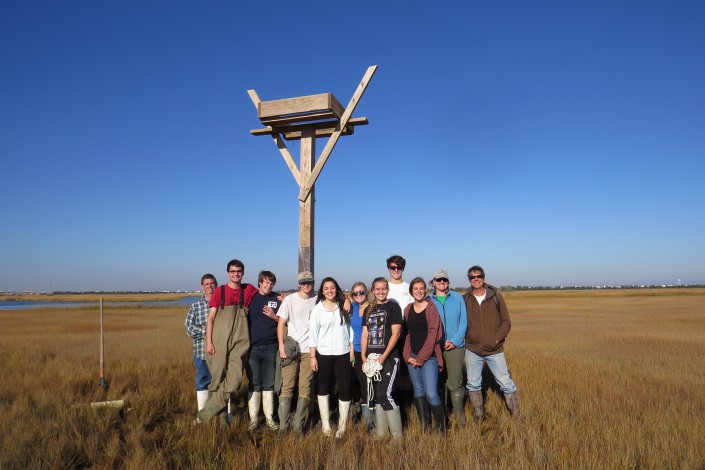
One lucky pair of ospreys received a brand new nesting platform due to the effort of volunteers and students from the Cape May County Technical School! Dedicated osprey project volunteer Matt Tribulski reached out to CMC Tech Natural Science teacher Hanna Toft, regarding replacement of an aging platform in the Avalon back bay. Hanna is an osprey project volunteer and bander and incorporates the osprey project into her curriculum. The nest that was replaced was an old four poster that was unstable and not predator proof. The nest was located at the edge of the water causing the birds to get off the nest every time a boat or jet ski went by (which in the summer is quite frequently).
Hanna had a platform available that her students had built last year. We couldn’t have picked a better day for the install, the weather was gorgeous and warm for November. We met Hanna and eight of her students out on the water. The new platform was placed further back from the water and has a predator guard. The students removed the old platform, leaving some posts for the ospreys to perch.
We hope that the birds like their new home when they return in the spring.
Thank you to Matt, Hanna and her students for all of their help!
CWF Biologist and Volunteers Find Foster Home for Osprey Chick
by Meghan Kolk, Volunteer
On July 6, I had the opportunity to participate in an osprey banding project with Larissa Smith (Wildlife Biologist/Volunteer Manager) and her husband Matt, who have been banding ospreys for many years. I was thrilled that Larissa invited me to tag along because I knew that it would be an amazing experience, but I had no idea it would be a day that I would never forget. I was expecting to get some good pictures and maybe even get to hold an osprey, but we came upon a situation that would make the day so much more rewarding.
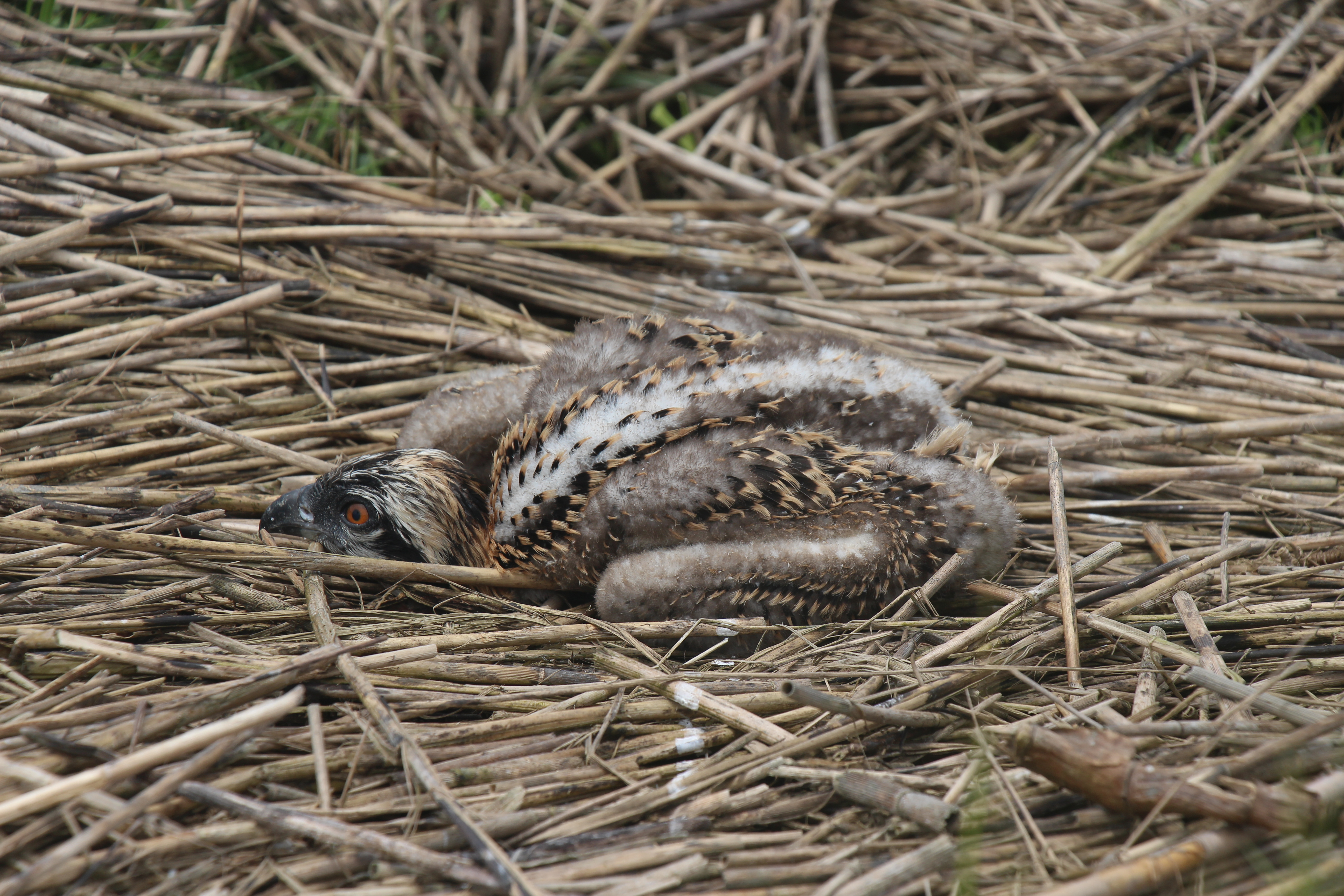
Osprey chick found on ground July 6, 2015, Avalon Photo by M. Kolk
About half way through the day as Matt approached an osprey nest and got ready to climb up, he noticed a young osprey chick lying on the ground below the nest. It appeared weak and dehydrated, but uninjured. The nest above contained two older and larger chicks, and it became evident to us that the young runt was most likely pushed out of the nest by it’s competitive siblings. Our first thought was to put the chick back in the nest, however we knew that it would ultimately suffer the same fate, especially in it’s weakened condition. Our second thought was to take it to a rehabilitation facility, but since it did not appear to be injured we thought it would be best to keep it in the wild if possible. This brought us to our third option…find a foster home.
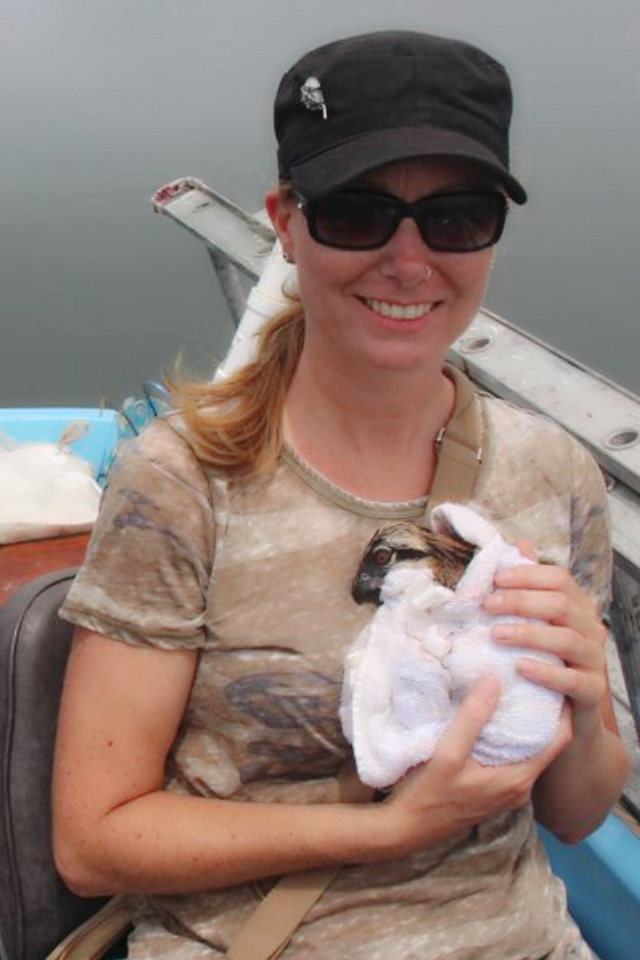
Meghan with chick Photo by L. Smith
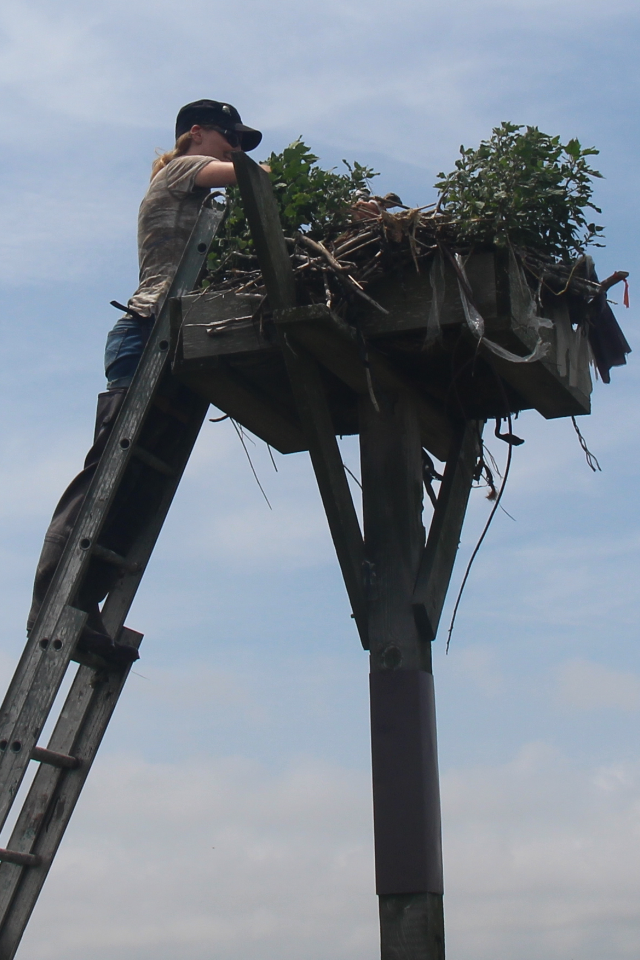
We offered the chick some much needed water and carried it back to the boat. I had the pleasure of holding and comforting our chick on the boat ride as we searched for the perfect nest. We came upon an empty nest holding three eggs which never hatched. The parents were lingering nearby and still seemed interested in parenting. We decided to give it a try. I was really enjoying my time with the chick and quickly grew attached, but I knew we had to get it into the care of some adults as soon as possible. Reluctantly, I climbed the ladder and placed the chick into it’s new home and said goodbye. We got back in the boat and watched from a distance to observe how the adults reacted.
Meghan placing chick into foster nest Photo by M. Tribulski
One adult circled the nest many times observing from a distance. After several minutes it landed on the edge of the nest to get a closer look. I can just imagine the surprise and confusion it must have felt, but I was hoping that it was happy to see the little bundle of joy. After a few more minutes the partner joined in the nest, and we continued on with our banding to give them a little time to adjust.
Before finishing for the day, we went back to check on the nest. We were relieved to see both foster parents in the nest, and already protecting their adopted chick by swooping at us as we got close. It seemed as though they had already accepted the chick as their own.
Two days later Matt went back to the nest to check on the foster family. The chick looked stronger and had a full crop. This made it clear that the parents were feeding it since the crop was completely empty on the day we found it. About three weeks later, at the end of July, he checked on the nest once more and found our foster chick in good health and growing. I was so elated to hear the news and to know that our rescue mission was a success and this wonderful bird got a second chance at life.
Chick in foster nest July 29, 2015 Photo by M. Tribulski
This experience was so rewarding for me because even though we had to intervene, we were able to let the natural instinct of the osprey take over to raise this abandoned chick in need. I now have an even greater respect for ospreys because they will care for young that are not their own. This is an important characteristic for a threatened species to have in order to keep the population growing.
This particular chick experienced both the competitive instincts of it’s siblings fighting for survival, and also the protective instincts of it’s foster parents who put all of their energy into raising it. I feel so thankful to have been a part of this success story, and it reinforces all the reasons that I will continue to be a volunteer. Being able to make a difference even to just one individual is all the reward I need.