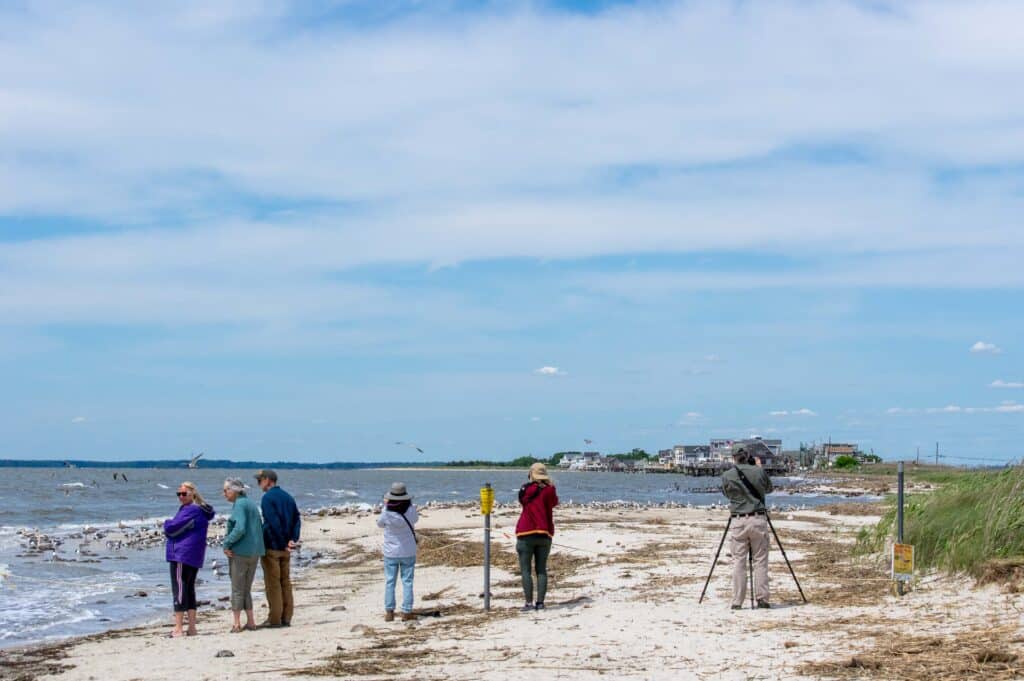
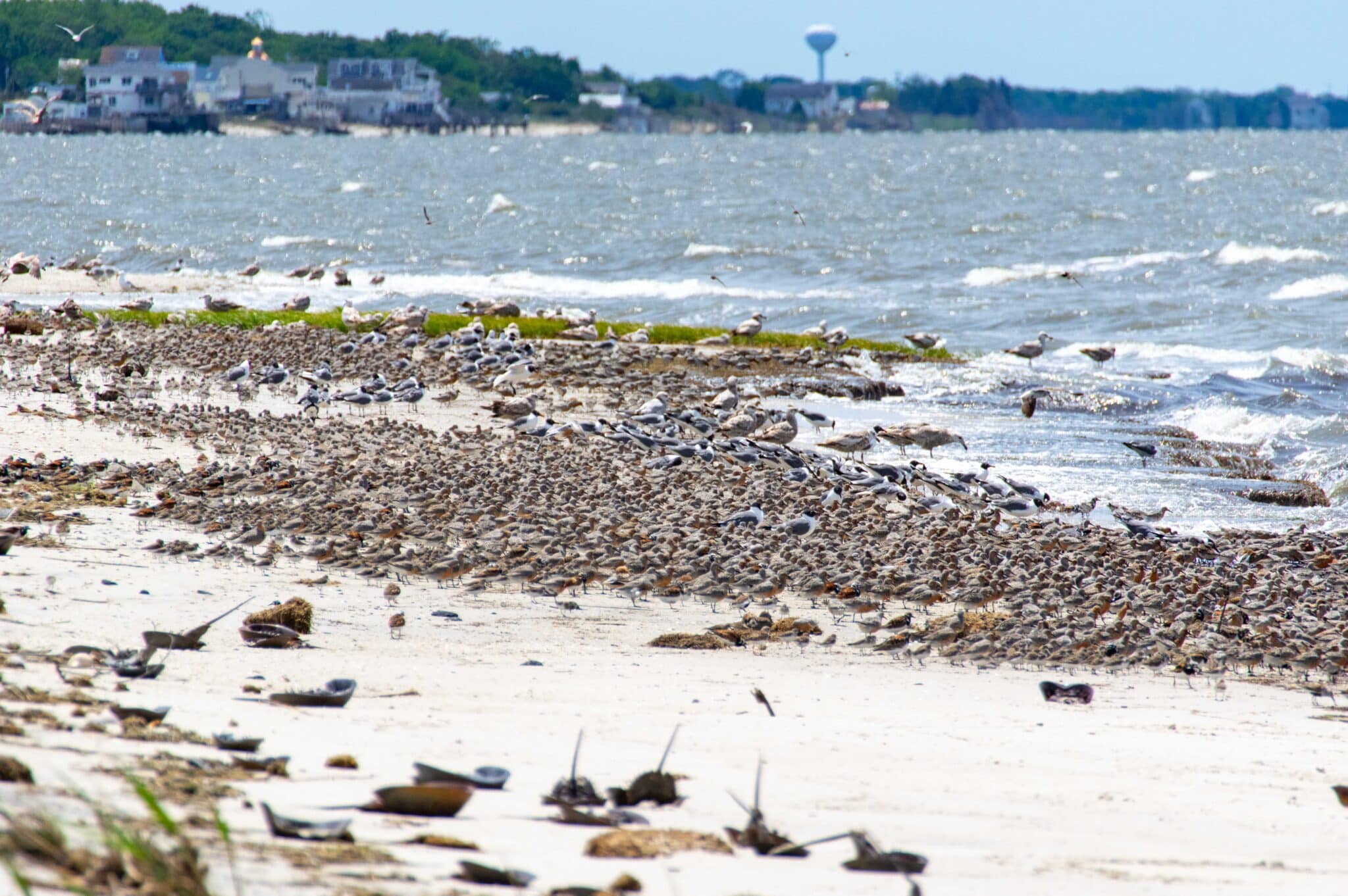
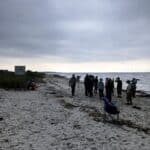
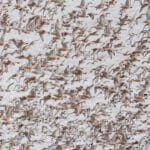
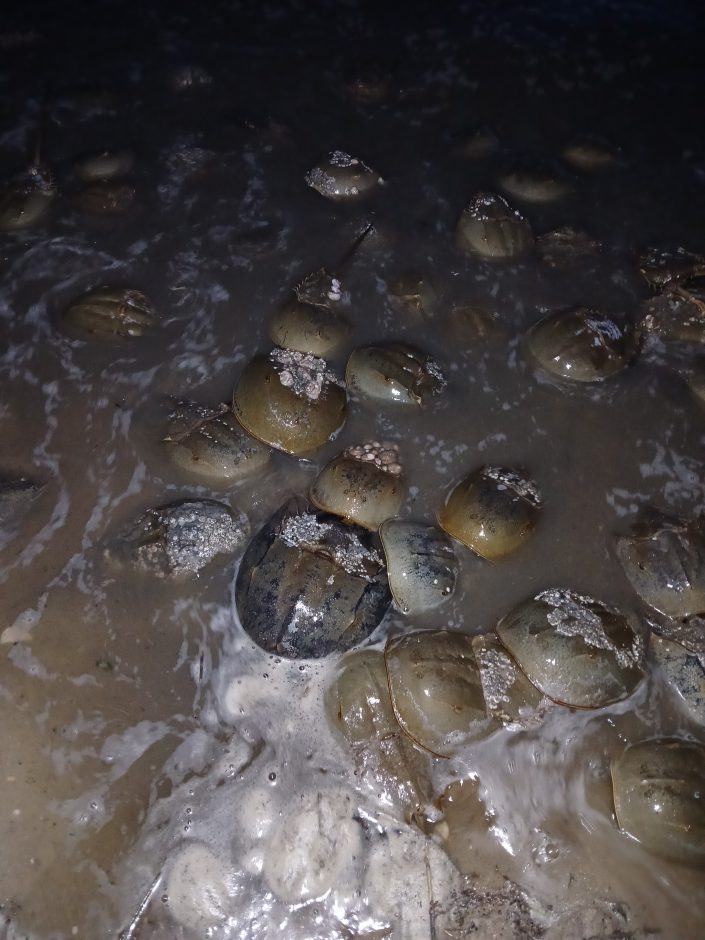
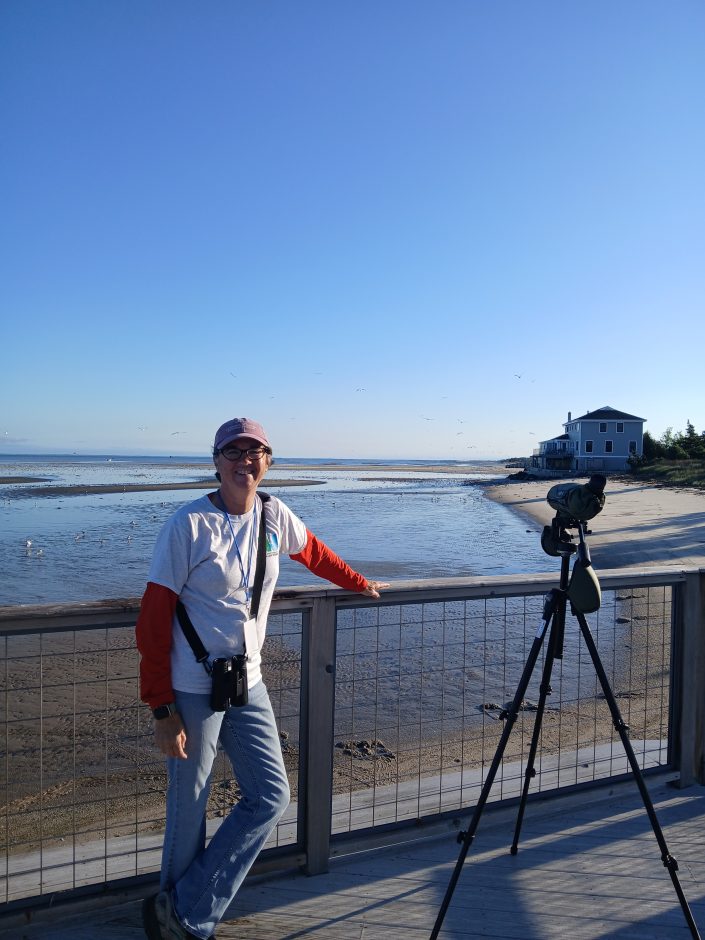
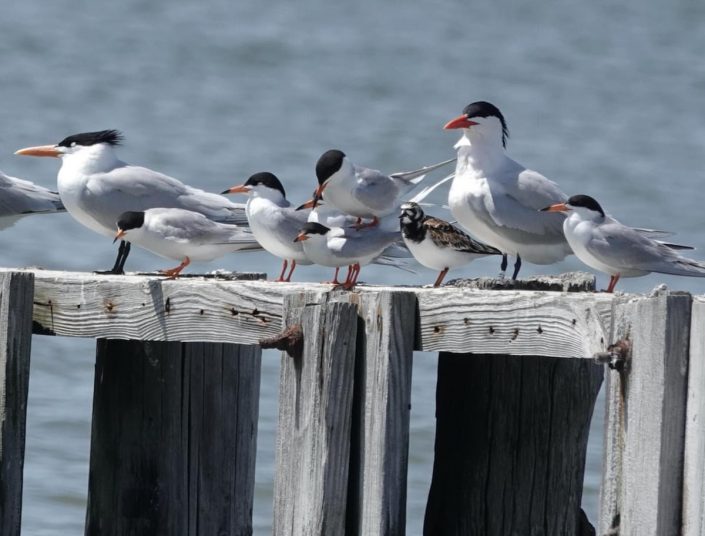
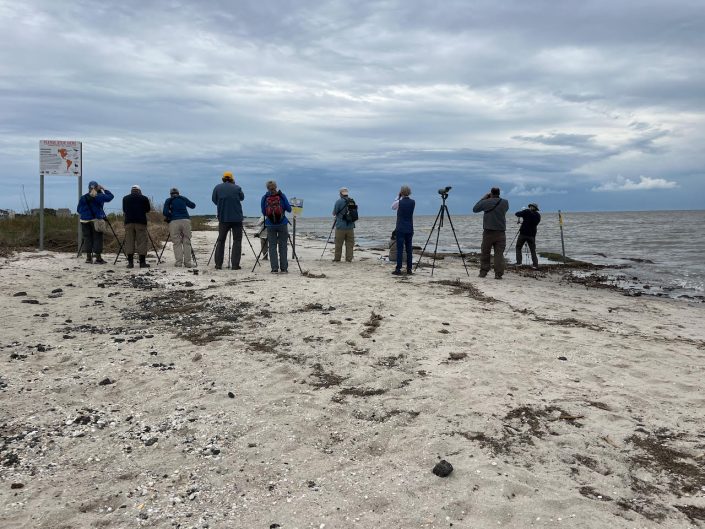
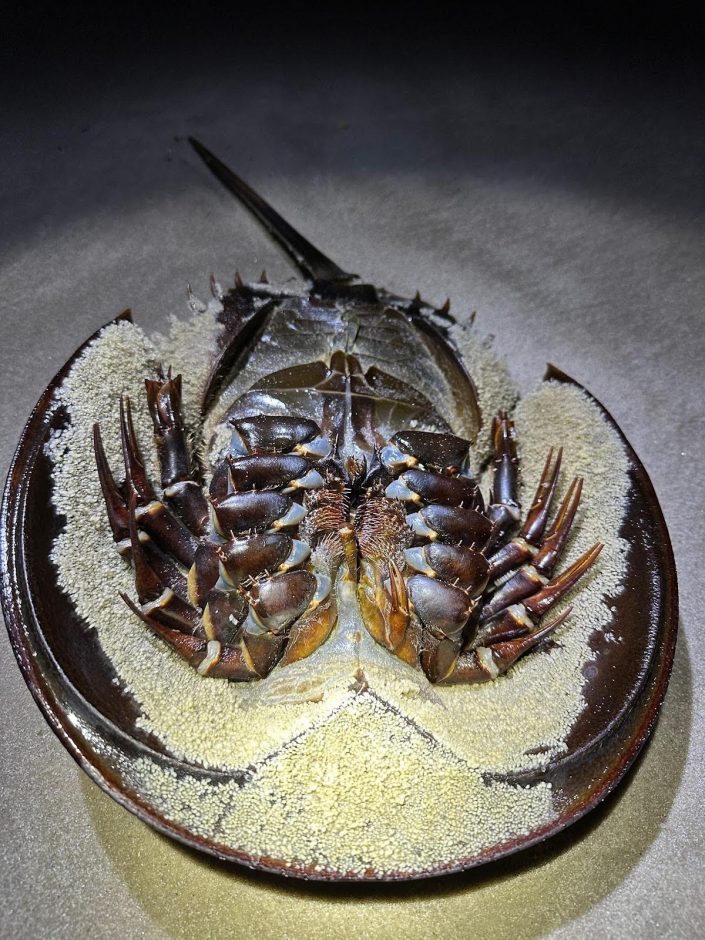
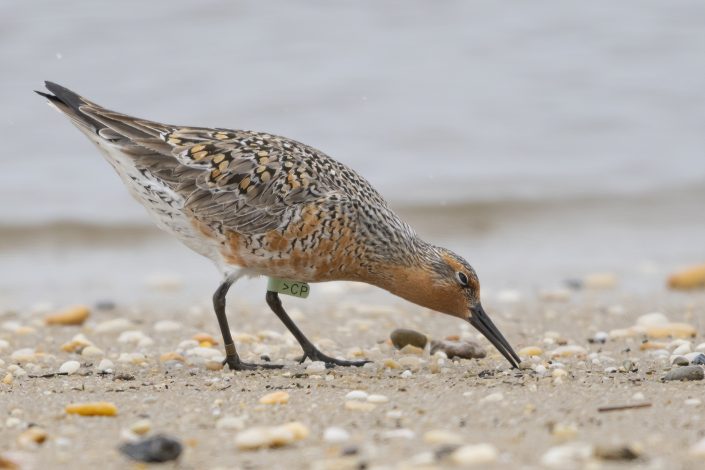
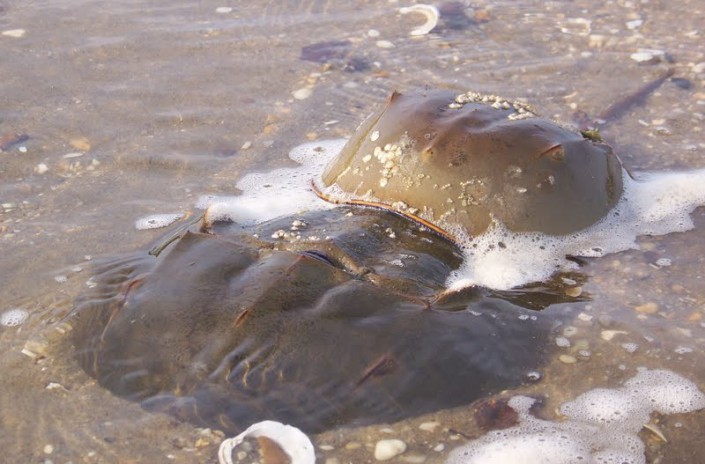
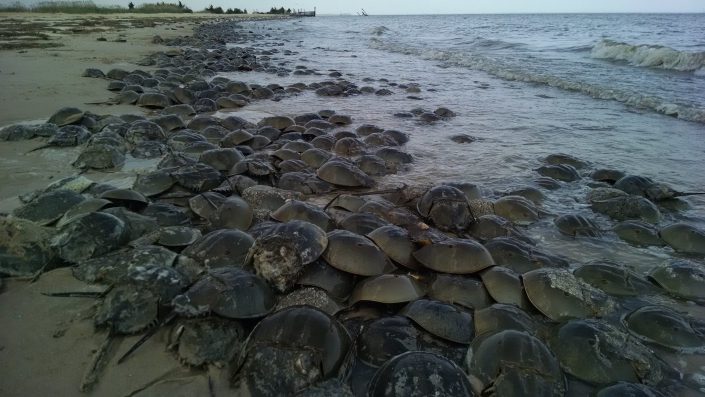
This shorebird season 43 stewards worked a total of 1,374 hours over a two week period from May 9th thru May 25th. Stewards were posted at restricted access beaches in Cape May and Cumberland Counties. Stewards help to protect the migrating shorebirds that stop over on the Delaware Bay to feed on the horseshoe crab eggs. They keep people off of the restricted beaches by educating them about the importance of letting the shorebirds feed undisturbed so that they can gain the weight needed to continue their journey north to their breeding ground’s. Continue reading “NJ Delaware Bay Shorebird Stewards: Protectors and Educators”
by Larissa Smith Senior Wildlife Biologist Posted on
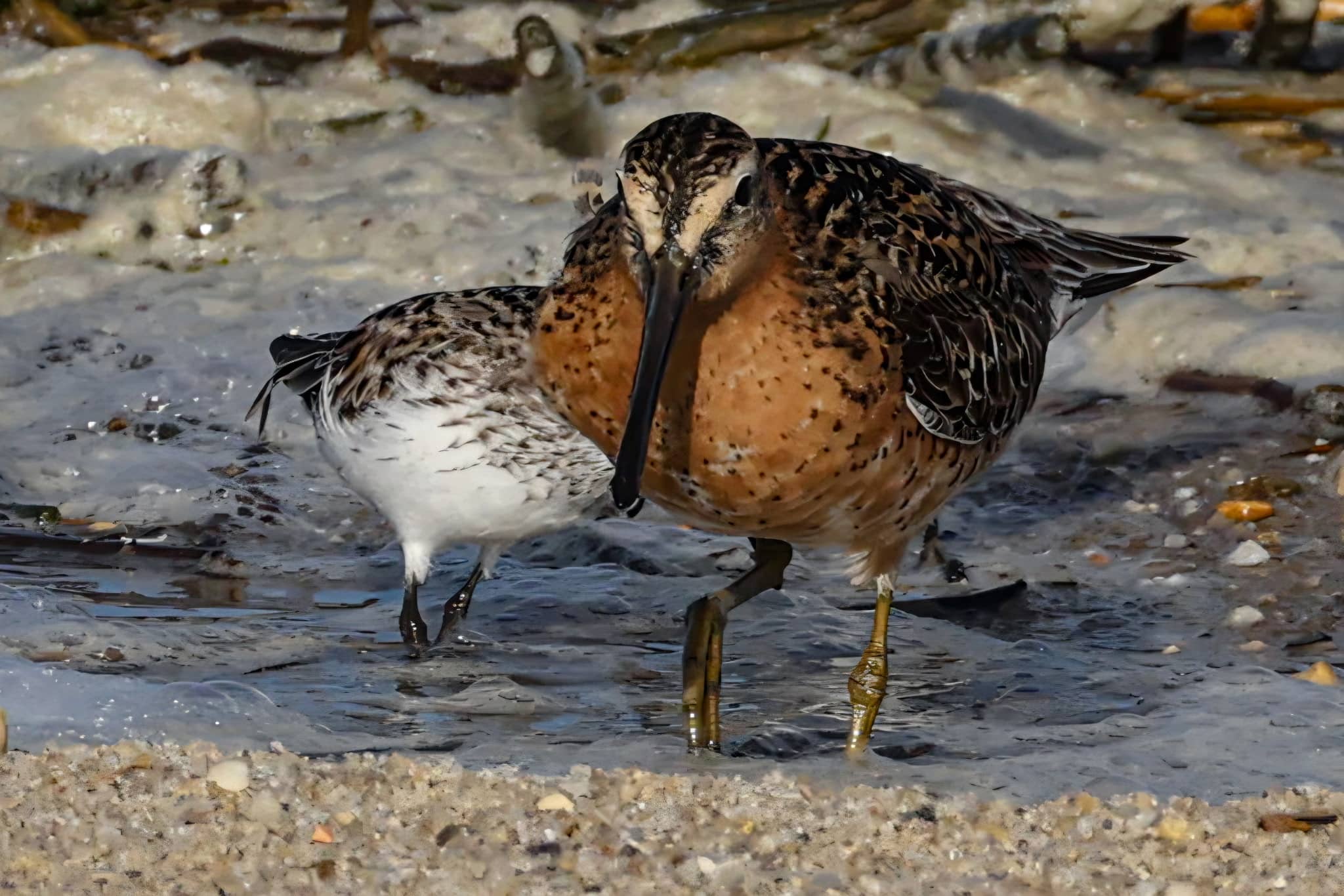
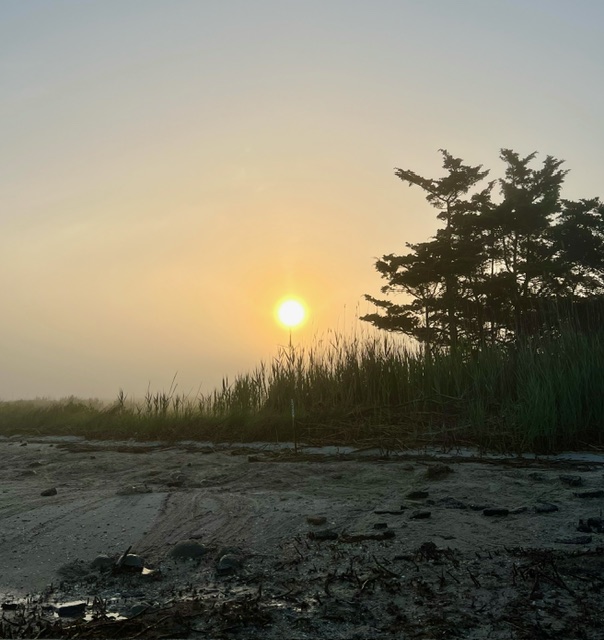
photo by Bill Reinert
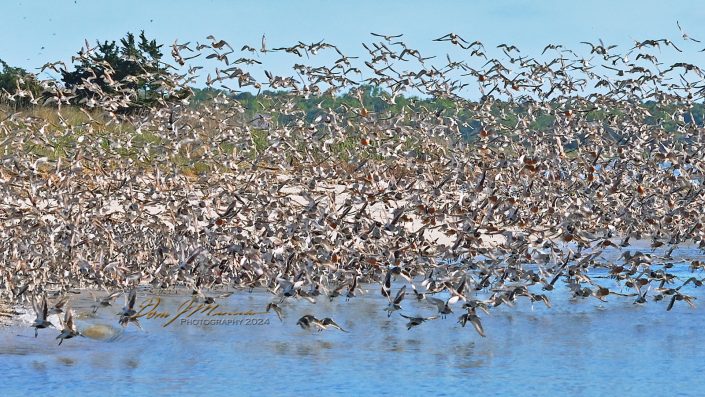
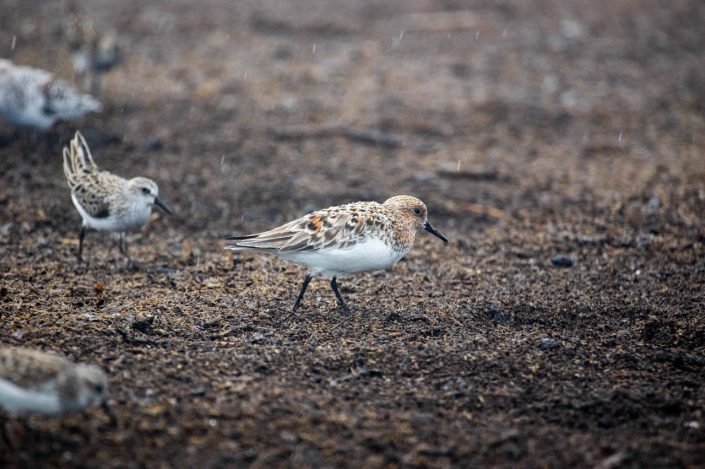
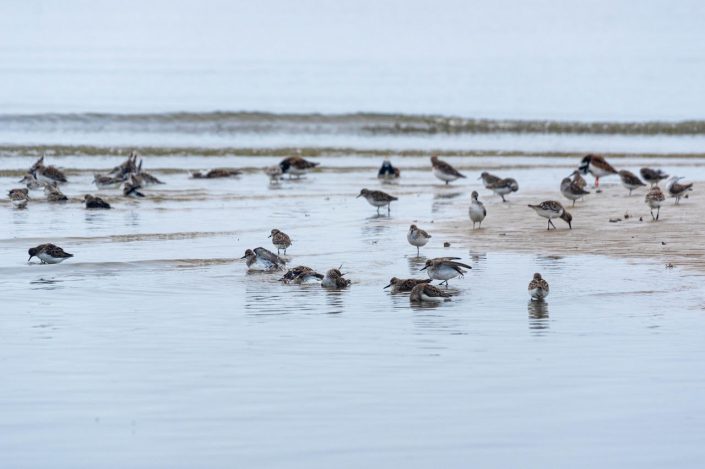
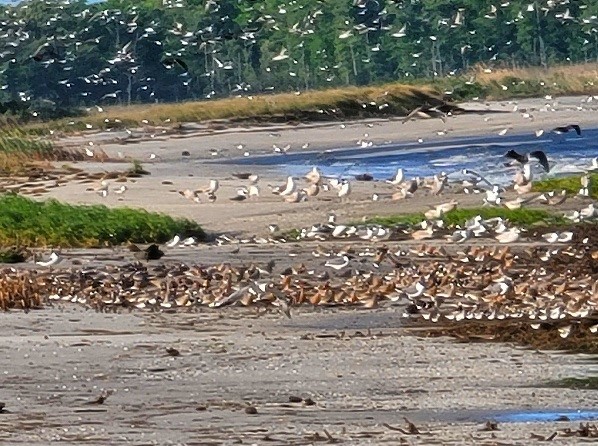
Shorebird stewards may not wear capes but they are superhero’s to the multitude of shorebirds stopping along the Delaware Bay in the spring. During May, the beaches in New Jersey are an important stopover for these migratory birds who are mainly feeding on the horseshoe crab eggs, deposited during the annual horseshoe crab spawn. The shorebirds, which include the red knot a NJ endangered species, have a short window to reach their ideal weight before leaving on the next half of their journey north to breed. Eight beaches in Cape May County and two in Cumberland County have restricted access during the migration so that the shorebirds can feed undisturbed.
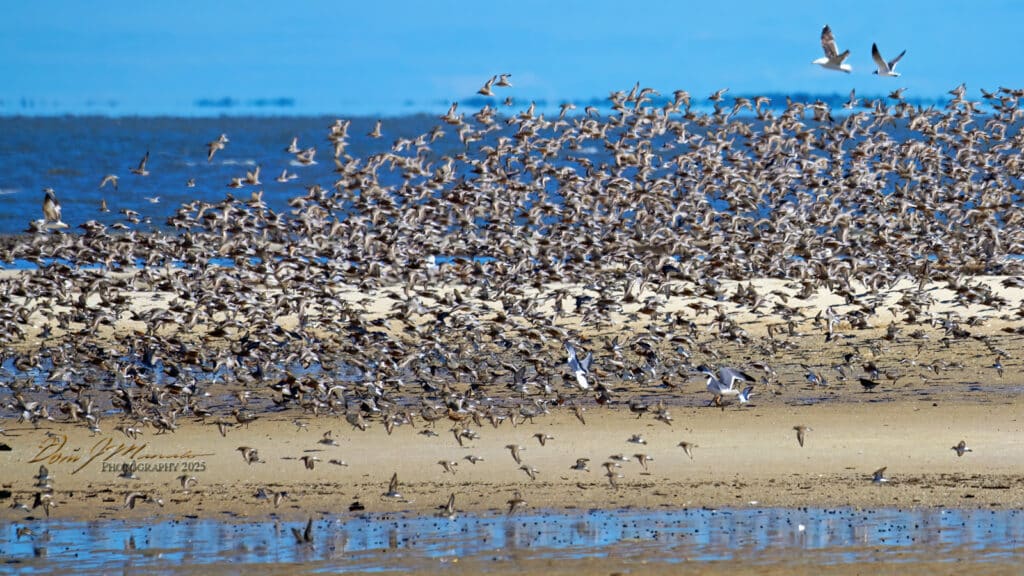
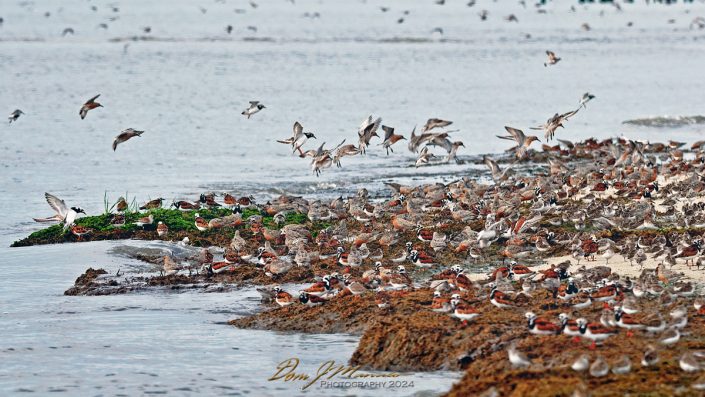
photo by Dom Manalo
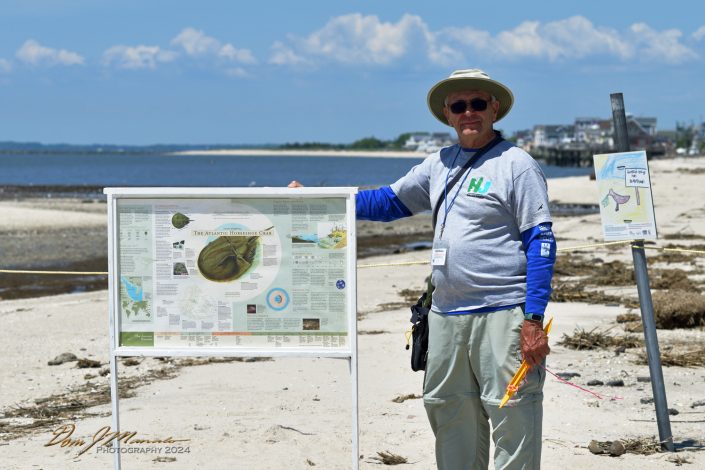
Since 2003 Conserve Wildlife Foundation has coordinated the Shorebird Stewards, who help protect the feeding shorebirds by educating the public. This season thirty-one stewards were stationed at beaches between May 10th to May 26th. While most stewards are from New Jersey, we have stewards from Pennsylvania, Delaware and Maryland. Some of the stewards volunteer for a day, while others work the entire season and many return year after year. No matter how often someone has been a steward, they have a made a difference and we have definitely seen a positive change in peoples attitudes over the years. Visitors come from all over to view the shorebirds and horseshoe crabs and one of the main questions the stewards get asked is, “where are the shorebirds today”?
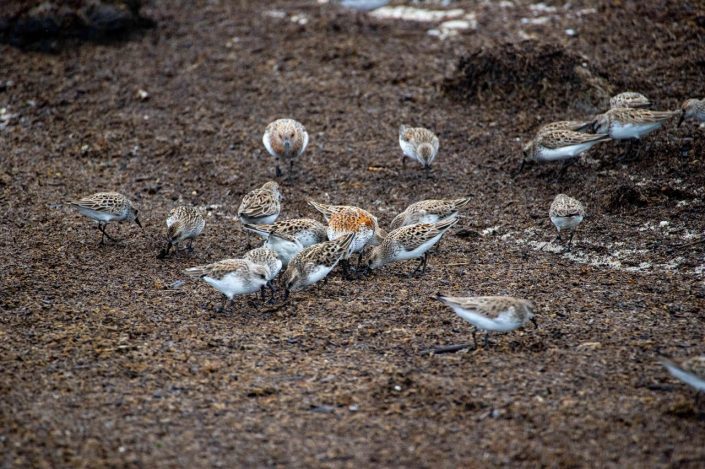
photo by Luke Tan
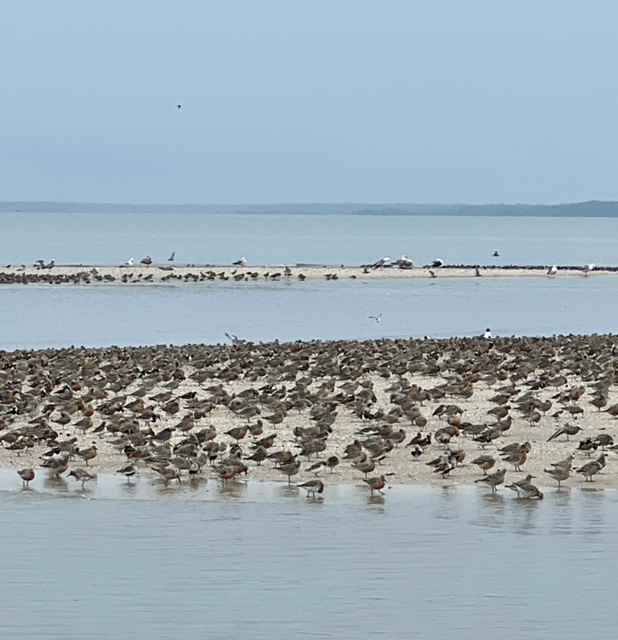
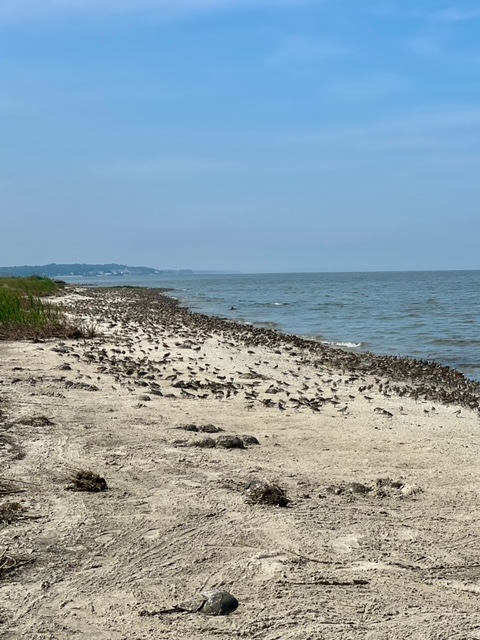
Some days the beach where the steward is assigned has only few shorebirds, while other days the beach is covered with the feeding birds. While the majority of beach goers have a positive attitude about the beach restrictions, there will always be those that want to go on the beach. While these situation aren’t always pleasant, the stewards are trained to handle them calmly and with education.
Twenty-nine Shorebirds Stewards were posted at Delaware Bay beaches in Cumberland and Cape May Counties during the annual shorebird migration in May. Stewards help to protect the feeding shorebirds by keeping disturbance to a minimum. Shorebirds birds need to feed and fatten up on horseshoe crab eggs for their journey north to their breeding grounds. Stewards educate the public about this phenomenon and the reasons for the restricted beaches. The 2024 shorebird season went smoothly, the crabs spawned throughout May, so there were plenty of eggs on the beaches. This season the shorebirds were using many of the beaches with restricted access to the public. These beaches had stewards present and viewing areas, allowing people to witness the multitudes of shorebirds, especially the Red-knot, a federally listed species. Thank you to all the stewards for making this a successful shorebird season.
photos by Shorebird Stewards
photo by Dom ManaloShorebird Steward Susan Rashphoto by Susan Rashphoto by Luke Tanphoto by Luke Tanphoto by Susan RashShorebird Steward Neil Olfusen; photo by Dom Manalophoto by Susan Rashphoto by Luke TanCWF inter James O’Rourkephoto by Dom Manalophoto by Larissa SmithShorebird Steward Jill Connellphoto by Barb Bennettphoto by Barb Bennettphoto by Kat Codyphoto by Chris HeimerShorebird Stewards Dan & Cheryl Alexanderphoto by Barb Bennett
In the May 16th blog, Shorebird Stewards On the Bay in May, it’s mentioned that some beaches along the Delaware Bay have restricted access every year from May 7th to June 7th. This is due to the migratory shorebirds that travel thousands of miles and need a place to stop to feed. Our beaches contain excellent food sources to help birds gain weight to continue their journey- horseshoe crab eggs. They are filled with fat and protein. The Delaware Bay is the largest spawning area for horseshoe crabs in the world!
Now what do the Shorebird Stewards, such as myself, do all day? We monitor our assigned beaches and educate the public about this incredible phenomenon! My favorite beaches are Roosevelt Blvd. beach and Cook’s Beach because I see the most active flocks of shorebirds at these locations.
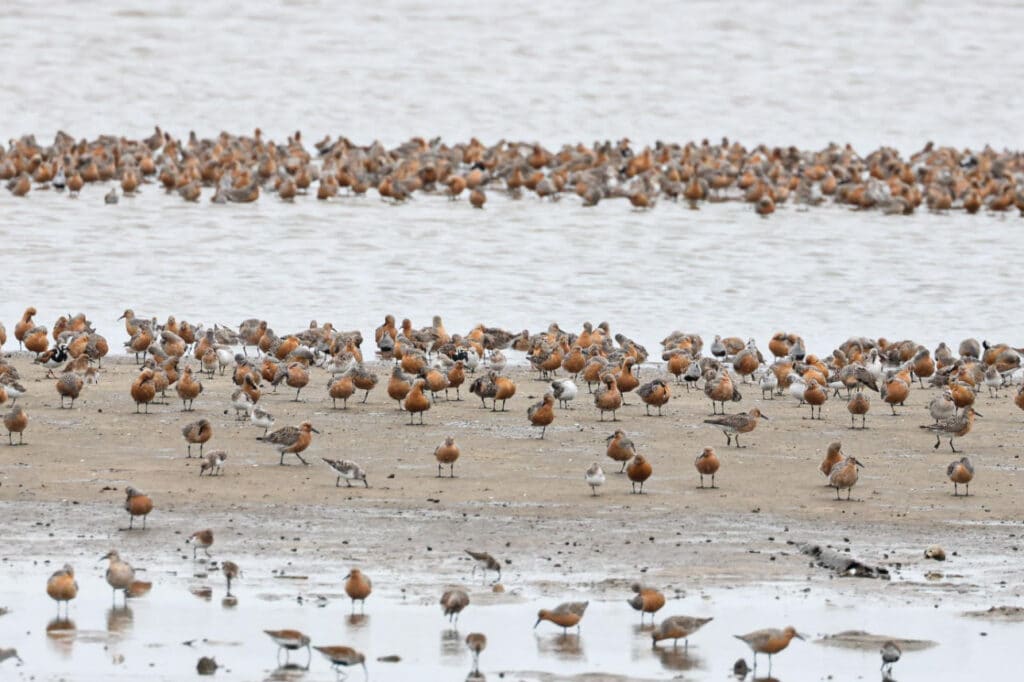
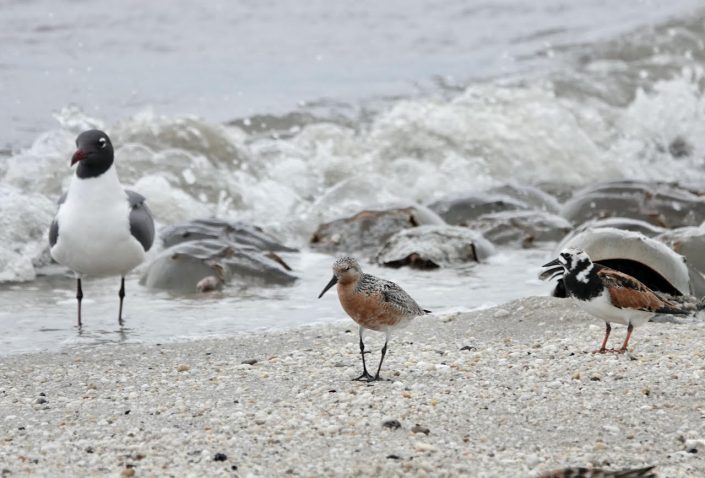
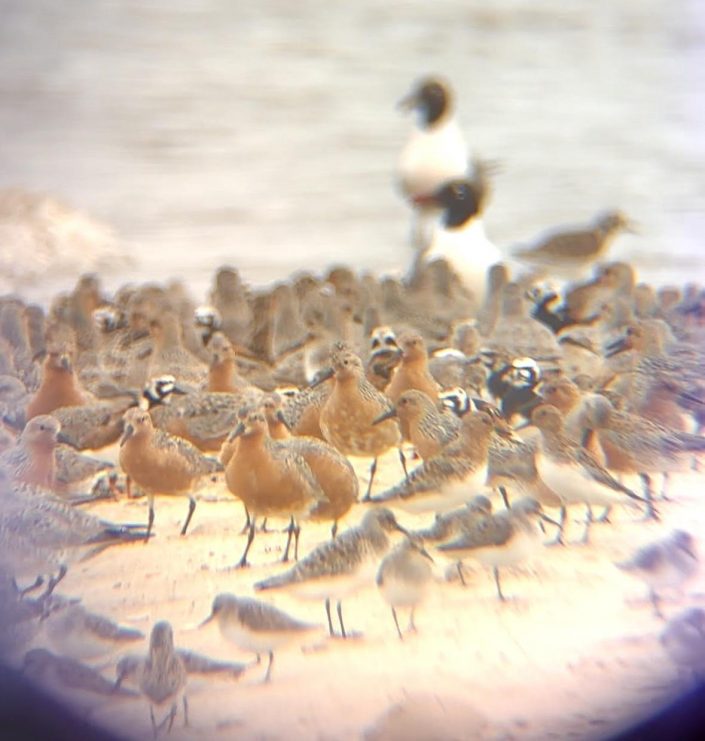
A group of the infamous Red Knots: Calidris canutus, Semipalmated Sandpipers: Calidrus pusilla, and Ruddy Turnstones: Arenaria interpres, at the beach on Roosevelt Blvd., photo: C. Franceschini
On a quiet day with not many people to educate, there are many things for us Stewards to do. Some Stewards read their books, watch movies, listen to music/podcasts, color/paint, take walks, research, etc. I do all of the above! Since we have a love for these special shorebirds, most Stewards also birdwatch! It’s a must to bring your binoculars or scope to observe these beautiful birds. Sometimes, you observe other interesting animals, too!
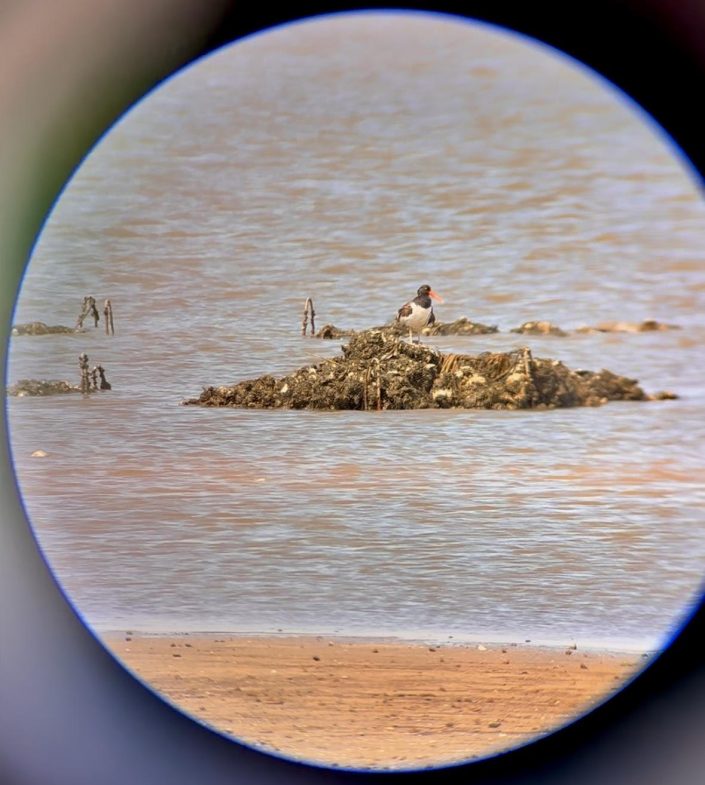
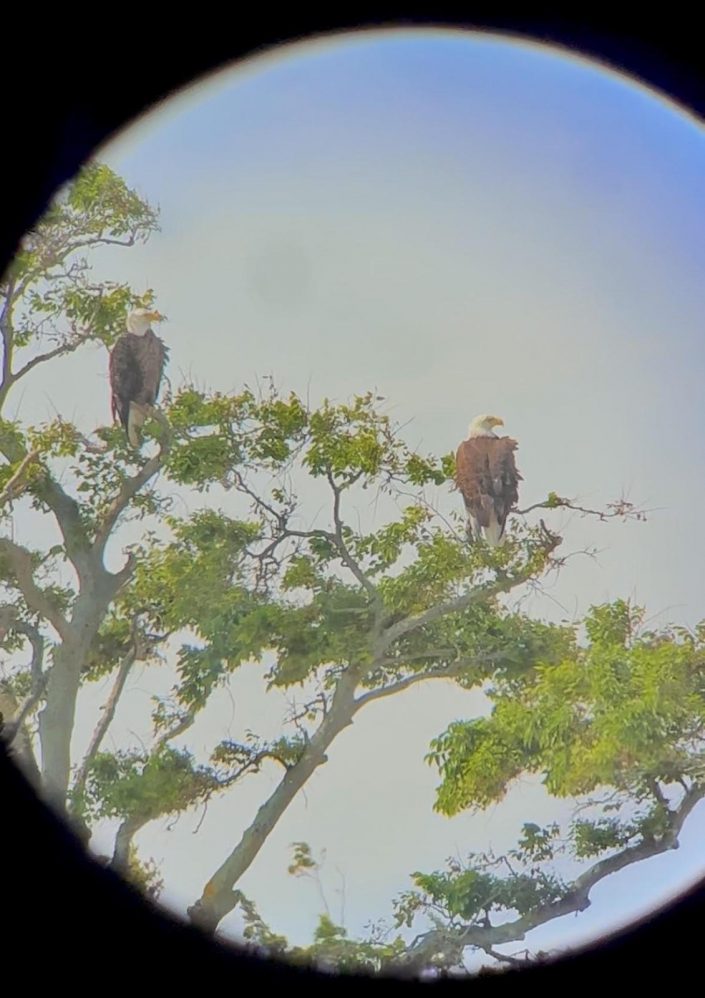
American Oystercatcher at Cook’s beach: Haematopus palliatus photo: C. FranceschiniBald Eagles, Haliaeetus leucocephalus, photo: C. Franceschini
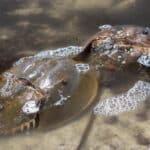
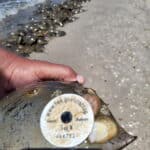
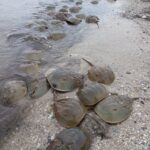
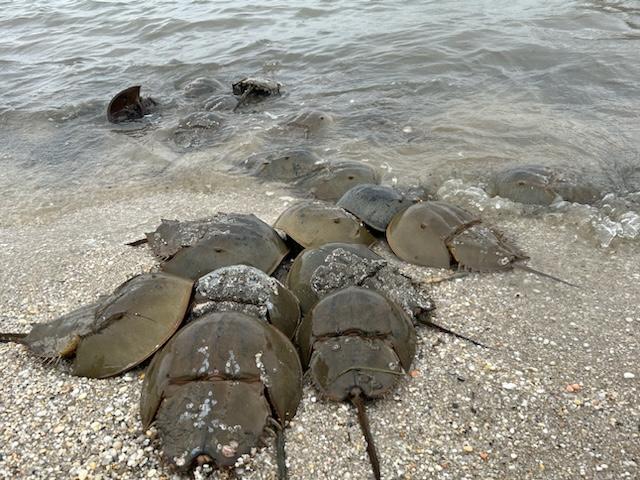
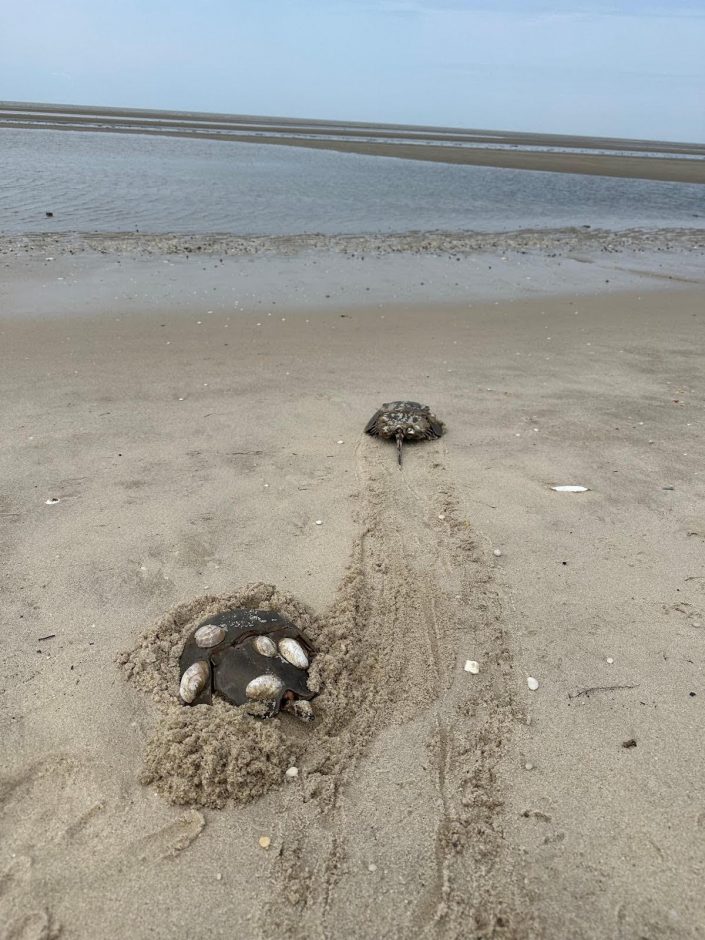
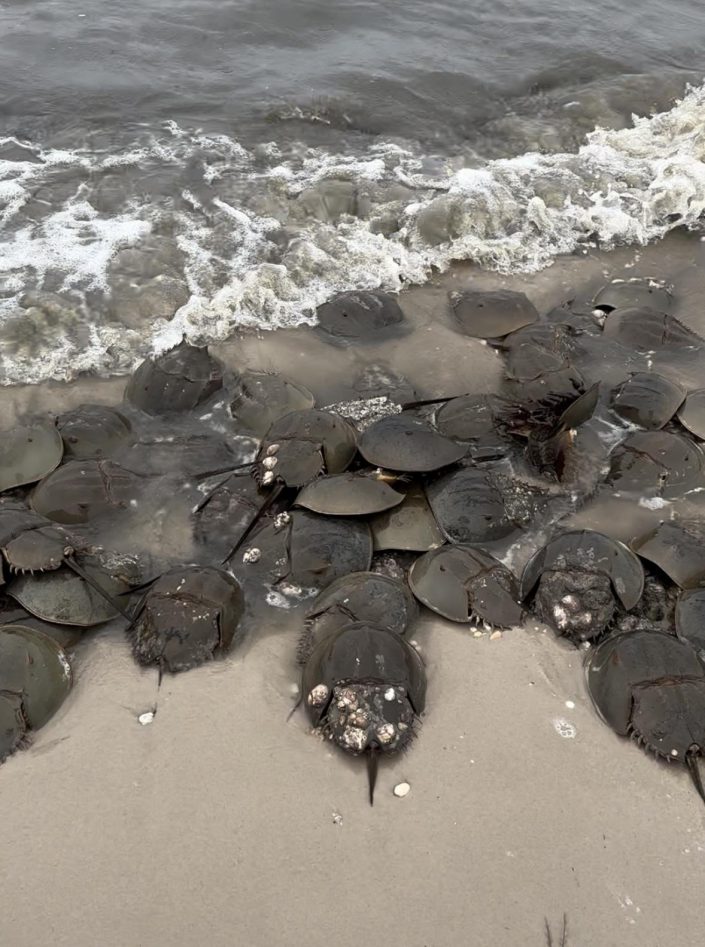
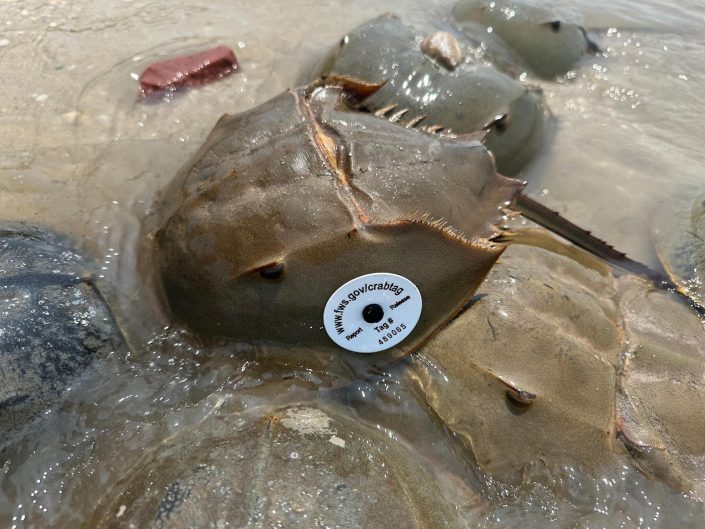
Another activity to do in the down-time is to flip the spawning Atlantic Horseshoe crabs, Limulus polyphemus, back onto their legs so they can crawl back into the bay. When the tide rise, these crabs get overturned by the waves and have no way of returning back to their feet! Personally, this is my favorite activity to do. When you return after your “crab walk”, you get to see the tracks of their feet traveling back into the bay where they belong. Below on the left is a picture of flipped and rescued crabs: the one on the left is a male who decided to bury himself in the sand to preserve water until the tide comes back in, and the one on the right is a male who decided to make the trek back into the bay. When the tide comes in, the horseshoe crabs come up and begin spawning. Pictured below in the middle is an example of how crowded the beaches get with these creatures! On the right, is a photo of a tagged crab I found, and reported it to the US Fish and Wildlife Service so that they can collect data on the tagged crabs.
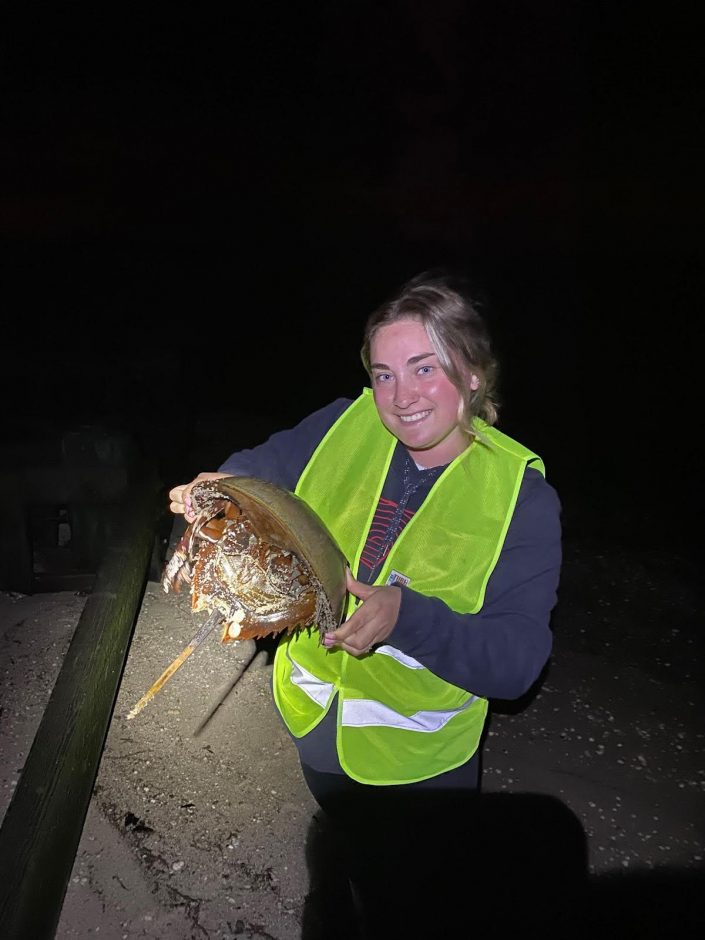
You can also get involved with helping these critters! “Return the Favor” is an organization dedicated to conducting beach walks to flip overturned horseshoe crabs on the NJ beaches of the Delaware Bay. You can join public walks that are held by walk leaders or sign up to be a volunteer and conduct your own walk (until July 15th, 2023 or next year). I am a volunteer and walk leader and it is one of my favorite things to do. Flipping horseshoe crabs is such a special event because that means you’re saving those crabs so they can continue to spawn and produce eggs for the shorebirds. With your help, you could help save hundreds of crabs just by flipping them over! Of course I had to capture this special moment of me flipping a crab (picture below)!
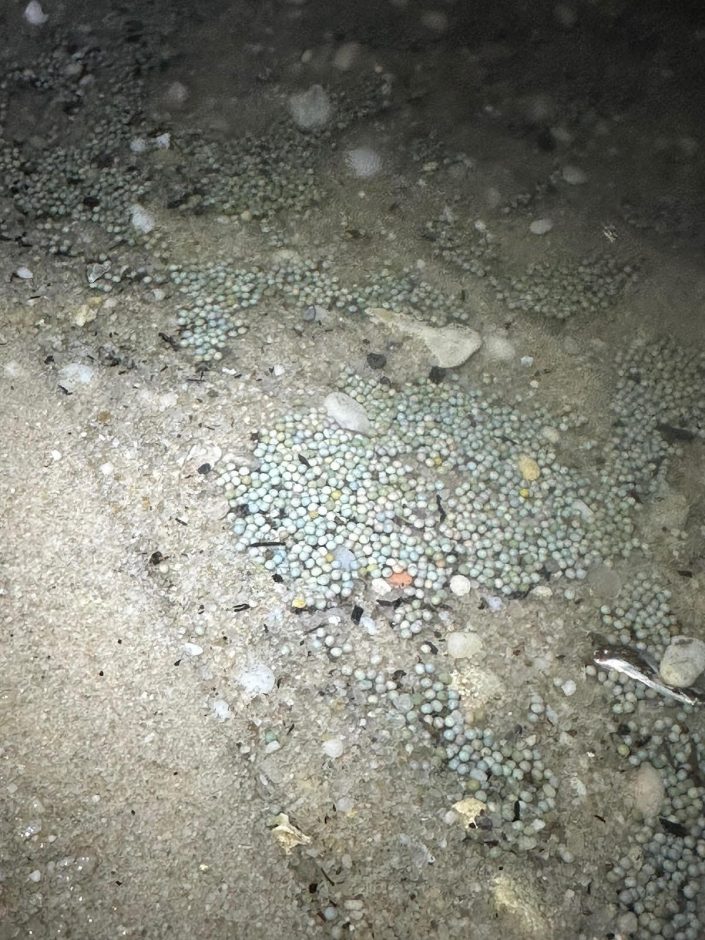
On these walks, you experience much more than just crabs. You get to see other wildlife that emerges during dusk or dawn. You can also go on the closed beaches to save the crabs that can’t be rescued during the day. During my walk, I got to see thousands of horseshoe crab eggs!
C. FranceschiniHorseshoe crab eggs photo: C. FranceschiniFemale horseshoe crab, photo: C. Franceschini
Banded red knot feeds on the shoreline. Photo by Kevin Knutsen
The number of red knots that visited the Delaware Bay this spring to rest and refuel on their long-distance migration from South America to the Arctic was the lowest recorded since counts began in 1982. The baywide counts, by Conserve Wildlife Foundation and our partners, which include the New Jersey and Delaware shorelines, resulted in only 6,880 red knots, roughly a third of what was counted last year, and less than a quarter of the population in the previous two years. In the early 1980s, when counts first began, almost 100,000 red knots migrated through the Delaware Bay. With recent numbers that were already below the level that would ensure survival, this latest decline makes the rufa red knot subspecies even more vulnerable and pushes it closer to extinction.
The extreme decline is thought to be caused by a poor breeding season in 2020. Last spring, unusually low water temperatures in the Bay delayed the horseshoe crab spawn until early June. When the red knots arrived in May, the horseshoe crab eggs were not available, and so they moved on with their migration without gaining the weight needed to finish the journey. The horseshoe crab eggs are an essential food source for these birds that need to double their weight before continuing their northbound journey. Without the eggs to refuel on, it is likely that 40 percent of the birds died before reaching the Arctic, diminishing the breeding population. Numbers of other migratory shorebirds that stop in the Delaware Bay, such as ruddy turnstones, sanderlings and semipalmated sandpipers also showed declines this year.
Another factor that may have contributed to the low numbers was adverse weather conditions in the Caribbean, making it more difficult for the birds to migrate north. The good news is that the horseshoe crab spawn was on time this year, and there were plenty of eggs available for the migrants that stopped to refuel. With such a long migration, there are so many factors that have to line up for a successful breeding season. We cannot control the weather conditions or the water temperatures, but one thing wildlife biologists want to ensure is that there are enough horseshoe crabs in the Bay to sustain the birds for the long term.
There are many aspects to the Delaware Bay Shorebird Project. During the month of May researchers survey, re-sight and band shorebirds as well as conduct horseshoe crab egg counts. Nine beaches in Cape May and Cumberland Counties have restricted access during May, which allows the shorebirds to feed on the horseshoe crab eggs.
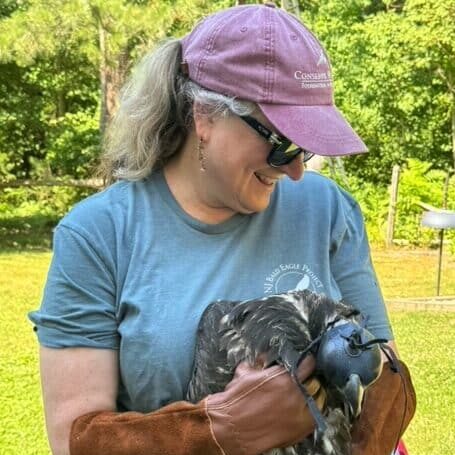
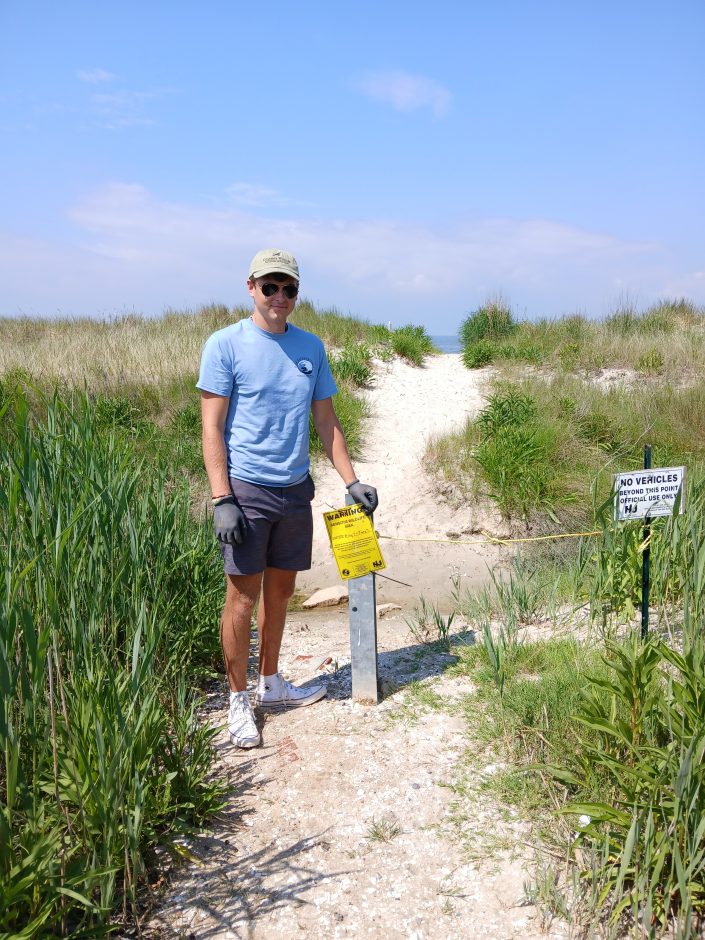
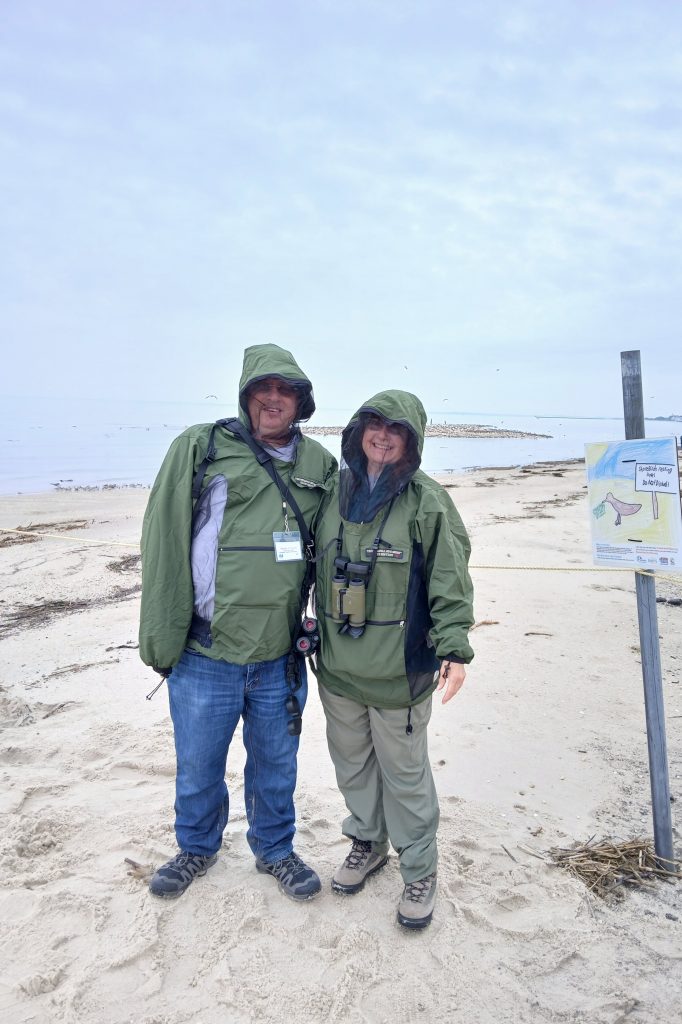
Shorebird Steward Bill Reinert@ Dom Manalo
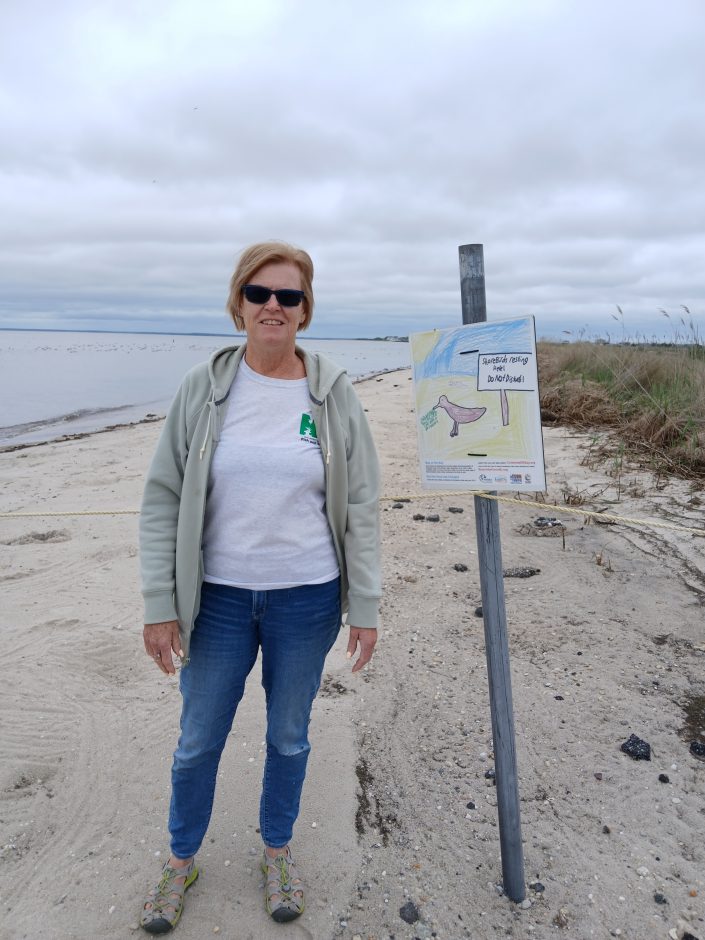
Shorebird stewards are out on the beaches in all types of weather and insect seasons making sure that the restricted areas are respected. They do this through education and explaining to beach goers the importance of allowing shorebirds to have these undisturbed areas to feed. Stewards really make a big difference in shorebird protection on the bay and we thank them for all of their efforts this shorebird season. This season there were plenty of horseshoe crabs spawning with eggs in abundance, but unfortunately the shorebird numbers were down this season. For more details on the 2021 Shorebird season can be found in the article ,Red knot numbers plummet, pushing shorebird closer to extinction.
With May just around the corner, biologists and volunteers alike are preparing for the arrival of migratory shorebirds on their annual stop over in New Jersey’s Delaware Bay.
Andrew S. Lewis of NJ Spotlight News recently spoke with CWF Wildlife Biologist and Shorebird Steward program organizer Larissa Smith to discuss the 2021 shorebird season. The article highlights the history of shorebird conservation in the Delaware Bay, modern challenges to conservation due to COVID-19, and how a recent grant to the Littoral Society will help bolster this year’s efforts.
Read an excerpt of the article below and continue reading on NJSpotlight.com.
The quiet, empty beaches of South Jersey’s Delaware Bay shoreline will soon begin to stir with the sound of thousands of migrating shorebirds, pausing their long journeys from the Southern Hemisphere to the Canadian Arctic to refuel on the eggs of horseshoe crabs that emerge to spawn here each spring.
Along with this natural wonder comes a dedicated group of volunteers, called Shorebird Stewards, who assist biologists from the state and nonprofit organizations in their annual count of the bay’s most vulnerable migratory shorebirds, including the dunlin, sanderling, semipalmated sandpiper, short-billed dowitcher, ruddy turnstone and the red knot, a federally listed threatened species.
“I’ve been organizing the Shorebird Stewards since 2003, and it has always been a fairly small volunteer project, about 10-15 people,” said Larissa Smith, a biologist with the Conserve Wildlife Foundation, one of the Steward program’s partners. “This year, I’ve had more than 40 people interested.”
In a year upended by social distancing and hardship, Smith said, many people were nevertheless able to reconnect with the outdoors. “They want to help make a difference,” she said.
CBC Radio Canada program “The Current” interviewed Conserve Wildlife Foundation executive director David Wheeler for its feature on the fascinating story of New Jersey’s horseshoe crabs playing an irreplaceable role in the urgent search for an effective COVID-19 vaccine.
Conservationists are raising concerns that horseshoe crabs and the shorebirds that feed on them could become unexpected casualties of the COVID-19 pandemic.
“The milky blue blood of this ancient animal has made it into a modern medical marvel,” David Wheeler, executive director of the Conserve Wildlife Foundation of New Jersey, said of the horseshoe crab.
The medical industry captures the critters to draw out some of their blood, because it contains a unique component called limulus amebocyte lysate, or LAL. LAL can detect harmful toxins in vaccines — including those being produced for COVID-19 — or other medicine undergoing testing, he told The Current‘s Matt Galloway
“It’s really extraordinary,” said Wheeler. “The concern now, of course, is at some point we would really like to see it shift to a synthetic alternative rather than continuing to only use the crabs for that.”
Horseshoe crab blood is hypersensitive to dangerous bacteria that can develop in injectable medicines and vaccines.
In the race for a vaccine for COVID-19, horseshoe crabs – a New Jersey coastal fixture both now and eons ago in the days before the dinosaurs – may play a vital role.
This video story by ABC Action News features CWF Executive Director David Wheeler and top shorebird scientist Dr. Larry Niles in telling this science fiction-like tale.
Horseshoe crabs spawning at Thompsons Beach in May 2015. Photo by Joe Smith.
Perhaps the most remarkable creature to call the
waters off New Jersey home is older than the dinosaurs, helps
balance the state’s ecosystem and looks like it crept out of the
“Aliens” movie franchise.
Now the horseshoe
crab is playing a vital role in the development of a COVID-19 vaccine,
with billions of doses expected to be produced worldwide over the next
several years.
“It’s absolutely worthwhile for horseshoe crabs to be used in the
development of a vaccine,” said David Wheeler, executive director of the
Conserve Wildlife Foundation of New Jersey. “They play an extraordinary
role in public health. But they are irreplaceable in New Jersey and
Delaware for how they keep the bird population alive.”