Leave The Leaves This Fall
By Leah Wells
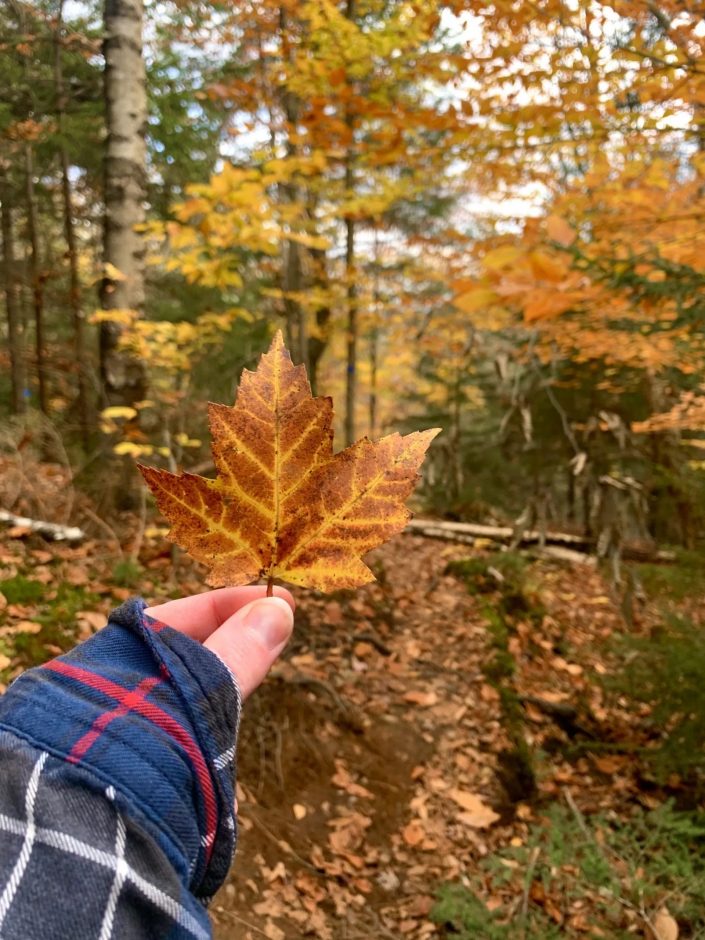
Once leaves fall to the ground, leave them be! Deciding not to rake, blow, and dispose of your leaves not only benefits native wildlife but provides nourishment to your garden and lawn.
By Leah Wells
Once leaves fall to the ground, leave them be! Deciding not to rake, blow, and dispose of your leaves not only benefits native wildlife but provides nourishment to your garden and lawn.
by Meaghan Lyon
The CWF team chose some of their favorite photos taken during their summer bat surveys to share. Enjoy this visual journey into the field to see what a night of mist net surveys looks like.
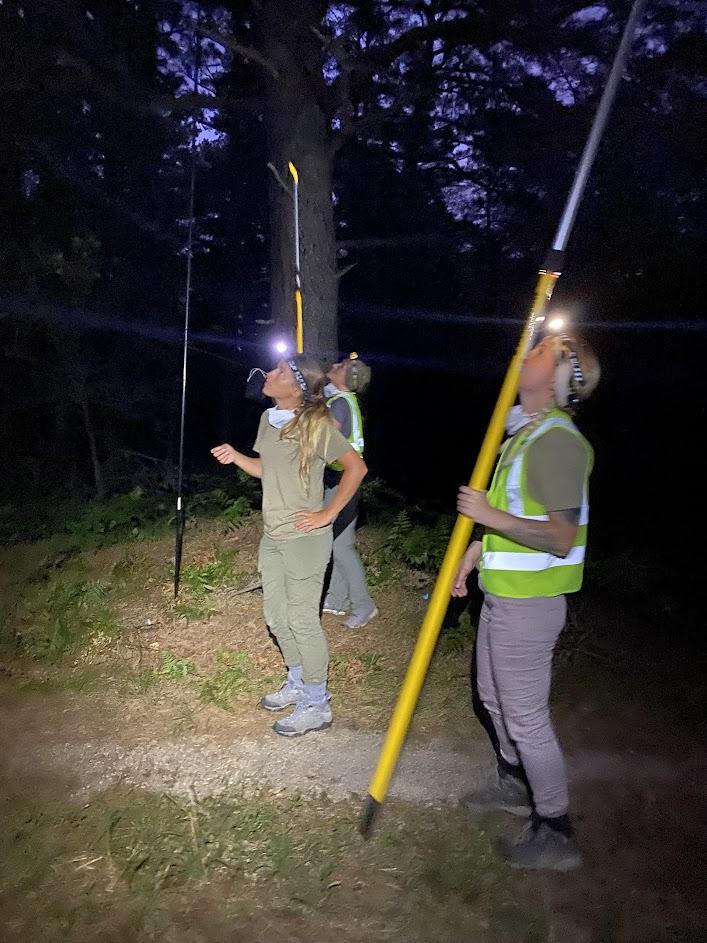
The CWF Team, Meaghan Lyon, Leah Wells, and Sherry Tirgrath, deploy the mist net at sunset. The long yellow poles are used to raise the net up to 5 meters high.
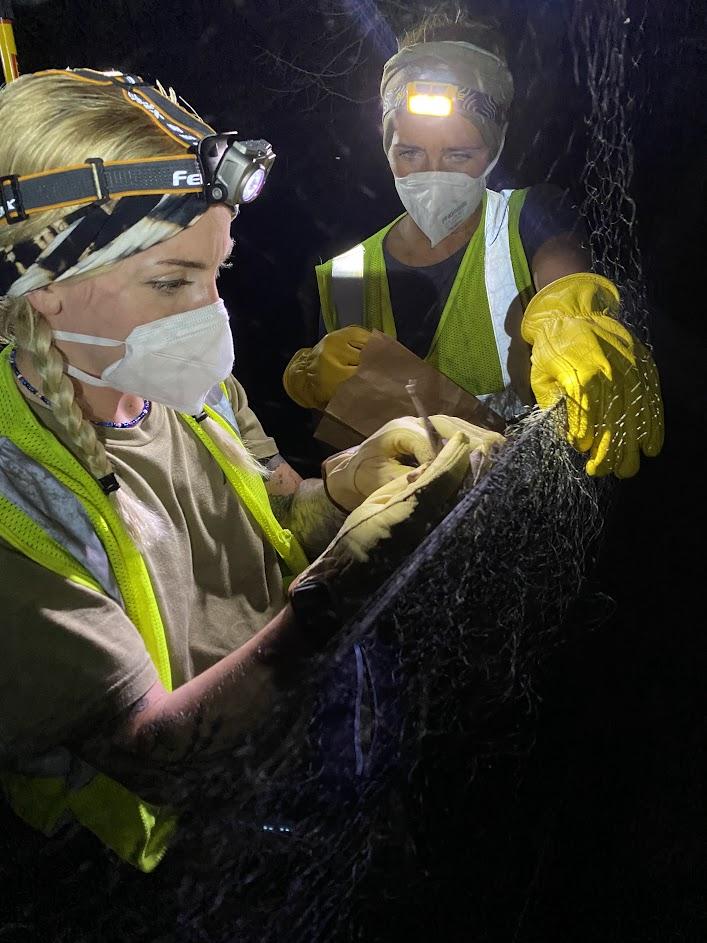
Leah extracts a bat from the mist net with the assistance of Meaghan. Sometimes crochet hooks are used to help remove the fine netting from the bat. Thick deerskin gloves are always worn to protect from sharp teeth!
by Leah Wells

Surveying for bats means staying up late and spending a lot of time in the dark. Our evenings begin a few hours before sunset, giving us just enough time to set up for the night. We start off by scouting locations to set up our mist-nets which we use to capture bats. These fine nets, ranging from 8 – 30 ft across and 16 ft high, are attached to tall poles stationed along corridors which bats often use to forage for food. With our nets ready to be deployed, we use the last of the daylight to set up our work station where we will process the bats we hopefully catch.
Continue reading “Special Guests During Bat Survey Nights”by Meaghan Lyon
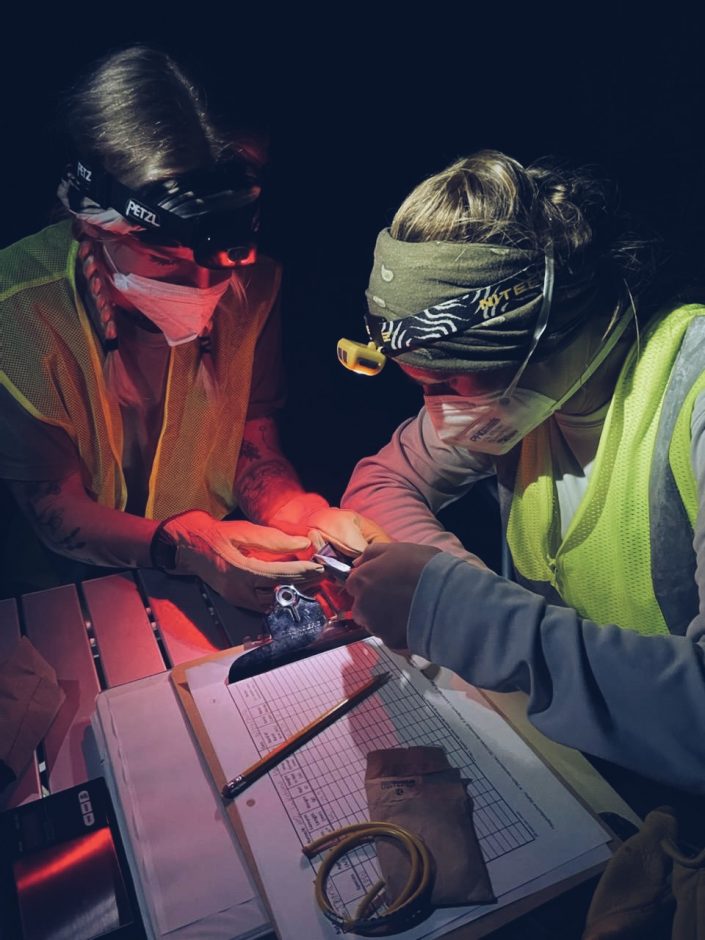
Since 2018, CWF has partnered with the USFWS New Jersey Field Office in completing summer mist netting surveys for bats in the Pinelands. The goal of these surveys is to capture the federally threatened Northern long-eared bat and track these bats to maternity roosts.
Continue reading “Summer Mist Netting Surveys for Northern long-eared bat Come Up Short Handed”by Christine Healy
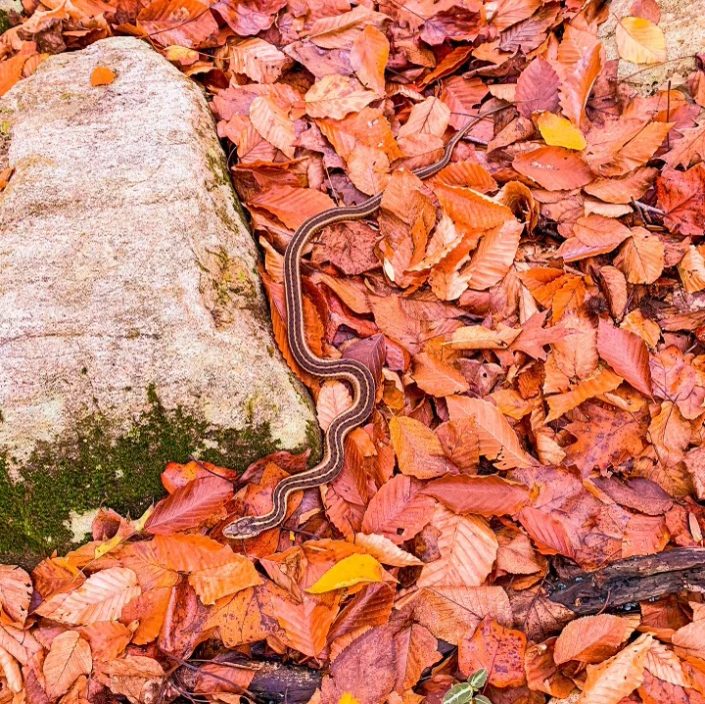
July 16th is World Snake Day! This day of recognition was established to increase awareness
and raise appreciation for these most polarizing of creatures. People tend to have an extreme
opinion when it comes to snakes; They are loved and revered by some, loathed and vilified by
many. Mythology, religion, and pop culture are riddled with snake imagery and, though these
media sometimes align them with healing, transformation, and fertility, they often proliferate a
connection between them and evil intentions. Whether learned or not in Greek legend, the
Medusa, with her living locks, is universally recognizable and her beheading is counted among
the greatest achievements of the hero, Perseus. Norse stories give us Jörmungandr, the
serpent son of Loki, hated by and responsible for the death of his uncle, the beloved god Thor.
The Bible symbolizes the devil himself as a snake in the Garden of Eden and, in this form,
provides the temptation responsible for original sin in Christian teachings. More recently, we
watched as ophidiophobia (fear of snakes) became the Achille’s heel of everyone’s favorite
archeology professor, Indiana Jones, and read about how the ability to communicate with
snakes was a defining characteristic of Lord Voldemort, the most notorious dark wizard of all
time.
To be clear, I’m not suggesting that works such as these are responsible for a negative public
perception of snakes. Rather, I think they capitalize on a rampant unease associated with
snakes to encourage their audience to sympathize with the protagonist. The truth is, snakes can
be dangerous, particularly if they are venomous. Snakes can and do kill people, sometimes
stealthily, which defies our view of humans as the universal apex predator. This, naturally,
instills anxiety. But it’s also not the full story.
by Meaghan Lyon

CWF’s team of biologists, along with several USFWS biologists from the New Jersey Field Office, specializing in bat surveying have been at it again for their fourth year of mist netting in the Pine Barrens. Mist netting surveys for bats starts at sundown and continues for five hours through to the early morning. The nets are set up across travel corridors through the woods with canopy cover and wetland foraging grounds nearby. As the bats head to and from their roosts and foraging grounds, they funnel through the corridors and into our nets. The bats are quickly and carefully extracted from the nets and then walked a short distance to our ‘camp’ where they are processed. Processing bats includes identifying bat species, sex, and reproductive status, as well as taking wing measurements.
Continue reading “Pine Barrens Bat Surveys Provide Insight into Bat Fidelity”by Todd Pover, Senior Wildlife Biologist
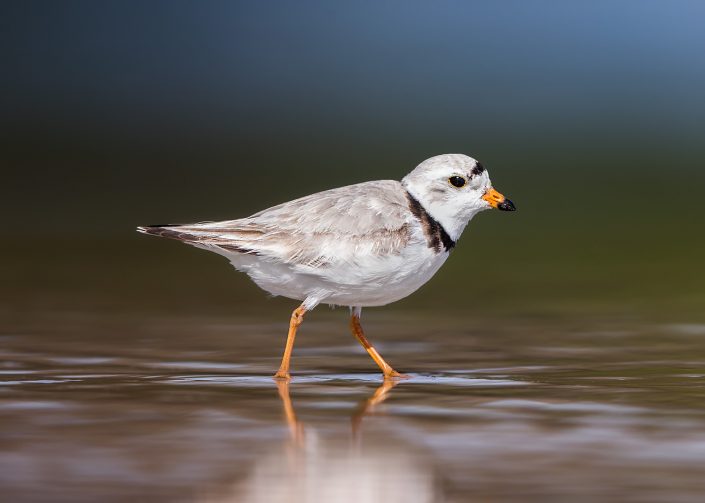
Holgate, a unit of the Edwin B. Forsythe National Wildlife Refuge, is having another record year for piping plovers. A total of 49 pairs have nested at the site this year, up from 46 pairs in 2021, which was also a record, by far, from the previous high for the site. Since Superstorm Sandy devastated much of the New Jersey coast in October 2012, the number of piping plovers nesting at Holgate has increased fourfold.
Continue reading “Holgate – Record Breaking Site for Piping Plovers”by Todd Pover, Senior Wildlife Biologist
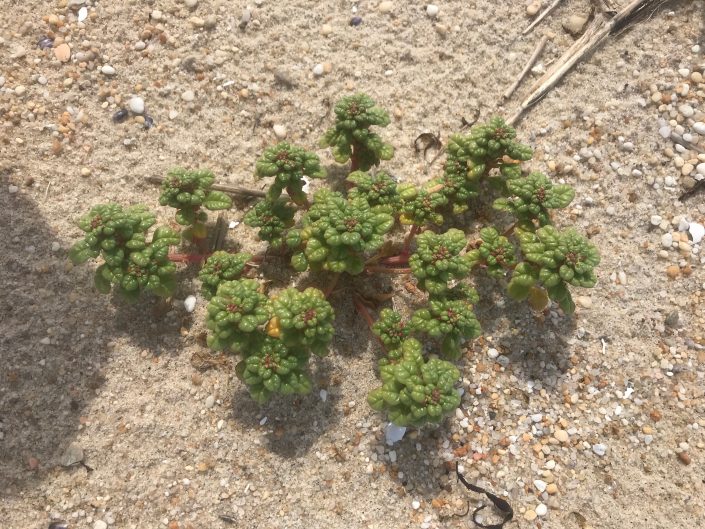
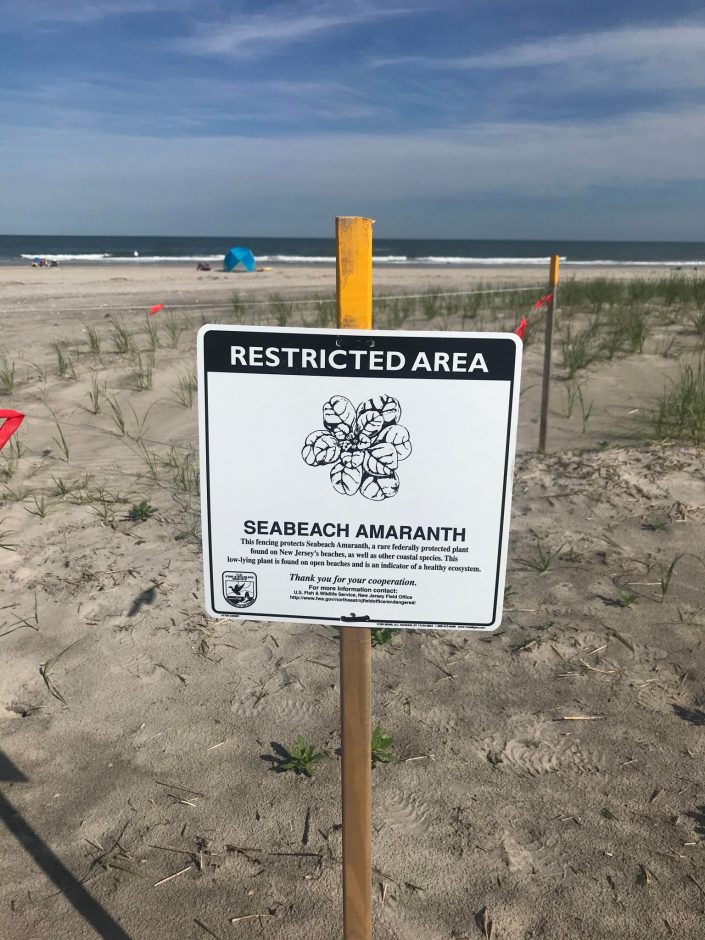
Although most of CWF’s work focuses on protecting New Jersey’s imperiled wildlife, in a few cases our mission overlaps with at-risk plants, as well. One such case involves seabeach amaranth, a state and federally-listed plant that shares the beach with our endangered beach nesting birds. In the past, CWF’s effort to protect seabeach amaranth was more “behind the scenes” through the development of beach management plans with coastal communities that put measures in place to protect plants from municipal activities. Over the past several years, in partnership with and through funding by the U.S. Fish and Wildlife Service – New Jersey Field Office, CWF has now taken a more pro-active role in helping monitor and protect seabeach amaranth.
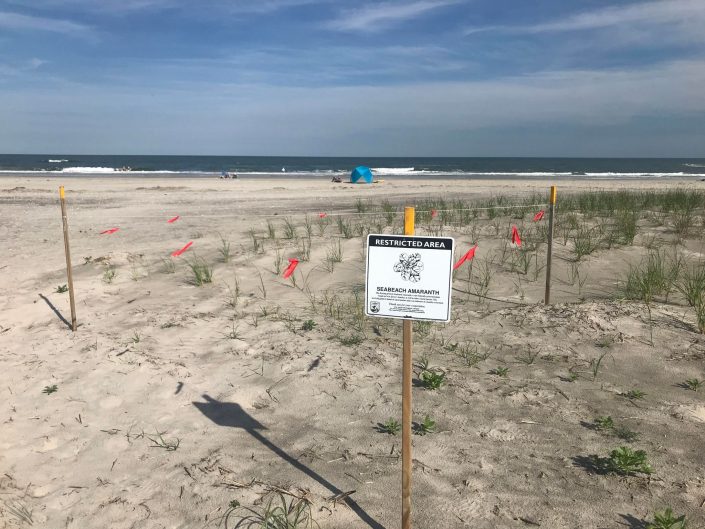
Starting in late May and all throughout June, CWF staff combs the state’s Atlantic coast beaches looking for amaranth plants that are just starting to germinate. Once found, the plants are protected with fence and signage, so they aren’t trampled by beach goers or driven over by vehicles conducting various beach maintenance activities, such as cleaning the beach with mechanical rakes. In the past they would have gone undetected and unprotected; few of the plants would have made it to the stage where they flower and produce seeds. Seabeach amaranth is an annual plant, its continued occurrence depends on seeds being produced and then dropped nearby or dispersed by wind or tides for next year’s “crop” of plants.
So far this season, mostly through the diligent fieldwork of CWF’s Biologist Sherry Tirgrath, we have located and protected 811 plants at 19 sites leading into the busy July 4 th holiday. The highest concentrations of plants are on beaches in southern Monmouth and northern Ocean counties. Since seabeach amaranth was rediscovered in New Jersey in 2000 – it had been absent since 1913 – Monmouth County, in particular Sandy Hook, a unit of Gateway National Recreation Area, has harbored most of the state’s seabeach amaranth population. However, over the past few years, increasingly more plants have been found on Ocean County beaches. In addition to increasing the overall population of plants, this wider distribution is one of the goals of the CWF/USFWs initiative.
With the early season work completed, CWF will now move onto other phases of the project. That includes repeat surveys for later germinating plants, ongoing maintenance of the fence we erected, and coordinating with the state’s beach nesting bird staff as they remove their fence once breeding season ends so it can be checked for plants. Those sites often have large numbers of plants as that habitat has been protected for birds – and as a result plants too – since late March or April. Finally, an annual statewide survey of seabeach amaranth occurs in late July and August and CWF will be “on call” to fence plants that are found by those survey crews. Plants can persist until late November in years with mild fall weather and low-flooding, in those cases our fence could remain up until then, so our work for the season has really just begun.
by Christine Healy
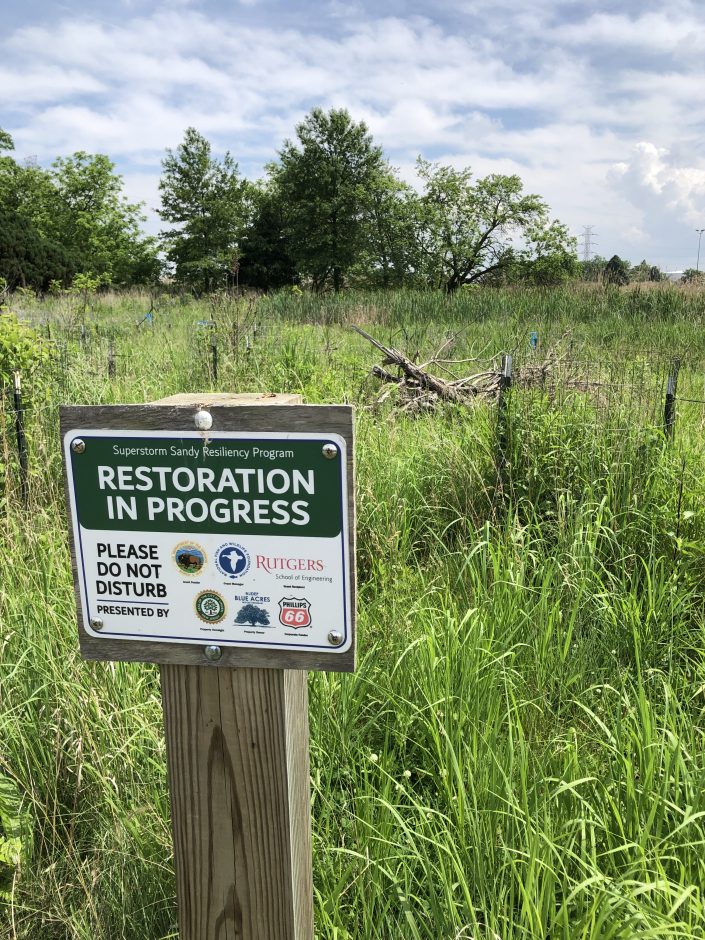
Hurricane Ida. Hurricane Irene. Superstorm Sandy. These weather events represent three of the four most devasting storms recorded in New Jersey history. Though data dates back 218 years, all 3 have occurred within the past 11, substantiating concerns over the effect of climate change on tropical cyclone severity. Therefore, taking measures to safeguard communities from devastating floodwaters is more important now than it ever has been. But who said helping people can’t, in turn, help wildlife?
Continue reading “Protecting Flood-Prone Communities Through Wetland Restoration”
The Kindergarteners at Ridge Street School in Newark, New Jersey, have been utilizing
Conserve Wildlife Foundation’s Soaring with STEAM curriculum in their classrooms. From
snakes and turtles to whales and woodpeckers, the students are learning all about the endangered
species that call New Jersey home as well as the unique habitats in which they reside. Each
lesson includes hands-on activities to drive home what they have learned, with all materials
provided by CWF.
Students have enjoyed using their creativity to make each lesson activity their own! They have
been given the opportunity to build snake dens, design a habitat for their favorite animals, and
practice breathing like humpback whales. Kindergarten teacher Aracelys Muniz says students
look forward to these lessons each week and call their CWF lesson days the “Best day ever!”.
By providing positive experiences for students at such a young age in the realm of wildlife
sciences, we hope to engage with and inspire the next generation of environmental stewards. Our
goal is for students to remember our lessons beyond the classroom, becoming excited to continue
learning on their own and sharing their knowledge with their friends, families, and communities.
CWF thanks PSEG Foundation, Victoria Foundation, The Merrill G. and Emita E.
Hastings Foundation, David A. and Carol B. Lackland Family Foundation, and the Zoological
Society of New Jersey for their generous support for our work with Newark Public Schools.