Northern Long-Eared Bats found in the Pinelands

by Meaghan Lyon, Wildlife Biologist

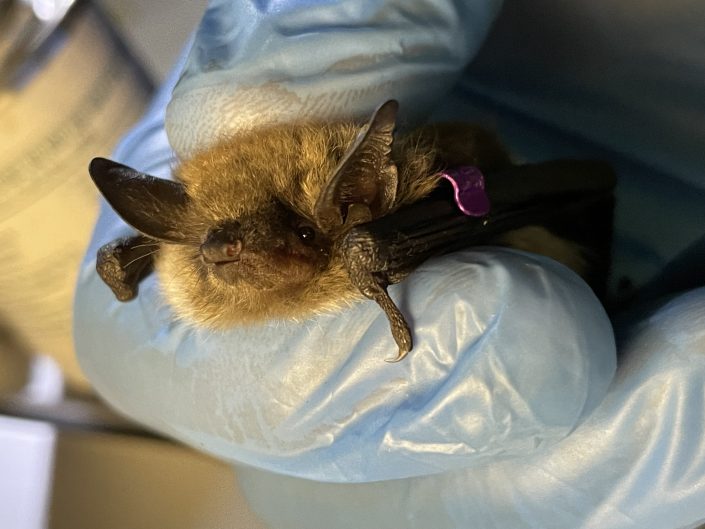
A Northern Long-Eared Bat (Myotis septentrionalis) rests in hand before being released.

During the past two months, Conserve Wildlife Foundation of New Jersey biologists have spent many late nights surveying for bats in the Pinelands! A typical survey night starts just before sundown with setting up expansive nets across corridors in the woods. In the dark, these fine threaded nets are nearly invisible to bats and the occasional flying squirrel or Whippoorwill. As the sun sets, the bats emerge, rushing through the sky to their foraging grounds. Every ten minutes, from sunset till 2am, the nets are checked and any captured bats are safely extracted from the nets to then be identified, weighed, and measured.

Over the course of 10 survey nights, 49 bats were captured in the nets! The Big Brown Bat (Eptesicus fuscus) was the most common bat identified with a total of 28 individuals. The Big Brown Bat is the most common species of insectivorous bat in North America, relatively large with long, silky fur, dark skin, and a wide nose. The second most common bat captured was the Eastern Red Bat (Lasiurus borealis). Like the Big Brown Bat, the Eastern Red Bat is widespread across eastern North America. It’s distinguished by the orange fur and a furred tail membrane. While surveying in the Pinelands, wildlife biologists captured 17 Eastern Red Bats!

Our goal for this surveys was not to capture a lot of bats, but to capture rare bats in the Myotis genus. On the last few survey nights, we finally achieved our goal, capturing two Little Brown Bats (Myotis lucifugus) and two Northern Long-Eared Bats (Myotis septentrionalis). The Little Brown Bat is a tiny bat weighing less than 10 grams that has glossy brown fur and long hairs on its toes. Likewise, the Northern long-eared bats are very tiny, with brown fur, and large ears.

The Little Brown Bat is a Species of Concern and the Northern Long-Eared Bat is a Federally Threatened species due to their susceptibility to White Nose Syndrome (WNS). WNS is a fungal disease that has heavily impacted bats of the Myotis family. White nose fungus grows in cold, moist environments like caves and mines – perfect habitat for many bats. This devastating disease has killed more than 6 million bats nationwide since it was first discovered in 2006.

When a Myotis bat, like the Northern Long-Eared or Little Brown, is captured, things get exciting! To learn more about where these bats roost during the day, we attach a temporary radio transmitter, smaller than the size of a fingernail, to the bat’s back and then spend the next several days tracking the radio signal in a process called radio telemetry. The transmitter on the bat’s back sends out a signal that sounds like a consistent “beep” and then the biologist holds an antenna and a receiver that is able to receive the signal. The closer you get to the bat, the louder and clearer the signal or “beeps” are! The bats are tracked through this process of radio telemetry until the roost is found.

The tagged Northern Long-Eared Bat was able to be tracked to a roost tree in a nearby swamp, roughly a mile away from the capture site. There is still lots to learn about this dwindling species and identifying roost trees is an important way to help protect this species habitat and to get a better understanding of the existing population. We also fitted one of the Little Brown Bats with a radio transmitter to track it to the roost. The roost for this bat was located approximately 2 miles away from the capture site in a residential building! Roosting in buildings is common for Little Brown Bats as it mimics the microenvironment of a cave.

Although previous years surveys resulted in higher overall numbers of bats, this was the first year for the Northern Long-Eared Bat and Little Brown Bat to be captured at this site in the Pinelands.  Acoustic surveys from 2017 indicated these species were present but confirming these threatened bats are still active in the area several years later is an exciting feat!

This project was done in partnership with the United States Fish and Wildlife Service, New Jersey Field Office.

https://www.instagram.com/p/CSSYN_Kn8eu/?utm_source=ig_web_copy_link

NEW JERSEY’S WILDLIFE IN THE TIME OF COVID-19 – PART 3

by David Wheeler, Executive Director

COVID-19 has changed our lives in virtually every possible way over the last few months. Our relationship to wildlife is no different. This three-part series explores the impacts of the COVID-19 pandemic and shutdown on wildlife in New Jersey and across the world. Read Part 1 and Part 2 and check out our podcast on COVID-19 and wildlife.

Part 3 The Threat of COVID-19

No discussion of COVID-19’s impact on wildlife would be complete with its fated beginning and its long-term threats posed by the global economic shutdown. As a zoonotic disease, COVID-19 likely was triggered by a virus in bats that got into a pangolin in a wet market that was then consumed by people, chance encounters made much more likely by a number of destructive human activities.

Clearing primal forests bring people into contact with remote wildlife for the first time, while also changing wildlife behaviors to increase the likelihood of their interaction with humans. Live animal markets offer ideal opportunities for viruses like COVID-19 to emerge. Illegal trafficking incentivizes further habitat clearing and poaching. Trading in exotic wildlife creates a host of problems both to the species themselves and to their ecosystems. (Though underexplored in the popular Tiger King series, the impacts of the exotic wildlife trade could make a fascinating series in its own right).

Continue reading “NEW JERSEY’S WILDLIFE IN THE TIME OF COVID-19 – PART 3”

Summer Series: Join Us for Virtual Wildlife Events

Wildlife takes center stage this summer in a series of virtual presentations.

Conserve Wildlife Foundation and Mercer County Park Commission will present four one-hour webinars this summer, focusing on wildlife that affects our lives, even in an urbanized environment.

Continue reading “Summer Series: Join Us for Virtual Wildlife Events”

Wild for Volunteers Guest Post: Birds, Bats, Frogs and Horseshoe Crabs!

by John King

Some of the species (super) volunteer John King has helped.

When I retired from teaching, one of my first tasks was to search for local organizations that encouraged volunteers, especially in areas of wildlife conservation. Luckily, I found Conserve Wildlife Foundation. I have to say that over the past few years, my volunteer service with CWF has been both rewarding and inspiring!

Continue reading “Wild for Volunteers Guest Post: Birds, Bats, Frogs and Horseshoe Crabs!”

The Bat’s Misunderstood Identity, State of Change Podcast, Episode 5

Bats are one of nature’s most misunderstood species. They strike fear in the hearts of many people but in reality they are incredibly beneficial to us. Bats face a multitude of threats and it is up to us to learn to understand and coexist with them if they are to have a future in our state.

The fifth episode of our podcast, State of Change, “The Bat’s Misunderstood Identity” features MacKenzie Hall, biologist at the New Jersey Division of Fish and Wildlife and Ethan Gilardi, assistant biologist with Conserve Wildlife Foundation (CWF).

Continue reading “The Bat’s Misunderstood Identity, State of Change Podcast, Episode 5”

KEEP NEW JERSEY’S SKIES WILD!

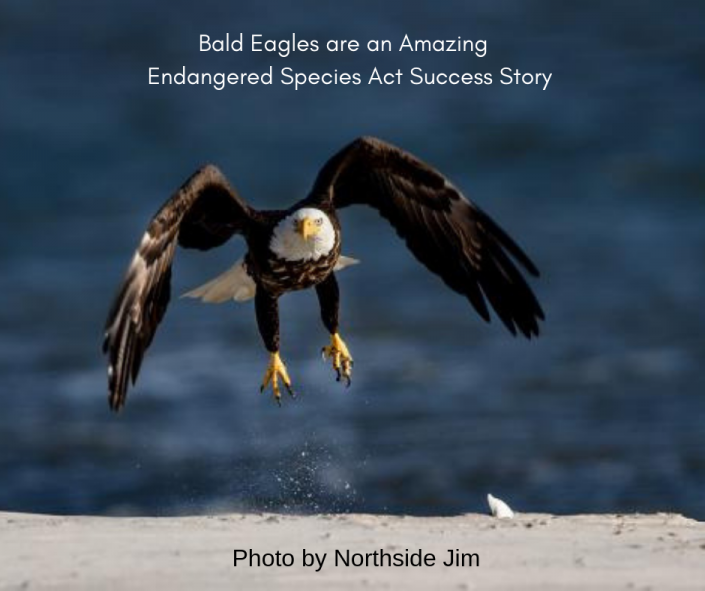
PSE&G, Conserve Wildlife Foundation, Mercer County Park Commission, Mercer County Wildlife Center and Wildlife Center Friends team up with free public programs on Bald Eagles, pollinators, and bats.

Bald eagle fishing in Mercer Lake. Photo by Mercer County Park Commission.

Join us on August 8th at the Mercer County Wildlife Center to learn about pollinators like bees, butterflies and moths and how they help keep flowers in bloom and food on your plate.

Continue reading “KEEP NEW JERSEY’S SKIES WILD!”

HAPPY ENDANGERED SPECIES DAY!

Story by Alison Levine

The third Friday in May has been a celebration of our nation’s wildlife and wild places since 2006, when the United States Congress established the holiday. There is a special urgency this year as the United Nations recently reported that nearly one million species worldwide are at risk of extinction within decades (read our post about the UN report for more information).

One of the main points the report makes is that humans are dangerously degrading Earth’s ecosystems, the delicate, interconnected webs of life that we all, people and wildlife alike, need to survive.

Continue reading “HAPPY ENDANGERED SPECIES DAY!”

Acoustic Monitoring Drives Efforts to Save Bats

by Stephanie Feigin, CWF Wildlife Ecologist

Volunteer Nicole Dion ready to conduct mobile acoustic survey

Across the country bat populations continue to decline due to the threat of White Nose Syndrome. Last year, to collect important population data to monitor population trends of New Jersey’s bat species, Conserve Wildlife Foundation of New Jersey (CWF), in partnership with Endangered and Nongame Species Program (ENSP), re-launched their Statewide Mobile Acoustic Surveys with new equipment and protocol. With all the kinks of a revamped project worked out, CWF entered their second year of this project. Continue reading “Acoustic Monitoring Drives Efforts to Save Bats”

Costume parade and live wildlife highlight Leonardo Nature Center grand opening

by David Wheeler

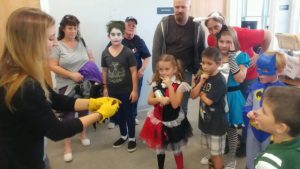
Witches, ghosts, ghouls, bats – and even dogs in costume – helped celebrate the grand opening of the new Nature Center, a partnership between Conserve Wildlife Foundation of New Jersey (CWF) and the New Jersey Division of Parks and Forestry.

Over 200 people visited Leonardo State Marina on a gorgeous autumn afternoon to enjoy the Halloween costume contest, pet parade, pumpkin painting, and light refreshments.


Yet the tiniest creature of all may have been the most memorable –

CWF Wildlife Ecologist Stephanie Feigin teaches children about the big brown bat.

a live big brown bat. CWF wilflife ecologist Stephanie Feigin showed the rapt families the unique adaptations that allow bats to fly, roost, and use sonar, as well as the surprising skeletal similarity between a bat’s wing and a human hand.


Maggie Mitchell, Superintendent at Leonardo State Marina, had this to say, “The Marina’s new Nature Center and partnership with Conserve Wildlife Foundation of NJ will provide continued education to the Bayshore Area and expand on our presence in the community, many residents were grateful for this event and we look forward to hosting additional events in the future.”

Stephanie Feigin, CWF wildlife ecologist, Stephanie DAlessio, CWF Education Director, and Maggie Mitchell, Superintendent at Leonardo State Marina.


This partnership is designed to educate the public about important coastal habitat and diverse wildlife species that utilize the Raritan Bayshore area.  The grand opening allowed visitors of the center to get up close and personal with both local species like diamondback terrapins, and invasive species like the red eared slider. In addition to those two turtle species, the Nature Center also hosts a corn snake, bearded dragon, touch tanks and other activities for children to enjoy.


“Children and adults alike are often amazed to find out some of the wildlife species that live right in their backyards and neighborhoods – and now our Nature Center allows visitors to experience those incredible animals up close,” said CWF Director of Education, Stephanie DAlessio. “We are so excited to create a new generation of environmental stewards to help protect our coastal habitat and the wildlife that shares it with us – all while having fun connecting local families to nature.”


Just south of New York City, New Jersey’s Raritan Bayshore hosts an impressive wildlife diversity for such a densely populated metropolitan area. Leonardo State Marina is located in the Leonardo section of Middletown in Monmouth County, west of Sandy Hook and just north of Route 36.


The Nature Center is open daily from 10 am to 3 pm, with extended hours until 6 pm on Fridays. CWF and Leonardo State Marina also offer school field trips, summer programs, and special events throughout the year.

You can learn more about the Nature Center at or to inquire about school or community programs, call 732-291-2986 or email Stephanie DAlessio at Stephanie.dalessio@conservewildlifenj.org.


David Wheeler is the Executive Director of Conserve Wildlife Foundation and the author of Wild New Jersey: Nature Adventures in the Garden State.

The Record: Unseasonable February weather not great for wildlife & plants

Reporter James O’Neill covers the impacts on plants and wildlife from the unseasonably warm weather for New Jersey this winter in this story for The Record.

Big Brown Bat by Blaine Rothauser.

Bats, migratory birds, and other wildlife are challenged by earlier than usual spring-like conditions, says Conserve Wildlife Foundation’s David Wheeler.


CLICK HERE FOR THE FULL STORY