The Record: Unseasonable February weather not great for wildlife & plants

Reporter James O’Neill covers the impacts on plants and wildlife from the unseasonably warm weather for New Jersey this winter in this story for The Record.

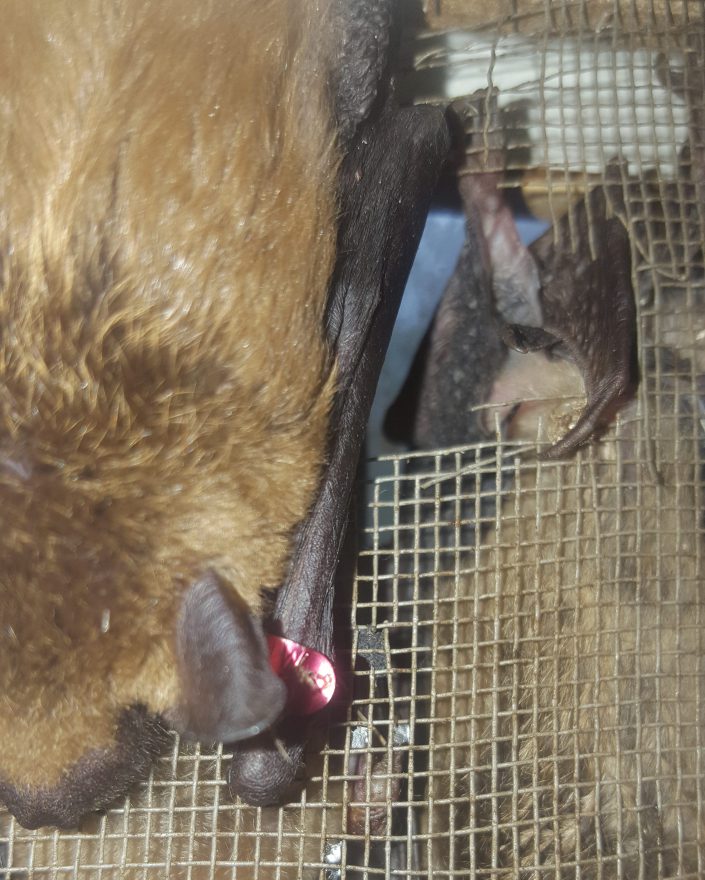
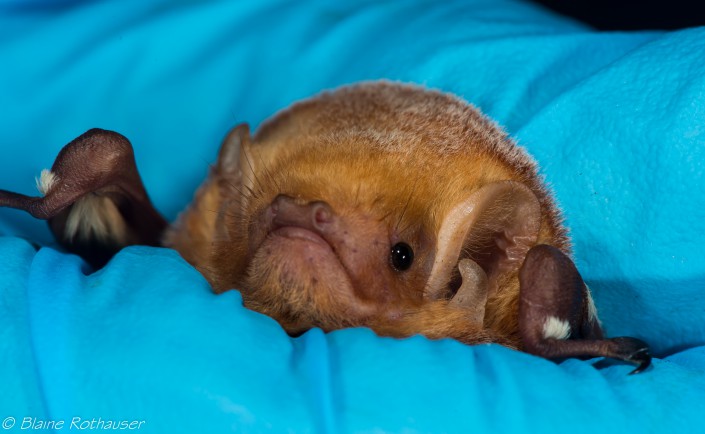
Big Brown Bat by Blaine Rothauser.

Bats, migratory birds, and other wildlife are challenged by earlier than usual spring-like conditions, says Conserve Wildlife Foundation’s David Wheeler.


CLICK HERE FOR THE FULL STORY


Princeton Seventh-Graders Protect Bats through Hands-on Research Project

Students partner with nonprofit Conserve Wildlife Foundation to design better bat houses

By Stephanie Feigin

Although bats have a reputation of being dangerous and scary, these flying mammals are something to be coveted, and the students at Princeton Day School know why. Seventh grade students Albert Ming, Arjun Sen, Martin Sen, Dodge Martinson, Kai Shah, and Samuel Tang teamed up with Conserve Wildlife Foundation to design a better construction plan for bat houses. The students hope to promote better conditions for bats living in Central Jersey.

Bats are in the midst of tragic declines as a consequence of habitat loss and a devastating fungal disease known as White-nose Syndrome. CWF works to preserve bats, which basically provide a free pest removal service. A single bat can consume up to 3,000 mosquito-sized insects in one night! Their value to agriculture is estimated at $53 billion annually in the United States alone. Not to mention they provide mosquito and biting insect control, which are not only a nuisance but also have disease spreading potential.

Many bats in New Jersey have come to depend on manmade bat houses, structures specifically designed and placed for the needs of the bats, and the Princeton Day School students stepped up to help.

First, the students researched the best, most economical type of wood to use for construction. Next, they used an infrared thermometer to see how well heat is absorbed and retained by the different wood types after they were painted and stained using three different colors.

Keeping the inside of a bat house within the right temperature range is vital to the survival of bats, especially the vulnerable young pups. If a bat house becomes too hot (above 95 degrees) or too cold (below 65 degrees), the health of the bats is threatened. Bats move their pups from house to house in search of the right temperatures.

The students used the results of their temperature experiment and high and low temperature readings for Central Jersey over the past three years to design a plan for a bat condo unit that would satisfy bats temperature requirements during their entire six month roosting period.
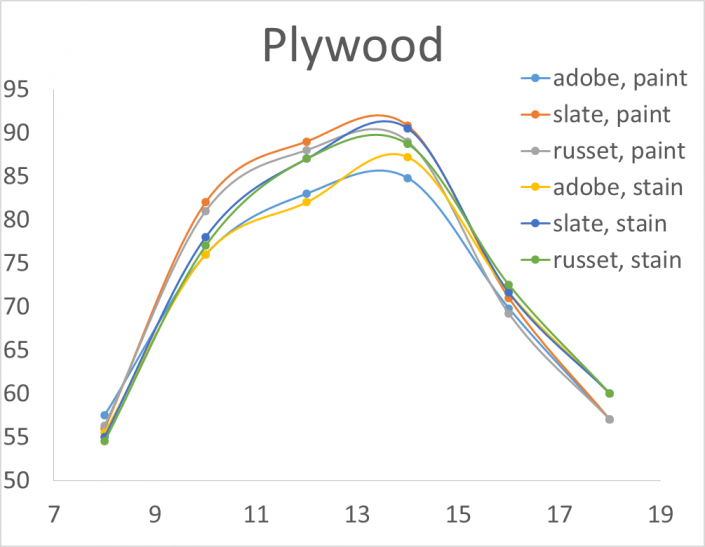
The x – axis is the number of hours passed during the day and the y- axis represents degrees Fahrenheit.
This graph displays the research for the best type of wood (cedar, pine or plywood) to use for constructing bat houses, along with different kinds of paint (adobe, slate or russet) to determine which combination could retain the most heat for the bat colonies. Heat retention was measured over a long period of time while exposed to the sun.
The research revealed that the bat houses are most successful if they are painted or stained and weather resistant wood like cedar would last much longer than softer wood like pine or plywood. When cedar wood was used the temperature changed the most as the air temperature changed and the least when sunset came. When plywood was used the temperature changed the least as the air temperature changed and the most when sunset came. When pine wood was used the temperature changed moderately as the air temperature and moderately when sunset came.
The conclusion made was that there are differences among wood and paint combinations. Adobe paint on plywood has the smallest average temperature change even though the difference is not statistically significant and adobe paint on cedar had the smallest temperature change between 4 and 6 degrees. They chose adobe paint on cedar or plywood as they are also the most cost effective.

With the results of their research and experiments, the students made informed decisions to design the bat boxes. The final product was three bat houses built using plywood. They painted one of the houses in a black slate color to provide maximum heat during the colder months, and painted a second house in an adobe beige color to provide air conditioning during the hot summer months. Lastly, they chose a russet color to for the moderate months.

CWF Wildlife ecologist Stephanie Feign who worked with the students on the project was happy to see how passionate these kids were to learn and be hands-on. “Their passion and enthusiasm were inspiring. Projects like these not only benefit wildlife, but also benefit surrounding communities and provide experiential learning for students.”

New Jersey is home to nine different species of bats, two of which are listed as endangered or threatened. Six species that do not migrate south for the winter remain in New Jersey to hibernate in a cave or another safe place. When they awake from hibernation in April, the females search for roosting spots to bear and raise their young pups. With so few intact forests in New Jersey, bats are struggling to find places to safely roost.

That is why projects like this one with Princeton Day School are essential for preserving bats. Not only did the projects help bats, but it also helped the students by requiring them to use problem solving and critical thinking skills to protect a creature that they came to value. Wildlife, which kids become excited and passionate about, is a valuable educational tool.

The team is currently working with Princeton Day School facilities to erect the bat condo unit on campus. Hopefully, by next spring, the school will be home to many new, very comfortable bats.


LEARN MORE:


Stephanie Feigin is a Wildlife Ecologist for Conserve Wildlife Foundation.
Halloween Without Bats

By Stephanie Feigin, Wildlife Ecologist

This Halloween, while you are with friends and family celebrating a spooky evening of fun, I ask you to take a moment and think about one more thing – Halloween without bats. I want you to think about bats today not as the spooky creatures of the night that some people normally think of them as, but as incredible mammals that are invaluable to our ecosystem. In New Jersey, all of our 9 bat species are insectivores. They can eat thousands of insects in one night, protecting our crops and forests from insect destruction, and they pollinate many important foods that we love. A study published in Science magazine estimates that bats’ insect-eating services may be worth as much as $53 billion to US agriculture alone.

Photo courtesy of Blaine Rothauser.

Despite the many environmental and economic benefits bats provide, bat populations around the world are still declining. Bats face many threats, including habitat loss and destruction, human persecution, wind energy development, and White-Nose Syndrome.

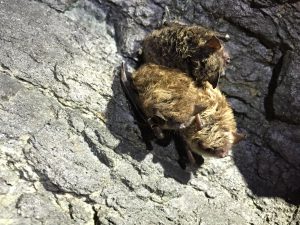
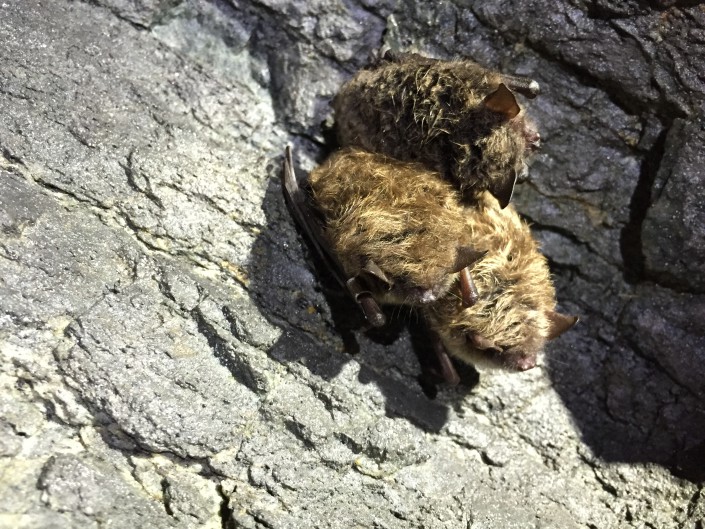
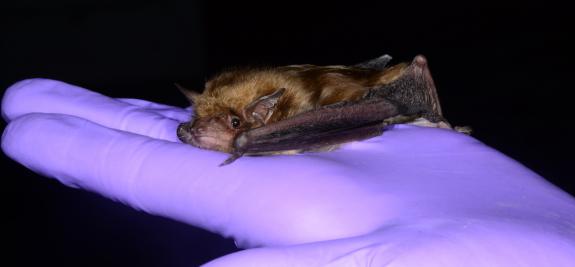
Little brown bats. Photo courtesy of Stephanie Feigin.

Devastatingly, we have lost over 6 million bats nationwide due to the spread of White Nose Syndrome (WNS) – a disease caused by a cold-loving fungus called Pseudogymnoascus destructans or Pd. It attacks hibernating bats, disturbing them during hibernation when the bats’ immune response is low, and prevents them from conserving enough stored energy to survive until spring. WNS also causes dehydration and unrest as well as severe wing damage that can prevent bats from flying. Much is still unknown about White-nose syndrome, its spread, and its consequences. The federal government, states, several universities, and organizations like ours are working hard to track and understand this disease.

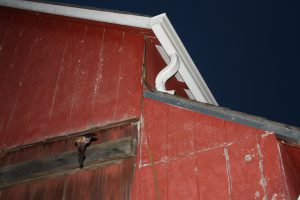
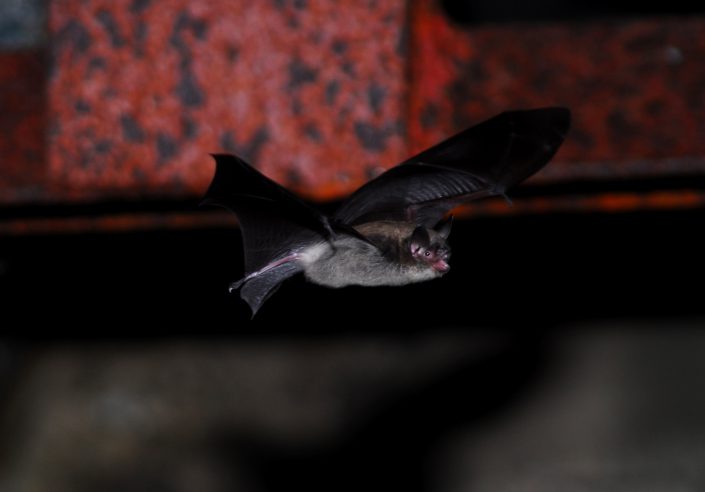
Big brown bat emerging from barn. Photo courtesy of Mackenzie Hall.

In New Jersey, about 50,000 bats were killed by WNS in the first year (2009) – and we now estimate over 60 tons of mosquitoes and other night-flying insects go undevoured each year from loss of bats. Though bats are one of the most beneficial animals to humans they are still poorly understood and underappreciated, which is why today I ask you to think of them in a new light. Today, think about bats for all of the wonderful benefits they provide, think of them as amazing animals that work hard at night to protect our ecosystems, because we need to make a change.

To protect the bats we still have, it is important that people understand the stress these bats are under. It is important that we re-think how we view bats, remove the spooky stigmas that surround them and appreciate their importance to us. So today, think about bats think about how important they are, how badly we need to protect them and how scary a world without bats would be.

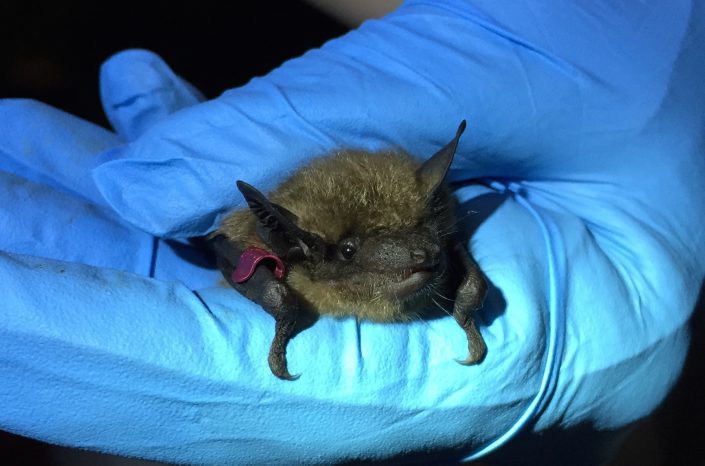
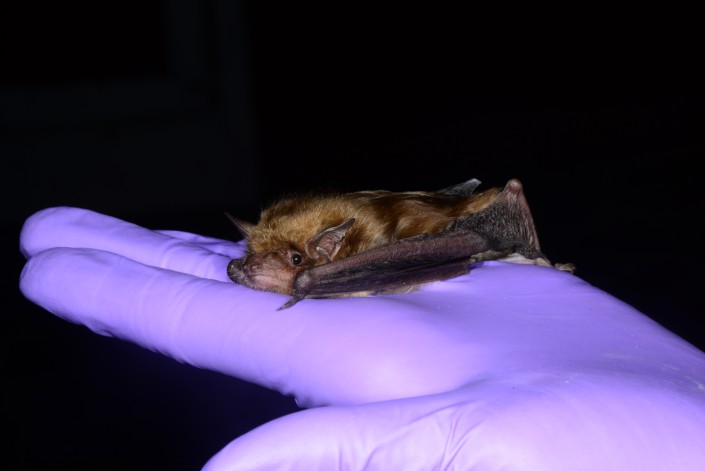
Big brown bat. Photo courtesy of Stephanie Feigin.


Stephanie Feigin is a wildlife ecologist for Conserve Wildlife Foundation.

LEARN MORE


Tracking NJ Eagles: Update

Larissa Smith: CWF Wildlife Biologist

Since the spring of 2014 CWF and the NJ Endangered and Nongame Spieces Program have been tracking a transmittered eagle named “Nacote”, D/95. He fledged from the Galloway nest (Atlantic County) in the summer of 2014 and made a trip up to Canada, he returned to NJ in Mid-October of 2014 and has been in southern NJ ever since, spending most of his time in Cape May and Atlantic Counties. He spend some time in April near his nest of origin at Forsythe NWF  where he was photographed.

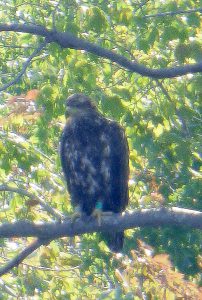
D/95 "Nacote" at Tuckahoe Lake 7/21/16@ Kathy Clark
D/95 “Nacote” at Tuckahoe Lake 7/21/16@ Kathy Clark

In the past few weeks he has been in Upper Cape May County spending time at the county landfill and he even made an appearance at  Tuckahoe Lake behind our office. NJ ENSP biologist, Kathy Clark was able to get a photo of him perched by the lake.

Another eagle we are tracking “Oran”, fledged from the Egg Island nest, Cumberland County along the Delaware Bay in the summer of 2015.  In Mid-November he headed south and spent the winter down in the Chesapeake Bay area and returned to southern NJ in the spring 2016. “Oran” spent most of his time ranging around Cumberland County until making a bold move north in Mid-July. He flew to Maine in two days and then north into Canada, south of Quebec City.  He has been out of range and the last signal received was July 18th when he was at the Maine/Canadian Border.


Flemington “BatCam” Bats Banded LIVE on Facebook

BIG BROWN BATS ARE THE STAR OF THE SHOW FOR OVER 200,000 ONLINE FOLLOWERS

By Stephanie Feigin, Wildlife Ecologist

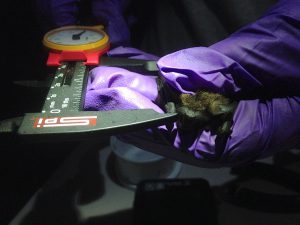
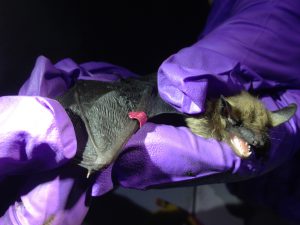
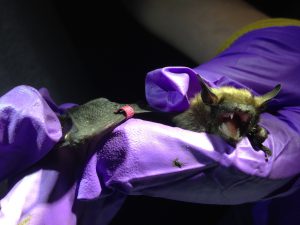
Earlier this week marked the second year that Conserve Wildlife Foundation of New Jersey wildlife ecologist Stephanie Feigin, along with project partner MacKenzie Hall from New Jersey’s Division of Fish and Wildlife and project interns from Rutgers University, banded the BatCam bats. This banding survey was part of a long standing maternity survey project conducted by CWF in partnership with NJDEP. These surveys allow us to gain important information about reproductive success, record weight, sex and age status of the bats, assess bats for signs of white-nose syndrome, and band bats for future observation.


IMG_2302 IMG_2295 IMG_2292

Photos by Stephanie Feigin


This year, the team decided to stream the banding of big brown bats LIVE on Facebook. Allowing viewers to gain a once in a lifetime opportunity to see wildlife in a way they have never seen before and giving us the ability to directly interact with thousands of followers as we conducted an important wildlife survey. The banding has reached over 200,000 online followers as of Thursday morning.


The team caught and banded 36 bats total, 14 adult females (10 were recaputres from last year, 4 were banded as juveniles last year) and 23 juveniles (12 males and 11 female). All of the bats were weighed, measured, and banded according to the same coding as last year (red for juveniles and silver for adults).


The main goal of our Bat Project is to protect the bats we have in New Jersey, protect their habitats, learn more about their life cycles, and educate the public on the benefits of bats and how amazing and beneficial they truly are. By streaming live, we were able to shed new light on bats and allow the public to gain a better understanding for these special mammals.


Learn More:


Conserve Wildlife Foundation of New Jersey “2015 Annual Report” Released

CWF Releases its Second Annual Report Using a Story Map Format:

2015 Annual Report


Technology has proven to be vital to Conserve Wildlife Foundation’s work protecting rare wildlife species over the years. Our biologists depend greatly on modern technologies to band, track, and share online the journeys of wildlife. Our webcams broadcast the most intimate behaviors of nesting birds and bats across the web. And we seek out ever-evolving communications technologies to spread the word about the inspiring stories of wildlife, from social media and infographs to e-books and Story Maps. These technologies offer newfound abilities to share complex data on multiple levels, while still incorporating the awe-inspiring photography and videos that bring wildlife’s stories to life.

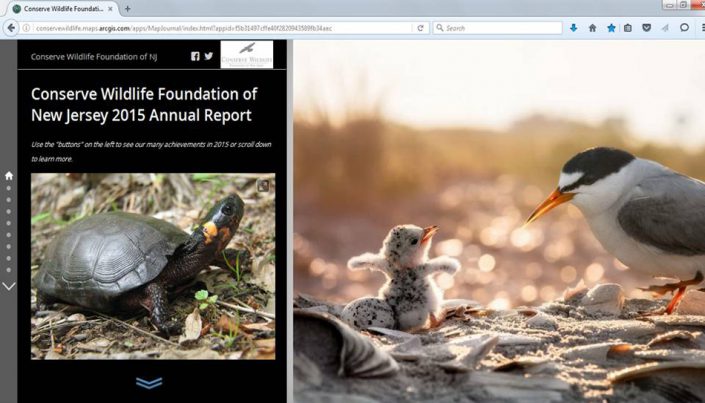
Conserve Wildlife Foundation of New Jersey is excited to offer our 2015 Annual Report in a unique format that utilizes one of those technologies – Story Maps. In the past year, we have explored the lives of seals, eagles, and freshwater mussels with Story Maps – and the annual report allows all of our projects to be highlighted in this interactive format as well.

2015 Conserve Wildlife Foundation Annual Report.

Visit the multiple pages within this Story Map to learn about Conserve Wildlife Foundation’s many projects and partnerships in 2015, and the imperiled wildlife species in need of our help. Find examples of the innovative and dedicated leadership of our biologists and volunteers. And take an online journey across the state to learn how our projects made a difference in all corners of New Jersey in 2015 – a great year for wildlife in the Garden State!


The BatCam Bats are Back!

Watch a Family of Bats LIVE on Conserve Wildlife Foundation’s BatCam

by: Stephanie Feigin, Wildlife Ecologist

BatCam Bats
Juvenile big brown bat that was banded last year has returned to the roost!

Early April 2016, the BatCam bats returned to their roost in the window of the Williams’ home. As of now, it seems that only part of the colony has returned — about 20 big brown bats.


Last year CWF’s Stephanie Feigin and ENSP’s MacKenzie Hall banded the BatCam bats. We banded a total of 48 bats, about half of the bats banded were adults (banded with silver bands) and the others were juveniles (banded with red bands). This has allowed us to now see that some of the returning bats were banded last year. We even have some juveniles that have returned to the roost with their moms from last year!


Make sure to stay tuned for when the moms give birth to their pups in June and other updates throughout the season!


Learn More:


Stephanie Feigin is the Wildlife Ecologist for Conserve Wildlife Foundation of New Jersey.

New Jersey Little Brown Bat Resighted!

by Stephanie Feigin, Wildlife Ecologist

Little brown bats (c) Stephanie Feigin

“Luci,” a little brown bat banded in July 2014 at 2008 Women & Wildlife Award Winner Barbara Brummer’s pond house (a New Jersey maternity site) was recently resighted!


Biologists doing a hibernaculum survey in New York State found Luci in a mine in one of New York’s largest little brown bat hibernaucula about 70 miles north from her summer roost site in New Jersey!


“She is spending the winter with 37,000 of her closest friends.” – Carl Herzog Wildlife Biologist, New York State Department of Environmental Conservation, Wildlife Diversity Unit

Gone Batty: The Creature Show Halloween Special

Conserve Wildlife Foundation Biologist and 2015 Women & Wildlife Inspiration Award Winner Featured in Halloween Special of The Creature Show

by Lindsay McNamara, Communications Manager

TheCreatureShow


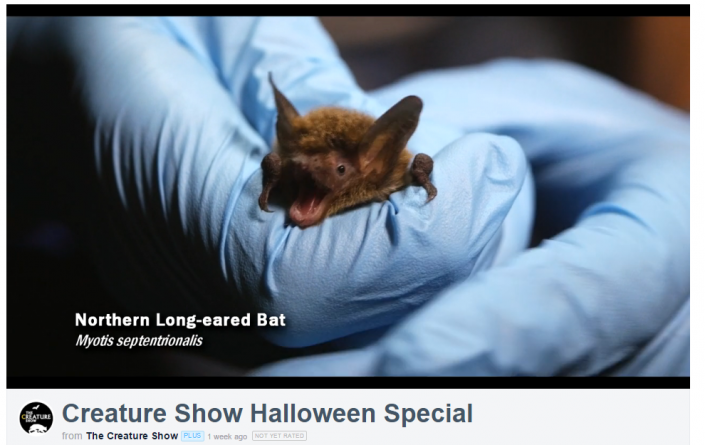
Just in time for Halloween, learn more about New Jersey’s bat population in the latest episode of The Creature Show! In this episode, join Conserve Wildlife Foundation’s wildlife ecologist Stephanie Feigin and 2015 Women & Wildlife Inspiration Award Winner MacKenzie Hall on their journey to track the federally listed Northern long-eared bat, hear from a young bat advocate and learn more about current threats to bat populations.


The Creature Show Halloween Special offers a glimpse into the work by New Jersey’s bat biologists to protect the remaining population of these misunderstood creatures of the night. Learn how to radio track a bat, see the joy in our biologists’ faces when all of their effort in the field pays off, and listen as common myths about bats are de-bunked.


The episode is running through Halloween in the small theater downstairs at Duke Farms‘ Orientation Center (Hillsborough, New Jersey) on a continuous loop in their “bat cave.”


The Creature Show is a documentary webseries dedicated to conservation storytelling. Their stage: the wilds of New Jersey, within the nation’s most crowded state. Here they find represented all the villains of global extinction, including habitat destruction, climate change, invasive species and wildlife disease. They also find wildlife biologists and regular citizens who have devoted themselves to protecting the region’s biodiversity, no matter what the challenges may be.


Learn more:


Creature Show Halloween Special from The Creature Show on Vimeo.


Lindsay McNamara is the Communications Manager for Conserve Wildlife Foundation of New Jersey.

Halloween and Bats

Spooky or Beneficial?

by Stephanie Feigin, Wildlife Ecologist

Big Brown Bat photo by Blaine Rothauser

It’s that time of year again, the days are getting shorter, temperatures are dropping, and creatures of the night are lurking behind shadowy corners. As Halloween approaches one animal comes to the forefront of everyone’s mind – bats.


For most people, the connection between the spookiness of Halloween and bats is a natural fit. Bats are elusive creatures of the night that hide in dark spaces, and they live secretive lives leaving us in fear of their actions.


Bats have been misunderstood by humans for many years, and are still among the most persecuted animals on earth. In many parts of the world, bats are killed due to fear or harmful myths that make them seem scary or even dangerous.


To me, however, that connection does not seem like a natural fit. Bats are one of the most beneficial animals to humans. They can eat thousands of insects in one night, protecting our crops and forests from insect destruction. They pollinate many important foods that we love and are worth millions of dollars to U.S. agriculture alone.


Though tying bats with the Halloween season gets the general public thinking about bats for almost a full month, I prefer to think of bats every day. I like to think about them on a warm summer night when I am outside not being bit by mosquitoes, or when I am eating some of my favorite foods, like chocolate and bananas, that are pollinated by bats.


Sadly, however, due to the many threats that bats face today, we have lost a significant amount of our bat population nationwide. The continued loss of these animals will have drastic effects, including increasing the demand for chemical pesticides, and we will be losing a key link in our ecosystems that is irreplaceable.


This is why it is important that we work to love the bats we still have for all of the benefits they provide. We need to remove the spooky stigmas that surround bats and show them off in a new light, because to me the scariest thing would be a world without bats.

Red Bat photo by Blaine Rothauser

And they really are pretty cute.


Learn More:


Stephanie Feigin is the Wildlife Ecologist for Conserve Wildlife Foundation of New Jersey.