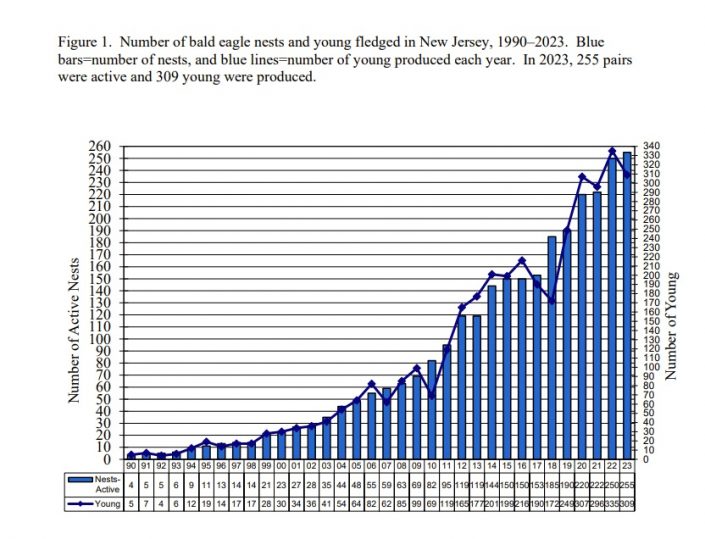
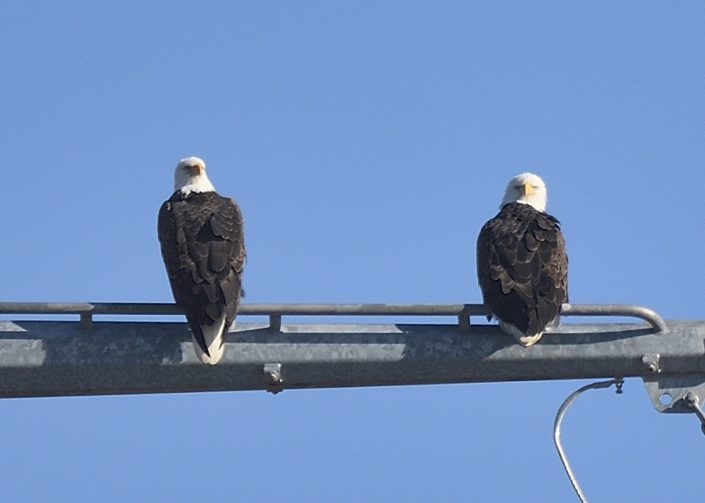
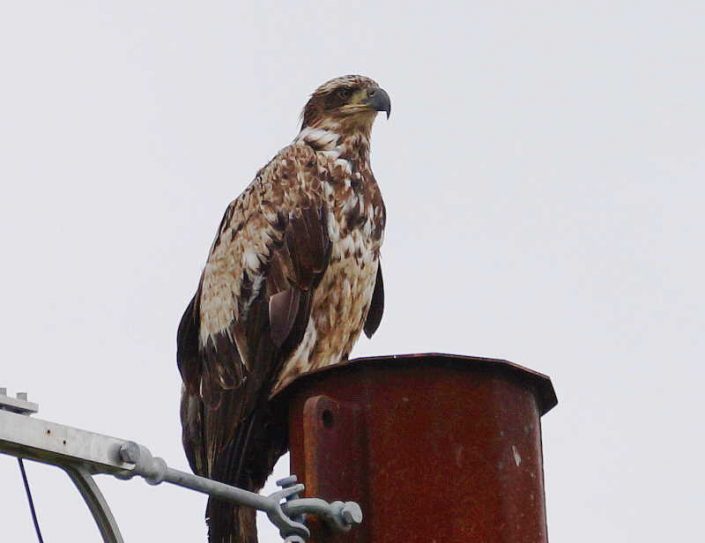
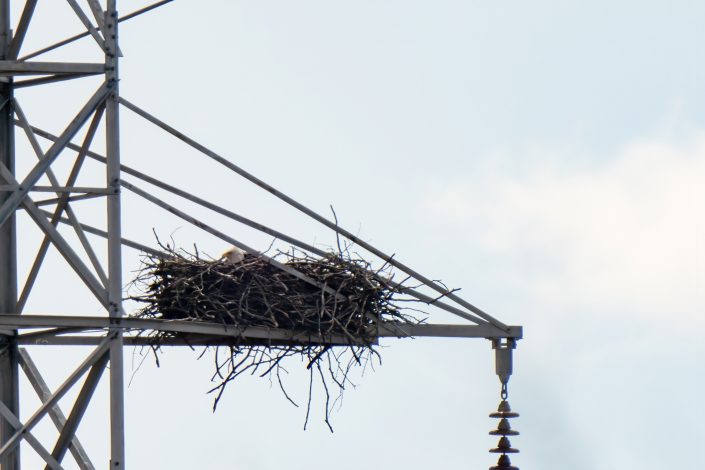
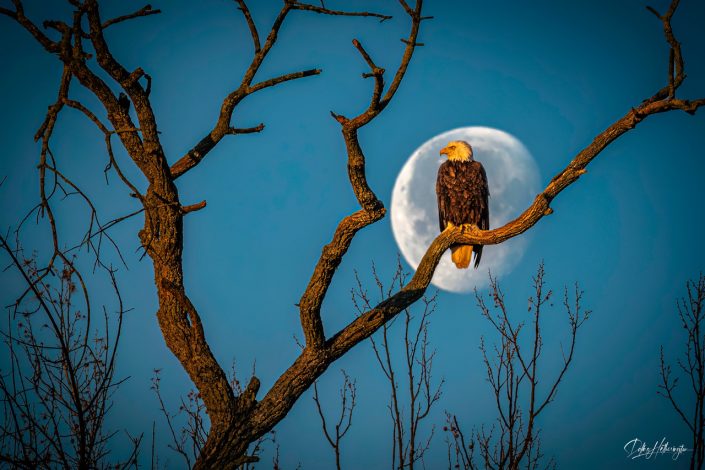
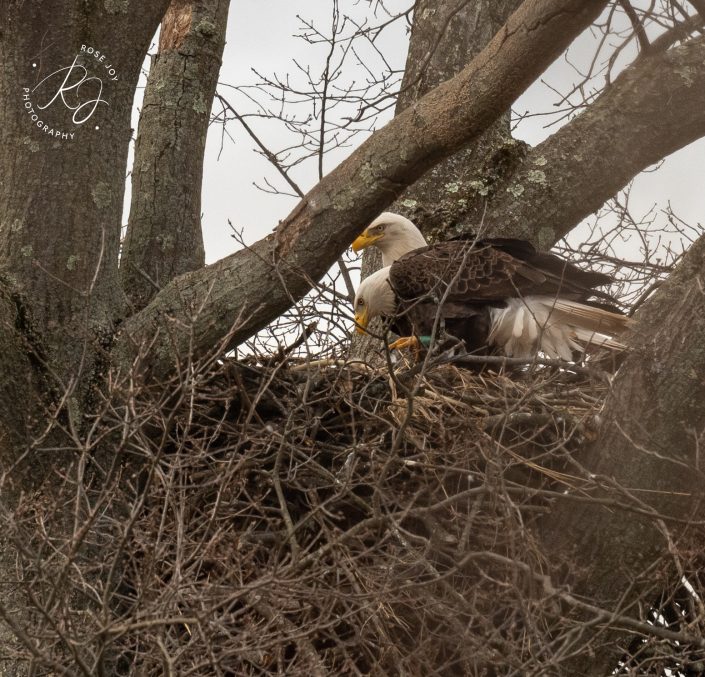
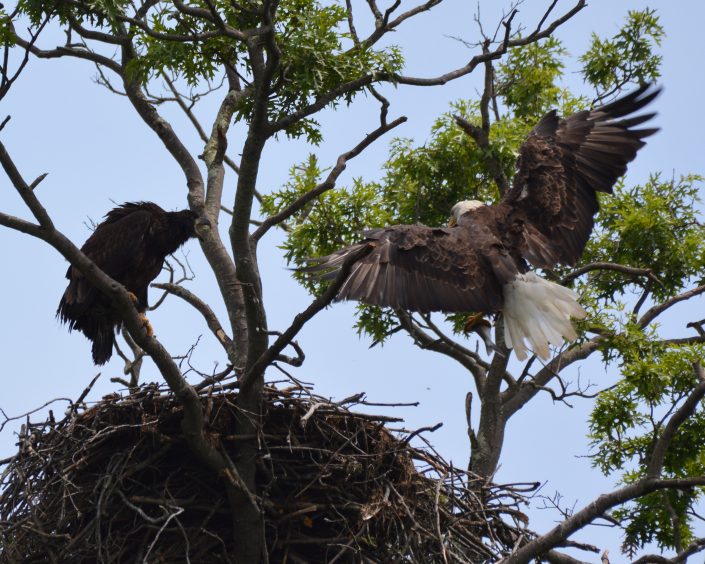
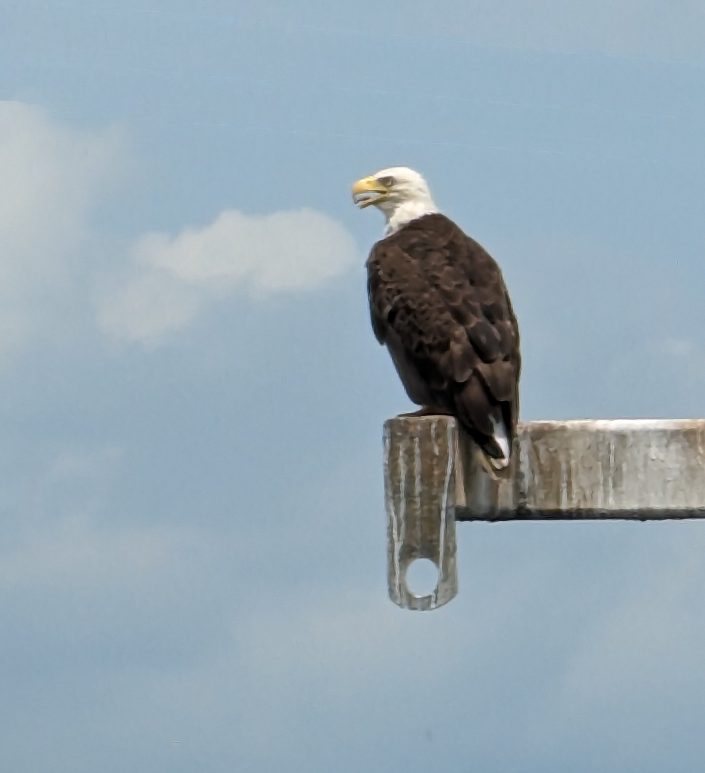
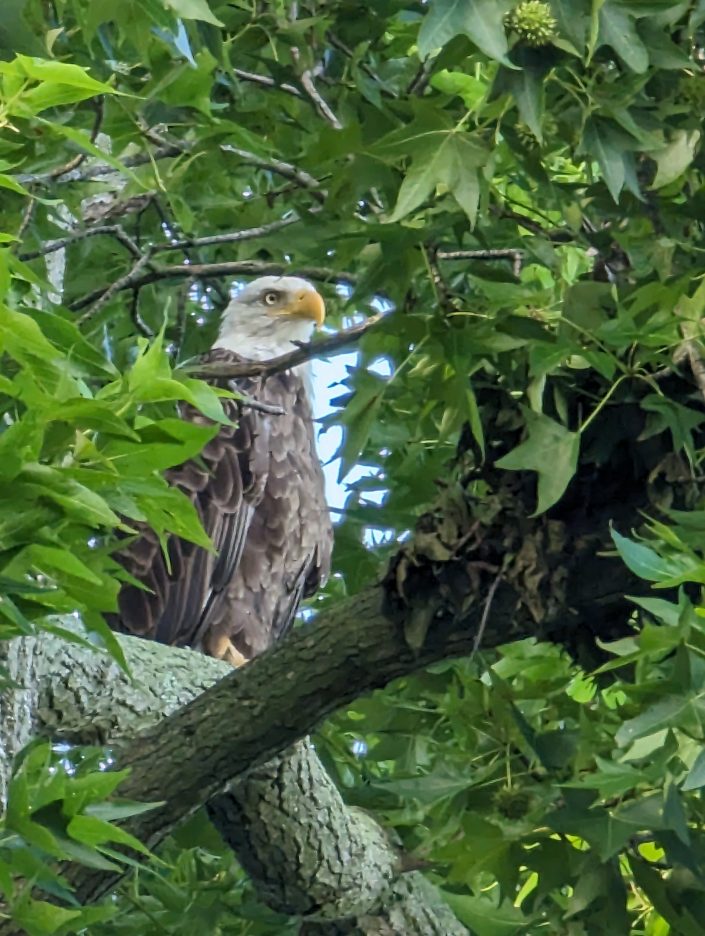
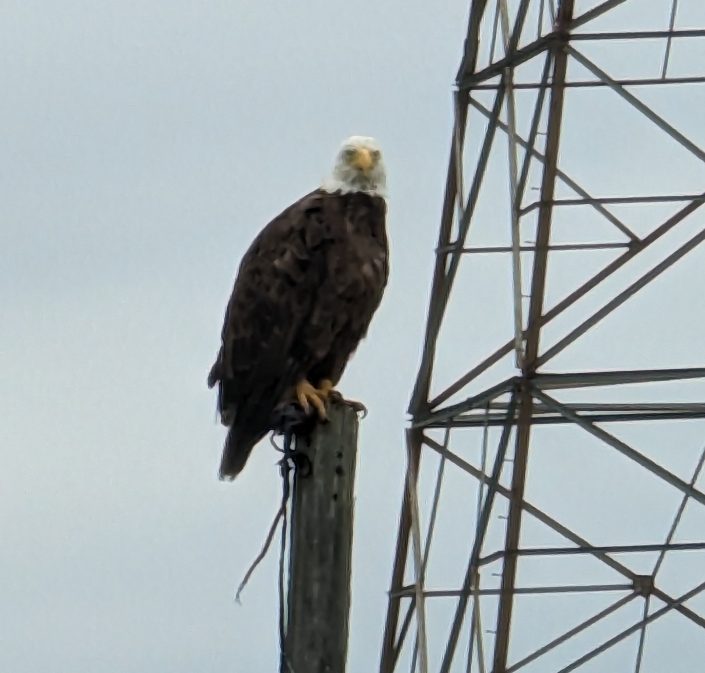
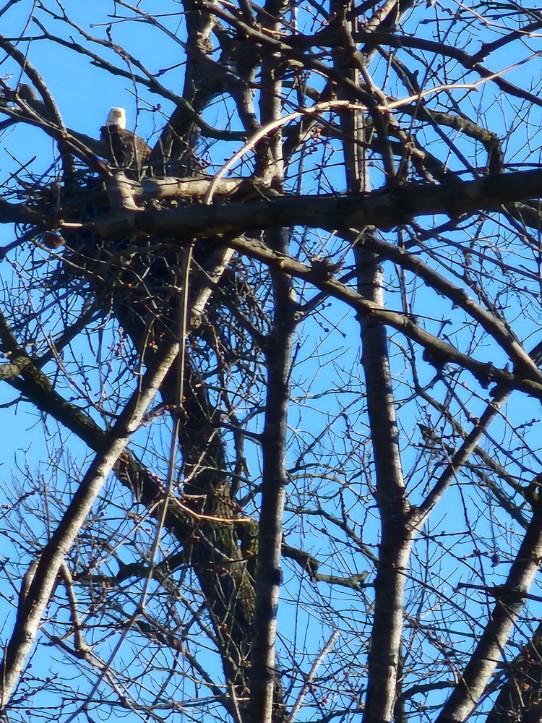
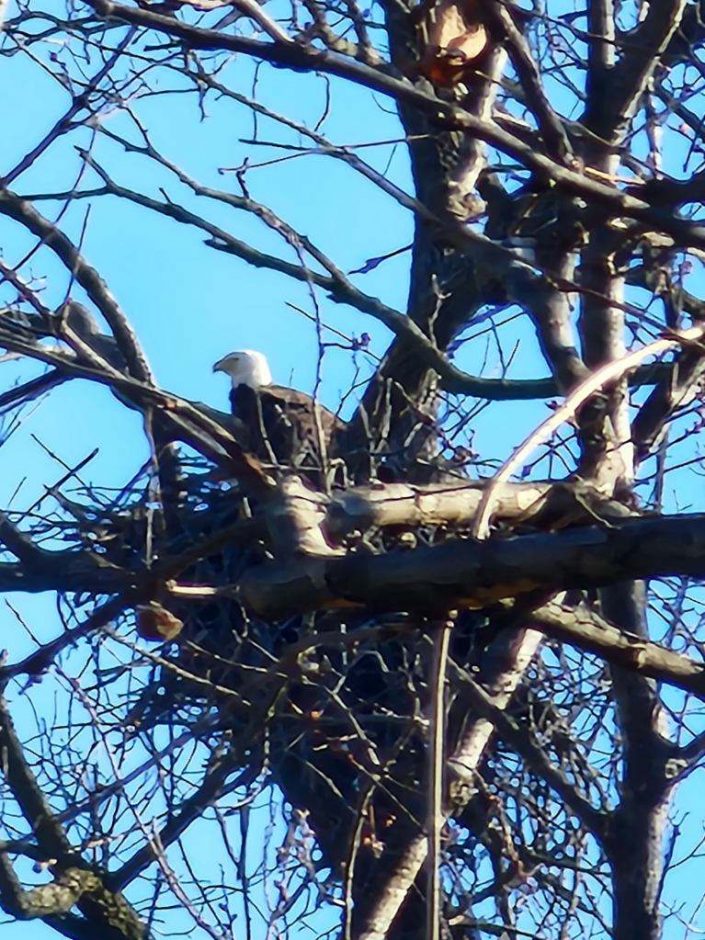
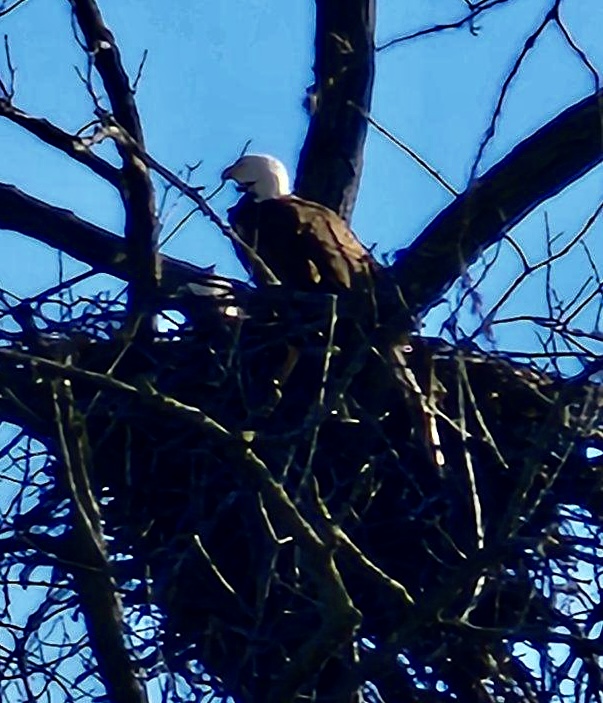
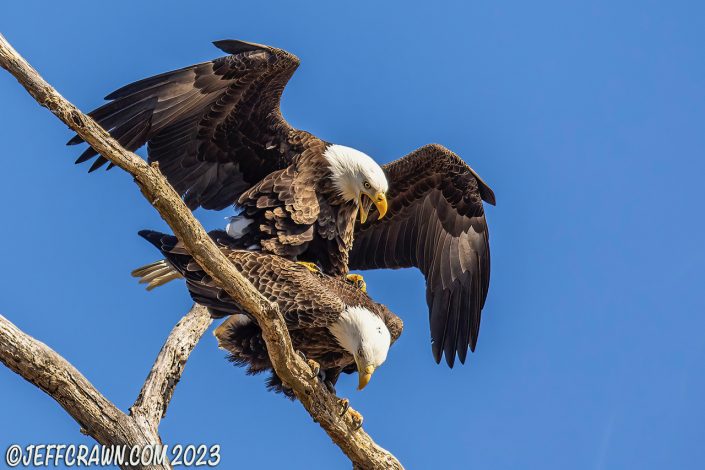
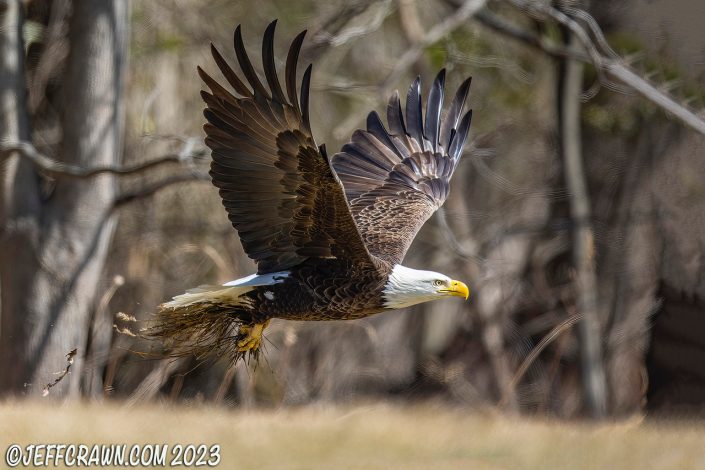
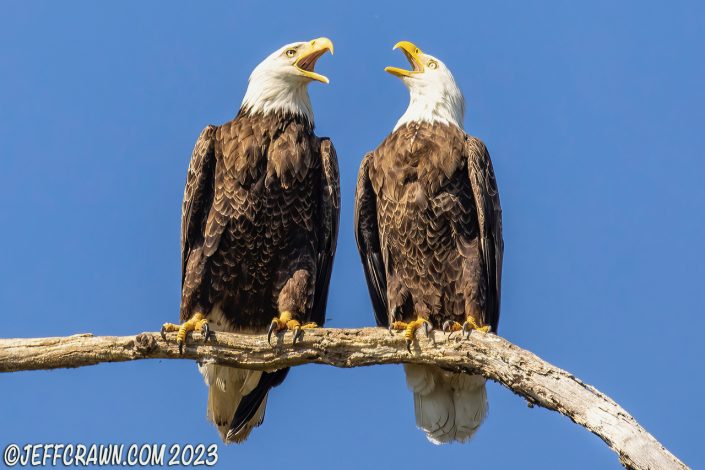
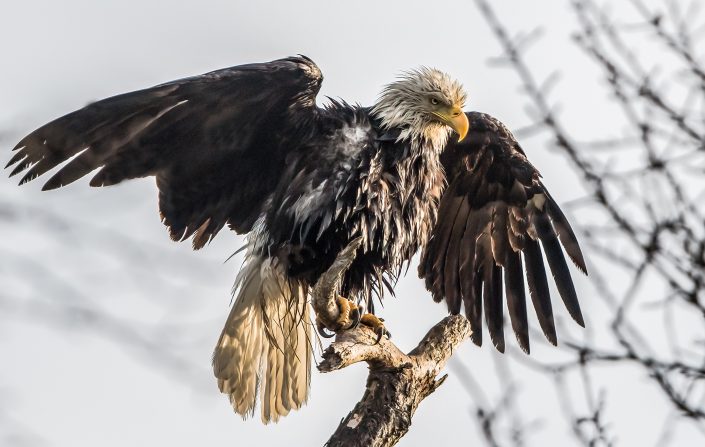
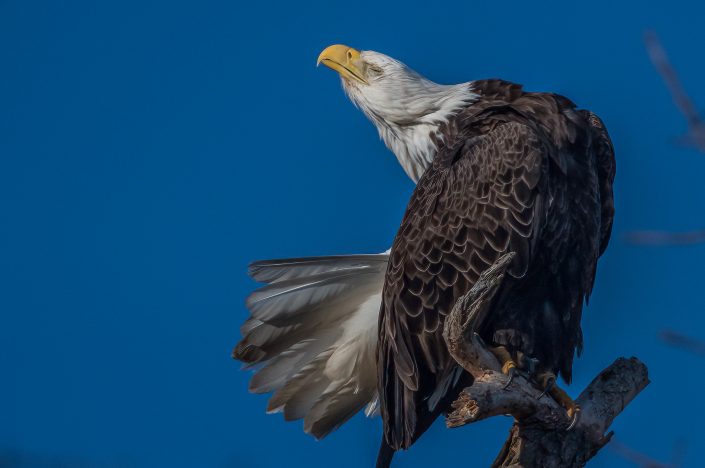
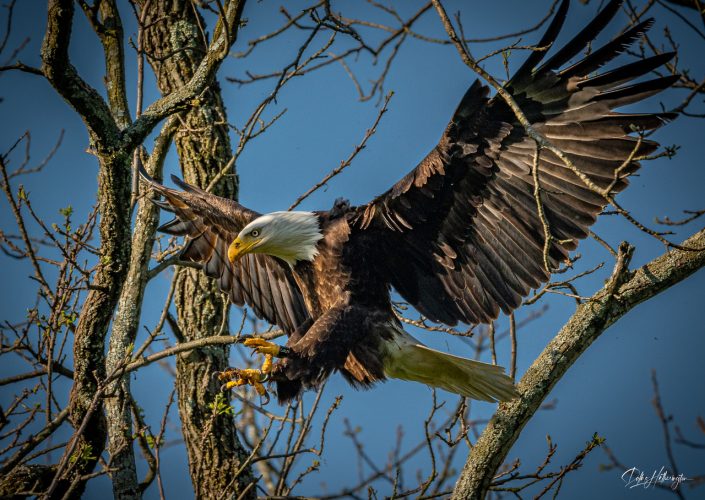
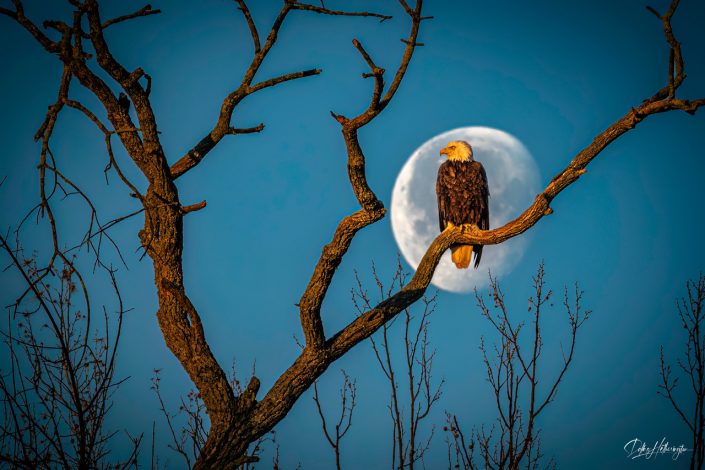
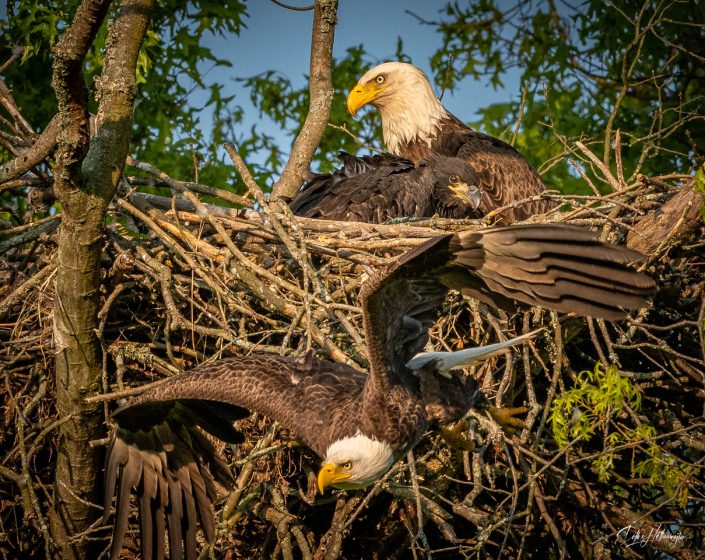
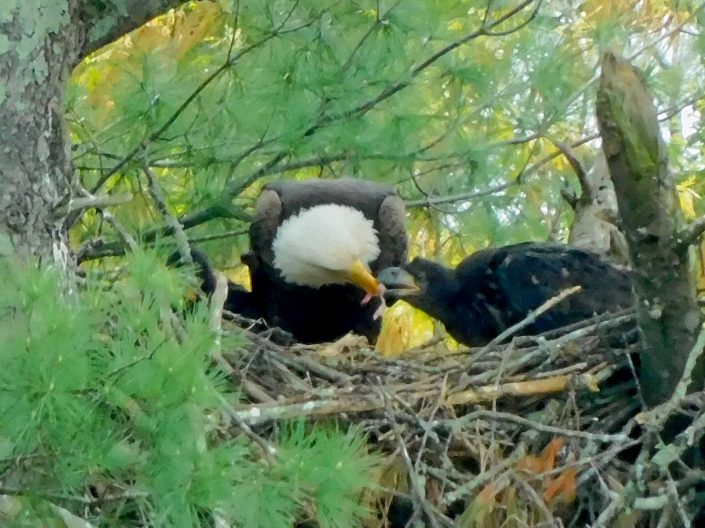
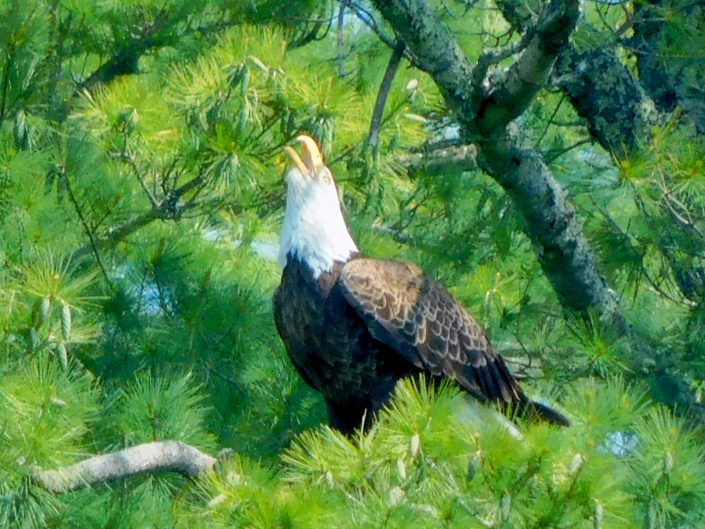
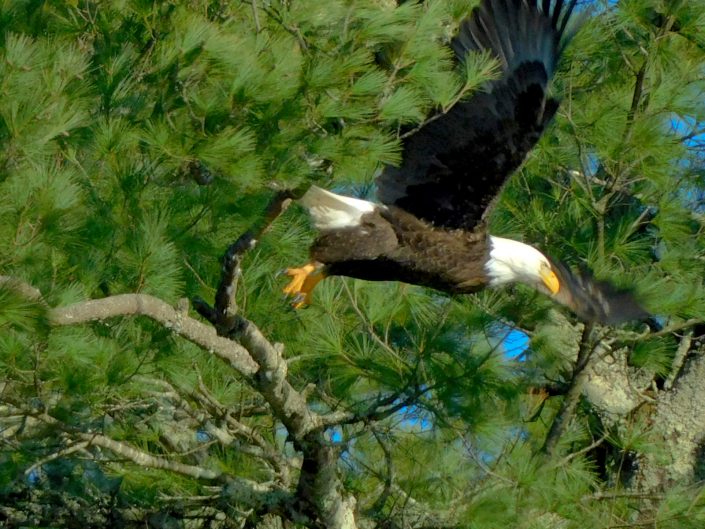
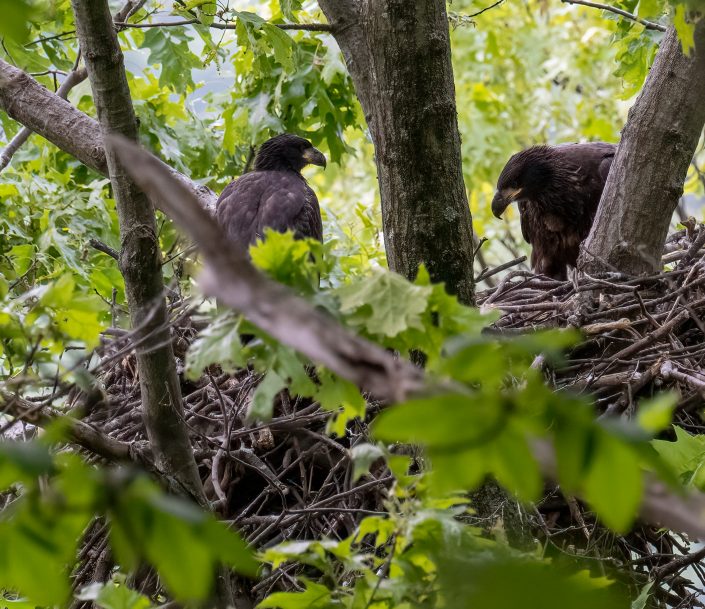
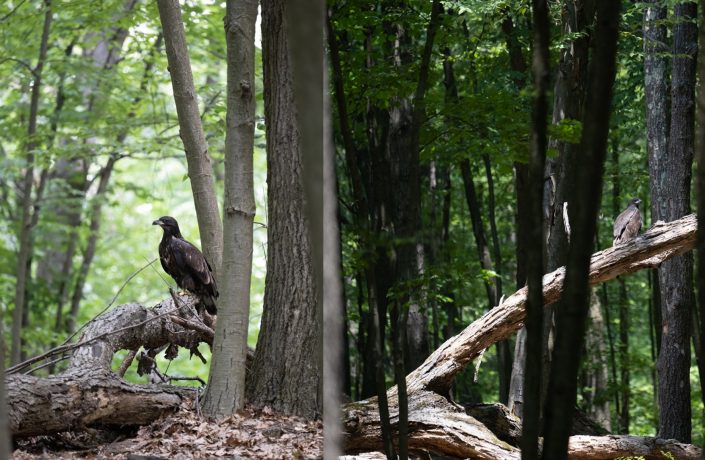
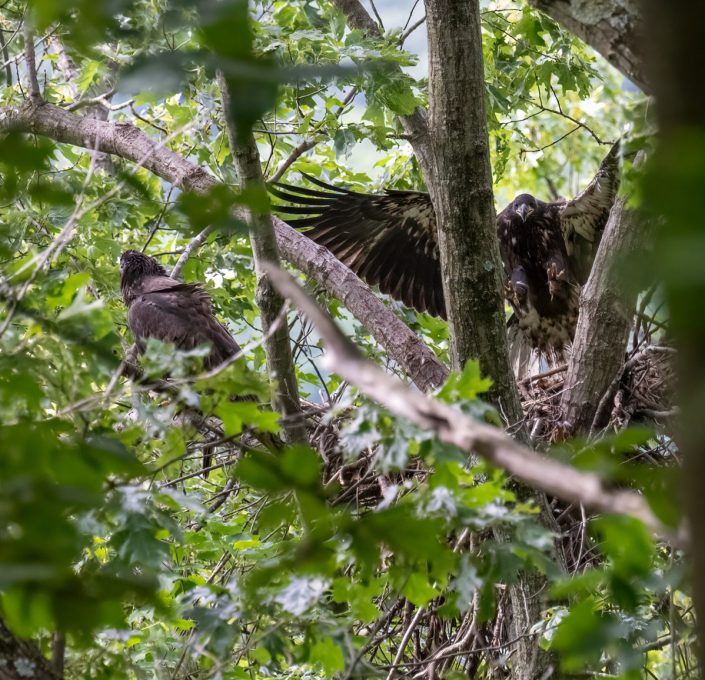
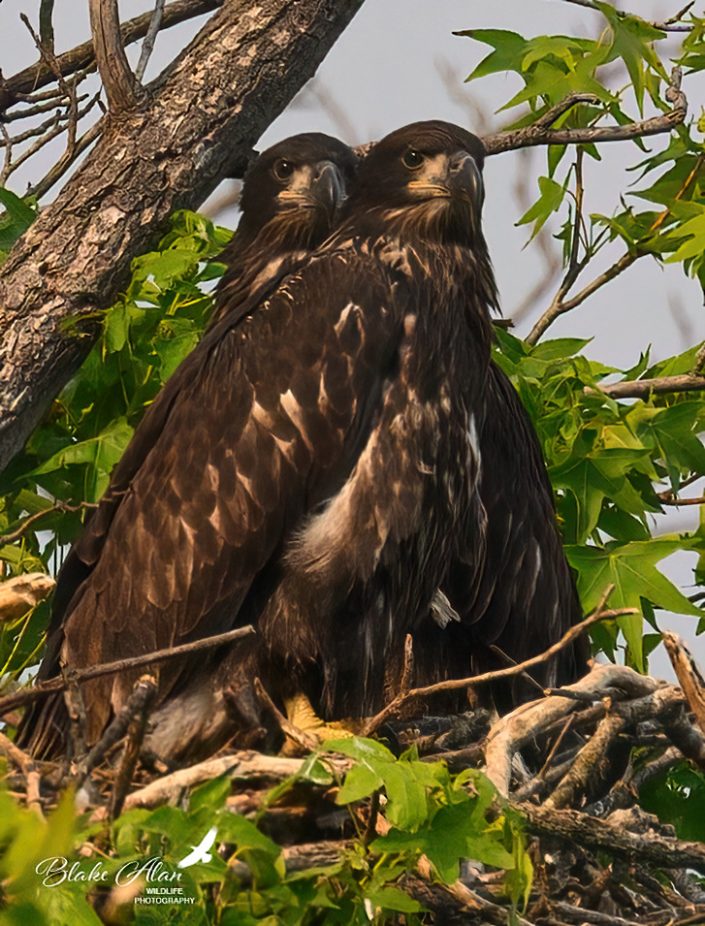
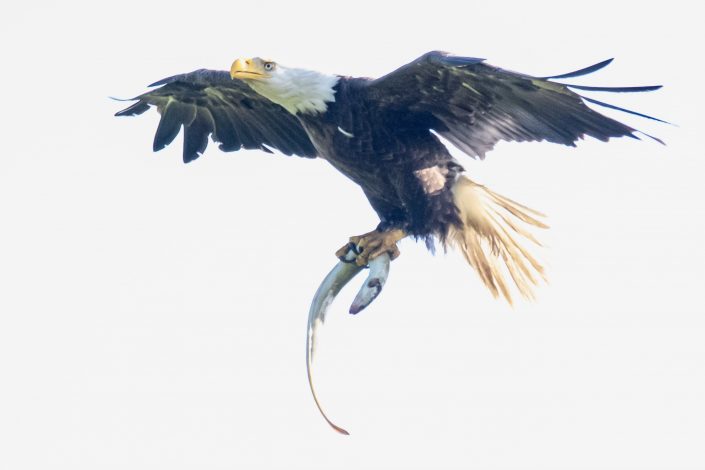
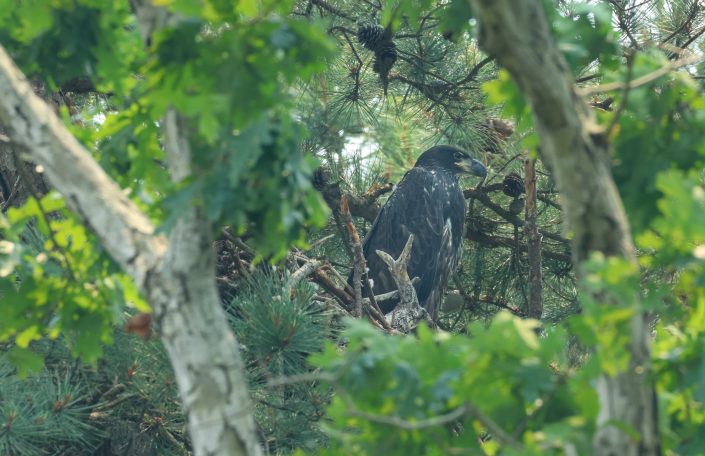
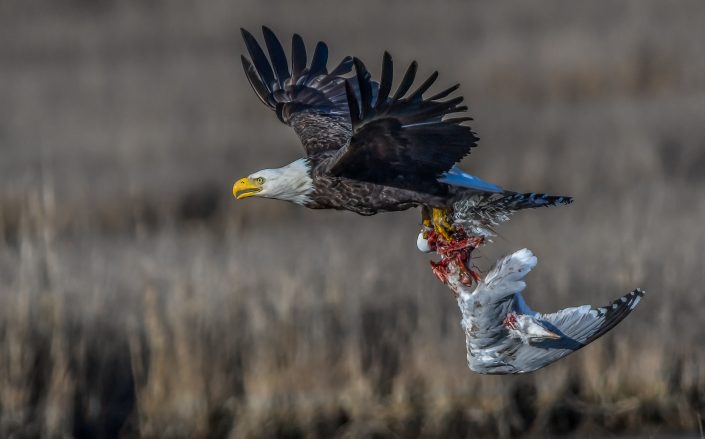
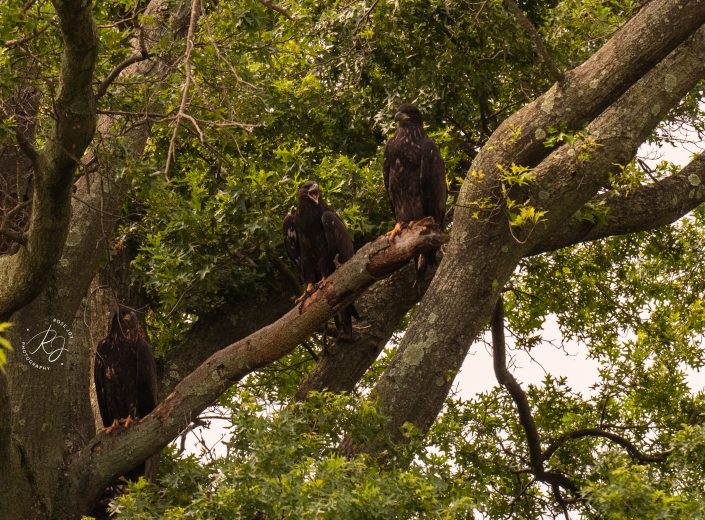
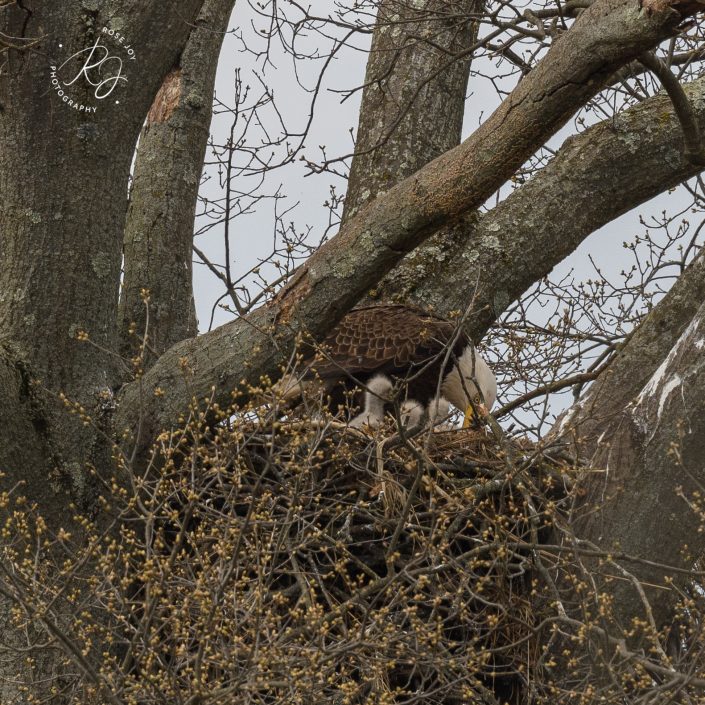
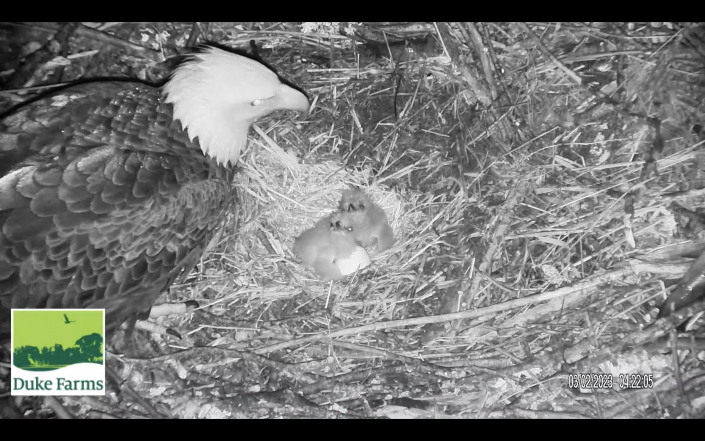
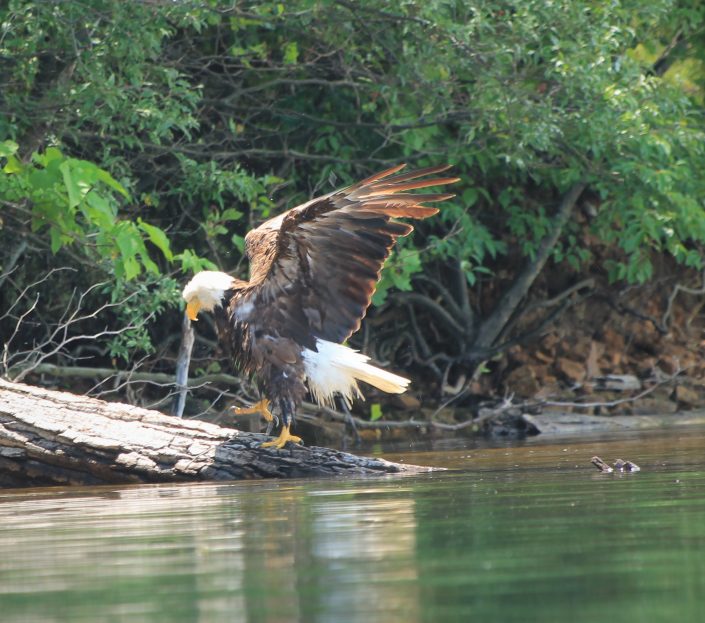
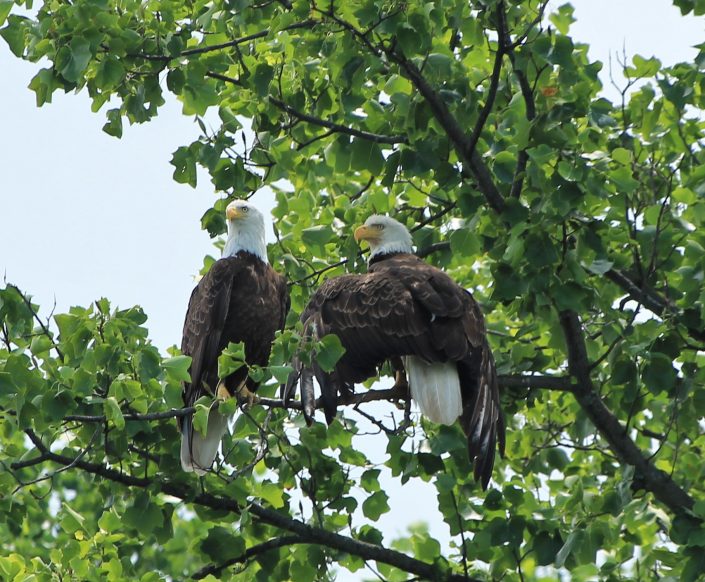
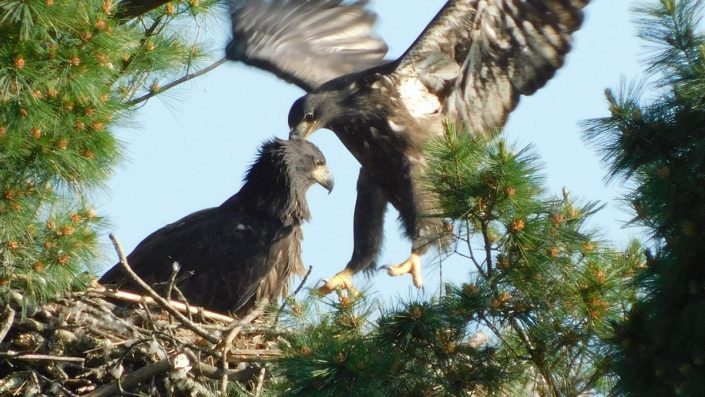
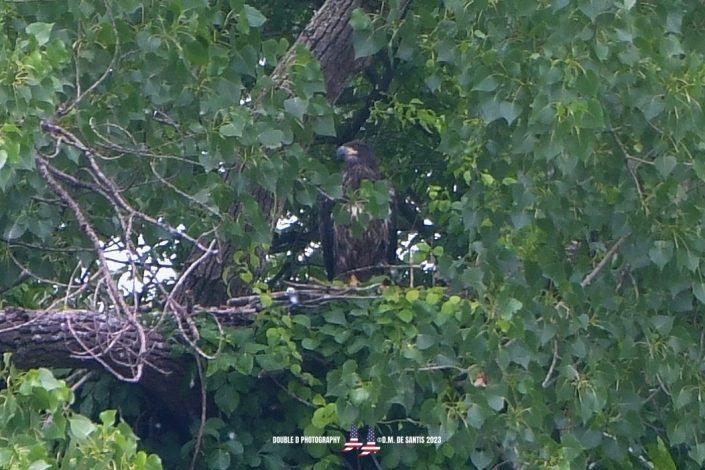
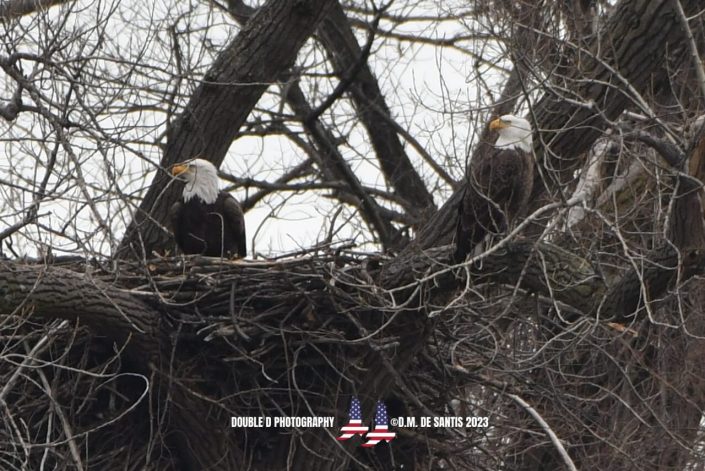
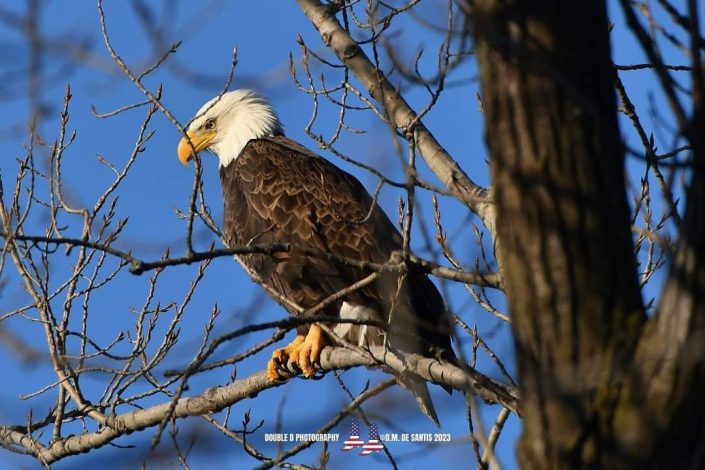
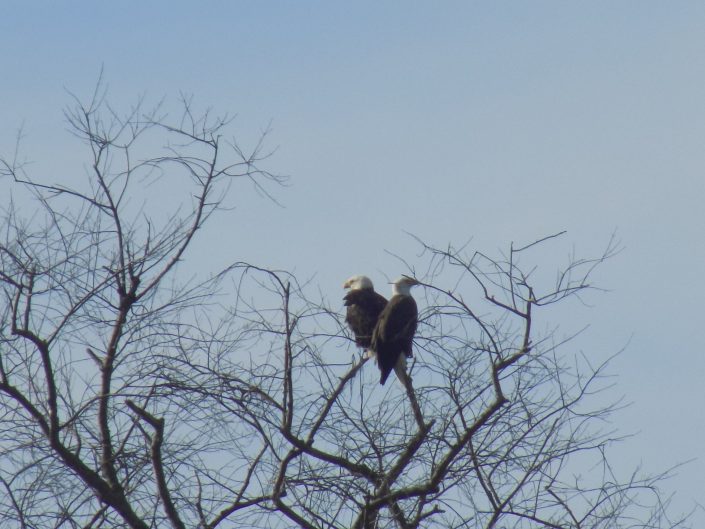
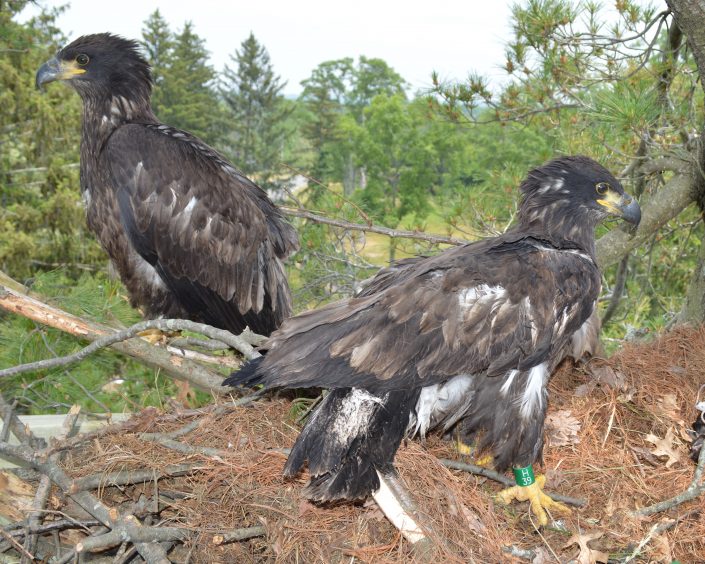
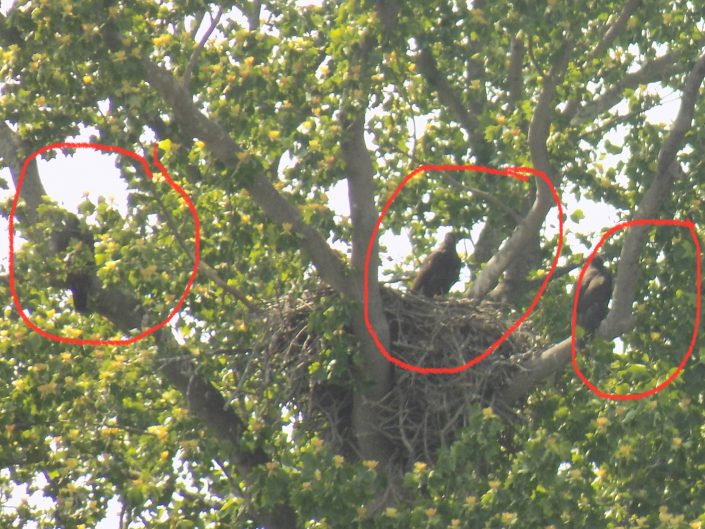
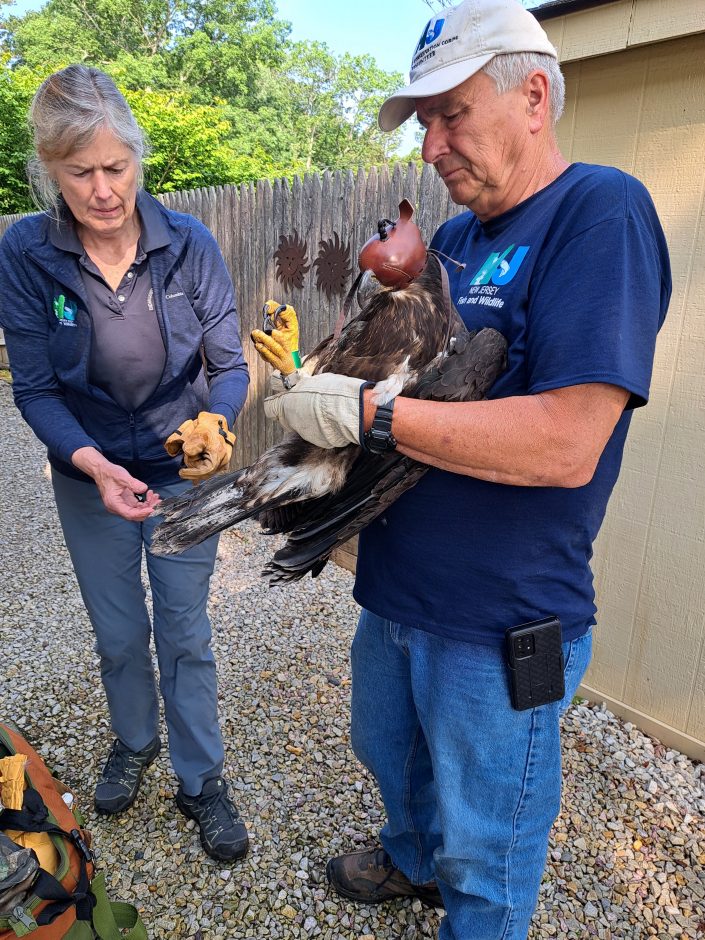
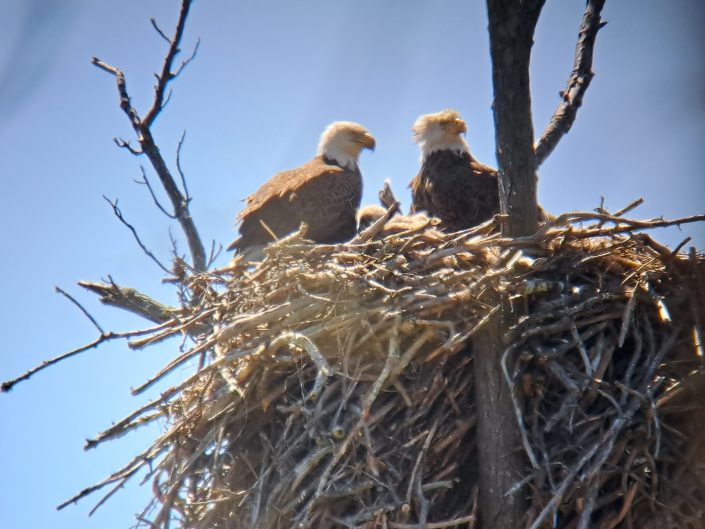
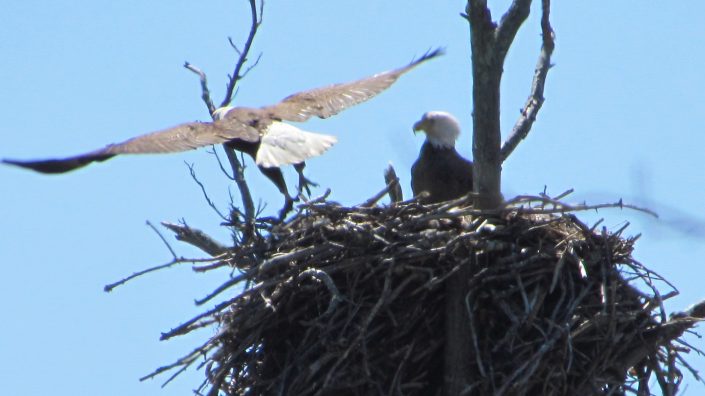
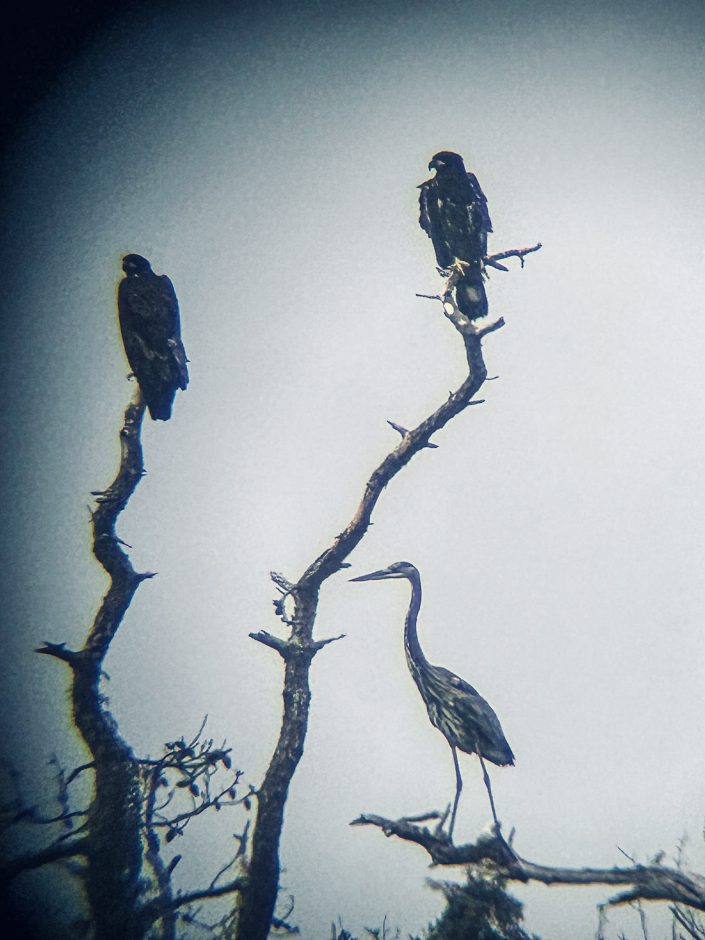
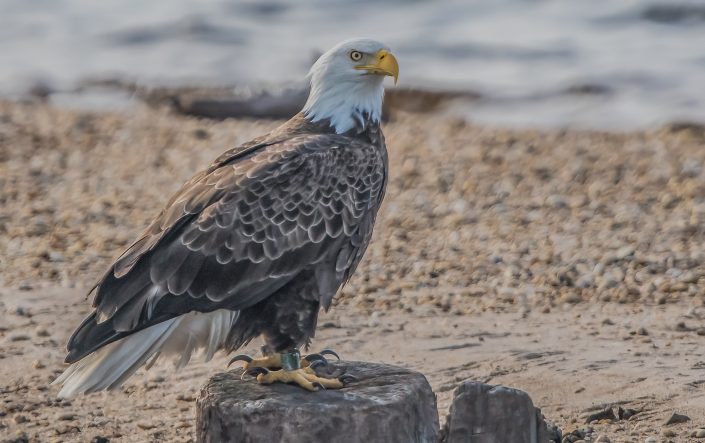
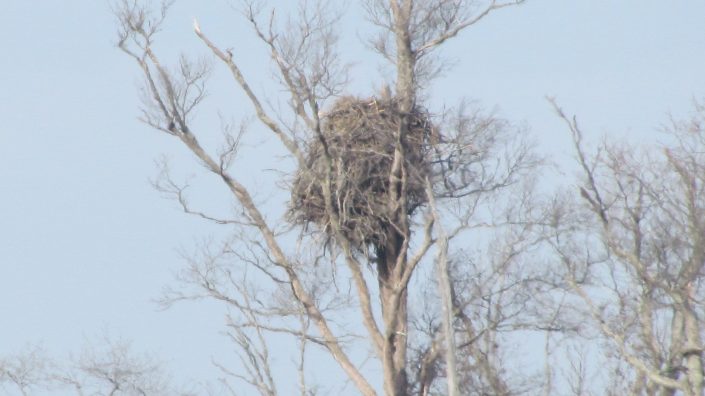
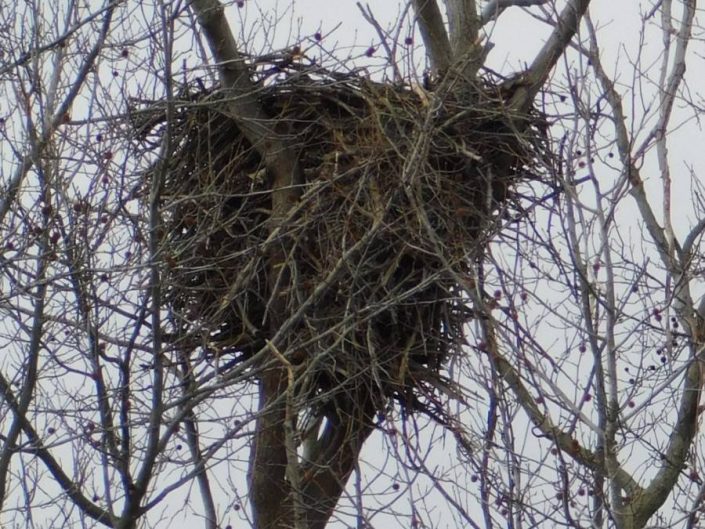
The NJDEP Fish & Wildlife’s Endangered and Nongame Species Program and Conserve Wildlife Foundation of New Jersey have published the New Jersey Bald Eagle Project, 2023. The NJ eagle population continues to thrive. During the 2023 nesting season, 286 nest sites were monitored of these 255 pairs were active (laid eggs). This is a slight increase of 5 active nests from 2022. This season 309 young eagles were documented to have fledged, this number is a down from 2022’s high of 335 young fledged. The productivity rate of 1.28 young per active nest is above the 1.0 young per nest needed for population maintenance.
Fifty-four nest failed to fledge young this season, this means that the pair laid eggs, but the eggs failed to hatch or the chicks did not make it to fledging. There could be many reasons for nest failure including weather events, nest/tree collapse, disturbance by humans or intruder eagles. The NJ eagle population is doing well but they still need monitoring and protection. There is constant pressure for development in NJ and if we don’t know about a nest we can’t help to protect it. Eagles are nesting in all 21 NJ counties, from remote marshes in southern New Jersey to suburban neighborhoods. How the ENSP and CWF protects these nests is on a nest by nest basis. We couldn’t do this without the dedicated group of 150 NJ Eagle Project volunteers who not only monitor the eagle nests, but help minimize disturbance to nests by educating the public about NJ’s eagle population.
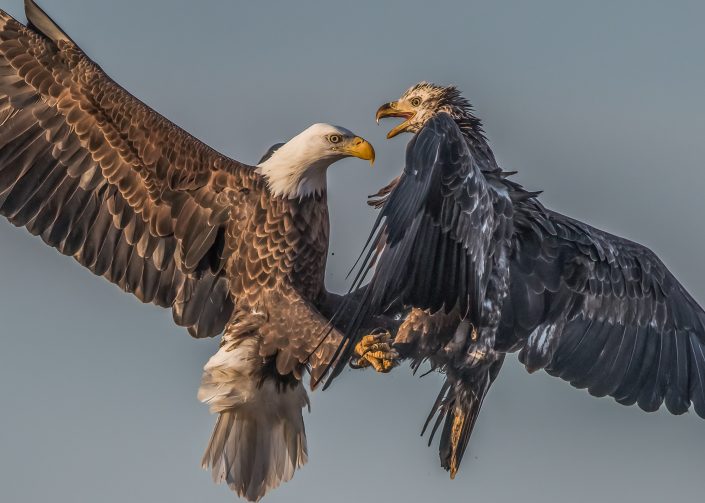
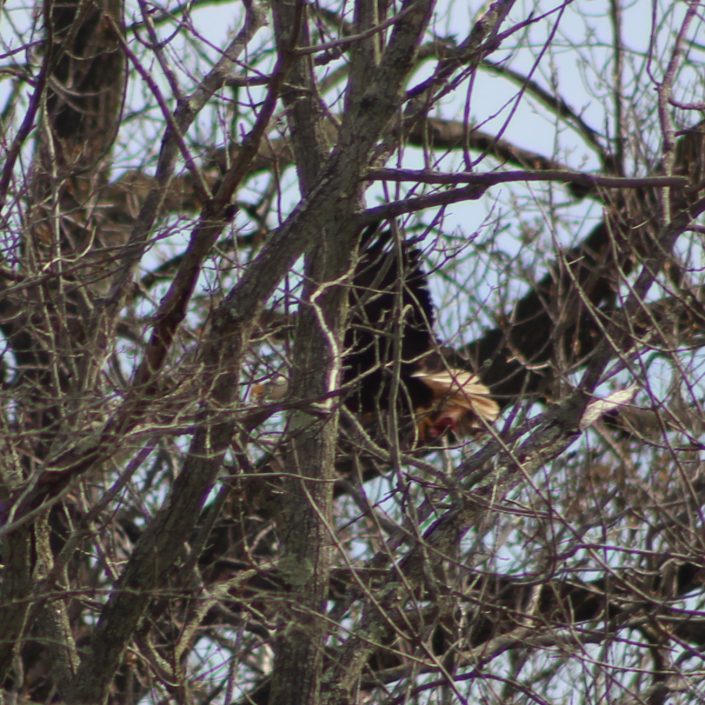
Forsythe NWR, eagles fight over prey, 12/16/23 photo by Rich Nicol
The 2024 NJ Bald Eagle season is underway with eight pairs currently incubating. A great way to see what goes on in an eagles nest is to watch the Duke Farms eagle cam. The female should be laying the first egg any day now.
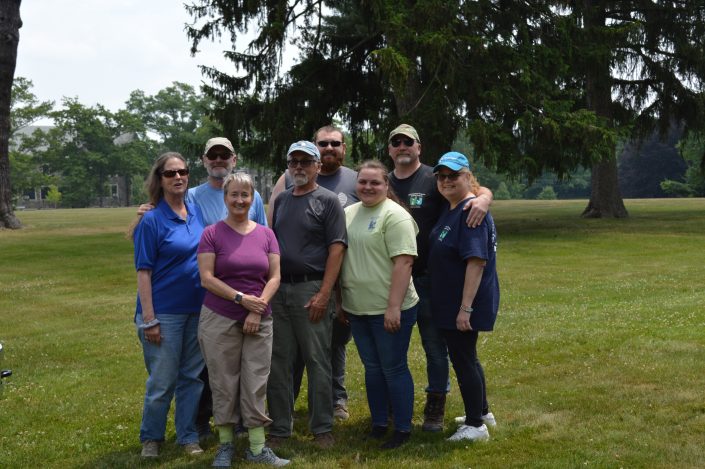
We’d like to thank all the volunteers, sponsors, donors and friends of the NJ Eagle Project
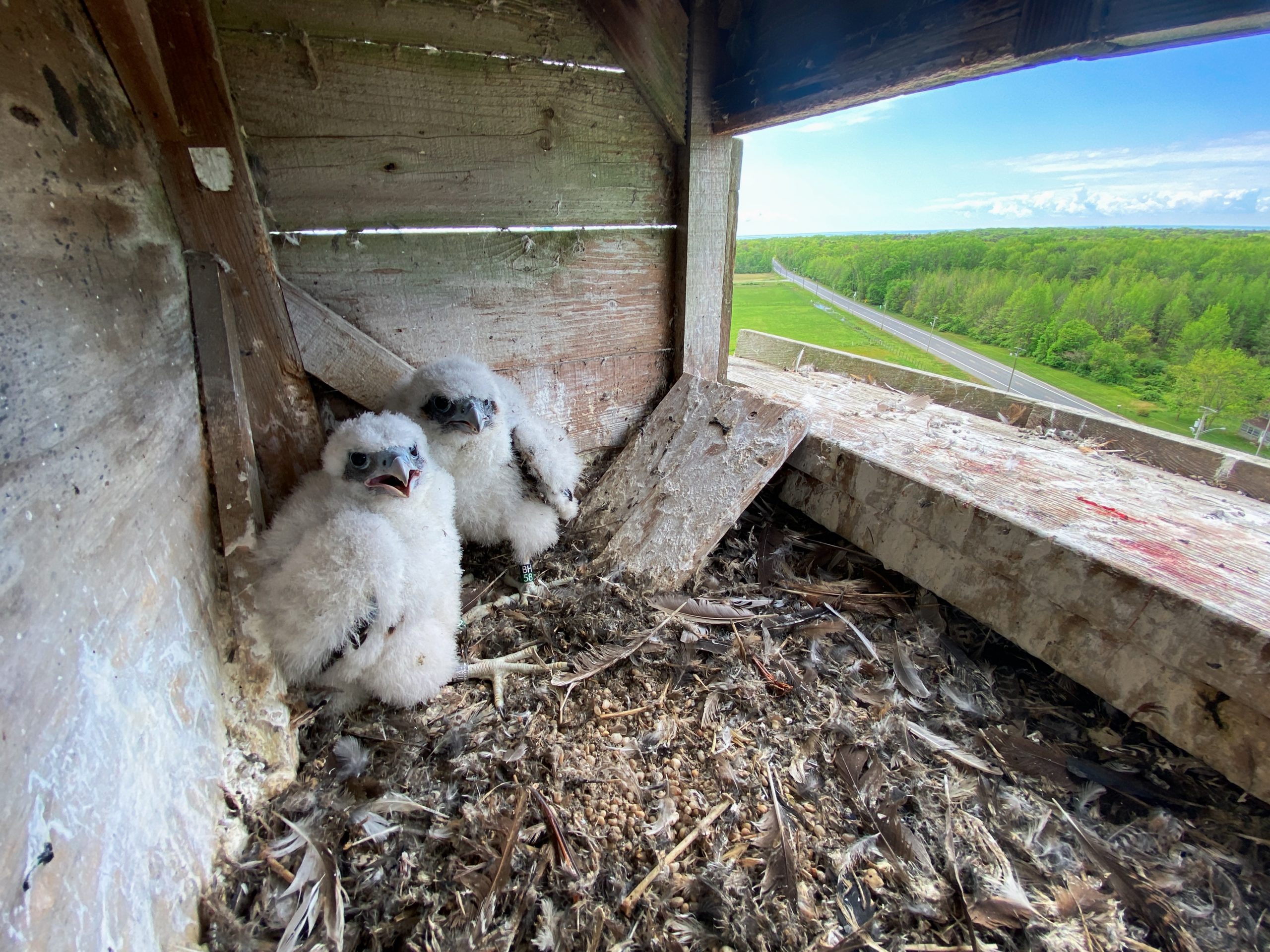
Two peregrine falcon eyases after being banded at a nest in southern New Jersey.
It’s no surprise to hear that peregrine falcons have made a remarkable recovery since being extirpated from New Jersey in the mid-1960s. From the cliffs of the Palisades to bridges and buildings in our urban areas and along our entire coast, peregrines can be seen at many locations throughout the state. Today the population has been holding steady with 40 (known) pairs and at least 35 active nests over the last couple years. This is due to protection through the Endangered Species Conservation Act, where biologists worked tirelessly to jumpstart their recovery efforts by “hacking” young falcons and the banning of harmful pollutants, like DDT.
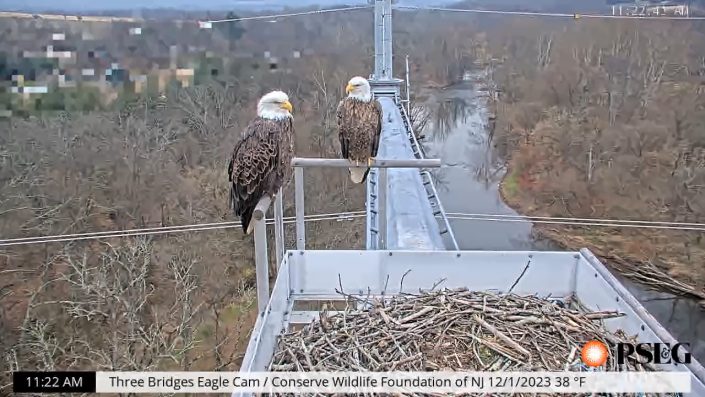
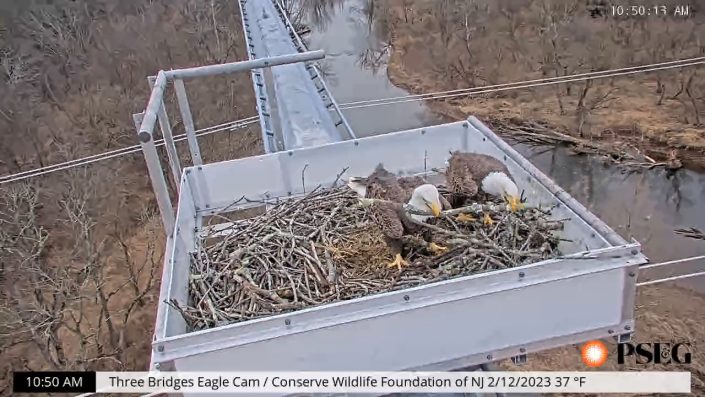
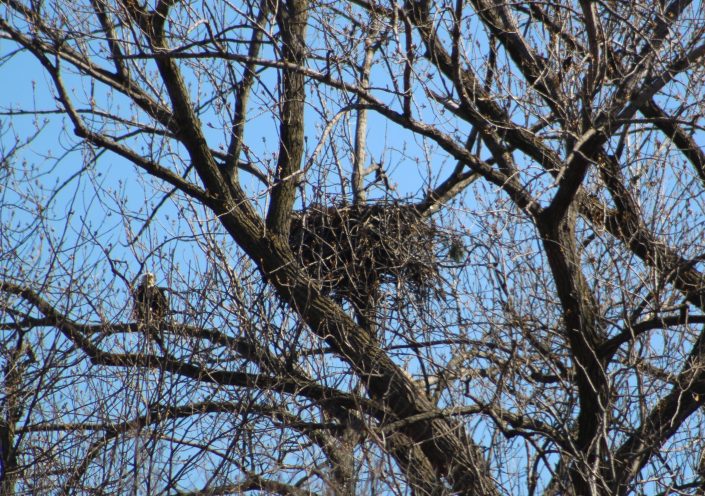
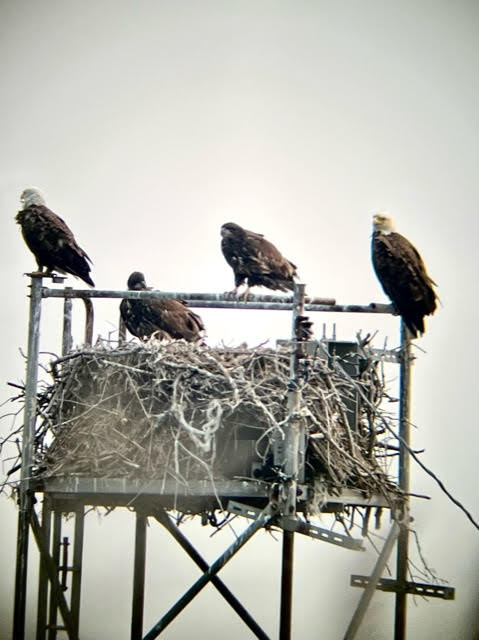
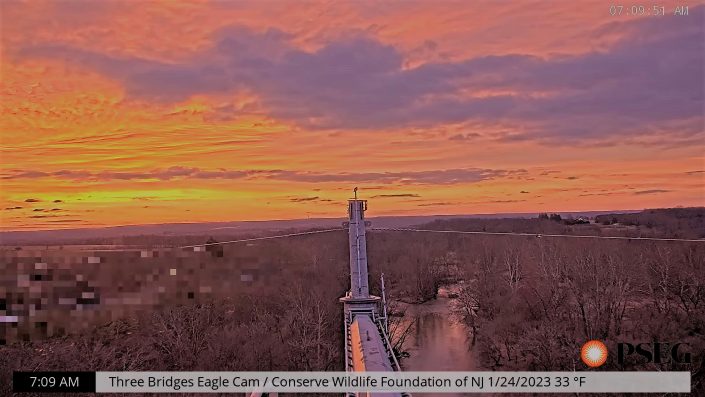
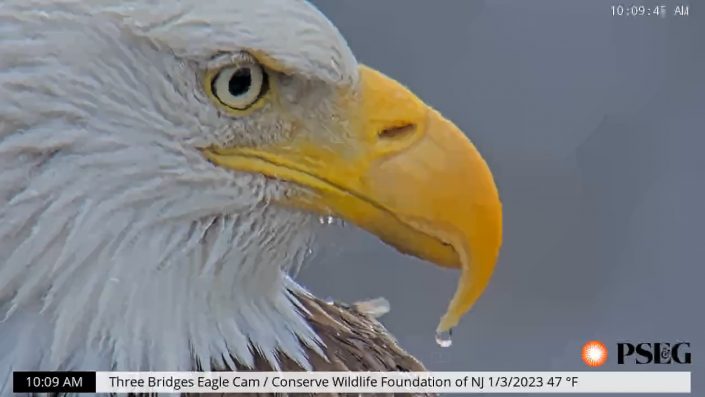
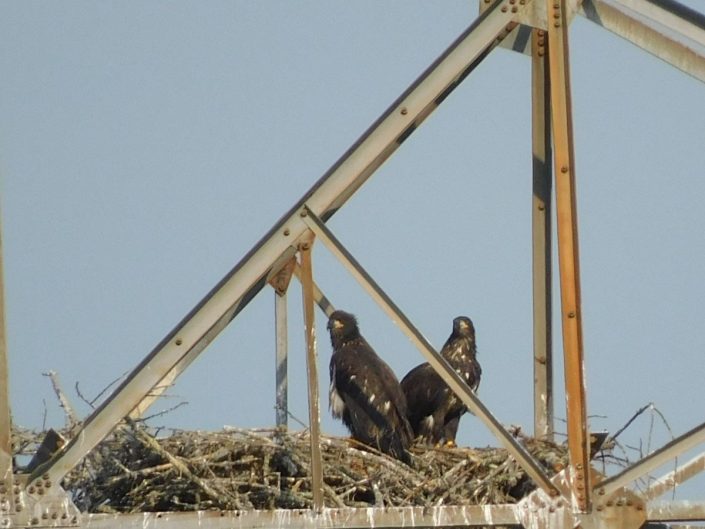
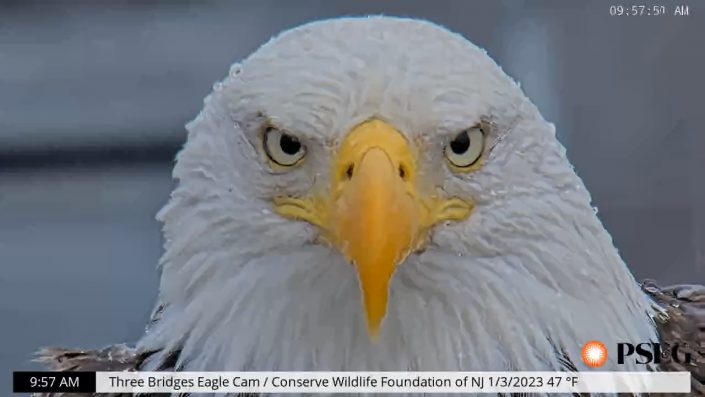
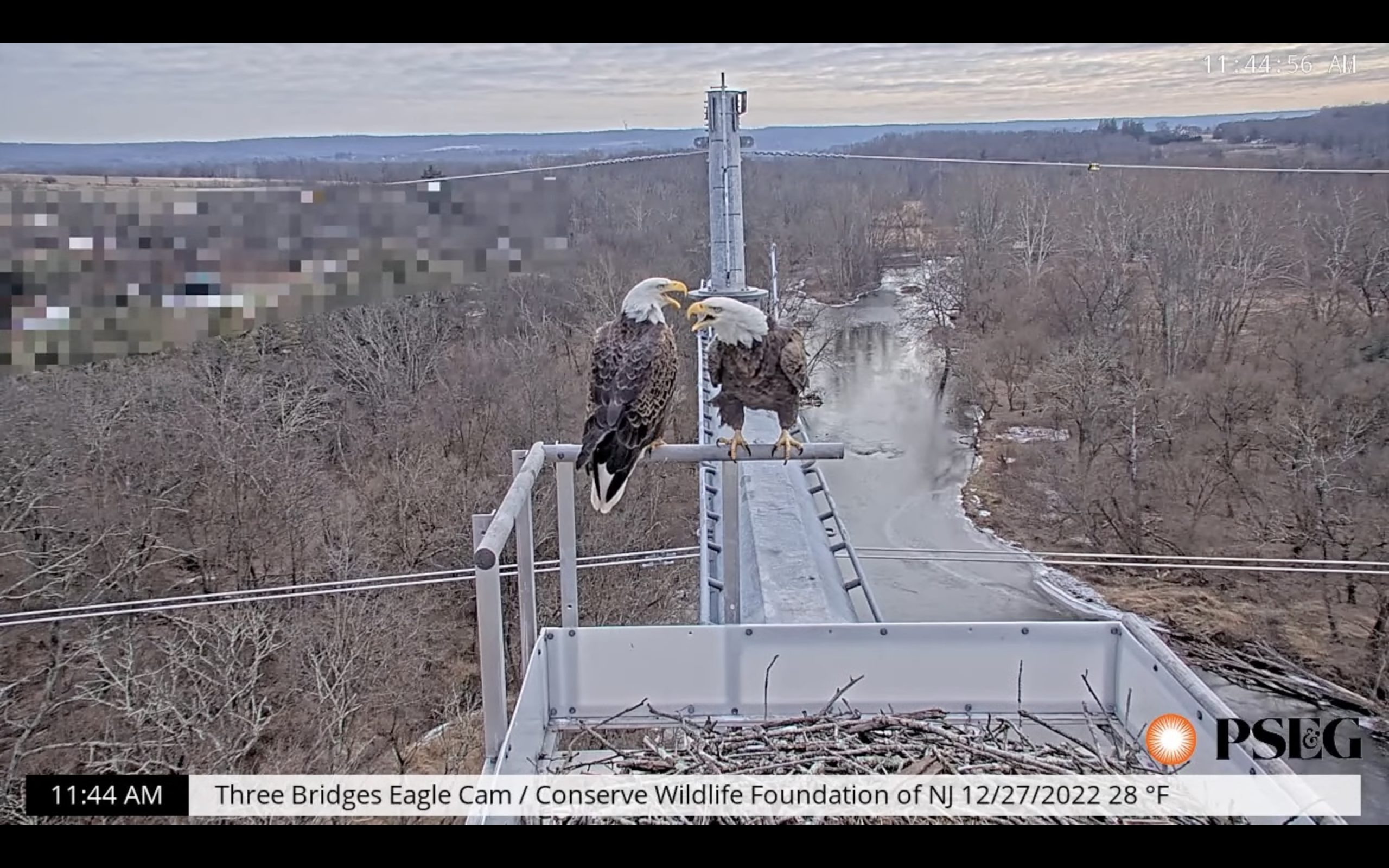
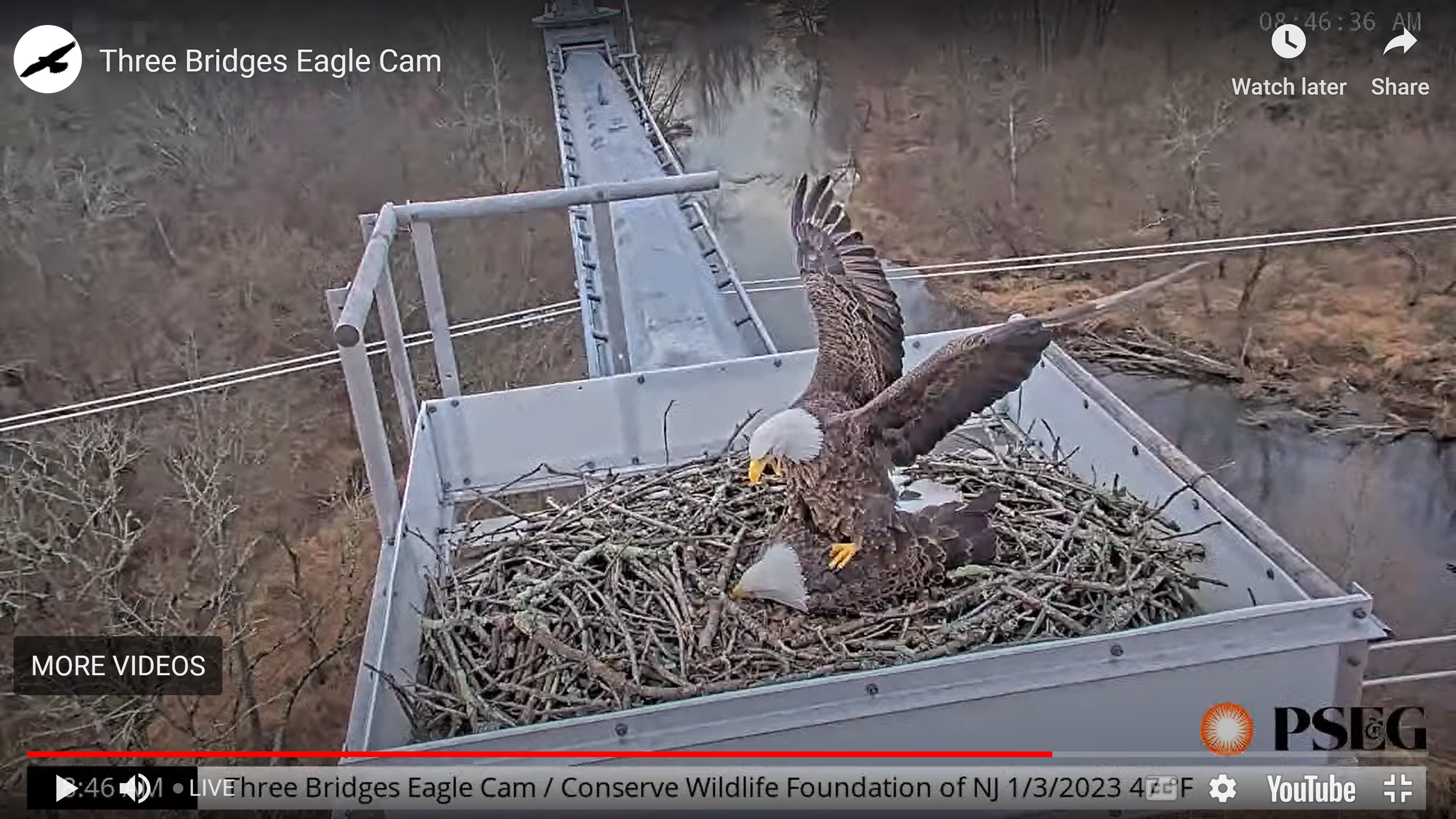
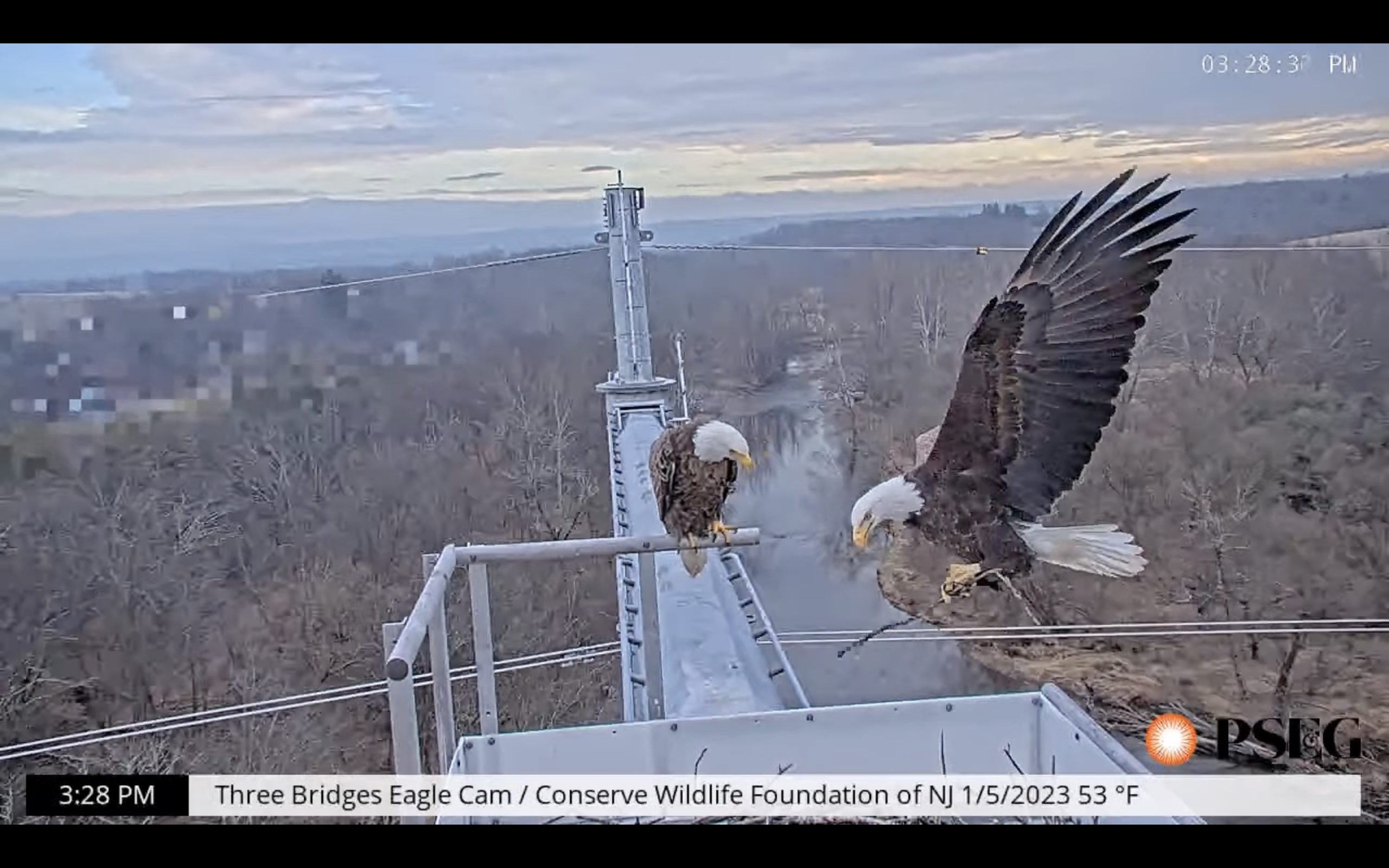
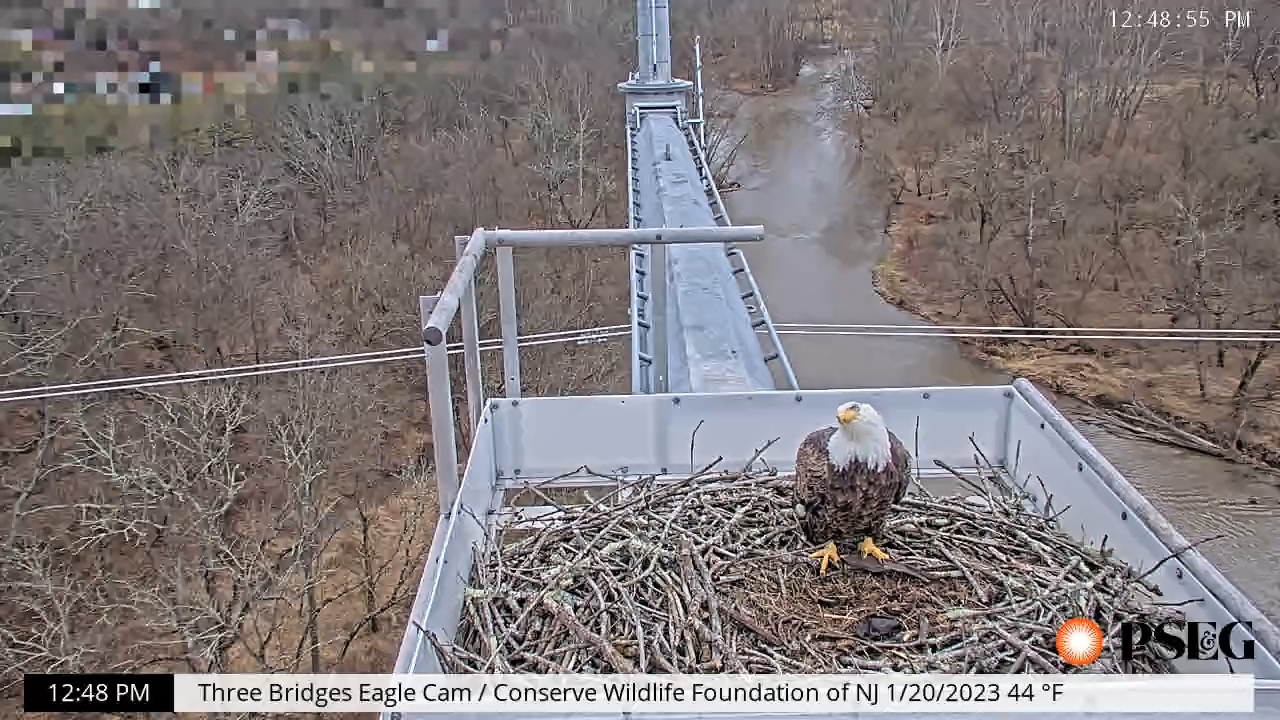
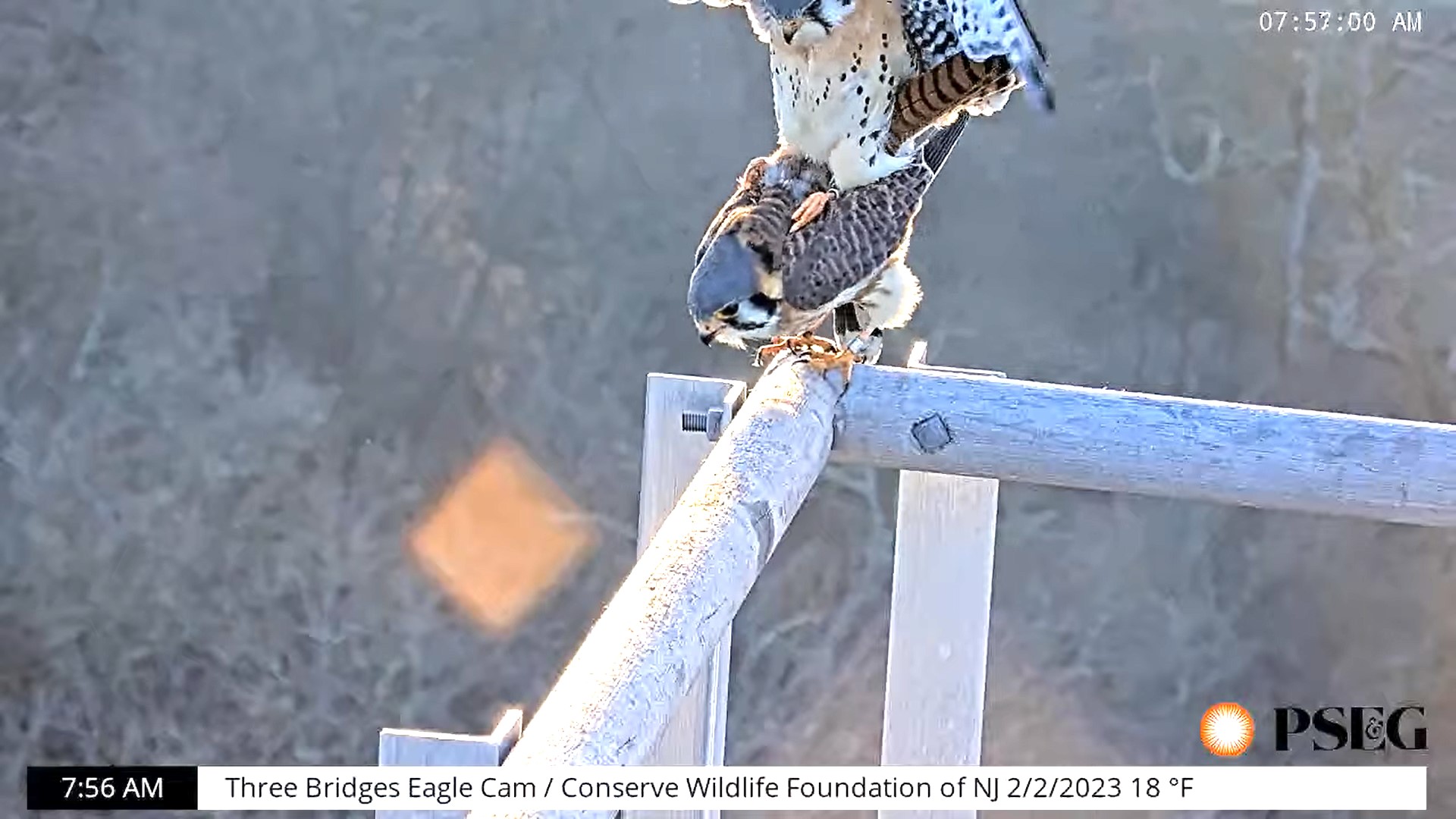
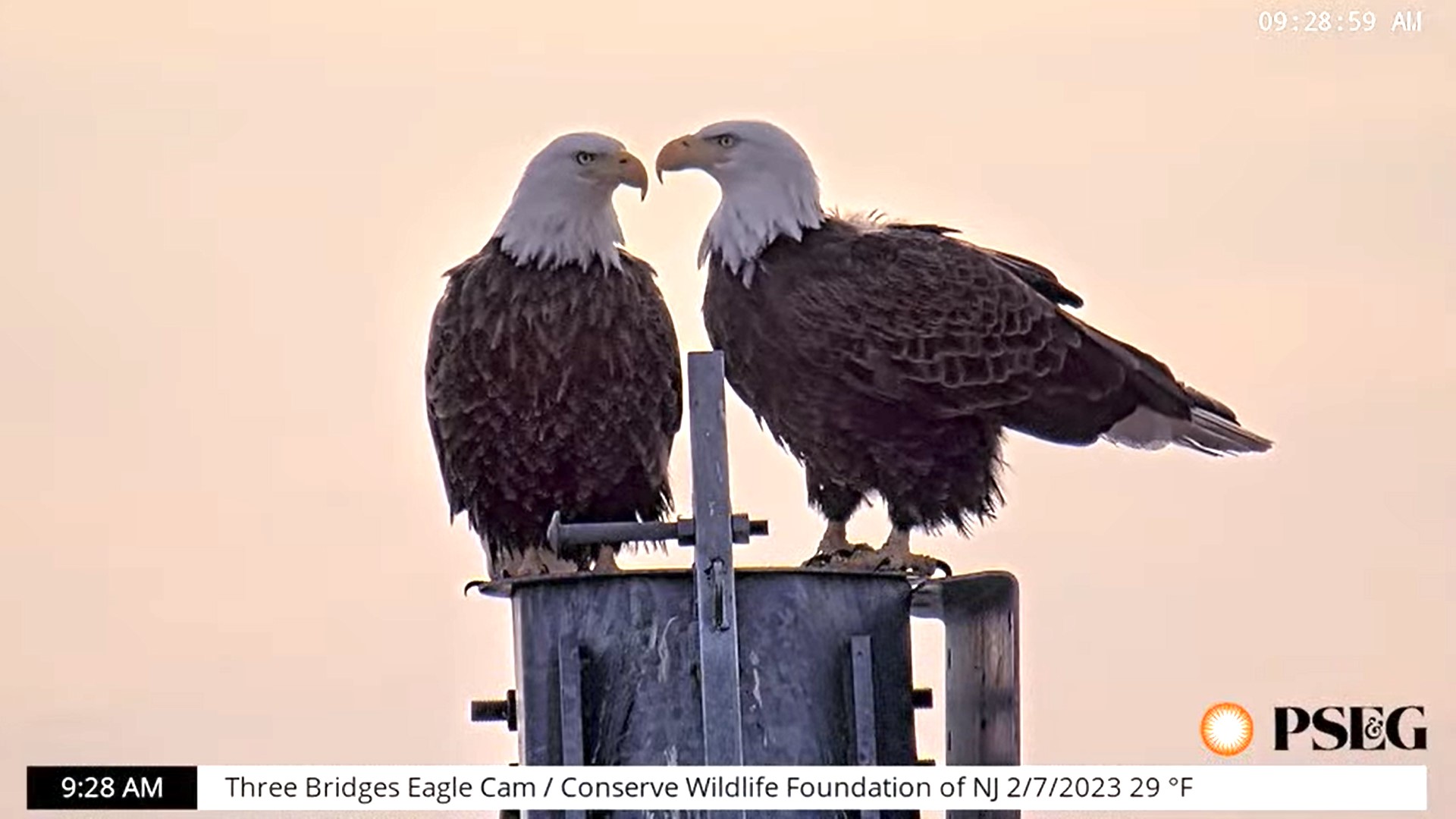
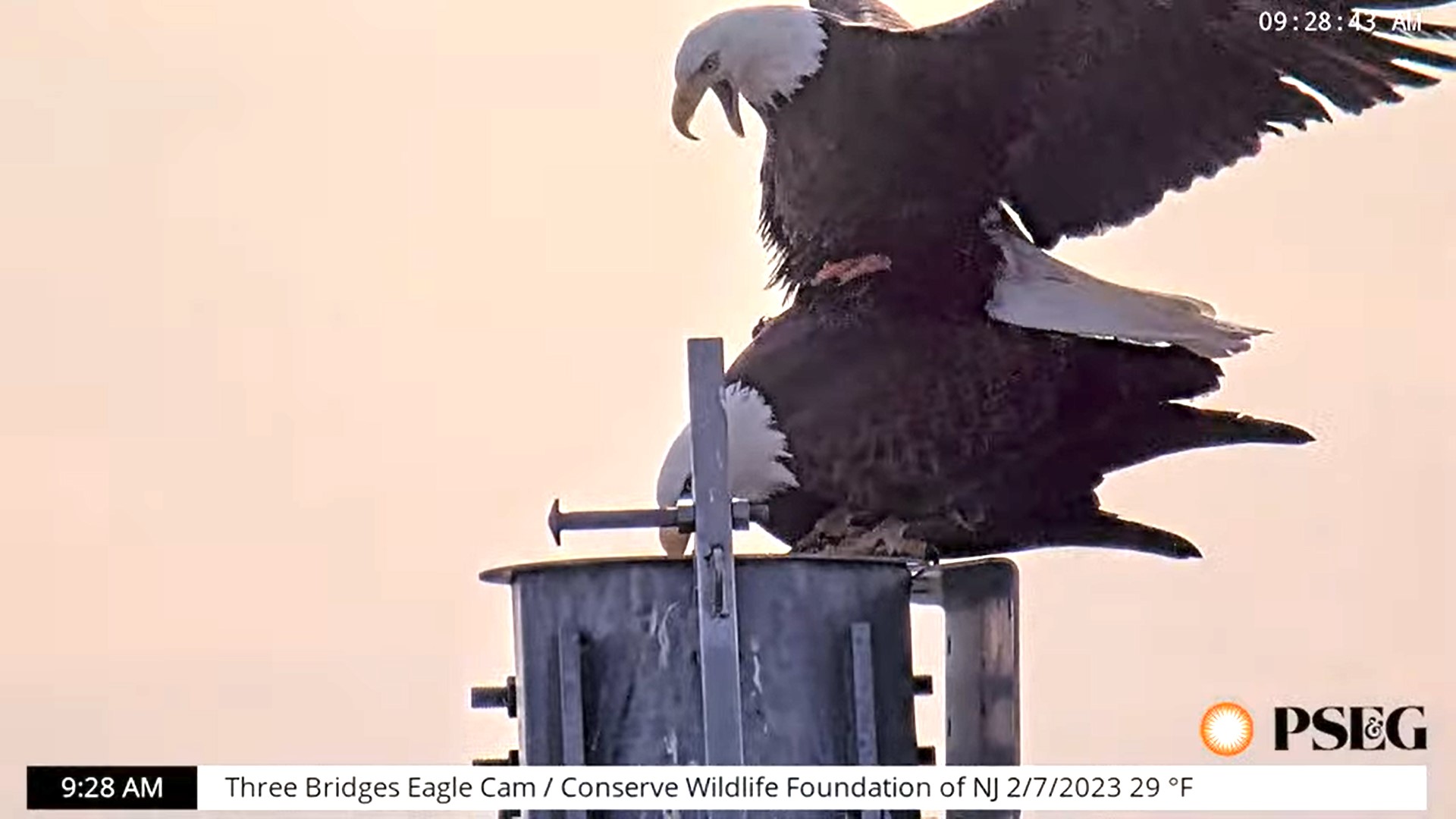
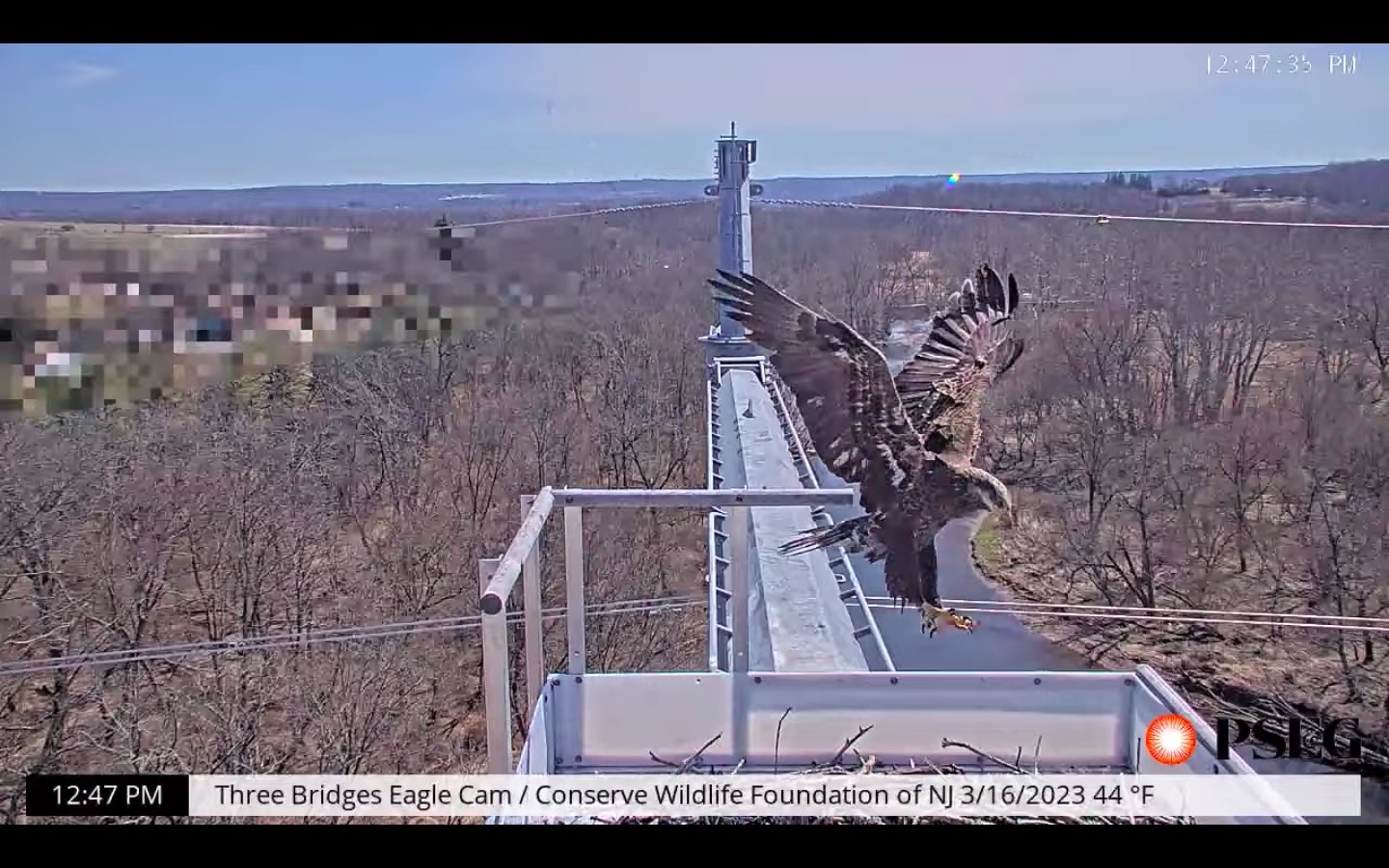
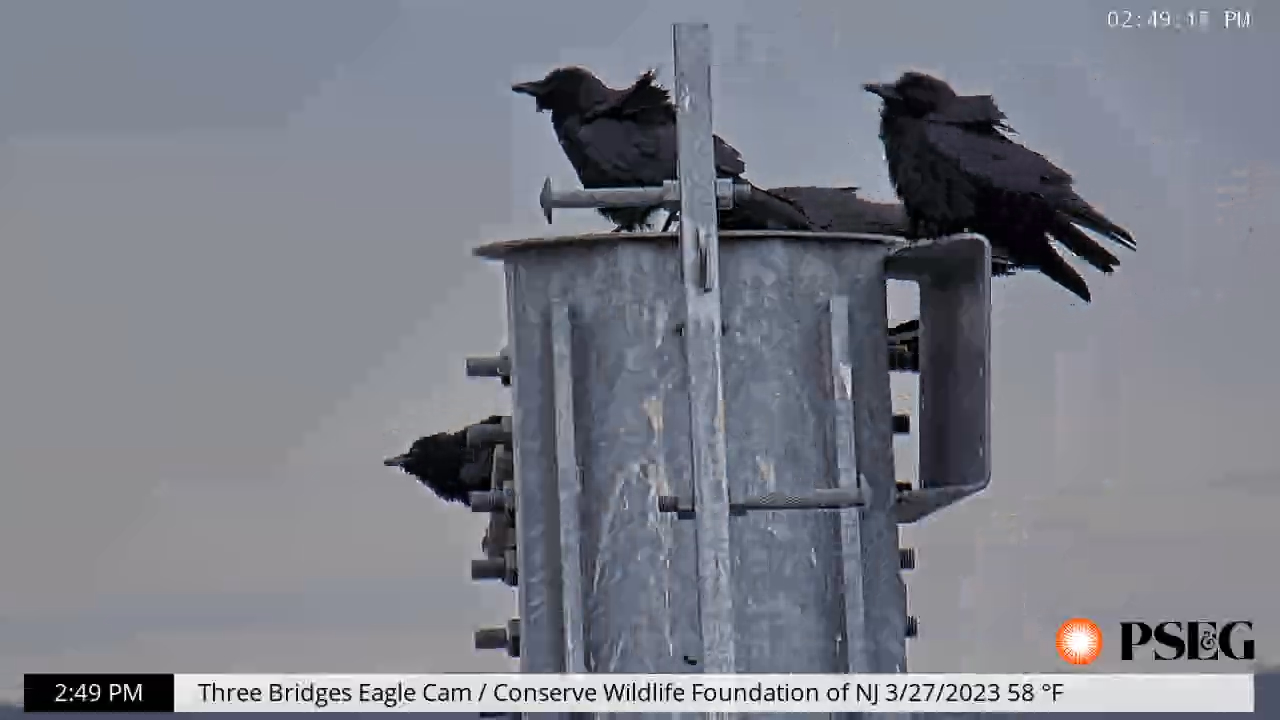
The Three Bridges eagle cam went live for the 2024 nesting season on December 1st. A pair of eagles made an appearance that morning. The Three Bridges nesting platform was used by eagles in 2021, when they successfully raised two young. During the 2022 and 2023 nesting seasons, the pair were seen at the nest platform but ended up using a nest in a tree. We will see if the pair decides to use the nest platform this season. For now we believe that the Three Bridges pairs territory is both the nest tree and platform. As the numbers of nesting Bald Eagles continues to increase New Jersey there is the possibility that a second eagle pair could nest at the platform. Last nesting season there was lots of eagle action at the tower, eagles of all ages stopped by along with many different avian species. A pair of Osprey’s took interest in the nest platform but didn’t end up laying eggs. An American Kestrel perched at the platform on the first day the cam was live. It’ll be interesting to see what activity occurs at the tower this season.
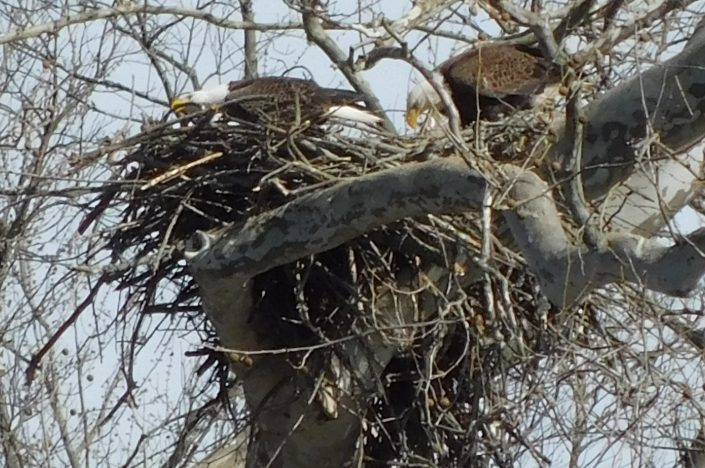
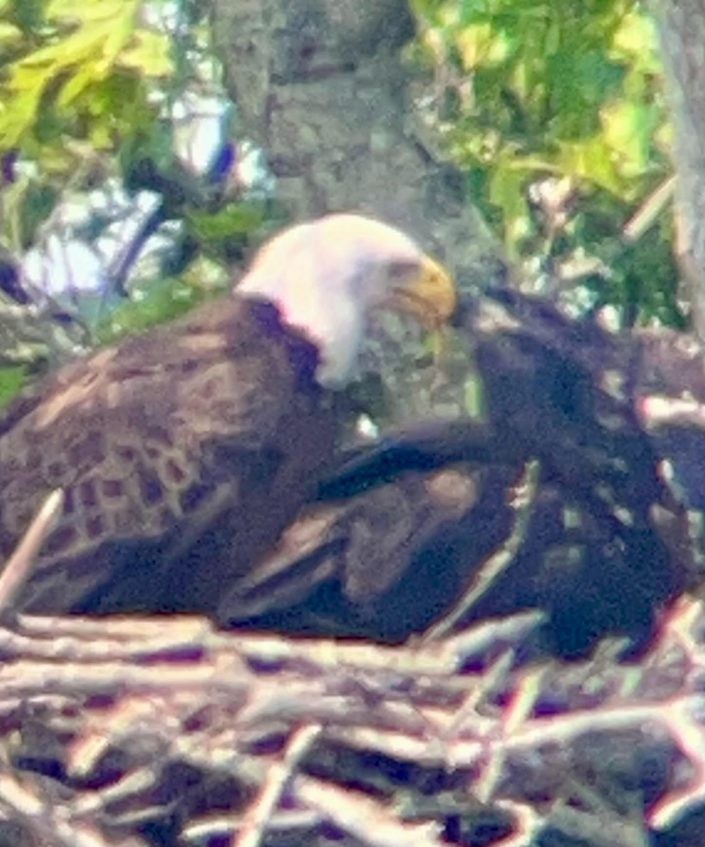
Nesting pair of eagles near Atlantic City@ Bill Reinert
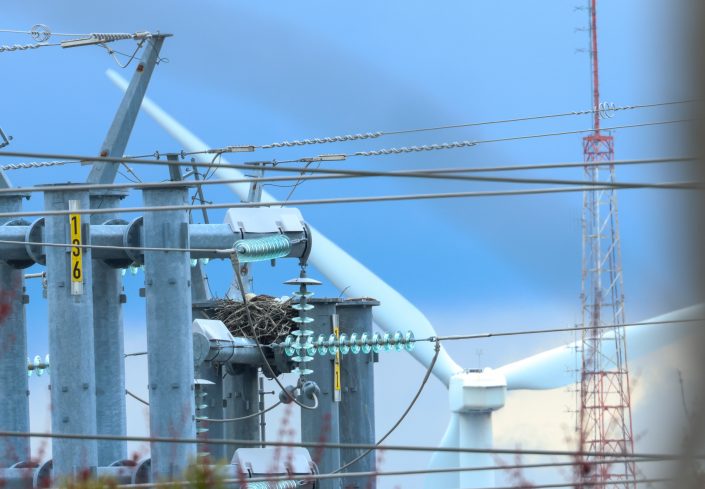
Last week I attended the APLIC (Avian Powerline Interaction Committee) workshop hosted by PSE&G. APLIC is a group that leads the electric utility industry in protecting avian resources while enhancing reliable energy delivery. We all use electricity and power lines are needed to distribute the power to where it’s needed. Powerlines and transmission towers have become a normal part of the landscape and we don’t pay much attention until our power goes out. All different species of birds, from bald eagles to starlings, interact with powerlines, poles and towers daily, including perching and nesting on them.
photo by Cheryl Leonardnest on transmission tower @ Barb McKeephoto by Mary Ellen Hillphoto by Jeff WhiteKin Buc pair@Kevin Redden
With these interactions come issues, birds can be injured or die from electrocution and collisions which can cause power outages. Nests on poles and transmission towers can create problems with outages and fires as well as risk to chicks or adults. One part of my job is keep track of all reported injured or dead bald eagles in New Jersey. In 2023 there have been fifteen confirmed eagle electrocutions. Any recoveries that are a suspected electrocution or collision with a powerline are reported to the appropriate utility company. CWF and the NJ ENSP have a good relationship with the Utility companies in New Jersey. Each utility company has biologists that work on environmental issues including avian. There are a whole set of issues that they need to be taken into consideration when deciding how best to minimize negative avian interactions. The solutions require time, money and often scheduled power outages. When an area of lines or poles are identified as a risk for bird electrocution/collision, they are made as avian safe as possible. When new distribution lines are rebuilt, avian issues are taken into consideration and the appropriate measures are implemented.
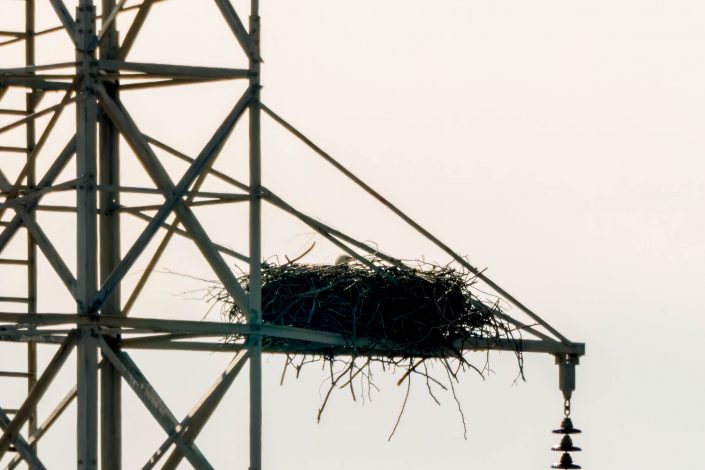
There are quite a few bald eagles and ospreys that nest on poles and transmission towers throughout New Jersey. Most of these nests don’t cause problems, but if they need to be removed, the utility company works to obtain the proper permits and replace the nest with a new nesting structure in close vicinity. One example is the Three Bridges eagle nest. PSE&G needed to replace the entire distribution line where an eagle pair had been nesting on one of the towers for years. After much planning and coordination the nest was removed and placed on a nest platform installed on one of the new towers.
I certainly learned a lot at the workshop and gained a new appreciation for everything that goes into keeping our electricity flowing at the flick of a switch and making sure that avian species stay safe at the same time.
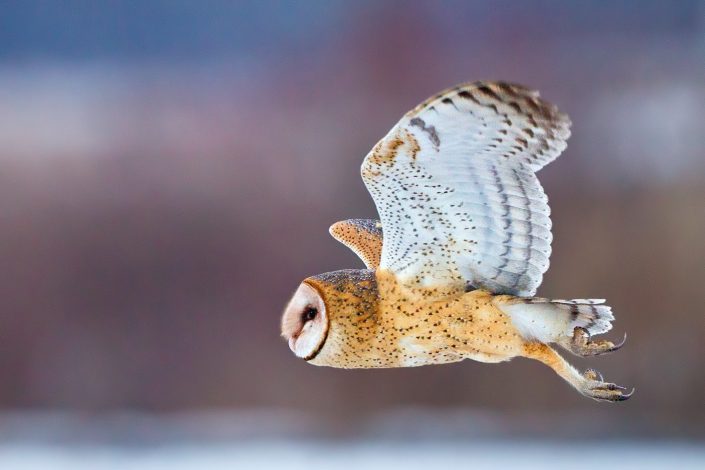
Barn Owls (Tyto alba) are one of the most widespread avian species in the world. Despite this impressive distribution, their numbers have been decreasing in parts of their range, and New Jersey is no exception. The barn owl population in New Jersey is in decline due to habitat loss associated with urban sprawl and development of former agricultural lands. Little is known about the Barn Owl population in central New Jersey. Through a grant from the Monmouth Audubon Society, Conserve Wildlife Foundation of New Jersey is partnering with Monmouth County Park System and the New Jersey State Park to construct, install and monitor three barn owl boxes. By providing suitable nest site opportunities we can potentially boost the barn owl population locally within Monmouth County as well as regionally as fledglings disperse to find their own nesting areas.
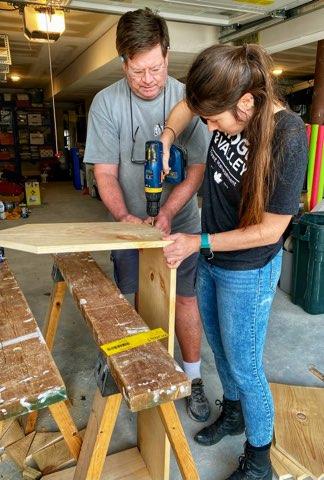
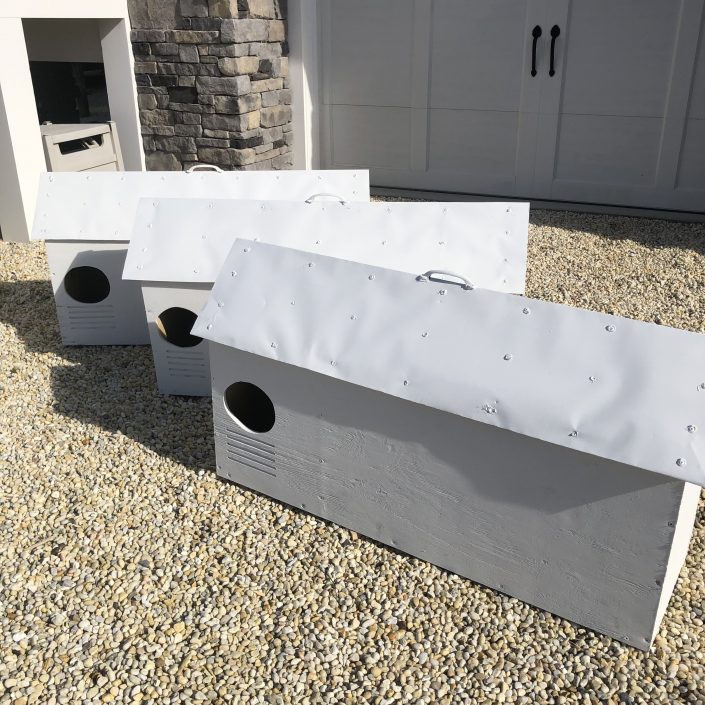
The first step of the project has been completed. CWF biologist Christine Healy and her Father Jim Healy have constructed three nest boxes that are ready for installation.
Christine and Jim Healy construct Barn Owl nest boxescompleted Barn Owl nesting boxes
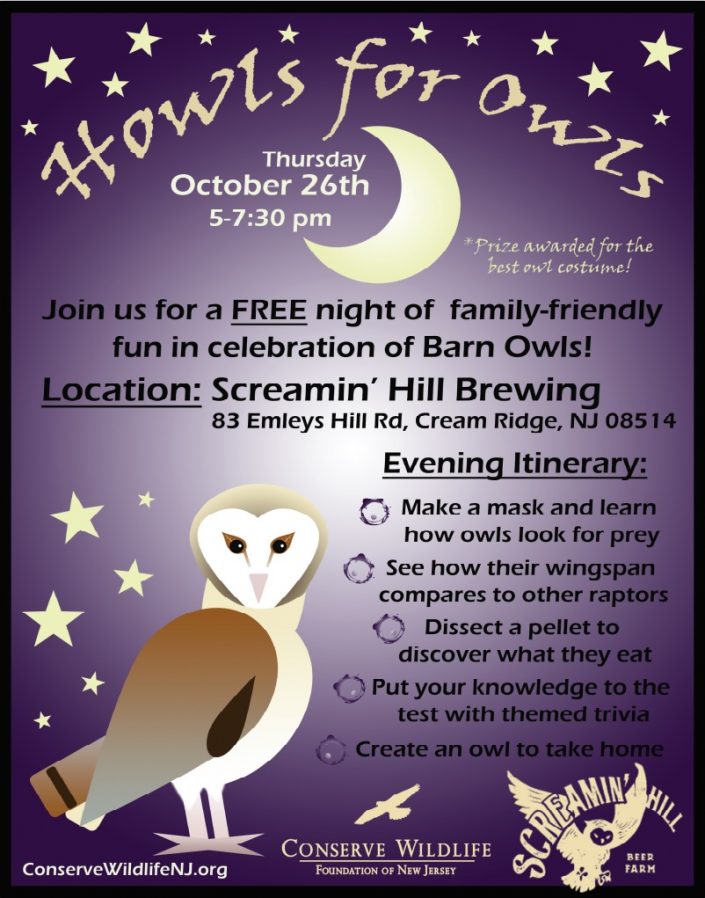
Would you like to learn more about the elusive Barn Owl, support the CWF Barn Owl Project and have a fun family night? Join us at Howls for Owls, at the Screamin’ Hill Brewing.
We Hope to see you there. This outdoor event will be cancelled for bad weather, so please stay updated on our website.
NJ Eagle Project Volunteers monitor nests during the nesting season. Since they spend a lot of time observing the nest and eagles behavior they get to see some pretty interesting things and many of them are able to document with photos. I asked volunteers to send me their three favorite photos from the eagle nesting season. Thank you to all the eagle project volunteers for their dedication
Enjoy the slideshow.
Manville-The Hatch @ Rose Joy
Adult bringing a fish to Junior at the Mercer Co. nest @ Kevin & Karin Buynie
Alloway E, nestling @ Clare Luisi
“Back together with our mentor (Kim Korth) @ Kevin & Karin Buynie
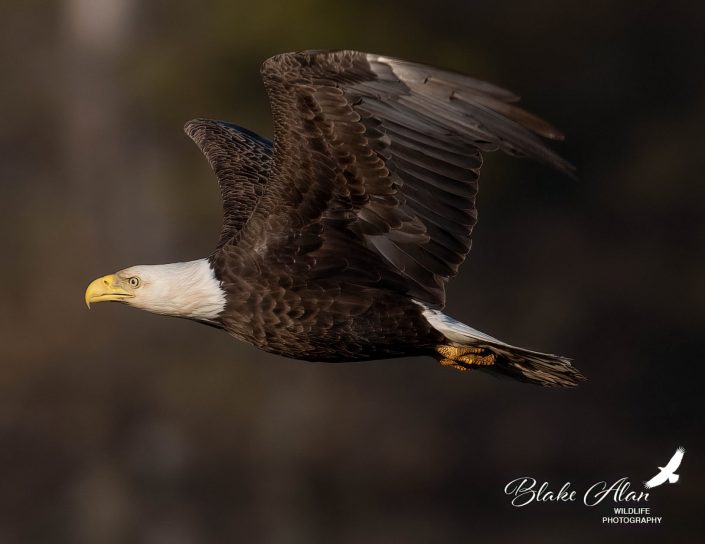
photo by: Blake Alan
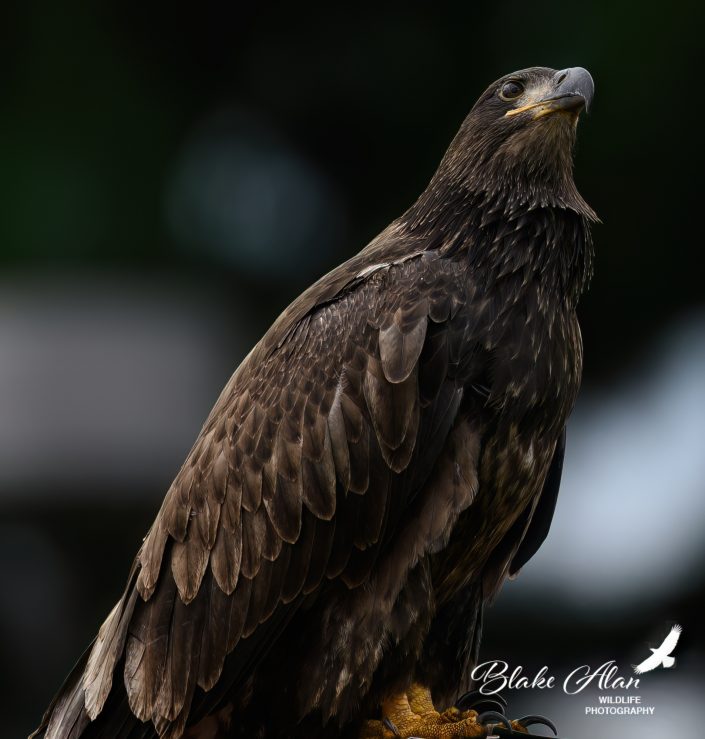
photo by: Blake Alan
Bull Island, “This pair worked diligently during the early months,then abandoned this nest which had been productive for at least a decade! @ Barb McKee
Denville-fledgling returning to nest@Margaret & Chuck Blewett
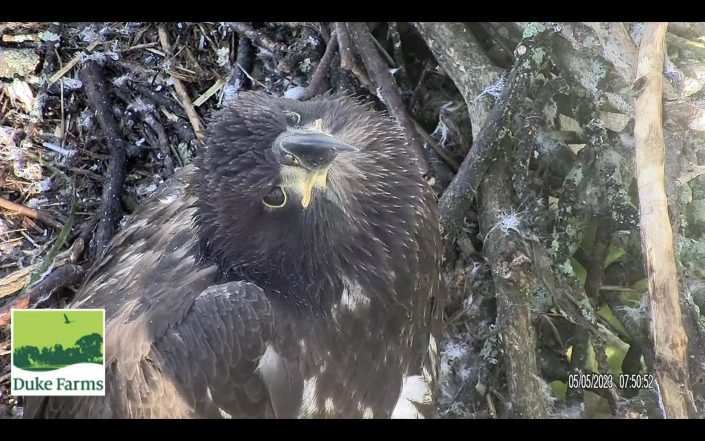
Duke Farm May 5th @ Diane Cook
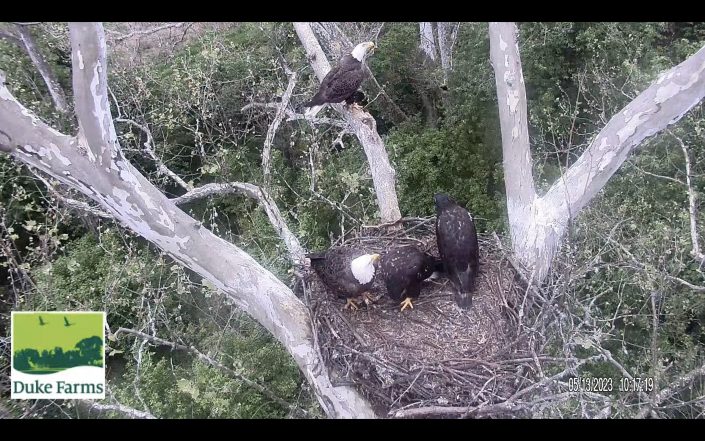
Duke Farm, Family Time May 13th @ Diane Cook
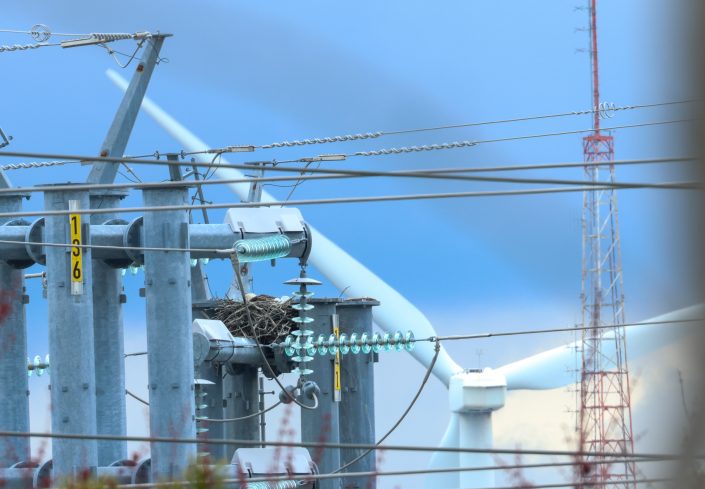
Difficult challenges for the Atlantic City nest, high power lines and nearby windmills. This nest had successful last year but was unsuccessful this season@ Bill Reinert
Eagle Point_Red Bank nest@ Rick & Tina Clegg
Eagle Point_Red bank @ Rick & Tina Clegg
Cape May “Family Portrait @ John King
Higbee “good luck kiss from Mom before Junior’s first flight” @ John King
Group who renested the two Princeton eaglets
“Double trouble” @ Blake Alan
Linden @ Tony Gregorio
Lower Patcong-single fledgling @ Bill Reinert
“male returning with Herring Gull” @ Rich Nicol
Manville- “fledged for four weeks” @ Rose Joy
Manville Mom feeding triplets @Rose Joy
Duke Farms March 2nd @ Diane Cook
Merrill Creek eagle after trying to catch a fish@ Louis Schwarz
Merrill Creek pair@Louis Schwarz
Mt. Airy “Woohoo-Ready to fly@Barb McKee
Overpeck juvenile@ D. DeSantis
Overpeck@ D. DeSantis
Overpeck adult @ D. DeSantis
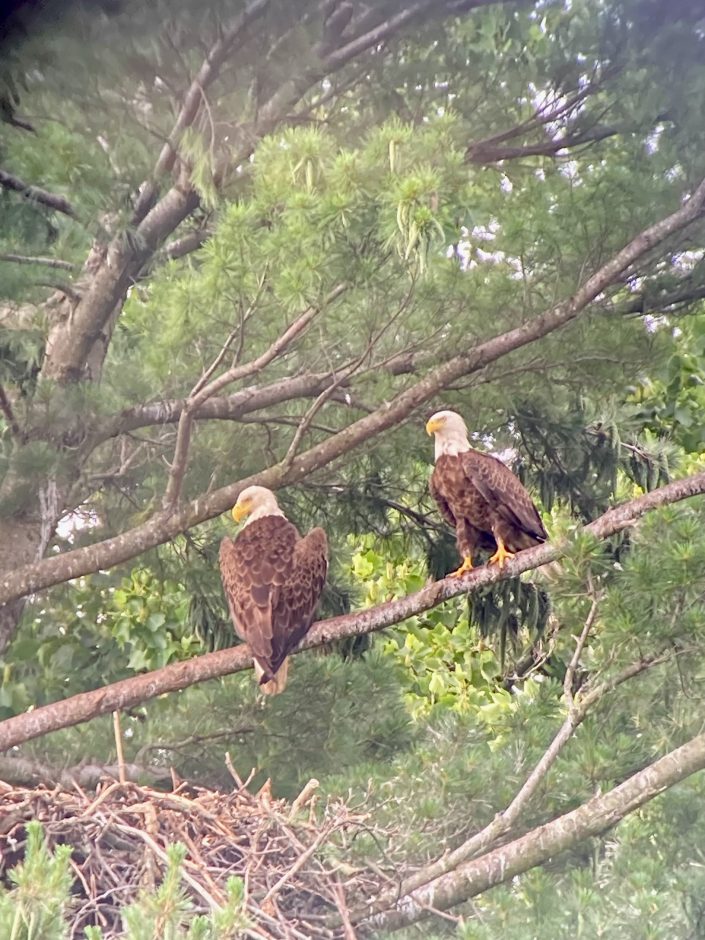
Pine Tavern pair @ Clare Luisi
Princeton chicks (H38 & H39) back in their new nest built by John Heilferty
Quinton B trio@ Clare Luisi
Rainbow Lake fledge (Kathy Clark & Heiki Poolake) @ Donna Poolake
School House pair with chick @ Poolake’s
Schoolhouse nest @ Poolake’s
South River’s fledgling pair joined by a Great Blue Heron @ Bill Reinert
Audubon nestling @ Spence Bennett
Audubon @ Spence Bennett
Audubon pair @ Spence Bennett
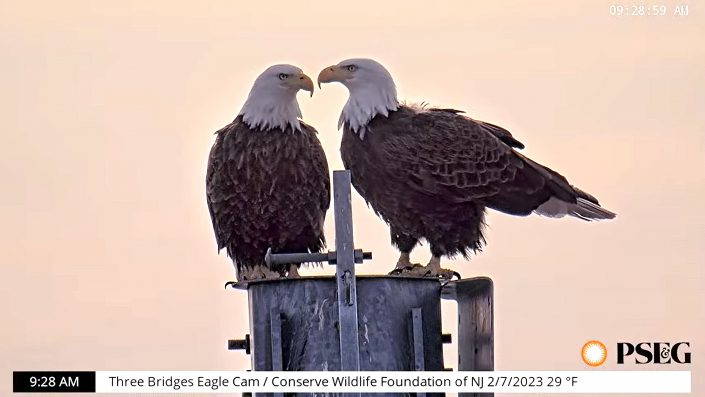
Three Bridges eagle cam Feb. 7th @ Mary Ellen Hill
Three Bridges eagle cam, Kestrel Jan, 24th @ Mary Ellen Hill
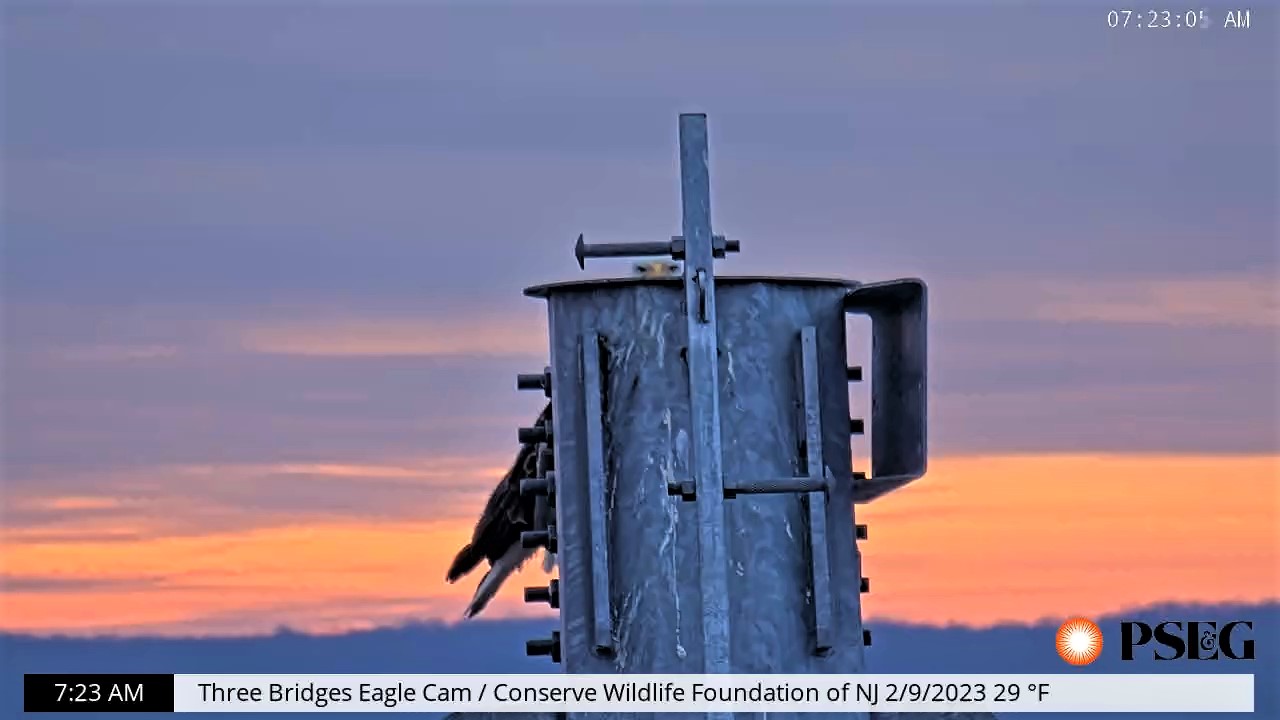
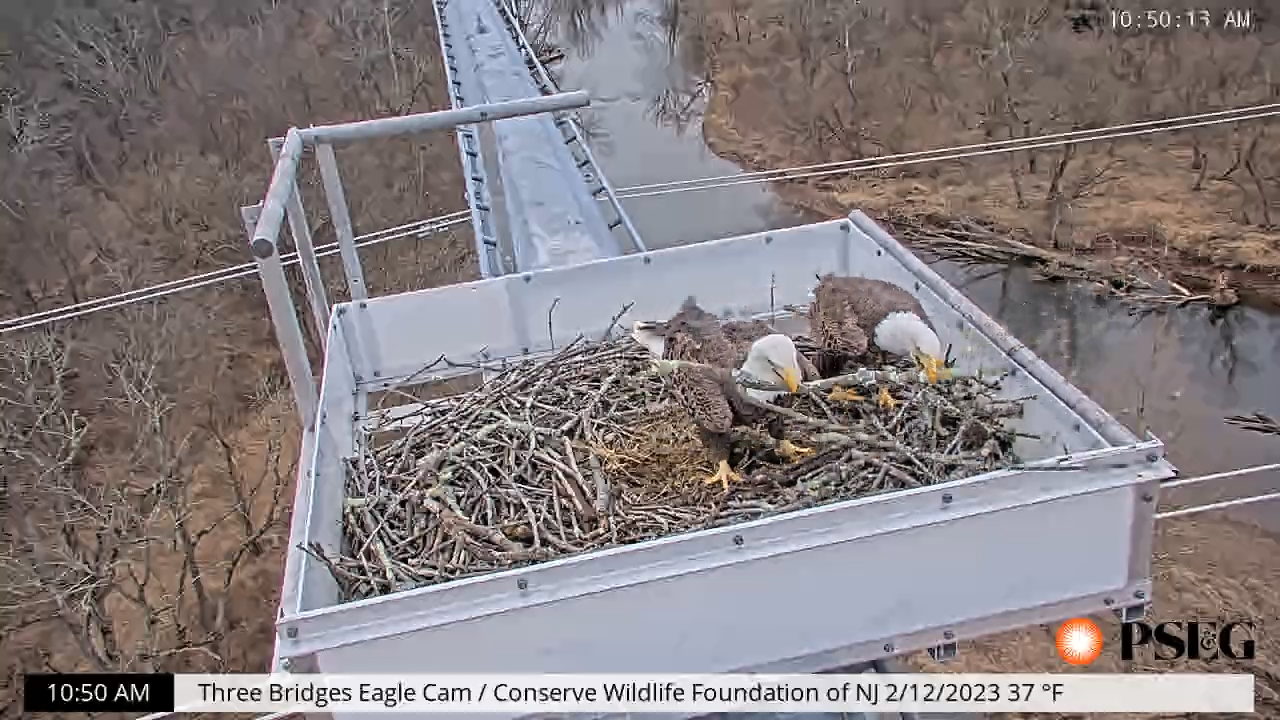
Three Bridges eagle cam @ Mary Ellen Hill
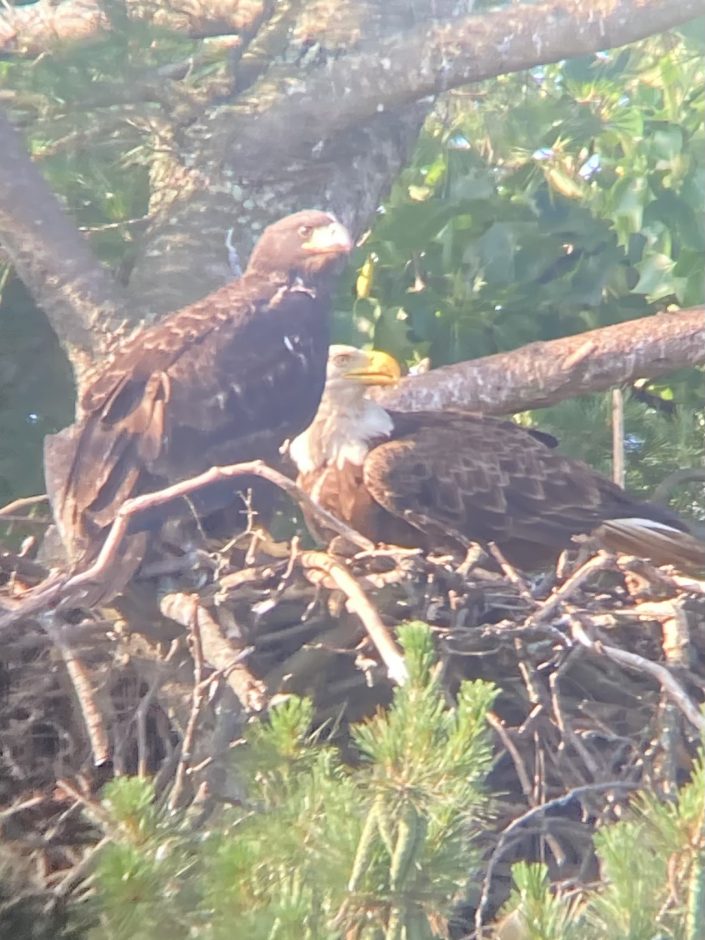
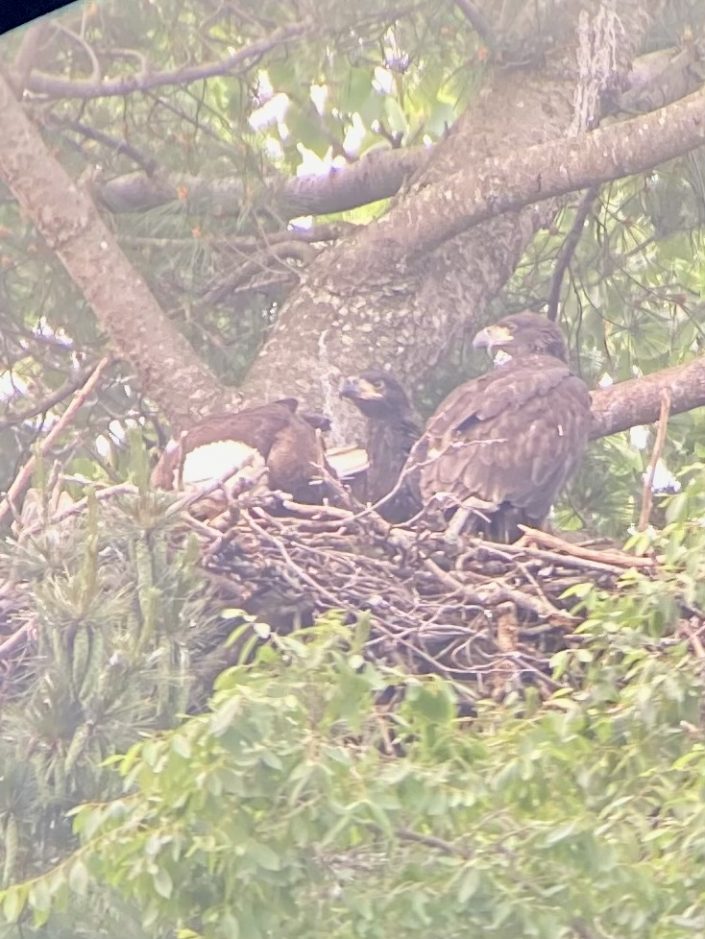
Woodschurch nest-two chicks, within days of fledging @ Barb McKee
Princeton eaglets in their new nest; photo by John Heilferty
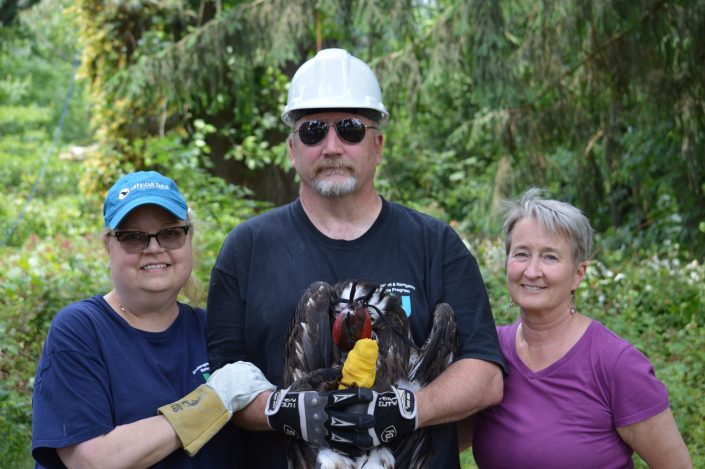
The Princeton eagle nest collapsed sometime between Friday June 2nd and early Saturday June 3rd. The Princeton pair had two chicks that were ten weeks old and close to fledging. NJ Eagle Project volunteers, Kevin and Karin Buynie monitor this nest and went out as soon as they were notified. When they arrived one chick was perched up in the tree and one was on the ground. The grounded chick was taken to Mercer County Wildlife Center for evaluation. The next day Kevin returned to the nest site and found the second chick now on the ground, so that chick was also captured and taken to MCWC. Both chicks were found to be uninjured and ready to return to the nest. A plan was formed to build a new nest in the tree and renest the two chicks. On June 11th, a group of volunteers and staff from Mercer County Wildlife Center met at the nest site. John Heilferty, retired ENSP Chief, climbed the nest tree and built the nest as volunteers helped to send up the needed materials. Diane Nickerson with the MCWC brought the two chicks, which were banded with Green NJ band H/39 and H/38 and silver federal bands. The chicks were then placed back up in the nest. One of them decided to fledge and the other perched on a branch near the nest. The recently fledged chick did return to the nest that evening and the second chick fledged June 16th. Thank you to Karin and Kevin Buynie, Diane Nickerson and volunteers Daniel and Hope with Mercer County Wildlife, John Heilferty, Kim Korth, and Roger Smith.
Scroll through the slideshow to view photos from the renest.
Princeton nest after collapse
Remains of nest
eaglets at Mercer County Wildlife Center
eaglets at MCWC
Nest tree
nest building materials
John Heilferty climbing tree
John working on nest platform
nest construction
platform finished
adding sticks
finished nest
Kevin Buynie with eaglet
Diane Nickerson, Kevin Buynie and Karin Buynie band the eaglet
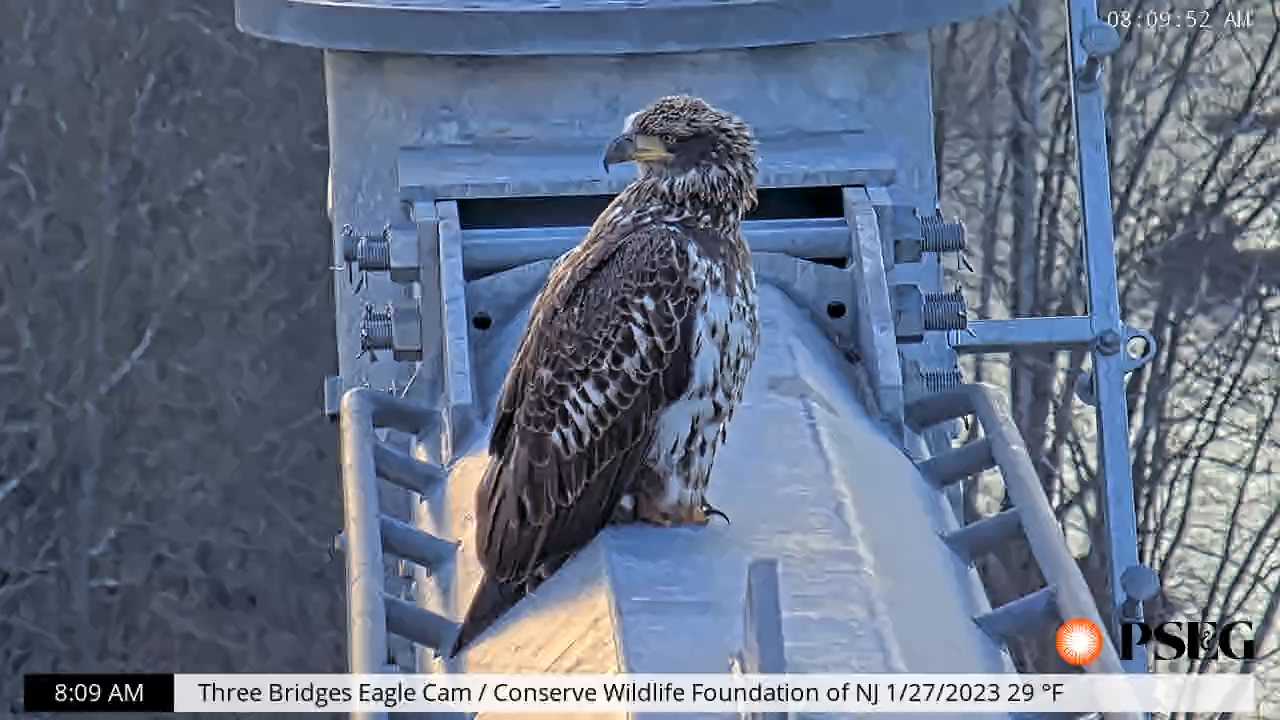
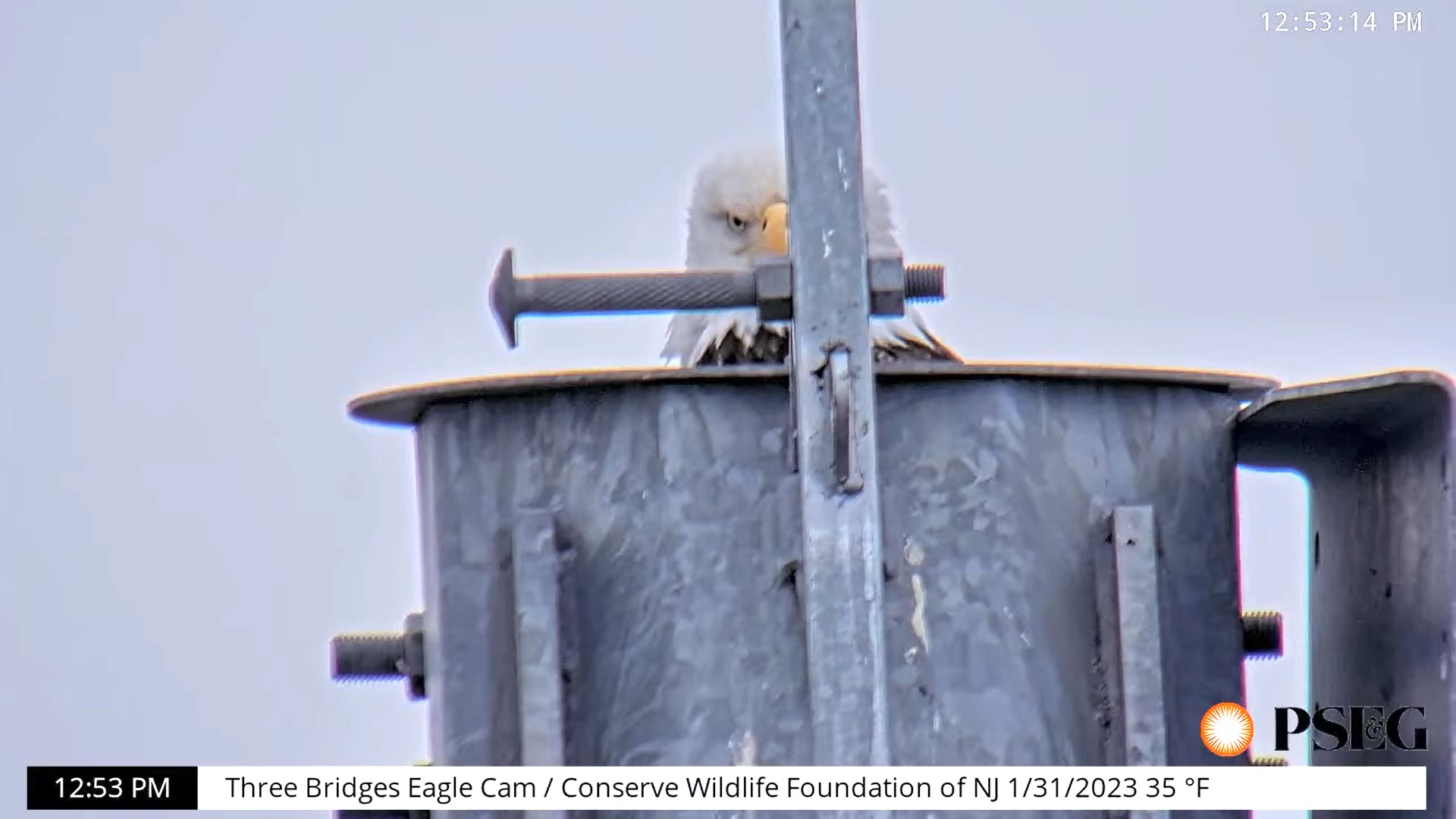
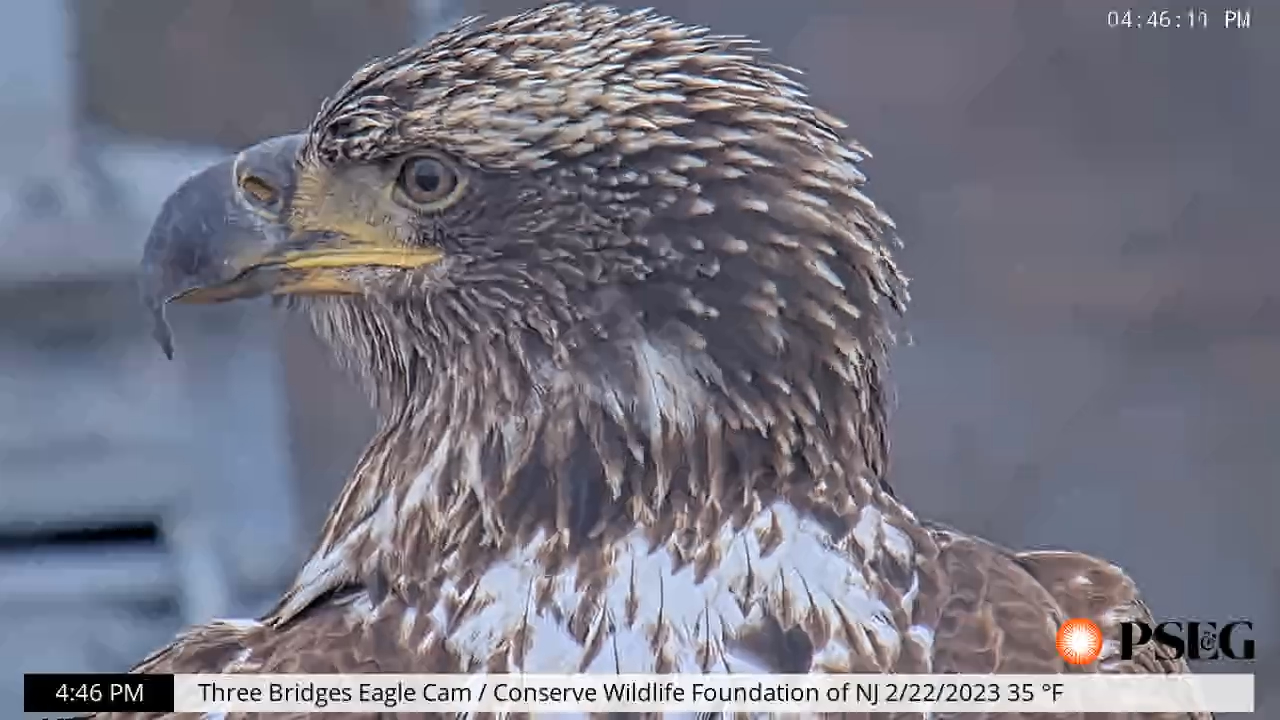
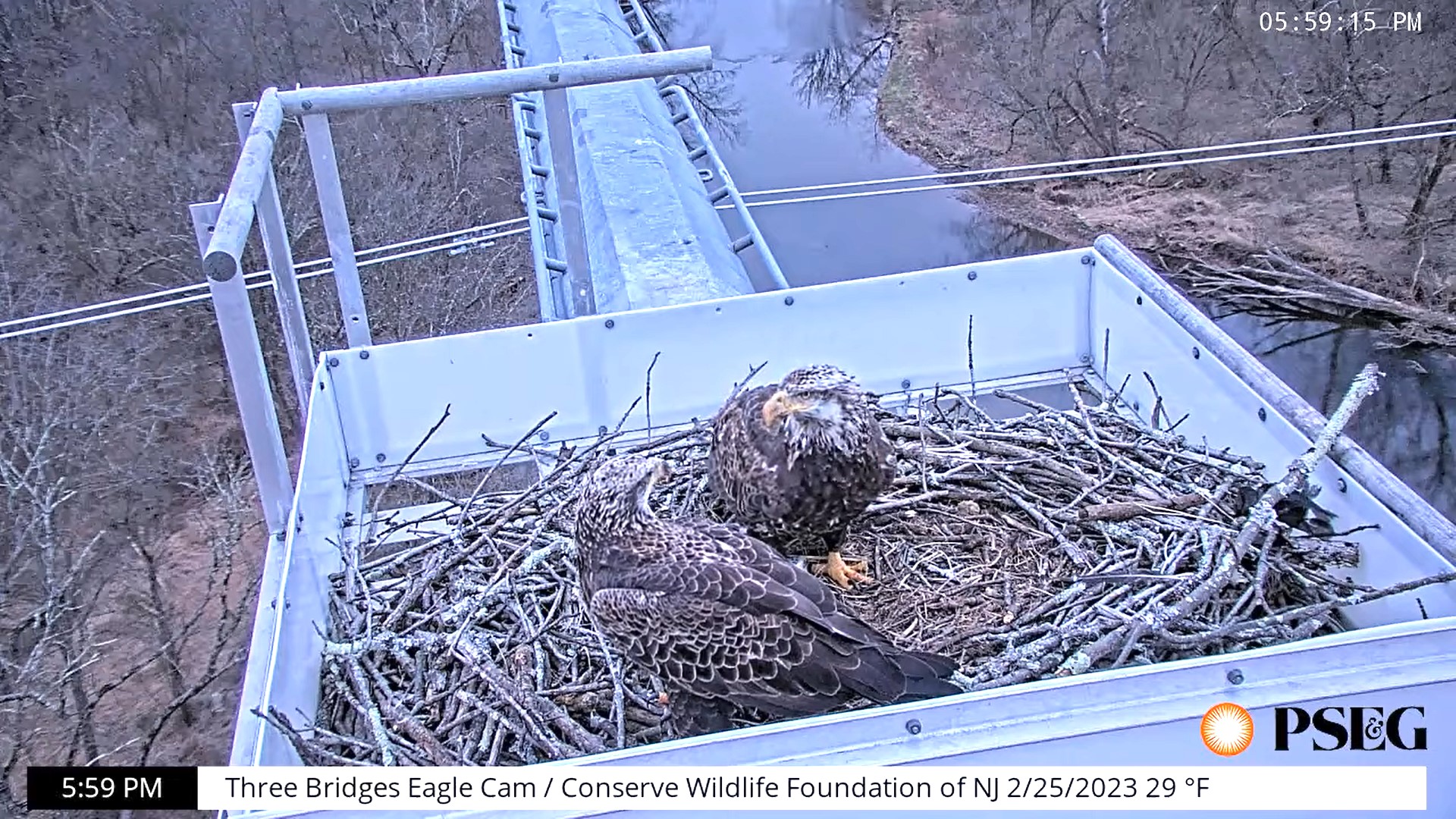
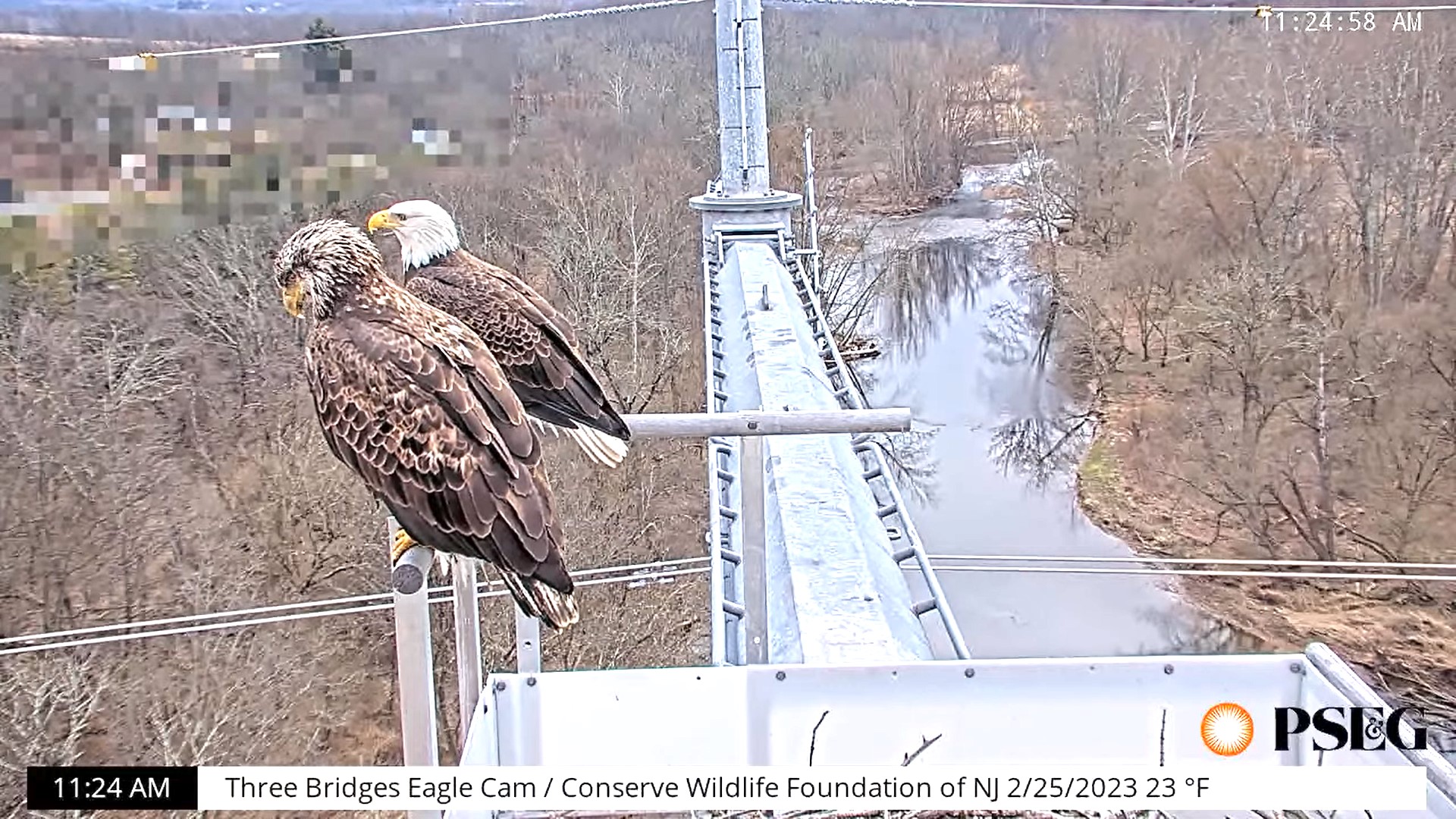
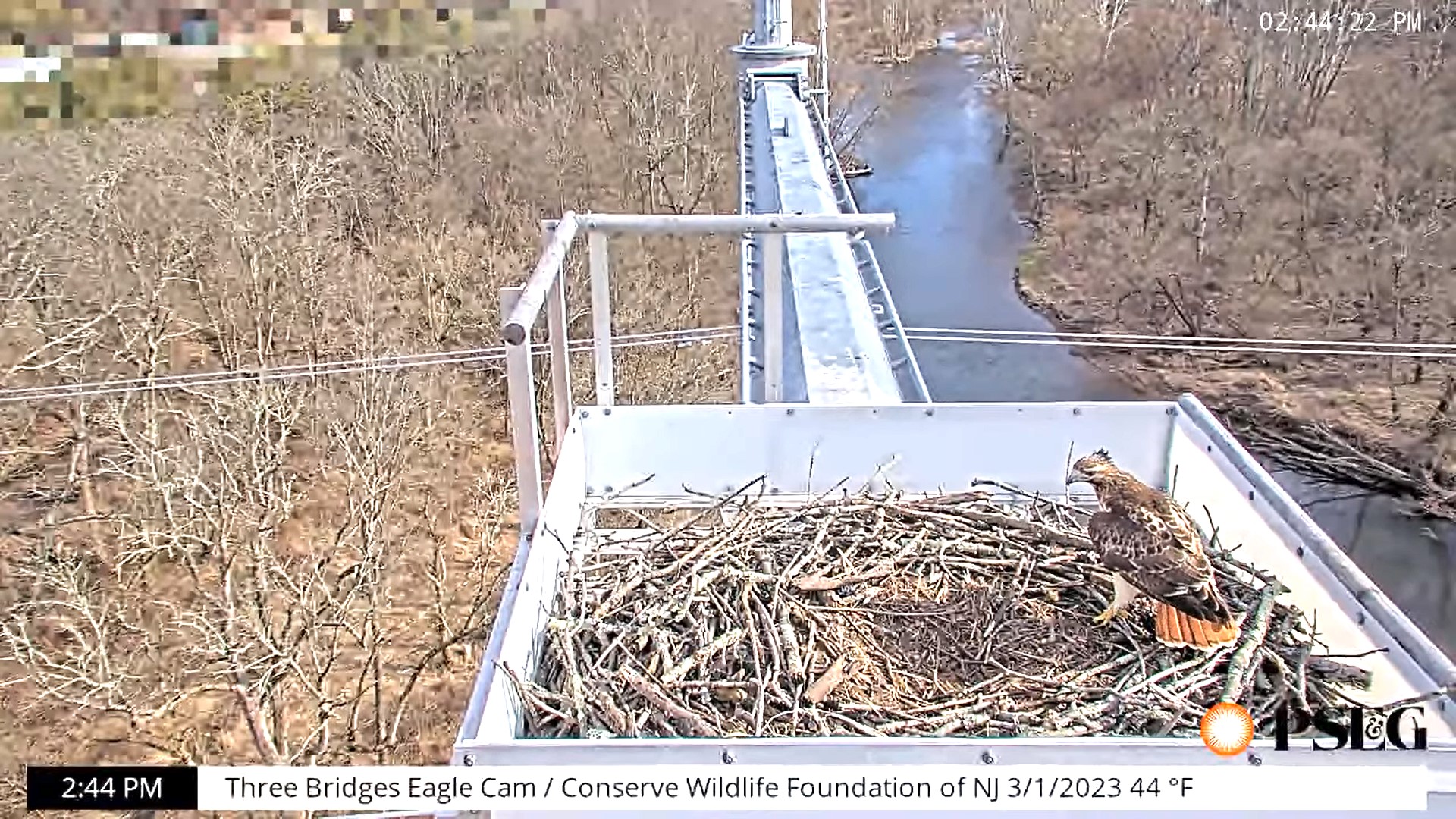
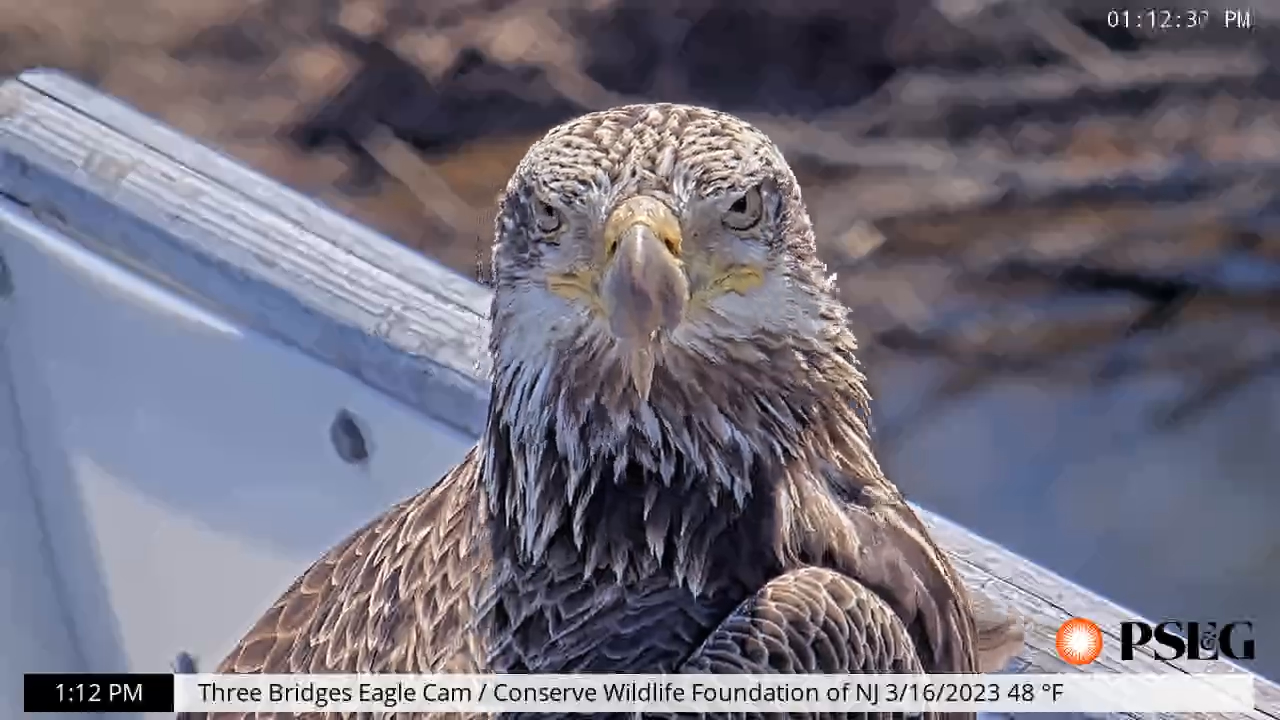
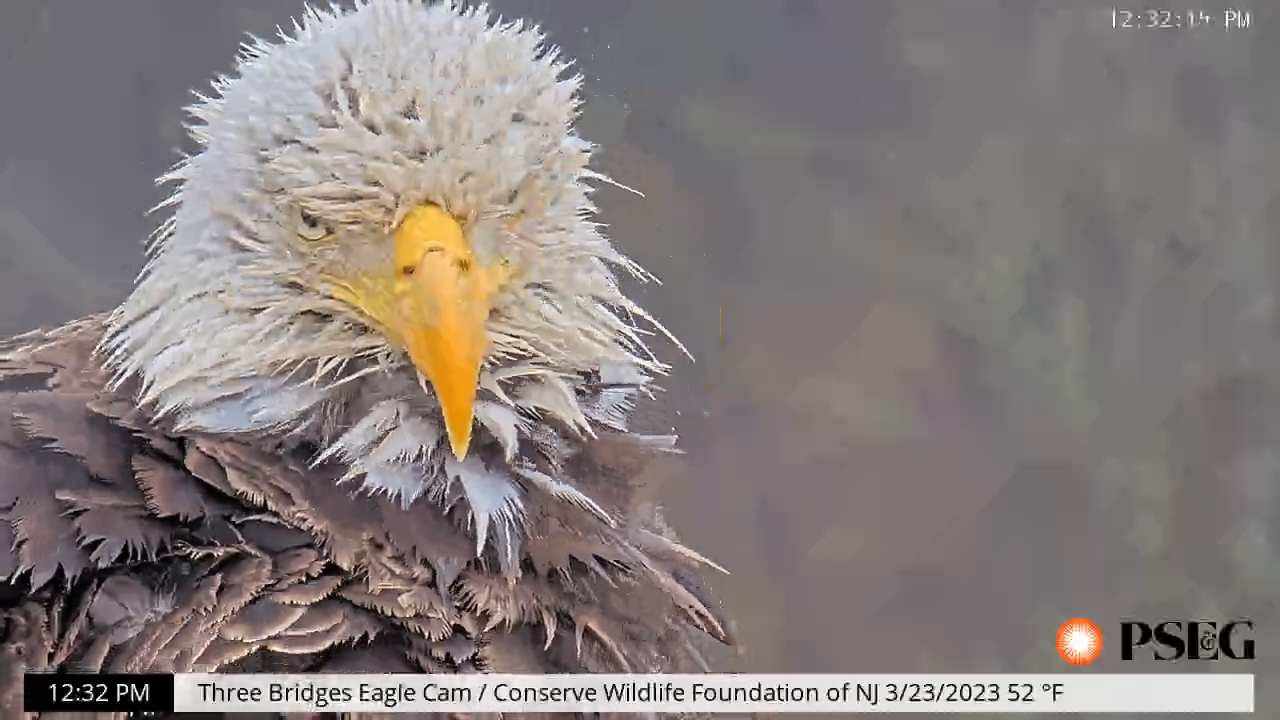
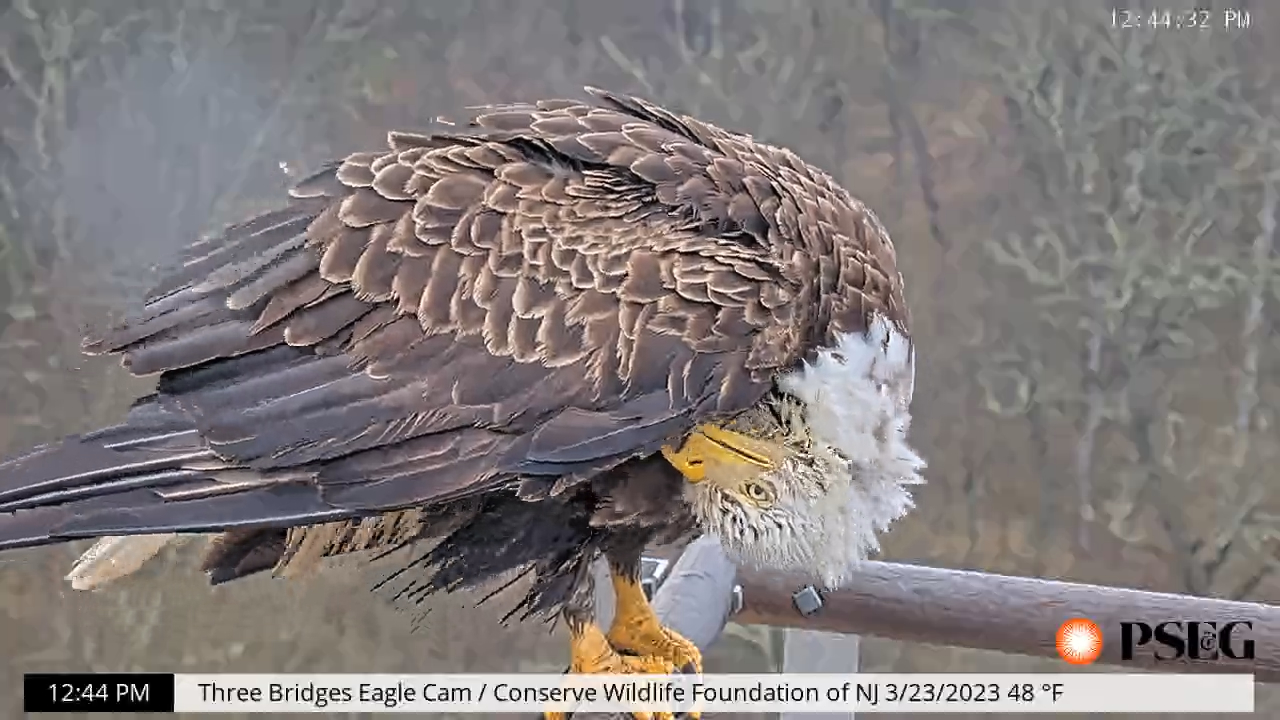
For the second year in a row there haven’t been eagles nesting on the Three Bridges platform in view of eagle cam. The pair used the platform when it was first installed in 2021 and viewers got to watch the two chicks grow up and fledge. In 2022 & 2023 the pair have nested in a tree nest instead of the platform. While it’s disappointing that the pair didn’t use the platform, there was still plenty of avian action at the tower this season. There were several immature eagles visiting the platform this season, perhaps in the next few years one of these eagles will pair up and use the platform.
Slideshow: Highlights from the 2023 Three Bridges Eagle cam season
December 4th, 2022, photo by: Mary Ellen Hill
December 9, 2022; photo by, Barb McKee
eagle pair chase off Red- tailed hawk
American Kestrels
Peregrine Falcon
Red-tailed hawk
Northern Flicker
The eagle cam will be turned off April 1st.
Thank you to all the viewers who watch and enjoy this eagle cam. During the 2023 season there were 22,981 views of the cam. Thank you to the the eagle project volunteers, especially Mary Ellen Hill, who grab screenshots from the cam. We also thank PSE&G for hosting and supporting the eagle camera.
The Duke Farms eagle cam is extremely popular and just this week viewers watched as two chicks hatched. These two chicks will be watched by a multitude of viewers over the next few months as they grow to become juveniles and leave the nest. As with anything in Nature, this pair has had it’s ups and downs. I wanted to summarize the history of this pair and nest. The male is a NJ banded bird (A/59) and has been in the pair from the beginning, he is 23 years old. Interestingly, there have been several females in the pair over the years. Thank you to Duke Farms for hosting the cam and their tech team that keeps it running smoothly when issues arise. The cam location has changed as well as the cam itself over the years and the quality of the picture has improved.
Green band D/25; banded in April 2011 at the Manasquan River; photo by; Rich Nicol
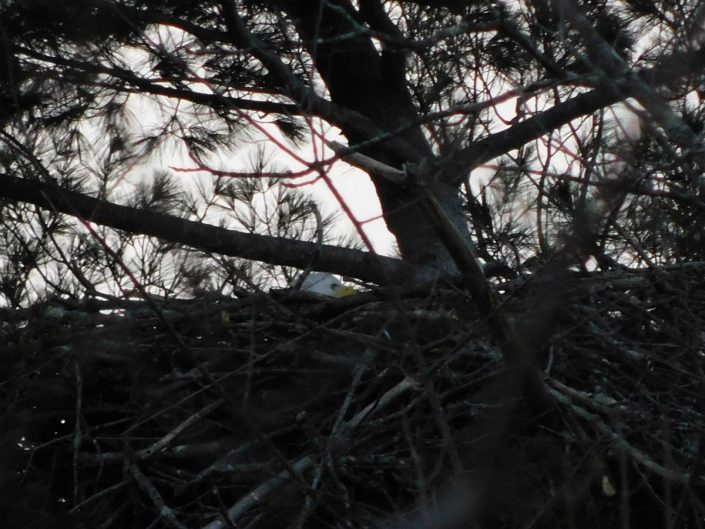
Bald Eagles are the earliest nesting birds in New Jersey. Two pairs of eagles laid eggs in December of 2022 and those nests have already hatched. Those pairs are the really early “birds”, so far 73 pairs of eagles are incubating (laid eggs). Nest Monitors are keeping an eye on over 300 known eagle territories in NJ, the bulk of which lay their eggs in February to mid-March. Eagles incubate for approximately 35 days before hatching occurs. The female does most of the incubating the male also takes over the incubation duties so the female can go out and hunt. One hundred and fifty nest monitors keep track of the eagle nests and report on incubation. It can be quite difficult to tell when an eagle is in the nest incubating. Sometimes all the nest monitor can see is just the top of the head pop up every now and then. One way to determine incubation at a nest is to witness a “nest exchange”, where the male and female switch incubation duty.
photo by: Barb McKeephoto by: Kevin Reddenphoto by: Poolake’s
Over the next few months as the eagles incubate and hatch chicks, they are very sensitive to disturbance. Nest Monitors are trained and experienced and only view the nest from a location that doesn’t disturb the eagles. Monitors use high powered scopes and cameras to determine the status of the nest. While it’s always a great sight to see an eagle, please respect them and view from a distance. To see what goes on in an eagles nest close up check out the Duke Farms eagle cam. The pair is currently incubating two eggs and hatching of the first is expected around February 24th. You can also watch a pair of eagles at The Three Bridges eagle cam. They aren’t yet nesting and we’re not sure where they will nest this season, but they have been making frequent appearances at the nest tower.