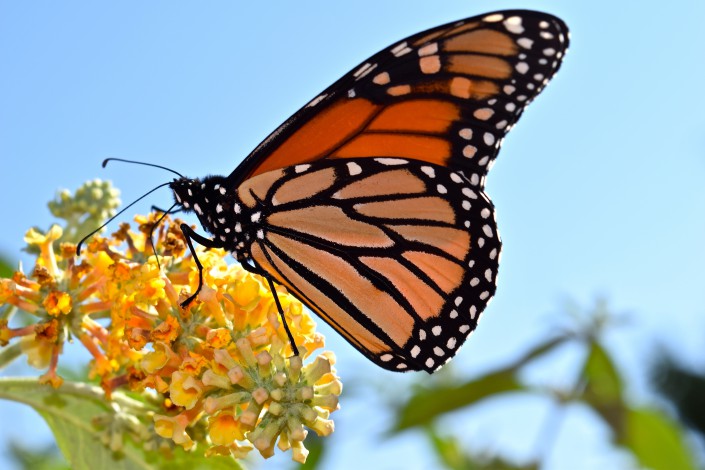
Monarch butterfly refueling in Cape May as it prepares for fall migration to Mexico. Photo courtesy of Lindsey Brendel.
Over the last decade, the monarch butterfly,Danaus plexippus, population has declined. Climate change has affected weather conditions, the winters are colder and wetter while the summers are hot and drier. This disturbs their survival rate, especially during their long annual migration. Other factors like pesticides and a loss of habitat to human development further threaten the monarch population.
The monarch butterfly migration is mysterious and magnificent. Every fall season, monarch butterflies travel thousands of miles from their breeding grounds in the United States and Canada to escape the cold winters. Monarchs in Eastern North America spend the winter months in the Transverse Neo-Volcanic Mountain Range in Michoacan, Mexico. To reach their destination, monarch butterflies migrate over 3,000 miles, utilizing the air currents and making many stops along the way.
A beached humpback whale, found on the bay side of the inlet just across the Townsends Inlet Bridge. Photo by Seven Mile Times.
On Thursday, November 5, 2020, a 20-25 foot juvenile humpback whale (Megaptera novaeangliae) was found dead floating near a sandbar in Townsends Inlet in Cape May County, New Jersey. The large mammal had apparently been dead for several days. It was first spotted around 3:30 p.m. Wednesday.
This tragic event follows even more heartbreaking news about Right Whales, the most endangered large whale species in the world!
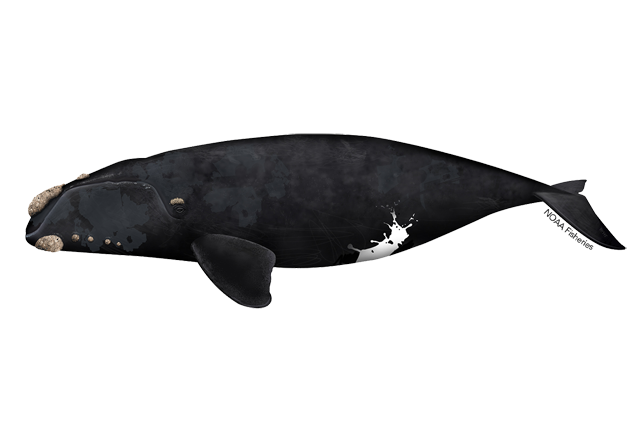
The North Atlantic Right Whale.
We are very sad by the announcement by researchers at the North Atlantic Right Whale Consortium that the estimated number of North Atlantic right whales (Eubalaena glacialis) remaining in the world is just 356, not 400 as previously thought. It is truly upsetting news. The population continues to be in decline, and the decline is accelerating.
Plover chick next to a seabeach amaranth plant. Photo by Alice Brennan.
Despite hundreds of trash bins conveniently located on the beach, litter is still found in the sand every day. Many people enjoy their summer days at a key beach nesting bird site in Sea Girt. Beach goers leave behind trash that litters the crucial environment. These include plastic bottles, bags, cans, wrappers, straws, fishing line, etc. Plastic pollution effects the surrounding environment and wildlife that inhabits it.
At the Sea Girt beach, piping plovers (Charadrius melodus), an endangered beach nesting bird species, travels hundreds of miles to breed and nest during the summertime. This species is directly affected by the amount of litter that pollutes the beach. Every year shore birds, and many other species, ingest plastic or get entangled in fishing line which lessens their chance of survival.
Seabeach Amaranth. Photo by Meghan Kolk.
Another significant endangered species located at Sea Girt beach is seabeach amaranth (Amaranthus pumilus). This annual plant needs a healthy ecosystem free of debris to thrive every season. It is important to maintain a strong coastal habit for reproduction and population growth.
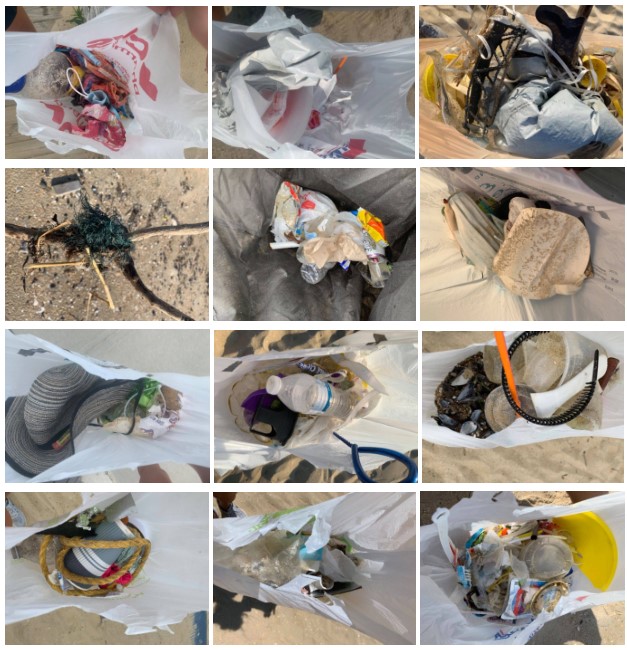
Twenty weeks of litter was collected at the Sea Girt beach with approximately 200 plastic straws, 50 plastic bags, 75 bottles, and 25 pieces of fishing line. Pollution on the beach can be prevented if patrons are mindful of properly disposing their trash at the end of their trip.
20 weeks worth of beach trash recovered from the Sea Girt beach.
Mary Emich is an assistant biologist with Conserve Wildlife Foundation.
None of us could have predicted what would happen in 2020, and that’s certainly true for New Jersey’s bald eagles.
When our eagle volunteers joined me at our kick-off training in February, we prepared as usual to monitor known nests and educate landowners and the public about the importance of minimizing disturbance to our breeding pairs.
We never imagined how important eagles would become to so many people during the COVID-19 pandemic. Dozens of you shared the wonder you felt in seeing eagles fly overhead, some for the first time. Eagles became a sign of strength and resilience for those staying at home, as well as those venturing out to do essential work.
And New Jersey’s eagle population soared – both literally and figuratively – breaking records with more than 200 active nests (with eggs) and 300 young fledged – up from just one pair in the early 1980’s.
We can thank our devoted eagle volunteers for this year’s success, as well as the individual, foundation, and corporate supporters who came through with funding to support our tireless efforts.
Unfortunately, not everyone who gave in the past, or who expected to give this year, donated as planned. And we recently learned that we’re losing our largest project funder for the coming season.
That is why I’m asking you to donate today to help CWF raise $10,000 to help cover the shortfall. Two generous donors have each put up a $2,500 match, which means that the first $5,000 donated will be matched dollar for dollar.
While having the best season on record is exciting news for all of us, important work remains to be done. Eagles still face serious threats of habitat loss and disturbance. The increasing population will require an even larger team of trained volunteers to observe nesting behavior and determine egg laying, hatching, and fledging dates. It also means an increase in the number of injured eagles which will need help. All of this takes time and resources.
For my part, I’m happiest when I’m outside working with bald eagles as I have for 20 years. After all, I’m a biologist, not a fundraiser! But in this case, I’m reaching out to ask for your support for the Eagle Project. We have overcome financial challenges in the past with the help of people like you. Whether you have always supported this project, or have newfound appreciation for these majestic raptors, please help us to ensure that this incredible success story continues to inspire all of us!
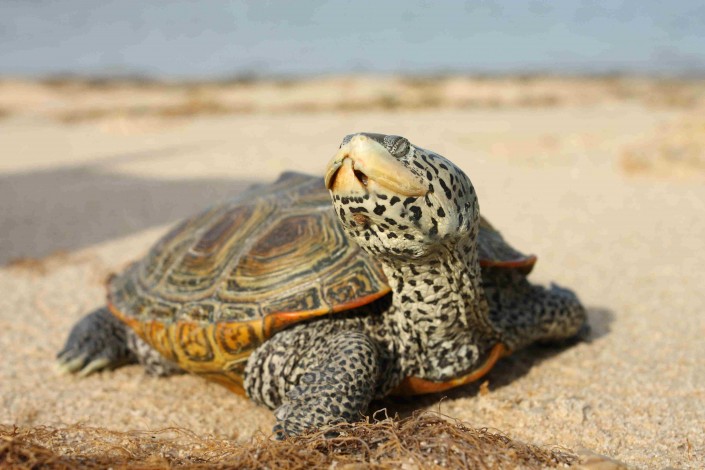
Northern Diamondback Terrapins (Malaclemys terrapin terrapin) are a native species of New Jersey turtle, inhabiting the brackish waters of the state’s coastal salt marshes and estuaries. The survival of the species depends on the ability of female turtles to access safe nesting habitat every summer, a struggle for the species these days with roadways disconnecting large swaths of their habitat. To help give females a better chance of successfully reproducing, CWF partnered with New Jersey Division of Fish & Wildlife last year to create a half-acre “turtle garden” at a former marina within the Great Bay Wildlife Management Area.
CWF Habitat Manager Ben Wurst took Pat Johnson of TheSandpaper.net to the site recently to survey the success of this new turtle garden and walk through what it takes to save a species like the diamondback terrapin.
Check out the except below!
It’s diamondback terrapin hatching season in the newest turtle garden established by the Conserve Wildlife Foundation of New Jersey in the Great Bay Wildlife Management Area. Project Manager Ben Wurst has been monitoring the 50 or so nests that were created this spring to protect them from predators so the hatchlings could have a fighting chance of survival.
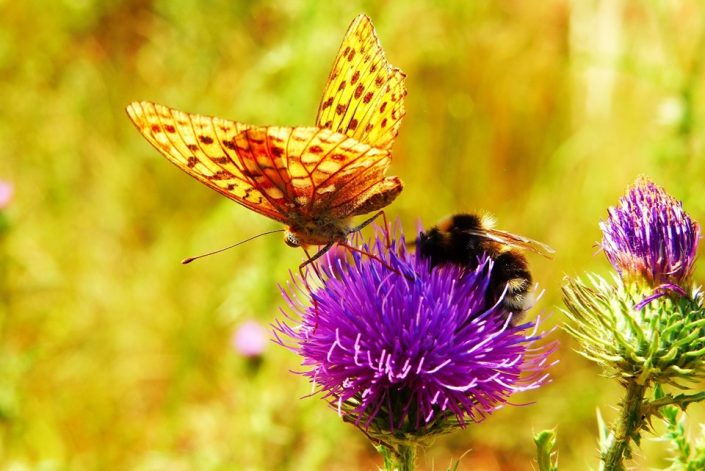
Double pollination! Image by Krzysztof Niewolny from Pixabay.
New Jersey’s State Senate passed legislation this past August authorizing the creation of “Protect Pollinator” license plates with the aim of helping to protect New Jersey’s native pollinators.
Created by Kip Bateman (R) and co-sponsored by Linda Greenstein (D), the bill will require the New Jersey Motor Vehicle Commission to create “Protect Pollinator” license plates, featuring a design and slogan that expresses support for New Jersey’s native pollinator animals.
“New Jersey would not be the Garden State without the help it gets from its native pollinators,” said Bateman. “From the gardens we grow to the produce we purchase at a local farmer’s market, many of our fruits, vegetables, and flowers rely on pollinators like bees and butterflies. The license plates will ensure our ‘Jersey Fresh’ plants and crops grow strong for generations.”
Blog written by Eagle Project volunteer, Frank Budney
On June 15th, 2020 a juvenile Bald Eagle was rescued in a most unlikely location; on a major highway, located in an industrial area of Union County. At first glance stories like this usually have an unfortunate ending, considering the location, but the timely arrival of a local Police Officer on patrol saved the day.
This is only part of the story. The eagle in question was one of two nestlings that hatched from a nearby nest back on March 24. Its sibling fledged sometime in late May or early June while this individual remained on nest, branching next to it but never attempting to fly. By June 14, the juvenile in question was still perched next to the nest with no indication that it was about to fly until the following morning when it was rescued.
A
‘living fossil’ today swims the Delaware River, having survived eons from the
days of the dinosaurs through the caviar craze a century ago that nearly wiped
it out for its roe, or valuable eggs.
However, as explored in the latest episode of State of Change – Conserve Wildlife Foundation’s regular podcast exploring climate change impacts on New Jersey wildlife –the Atlantic sturgeon faces an abundance of modern threats.
From
a historic population of 360,000 adults, “Based on our best estimates, there’s
less than 300 in the river. There’s less than 1 tenth of 1% that was there
historically,” says Dewayne Fox, a professor of fisheries at Delaware State
University. “The loss of one or two adults is a significant loss of spawning potential
in the Delaware River.”
Among
the largest river fishes in North America, the Atlantic sturgeon can grow up to
14 feet and weigh up to 800 pounds. One sturgeon from New Jersey is believed to
have been over 1,000 pounds. The Atlantic sturgeon’s features indicate that
their existence can be traced back to millions of years.
Yet
that lengthy run was in jeopardy after facing ensuing perils of caviar
harvesting and pollution.
Two year old terrapin. we found on the road shoulder.
CWF Habitat Manager Ben Wurst is known first and foremost for his work with New Jersey’s resident Osprey population. The job of a habitat manager doesn’t stop with ospreys, however. Ben’s work creating gardens for Diamondback Terrapins to safely nest in was recently the spotlight of an article by Pat Johnson of The Sand Paper.
Like tiny air raid shelters, protective cages sheltering the terrapin nests along Great Bay Boulevard in Little Egg Harbor keep them safe from predators, among them crows and gulls from the air and foxes and raccoons on the ground. The Great Bay Boulevard Terrapin Habitat Project site, commonly called the terrapin garden by its founder, Ben Wurst, habitat project manager for the Conservation Foundation of New Jersey, already has at least 50 nests on its sandy beach next to the salt marsh.
An Atlantic horseshoe crab lies on the beach in Stone Harbor, New Jersey, not far from Delaware Bay. Photograph by Joel Sartore.
National Geographic’s Carrie Arnold recently wrote about the role horseshoe crabs and their “special” blood are set to play in the creation of a COVID-19 vaccine. She spoke with CWF partner Larry Niles about the horseshoe crab’s importance to the health of the Delaware Bay and what this means for the bay’s future.
Check out the excerpt below and read the full article on National Geographic!
Each spring, guided by the full moon, hundreds of thousands of horseshoe crabs clamber onto beaches across the U.S. mid-Atlantic to lay their eggs. For hungry birds, it’s a cornucopia. For drug companies, it’s a crucial resource for making human medicines safe.