Volunteers Survey NJ’s Eagle Population

Midwinter Eagle Survey

by Larissa Smith, Biologist and Volunteer Manager

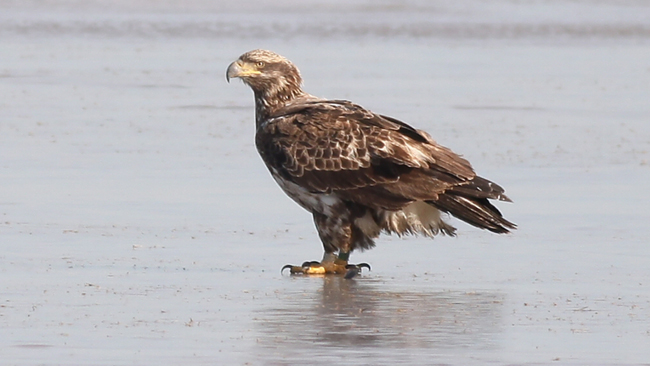
An immature eagle at Forsythe NWR in Oceanville. © Eric C. Reuter

The New Jersey midwinter eagle survey takes place each January and is part of the National midwinter eagle survey to monitor population levels.  Another benefit of the midwinter eagle survey is that new eagle nests and nesting pairs are often located.  The target dates for the 2011  survey was January 8th and 9th.  Approximately 75 volunteers participated throughout the state. This year the snowy winter weather on Saturday did  effect  the count due to the heavy snow fall at times and low visibility.  Sunday was clear and sunny which allowed volunteers to get out and survey.

Preliminary results:
  • 194 eagles – southern NJ
  • 24 eagles – northern NJ reservoirs
  • 17 eagles – Delaware Water Gap
  • A total of 235 eagles were observed this year.

This total is lower than 2010s count of 333 eagles which is in large part due to the weather. Full results will be released soon.

Thank you to all the volunteers who braved the snow, cold and windy weather!

New Jersey’s Rare Wildlife

A year in review: Weather and Disease Impact Populations
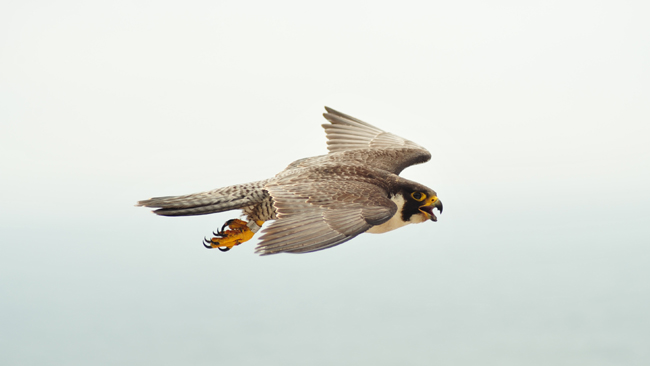
It was generally a good season for peregrine falcons, except for no successful nesting at the cliff habitats. © Kathy Clark

Biologists with the Conserve Wildlife Foundation of New Jersey help monitor and manage many endangered and threatened species in New Jersey. We work very closely with the Endangered and Nongame Species Program in the NJ Division of Fish and Wildlife. Each year we summarize the results of many surveys and monitoring programs to show the most current information about the status of New Jersey’s wildlife. Whether good or bad news, we like to share this information with the public to make them aware of the conservation needs and successes.

Weather had a huge impact on wildlife this past year. The cold winter lead to a higher than normal loss of young bald eagles while the hot dry summer was favorable to those species impacted by coastal floods, the piping plover, least tern and black skimmer. The hot dry climate also helped ospreys produce a record high number of young. However, disease still impacts our state’s bats and disturbance by people or predators plays a role in fledging success. Check out the full report for detailed information for over 15 species listed as endangered or threatened in New Jersey.


Nesting Pairs up, productivity down

Mixed results for Bald Eagles this year

by Larissa Smith, Biologist & Volunteer Coordinator

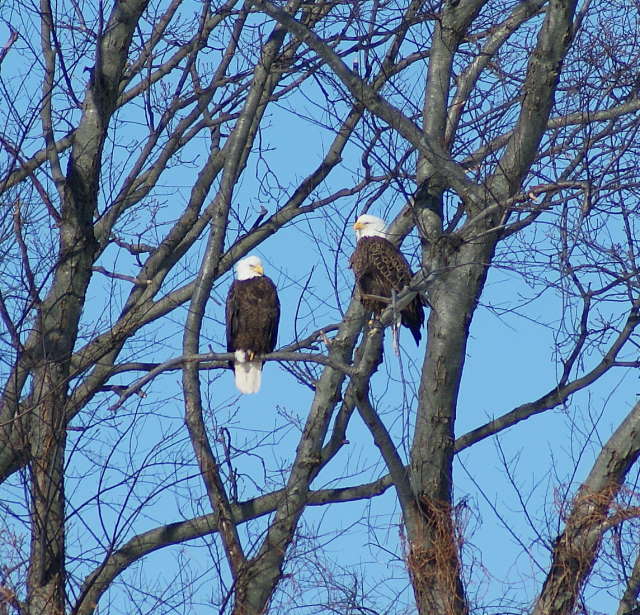
Pilesgrove Eagle Pair. © Jeffrey White

The 2010 New Jersey bald eagle nesting season has ended and the young eagles have left their nest areas and are heading out on their own.  This season there was a high of 94 eagle pairs being monitored.  Eighty-two of these pairs were active (laid eggs), 8 were territorial and it was unknown if and where 4 other pairs were nesting.  Thirteen new pairs of eagles were located this season. Good news, the bald eagle population is increasing.

Forty-three nests were successful in producing 69 young, for a productivity rate of .84 young per active nest.  This is slightly below the required range of 0.9-1.1 young per nest for population maintenance.  Unfortunately there were 32 nests which failed to produce young this season.  Many of the failures can be attributed to the severe winter and spring weather which coincided with the eagle nesting season. But every population has fluctuations so this one off season won’t effect the NJ eagle population in the long term.

More details will be available in the Annual Bald Eagle Project report which will be out by the end of the year.

Human/Wildlife Interactions

Juvenile eagle released back into the wild

by Ben Wurst, Habitat Program Manager

The eagle in a carrier to be transported from Sandy Hook to The Raptor Trust. Image courtesy National Park Service.

Last Tuesday I met with Debra and Gail, volunteers with The Raptor Trust in northern New Jersey to help release a juvenile eagle. The release was coordinated by Kathy Clark with the Endangered and Nongame Species Program and Cathy with the Raptor Trust. They transported the eagle for more than 2 hours to see it return to the wild. I was merely there because I have experience with handling birds of prey (in case anything were to happen).

The eagle was found on Gunnison Beach in late June inside Gateway National Recreation Area on Sandy Hook.The eagle was spotted by park visitors on the beach. The eagle was distressed but had no injuries. Jeanne McArthur–Heuser, NPS transported the eagle to the Raptor Trust, located in Millington, New Jersey.

Many juvenile raptors or birds of prey are not 100% successful at catching prey. Some rely on their parents for food until they learn the skills to catch prey that they will use for the rest of their lives.

The eagle takes flight after being rehabilitated at the Raptor Trust. © Debra Falanga

The eagle was rehabilitated at the Raptor Trust for 6 weeks. It was a male and was banded with a federal USGS bird band for future tracking. At the Raptor Trust it got plenty of rest and relaxation under their care. I met Gail and Debra in Millville where we traveled south towards Newport. We released the eagle at a location determined by Kathy Clark in Cumberland County at Nantuxent Wildlife Management Area. The release was uneventful (which is good!!!). We basically stood behind and to the sides of a large dog crate and opened the door. I held the door open and lifted up the back to try and encourage the eagle to leave the crate. After about 45 seconds, the eagle hopped out of the crate and immediately took off into the distance with a strong flight.

Without the care of the National Park Service, The Raptor Trust, and the Endangered and Nongame Species Program, this eagle might not have survived! This is a clear example of how we are all connected and how delicate the balance of nature is! We hope this eagle lives on and is able to flourish in New Jersey!