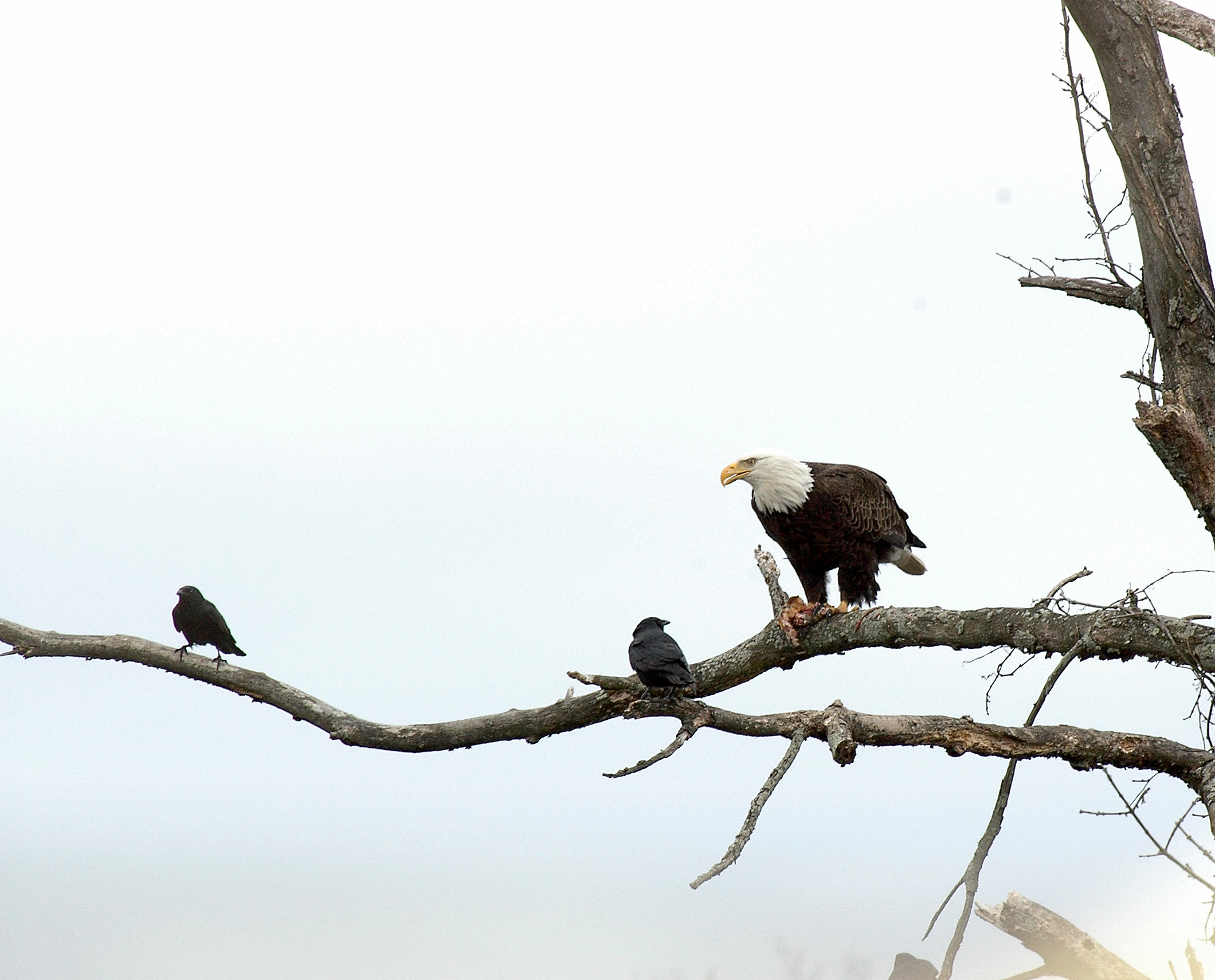
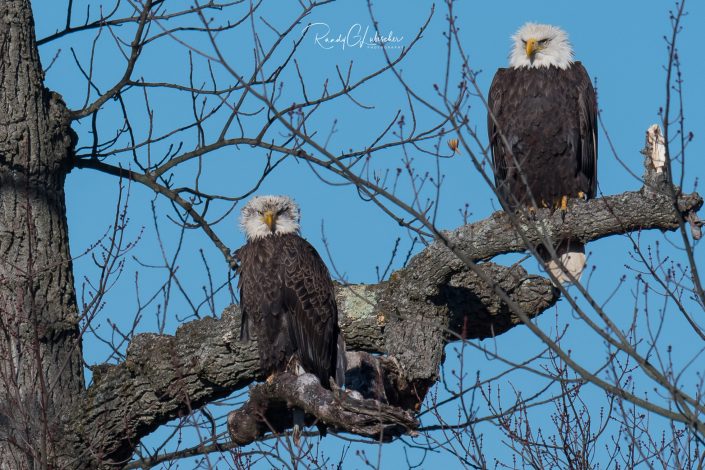
Andrew Drummond captured this image of “Harmony 2” on Memorial Day in Marlboro, VT. She was banded as D/64 and outfitted with a transmitter May 29th, 2012 at Merrill Creek, Warren County. We have since been following her movements on Eagle Trax. She fledged in 2012 and spent her first winter on the lower Chesapeake Bay before traveling to Maine. She has spent the last five years in a 100-mile swath of western Connecticut and Massachusetts, and now into southern Vermont. She is of breeding age so we suspect that she will be nesting in the area next season.
Bald eagle rescued, rehabilitated and released with satellite transmitter to track movements
by Kathy Clark, Endangered & Nongame Species Program, NJ Division of Fish & Wildlife
Pedro takes flight! photo by Marian Quinn.
On Sunday, April 15th, I got a call that three bald eagleswere spotted in a farm field. Not too unusual in rural Salem County, but this good neighbor was rightly concerned that something was wrong. Pedricktown resident Steve Wilson approached the eagles and not only did they not fly away from him, but two could barely sit upright and a third was stumbling away. Steve made phone calls and, at 7:30 at night, couldn’t reach any of the wildlife centers or offices. Persisting, he made a connection with Dr. Erica Miller, a wildlife veterinarian who for over 20 years was both clinician and surgeon atTri-State Bird Rescue & Research in Newark, Delaware. Erica is also a long-time partner on the NJ Bald Eagle Project, and called me about 7:45 that evening. Continue reading “Quick Action Ensures Survival of Poisoned Eagles”
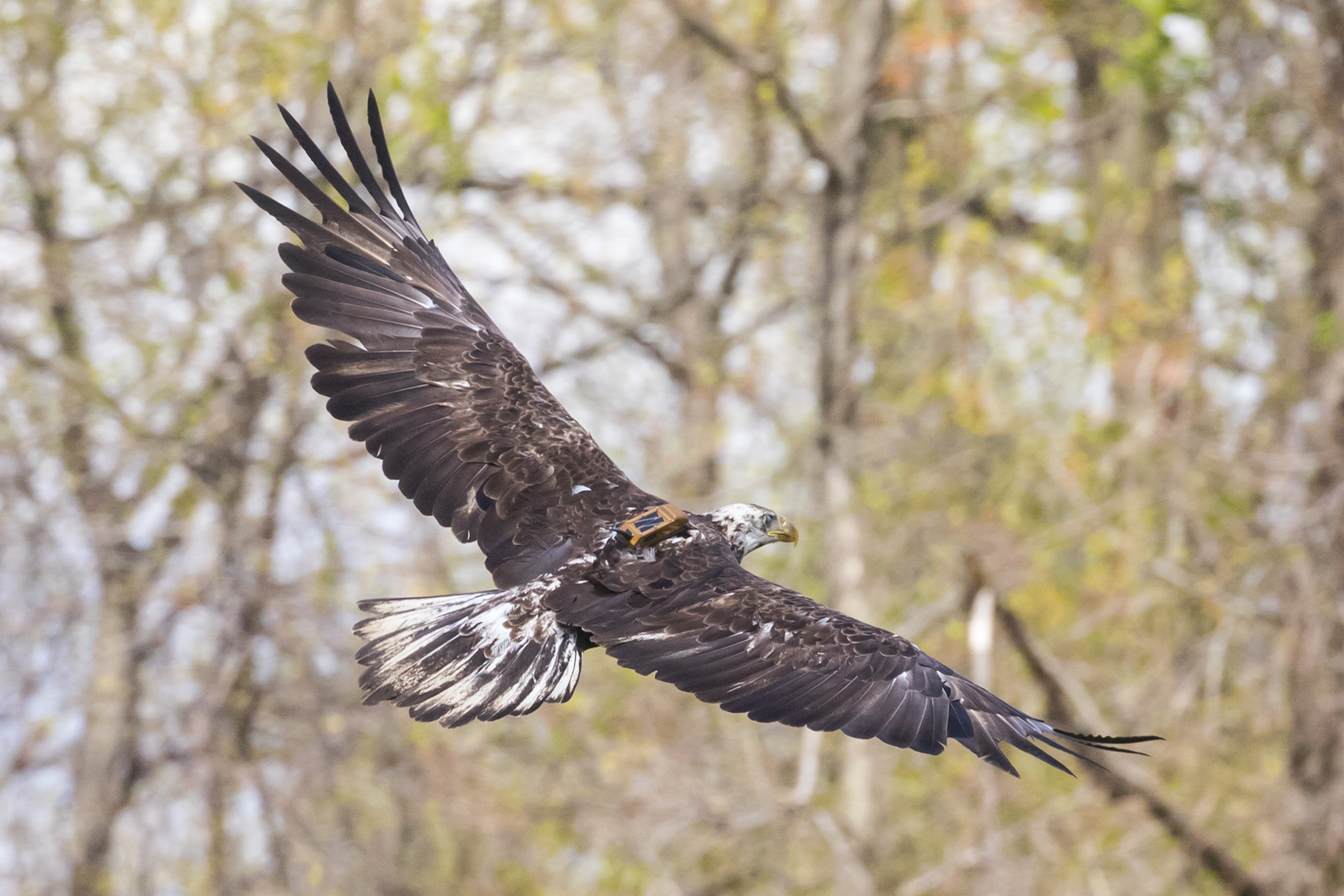
Currently, we are tracking two NJ eagles outfitted with transmitters. One of these,”Haliae” was outfitted with a transmitter on May 31st, 2013, at the Merrill Creek Reservoir. We have been following her movements on NJ EagleTrax. Since 2015 she has spent her time in Maryland and eastern PA along the Susquehanna River. This past November a photo was taken of Haliae at Conowingo Dam, MD. At that time it appeared that one of the straps on her harness had come loose and we expected the transmitter to fall off in the near future, but continue to receive signals.
On April 12, 2018 Keith Opperhauser photographed Haliae along the Susquehanna River in Darlington, MD. The harness strap is clearly loose below her chest, but the transmitter is still attached. Haliae will be five years old this May and reaching breeding age. We don’t know how long the transmitter will stay attached or continue to transmit, but we’re glad to know that she is doing well.
Nature can be awe inspiring and beautiful. Watching a powerful bald eagle gently offer food to a newly hatched chick is amazing. Cheering awkward chicks walking on wobbly legs, and holding your breath when they take that first flight are the events live cam viewers look forward to year after year.
Duke Farms nest-2016
We are reminded of the harsh realities of nature too. Nest fails can and do happen. Many things can go wrong: storms, predators in the nest, or conflicts with other eagles and territorial disputes. Watching it happen live, can be heartbreaking. Every event is a learning experience for us all.
There is a sad ending this year at the Duke Farms nest. It was hard to see the adult pair defending their nest from younger interlopers again. Harder still was actually witnessing the failure of both eggs. Hatching is a complicated business. We’ve been fortunate to have many years of success. As watchers, we must take the good with the bad. This is nature after all.
So what do we do now? My love of nature and the bald eagle will have me seeking out other live cams, but missing my local wild family. I will remember the successes of past years. I will stare in amazement as I look up into the sky to watch a bald eagle soaring overhead.
Duke Farms- 2016
Life will go on. The cycle will continue, if not in “my” nest, in another. Nature will find its balance. Thank you to Duke Farms and Conserve Wildlife Foundation of NJ for bringing us the live cam. Thank you to the state biologists who work every day to preserve and protect the wildlife in our state.
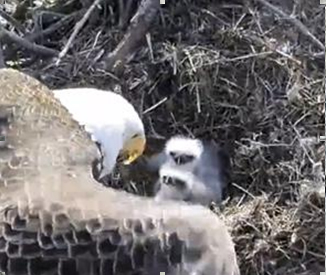
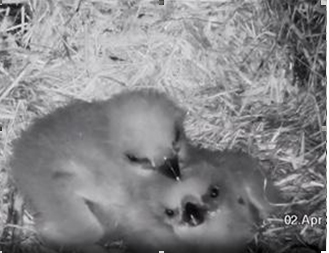
Egg 1 was laid on February 14th this year. Bald Eagle eggs are incubated for about 35 days. That means the first hatch could be next week, Wednesday, March 21st! What are the signs hatching has begun? As an observer for many years, viewing the live cam has taught me much. These are some behaviors I’ve seen in the past to alert me that hatching will soon begin or is already underway.
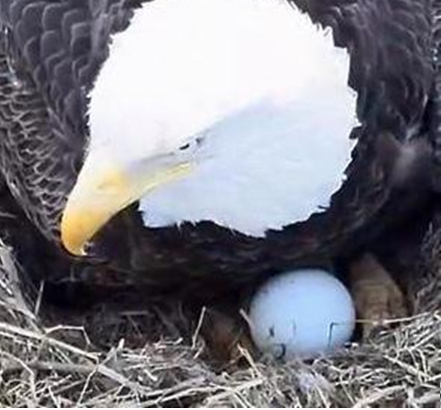
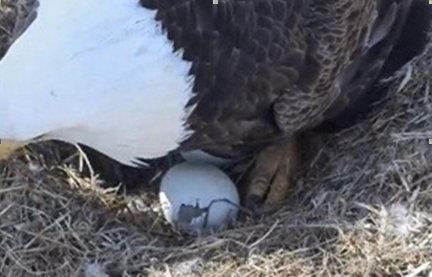
Believe it or not, the adult and chick can “talk” to each other through the shell. Watch for the adults to stand over the eggs with their heads bent closer to them. You may even see movement of the adult’s bill, as it “chirps” to its chick inside the egg.
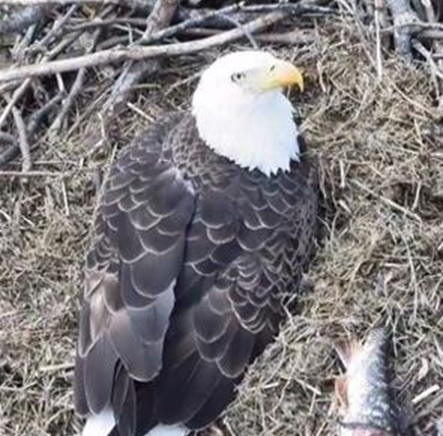
If food begins to show up in the nest, the adults could be preparing for another mouth to feed. They are stocking the “pantry”.
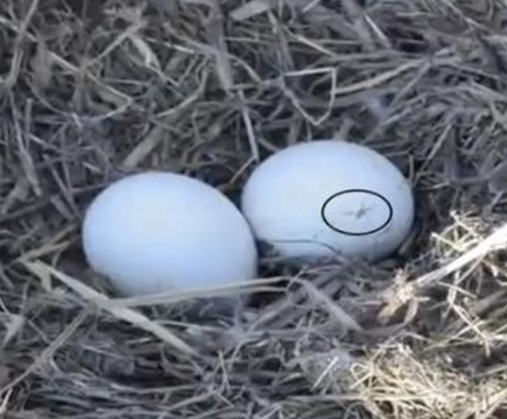
Restless adults, with lots of moving around on the nest, or more frequent egg rolls, is another sign to watch carefully. When you get a clear view of the eggs, look for a tiny hole or a spider web-like cracking. This first hole in the shell is called a pip, and is made by the chick. The chicks do all the work!
Pips can be difficult to spot with protective adults blocking the view. You may wonder if you are looking at a spot of dirt or piece of grass on the egg or a real pip. Trust your eyes and keep watching, that pip will increase in size. This is exhausting and hard work for a little one. The complete hatching process can sometimes takes a day or two.
It is amazing to watch the progress once the first pip has appeared. Get ready for the most eggciting time of year for eagle watchers!
We are honored to have Diane Cook as a guest blogger, over the next few months. Diane will be discussing Duke Farms eagle cam and how she uses it in her classroom. Diane is a K-2 Technology Literacy teacher at both Copper Hill and Robert Hunter Elementary schools. She has been an avid and enthusiastic eagle cam viewer since 2008 and now she is the official nest monitor for the Duke Farms nest. As the monitor Diane records important data into the Eagle Project database, Nest Story. Diane also uses the eagle cam in her classroom and was the winner of a contest held by Duke Farms and CWF in 2015, to choose the best bald eagle lesson plan.
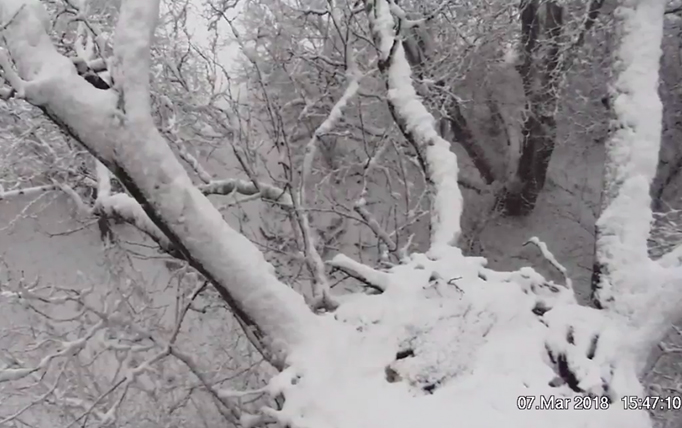
Diane was home from school during yesterday’s snowstorm and able to document the eagles during the storm.
March 7, 2108, Diane Cook’s blog
Thankfully the live cam was back up and running by the time school started on Monday following the first Nor’easter to hit our part of NJ. Was glad to be able to tell the students all was well, and that they could see for themselves! The good news was soon replaced by worry with yet another Nor’easter predicted for today. The day began slowly. Yes, it was snowing, but lightly. Things didn’t look too bad.
Within minutes, the snow really picked up in intensity. The storm hit quickly and the snow fell fast and heavy. Within minutes snow had covered the ground.
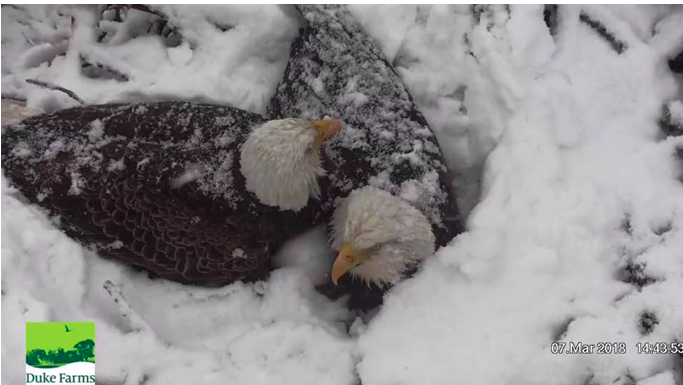
There was an exchange at some point on the nest. Mom won the rights to incubation. Then something I’ve never seen before happened. BOTH eagles stayed on the nest through the storm. They laid side by side.
Thanks to Charles T. Barreca who mans the camera at Duke Farms for the awesome close up view. As the camera moved, the eagles looked up at the noise.
They would shake off the snow, but remained on the nest together.
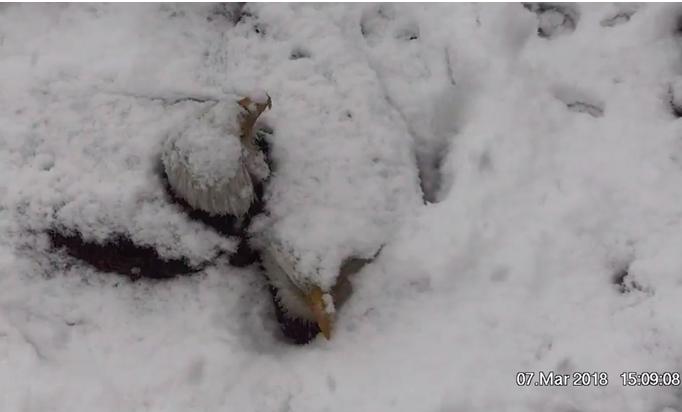
More snow fell. Still the eagles sat.
Finally the male flew off the nest, but stayed on a nearby branch.
No matter how much snow fell, these dedicated parents remain with their eggs and incubation continues.
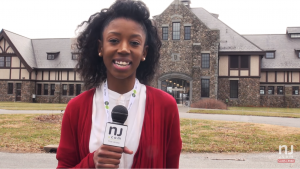
NJ.com reporter Alexis Johnson at Duke Farms in Hillsborough
Conserve Wildlife Foundation has long partnered on the famed Eagle Cam at Duke Farms in Hillsborough, which has thrilled over 13 million viewers since it started.
In this video, NJ.com reporter Alexis Johnson covers the state’s longest running Eagle Cam with an interview with Duke Farms Executive Director Michael Catania.
Bald eagles have nested at Duke Farms since 2005. Currently the pair has laid two eggs in this nest, with the first egg laid on Valentines Day this year.
From just a single nest remaining in the state in the late 1970s and early 1980s, bald eagles have recovered to over 170 nests, thanks largely to scientists and volunteers from the New Jersey Endangered and Nongame Species Program and Conserve Wildlife Foundation.
The Duke Farms Eagle Cam can be found here, and author Jim Wright’s e-book “Duke Farms’ Bald Eagles” provides some fascinating additional information about this nest.
CWF’s Bald Eagle webpage and annual Bald Eagle report details the story of bald eagles in New Jersey, with a number of other helpful links.
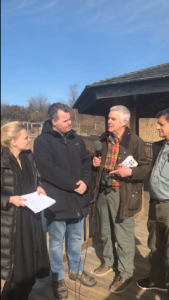
The WNET-PBS Nature program Peril & Promise’s second live interview with Conserve Wildlife Foundation marked the Great Backyard Bird Count by focusing on the inspiring recovery of the bald eagle. This interview, taking place at DeKorte Park in the Meadowlands, features program host Emily Harris speaking with CWF Executive Director David Wheeler, CWF Trustee Kumar Patel, and Jim Wright, who has written two e-books about bald eagles.
Holding an authentic (empty) can of DDT, Wright noted, “Eagles had some tough times…with things like DDT, a really nasty pesticide that got into the food chain and would get into the fatty tissues of the bald eagles, and they had trouble laying their eggs because their eggshells were so weak. It got to the point in New Jersey where they were down to one nesting pair in the late 1970s, and they were not producing eggs…. But now there are…approximately 170 nesting pairs in New Jersey, including two right here in the Meadowlands.”
CWF’s bald eagle project was featured in a news feature today on New Jersey 101.5 FM.
Bald eagle nesting season is underway! photo by Ken Connelly
January kicks off bald eagle nesting season in the Garden State, and biologists from CWF and the Endangered and Nongame Species Program are working with volunteers across the state to monitor the nests of approximately 150 bald eagle pairs – up from 1 nesting pair just a few decades ago!
CWF will be at the festival on February 3rd. There are presentations, walks, viewing sites and exhibitors. It’s a great way to learn about NJ’s eagles and other raptors.



 The WNET-PBS Nature program Peril & Promise’s second live interview with Conserve Wildlife Foundation marked the Great Backyard Bird Count by focusing on the inspiring recovery of the bald eagle. This