Conserve Wildlife Foundation Appoints New Executive Director
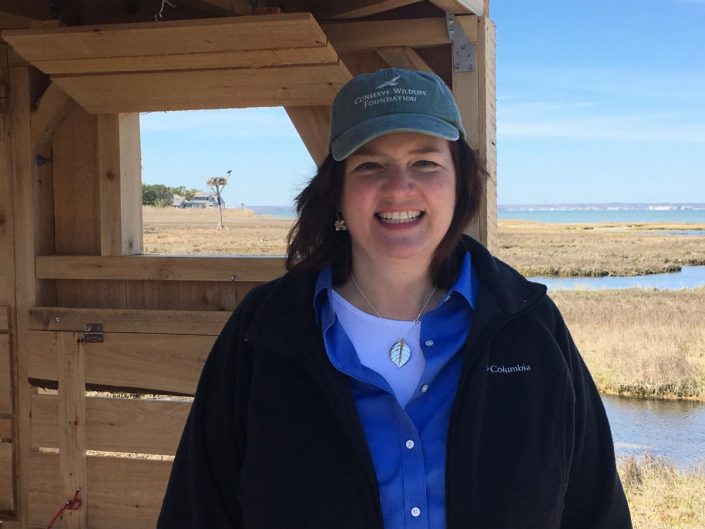
The Board of Trustees of Conserve Wildlife Foundation of New Jersey (CWF) is pleased to announce the appointment of Liz Silvernail to Executive Director. In this role, Silvernail will guide the organization in its work to preserve rare and at-risk wildlife in New Jersey through field science, habitat restoration, public engagement, and education.

“I am honored to have this opportunity to lead CWF as executive director,” said Silvernail. “With the support of our dedicated and hard-working biologists, the leadership of our board, and the commitment of our supporters and volunteers, we’re ready to take on the daunting challenges facing our rare wildlife and the habitats on which they depend.”

A part of CWF for nearly 12 years, Silvernail was most recently Acting Executive Director. Previously, she was Director of Development where she formed strong corporate and donor partnerships to build organizational capacity and impact. Through her leadership, CWF developed and implemented highly successful STEAM educational programs throughout New Jersey schools as well as the annual Women & Wildlife Awards and a host of outreach initiatives to promote public awareness of at-risk wildlife.

“Liz is uniquely qualified to lead CWF in the implementation of our strategic plan,” stated Steve Neumann, President of the Board of Trustees for CWF. “Her passion for environmental causes, depth of experience, vision and collaborative approach will be instrumental in our partnerships and donor support.”

Silvernail brings over 30 years of non-profit experience to the role. Prior to joining CWF, she championed environmental advocacy for both Scenic Hudson and NJ Keep it Green. A graduate of Boston College, she serves on the board of EarthShare New Jersey and has volunteered with the Garden Club of America, Junior League of Greater Princeton, and Girl Scouts of Eastern Pennsylvania.

Amy Greene of Amy Greene Environmental and a CWF Trustee offered, “Liz’s deep understanding of the organization’s mission, her strong relationship with CWF and NJDEP staff and donors, her commitment to restoring New Jersey’s rare species populations, and her compassion for educating its human inhabitants about the importance of rare species protection makes her a natural to lead CWF to continue to help New Jersey’s most threatened wildlife thrive.”

>> Learn more about Conserve Wildlife Foundation of New Jersey
Two are sometimes better than three

A season of change and hope at the Barnegat Light Osprey Cam.

by Ben Wurst, Habitat Program Manager

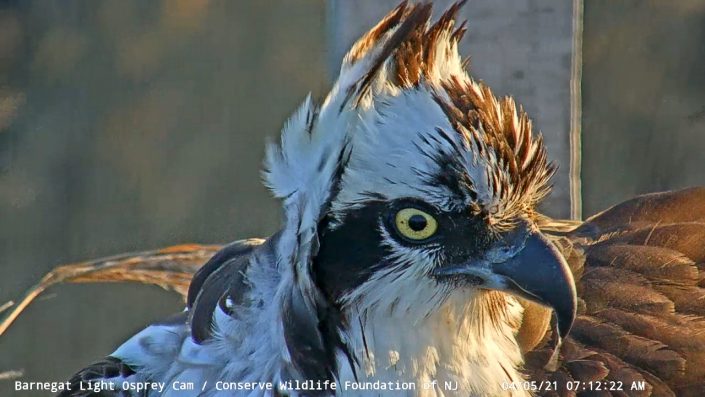
The “new” female at the BL Osprey Cam. April 5, 2021. Note the small dark fleck on her right iris.

By far, this was the most viewed season of the Barnegat Light Osprey Cam, with over 360,000 views and 111,000 hours watched! It was a season of change. Viewers throughout the world watched as the mated pair successfully fledged two healthy young. We witnessed the trials and tribulations of a new pair, especially the female, who we believe attempted reproduction for the first time in her life. We saw that life as a young osprey was not always guaranteed, which is something we rarely get to witness but know is quite common at many nests throughout the world; however, with an experienced male and plentiful prey, the surviving young thrived. As we work on a season long highlight video, here is a brief summary of their nesting season.

Continue reading “Two are sometimes better than three”

The Mysterious Oystercatchers of the Delaware Bay: Results of the 2021 Bay-Wide Survey

By: Meghan Kolk, CWF Wildlife Biologist

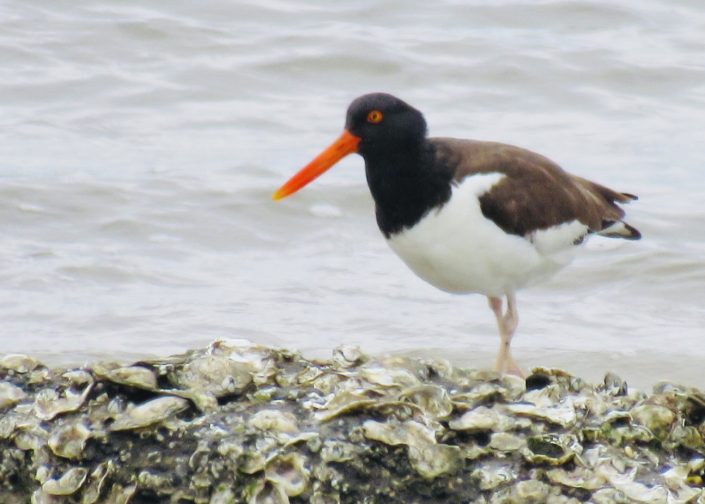
American oystercatcher foraging for oysters along the Delaware Bay. Photo credit: Meghan Kolk.

The Delaware Bay is well known for the spectacular phenomenon of spawning horseshoe crabs and migrating red knots every May, but in recent years the American oystercatchers (Haematopus palliatus) have also discovered the allure of the Bayshore and made it their home.  American oystercatchers, a State Species of Special Concern, have been monitored and managed by CWF and the NJDFW’s Endangered and Non-game Species Program along the Atlantic coast beaches for nearly two decades, resulting in a steady population increase.  However, the population that breeds along the Bayshore, first documented in 2016, has not received the same attention and had never been fully surveyed until this year. 

CWF’s interest in this newly discovered population led to a small pilot study of a few known breeding pairs in 2018.  Then this past May, we launched a bay-wide survey of the sandy beaches of the New Jersey side of the Bay from Cape May Point up to Seabreeze, the northernmost beach in Cumberland County.  The purpose of the bay-wide survey is to determine a baseline of the number and distribution of breeding pairs along the Bayshore.  The data gathered from this survey will add to the Statewide population estimate and help determine the amount of time and funding needed to fully monitor and manage the Bay’s population.  More monitoring will be necessary to assess risk factors and reproductive success.  Reproductive success can then be maximized by managing for risk factors such human disturbance, predation and tidal flooding.

This survey was made possible due to the efforts of dedicated volunteers and could not have been completed without their help.  Unlike the Atlantic coast, the Bayshore beaches are often difficult to access, and many can only be reached by boat, making this survey more challenging.  In fact, two sites that we planned to survey proved to be too difficult to reach and were skipped for this year.  Each of the 33 remaining sites were surveyed just once within a specific timeframe, giving only a snapshot of the breeding season.  We hope to be able to collect much more information in the future when more funding for this project is available.  Based on the survey that was conducted, 13 pairs were documented at 8 different sites and 8 nests were documented at 5 different sites.

In addition to the formal survey, I was able to collect some observations as I spent every day in May on the Bay working with red knots.  I took notice of the prey items that the oystercatchers were choosing.  I often observed them feasting on oysters, which were plucked off exposed rubble at low tide.  They also spent time at the man-made oyster reefs that were constructed at several beaches to act as breakwaters to slow the erosion of beaches.  They also favored ribbed mussel beds, which become exposed as the tide recedes.  The most interesting foraging behavior I witnessed was an oystercatcher plucking a fresh slipper shell off a horseshoe crab as it came to shore to spawn.  It seems the Bay offers a variety of good food sources for a bird that mainly preys on bivalve mollusks. 

I also noticed that flocks of up to 11 oystercatchers were traveling together up and down the Bayshore.  This is a peculiar behavior since oystercatchers are highly territorial during the breeding season and are typically only seen in flocks once the breeding season is over.  Could it be that the Bayshore is a popular spot for non-breeding young adults to hang out? 

So much more research is needed to answer the many questions we have about the mysterious Bayshore oystercatchers. 

Conserve Wildlife Foundation Team Gives Thanks

by Morgan Mark & CWF Staff

Happy Thanksgiving to you and your family from our Conserve Wildlife Foundation family!

Thank you for all of your generous support this year.

Our staff would like to share with you what they’re thankful for this season.

Stay safe and enjoy your holiday!


If you’re viewing this blog on your computer, you can click on each staff member’s block to enlarge the photos and text.

Continue reading “Conserve Wildlife Foundation Team Gives Thanks”

Duke Farms Alumni D/99: All Grown Up

by Larissa Smith: CWF Biologist

On Sunday January 13th, 2019 photographer, Bob Cook was taking photos of the ~20 eagles at a lake in a Mercer County park. He noticed that one of the eagles had a green tag on it’s right leg. After reviewing the photos it was established that the band was D/99.

D/99;1/13/19@ Bob Cook

D/99 is from the Duke Farms nest located in Somerset County. He and his two siblings grew up as a celebrities their every move being watched by viewers of the Duke Farms eagle camera.  The three chicks were banded on May 12th, 2014. Measurements showed that there there were two males and one female, D/99 was the youngest male.  All three fledged from the nest in June 2014.

chicks at Duke Farms nest 5/12/14. D/99 is in the middle.

Unfortunately, in August of 2014 we received a report that D/98, the oldest male, was found dead up in Maine.  He most likely died of injuries that occurred during a fight with another eagle. This most recent sighting of D/99 is the first report of either of the two remaining chicks. D/99 will be five years old in April and reaching the age where he will be looking for a mate and establishing his own territory.  It is always nice to know that a chick has survived to adulthood and most likely has come back to NJ to nest.

D/99 @Bob Cook


2018 NJ Bald Eagle Project Report

by: Larissa Smith, CWF Wildlife Biologist

photo by Bob Kane, Cranbury, Middlesex County

The Conserve Wildlife Foundation of NJ in partnership with the NJ Division of Fish and Wildlife, Endangered and Nongame Species Program, has released the 2018 NJ Bald Eagle Project Report.

“Two hundred-four nest sites were monitored during the nesting season, of which 185 were documented to be active (with eggs) and 19 were territorial or housekeeping pairs.  Thirty new eagle pairs were found this season, 20 in the south, nine in central and one in the north.  One hundred-twenty-one nests (66%) of the 182 known-outcome nests produced 172 young, for a productivity rate of 0.94 young per active/known-outcome nest. The failure rate was well above average with 61 nests (33%) failing to produce.  The Delaware Bay region remained the state’s eagle stronghold, with roughly half of nests located in Cumberland and Salem counties and the bayside of Cape May County.”

The number of active nests has increased while the number of young eagles fledged has decreased since a high of  216 young fledged in 2016.  During the 2018 eagle nesting season there was an abundance of cold, wet, windy and snowy weather which was the cause for a portion of the nest failures. As the eagle population increases, there are  more eagles competing for territories. This can also be a contributing factor in nest failures.  NJ is still in the range of 0.9 to 1.1 young per nest which is needed for population maintenance with a productivity rate of 0.94 young per known-outcome/active nest in 2018. The 2018 NJ Eagle Project Report has all the details on the project including telemetry, re-sightings and recoveries.

The success of the eagle project is due to the tremendous dedication of the NJ Eagle Project Volunteers. They monitor the nests in all types of conditions and education people about the eagles with enthusiasm.

THANK YOU


Bald Eagles and Lead: A Deadly Mix

by Larissa Smith, CWF Biologist
Lead poisoning continues to be a serious issue affecting Bald Eagles today.  CWF and ENSP biologists produced a brochure to educate hunters about this issue and ask for their help. Below is an excerpt from the brochure. Please view the entire brochure and pass along to anyone you know who is a hunter.
One person can make a difference!

Thank you.

Eagle with lead poisoning at Tri-State Bird Rescue@Erica Miller

“Bald Eagles have made an amazing recovery in NJ since the 1980s. Today the eagle population still faces challenges and one of those is lead poisoning. Lead in the environment is dangerous to eagles as well as humans, and is often deadly. Unintentional poisoning of eagles can occur when they scavenge gut piles from deer or other game species shot with lead ammunition. It takes just a tiny fragment of lead to sicken and kill an eagle. Each year avian rehabilitators receive eagles that are diagnosed with lead poisoning and most will die. There is no good treatment for lead poisoning.”

Early Birds….

by Larissa Smith: CWF Biologist

Some of New Jersey’s  eagle pairs are getting an early start on the 2019 nesting season. Eagles in NJ will begin incubation anywhere from January through March.  NJ Eagle Project volunteers usually report eagles back and working on the their nests in the late fall/early winter.  But some pairs have already been spotted sprucing up their nests in preparation for the upcoming nesting season.

Kettle Creek 9/27/18@Alex Tongas

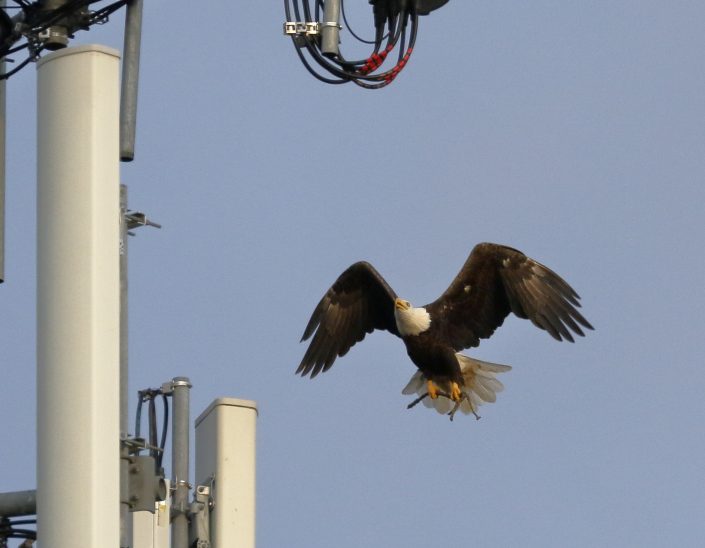
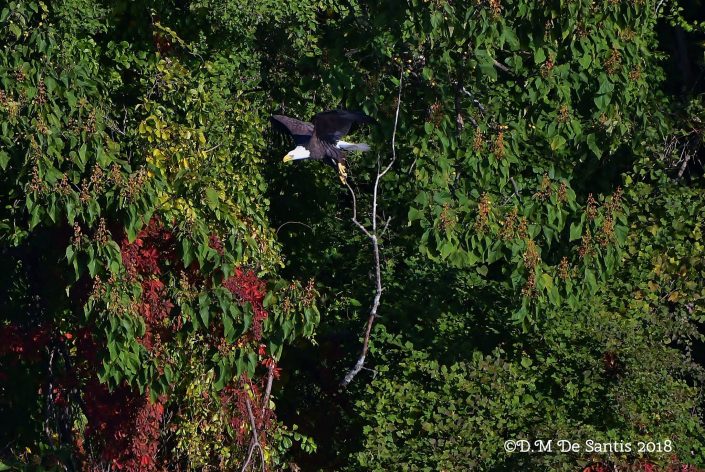
Overpeck 10/24/18@D.M. De Santis

Injured Eagle Flying Once Again

…thanks to help from some friends.

By: Larissa Smith, CWF Biologist

On August 20th, 2018 a resident of Monmouth Beach reported a young eagle that had been perching in the neighborhood and was possibly injured.  NJ Eagle Project Volunteer Randy Lubischer,  was able to respond and check out the situation.  The bird was a hatch year eagle, which means it fledged during this nesting season.  The eagle was feeding on a swan carcass and though Randy could get fairly close,  the bird was able to fly a short distance and appeared to have an injury to its left leg. The eagle had been seen feeding on the swan carcass for the past few days, so it was assumed that its injury was keeping it from hunting and the bird would only get weaker over time.

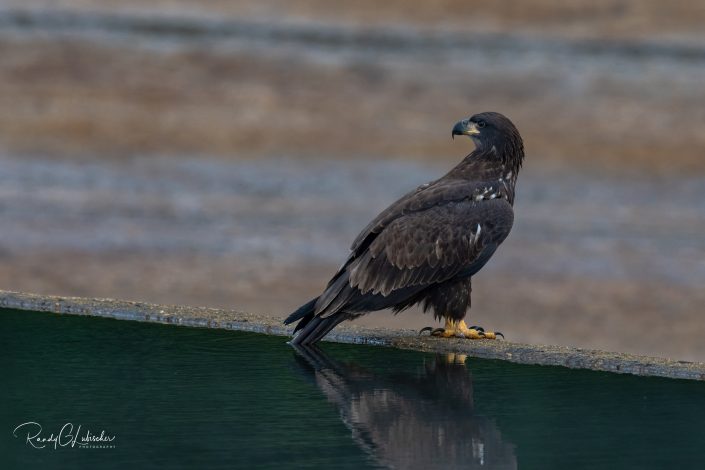
Injured eagle before capture@ R. Lubischer

Continue reading “Injured Eagle Flying Once Again”

Photos From The Field

NJ Eagle Chicks Spread their wings and fly.

by Larissa Smith; CWF biologist

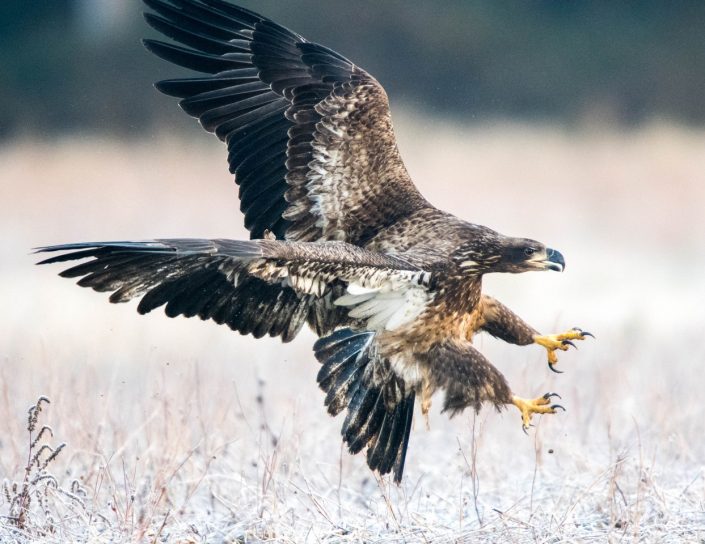
So far this season 123 eagle chicks have fledged (taken their first flight). Even after fledging the chicks will stay around the nest area for the next few weeks learning to hunt, fly and survive on their own.

Below are some photos of recent fledges taken by NJ Eagle Project Volunteers

Navesink fledge 6/27/18@Randy Lubischer

Continue reading “Photos From The Field”