Hello! I would like to introduce myself as a new member of the Conserve Wildlife Foundation of New Jersey team. My name is Rachel McGovern, and I am joining CWF as the Education Director.
I am a lifelong NJ resident and have always been passionate about environmental issues in the state. After completing my undergraduate degree in Human Ecology at Rutgers University, I spent a year in the Americorps New Jersey Watershed Ambassador Program (NJWAP) where I first taught environmental education lessons. Since then, I have had wonderful experiences teaching at nature-based organizations across the state.
Most recently, I was the Program Director at Flat Rock Brook Nature Center in Englewood, NJ. This center is located on a 150-acre forested preserve surrounded by dense development just minutes from the George Washington Bridge. At Flat Rock Brook, I led the education team in developing and delivering school programming, community events, and summer camp. I was also fortunate to take on the care of five non-releasable raptors—a job that deepened my admiration for all raptors in NJ (particularly falcons).
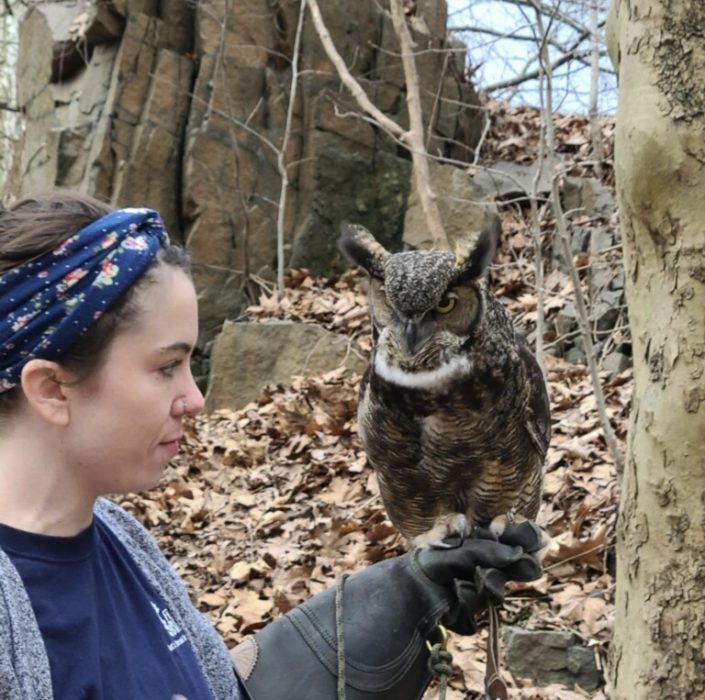
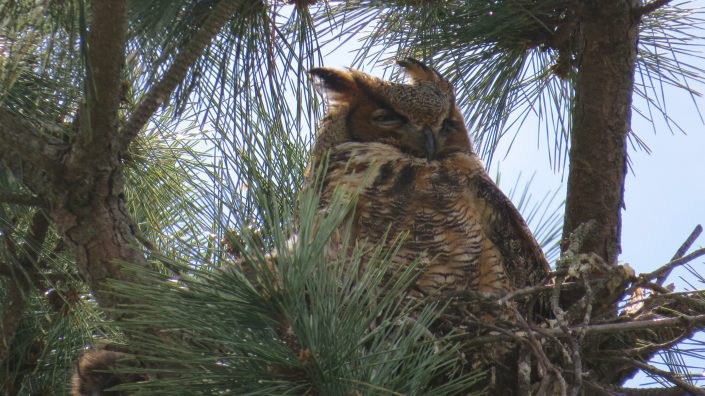
Josephine is a great-horned owl. She is an imprint, meaning she was raised by humans and now “identifies” with humans.
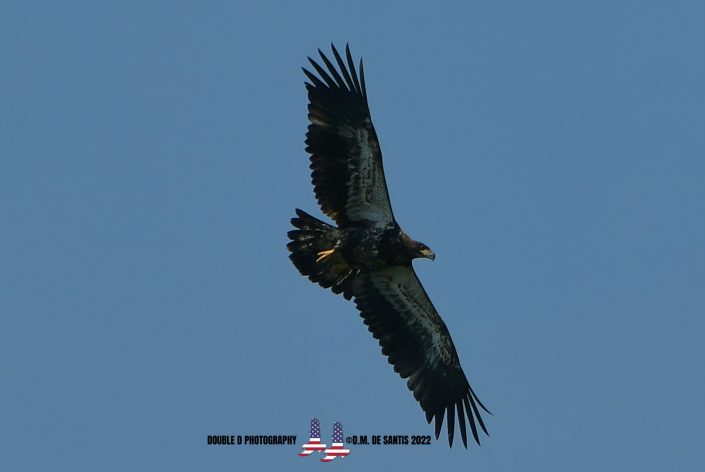
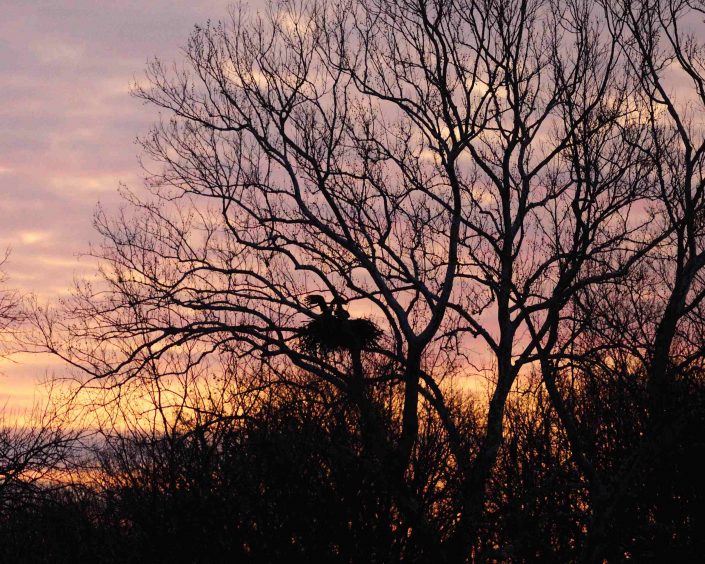
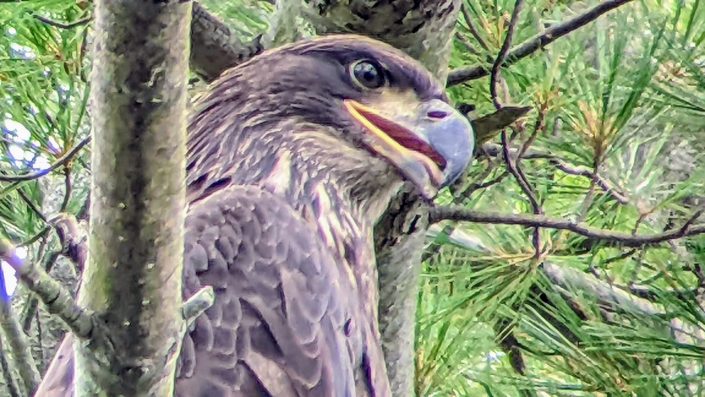
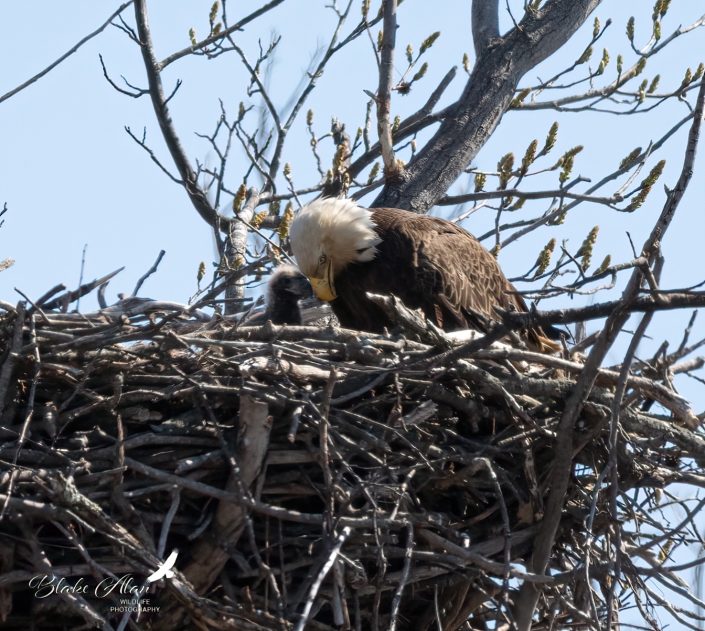
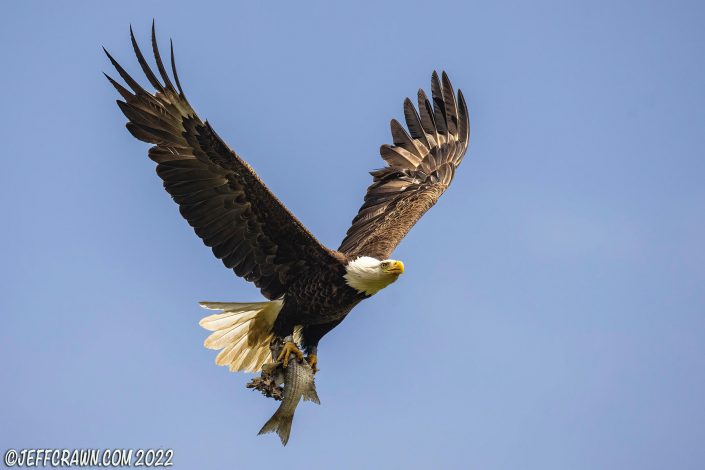
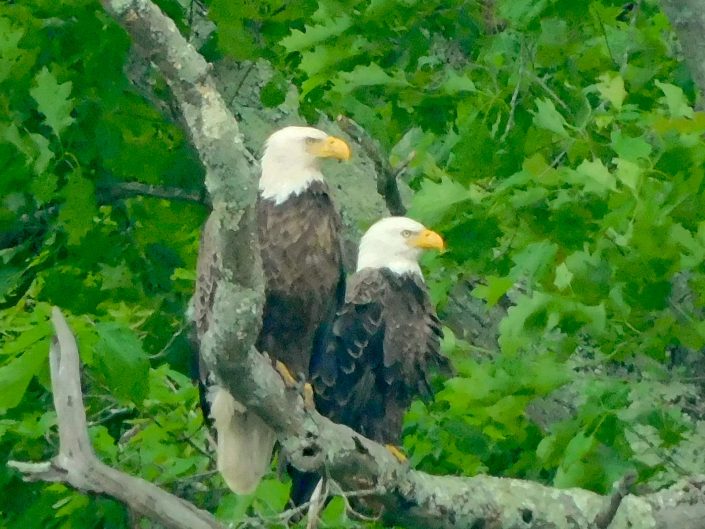
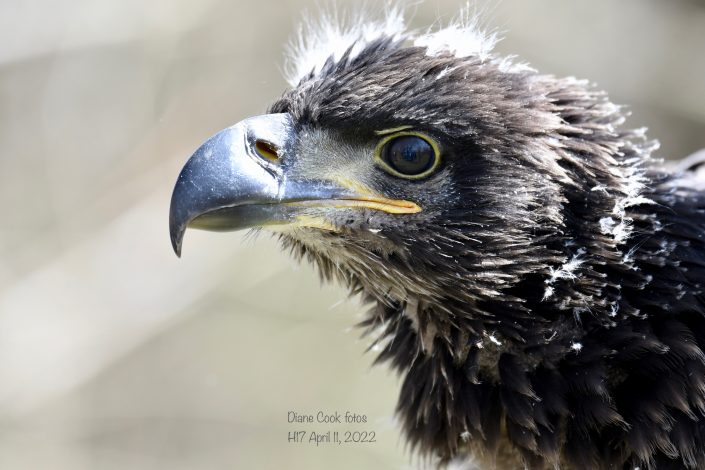
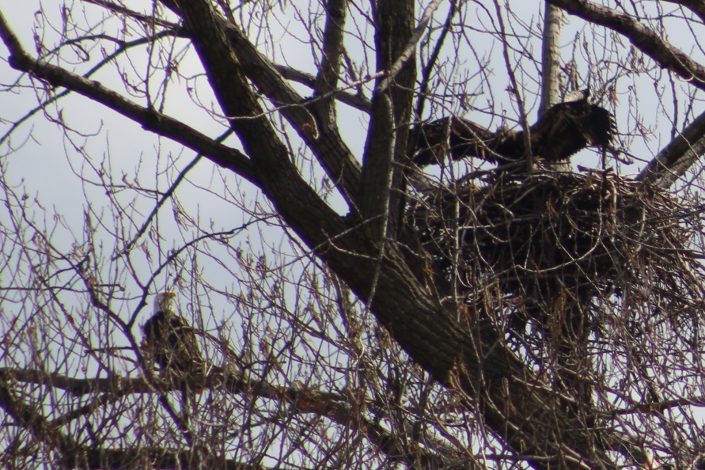
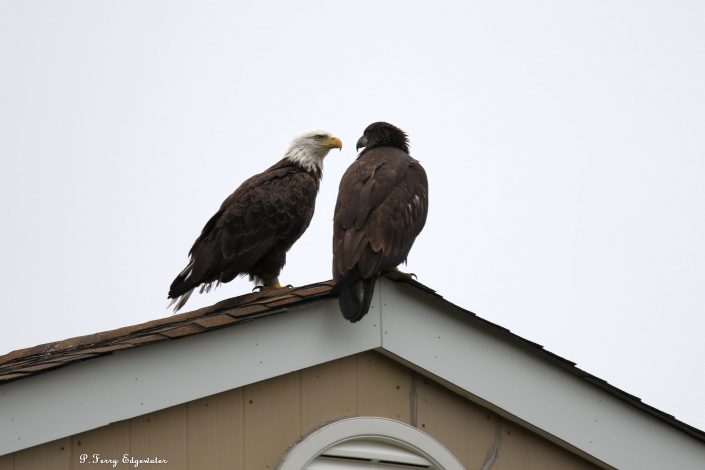
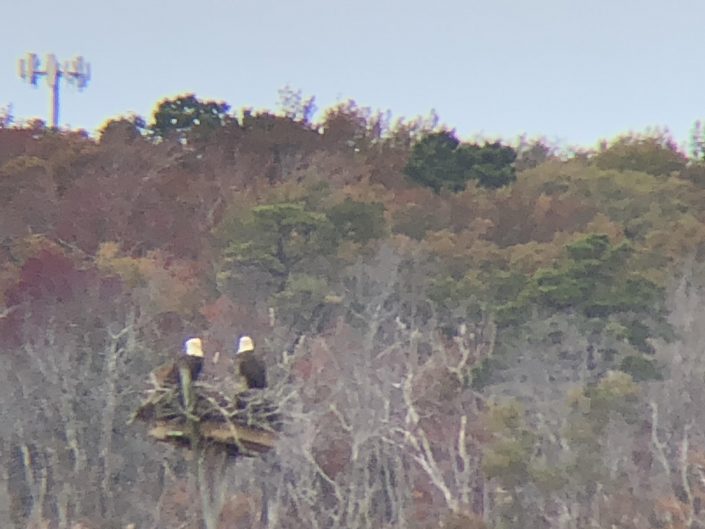
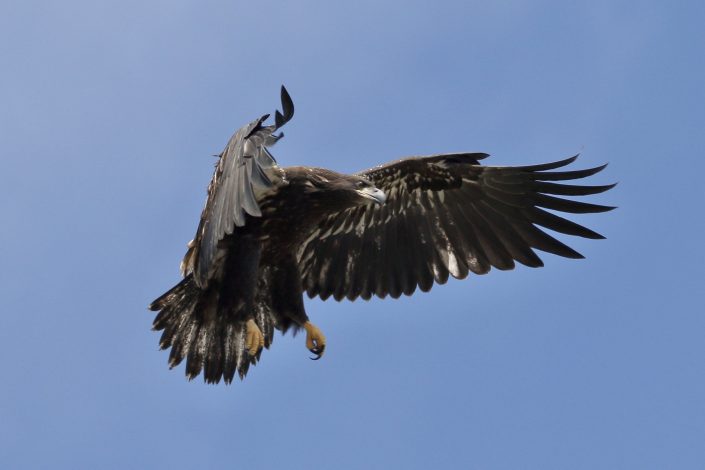
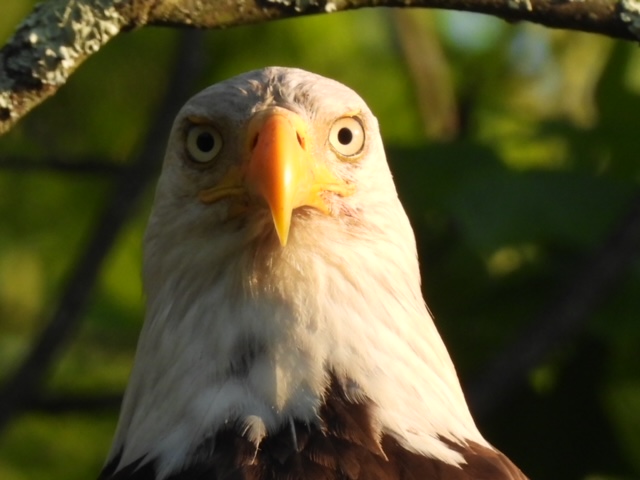
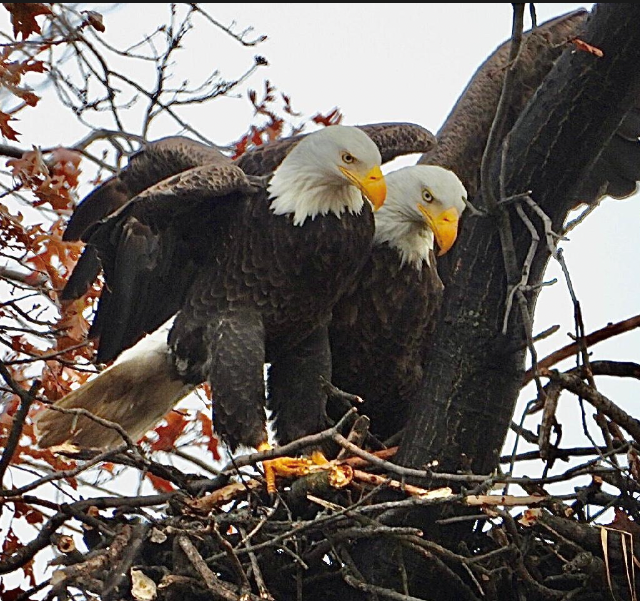
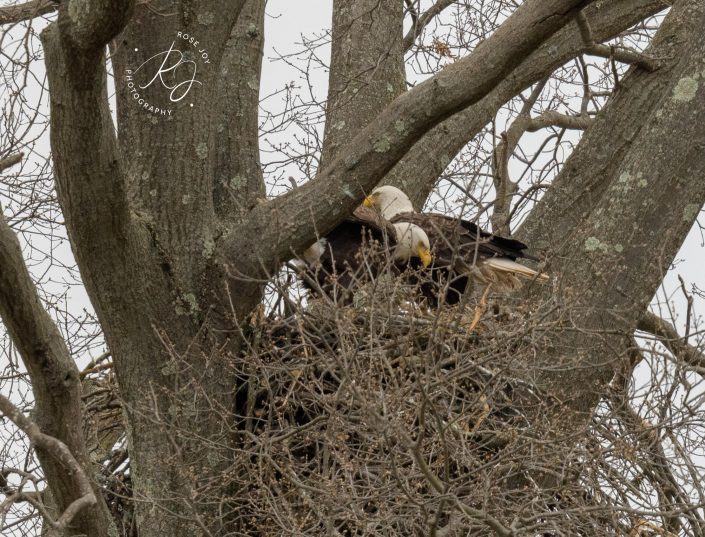
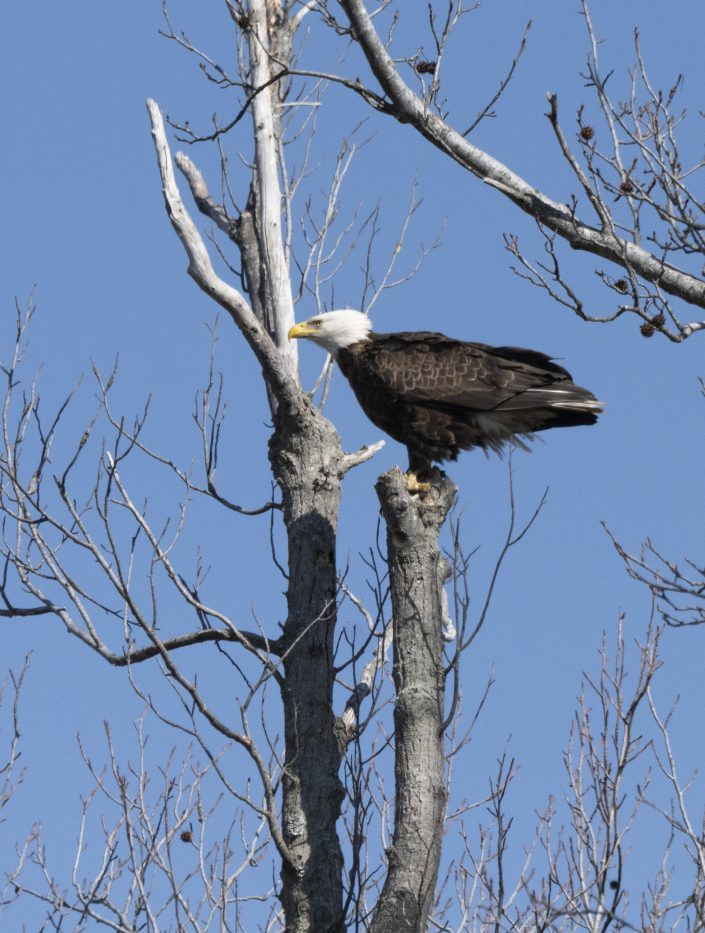
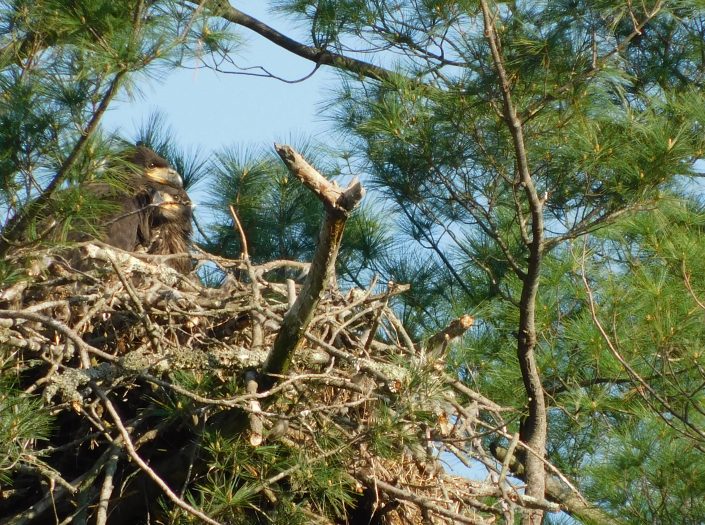
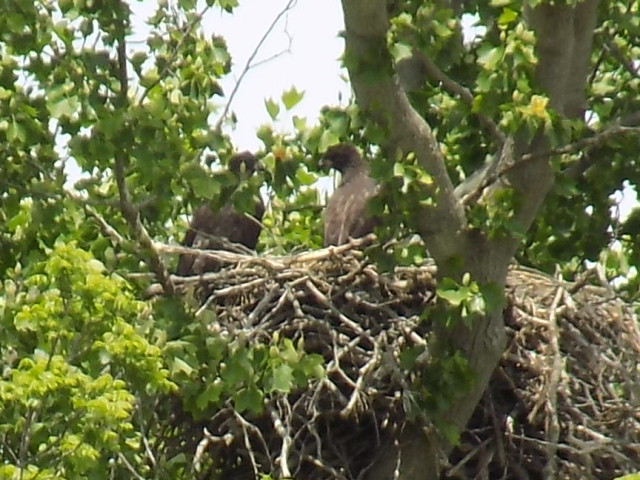
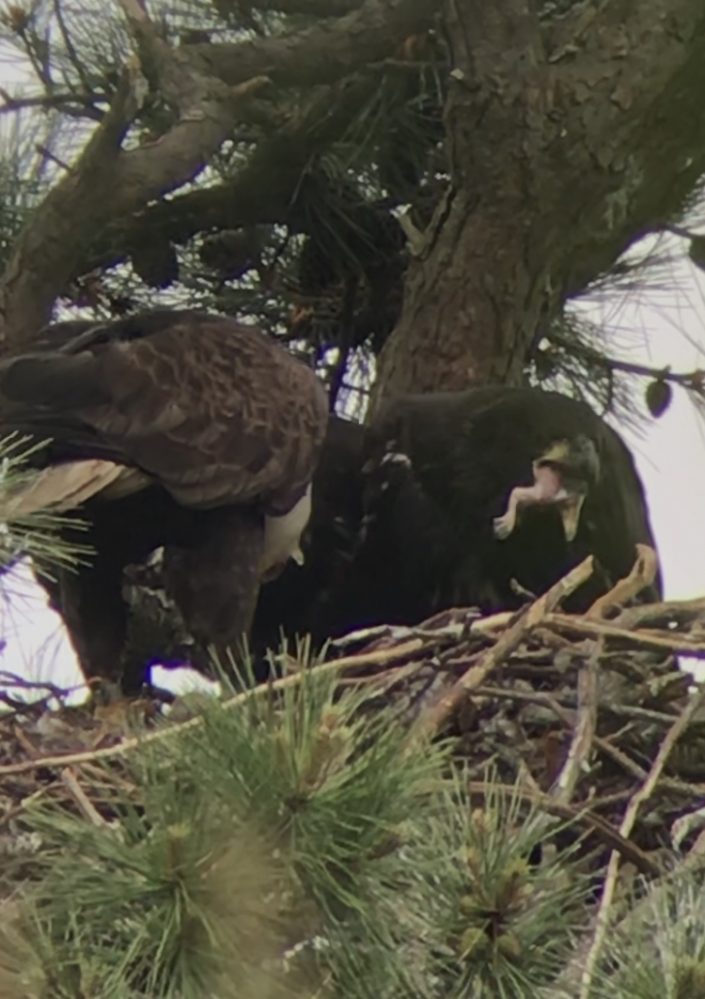
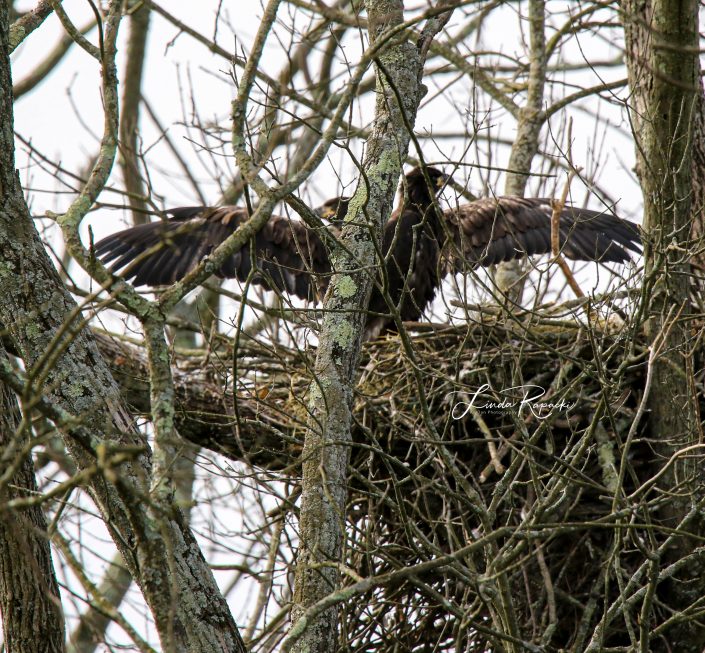
I asked the Eagle Project volunteers to send me their one favorite photo from the 2022 eagle nesting season. Enjoy the eagle nesting season through the eyes of the nest monitors. (click on the photos to enlarge and view details)
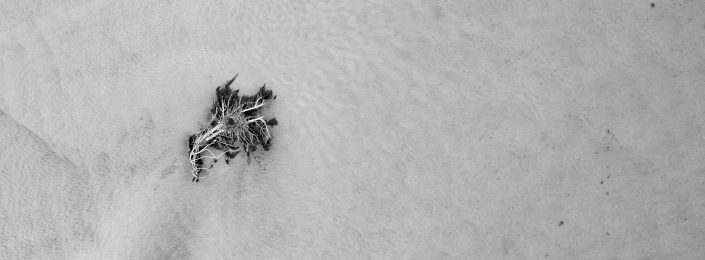
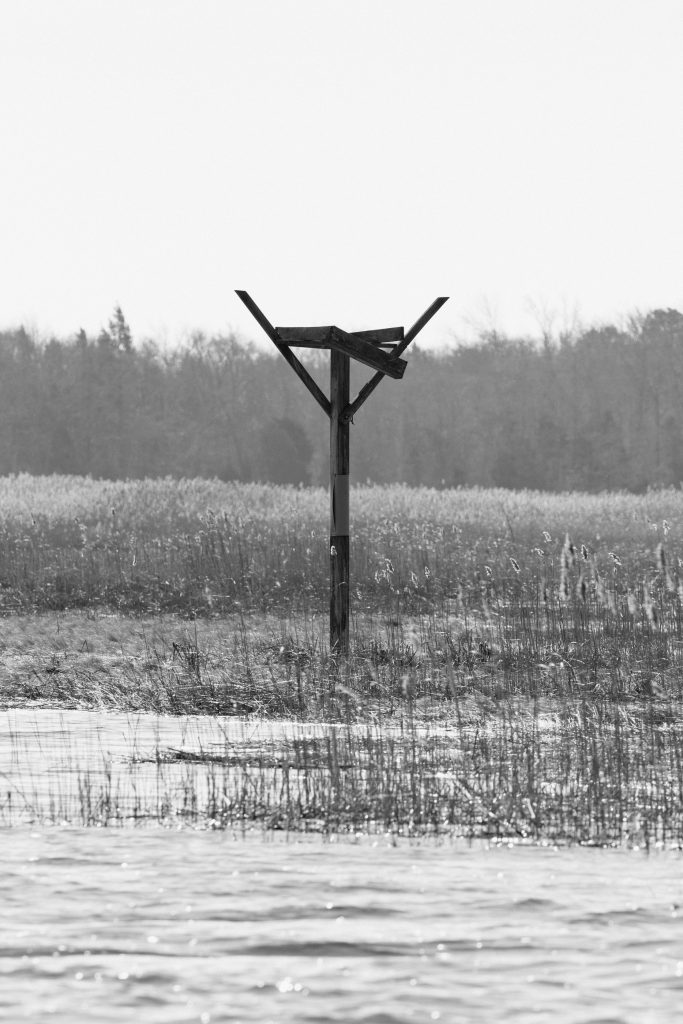
An empty osprey nest on a sandbar located on Barnegat Bay.
In the coming weeks CWF staff, NJDEP Biologists, and a handful of dedicated volunteers will descend onto the coastal saltmarshes of New Jersey to conduct a census of nesting ospreys. The last census was conducted in 2017 when 668 nesting pairs was recorded. They will survey remote areas of back bays by boat. Nests are surveyed in a variety of methods, with ladders being the traditional method, which allow for closer inspection of nests and banding of young for future tracking. Other nests are surveyed from a distance using optics or cameras with telephoto lenses, a mirror, smartphone or GoPro on an extension pole and a sUAS (when operated by a FAA licensed unmanned pilot). The goal is to recorded the total number of nesting pairs throughout the State.
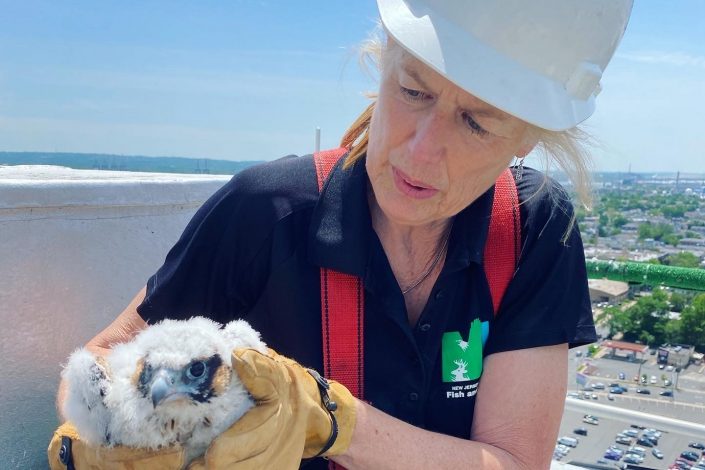
Kathy Clark carefully places a young falcon in a reusable shopping bag.
On May 23, NJDEP Fish & Wildlife Supervisory Zoologist Kathy Clark and myself visited the Union County Courthouse in Elizabeth, NJ to band the three eyases that were produced by the nesting pair of peregrine falcons. We were joined by Union County staff and guests, who assisted with the banding. The nest is located on the roof of the building. As soon as the hatch made a sound, the adults took off and started to defend their nest and flightless young. As we enter their turf, we are dive bombed by the adults — it is clear that the female has become more aggressive — as she flies very close to us on the roof in sweeping dive bomb attacks. As Kathy goes to the nest to grab each young who are placed in reusable shopping bags, I use her trusty feather duster to ward off the adult female. All who enter the roof wear fall arrest harnesses and hard hats. Kathy and I know that the hard hats are not just worn for fall protection, but also from attacks from above. Both of us received bumps from the adult female to our helmets!
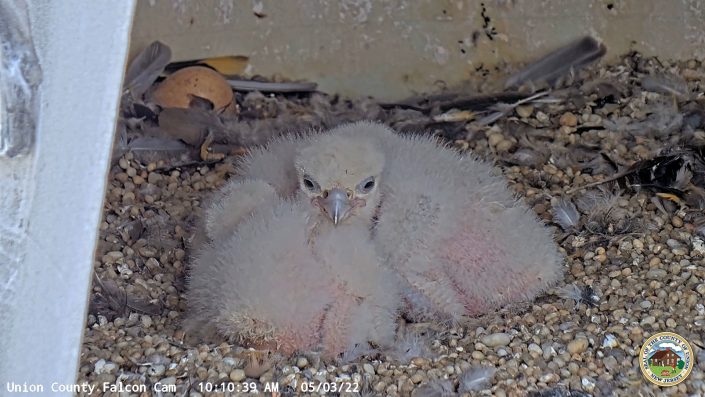
Another season of growth and new life is here! As many species are beginning their annual life cycle to reproduce, some peregrine falcon pairs already have young. The eyases (young falcons) at the Union County Falcon Cam are a prime example. They are now a little over a week old and have been examined and treated for a pigeon borne disease, called trichomoniasis, which adult falcons can transfer to their young. If young falcons would get trich., then they could perish. Kathy Clark, NJDEP Fish & Wildlife Supervisory Zoologist, UC staff and colleague Cathy Malok, w/ The Raptor Trust visited the site to ensure the survival of this brood.
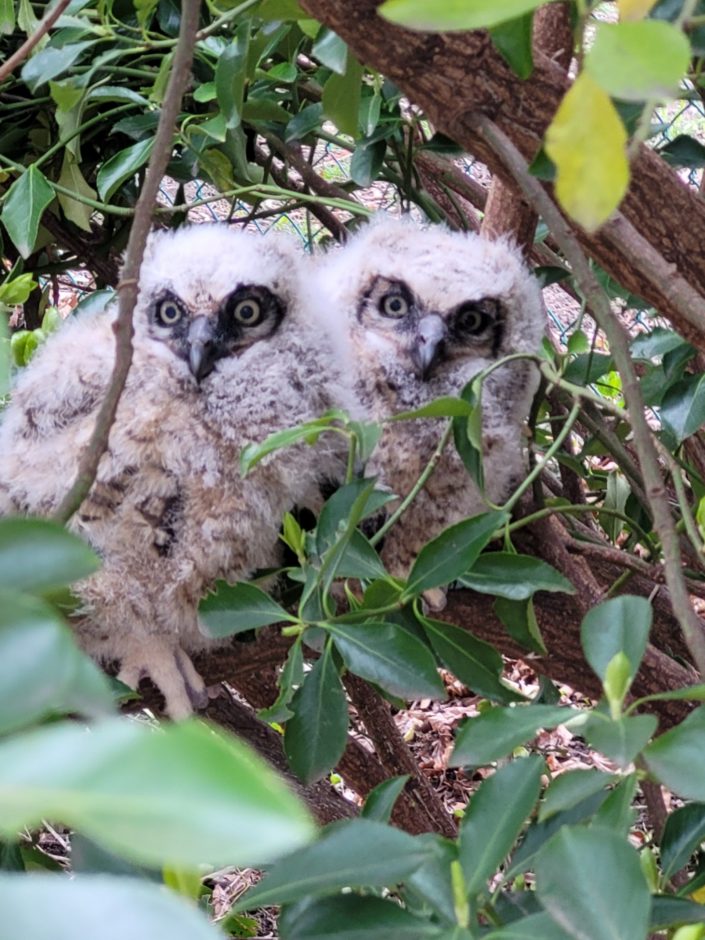
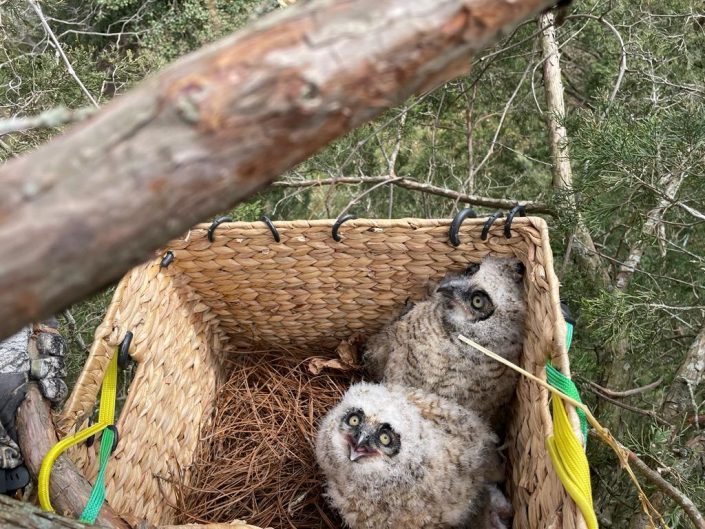
We received a call about a homeowner who found two great horned owlets on the ground. They had fallen out of a nest located in a pine tree in her backyard. The female owl was still sitting in the nest with one chick. Great horned owls use the vacant nests of other bird species and this nest was too small for three growing chicks. At this age the young owls are defenseless from predators, plus a rain/wind storm was predicted for that evening. The plan was to keep the owlets overnight in safe location and renest them the next day.
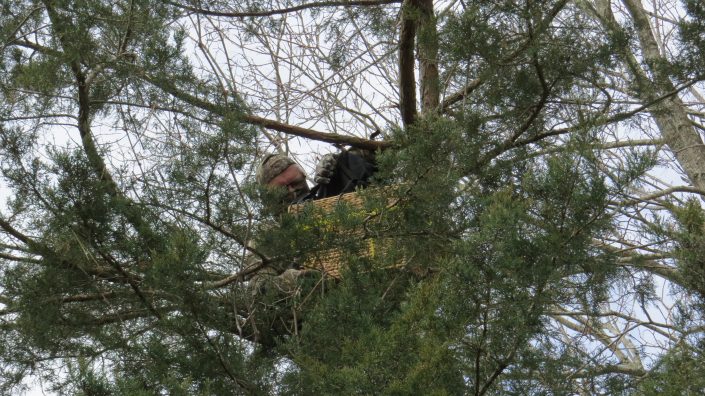
We met Ray Byrant, with Tri-State Rescue & Research, raptor renesting team at the nest site. Due to crowding the owlets would end up on the ground again if placed back in the nest. A basket serving as a substitute nest was secured in a nearby tree that was sturdier than the nest tree. The two nests are close enough that the adults can go back and forth between nests caring for the young. The female owl watched us closely the entire time and the owlets were “clicking” with their bills, so she knew they were there.
The homeowner will keep an eye on the nests to make sure the owlets remain in them until they start to branch. She reports that the adult has been at the basket nest several time since the renest. Thank you to the homeowner for calling to report these owlets, Vicki Schmidt, Matt Tribulski, Ray Byrant and Tri-State Bird Rescue & Research. It takes a team.
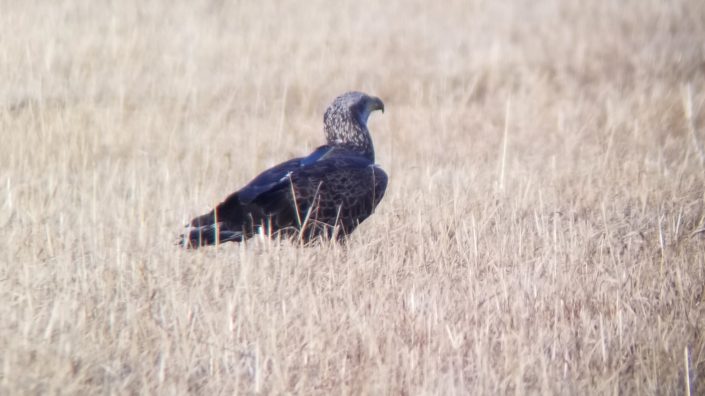
E/63 along Hackensack Jan. 28, 2022 photo by Lisa Katz
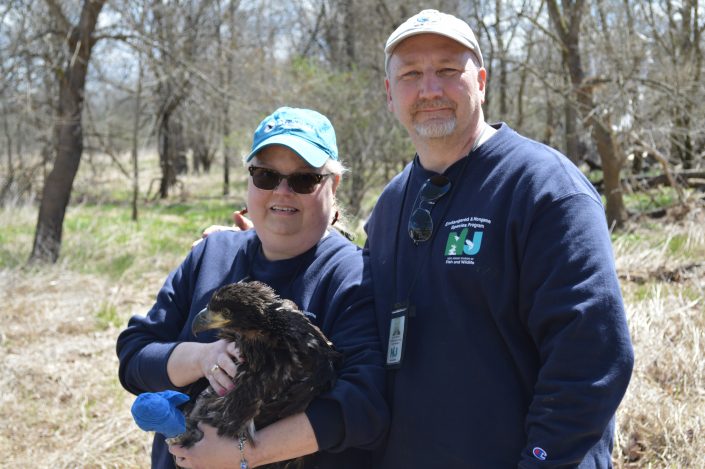
Each year biologists with NJ Fish & Wildlife’s Endangered and Nongame Species Program & CWF venture out to eagle nests to band the chicks, take blood samples and measurements. The chicks are banded with a green NJ band that has a specific code and a silver federal band. At the time of banding the chicks are approximately six weeks old and have a few weeks left in the nest before they fledge. In 2018, we started to publish the re-sightings in the Annual Eagle Report. In 2022, we have already received quite a few re-sightings. E/63 is one of those eagles.
A year ago November I began tracking Duke. I was fortunate to see and photograph him more than a dozen times and wrote two blogs for CWF about these adventures.