The Return of Bald Eagles in New Jersey

Conserve Wildlife Foundation Releases New Story Map: “The Return of Bald Eagles in New Jersey”

By: Brian Henderson, GIS Specialist
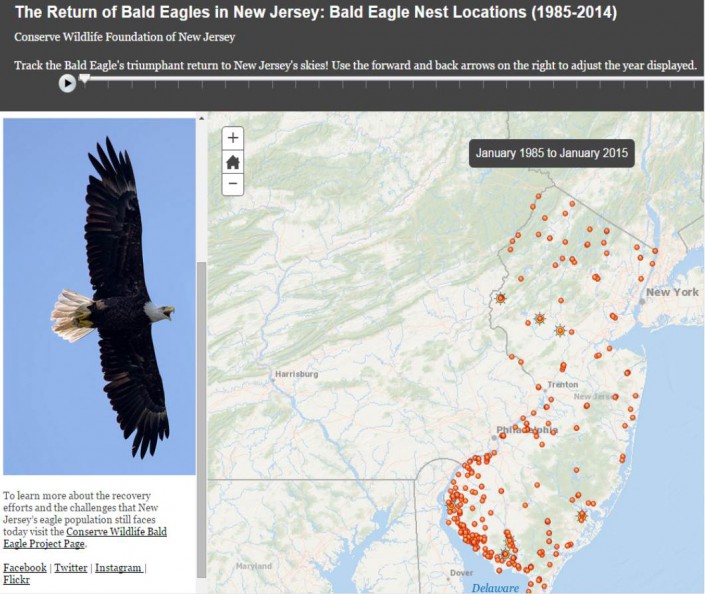
Bald Eagle Story Map

Today, Conserve Wildlife Foundation of New Jersey (CWF) announced the release of “The Return of Bald Eagles in New Jersey” a Story Map that provides a new way to visualize the increasing number of bald eagle pairs nesting in New Jersey over time.


For years, CWF has worked closely with the New Jersey Endangered & Nongame Species Program (ENSP) to track and restore the bald eagle population within the state. It has been a rewarding experience for all involved to witness the return of bald eagles to the garden state, and now the public can appreciate the scope of their return as well.


The recovery of bald eagles nationally and in New Jersey is fairly well known, but some may not realize that as recently as the mid-80’s there was only a single pair of nesting bald eagles in all of New Jersey. The ban of DDT, combined with restoration efforts by ENSP biologists, resulted in population increases to 23 pairs in 2000, 48 pairs by 2005 and 82 pairs in 2010.


In 2014, there were a record 146 active bald eagle pairs nesting in New Jersey. This year, 190 nesting territories are being monitored and currently 88 chicks have been reported at 52 nests; it is still early in the season so we don’t have a count for all nests yet.


“The Return of Bald Eagles in New Jersey” Story Map displays the locations of all the known active bald eagle nests in New Jersey from 1985-2014. Users can choose to view the nests active in a single year or over a longer period of time. By choosing a one year interval and beginning in 1985, it’s possible to watch as nests multiply from a single nest in Bear Swamp to densely populating the Delaware Bay coast and spreading across the southern portion of the state and eventually into almost every county of New Jersey. In 2014, the only counties in New Jersey without an active bald eagle nest were Essex and Hudson.


The Story Map also highlights “featured” nests, or nests of special significance, including the Duke Farms nest which has been featured on a webcam since 2005 and the Millville nest where a juvenile eagle was fitted with a GPS tracking device in 2014. These featured nests include more information, pictures and links to pages that explore related projects in greater depth.


As the bald eagle population has reached record numbers in New Jersey, the raptors have expanded into non-traditional parts of the state, providing more and more people with a chance to glimpse this iconic species. This map highlights the ongoing success of conservation efforts and illustrates that whether you realize it or not, you’re never very far from a bald eagle nest in New Jersey!


Learn more:

Brian Henderson is the GIS Specialist for Conserve Wildlife Foundation of New Jersey.
 

2015 Delaware Bay Shorebird Project Begins!

Another Season of the Delaware Bay Shorebird Project Underway

By: Dr. Larry Niles, LJ Niles Associates LLC

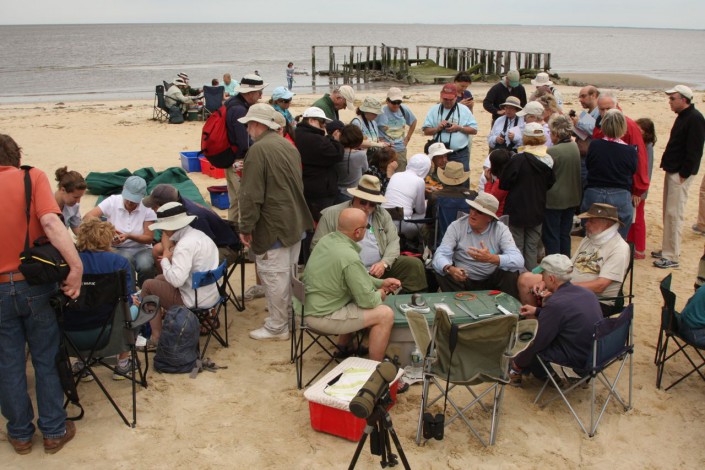
Our 2015 Delaware Bay Shorebird Project began on one of the hottest early-May weekends in memory. Clive Minton, an English-expatriate Australian, and I began the project with an early morning survey of each bay beach – Reeds, Cooks, Kimbles, Pierces, Rutgers, Norburys, Villas – dripping sweat and swatting biting gnats as though it was early June, not early May. The sudden burst of summer weather warmed the bay waters, triggering our first horseshoe crab spawn providing sufficient eggs for newly arriving birds.

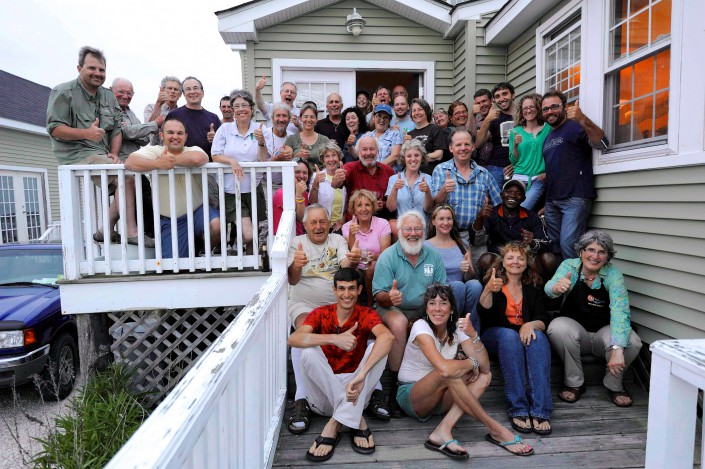
Delaware Bay Team 2015


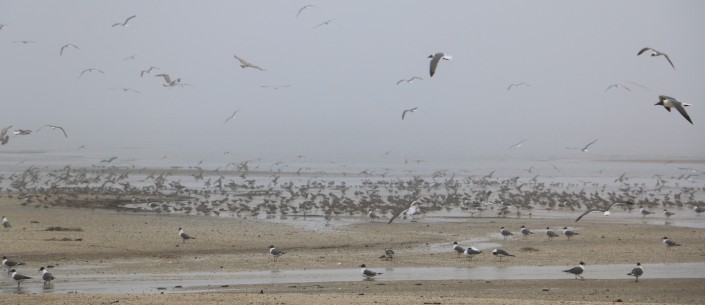
The birds, on the other hand, followed a more normal schedule. We counted only 400 knots, a smaller number of ruddy turnstones and, surprisingly, no sanderlings. We know the birds are en route; Pat Leary in Florida and Fletcher Smith in Georgia report good numbers of knots, but the birds appear stuck because of the unsettled weather and the rare occurrence of a tropical storm making landfall in North Carolina over the weekend. Soon enough they will come.

Red Knot Photo by: Pat O'Leary
Red Knot Photo by: Pat O’Leary

The warm weather and the abundant crab spawn bode well for the birds – we want the early bird to gets eggs.  But they point to one of the many difficulties facing the red knot and other shorebirds. Will the insidious effects of climate change unravel this elegant machine that provides horseshoe crabs eggs just at the time Arctic-nesting shorebird need them to fly on to their breeding areas?

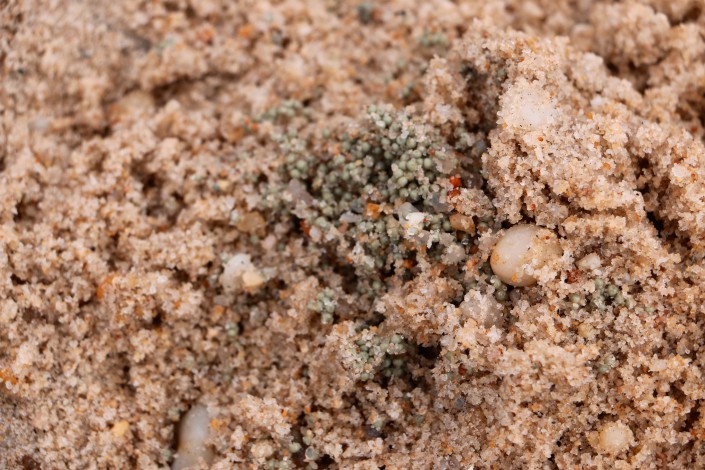
Horseshoe Crab Eggs
Horseshoe Crab Eggs
Horseshoe Crab Eggs
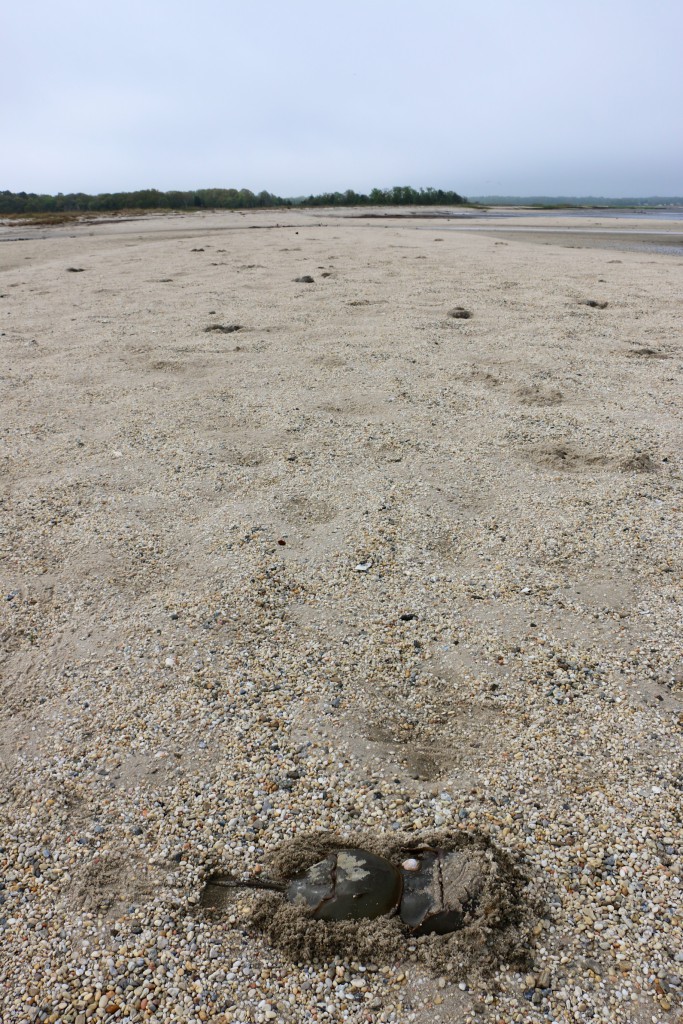
Horseshoe Crabs Spawning

Our project is 19 years old and so provides a perspective virtually unique among wildlife projects. A long-running project of this kind has many advantages, not the least of which is the human family that has formed around our love of birds. We have nearly the same core team in 2015 as we did in 1997, losing and gaining a few team members as time marches on, but always maintaining an esprit de corp, a common purpose, a lasting bond. The shorebirds, the crabs and the many people who love the Delaware Bay owe a debt of gratitude to this team of intrepid researchers.

Photo by: Christophe Buidin

The project’s longevity also creates a perspective rare in the world of bird study. Over 19 years we have seen the collapse of the horseshoe crabs; the dramatic free fall of the red knot that resulted this year in a federal listing as Threatened; the rise of irresponsible commercial exploitation of the natural wealth of the bay; a devastating hurricane and more. And yet each year the birds arrive, the crabs spawn and our team coalesces from every corner of the world. Despite the problems and all the concern, the system persists.


But how long will the system persist?


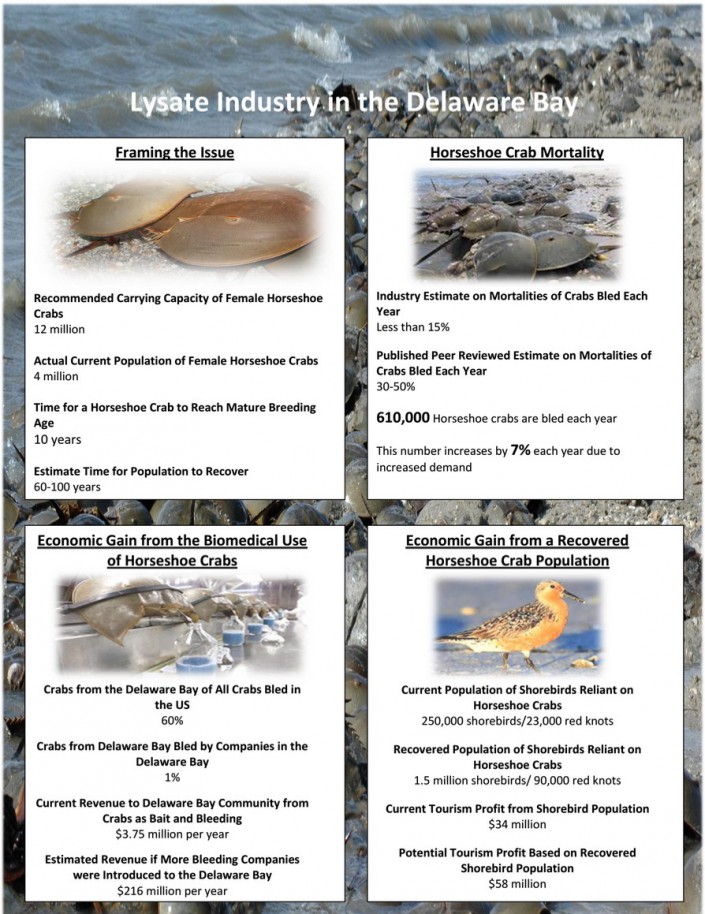
The challenges faced by the birds grow every year. They cling to this amazing migratory bird like barnacles on a wooden boat.  Crabs have not recovered from the devastating overharvest of 15 years ago. The international drug cartels still drain the blood of crabs for the valuable chemical lysate without any responsible management. All the while shorebirds, the red knot in particular, face growing threats from climate change: more frequent storms, destroyed coastal habitat, rapidly-changing arctic tundra habitats.

Lysate Industry

Herein lies the value of a long-term study. This season’s unprecedented early spawn and warm weather could be good or bad.  Either way, by season’s end, the team’s dedication, skill, and plain hard work means we will know what happened and what it means compared to 18 other years.

Early Red Knots
Early Red Knots on Baycove Beach on Delaware Bay


Dr. Larry Niles has led efforts to protect red knots and horseshoe crabs for over 30 years.

Horseshoe Crab Tagging and Monitoring in Raritan/Sandy Hook Bay

Bayshore Regional Watershed Council Looking for Volunteers to Help Out Four Nights in May and June

By: Lindsay McNamara, Communications Coordinator

Photo by: Joe Reynolds

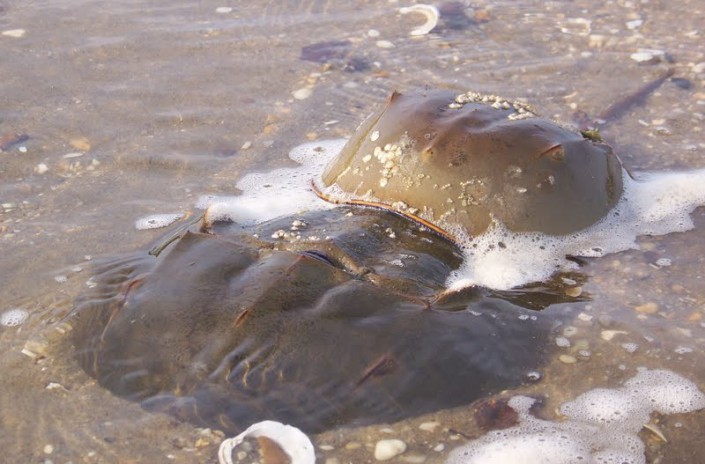
The Bayshore Regional Watershed Council (BRWC) is looking for volunteers to help monitor and tag horseshoe crabs in Sandy Hook and Raritan Bay this May and June. Since 2009, BRWC has been collecting hard data through their volunteer-driven monitoring and tagging program. This data is used to help analyze the population of horseshoe crabs in the region and better inform conservation efforts to protect them.


Lately on the Bayshore, the Council has seen a ratio of about 35 males per 1 female, which is a cause for concern. Why are there so few females? How will the population continue to survive in the region with such a low number of mature, female horseshoe crabs?


BRWC investigated the issue and found that New York State is harvesting about 100,000 horseshoe crabs a year from the Harbor. Female horseshoe crabs are frequently harvested because their eggs are used as bait for fishermen. Horseshoe crab numbers have dropped dramatically in New York area waters, BRWC thinks in part because of the harvest. According to the Council’s website, over the last 150 years, horseshoe crab populations have declined 90%. What can concerned citizens do to help protect the current population of horseshoe crabs in Sandy Hook/Raritan Bay from further decline?


Volunteering with Bayshore Regional Watershed Council is a great place to start. Volunteers monitor and tag horseshoe crabs on four nights (alligned with the new and full moon and the tides) through May and June on Sandy Hook/Raritan Bay. The volunteers record clusters, single females, single males, swimming pairs, and other data points on tally sheets at five different locations on the Bayshore. The recordings function as a sampling of the population; volunteers monitor an area of 1,000 feet by 6 feet on the beach. BRWC volunteers can see anywhere from 10-125 horseshoe crabs a night, depending on the site.


Adult horseshoe crabs are also tagged. The tag displays a New Jersey Division of Fish and Wildlife phone number that can be called if the horseshoe crab is seen again. These tags and calls by the general public help biologists to better understand horseshoe crab behavior and where they go when they are not spawning. BRWC suspects that older horseshoe crabs return to the ocean out past the continental shelf, while younger horseshoe crabs stay in the bay. Volunteering will help the Council collect more data to analyze these observations and trends.


Take action to help protect these over 250 million year old creatures:

Bayshore Regional Watershed Council is recruiting volunteers at:

  • Cliffwood Beach in Aberdeen Township
  • Conaskonck Point in Union Beach
  • Leonardo Public Beach in Middletown Township
  • The mouth of Many Mind Creek in Atlantic Highlands
  • Plum Island at Sandy Hook National Recreation Area

Dates and times for the 2015 monitoring program are:

  • Monday, May 4, 2015 at 8:30pm
  • Monday, May 18, 2015 at 8:30pm
  • Tuesday, June 2, 2015 at 8:30pm
  • Tuesday, June 16, 2015 at 8:30pm

For more information, visit Bayshore Regional Watershed Council’s website.


Lindsay McNamara is the Communications Coordinator for Conserve Wildlife Foundation of New Jersey.

Photos From the Field: Pilesgrove Eagle Nest Six Years Later

A Look at the Pilesgrove Eagles Nest Over Time (2009-2015)

By:Larissa Smith, Wildlife Biologist and Volunteer Manager

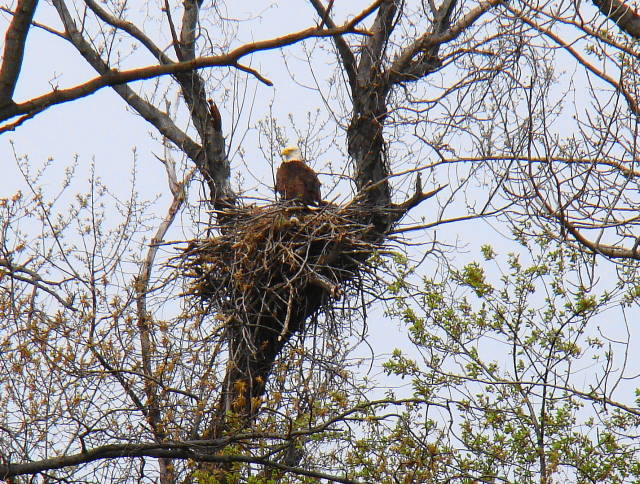
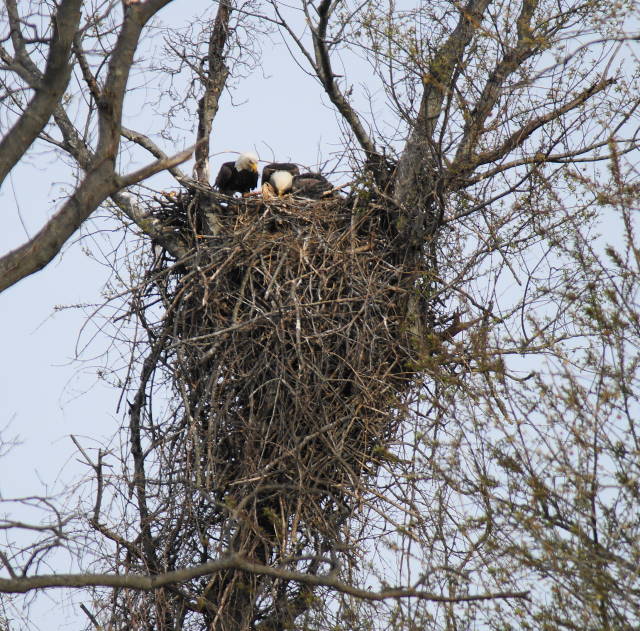
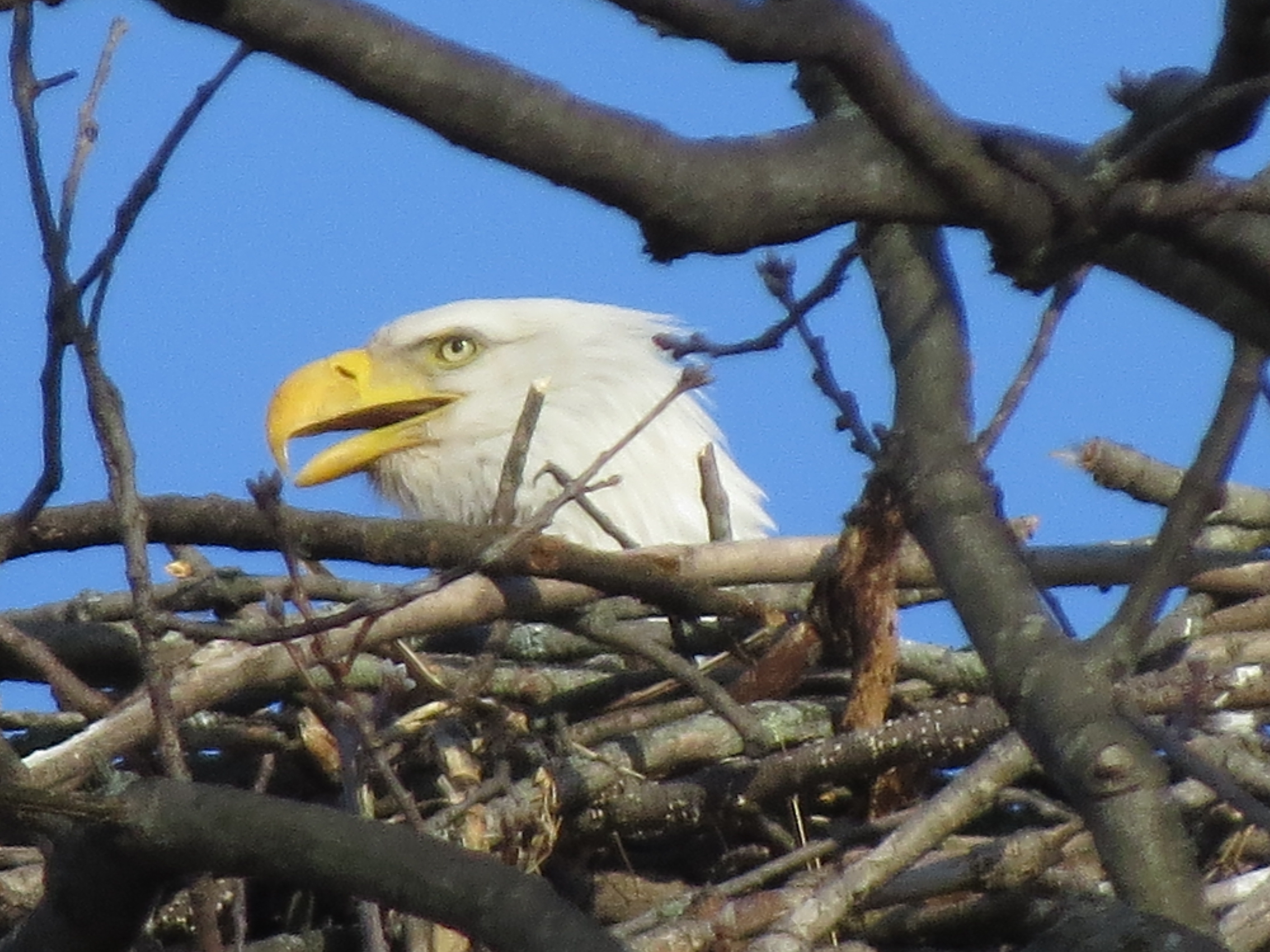
New Jersey Bald Eagle Project Volunteers Jeffrey and Cathy White have been monitoring the Pilesgrove eagle nest since the pair’s first nesting season in 2009. The pair has successfully raised and fledged 9 young for the past six years. This season the pair has two chicks which are currently six weeks old. Jeffrey took a photo of the nest on April 19, 2015. He then went back through his photos and found one that he taken on the same date April 19, 2009 in their first nesting season. This comparison really shows just how large eagle nests can get after years of use.

Pilesgrove nest 4/19/2009@J. White
Pilesgrove nest 4/19/2009 Photo by: J. White


Pilesgrove nest 4/19/2015@J. White
Pilesgrove nest 4/19/2015 Photo by: J. White

Learn more:

Larissa Smith is a Wildlife Biologist and the Volunteer Manager for Conserve Wildlife Foundation of New Jersey.
Dedicated, Passionate Hunterdon County Computer Teacher Wins Statewide Wildlife Education Contest

Contest winner to help band EagleCam chicks at Duke Farms next month

By: Lindsay McNamara, Communications Coordinator

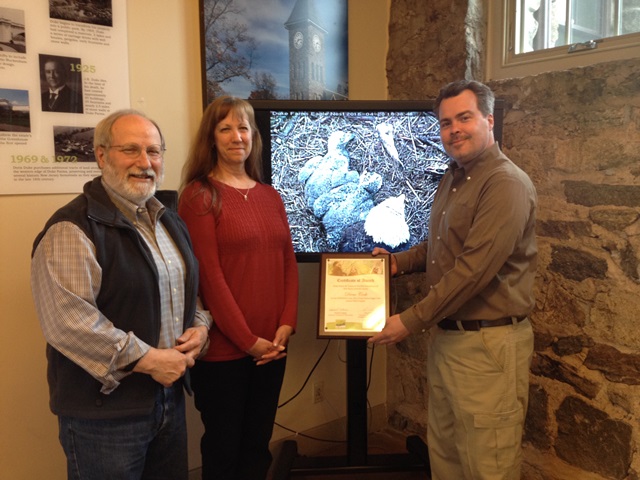
From Left to Right: Duke Farms Executive Director Michael Catania, Contest Winner Diane Cook, CWF Executive Director David Wheeler

Copper Hill School computer teacher Diane Cook was recognized by Duke Farms and Conserve Wildlife Foundation for winning their EagleCam lesson plan contest earlier this week. Cook will join wildlife biologists to help band the new Duke Farms EagleCam chicks next month.


The EagleCam Lesson Plan contest, jointly organized by Duke Farms and Conserve Wildlife Foundation, called on educators to submit lesson plans incorporating the Duke Farms EagleCam into their classrooms. Installed in 2008, the Duke Farms EagleCam, a web cam on a tree adjacent to a Bald Eagle nest, has provided a streaming look into the daily lives of the eagle family for over 10 million viewers.


Diane Cook submitted three creative lesson plans for the contest and is working with the Duke Farms and Conserve Wildlife Foundation EagleCam team to expand the camera’s potential as an educational vehicle.


“Duke Farms is delighted to support dedicated teachers that bring nature to life in their classrooms. Diane Cook’s winning lesson plan featured innovative strategies to teach digital citizenship through student observations of the nesting eagles,” explained Michael Catania, Duke Farms Executive Director. “Her participation in this year’s banding of the Duke eagle chicks will be a highlight for our staff.”


The EagleCam has been a staple of Diane Cook’s classrooms since the webcam was installed in 2008. Cook began blogging about the eagles in 2011 and allows students in grades kindergarten through four to share their thoughts, observations or questions on what they see happening in her computer literacy class. Cook also live streams the EagleCam in her classroom for her students to watch. Her first graders use the webcam as a part of an internet safety unit and her third and fourth graders use the EagleCam to learn how to write blogs themselves.


“Watching the EagleCam gives us all, adults and students, the opportunity to experience nature happening right before our eyes. It opens the way for meaningful discussions and great questions, both at school and at home as families watch together,” said Computer Literacy Teacher and Contest Winner Diane Cook. “This year, I am using the EagleCam to teach how to write a thoughtful and meaningful comments in social media forums. Fourth graders are learning how to blog. They are excited to write about a topic that excites them.”


“As a dedicated and inspiring teacher, Diane Cook is helping us realize the incredible potential for connecting our kids with the natural world around us,” stated David Wheeler, Conserve Wildlife Foundation Executive Director. “The amazing comeback of Bald Eagles across New Jersey mirrors the recovery that our state has made from the devastating legacies of unchecked pollution. Teachers like Diane Cook work so hard to make sure the next generation of leaders understands first-hand how much all of us – humans and Bald Eagles alike – depend on a clean and healthy environment.”


Originally from Branchburg, New Jersey, Cook now resides in Ringoes. She has been an educator at Cooper Hill School in the Flemington Raritan School District for 19 years, teaching first grade, second grade and now computer literacy. Cook gets outside as often as she can, and she enjoys gardening, birding or looking for other wildlife, hiking, walking, fishing, and learning her newest craft of photography.


“I’m hoping to instill in all who learn about the EagleCam in my class a sense of wonder, appreciation for our natural world, and a desire to take care of our world,” explained Cook. “Environmental science is one of my passions. I want to pass along a small part of that to others.”


Lindsay McNamara is the Communications Coordinator for Conserve Wildlife Foundation of New Jersey.
Volunteers needed to help protect terrapins!

Training Session scheduled for May 12th at 6pm in Tuckerton
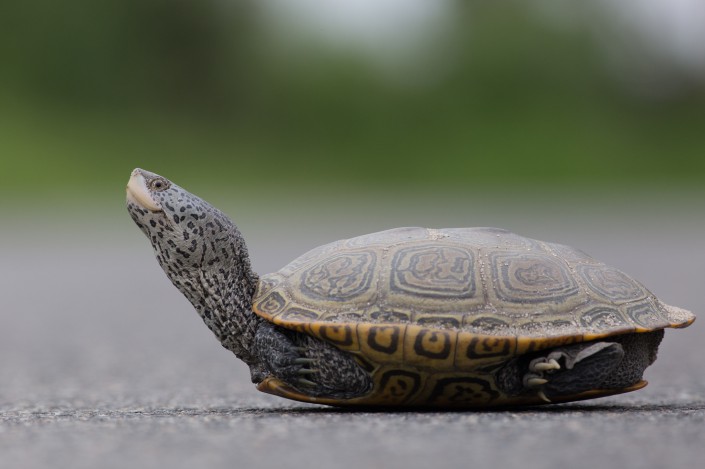
A female terrapin pauses while crossing Great Bay Blvd in Little Egg Harbor, NJ.

We work hard to protect wildlife for future generations to enjoy. One of those species, who is largely an underserved species in New Jersey is the northern diamondback terrapin. Terrapins are so cool yet hardly noticed by many. They face a HUGE amount of threats. To list a few (from greatest to least): Poaching, drowning in crab traps, road mortality, predation (usually of eggs or young), and collisions with boats and boat props. That’s a long list of threats to the health of their population, which no one really knows how they are doing…

What we’ve done with them in Tuckerton and Little Egg Harbor is address a problem which was believed to be the root cause for their decline in the area. Studies that have been done in the area have stated that the overall size and age of terrapins has decreased over time. Another documented the total road mortality rate at 70% of individuals that crossed the road (the actual rate in a more recent study was around 30%, but that’s still high and having an impact). Either way, each year many terrapins are being injured and killed by motor vehicles.

Each year we recruit volunteer “Terrapin Stewards” to help patrol area roads. This hardy and extremely dedicated group of volunteers work tirelessly to prevent terrapins from becoming road kill and also collect valuable data on their annual migration to find suitable nesting areas. On May 12th at 6:00pm we are hosting a short training session for anyone interested in volunteering this year. Attendees will also learn more about all of the work that we’ve done over the past 5 years.

Calling All New Jersey High School Students – Win a Scholarship!

Enter Conserve Wildlife Foundation’s New Species on the Edge 2.0 Contest by May 22, 2015

By: Lindsay McNamara, Communications Coordinator


Attention New Jersey High School Students!


Love experimenting with new multimedia and technology programs? Want to express your concern for New Jersey’s endangered species and help show the public why wildlife protection is important in the Garden State? Make sure to enter our Species on the Edge 2.0 Multimedia Contest!


Open to all New Jersey high school students, this contest invites students to submit a video, app, podcast, digital graphic design, webpage, or other multimedia component showing why wildlife protection is important in New Jersey. Watch the new Species on the Edge 2.0 video, created by 2015 Video Intern Tyler Grimm, to learn more about this great opportunity.


Thanks to PSEG, our generous sponsor, first place, second place and third place entries will be awarded scholarships! For more information, visit Conserve Wildlife Foundation’s website and watch our new Species on the Edge 2.0 video. All entries due by Friday, May 22, 2015.


Lindsay McNamara is the Communications Coordinator for Conserve Wildlife Foundation of New Jersey.
 

Spring has Sprung on the Delaware Bayshore

CONTINUING THE 2015 RESTORATION SEASON AT FORTESCUE AND THOMPSON’S BEACH

By: Lindsay McNamara, Communications Coordinator

Spring on the Bayshore is in full swing, there are ospreys hunting in Dividing Creek.

Conserve Wildlife Foundation of New Jersey and American Littoral Society are moving right along with this season’s restoration work in Delaware Bay! Currently, we are working on projects on Fortescue Beach and Thompson’s Beach. Read more about our restoration work on RestoreNJBayshore.org.


Dr. Larry Niles of LJ Niles Associates LLC, a leader in efforts to protect red knots and horseshoe crabs for over 30 years, has shared updates throughout the month of April on the blog of RestoreNJBayshore.org:


Visit our restoration blog on RestoreNJBayshore.org often to read more updates on our progress!

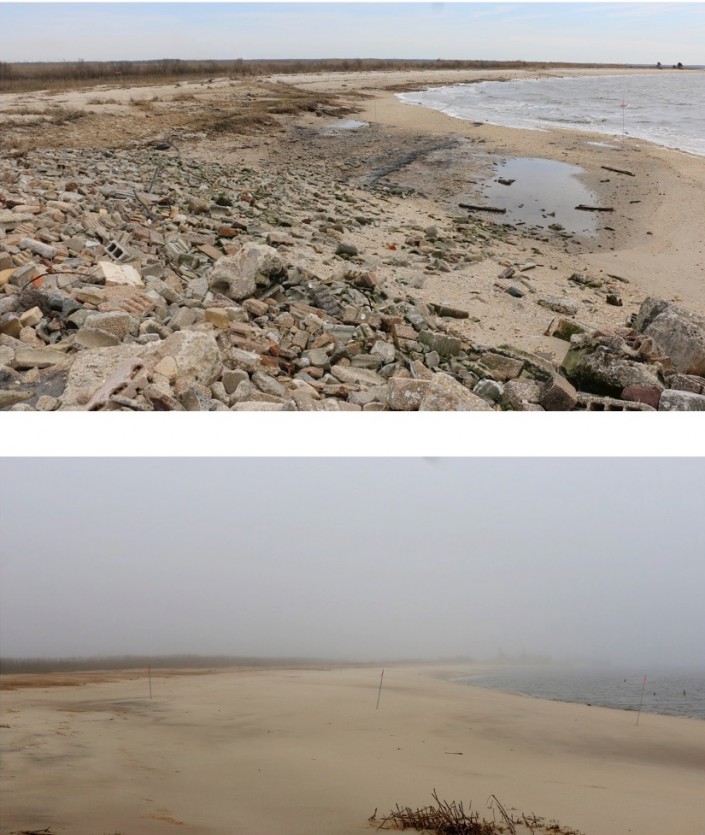
A comparison of Thompson’s Beach before and after our restoration work.


Lindsay McNamara is the Communications Coordinator for Conserve Wildlife Foundation of New Jersey.
 

New Jersey Banded Eagle “Jersey Girl” Makes the News

Update on New Jersey eagle nesting in Pennsylvania

By: Larissa Smith, Wildlife Biologist/Volunteer Manager

B/64 "Jersey Girl" 3/27/15@L. Oughton
B/64 “Jersey Girl” 3/27/15@L. Oughton

Back in June of 2014, I wrote a blog when Conserve Wildlife Foundation was contacted by Linda Oughton regarding a New Jersey banded bird nesting in Montgomery County, Pennsylvania. The female referred to as “Jersey Girl” recently made the news in The Reporter.


One correction, the article states that B/64 is from Northern New Jersey, she was actually banded in southern New Jersey, Cumberland County in 2004.


The Pennsylvania pair started incubating on February 14th, 2015 and hatching occurred the weekend of March 21st, 2015. It has been confirmed that the pair has two chicks this season.


Learn more:


Larissa Smith is the Wildlife Biologist/Volunteer Manager for Conserve Wildlife Foundation of New Jersey.
Over 130 Volunteers “Shell-a-Brated” Delaware Bay

Oyster Reef Build on South Reeds Beach a Huge Success

By: Lindsay McNamara, Communications Coordinator

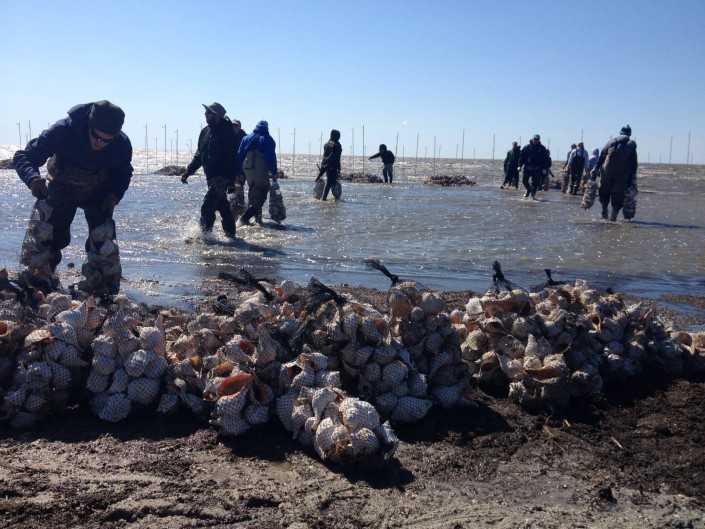
Photo by: Lindsay McNamara

Over 130 volunteers and veterans worked alongside Conserve Wildlife Foundation of New Jersey and American Littoral Society to establish a near-shore whelk shell bar at South Reeds Beach in Cape May Court House on the Delaware Bayshore on Saturday, April 4, 2015. The shell bar was built to prevent sand loss from wind-driven waves. During the “Shell-a-Bration,” an approximately 200-foot oyster reef was constructed offshore to test whether the reef bars help reduce beach erosion and create calmer water for spawning horseshoe crabs.


“We are rebuilding the habitats of Delaware Bay to strengthen its ecology, its communities and its economy. This reef approach will be a key technique which we will try to expand around the Bayshore,” stated Tim Dillingham, American Littoral Society Executive Director.


The South Reeds Beach Oyster Reef is one of the many projects that American Littoral Society and Conserve Wildlife Foundation are working on to restore the ecology and economy of the Delaware Bayshore, thanks to generous funding by the National Fish and Wildlife Foundation.


“The project focuses on creating resiliency in Delaware Bay beaches while improving their usefulness to horseshoe crabs. We have a great challenge: how do we create a reef to protect against damaging Bay storms without stopping horseshoe crabs from getting ashore to breed,” said Dr. Larry Niles, a biologist who leads the beach restoration efforts for Conserve Wildlife Foundation of New Jersey and American Littoral Society, and has studied Red Knots for three decades. “This project is an experiment to help us do both,” he added.


Shorebirds, like the federally listed Red Knot, depend on an uninterrupted supply of horseshoe crab eggs when they stopover in Delaware Bay during their migration. In recent years, countless horseshoe crab eggs have been lost because of the devastating storms that swept away the beaches they depend on.


“The time-honored migration of Red Knots to reach the eggs of these ancient horseshoe crabs is a wildlife spectacle of global significance right here in Delaware Bay,” explained David Wheeler, Conserve Wildlife Foundation of New Jersey Executive Director. “Red Knots come to New Jersey’s Delaware Bay from as far away as the southernmost tip of South America to feed on horseshoe crab eggs. It is vital that we promote coastal resiliency projects like this one to support the largest population of horseshoe crabs in the world, and the human communities of the Delaware Bayshore alike.”


The new oyster reef will attenuate waves but still allow for horseshoe crab breeding. In existing areas where crabs can breed without interruption, like creek mouths protected by sand shoals or rock jetties, egg densities can exceed ten times the egg densities on unprotected beaches.


The projects are being funded by National Fish and Wildlife Foundation (NFWF) through their Hurricane Sandy Coastal Resiliency Grants Program, and are being developed in partnership with U.S. Fish and Wildlife Service and New Jersey Division of Fish and Wildlife.


“The Delaware Bayshore is a perfect location to demonstrate how communities benefit from their connection to a healthy natural resource base – for fishing, boating, wildlife watching and tourism,” said David O’Neill, National Fish and Wildlife Foundation Vice President of Conservation Programs. “The economies of Bayshore towns have historically been intertwined with the bay. And with the NFWF Hurricane Sandy grant, American Littoral Society and Conserve Wildlife Foundation of New Jersey are already restoring shorelines to make Bayshore natural resources and communities more resilient for the future.”


Event guests enjoyed a barbecue and oysters, and family-friendly activities like a “Green Eggs in the Sand” Easter Egg Hunt. In addition, local leaders and biologists spoke to the attendees about the oyster reef project at a mid-day “Whelk-come.”


Learn more:

Lindsay McNamara is the Communications Coordinator for Conserve Wildlife Foundation of New Jersey.