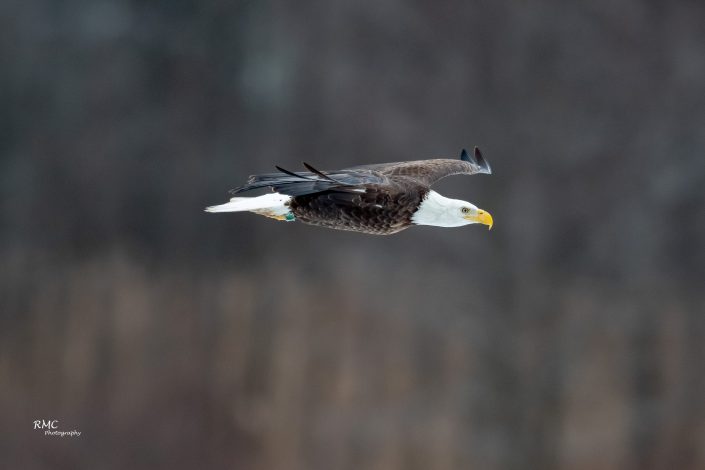
The male at the Duke Farms nest is banded with a green NJ band, A/59. He is nineteen years old this season.
D/59 and female: Feb. 4, 2019@Kathy Clark
On March 24, 2000, at 2 weeks of age, A/59 was fostered from the Greenwich nest in Cumberland County to the Rancocas nest in Burlington County. On May 15, 2000 he was banded, a backpack transmitter attached and fledged on June 3. ENSP’s staff tracked A/59 until the transmitter’s signal was last recorded on October 22. You can read more details in the 2000 Bald Eagle Report. A/59 started nesting at the Duke Farms nest in 2006 and has been in the public eye ever since on the Duke Farms eagle cam.
“Tiny” C/94: Update
We have an interesting update on one of A/59’s offspring, “Tiny” C/94, who has been nesting in CT since 2014. “Tiny’s” original mate was a Massachusetts banded female. In 2017 nest monitor Cyndi Pratt Didan, reported that he had a new mate with a green NJ band on her right leg. Cyndi was recently able to get a photo of the females band and we could read the code as D/15.
D/15 in CT @Cyndi Pratt Didan
In 2010, D/15 was one of two female chicks banded at the Duke Farms nest. Yes, she is Tiny’s sibling. Tiny was banded in 2009. It is interesting that two eagles from the same nest in NJ ended up as a pair nesting in CT and that we are able to know this information via bands and the Duke Farms cam. Cyndi has not yet found where the pair is nesting but will keep us updated.
On Sunday January 13th, 2019 photographer, Bob Cook was taking photos of the ~20 eagles at a lake in a Mercer County park. He noticed that one of the eagles had a green tag on it’s right leg. After reviewing the photos it was established that the band was D/99.
D/99;1/13/19@ Bob Cook
D/99 is from the Duke Farms nest located in Somerset County. He and his two siblings grew up as a celebrities their every move being watched by viewers of the Duke Farms eagle camera. The three chicks were banded on May 12th, 2014. Measurements showed that there there were two males and one female, D/99 was the youngest male. All three fledged from the nest in June 2014.
chicks at Duke Farms nest 5/12/14. D/99 is in the middle.
Unfortunately, in August of 2014 we received a report that D/98, the oldest male, was found dead up in Maine. He most likely died of injuries that occurred during a fight with another eagle. This most recent sighting of D/99 is the first report of either of the two remaining chicks. D/99 will be five years old in April and reaching the age where he will be looking for a mate and establishing his own territory. It is always nice to know that a chick has survived to adulthood and most likely has come back to NJ to nest.
The Conserve Wildlife Foundation of NJ in partnership with the NJ Division of Fish and Wildlife, Endangered and Nongame Species Program, has released the 2018 NJ Bald Eagle Project Report.
“Two hundred-four nest sites were monitored during the nesting season, of which 185 were documented to be active (with eggs) and 19 were territorial or housekeeping pairs. Thirty new eagle pairs were found this season, 20 in the south, nine in central and one in the north. One hundred-twenty-one nests (66%) of the 182 known-outcome nests produced 172 young, for a productivity rate of 0.94 young per active/known-outcome nest. The failure rate was well above average with 61 nests (33%) failing to produce. The Delaware Bay region remained the state’s eagle stronghold, with roughly half of nests located in Cumberland and Salem counties and the bayside of Cape May County.”
The number of active nests has increased while the number of young eagles fledged has decreased since a high of 216 young fledged in 2016. During the 2018 eagle nesting season there was an abundance of cold, wet, windy and snowy weather which was the cause for a portion of the nest failures. As the eagle population increases, there are more eagles competing for territories. This can also be a contributing factor in nest failures. NJ is still in the range of 0.9 to 1.1 young per nest which is needed for population maintenance with a productivity rate of 0.94 young per known-outcome/active nest in 2018. The 2018 NJ Eagle Project Report has all the details on the project including telemetry, re-sightings and recoveries.
The success of the eagle project is due to the tremendous dedication of the NJ Eagle Project Volunteers. They monitor the nests in all types of conditions and education people about the eagles with enthusiasm.
Derelict fishing gear continues to plague the depths of Barnegat Bay. Often lost through storm events or due to boat traffic, lost or abandoned crab pots (ghost pots) become an unintentional deathtrap for a variety of marine species and reduce otherwise harvestable resources. CWF and their partners at MATES, Stockton, and ALS have been working to recover lost pots in Barnegat Bay since 2015.
Over the course of the last three field seasons, 1,300 crab pots have been recovered and their bycatch has been extensively documented. Notably, CWF and MATES have been focusing on how to further help northern diamondback terrapins who often find themselves caught in ghost pots. In 2016, one pot contained the remains of 17 terrapins.
As we enter the fourth field season of pot collections, the project hopes to not only recover as may pots as possible, but also to glean further information on how the pots move in a variety of substrates and under a variety conditions. To bring further awareness to the issue, CWF teamed up with the awesome folks at Citizen Racecar to produce a short informational film about ghost fishing and its effects on Barnegat Bay. Visit our Facebook page to view the video: https://www.facebook.com/wildlifenj/
This project is funded primarily by the National Oceanic and Atmospheric Administration, with additional support by the New Jersey Corporate Wetlands Restoration Partnership and New Jersey Department of Environmental Protection. Covanta and Schnitzer Steel also support the project by recycling the metal in the retrieved crab pots.
Lead poisoning continues to be a serious issue affecting Bald Eagles today. CWF and ENSP biologists produced a brochure to educate hunters about this issue and ask for their help. Below is an excerpt from the brochure. Please view the entire brochure and pass along to anyone you know who is a hunter.
One person can make a difference!
Thank you.
Eagle with lead poisoning at Tri-State Bird Rescue@Erica Miller
“Bald Eagles have made an amazing recovery in NJ since the 1980s. Today the eagle population still faces challenges and one of those is lead poisoning. Lead in the environment is dangerous to eagles as well as humans, and is often deadly. Unintentional poisoning of eagles can occur when they scavenge gut piles from deer or other game species shot with lead ammunition. It takes just a tiny fragment of lead to sicken and kill an eagle. Each year avian rehabilitators receive eagles that are diagnosed with lead poisoning and most will die. There is no good treatment for lead poisoning.”
Some of New Jersey’s eagle pairs are getting an early start on the 2019 nesting season. Eagles in NJ will begin incubation anywhere from January through March. NJ Eagle Project volunteers usually report eagles back and working on the their nests in the late fall/early winter. But some pairs have already been spotted sprucing up their nests in preparation for the upcoming nesting season.
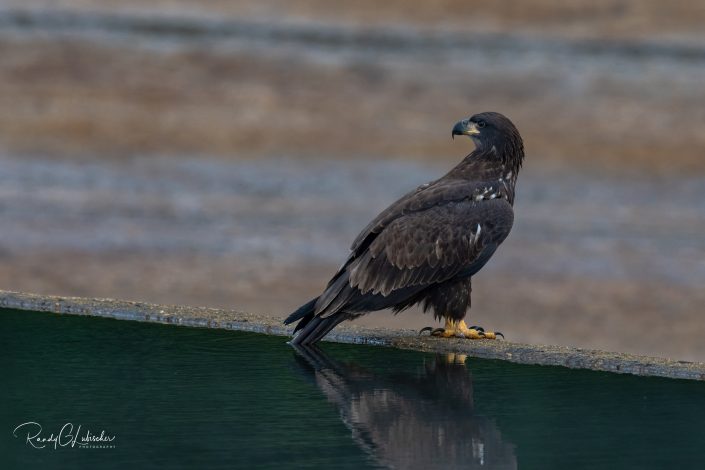
On August 20th, 2018 a resident of Monmouth Beach reported a young eagle that had been perching in the neighborhood and was possibly injured. NJ Eagle Project Volunteer Randy Lubischer, was able to respond and check out the situation. The bird was a hatch year eagle, which means it fledged during this nesting season. The eagle was feeding on a swan carcass and though Randy could get fairly close, the bird was able to fly a short distance and appeared to have an injury to its left leg. The eagle had been seen feeding on the swan carcass for the past few days, so it was assumed that its injury was keeping it from hunting and the bird would only get weaker over time.
So far this season 123 eagle chicks have fledged (taken their first flight). Even after fledging the chicks will stay around the nest area for the next few weeks learning to hunt, fly and survive on their own.
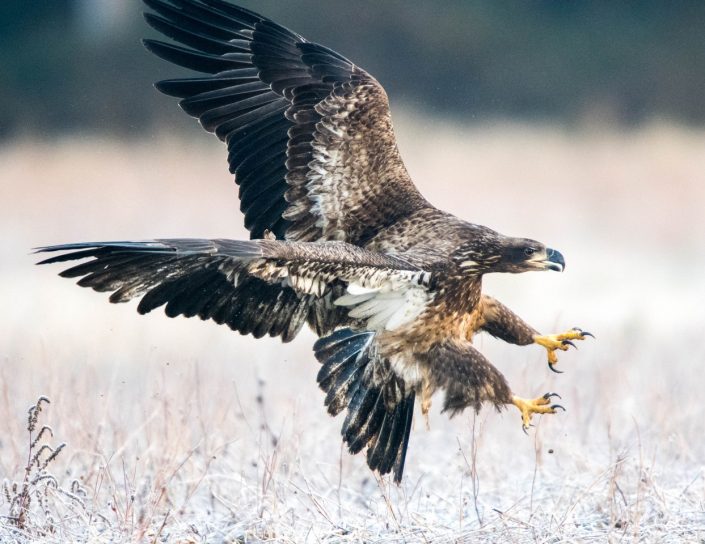
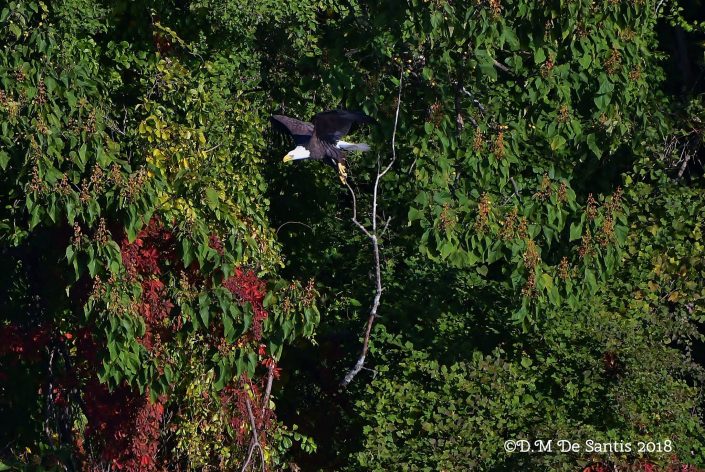
Below are some photos of recent fledges taken by NJ Eagle Project Volunteers
Thanks to dedicated Conserve Wildlife Foundation of NJ staff and volunteers three osprey chicks were saved from what could have been an unhappy fate.
NJ Osprey Project Volunteers Matt Tribulski, Wayne Russell and John King were surveying osprey nests in the Wildwood back bay area this past weekend. They checked on a nest with three chicks and found that the platform top was broken and a strong possibility it could collapse, especially with any heavy rains or winds. The chicks weren’t old enough to fly and would have fallen to the marsh and died. Continue reading “Osprey Chicks Get A Necessary “Home” Upgrade”
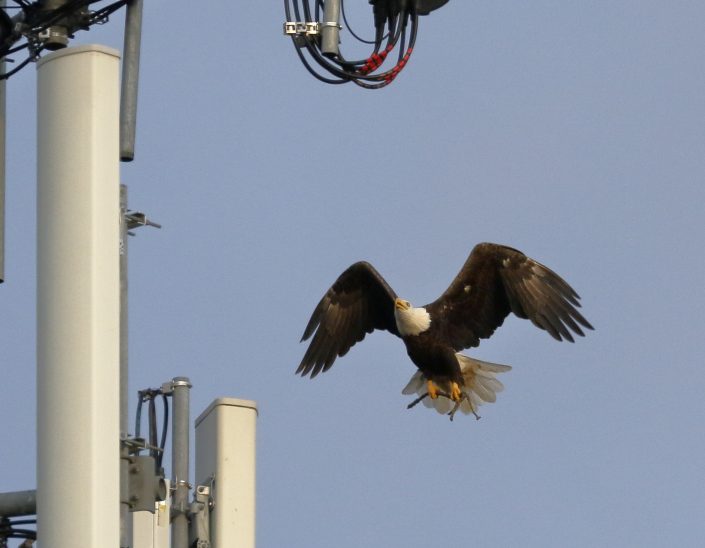
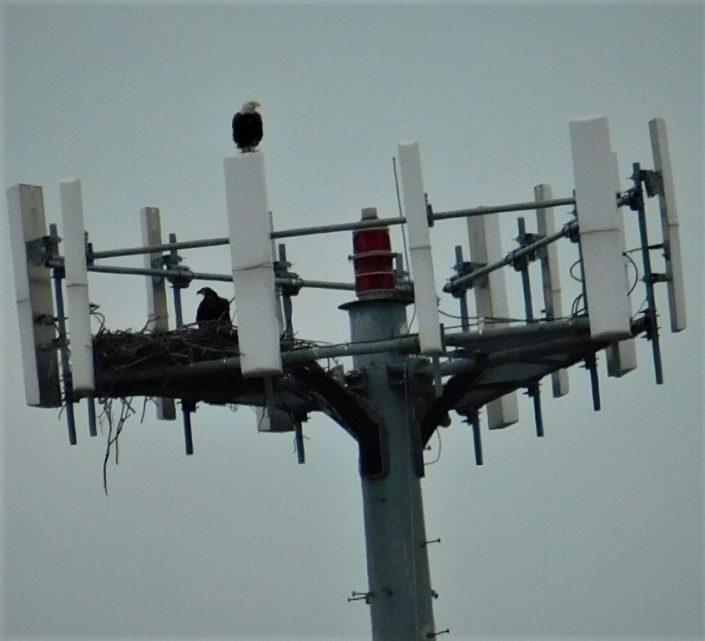
This is a story that shows how individuals and groups work together to help eagles in New Jersey. On May 23rd wildlife rehabilitator, Vicki Schmidt, picked up and transported an injured juvenile eagle to Tri-State Bird Research and Rescue. The eagle had been reported injured and on the ground by a concerned citizen in Hopewell Township, Cumberland County. It was found near a known eagle nest which is located on a communications tower and the injured eagle was assumed to be the chick from that nest. New Jersey Eagle Project volunteer Jim McClain was able to confirm that he last saw the chick on May 19th, perched on one of the tower railings. When he returned on the 23rd and didn’t see the chick, he had assumed it fledged, not knowing that it had been taken to Tri-State.
Young eagles start “branching” (hopping on to branches) as well as; flapping, jumping, and hovering, to strengthen their wings for flight. Eagles fledge around 10- 12 weeks of age. In this case, the young bird most likely took it’s first attempt at a flight and hit an object which injured it’s wing and left it unable to fly. If no one had spotted this bird on the ground it could have been predated or died.
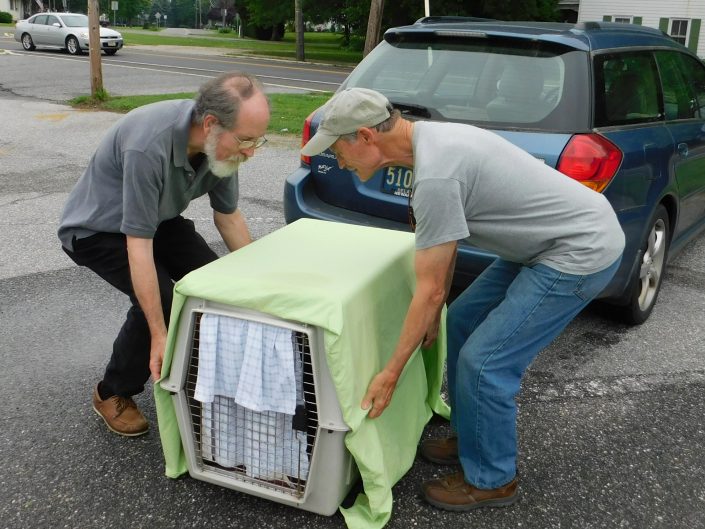
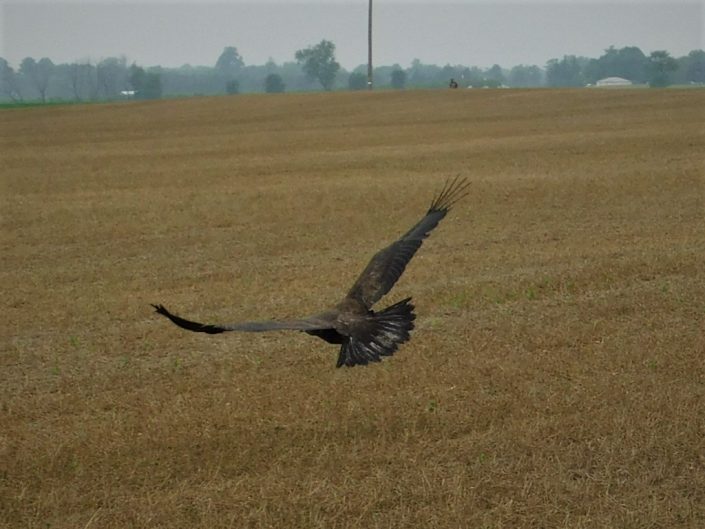
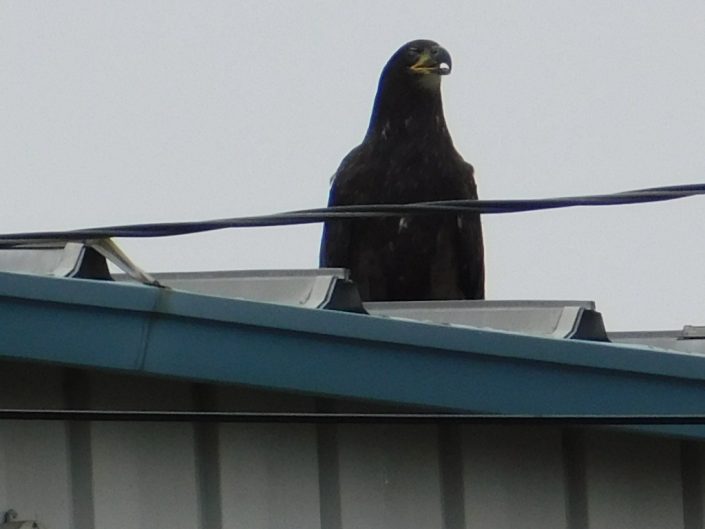
Tri-State reported minor soft tissue damage to the wing, but that the bird was alert and perching. The young eagle continued to recuperate and was banded with a federal band and released on June 1st. Tri-State volunteer Tom Jones transported the bird back to the nest area and with the help of volunteer, Jim McClain, the bird was released. The bird flew and landed on a nearby roof where it perched.
Eagle Release June 1, 2018@J. McClain
June 1, 2018@J.McClain
eagle perched after release@J. McClain
Jim reported that the fledgling and both adults were seen at the nest on June 7th and 9th, so we know that the young eagle is doing well. Thank you to all involved in this lucky eagles recovery.