Interview with Joanna Burger, “Life Along the Delaware Bay” co-author
How long have you been involved in the Delaware Bay?
I first censused shorebirds in Delaware Bay in the late 1970s as part of a project to determine how important Delaware Bay, Barnegat Bay, and Raritan Bay were to migrant shorebirds, and we discovered the masses of shorebirds foraging there. After that, birders flocked in masses to see the thousands of shorebirds using the bay. Well over 100,000 knots, and large numbers of other shorebirds regularly moved through the bay, and the numbers have declined since then.
How did you get interested in the region and its wildlife?
I have loved the shore and all the wildlife along it since coming to New Jersey. The whole Jersey shore teems with a wide diversity of birds, as well as other creatures. We have some of the largest and healthiest colonial waterbird colonies along the Atlantic Coast, and the Delaware Bay ecosystem is among the most enchanting and interesting ecosystems along the US East Coast. Once I came to Rutgers, I began studying birds along the Atlantic coast and along Delaware Bay. Since the shorebirds move through Delaware Bay in the early spring, I can study them there as well as the colonial nesting birds in Barnegat Bay.
Why should the shorebirds that move through Delaware Bay be protected?
The shorebirds that move through the bay each May and early June have migrated from a long distance, and have yet to fly to the Arctic to breed. These are long distances, and the ones that arrive from South America have depleted their body of all fat. Knots, for example, may weigh as little as 100 grams when they arrive, and have to nearly double their weight so that they can fly to the Arctic to breed. They not only have to reach the Arctic, but they need enough food resources (body fat) to lay eggs as there is little food when they first arrive.
Basically the shorebirds have 10 days to 2 weeks to nearly double their body weight. That is a lot of pressure, and they need safe places to roost at night, and to forage during the day.

What has the shorebird work shown us?
We have learned how important the Bay is to the survival of Red Knots, Sanderlings, Sempalmated Sandpipers, Turnstones, and others; how critical it is to protect the foraging shorebirds so they can gain weight; how long the flights of Red Knots are (in distance and in time); and our recent work with geolocators has even shown us how many knots can actually begin incubation once they reach the Arctic. The use of geolocators has allowed us to know where Red Knots are during their entire cycle, from Delaware Bay to the Arctic, from the Arctic to their wintering grounds (some going as far as Tierra del Fuego), to their return to Delaware Bay.
You work on laughing gulls – what should the reader know about these birds that makes them so interesting to you?
Laughing Gulls are native to New Jersey, and the breeding population in New Jersey is the largest along the Atlantic coast. Laughing Gull increased in the 1960s through the 1980s largely because open garbage dumps provided an easily accessible food supply, and young that might otherwise have starved after the breeding season, did not. Thus, the population slowly increased. But then there were massive efforts to control Laughing Gulls at Kennedy Airport, and thousands were killed. The combination of this effort, along with the closing of garbage dumps has resulted in a decline of Laughing Gulls in New Jersey.
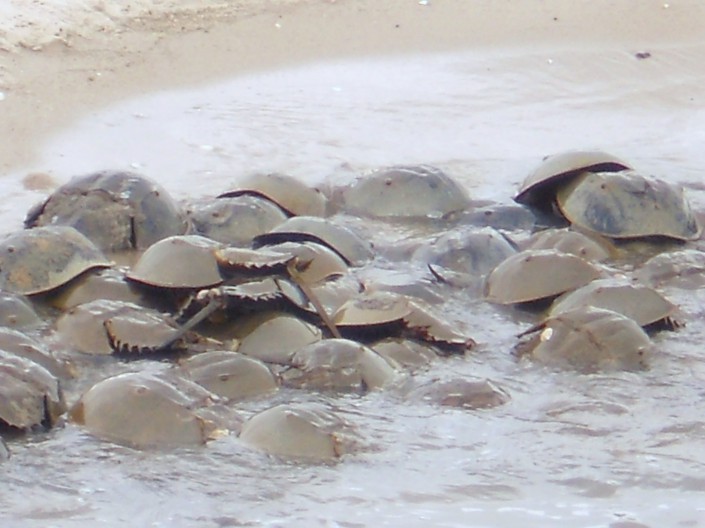
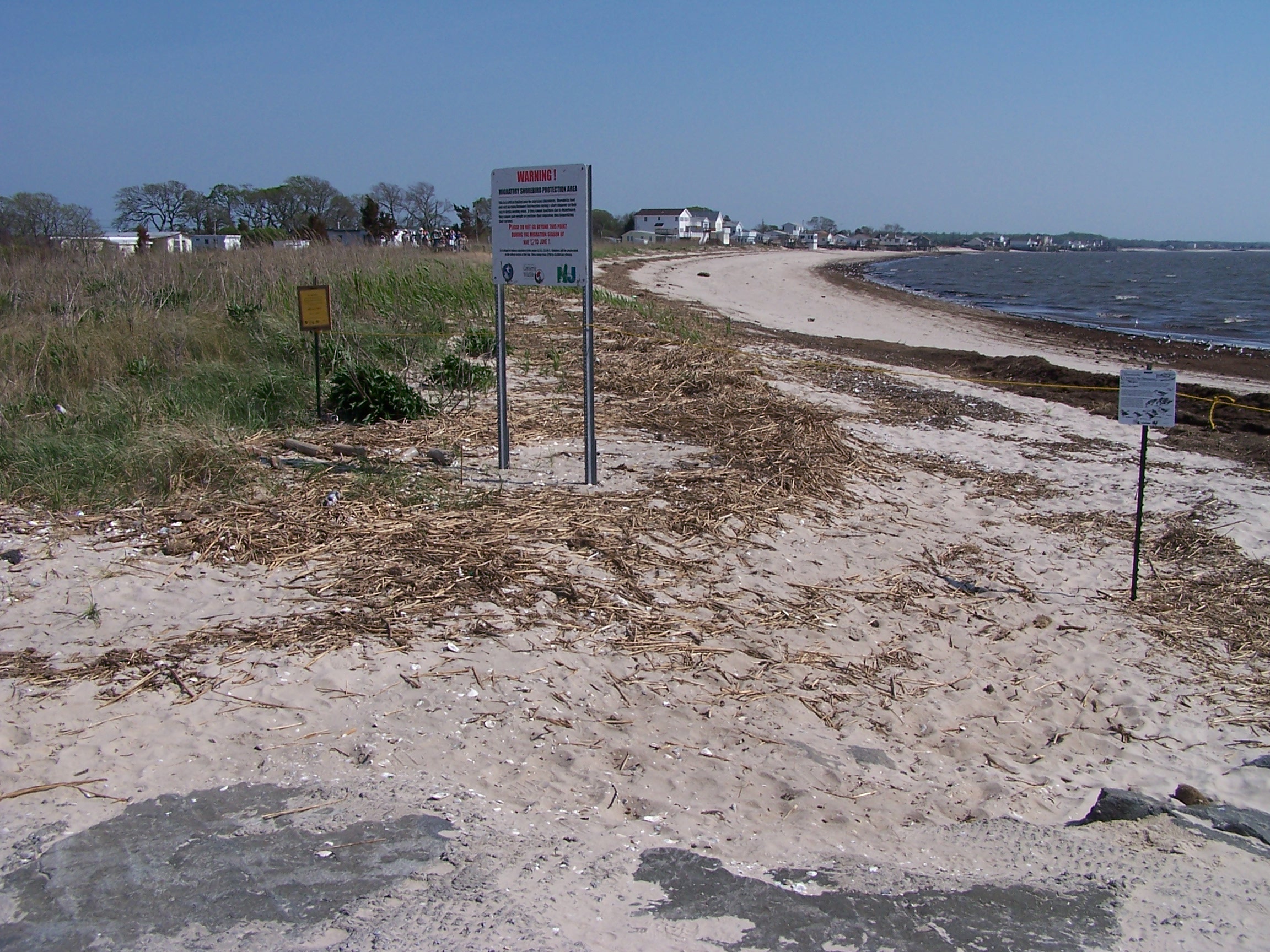
While it may appear that Laughing Gulls are competing with the shorebirds for horseshoe crab eggs on Delaware Bay, the main problem is that when people (or dogs, boats) disrupt foraging shorebirds and gulls, the gulls can return more quickly than the shorebirds, and so they can displace the shorebirds from the best foraging places. It is thus very important to keep people and dogs off the shorebird foraging beaches when the shorebirds are present.
Why did you get involved with writing “Life Along the Delaware Bay?”
I feel very strongly that Delaware Bay is one of the East Coast’s Jewels. It needs to be understood and protected for both the natural ecosystem and for our human needs. The shorebirds, and the Delaware Bay ecosystem, can survive and do very well in the presence of people if we manage the Bay in a manner that is positive for both the ecosystem and people. The bay should flourish, allowing oystermen to farm their oysters, commercial fishermen to have sufficient fish stocks, for recreational fishermen to have good catches, for people to walk and swim, and for all of us to enjoy the Bay, while also allowing the natural ecosystem to flourish.
This will not happen, however, unless people love and appreciate the Bay. There are many many books on Chesapeake Bay, but none on Delaware Bay that takes the broad ecosystem approach that our book does. But more importantly, this is a wonderful and beautiful book that allows us all to appreciate and celebrate the bay.
The creation of the book was a joint effort among scientists, photographers, conservationists and environmentalists, commercial interests, and others who all hellped contribute pictures, ideas, writing, and the support to produce the book, and I am grateful for everyone’s support.
What would you like the reader of “Life Along the Delaware Bay” to learn about this important ecosystem?
That it is one of New Jersey’s truly wild and wonderful places. A place where recreational, commercial, and ecological interests can survive and flourish together. We must preserve it for generations of children, as well as the generations of crabs, fish, and birds that live there.
“Life Along the Delaware Bay” can be purchased through CWF’s online store.