Long-legged spider crab (Libinia emarginata). Photo courtesy of Save Coastal Wildlife.
A special thanks to Juliet Kaszas-Hoch for spotlighting the most recent episode of CWF’s podcast, State of Change, as part of her Art & Entertainment Column on TheSandpaper.net!
The episode, Our Changing Coast, takes a deep dive into how our ocean species could be affected by climate change. CWF Multimedia Producer Matt Wozniak interviewed Dr. Thomas Grothues, a research professor with Rutgers University who specializes in abundance and distribution of fish, as well as Joe Reynolds, the head of Save Coastal Wildlife, a nonprofit dedicated to protecting New Jersey’s coastal species and educating the public about them.
NJDEP & CWF REPORT RECORD NUMBER OF BALD EAGLE NESTS, WITH EAGLES CONFIRMED IN ALL 21 NJ COUNTIES
by Ethan Gilardi, Wildlife Biologist
Photo by Northside Jim
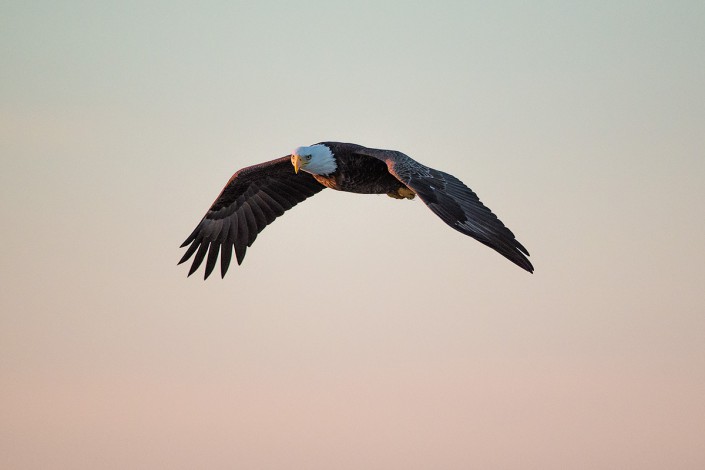
2020 was a record breaking year for Bald Eagles in New Jersey. Going from just one recorded nest in 1980, New Jersey’s Bald Eagles hit three major milestones this year in terms of new nests, locations and total nests monitored.
A record 36 new eagle nests were found in 2020. 22 nests were found in southern New Jersey, seven in northern New Jersey, and seven in central New Jersey.
This means that Bald Eagle are now confirmed to nest in every county in the state!
An astounding (and record breaking) 220 nesting pairs of eagles were also monitored in 2020. These pairs produced a total of 307 eaglets, with an additional 28 nesting pairs tracked to nests, but laying no eggs. Of the 210 known-outcome nests, an average of 1.46 young were produced per nest, exceeding the productivity rate necessary to maintain a stable population of 1.0 young per nest.
These numbers could not have been achieved or documented without the dedicated efforts of the almost one hundred volunteers with the Bald Eagle Nest Monitor program, managed by the Conserve Wildlife Foundation of NJ in partnership with the Endangered and Nongame Species Program. These volunteers conduct the majority of the nest-observation work vital to the Endangered and Nongame Species Program in tracking the population and nest distribution of our state’s Bald Eagles.
“The comeback of the bald eagle in New Jersey ranks among the most inspiring recoveries of endangered wildlife species anywhere,” said David Wheeler, Executive Director of the Conserve Wildlife Foundation of NJ. “The bald eagle’s return illustrates what is possible for many other rare species when you bring together proactive wildlife management, strong public investment, and the unparalleled dedication of biologists and volunteers.”
CWF thanks our dedicated volunteers and partners who make our bald eagle conservation work possible, including PSE&G, Wakefern Food Corp./ShopRite Stores, P&G, Wells Fargo, Mercer County Parks, Wildlife Center Friends, the American Eagle Foundation, and the Zoological Society of New Jersey.
The Statue of Liberty had a surprise tourist last week!
A humpback whale was spotted in the Hudson River on December 7th & 8th in the vicinity of Liberty Island. Video and photos of the whale were posted to Twitter as boaters took notice of the large marine mammal.
New York City Parks Department confirmed the citing on their social media on Tuesday:
“Whale sightings have increased in recent years in N.Y.’s waterways. Reasons for the uptick may include an improvement in local water quality, & an abundance of food sources like Atlantic menhaden.”
New York City Parks Department
Marine wildlife education group, Gotham Whale, also posted about the sighting, tracking the animal during it’s visit and urging boaters to exercise caution while traveling on the Hudson.
Humpback whales are a rare sight in the Hudson, but are hard to miss due to their size and perchance to show off by frequently surfacing and breaching. The last humpback to find it’s way to the Hudson was in 2016, when a humpback took up a week long residence in the busy waterway.
CBC Radio Canada program “The Current” interviewed Conserve Wildlife Foundation executive director David Wheeler for its feature on the fascinating story of New Jersey’s horseshoe crabs playing an irreplaceable role in the urgent search for an effective COVID-19 vaccine.
Conservationists are raising concerns that horseshoe crabs and the shorebirds that feed on them could become unexpected casualties of the COVID-19 pandemic.
“The milky blue blood of this ancient animal has made it into a modern medical marvel,” David Wheeler, executive director of the Conserve Wildlife Foundation of New Jersey, said of the horseshoe crab.
The medical industry captures the critters to draw out some of their blood, because it contains a unique component called limulus amebocyte lysate, or LAL. LAL can detect harmful toxins in vaccines — including those being produced for COVID-19 — or other medicine undergoing testing, he told The Current‘s Matt Galloway
“It’s really extraordinary,” said Wheeler. “The concern now, of course, is at some point we would really like to see it shift to a synthetic alternative rather than continuing to only use the crabs for that.”
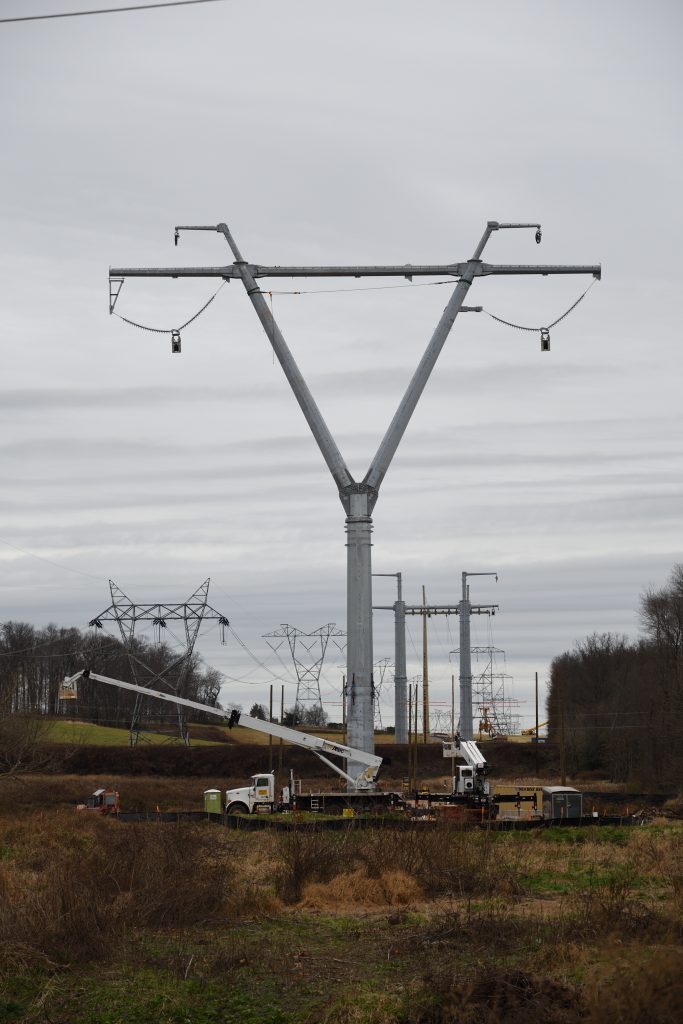
In Part one of this blog series the Three Bridges eagle nest was removed from the transmission tower. The tower was then dismantled. The next step was the installation of the new tower. This tower design is different then the old tower which had a lattice structure on top where the eagles built their nest. Since this new tower didn’t have have the same structure to support a nest, an eagle nest platform was designed and built .
New tower 11/22/20@ Mary Ellen Hill
Stringing lines 12/1/20@ Barb McKee
nest platform ready for installation @ Claudia Rocca
During the entire procedure the Three Bridges eagle nest monitors recorded the eagle pairs activities. They were often perched on the nearby towers watching the activity. Nest monitor Mary Ellen Hill saw one of the eagles fly over to the new pole and hover above before flying back to another tower.
eagle hovering over arm of new tower 12/29/20@ Mary Ellen Hill
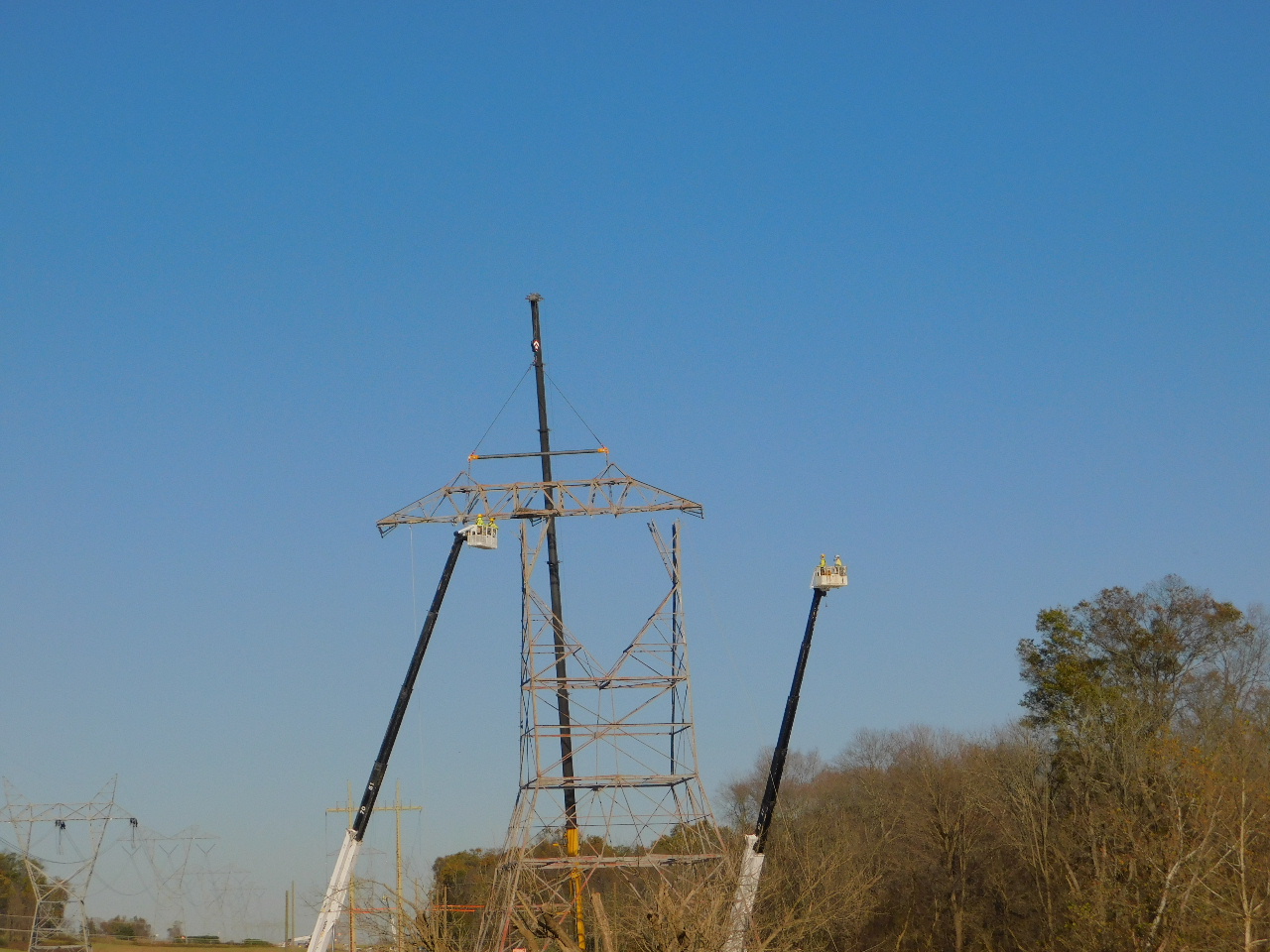
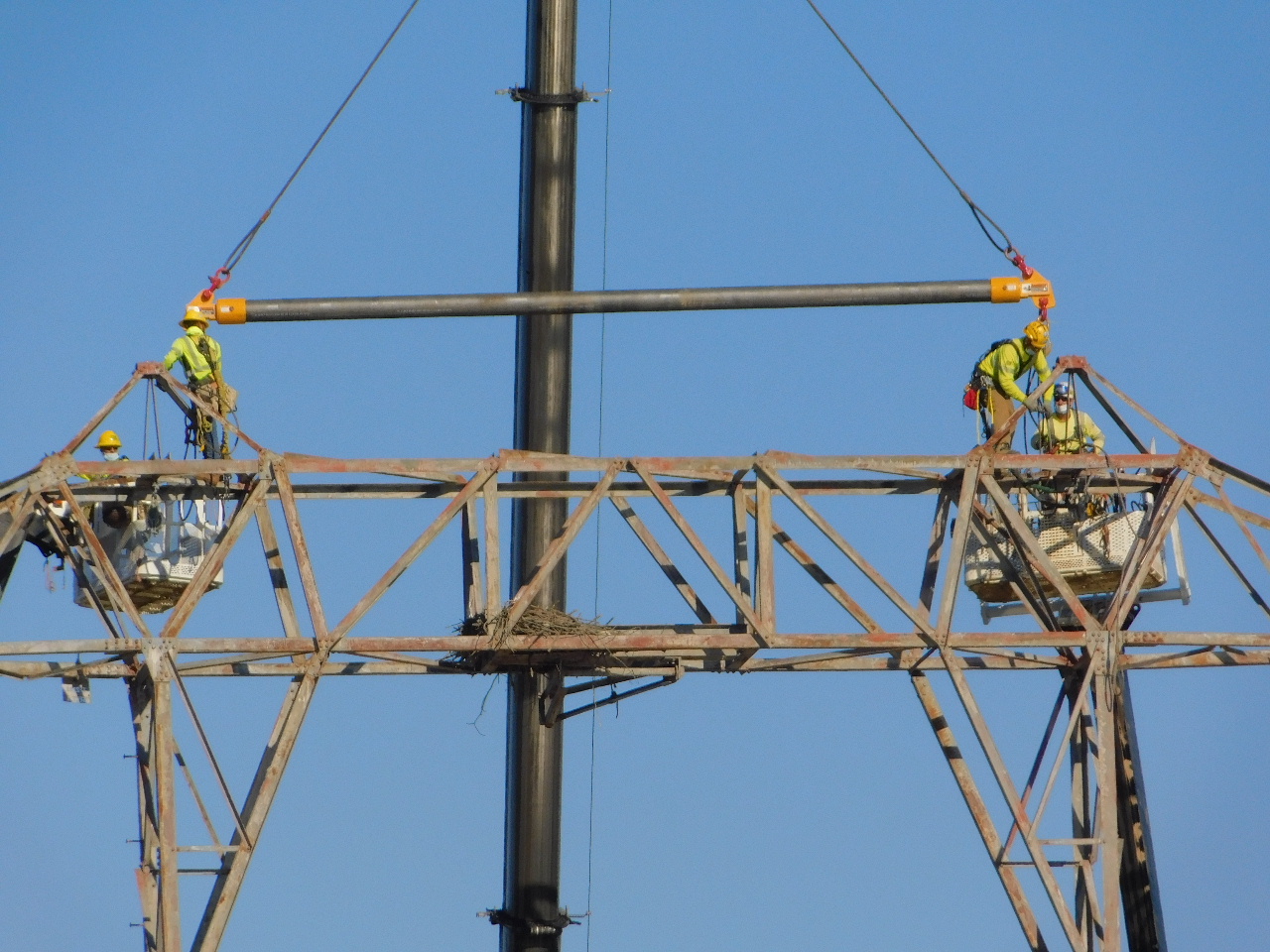
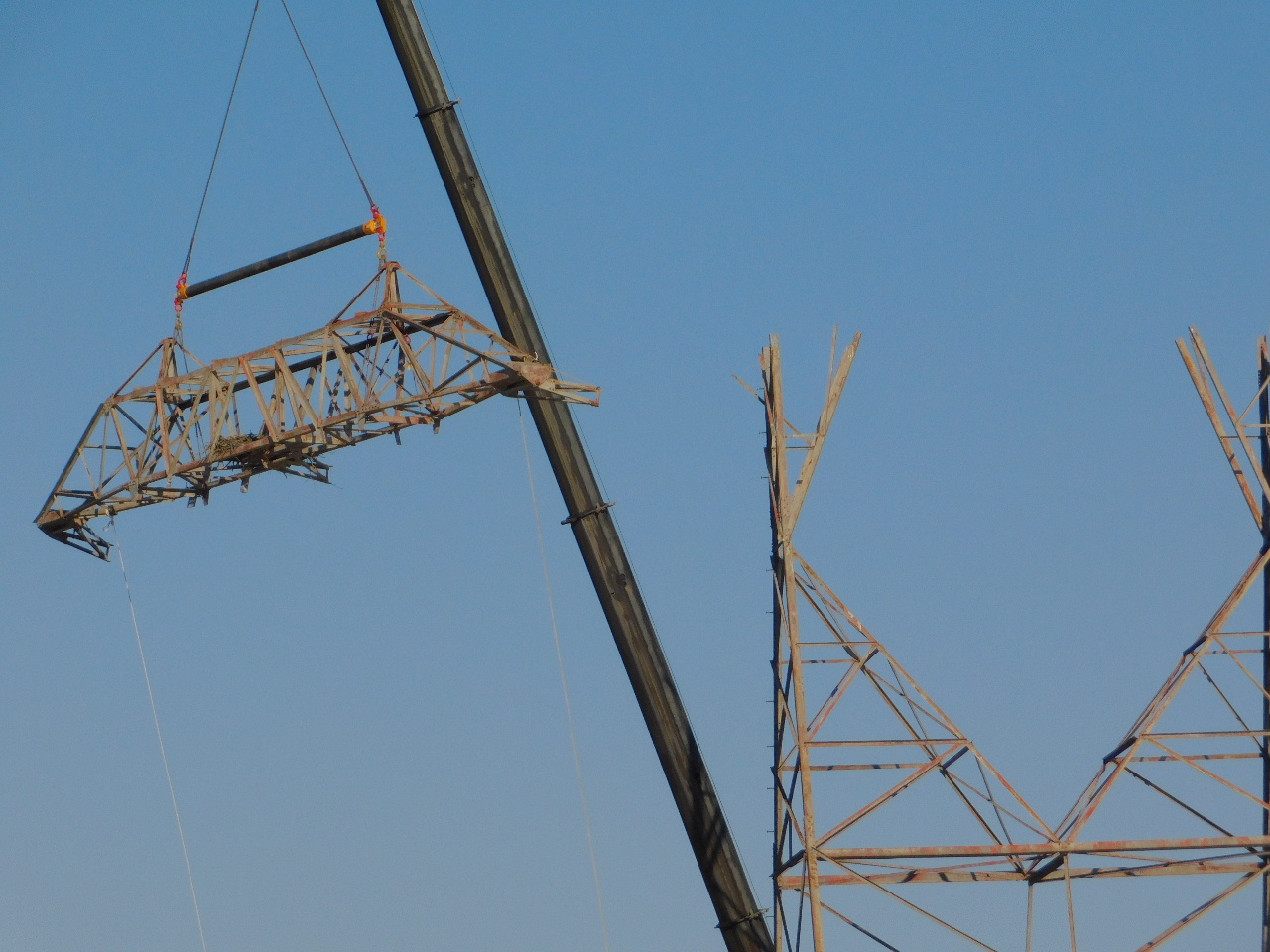
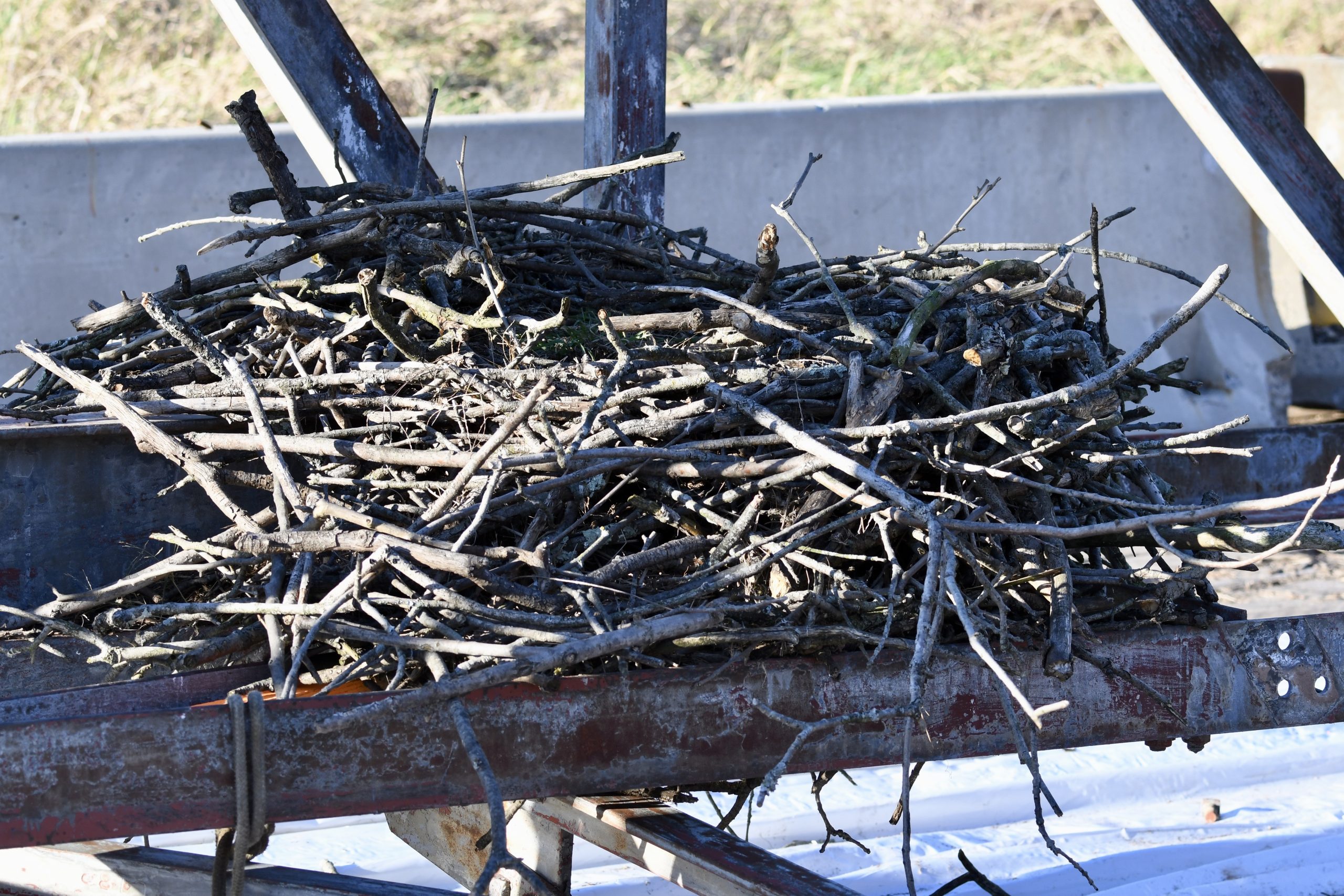
On a cold, snowy day the eagle nest was placed into the nest platform. The nest platform was then hoisted up to the arm of the tower and bolted in place. Now we wait and see if the pair will return and nest in their “old” nest on the new nest platform and tower.
Platform with nest @ Joe Mish
platform installation@ Daniel Kroon
platform installation @ Barb McKee
Platform installed@ Mary Ellen Hill
Thank you to all the Eagle Project volunteers who monitor this nest and PSE &G employees who have worked hard to finish this project before eagle nesting season.
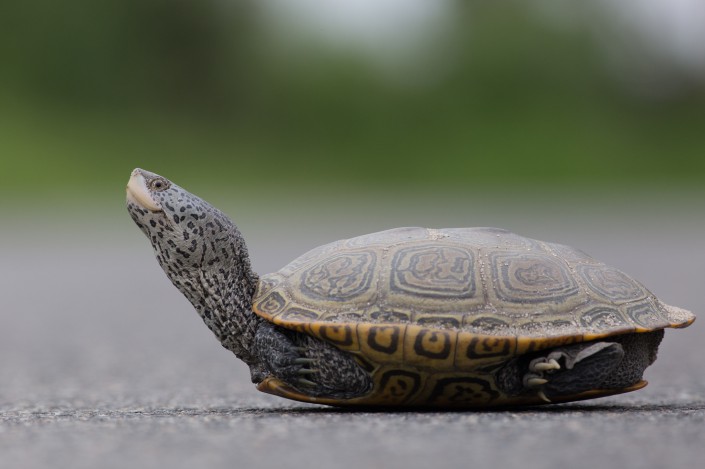
A female terrapin pauses while crossing Great Bay Blvd in Little Egg Harbor, NJ.
Shawn Michaels from WOBM News 92.7 recently visited the Conserve Wildlife Foundation and New Jersey Fish & Wildlife managed Great Bay Terrapin Habitat Enhancement Project and took the time to share his thoughts and some pictures from his visit.
Thank you Shawn for spreading information about our project and sharing these wonderful photos of the turtle garden!
You can read an except from the article below.
Photo by Shawn Michaels
If you live here at the Jersey Shore then there is a good chance you have seen a turtle or two trying to cross the road. This project ”turtle gardens” is located on the bay in Little Egg Harbor Township on Seven Bridges Road. The purpose is to give area turtles a place to lay eggs that’s out of harm’s way.
This is a fantastic project to help turtles which often are hit by cars trying to find areas to lay eggs. You may have seen signs around the Jersey Shore ”turtle crossing” to alert you to watch for turtles on area roadways usually late spring through summer.
April 21, 2020, Three Bridges adult with 2 chicks@ Daniel Kroon
The following was written by NJ Eagle Project volunteer, Daniel Kroon. He monitors this nest along with several other dedicated volunteers whose photos are featured in this blog.
The Three Bridges (Hunterdon County) eagle nest is located on the top arm of an electric transmission tower. This pair has successfully nested on the tower for the past five years. This line of towers is scheduled to be replaced with new monopoles and the work on it has recently begun. PSE&G is cooperating with the NJ Bald Eagle program to move this nest to a new pole platform. Unfortunately, the pair is already on territory and have been observed bringing a stick to the old nest. It is an interesting story of how these eagles are adapting to the human-created environment and how we are trying to accommodate them.
The pair at nest October 17, 2020 before work begins @ Mary Ellen Hill
On November 4, PSE&G removed the top of the tower, keeping the nest intact, and lowered it to the ground where they carefully removed the nest from the tower structure. The nest is stored in a shed and will be re-installed on a platform affixed to the new tower when it is erected. We hope the eagle pair accept their remodeled home.
@Barb McKee
@Barb McKee
@Barb Mckee
nest@ Diane Cook
The evening of the nest removal, volunteer Mary Ellen Hill observed the pair sitting together on the adjacent tower.
November 4th, 2020 @ Mary Ellen HillNovember 4th, 2020, pair on adjacent tower after nest removal@ Mary Ellen Hill
We will follow up with part two of this story once the new monopole tower is installed and the nest is placed back up on the platform. We thank all the nest monitors, PSE&G and everyone involved to make this as successful as possible.
A beached humpback whale, found on the bay side of the inlet just across the Townsends Inlet Bridge. Photo by Seven Mile Times.
On Thursday, November 5, 2020, a 20-25 foot juvenile humpback whale (Megaptera novaeangliae) was found dead floating near a sandbar in Townsends Inlet in Cape May County, New Jersey. The large mammal had apparently been dead for several days. It was first spotted around 3:30 p.m. Wednesday.
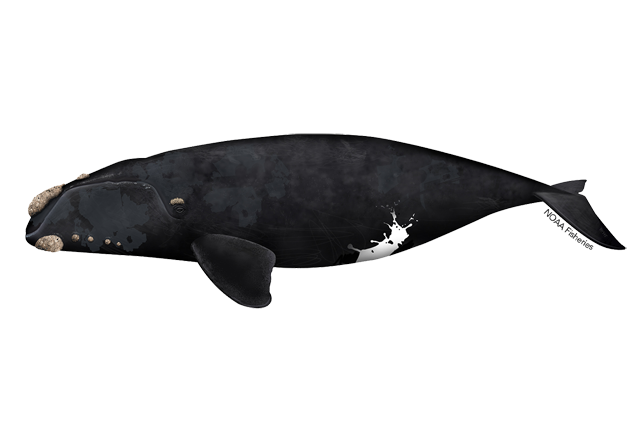
This tragic event follows even more heartbreaking news about Right Whales, the most endangered large whale species in the world!
The North Atlantic Right Whale.
We are very sad by the announcement by researchers at the North Atlantic Right Whale Consortium that the estimated number of North Atlantic right whales (Eubalaena glacialis) remaining in the world is just 356, not 400 as previously thought. It is truly upsetting news. The population continues to be in decline, and the decline is accelerating.
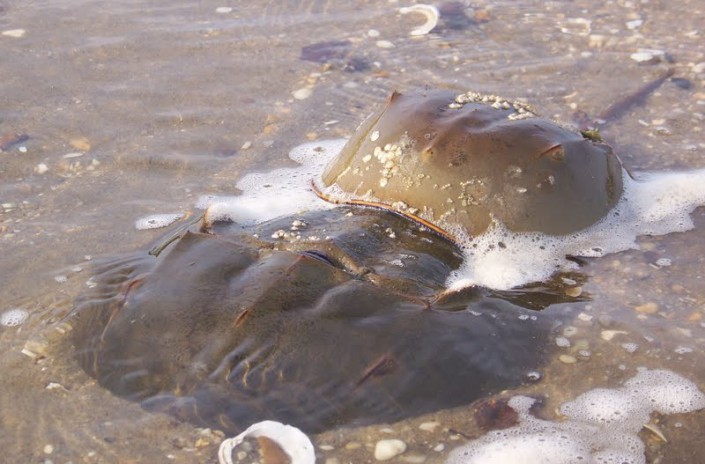
Horseshoe crab blood is hypersensitive to dangerous bacteria that can develop in injectable medicines and vaccines.
In the race for a vaccine for COVID-19, horseshoe crabs – a New Jersey coastal fixture both now and eons ago in the days before the dinosaurs – may play a vital role.
This video story by ABC Action News features CWF Executive Director David Wheeler and top shorebird scientist Dr. Larry Niles in telling this science fiction-like tale.
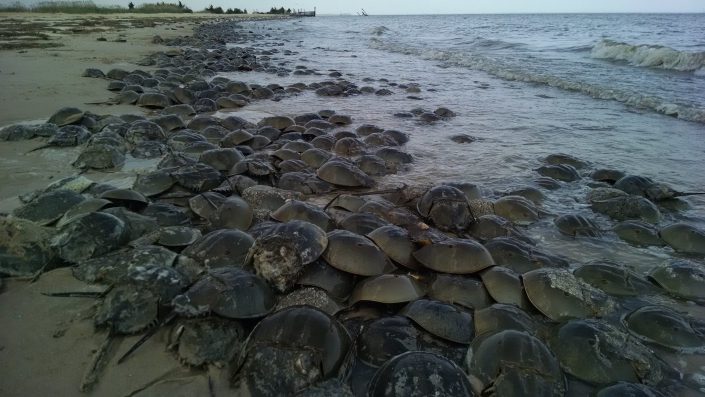
Horseshoe crabs spawning at Thompsons Beach in May 2015. Photo by Joe Smith.
Perhaps the most remarkable creature to call the
waters off New Jersey home is older than the dinosaurs, helps
balance the state’s ecosystem and looks like it crept out of the
“Aliens” movie franchise.
Now the horseshoe
crab is playing a vital role in the development of a COVID-19 vaccine,
with billions of doses expected to be produced worldwide over the next
several years.
“It’s absolutely worthwhile for horseshoe crabs to be used in the
development of a vaccine,” said David Wheeler, executive director of the
Conserve Wildlife Foundation of New Jersey. “They play an extraordinary
role in public health. But they are irreplaceable in New Jersey and
Delaware for how they keep the bird population alive.”