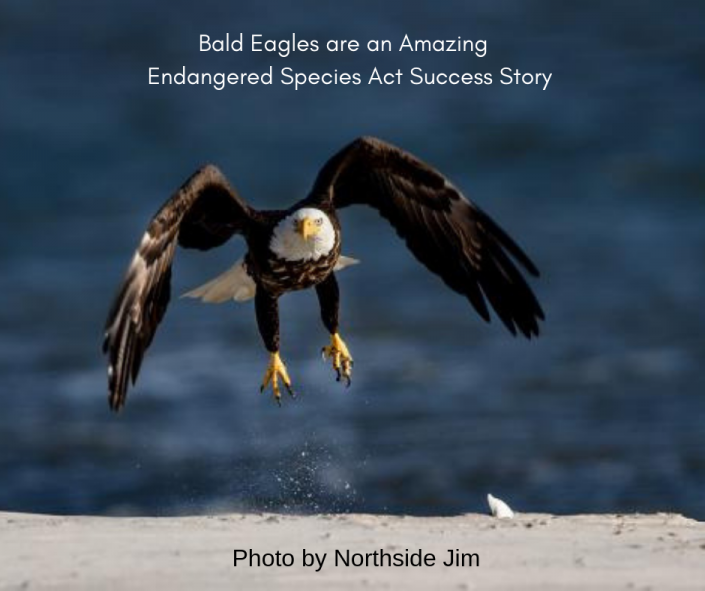
New Jersey has more people per square mile than any other state by far. It’s not an easy place for wildlife to survive. Yet countless wildlife species from bald eagles to bobcats are doing just that.
But what happens when you inject climate change into the mix? Superstorms and sea level rise, coastal erosion and salt water intrusion, invasive species, disrupted life cycles and wildlife disease.
Conserve Wildlife Foundation is excited to introduce the ‘State of Change’ podcast that explores how climate change is affecting wildlife in our state. Hosted by CWF executive director David Wheeler and produced by Matt Wozniak, each episode highlights a different climate change issue – and every story helps paint a portion of the big picture of our changing world.
CWF partners with NJ Fish & Wildlife to enhance habitat for terrapins in Little Egg Harbor
by Ben Wurst, Habitat Program Manager
A female terrapin nesting along Great Bay Blvd.
Northern diamondback terrapins are a coast hugging, saltmarsh living, shellfish eating, aquatic turtle. Their ultimate survival depends on the ability of adult females to safely access nesting areas during summer months. Since 2010 CWF has worked to document and reduce roadkills of terrapins on roads in southern Ocean and northern Atlantic Counties.
A piping plover chick tests out its wings. Photo courtesy of Bill Dalton.
A new report from Conserve Wildlife Foundation and the New Jersey Division of Fish and Wildlife shows that the state’s piping plover population increased in 2019, leading to cautious optimism for the birds’ long term prospects. The piping plover is listed as threatened federally and endangered in New Jersey.
One hundred fourteen pairs of piping plovers nested in New Jersey in 2019, a 19% increase over 2018’s 96 pairs. The 2019 population is slightly below the long-term average of 117 pairs and well below the peak of 144 pairs in 2003.
Piping plover productivity, measured by the number of chicks who survive until their first flight (or fledging), dropped from 1.51 in 2018 to 1.24 in 2019, and was the lowest seen in the last six years, but remains above the long-term average of 1.3.
Citizen science projects are an amazing way for volunteers to contribute to ongoing research projects. By using volunteers scientists are able to extend the data collected for projects, and help more wildlife. The Amphibian Crossing Project is one of the ways CWF works with volunteers to protect imperiled wildlife.
May 25th, 2019. Duke getting fitted with transmitter
A transmitter was placed on a chick from the Duke Farms Eagle Cam nest for the first time this year. This nest cam has been watched by thousands of people over the years and now cam watchers will be able to follow the movements of “Duke” after fledging.
January 13, 2019, Mercer County Park. NJ D/99banded at Duke Farms in 2014 @Bob Cook
Conserve Wildlife Foundation of NJ in partnership with the
NJ Division of Fish and Wildlife’s Endangered & Nongame Species Program, is
releasing results of the 2019 NJ Bald Eagle nesting season.
2019 was a record year for NJ eagles with the highest number
of active nests and young fledged in the history of the project. This year, 238 eagle nests were monitored, of
which 189 were active (laid eggs) and 248 young fledged. This is the highest number of fledges ever,
surpassing the previous high of 216 in 2016.
Bald eagle nesting population and young produced in New Jersey, 1982-2019.
We owe the incredible amount of information about NJ eagle success
to the NJ Eagle Project nest watchers. An
extremely dedicated group of approximately 85 volunteers monitor nests during
the season, recording the important dates and watching for possible issues at
nest sites.
This season two eagle cams were available to watch on the CWF website: one at Duke Farms and another at Mercer County Parks. The Duke Farms nest produced two chicks, and one was outfitted with a satellite transmitter; the movements of this eagle are on CWF’s Eagletrax website .
More details on the 2019 nesting season will be available in
the annual eagle report to be posted by December. The report will include individual nest data, state
totals, and eagle recoveries and resightings.
CWF partners with PSEG, the Mercer County Park Commission, Mercer County Wildlife Center, and Wildlife Center Friends and Duke Farms to protect bald eagles in New Jersey. Thank you to the Wakefern Food Corp./ShopRite Markets, Wells Fargo, Chemours and the American Eagle Foundation for additional eagle program funding.
Two sets of peregrine falcon chicks were recently banded high atop buildings in Elizabeth, Union County, and Jersey City. Biologists from Conserve Wildlife Foundation (CWF) and the New Jersey Department of Environmental Protection’s Endangered and Nongame Species Program (ENSP) checked the health and measurements of the falcons, while also placing both United States Geological Service bird bands and state auxiliary bands so the birds can be identified in the future.
The third
Friday in May has been a celebration of our nation’s wildlife and wild places
since 2006, when the United States Congress established the holiday. There is a
special urgency this year as the United Nations recently reported that nearly
one million species worldwide are at risk of extinction within decades (read
our post about the UN report for more information).
One of the
main points the report makes is that humans are dangerously degrading Earth’s
ecosystems, the delicate, interconnected webs of life that we all, people and wildlife
alike, need to survive.
A new report into human impacts on nature shows that nearly one million species risk becoming extinct within decades and that current efforts to conserve the earth’s resources will likely fail without radical action, UN biodiversity experts said this week. The report from the United Nations’ Intergovernmental Science-Policy Platform on Biodiversity and Ecosystem Services (IPBES) found that grave impacts on people around the world are now likely.
The report identifies five main drivers of this unprecedented decline: changes in land and sea use, direct exploitation of organisms, climate change, pollution, and invasion of alien species.
Ospreys have made great progress toward recovery in New Jersey, rebounding from a low of 50 nests in 1974 to 589 active nests in 2018. This progress should be celebrated, and victory can and should be declared, as The Press of Atlantic city suggested in their March 1 editorial “Maybe it’s time NJ declares victory in restoration of ospreys.”
But as a biologist who has studied ospreys for many years I also know that declaring victory doesn’t just mean we should walk away and abandon them.