New Jersey Bald Eagles Soar to New Highs in 2019

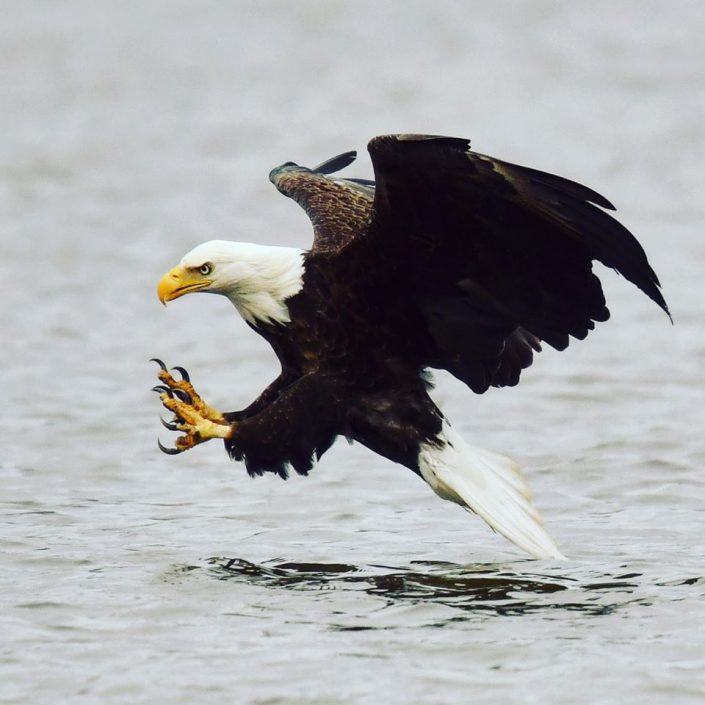
January 13, 2019, Mercer County Park. NJ D/99banded at Duke Farms in 2014 @Bob Cook

Conserve Wildlife Foundation of NJ in partnership with the NJ Division of Fish and Wildlife’s Endangered & Nongame Species Program, is releasing results of the 2019 NJ Bald Eagle nesting season.

2019 was a record year for NJ eagles with the highest number of active nests and young fledged in the history of the project.  This year, 238 eagle nests were monitored, of which 189 were active (laid eggs) and 248 young fledged.  This is the highest number of fledges ever, surpassing the previous high of 216 in 2016.

Bald eagle nesting population and young produced in New Jersey, 1982-2019.

We owe the incredible amount of information about NJ eagle success to the NJ Eagle Project nest watchers.  An extremely dedicated group of approximately 85 volunteers monitor nests during the season, recording the important dates and watching for possible issues at nest sites.

This season two eagle cams were available to watch on the CWF website:  one at Duke Farms and another at Mercer County Parks.  The Duke Farms nest produced two chicks, and one was outfitted with a satellite transmitter; the movements of this eagle are on CWF’s Eagletrax website . 

More details on the 2019 nesting season will be available in the annual eagle report to be posted by December.  The report will include individual nest data, state totals, and eagle recoveries and resightings.

CWF partners with PSEG, the Mercer County Park Commission, Mercer County Wildlife Center, and Wildlife Center Friends and Duke Farms to protect bald eagles in New Jersey. Thank you to the Wakefern Food Corp./ShopRite Markets, Wells Fargo, Chemours and the American Eagle Foundation for additional eagle program funding.
Photos from the Field: Ospreys Nest on Abandoned Crab Pot

Life is precious.

by Ben Wurst, Habitat Program Manager

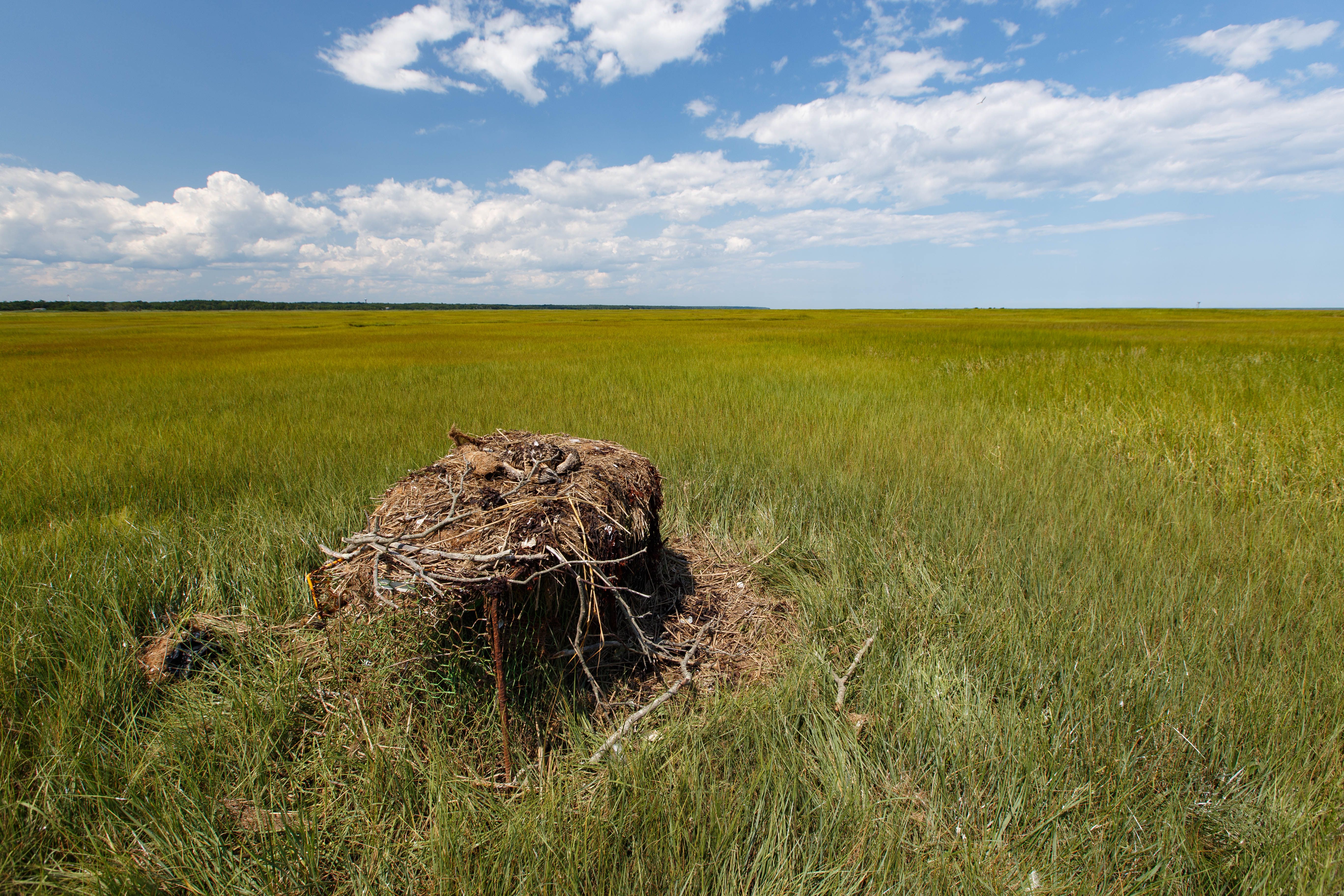
On the last osprey survey of the season we stumbled upon a new nest — one that was built on an abandoned crab pot. We were drifting on Absecon Bay when summarizing data when we heard an adult making defensive calls at a nest. We looked and saw a low nest on the ground.
Continue reading “Photos from the Field: Ospreys Nest on Abandoned Crab Pot”

Maternity roosts, delayed ovulation and mating swarms: Protecting the (truly weird) reproductive cycle of bats.

Story by: Alison Levine, Communications Coordinator

Bats. They can be kind of creepy. Full disclosure, when I was a kid a bat got into our house and was so disoriented at being in an alien environment that it actually flew into my shoulder. So, I’m not exactly unbiased. I’ve learned to appreciate the important roles bats play – many help keep insect populations under control, some are crucial pollinators for fruits – but I’ve never really warmed up to them before.

While there are plenty of people who share my slightly-creeped out feelings for bats, fortunately there are lot of people who love the furry little flying mammals.

CWF Biologist, and bat ambassador extraordinaire, Meghan Kolk goes out and handles bats on purpose. As part of a joint project with the U.S. Fish and Wildlife Service (USFWS) Meghan and CWF Biologist Ethan Gilardi teamed up with USFWS staff to conduct bat surveys in the summer of 2018 and again this year.

The surveys are conducted at Joint Military Base McGuire-Dix-Lakehurst in the northern part of Pine Barrens. The goal is to capture northern long-eared bats (Myotis septentrionalis), a federally threatened species, and track them back to their roost tree (ideally tracking females back to maternity roost trees) using radio transmitters.

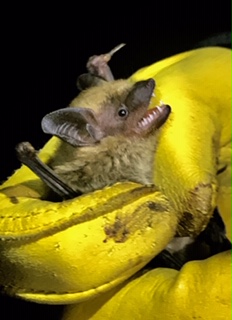
Photo of big brown bat by John King

Continue reading “Maternity roosts, delayed ovulation and mating swarms: Protecting the (truly weird) reproductive cycle of bats.”

Species on the Edge 2.0 Contest Winners Announced

Species on the Edge 2.0 2019 Contest Winners
From left to right: Carisa Mainiero and Stephanie Dalessio, CWF;
contest winners Ashley Laveriano, Katie Barcheski and Mayley Rodriguez; Maria Spina, PSEG Foundation; and David Wheeler, CWF

Sometimes the path to the wilderness starts with a screen. For teens growing up in New Jersey, the most densely populated state in the country, connecting with nature can seem a bit unnatural. Smartphones, tablets, computers these are all a part of everyday life, but bald eagles, diamondback terrapins, or bobcats can seem like creatures from a different world. 

The Species on the Edge 2.0 contest, a statewide educational competition open to all high school students, bridges these two worlds to inspire the next generation of wildlife lovers and conservation leaders.

In celebration of these future leaders, Conserve Wildlife Foundation and contest sponsor PSEG Foundation recently presented the winners of  the fourth annual Species on the Edge 2.0 contest, with scholarships at a ceremony at PSE&G headquarters in Newark.

Continue reading “Species on the Edge 2.0 Contest Winners Announced”

Happy National Bald Eagle Day!

Story by: Alison Levine

Photo From Mercer County Parks

Eagle enthusiasts in New Jersey have plenty to celebrate today on National Bald Eagle Day. Thanks to our dedicated Bald Eagle Project volunteers we know that so far this year 96 bald eagles have fledged from their New Jersey nests! Eagles have come a long way in the Garden State since the early 1980s when there was only one active nest in the whole state.

Continue reading “Happy National Bald Eagle Day!”

Public Participation Key to Protect Terrapins on Roads

Local residents and visitors in coastal areas urged to drive carefully during summer months.

by Ben Wurst, Habitat Program Manager

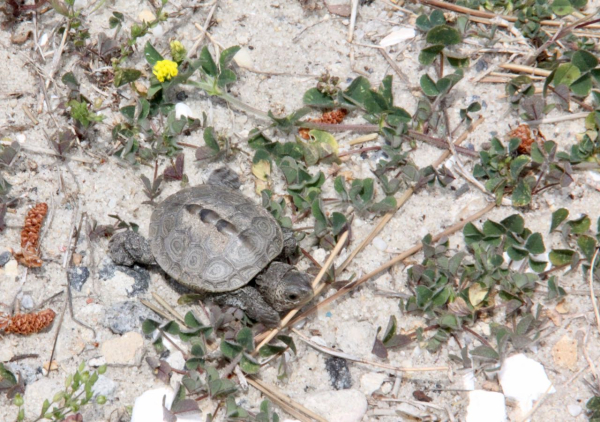
To cross or not to cross? Roads are barriers to wildlife, like this adult female northern diamondback terrapin.

This year marks nine years since we began efforts to document and reduce roadkills of N. diamondback terrapins in S. Ocean and N. Atlantic Counties within the Barnegat and Great Bay Watersheds. Our Great Bay Terrapin Project was centered around Great Bay Blvd. or Seven Bridges Road, a long saltmarsh access road where many adult female terrapins enter the roadway while seeking nest sites.

Continue reading “Public Participation Key to Protect Terrapins on Roads”

Peregrine Falcon Bandings in Jersey City and Union County: The Importance of Banding Chicks

Story by Alison Levine

Two sets of peregrine falcon chicks were recently banded high atop buildings in Elizabeth, Union County, and Jersey City. Biologists from Conserve Wildlife Foundation (CWF) and the New Jersey Department of Environmental Protection’s Endangered and Nongame Species Program (ENSP) checked the health and measurements of the falcons, while also placing both United States Geological Service bird bands and state auxiliary bands so the birds can be identified in the future.

NJTV and TAPintoUnion captured the banding in Union County, while News 12 New Jersey and CBS-2 covered the Jersey City banding.

Continue reading “Peregrine Falcon Bandings in Jersey City and Union County: The Importance of Banding Chicks”

Bald Eagle Banding and Transmitter Attachment at Duke Farms

Two bald eaglets at the site of our Eagle Cam at Duke Farms were recently banded by biologists from Conserve Wildlife Foundation (CWF) and New Jersey Department of Environmental Protection, Endangered and Nongame Species Program (NJDEP ENSP).

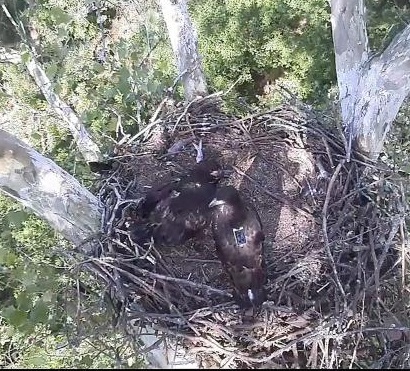
This year’s banding was special, as in addition to a band the male eaglet was also fitted with a transmitter which will allow him to be tracked on our Eagle Trax page.

View of transmitter on the male eaglet, on the right

Kathy Clark, (NJDEP ENSP), and Larissa Smith (CWF) wrote about the experience, and the benefits of transmitters on the Duke Farms blog. Their FAQ’s are reprinted below.

Continue reading “Bald Eagle Banding and Transmitter Attachment at Duke Farms”

Celery Farm and Beyond: Rescuing a Few Baby Terrapins

Photo by Jim Wright

While out on a drive along Delaware Bay friend of Conserve Wildlife Foundation Jim Wright has an unplanned encounter with our biologist Larissa Smith and several baby terrapins.

On his blog Jim says “(Larissa) explained that these tiny terrapins cross this road every late May. We helped save four of the little turtles — including three that would have likely been crushed by a giant tractor-trailer headed for a marina.  Alas, we found a few crushed little guys on the way.”

Continue reading “Celery Farm and Beyond: Rescuing a Few Baby Terrapins”

HOW YOU CAN HELP: SHOREBIRDS AND SEABIRDS

By Alison Levine

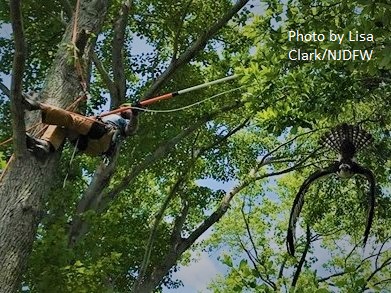
Update May 30, 2019: Another example of the dangers of fishing (or this time crabbing) line unfolded in dramatic fashion in Tuckahoe Wildlife Management Area. CWF biologist Ben Wurst was called upon to put his climbing skills to the test to help an osprey dangling high above the ground. Thankfully Ben was able to get to the bird in time, and our friends at Tri-State Bird Rescue and Research nursed the osprey back to health and were able to re-release him near where he was found. Read more about the daring rescue on our Facebook page.

Ben Wurst puts his climbing skills to the test
to rescue and entangled osprey

As thousands of people plan their trips to the Jersey shore for Memorial Day weekend, it is a good time think about how to help out shore and sea birds. Enjoy the holiday weekend!

The 141 miles of seashore in New Jersey are home – or at least part-time host – to many of the birds Conserve Wildlife Foundation protects and nurtures. Osprey, oystercatchers, black skimmers, piping plovers, red knots, and many others rely on a healthy coast to thrive.

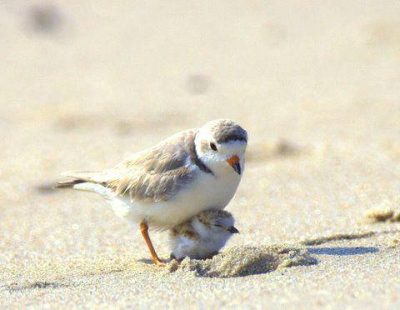
Piping plovers on the beach
Continue reading “HOW YOU CAN HELP: SHOREBIRDS AND SEABIRDS”