Falcon Comeback Continues in Union County

By Jasmine Lee, CWF Education Assistant
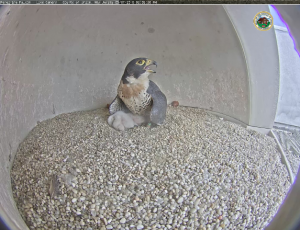
Spring has sprung, and peregrine falcon eggs have hatched! Viewers of our Union County Falcon Cam have enjoyed an exciting few days with the last of the four eyasses (baby falcons) emerging yesterday.

The adult female falcon 91/BA (“Cadence”) originally hails from Rochester, New York. She staked her claim on this nest last year and laid eggs very late last season, but the eyasses did not survive. This year, 91/BA got a timely start, with her first egg being laid on March 29, 2018. Incubation of her clutch of four eggs began on April 3.

While peregrine falcon feathers provide excellent insulation, it can be difficult for body heat to get past the feathers and to the eggs. An adaptation for this is the brood patch on the male’s and female’s chest. This patch has a high concentration of blood vessels close to the surface of their skin to allow for easier and better body heat transfer to the eggs.

After about 32 days, it is time for hatching to begin. The chicks begin by using a small “egg tooth” to peck a hole through the egg shell: this is called the external pip. After breaking the membrane, the chick can breathe some fresh air, and vigorously start the final process of hatching.

Around 8 AM on Saturday, May 5, the first eyas at Union County emerged! As we watch over the next few weeks, we will see a lot of activity in the nest as the parents work hard to feed the hungry chicks. The eyasses are completely dependent upon the adults and will eat an incredible amount, but they typically double in size in just six days! They will continue to be under constant care until they are ready to fly in approximately seven weeks.

An Inspiring Recovery

A peregrine hunts on the wing. ©Brian Kushner

In 2017 there were 34 nesting pairs of peregrine falcons were reported in all of New Jersey. Around two-thirds are known to have made their homes in buildings like the County Courthouse.

Until recent decades, the peregrine falcon population was in steep decline along with other birds of prey due to habitat loss and the pesticide DDT. By 1964, peregrine falcons had disappeared completely from New Jersey and all other states east of the Mississippi River.

Peregrine falcons were one of the first birds to be the focus of conservation efforts after the 1960’s.

In the 1980’s an intensive re-introduction effort began in the tri-state region, with biologists from the Endangered and Nongame Species Program and CWF leading the way in New Jersey. Since 2000 the New Jersey population has stabilized at approximately two dozen nesting pairs annually.

Livestreaming in Union County

2018 marks CWF’s second year partnering with Union County, providing a live stream of the action in and around the peregrine falcon nest located on the roof of the County Courthouse in midtown Elizabeth. CWF is proud to share the excitement in livestreaming the UCNJ Falcon Cam on our website and to use the webcam in our Union County school presentations, generously funded by Phillips 66.

Go to our website today to watch our new feathered friends as they continue to interact, and to learn more about the Peregrine Falcon. For more information about peregrine falcons, you can also visit the New Jersey Department of Environmental Protection, Division of Fish & Wildlife.
Osprey 04/D Back in Jersey!

Barnegat Bay Osprey Returns to New Jersey After Two Year Vacation

by Ben Wurst, Habitat Program Manager

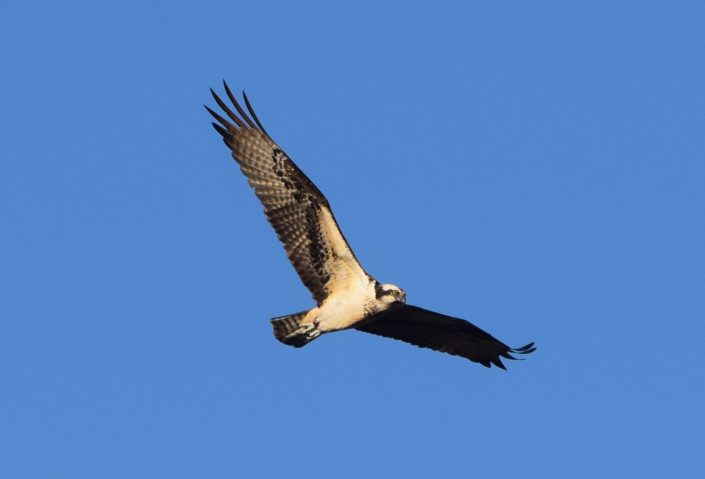
04/D was photographed in Allendale at the Celery Farm by Barbara Dilger on Monday, April 23.

North American ospreys migrate long distances to and from their breeding and wintering grounds in the southern U.S., Central America, Caribbean Islands, and N. South America. For the past four years we have been banding young ospreys who originate from nests on Barnegat Bay with an auxiliary band to help determine their movements after fledging. Project RedBand was designed to help track the migration, dispersal, life span, and foraging habits of ospreys from Barnegat Bay, a unique estuary along the Atlantic Coast of New Jersey. The project was also designed to help engage the public in osprey management and conservation. Since the red bands are highly visible and readable with optics, it allows the public the ability to identify the individual and then learn about their past. Lastly, we now rely heavily on citizen scientists who report nesting activity on Osprey Watch.  Continue reading “Osprey 04/D Back in Jersey!”

Eagles and Nor’easters

Larissa Smith: CWF, Wildlife Biologist

We are honored to have Diane Cook as a guest blogger, over the next few months. Diane will be discussing Duke Farms eagle cam and how she uses it in her classroom. Diane is a K-2 Technology Literacy teacher at both Copper Hill and Robert Hunter Elementary schools.  She has been an avid and enthusiastic eagle cam viewer since 2008 and now she is the official nest monitor for the Duke Farms nest.  As the monitor Diane records important data into the Eagle Project database, Nest Story. Diane also uses the eagle cam in her classroom and was the winner of a contest held by Duke Farms and CWF in 2015, to choose the best bald eagle lesson plan.

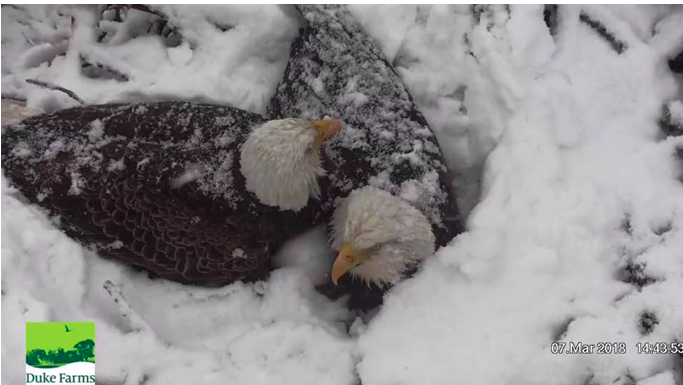
Diane was home from school during yesterday’s snowstorm and able to document the eagles during the storm.

March 7, 2108, Diane Cook’s blog

Thankfully the live cam was back up and running by the time school started on Monday following the first Nor’easter to hit our part of NJ. Was glad to be able to tell the students all was well, and that they could see for themselves! The good news was soon replaced by worry with yet another Nor’easter predicted for today. The day began slowly. Yes, it was snowing, but lightly. Things didn’t look too bad.

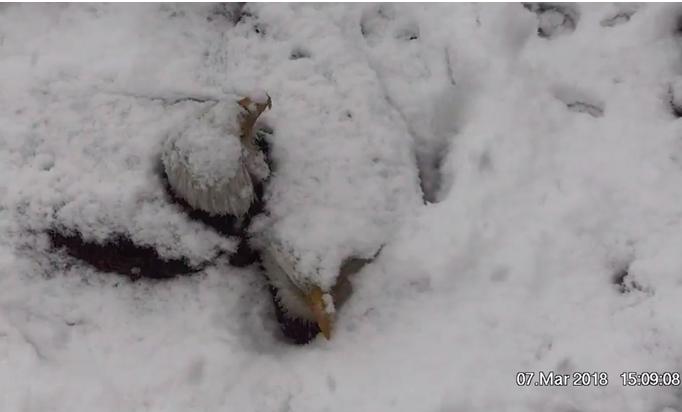
Within minutes, the snow really picked up in intensity. The storm hit quickly and the snow fell fast and heavy. Within minutes snow had covered the ground.

There was an exchange at some point on the nest. Mom won the rights to incubation. Then something I’ve never seen before happened. BOTH eagles stayed on the nest through the storm. They laid side by side.

Thanks to Charles T. Barreca who mans the camera at Duke Farms for the awesome close up view. As the camera moved, the eagles looked up at the noise.

They would shake off the snow, but remained on the nest together.

More snow fell. Still the eagles sat.

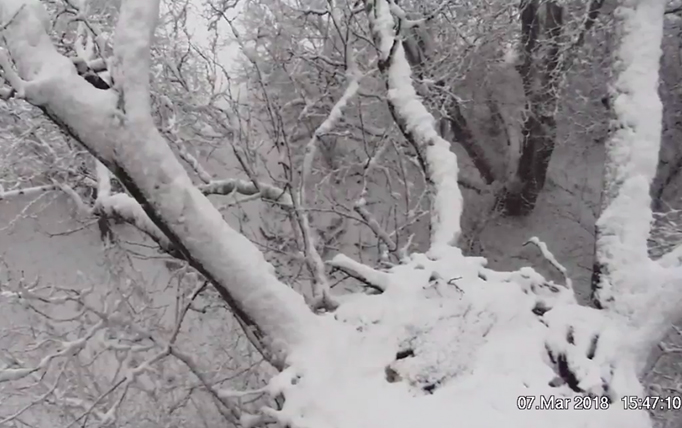
Finally the male flew off the nest, but stayed on a nearby branch.

No matter how much snow fell, these dedicated parents remain with their eggs and incubation continues.


Second PBS Nature interview celebrates bald eagle recovery in NJ

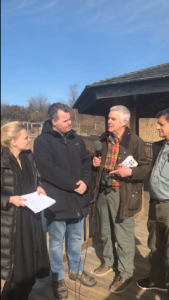
The WNET-PBS Nature program Peril & Promise’s second live interview with Conserve Wildlife Foundation marked the Great Backyard Bird Count by focusing on the inspiring recovery of the bald eagle. This interview, taking place at DeKorte Park in the Meadowlands, features program host Emily Harris speaking with CWF Executive Director David Wheeler, CWF Trustee Kumar Patel, and Jim Wright, who has written two e-books about bald eagles.
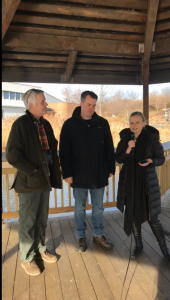
Holding an authentic (empty) can of DDT, Wright noted, “Eagles had some tough times…with things like DDT, a really nasty pesticide that got into the food chain and would get into the fatty tissues of the bald eagles, and they had trouble laying their eggs because their eggshells were so weak. It got to the point in New Jersey where they were down to one nesting pair in the late 1970s, and they were not producing eggs…. But now there are…approximately 170 nesting pairs in New Jersey, including two right here in the Meadowlands.”

Continue reading “Second PBS Nature interview celebrates bald eagle recovery in NJ”

CWF live interview with PBS Nature explores climate change impacts on birds

The WNET-PBS Nature program Peril & Promise celebrated the Great Backyard Bird Count with two live interviews with Conserve Wildlife Foundation at DeKorte Park in the Meadowlands.

In the first live interview, CWF Executive Director David Wheeler and Jim Wright, who has written widely about birds and the Meadowlands, discussed the importance of bird counts to CWF’s work, and the growing threat of climate change on bird populations around the world.

Climate change is “toughest on the migrants,” said Wheeler. “When you think about a bird leaving its neotropical wintering grounds in Central or South America and then coming up to New York or New Jersey, that’s a leap of faith that everything is as it has always been. But in reality, as spring seems to arrive earlier each year along with the leaves, the foliage, the insects, basically the bird risks coming back to a depleted prey resource – and they can struggle to survive.”


 Photo by Jim Wright, Meadowblog.net

View the interview here. Check our blog again tomorrow for the second interview, discussing the remarkable recovery of bald eagles.

Peril & Promise: The Challenge of Climate Change is a public media initiative from WNET in New York reporting on the human stories of climate change.

Richard W. DeKorte Park is a nationally recognized birding hotspot along the Atlantic Flyway with 3.5 miles of walking trails in the shadow of the Manhattan skyline, part of the Meadowlands region where over 285 bird species have been identified. It is managed by the New Jersey Sports and Exposition Authority.

CWF Scientists Follow At-Risk Migratory Shorebirds to Tierra del Fuego

by Stephanie Feigin, Wildlife Ecologist


Over the past two years, our team, with the help of funding from the Neotropical Migratory Bird Conservation Act, has worked to create critical habitat maps and detailed threat maps for at-risk shorebird species in Northern Brazil and in Tierra Del Fuego, Chile. These projects have established the foundation for conservation planning in these important wintering areas for migratory shorebirds like red knots.


Brazil:

Two years ago, our team began working in Northern, Brazil covering the Atlantic coastline of both Pará and Maranhão state between Belém and São Luís. Our team conducted two successful excursions to Brazil taking point count surveys of wading shorebirds collecting approximately 44,700 individual bird sightings to add to the database our team created for the critical habitat maps (Figures 1 & 2).

Figure 2. Results from the 2017 point count survey

                    Figure 1. Results from the 2016 point count survey


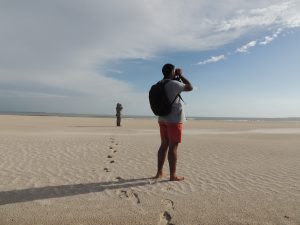
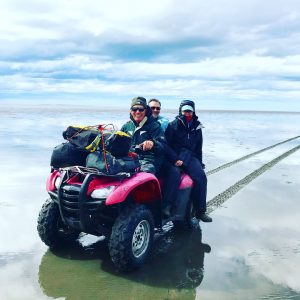
David Santos and Larry Niles conduct point sampling surveys in Maranhão Brazil.

We conducted surveys using point count methods using fixed radius plots positioned along transects, with all wading birds counted within the 250m radius. Transects were conducted by either walking or while in a boat across various tidal stages and a variety of habitat types including mangrove creeks, sand flats, mudflats and beaches.


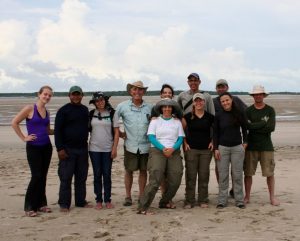
Brazil Team: Carla Meneguin,
Paulo Siqueira, Ana Paula Sousa, Larry Niles, Juliana Almeida, Carmem Fedrizzi Joe Smith, Stephanie Feigin, Yann Rochepault, Laura Reis and Christophe Buiden (photo by Juliana Almeida)


Our team then created threat maps of the region from coastal development, mining operations, offshore drilling, and shrimp farming to help inform future conservation planning and mitigate impacts of these activities to the critical shorebird habitat in the region.


Chile:

This year, with a second round of funding, our team conducted work in Tierra Del Fuego, Chile to create critical habitat and detailed threat maps for Bahia Lomas in Chile. Bahia Lomas is both a globally significant RAMSAR wetlands site and a Western Hemisphere shorebird site of hemispheric importance.  


Shorebirds in Bahia Lomas

Historically, Bahía Lomas and nearby Rio Grande supported wintering populations of 67,000 red knots –  the largest wintering area for knots in the Western Hemisphere. In the last 30 years, however, the population has declined to less than 15,000 knots in Bahía Lomas and the population in Rio Grande is functionally extinct (Morrison et al 1989).


Aerial Survey over Bahia Lomas


This January our team conducted surveys along the coast of Bahia Lomas to understand distribution of shorebird species within the region, using the same sampling methods, study key roosting and feeding habitats, and delineate critical habitat and threats to the region to inform future conservation and minimize impacts to shorebird populations.


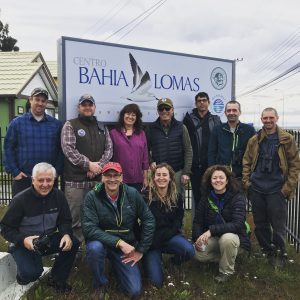
Team in Chile including Ross Wood, Stu Mackenzie, Carmen Espoz, Larry Niles, Joe Smith, Yann Rochepault, Christophe Buidin, Antonio Larrea, Richard Lathrop, Stephanie Feigin and Amanda Dey.

Over two weeks our team of New Jerseyans and Canadians conducted point-count sampling surveys throughout the bay with large assistance from our partners from Universidad Santo Tomás in Chile to determine key habitats. Additionally, our team conducted four aerial surveys to get species distribution counts on a large scale of the whole bay at various tide stages, as well as a helicopter survey to continue the population counts of the region done by Dr. Guy Morrison. Finally, our partners with the Universidad Santo Tomás conducted marine invertebrate sampling surveys. These data will be combined to aid in the creation of a GIS mapping system that can identify the most important shorebird habitats in the region.


In the next few months our team will use these data and overlay them with threat mapping to determine the critical habitats undergoing the greatest threats.  This project is designed set the stage for proactive conservation planning that will mitigate future threats and will hopefully uncover the source of ongoing declines to the shorebirds in this region.

Citation:


Morrison R.I.G. & Ross R.K. (1989) Atlas of Nearctic shorebirds on the coast of South America. Canadian Wildlife Service Ottawa (Canada).


Piping Plovers in the Bahamas

Our Work isn’t Done – the Ongoing Importance of Band Resighting

 By Todd Pover, Senior Wildlife Biologist

Earlier in January, I attended the Abaco Science Alliance Conference to make a presentation about recent conservation and research developments for piping plovers in the Bahamas. This marks the eighth year, starting in 2011, either solo or with CWF staff and other colleagues, that I have been able to follow piping plovers to their wintering grounds in the Bahamas to conduct work to better understand and help recover this at-risk species. And in another sense, to be an international ambassador for piping plovers.

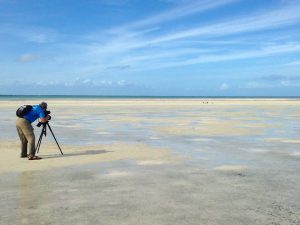
Todd Pover, CWF Senior Biologist, busy searching for piping plovers on the flats in the Bahamas

Over that time, the focus of those trips has varied widely, including conducting surveys for the International Piping Plover Census in 2011 and 2016, improving our understanding of how piping plovers use the various habitats, engaging students with our Shorebird Sister School Network from 2014-17, helping Friends of the Environment, our primary partner there, integrate piping plovers into their educational/school programs, building conservation partnerships, and even producing a video. Tremendous positive changes have occurred in that time with regard to awareness of and attitudes towards piping plovers in the Bahamas and some significant conservation progress has been made, most notably the establishment of several new national parks by the Bahamian government that help protect piping plovers and other shorebirds.

Continue reading “Piping Plovers in the Bahamas”

Osprey Numbers Surge Above Post-DDT Milestone

Statewide Census Documents over 650 nesting pairs in New Jersey

by Ben Wurst, Habitat Program Manager

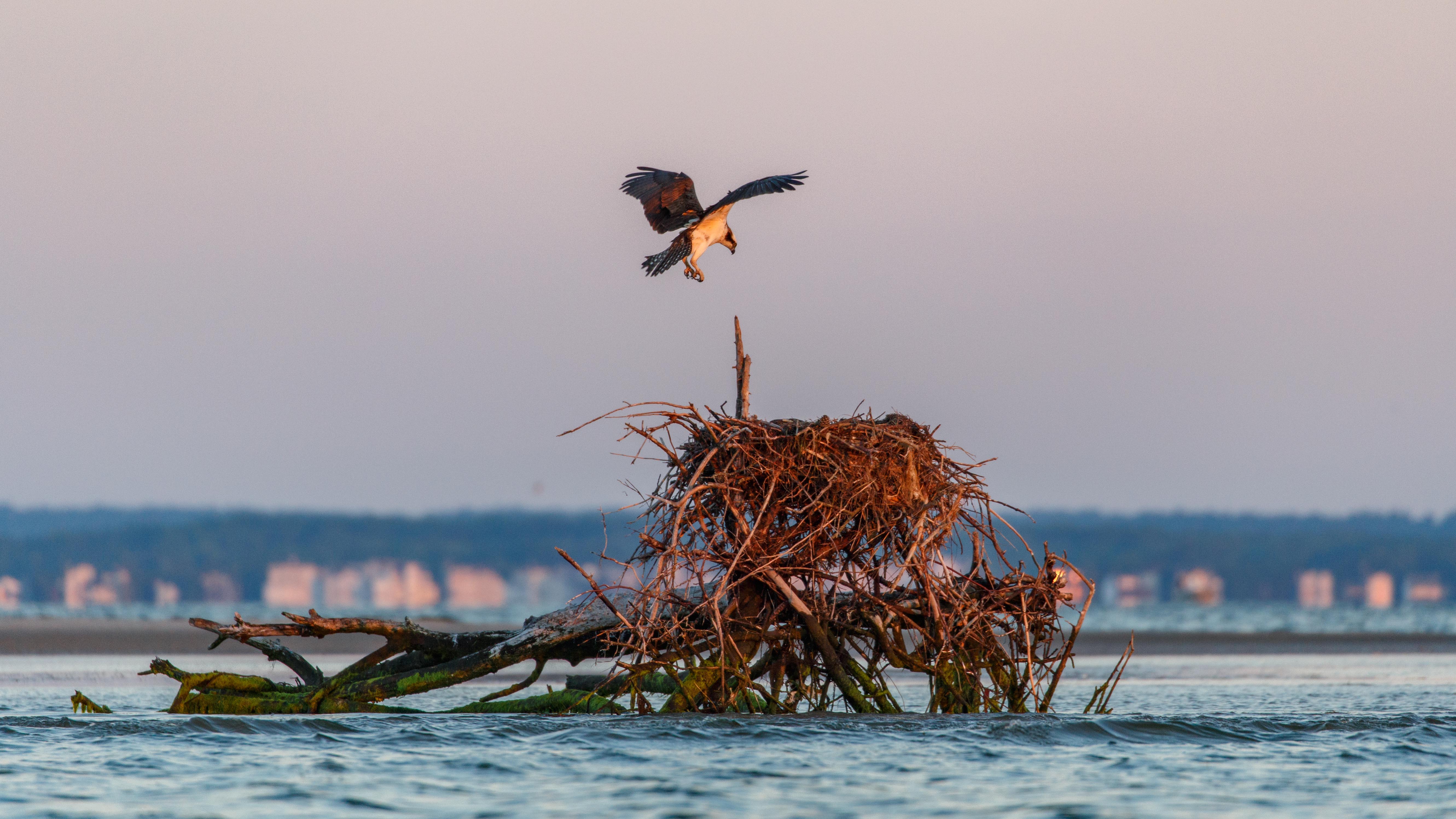
An osprey prepares to land on a natural nest. Barnegat Bay, NJ.

Since we began to work more closely with ospreys in 2006, we have documented the population grow beyond the historic population estimate of 350-450 nesting pairs (Henny 1977) to a new historic milestone. In 2017, a total of 668 active nests were recorded during a statewide census of nesting ospreys, which is well above the post-DDT milestone of 500 nesting pairs, and show that the population continues to grow. This is the second census conducted without the use of manned aircraft since 2009 after all known osprey nests were released and mapped online in 2013. Despite the lack of aircraft, we’re still able to obtain an accurate representation of the size and health of the statewide population, while reducing the overall project cost. Continue reading “Osprey Numbers Surge Above Post-DDT Milestone”

New Jersey Falcons Remain Stable in 2017

Nests on towers and buildings maintain stability in the state population

by Ben Wurst, Habitat Program Manager

Jersey City tiercel. photo by Ben Wurst

Results from the 2017 nesting season for peregrine falcons was released in a report from New Jersey Fish & Wildlife’s Endangered Species Program, and falcons had a decent year. New Jersey’s population remained stable with 32 active nests (with 34 known pairs) as compared to last years’ results of 30 active nests (35 known pairs). Nest success was slightly better than last year, with 22 pairs producing 52 young as compared to 20 pairs producing 47 young. The productivity rate, which is a measure of the health of the population, was very close to what was observed in 2016 at 1.59 young/active nest. Continue reading “New Jersey Falcons Remain Stable in 2017”

Grassland Birds of New Jersey

Part II: Restoring Critical Breeding Habitat

by Meghan Kolk, Wildlife Biologist

In Part I of this series, I discussed the drastic loss of grasslands in New Jersey and the importance of preserving and restoring this disappearing habitat for grassland-dependent bird species.  Due to this habitat loss, in much of the northeastern United States (including New Jersey) airports have become significant breeding grounds for many threatened and endangered grassland birds.  In fact, airports are often the only suitable habitat available for New Jersey’s rarest grassland bird, the upland sandpiper.  If these large expanses of open fields are managed properly, they can support nesting birds while still remaining safe for aircraft operation.  This is the goal of CWF’s new restoration project at one of the most critical breeding sites in New Jersey.

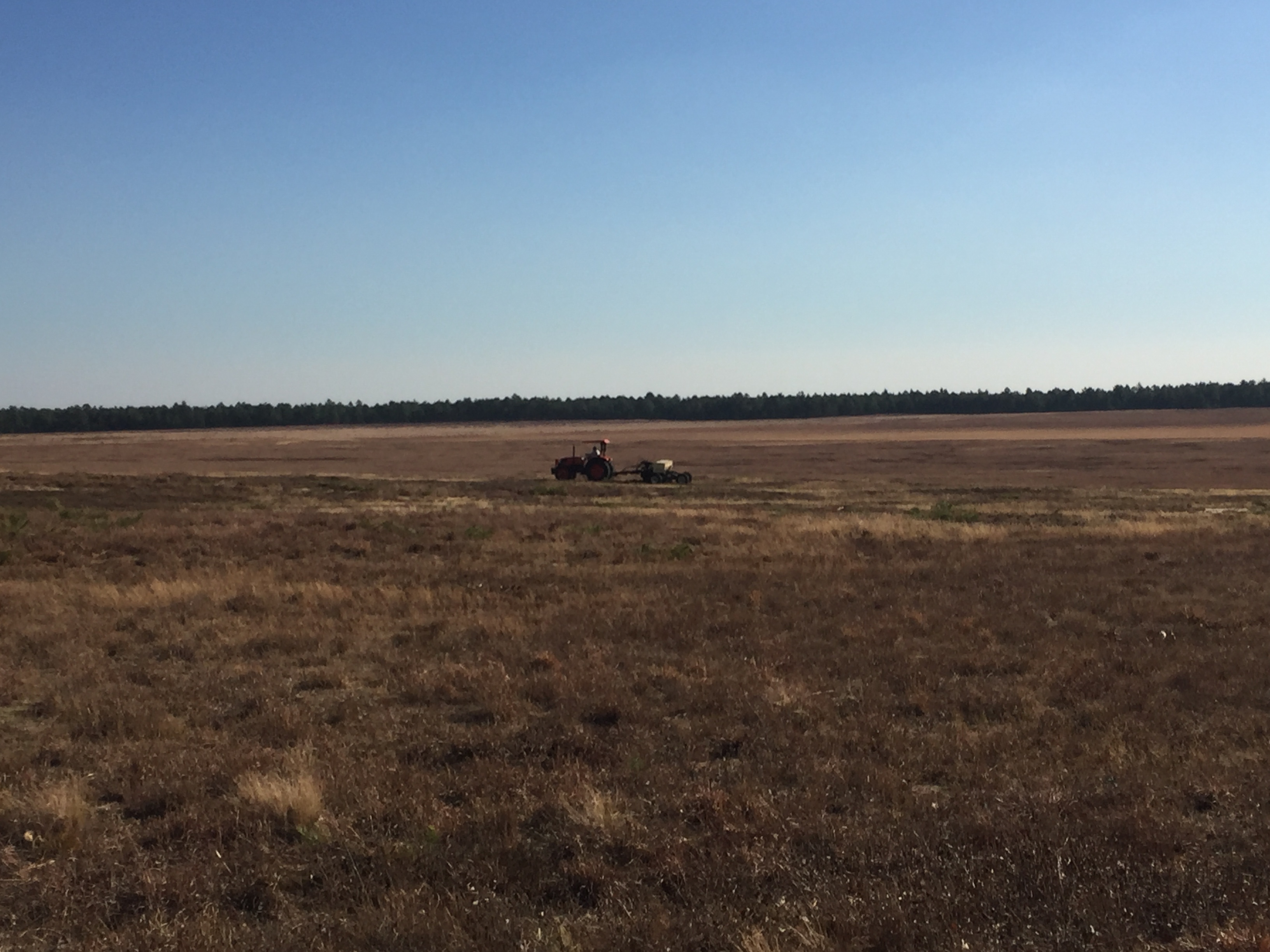
Restoration site at Lakehurst breeding grounds, December 2017. Photo by Meghan Kolk.

The Joint Base McGuire-Dix-Lakehurst (JBMDL) in central New Jersey hosts the largest known breeding colony of the endangered upland sandpiper (Bartramia longicauda), and the second-largest known breeding colony of the threatened grasshopper sparrow (Ammodramus savannarum) in the State.  The bobolink (Dolichonyx oryzivorus), savannah sparrow (Passerculus sandwichensis), horned lark (Eremophila alpestris) (all threatened) and eastern meadowlark (Sturnella magna) (special concern) all make a home here as well during the nesting season.  CWF has  partnered with the U.S. Fish and Wildlife Service to restore hundreds of acres of this vital land to increase suitability and to alter management practices to benefit both wildlife and airfield operations. Continue reading “Grassland Birds of New Jersey”