Enhancing public access to Barnegat Bay and its inhabitants!
by Ben Wurst, Habitat Program Manager
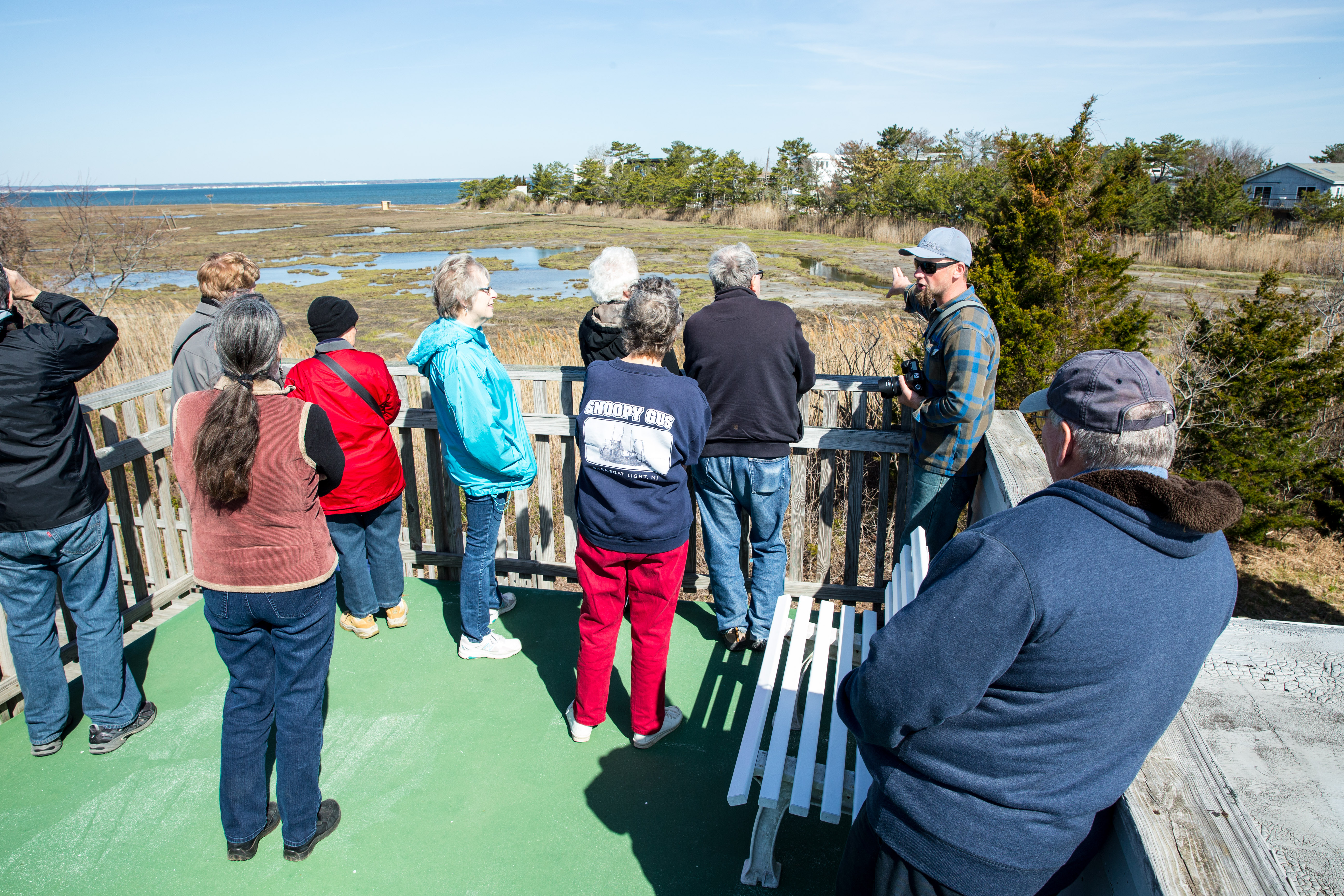
Ben Wurst describes the Nature Trail from the rooftop deck of Science Building at LBIF. Photo by Kyle Gronostajski.
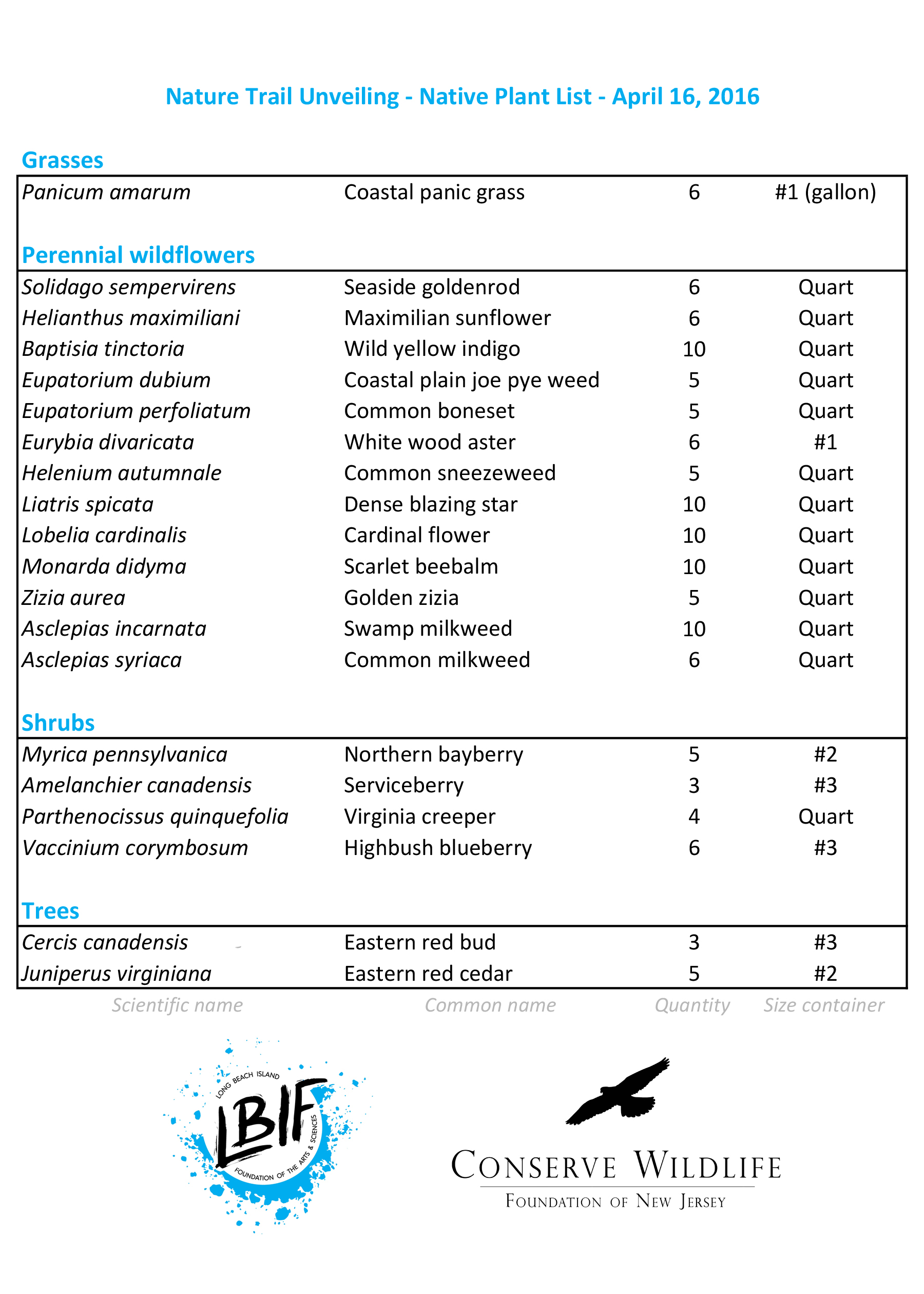
This past Saturday we “unveiled” the new Nature Trail at the Long Beach Island Foundation of the Arts & Sciences (LBIF). At the event we also conducted our first native plant sale, with lots of wildlife friendly plants, including milkweed, goldenrod, joe pye weed, bayberry, red cedar and many others. I lead guided tours along the trail to point out key features and work that we’ve done at LBIF. Our first stop was to the roof top of the Science Building, which is one of my favorite views. It provided visitors an opportunity to see what is the core foundation for our work, Barnegat Bay and some of the wildlife that we work tirelessly to protect and monitor: ospreys and northern diamondback terrapins, in particular.
Tracking Young Bald Eagle “Nacote” throughout the Garden State
by Larissa Smith, wildlife biologist
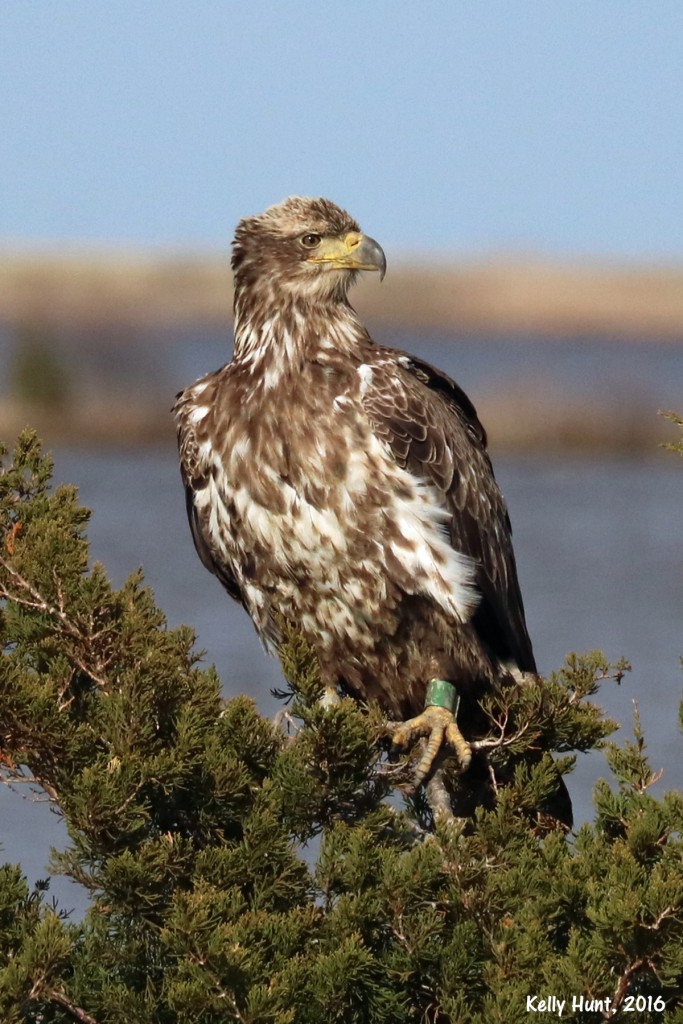
Nacote 4/8/2016 Photo by Kelly Hunt
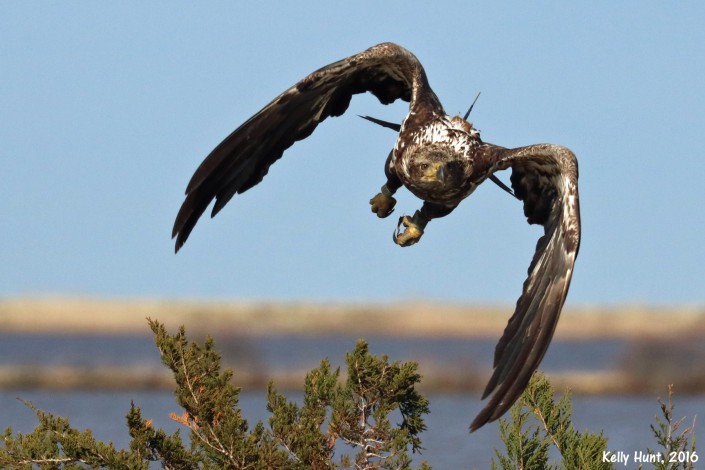
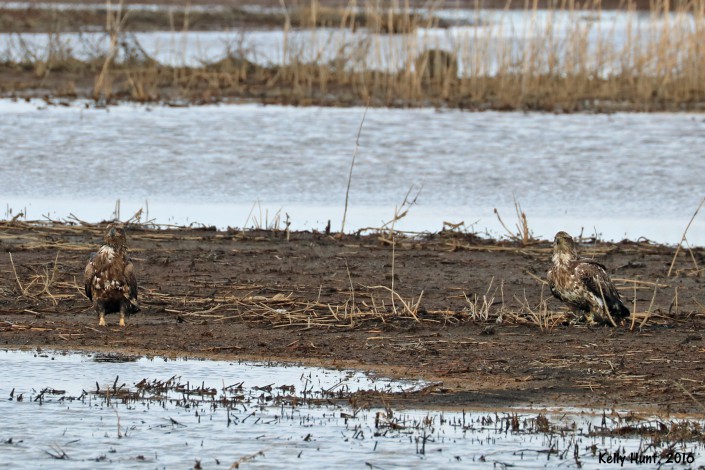
On April 8th, Kelly Hunt was photographing four bald eagles at Forsythe National Wildlife Refuge (NWR), two adult birds and two immature birds. When she got home and looked at the photos she realized that one of the young birds was banded and had a transmitter. It was “Nacote” back in his home area. “Nacote” was banded and outfitted with a transmitter on May 6, 2014 at the Galloway nest. Since then we have been trackinghis movements on the CWF website. These photos give a great look at what the plumage of a bald eagle going into its third year looks like. You’ll also notice that the eyes and bill haven’t yet turned yellow.
‘Jersey Girl’ and Her Mate Rebuild Nest for the 2016 Nesting Season
by Larissa Smith, wildlife biologist
‘Jersey Girl,’ B-64, New nest 2016 Photo by L. Oughton.
We continue to follow the story of “Jersey Girl” B-64. She was banded in Hopewell, Cumberland County, New Jersey in 2004 and this is the fifth season her and her mate have nested in Montgomery County, Pennsylvania. In 2015 after successfully raising three chicks, their nest collapsed due to rain and wind at the end of June, but luckily the three chicks had already fledged.
Nest observer Lind Oughton reported, “Well our great ‘Jersey Girl’ and mate have done it again. They built a brand new nest in the same tree but about 15 feet lower that the first nest. It is much more secure where it is now.” She reported incubation on February 12th and hatching around March 18th. On April 1st, she saw one chick in the nest. We will continue to follow “Jersey Girl’s” story and keep you updated.
“Jersey Girl”, B-64, 2016 new nest. Photo by L. Oughton
Second Annual “Shell-a-Bration” brings volunteers to strengthen coast’s resiliency and habitat
by Lindsay McNamara, Communications Manager
Today, conservation organizations leading the efforts to restore New Jersey’s Delaware Bay beaches today organized the Second Annual “Shell-a-Bration” oyster reef building volunteer event.
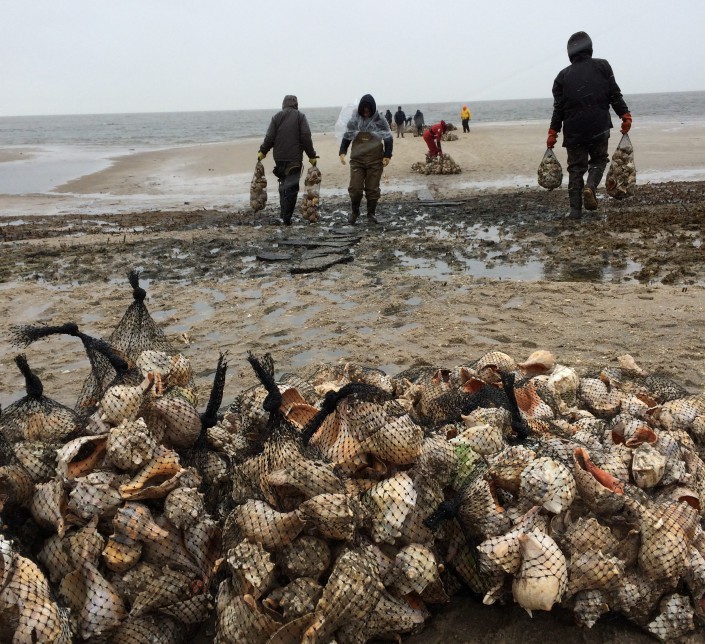
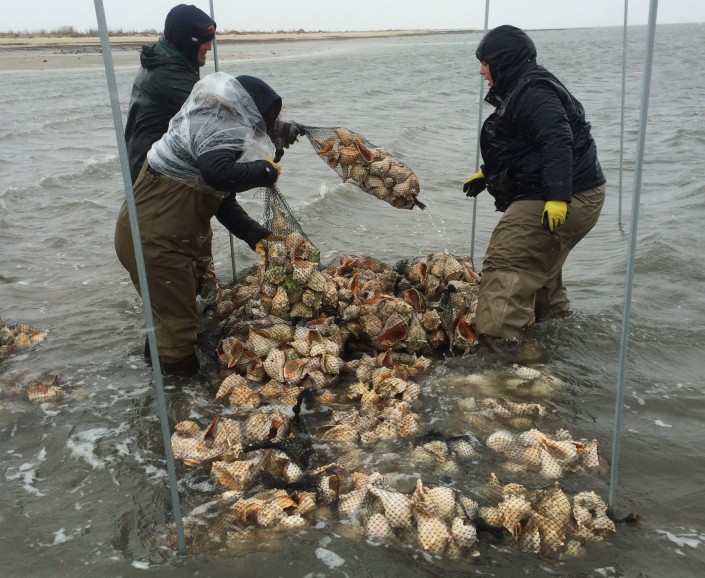
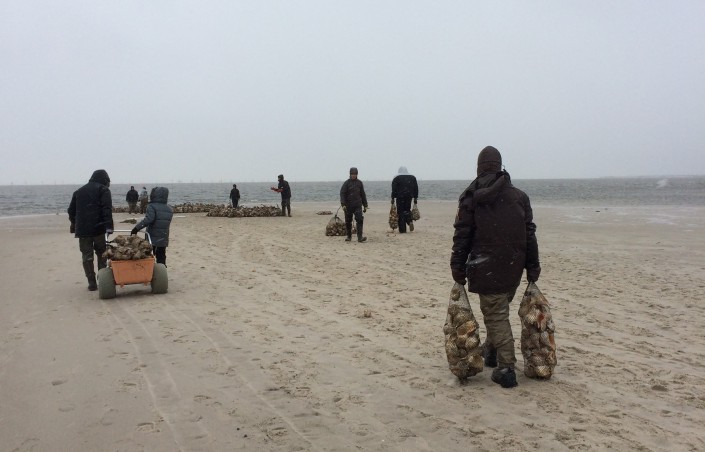
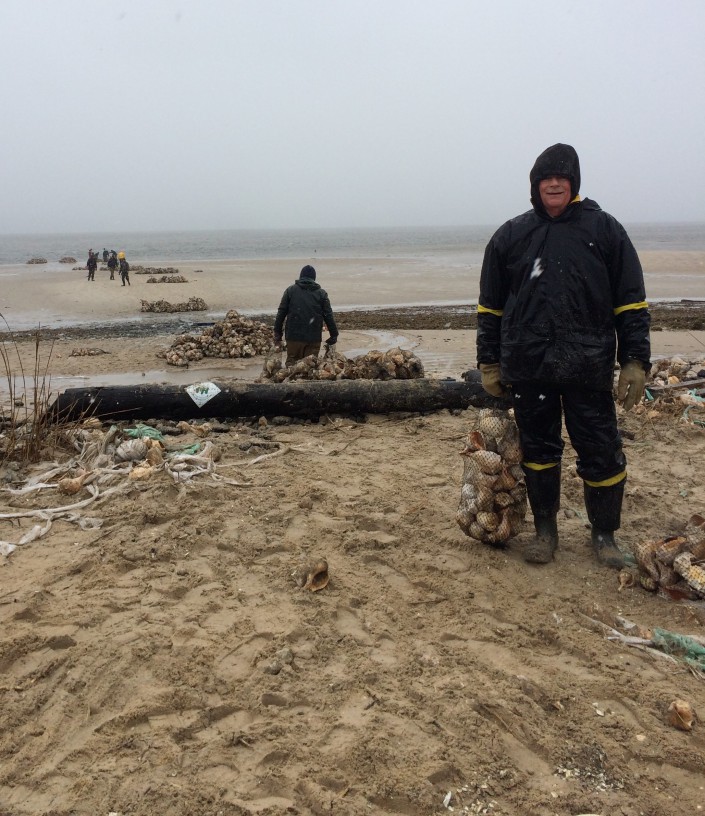
Dedicated volunteers braved the elements and worked alongside American Littoral Societyand Conserve Wildlife Foundation of New Jersey to establish a near-shore whelk shell bar at Moores Beach in Maurice River Township along New Jersey’s Delaware Bayshore. The shell bar was built to prevent sand loss from wind-driven waves. An approximately 200-foot oyster reef was constructed offshore to test whether the reef bars help reduce beach erosion and create calmer water for spawning horseshoe crabs.
“The Second Annual Shell-a-Bration truly celebrates the ecology, community, and culture of the Delaware Bayshore,” stated Captain Al Modjeski, Habitat Restoration Program Director, American Littoral Society. “It reinforces the connectivity between the natural and human-built bayshore communities through reef building and celebrates the significance of the Bay’s resources through restoration.”
“There are many strategies to defend our Delaware Bayshore, but one of the best and most productive are these oyster reefs,” stated Dr. Larry Niles, a biologist with American Littoral Society and Conserve Wildlife Foundation of New Jersey. “They not only replicate a lost but important habitat on Delaware Bay — reefs once covered much of the bayshore — but they provide just enough protection to make a difference in how long our beaches persist against the unrelenting forces of nature. In a way, we are fighting nature with nature.”
Shorebirds, like the federally listed Red Knot, depend on an uninterrupted supply of horseshoe crab eggs when they stopover in Delaware Bay during their migration. In recent years, countless horseshoe crab eggs have been lost because of the devastating storms that swept away the beaches they depend on.
The new oyster reef will attenuate waves but still allow for horseshoe crab breeding. In existing areas where crabs can breed without interruption, like creek mouths protected by sand shoals or rock jetties, egg densities can exceed ten times the egg densities on unprotected beaches.
“New Jersey’s Delaware Bayshore hosts an annual wildlife spectacle of global significance – the time-honored migration of Red Knots to reach the eggs of these ancient horseshoe crabs,” said David Wheeler, Conserve Wildlife Foundation of New Jersey Executive Director. “Red Knots fly to New Jersey’s Delaware Bay from as far away as Tierra del Fuego in South America to feed on horseshoe crab eggs. Volunteer projects like the Shell-a-bration help connect the people of New Jersey with these endangered shorebirds and the largest population of horseshoe crabs in the world.”
Last year, over 130 volunteers and veterans built the South Reeds Beach oyster at the First Annual Shell-a-Bration. Veterans Day on the Bay 2015 dedicated the South Reeds Beach oyster reef to all veterans and highlighted veteran involvement in the effort to restore New Jersey’s Delaware Bayshore. Event attendees honored their own military veterans by inscribing that special person’s name on a shell and placing that shell on “Veterans Reef.” Guests also helped study the wildlife living in this new reef with hands-on, interactive marine science activities like seining, trapping, trawling, and species identification.
Our “assembly line” of volunteers all working together to build the reef.
Veterans Reef and the Moores Beach Oyster Reef are two of the many projects that American Littoral Society and Conserve Wildlife Foundation are working on to restore the ecology and economy of the Delaware Bayshore.
In the wake of Hurricane Sandy, American Littoral Society and Conserve Wildlife Foundation of New Jersey worked with the U.S. Fish and Wildlife Service, the New Jersey Division of Fish and Wildlife and the New Jersey Recovery Fund to remove 8,000 tons of debris and added 45,000 tons of sand to the beaches just before the annual spring arrival of the red knot in 2013.
Additional work after 2012 restored another mile of shoreline, including two new beaches of poor quality even before Sandy. To date, the groups have placed 85,000 cubic yards of sand and restored seven beaches along New Jersey’s Delaware Bayshore. In early 2016, groups began another phase of restoration work at Cook’s Beach and Kimble’s Beach in anticipation of the return of the horseshoe crabs and red knots in May.
Photo Captures Beautiful Eaglets of Different Sizes
by Larissa Smith, Wildlife Biologist
Photo by Kathy Clark
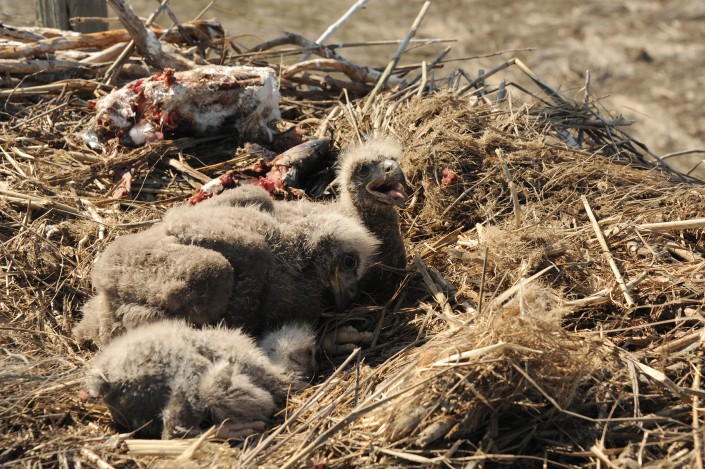
Conserve Wildlife Foundation’s partner biologist — Principal Zoologist with Division of Fish and Wildlife’s Endangered and Nongame Species Program (ENSP) — Kathy Clark checked on an eagle nest built on a structure only accessible by boat. This photograph shows the three chicks and the difference in their sizes. The youngest chick is approximately 2.5 weeks old, while the oldest is around 3.5 weeks of age.
Did you enjoy a warm cup of coffee this morning? I know I did. Over 2.25 billion cups of coffee are consumed every day.
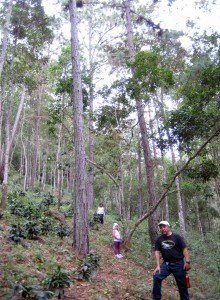
Coffee is also one of the world’s top agricultural exports in many developing countries. While I was in Honduras, with the Pennsylvania Golden-winged Warbler working group, I was given the opportunity to visit a shade grown coffee farm!
As I traveled across the country, I was able to enjoy many fresh cups of local Honduran coffee and learn about the importance of coffee as part of the Honduran history and local economy.
In 2011, Honduras became the number one coffee producer in Central America. Today, there are over 100,000 registered coffee producers in the country and over 90% of them are small producers. Coffee has become a vital part of the Honduran economy and family system, helping to generate small businesses and bring revenue to the local community.
In Honduras, coffee is harvested from November to March every year. Coffee is hand-picked and resembles a green or red cherry fruit when ripe. After ripening and picking, coffee must be dried and the outer coating, called the parchment, or pergamino must be removed. There are various methods of parchment removal and drying. Different drying and roasting techniques give way to differing quality, taste and aroma.
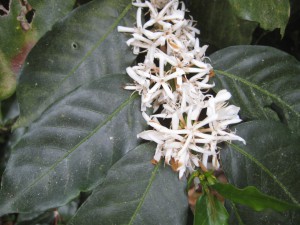
In its wild form, coffee is a small tree or shrub that grows in the understory of a forest. Traditionally, coffee production occurs on large farm fields, where the land is tilled and little native vegetation grows. Coffee producers often use this traditional method as a way to increase yield and fight off diseases susceptible to the plant. Recently, however, coffee producers have begun to grow shade-tolerant coffee which is grown under a forest canopy.
Shade-tolerant coffee production is a method which intends to incorporate the natural principles of ecology into agricultural production. Shade tolerant or shade-grown coffee is grown under a natural forest canopy. Shade grown coffee can have multiple benefits — reducing pests, increasing pollination and creating important wildlife habitat. Shade grown coffee plantations often have increased leaf litter which reduces erosion and allows for improved water quality.
Through the incorporation of native trees on farms, birds and natural predators will help reduce pest insects, which in turn, helps reduce the need for pesticides. Bird diversity is often higher on shade grown coffee farms since they eat the fruit, insects and nectar in the native tree canopy. These types of farming practices have also be termed “bird friendly” coffee, because they help support local bird populations, including migratory birds that stay in Honduras during their wintering months.
Upon our visit to a shade-grown coffee farm, called Lenca farms in the little town of Marcala, we were greeted with a Golden-winged Warbler! Most of the farm grew coffee right under the native forest canopy. Many of the native trees, leaf litter and herbaceous plants were left intact. It was great to meet with local Honduran farmers, who are eager to create and maintain wildlife habitat on their farms. Many Hondurans recognize the value in wildlife and are willing participants in wildlife conservation.
Shade-grown coffee may be important as coffee continues to be a growing commodity crop worldwide. When farmers learn to grow food in conjunction with nature, not against it, the best yields and benefits for the environment can result.
We were very appreciate of our time a Lenca Farms, and we didn’t leave without a fresh cup right on site!
Check out Smithsonian Migratory Bird Center online to learn about the certification process for coffee farms called “Bird Friendly Coffee” and to learn how to buy bird friendly coffee!
After more than a century, fishers are returning to New Jersey
by Kendall Miller, Communications Intern
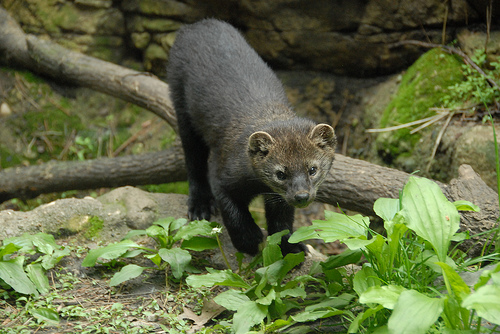
Fisher photo by Josh More via Flickr Creative Commons.
New Jersey’s forests lost a charismatic top predator when the fisher was extirpated nearly a century ago. Exploitation of the fisher for its pelt — coupled with excessive logging practices during the 19th and 20th centuries — caused decimated populations of this North American native across its entire range. However, through the implementation of conservation practices, this small, yet spunky forest carnivore is experiencing a comeback.
Despite its past disappearance from the state, the combined effects of trapping bans and nearby relocation projects (New York and Pennsylvania) are resulting in the fisher’s resurgence in New Jersey. Within the last decade, the return of fishers to New Jersey has been an exciting new possibility, with multiple reported sightings, photos caught via trail camera and anecdotal stories by the public.
Recently, two trappings by state officials in North Jersey, both within a mere month of one another, mark the return of fishers to the state of New Jersey, and speaks for the potential future of this species, as well as others.
What exactly is a fisher?
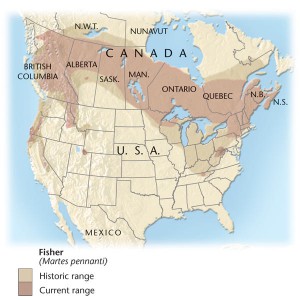
Source: Canadian Geographic
Found only in North America, fishers historically inhabited forested and semi-forested land from coast to coast, ranging from Virginia to Quebec in the east. Found in deciduous, coniferous and mixed forests, they prefer areas with dense canopy cover, and tend to avoid areas with human disturbances.
Also referred to as the fisher cat and Appalachian black cat, this animal looks like fluffy cat meets fox, with a wolverine-like disposition. However, it is neither a feline nor does it catch fish. The fisher (Martes pennanti) is a member of the Mustelidae family, which includes otters, badgers, martens, ferrets, minks, wolverines and more.
The fisher is a long bodied and short legged animal, with a bushy tail that makes up a third of its total body length. There is a substantial size sexual dimorphism between males and females. Males weigh 8-13 pounds and reach lengths between 35-47 inches. Females weigh between 3 and 7 pounds and are between 30-37 inches long. Males have grizzled fur due to blonde guard hairs on their neck and shoulders, while females are a uniform chocolate brown.
A generalist carnivore species, a fisher will eat anything it can catch — typically small- to medium-sized mammals and birds. Carrion and some nuts and fruits also make up a portion of its diet. They are known to eliminate weak or injured deer, especially in times of heavy snow pack.
While its diet may be general, one part is very special: this is the only predator of porcupines in the country. The prickly defenses of the porcupine protect it against almost all predators except the fisher, who has developed a special way of hunting its prey. It will chase a porcupine up a tree until it can go no further and falls. Then, it will make a head-first descent down the tree with the help of semi-retractable claws and feet that can turn nearly 180 degrees. The fall stuns the porcupine, allowing the fisher to access the unprotected underside.
These predators share prey with coyotes, bobcats, foxes and even raptors, creating competition with these species. Fishers have been known to travel hundreds of miles to meet their dietary needs, able to cross water if need be.
They live a solitary life-style, with home ranges between 1-3 square miles, seldom overlapping, which suggests territoriality. They are found to be active at any point during the day or night. Fishers make homes in dens year round, using a variety of forest resources such as tree hollows, stumps, debris piles, natural crevices and underground tunnels. Females with litters will use tree hollows that are far off the ground.
Fishers themselves have no natural enemies and few disease occurrences. Trapping by humans and vehicle collisions likely account for the majority of deaths throughout their range.
SEVERAL SPECIES OF FRESHWATER FISH TO RECEIVE IMPERILED STATUS
By Michael Davenport, GIS Program Manager
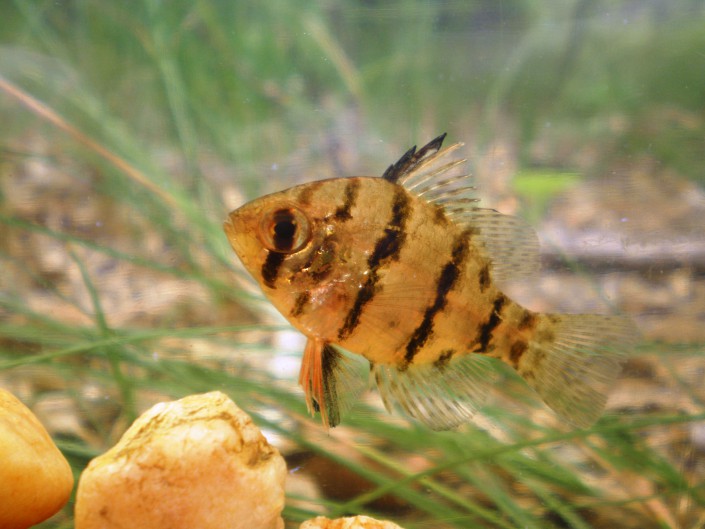
The New Jersey Division of Fish and Wildlife has recently completed a status review of the freshwater fish species within the state. A total of 53 species were reviewed by a panel of experts and the results of that review were then presented to the Endangered and Nongame Advisory Committee which voted on March 16th to recommend the status changes. As a result of this status review, ten additional species within the state will be receiving an imperiled status of either Endangered, Threatened, or Special Concern. The date for when those listings will become official is still unknown.
Conserve Wildlife Foundation of NJ’s online field guide, a one-of-a-kind free reference focused on New Jersey’s wildlife, has expanded to include the additional fish species.
To learn more about these fish species and the threats facing them, please click below to link to our field guide:
Reflections Three Years into the Shorebird Sister School Network Program
by Stephanie Egger, Wildlife Biologist
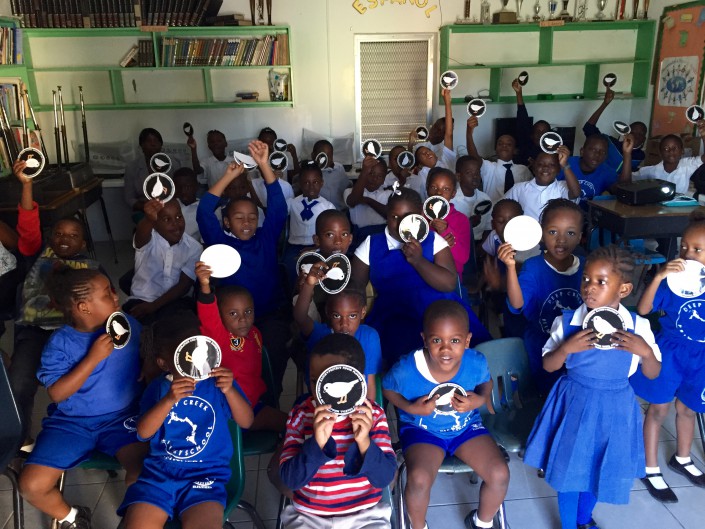
Deep Creek Primary students with the migratory and wintering Piping Plover decal.
As we begin to wrap up our third year of the Shorebird Sister School Network, we are able to reflect on how far we have come in just a short time. In our first year, we started with just one class at Amy Roberts Primary School (Green Turtle Cay, Abaco, The Bahamas), led by teacher Jan Russell, which was paired up with a class at Ocean City Intermediate School (Ocean City, New Jersey), led by teacher Deb Rosander. We presented the students with information on the full life cycle of the Piping Plover, commonly referred to as “our birds” in New Jersey. Really they are residents of The Bahamas, spending over half their life on the warm sandy beaches surrounded by turquoise water. Piping Plovers in The Bahamas, in most cases, see less disturbance than what is experienced by plovers on their breeding grounds in the United States and Canada.
We not only focus on breeding, migration, and wintering of the plovers, but the importance of their habitat to a suite of species. In The Bahamas, the tidal flats used by the Piping Plovers are of huge importance to the ecological value and economy of The Bahamas, as the flats are also used by bonefish, conch, and shark species. We had both classes conduct similar projects — interpretive signs placed on the breeding and wintering grounds — using their writing skills and original artwork. The students also participated in field trips where they learned how to use spotting scopes and binoculars to find and identify shorebirds.
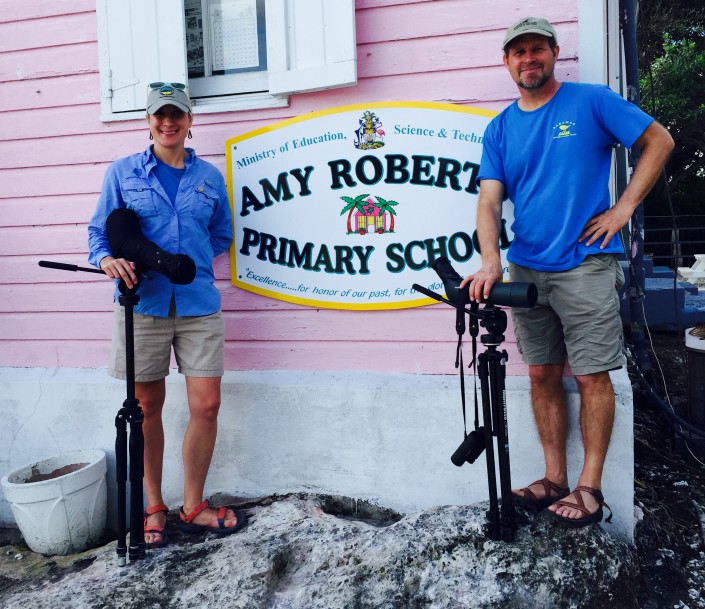
Shorebird Sister School Network leaders and CWF biologists, Stephanie Egger and Todd Pover at Amy Roberts Primary School, one of the first sister schools in the program.
Three years later, we still are teaching our core lessons, but have vastly expanded on the curriculum and projects, as well as extending the program onto another island, Eleuthera, which is just south of Abaco. We now are working with Cherokee Primary in the settlement of Cherokee Sound (Abaco) and Deep Creek Primary (Deep Creek, Eleuthera). We have continued working for the last three years with Amy Roberts Primary School and Ocean City Intermediate School. Back in the United States, we have added a second class from Ocean City, as well as the Leeds Avenue Elementary School Environmental Club (Pleasantville, New Jersey) led by Mary Lenahan. We’ve added new components to the curriculum such as bird anatomy, foraging differences between species of shorebirds, invasive species, habitat assessments (including macroinvertebrates) and marine debris.
We continue to implement interpretive signs as a project with classes that are in their first year of the program, but have come up with new and exciting projects to keep the students (and teachers) motivated and engaged to continue participating as a sister school. For example, during the second year we worked with Amy Roberts, we removed 1,500 Australian pine (Casuarina spp.) from Green Turtle Cay as it degrades the habitat for piping plovers and other species. We created a Piping Plover activity book complete with crossword puzzles, word searches, and mapping activities designed mainly by the students at Ocean City Intermediate School, Leeds Avenue Elementary School, and Amy Roberts Primary School. Because Cherokee Primary and Deep Creek Primary are new to the program this year we hope to have their students create interpretive signs, while the second and third year students in the Program may develop PSA-type videos this year and pen pal letters to their respective sister schools in the United States.
Throughout the year, each class receives one or two classroom lessons and a field trip. We keep busy during the few short weeks we have in The Bahamas; coordinating the field trips, conducting surveys, presentations, and working to continue to build and strengthen our existing relationships with partners, such as Friends of the Environment and local citizen scientists. This year, we’ve reached over 120 students in the program, both from the Bahamas and in the United States.
One of the most rewarding aspects of the Shorebird Sister School Network is that we are able to provide lessons to the some of the same children throughout multiple years in the program, which strengthens the conservation messages we are trying to instill in the upcoming generations. We hope to foster a greater appreciation for wildlife, especially for the Piping Plover and its habitat, and inspire students to help now — and later on in their lives as adults — ensure the recovery and survival of the bird for years to come.
Conserve Wildlife Foundation introduces new educational contest for 5-8th grade students in New Jersey
by Lindsay McNamara, Communications Manager
Image by: Jessie Peter (2009) “The Educator’s Guide to Marine Debris”
The scientists at Conserve Wildlife Foundation, NOAA, students from the Marine Academy of Technology and Environmental Science (MATES), and other partners are working with local fishermen to locate and recycle over 1,000 abandoned crab pots that litter the Barnegat Bay watershed.
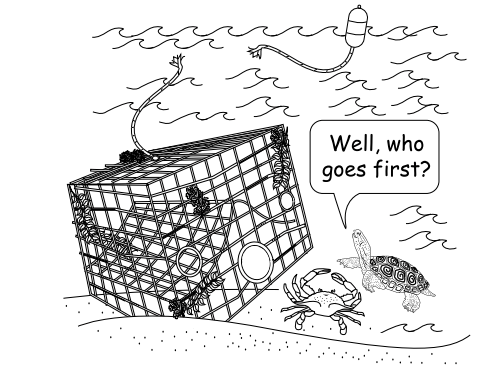
Abandoned crab pots are a form of marine debris, or litter that ends up in oceans, seas, or other large bodies of water. Every year, tons of marine debris is left behind in Barnegat Bay and surrounding waters. When a fisherman’s gear is lost or abandoned it can trap, hurt or even kill marine wildlife like fish, crabs and the diamondback terrapin, a small turtle that lives in the salt marsh.
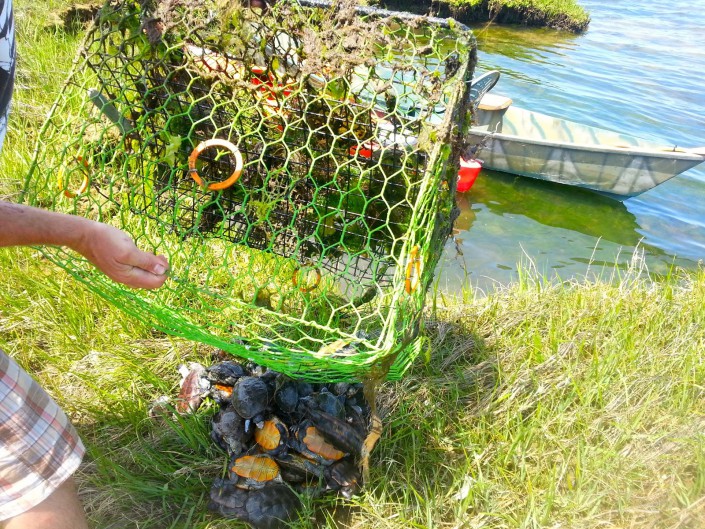
Nearly 50 diamondback terrapins drowned in one abandoned crab pot. Photo by Shannon Alexander of Bay Country Kayaking
To help fix the problem, our team of scientists will locate (with sonar technology) and take the crab pots that have been lost or left behind in the water. The old and rusty crab pots that are recovered will be recycled and converted into energy!
Calling all students! Do you want to help too? Enter our Species on the Edge: Marine Debris Edition contest and draw a design that shows how our project will help Barnegat Bay and marine wildlife like the diamondback terrapin.
Open to all New Jersey fifth-eighth graders in public, private, or home schools.
The contest opens on Friday, March 4 and closes on Friday, May 20, 2016.
Decal designs will be judged by marine scientists. Judging takes place in June.
The winner will be notified by the end of June.
The winning design will be printed on 2,500 stickers to use as the official “logo” of the project. The winning student will receive two free passes to Jenkinson’s Aquarium and spend a day in the field with one of CWF’s wildlife biologists.
Our abandoned crab pot project brings together the NOAA Marine Debris program, Fishing for Energy partnership, CWF, MATES, Monmouth University, Stockton University, ReClam the Bay, and local fishermen and baymen. Funders of this project include: NOAA Marine Debris Program, National Fish and Wildlife Foundation, Covanta, and the New Jersey Corporate Wetlands Restoration Partnership.