Piping Plover Population Reaches Lowest Levels in Decades
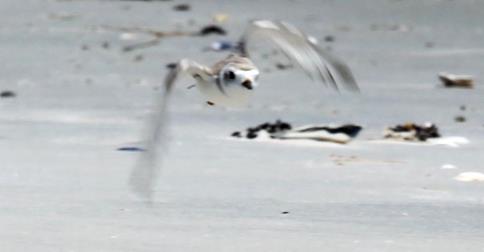
 

Plover populations at Malibu Beach in Egg Harbor Township are near a record-low this year due to predation, recreation activities and habitat loss. (c) Edward Lea

New Jersey’s Piping Plover population is at its lowest levels in decades, which raises serious concerns, but they also had one of their most successful years ever statewide in producing chicks. There is hope this will jump start the population again. To read the full article, click here.

  • To watch the video about this years Piping Plover population, click here
  • To learn more about CWF’s efforts to protect these birds, click here.

Photo from the Field

Running the numbers

by Ben Wurst, Habitat Program Manager

Ben Wurst prepares to band two osprey nestlings for future tracking. Photo courtesy Eric Sambol

By now many young ospreys have taken to the wing. While they still rely on their nests to perch at night and their parents for food, these juveniles take to the skies to learn the skills needed to survive to adulthood. Our nesting surveys have been completed, birds banded, and our sunburn and green bites are healing! Over the next week I will start to enter and summarize data that I’ve collected and data from our volunteer “banders” who help cover the most densely populated colonies. From my surveys, which range from Mantoloking to Atlantic City, I’d say that productivity is down in some areas and up in others, as compared to last year. But, ospreys still had a decent year. I would NOT call it a BAD year!

By far my own survey effort was not as great as last year, when we conducted a census of all nesting ospreys in NJ, by publishing our nest locations on our partners website, called Osprey Watch. This year I battled broken boats, a severe cold (still didn’t slow me down), harsh south winds, and thunderstorms to get to as many nests as I could, especially on Barnegat Bay. Why Barnegat Bay? We all have heard that Barnegat Bay is dying. Overloaded with excess nutrients from stormwater runoff, which is killing off the eelgrass beds that provide shelter for many juvenile fish, aka future osprey prey. This project will help us learn about osprey foraging habitat on N. Barnegat Bay. Are more birds foraging in the ocean in those areas, as opposed to birds that nest closer to LBI and LEHT? Hopefully our ospreys will help shed some light on the health of the bay. Lastly, the project would not be possible without the generous support of Northside Jim, chief blogger/extraordinary photographer at “Readings from the Northside” and his many followers. With their support we were able to purchase (100) and deploy (60) a red auxiliary band on young birds. These bands are engraved with an alpha-numeric code which will make identifying birds much easier than only the aluminum USGS band. In the coming weeks Jim will be giving us some assistance with setting up a nice little website where people can learn all about the bands, the birds, and most importantly: report re-sightings of these awesome new bands!

Shorebird Week: Iconic Red knot B95 Resighted on the Delaware Bay

by Stephanie Feigin, CWF Program Coordinator

This marks the second story in Shorebird Week! Our first blog post, on Tuesday, introduced the film “A Race Against Time” and directed you to a free viewing of the film on our website. Today’s blog post, will highlight an incredible news story about a resighting of the iconic Red knot B95 on the Delaware Bay! And tomorrow’s blog post, will highlight volunteer’s incredible efforts to save stranded horseshoe crabs!

This story highlights the iconic Red knot, B95, being resighted on the Delaware Bay. B95, nicknamed Moonbird, is at least 20 years old, which makes him the oldest Red knot on record. He received his nickname because he has flown the equivalent of the distance between the earth and the moon and at least halfway back in his lifetime.

Iconic Red knot shorebird B95

One of Conserve Wildlife Foundation’s partners, Manomet Center for Conservation Science, highlights this bird in an fascinating news story about his resighting and the research efforts being done by the CWF biologist Dr. Larry Niles and Amanda Dey, senior biologist with the Endangered and Non-game Species Division of N.J. Fish and Wildlife and their team to restore the Delaware Bay.

To read this news story, click here

For more information on CWF’s Shorebird project and the research being done, visit our website.

And make sure to check out the film about CWF’s efforts to restore the Delaware Bay Shore beaches, “A Race Against Time” as well!

Shorebird Week: Film Celebrates Beach Restoration for Red Knots and Horseshoe Crabs

by Stephanie Feigin, CWF Program Coordinator

A banded red knot searches for food on a Delaware Bay beach.

This week for Animal Week, we will be spotlighting Shorebirds in the Media! Endangered red knots, ruddy turnstones, and other magnificent birds travel from South America to the Canadian Arctic during their migration, and make an important stopover along the Delaware Bay Shore from May to June.

The 2014 Shorebird film, “A Race Against Time” celebrates the Delaware Bay Beach Restoration

The film can now be enjoyed for free on our website:

Click here to enjoy this film! 

Greener New Jersey Productions this spring produced a 30-minute film documenting the ambitious campaign by Conserve Wildlife Foundation, American Littoral Society and other partners to restore Delaware Bayshore beaches decimated by Hurricane Sandy. This project ensures that the at-risk horseshoe crabs and globally migrating shorebirds relying on this habitat can survive.

Conserve Wildlife Foundation of New Jersey and the Endangered and Nongame Species Program (ENSP) of the New Jersey Department of Environmental Protection’s Division of Fish & Wildlife, and New Jersey Audubon have partnered for many years to conduct research on Delaware Bay shorebirds in order to prevent their decline.


Edwin B. Forsythe NWR Osprey Banding

Three nestlings produced at the Osprey Cam nest are banded for future tracking!

by Ben Wurst, Habitat Program Manager

In the late afternoon of June 24, 2014, I kicked off the 2014 Osprey Nesting Surveys by banding the three nestings at the Osprey Cam nest. I was joined by Ann Marie Mason Morrison, with Friends of Forsythe NWR, our founding partner with the Osprey Cam, and two U.S. Fish and Wildlife Service interns, Jessie and Kirsten who helped bring out all the equipment needed to the nest (two 20′ ladders).

This is one of the most difficult nests to reach in all of New Jersey! It either takes a boat (at high tide) or two 20′ ladders (at low tide) to cross a 15′ wide ditch on the coastal salt marsh. Anyone who has crossed the ditch can attest to how difficult it is. Now you can watch and see what when into banding these three nestlings. A portion of the video was cut when I was attempting to repair the sound at the camera equipment box. At the same time the nest was cleaned of harmful plastic debris that the birds used as nesting material. A total of 3 balloons and a plastic bag were removed from the nest. The three young were banded with USGS bird bands (1088-04358,59 & 60) for future tracking. Check out a photo that I got of “the runt.” Enjoy!

Osprey Cam update: First egg to 21 days old

Young osprey develop so fast!

by Ben Wurst, Habitat Program Manager

First egg was laid on April 19.
They were incubated for 38 days, which is slightly more than the average of 35 days in NJ.
The first two eggs hatched on May 29th, and the third on June 1.
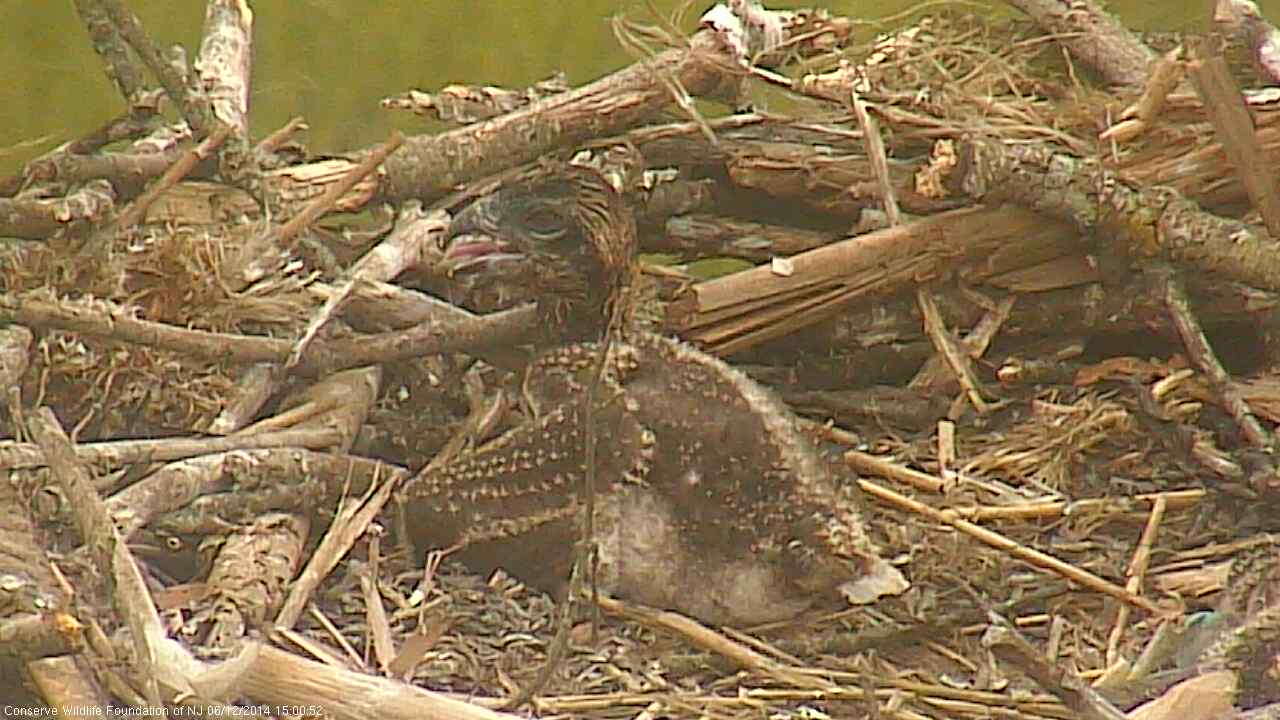
5-7 days old.
5-7 days old. Sleepy…
Feeding time is non-stop with ospreys!
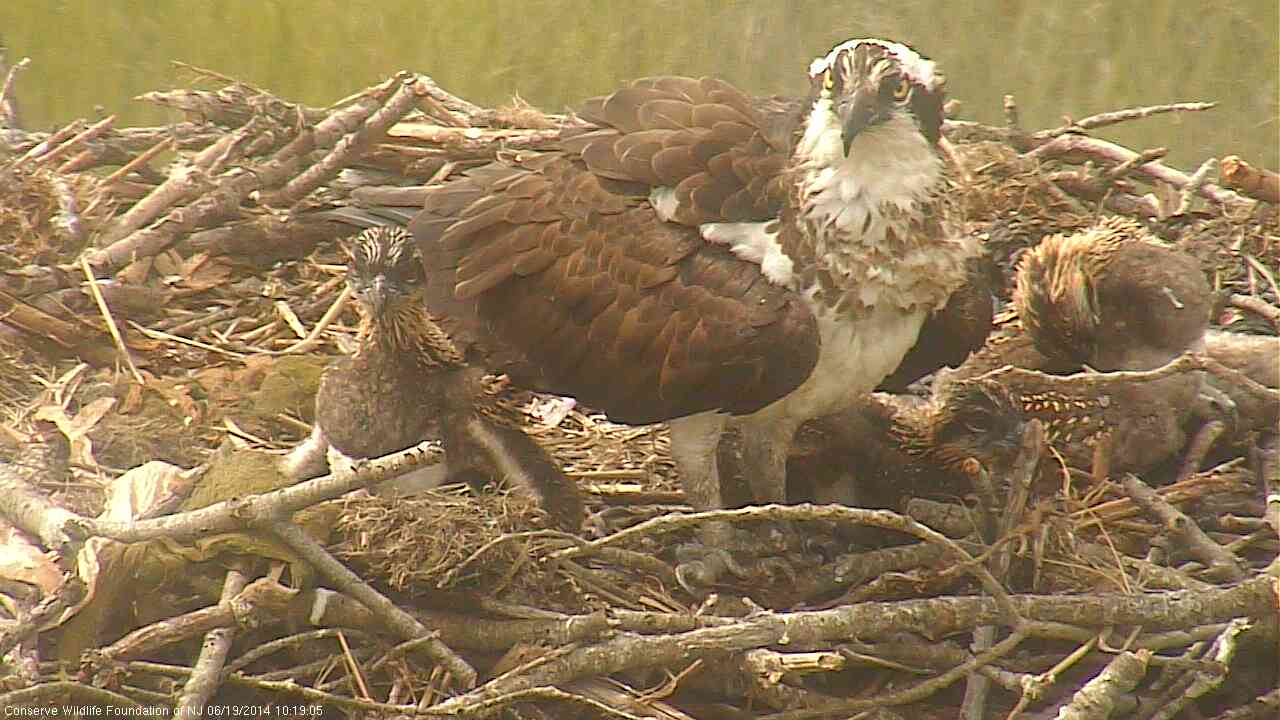
Two weeks old.
Downy and body feathers start to emerge at 14 days old.
Today marks 21 days old (for the oldest two young). They're now very active in the nest and like to check out all the cool nesting material mom & dad used in the nest.
Today marks 21 days old (for the oldest two young). They’re now very active in the nest and like to check out all the cool nesting material mom & dad used in the nest.

Plush birds help real birds in New Jersey!

Ever see an adorable bird in the wild and wanted to take it home with you?

by Ben Wurst, Habitat Program Manager

A Stuffed Owl hunts a desolate beach.
Well now you can!

I feel lucky to have had the chance to see a snowy owl on one of New Jersey’s beaches! It was certainly a once in a lifetime experience! Snowy owls are such an intriguing species that we know so little about. Hopefully scientists will learn more about them by studying their movements during this irruption to protect critical habitat for them, like some of the beaches and other habitat types that they overwintered on here in New Jersey.

Since we all LOVE the snowy owls so much, you can now purchase your very own memento of the irruption this winter! The plush snowy owl that you see above was made right here in the US; designed by talented artists and made by hand by craftsmen and women in Upperstate New York. 20% of the sales of these plush birds goes to Conserve Wildlife Foundation of New Jersey to protect REAL birds.

More plush birds are on the way, like ospreys, piping plovers, oystercatchers, and peregrine falcons!

I for one cannot wait to get my hands on a plush osprey!! 🙂

Osprey nest needs urgent repairs

A productive nest on the Navesink River needs a helping hand!

by Ben Wurst, Habitat Program Manager

UPDATE: We have learned that the pole has been straightened!! Thank you all for the support!!!

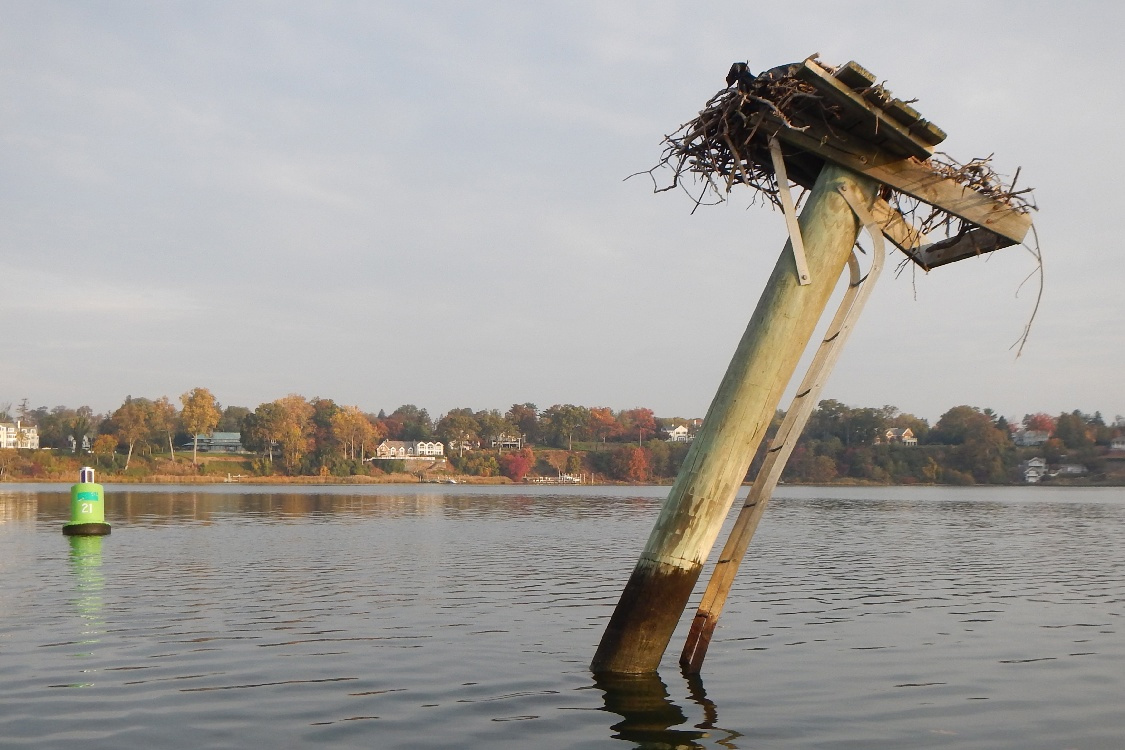
Many North American ospreys have already departed from their wintering grounds in Central America, N. South America, and the Caribbean and are on migration to their summer breeding grounds. In New Jersey, most ospreys nest along the Atlantic Coast, from Sandy Hook to Cape May and arrive in mid-late March. One nest (083-A-007) is on a decommissioned channel marker (#21) on the Navesink River, off Fair Haven. The nest was first found in 2006 and in 2013 the nesting pair successfully produced three young. Considering the current condition of the nest pole, they were really lucky to produce any young at all!

083-A-007 on the Navesink needs some TLC!

This platform was one of many that sustained damage by Superstorm Sandy. We pledged to repair any and all platforms that were reported as damaged by the Storm and did; however, we don’t have the equipment or boats to repair a leaning platform in open water, like 083-A-007. Since it was damaged we have been contacted by many concerned citizens who watch the pair that nests here. We’re sharing this story to help garner support to repair the nest pole.

Ospreys mate for life and return to the same nest site, year after year.  They will build their nest at an angle to compensate for the lean, but young are still in jeopardy of falling out of it. Our goal is to get it fixed before the pole falls over. Lastly, this is an important nest site in the region. There is very little preserved open space in this region of Monmouth County and very few osprey nests.

We need your help!

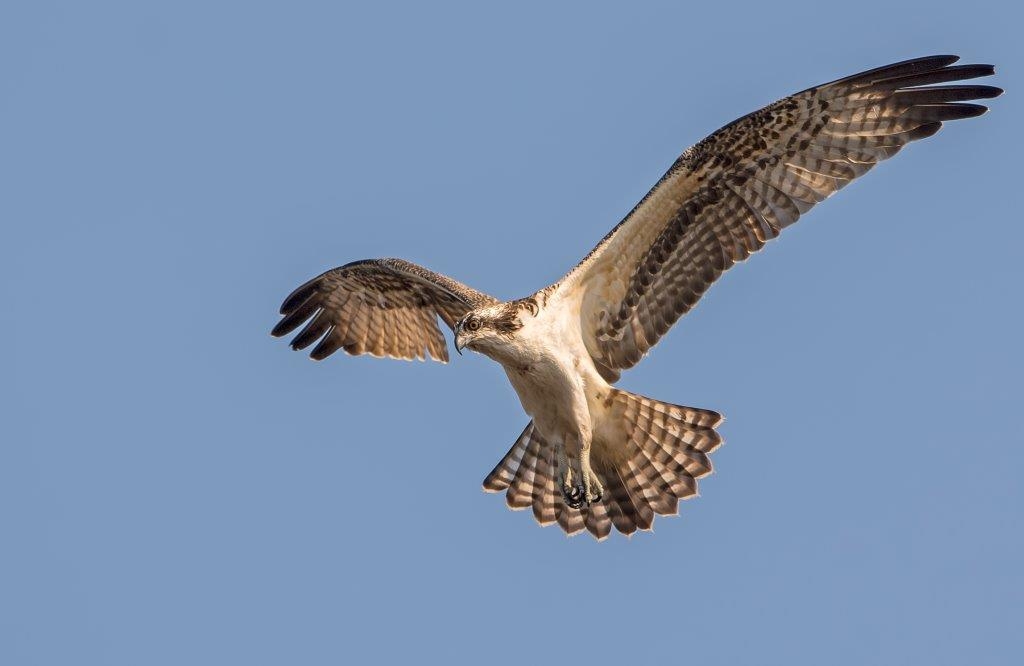
Ospreys return to their nesting grounds in mid-late March in New Jersey. © Howie Williams

Last year we tried reaching out to local marine construction and bulkheading companies but had no luck getting anyone to even return our calls. Then we contacted the Bureau of Coastal Engineering’s Aids to Navigation and they did not have equipment in the area to make the needed repairs last fall (we’ve since called them again to get their assistance and are waiting to hear back).

Do you know any local bulkheading or marine construction companies who work in the Fair Haven/Rumson area? If you do, please see if they can provide some assistance so this pair of ospreys have a safe place to nest!

Contact us if you know anyone who can help:

Hatching!!

Three healthy hatchlings at Forsythe NWR!

by Ben Wurst, Habitat Program Manager

Chicks!

If you haven’t noticed, we now have three healthy osprey nestlings at the nest at Edwin B. Forsythe National Wildlife Refuge in Oceanville, as viewed by our Osprey Cam. The first chick hatched on May 25th, the second on the 26th, and the third on the 28th. The eggs hatched in the order they were laid, referred to as asynchronous hatching. The incubation period was ~38 days for all three eggs (average is 35-37 in NJ; 32-43 throughout their range). With the cooler temperatures the longer period is expected. Osprey young are born semi-altricial, or are downy and require close parental care to survive. The male osprey has been very busy foraging and catching more prey to feed all the hungry mouths. Have you tried to identify the prey that they’ve brought in?

Monitoring New Jersey’s Falcons

Spy cam helps ID nesting pairs

by Ben Wurst, Habitat Program Manager

Last year 26 nesting pairs of peregrine falcons were monitored in New Jersey. The core of the state population nests on towers (old hacking towers) and on buildings in urban areas. Each spring we assist NJ Division of Fish & Wildlife’s Endangered and Nongame Species Program to help monitor the core of the population by performing nest checks and by installing a remote, motion-activated “spy” cam in nests to record the adults as they enter and exit nests. The footage captures the legs of peregrines. Why? Many peregrines are banded before they can fly with a federal USGS bird band and a state bi-color, alpha-numeric band. The state bi-color band can be read from the video captured by the camera.  The information that these identifications provide is immensely valuable for relating peregrine origin and age to nest success, site fidelity and turnover rate in the population.

Here is a short clip from a nest site in Ocean Gate and the bird in the video was identified as a male (*8/*5, black/green) that was banded in 2005 at Sedge Island.