Red Knots “Vote with their Wings”

An Update from the 2015 Delaware Bay Shorebird Project Team

By: Dr. Larry Niles, LJ Niles Associates LLC

Clive Minton is fond of saying, “the knots vote with their wings” as a way of saying knots concentrate in the best places for knots. Of course it’s true, animals move to the habitats they find most suitable, nature leaves little room for anything but. Sometimes however, animals use a habitat only because they have little choice — in other words, they are making the best of a bad situation. The job of a good wildlife biologist is to understand the difference. Unfortunately, it’s often not obvious.
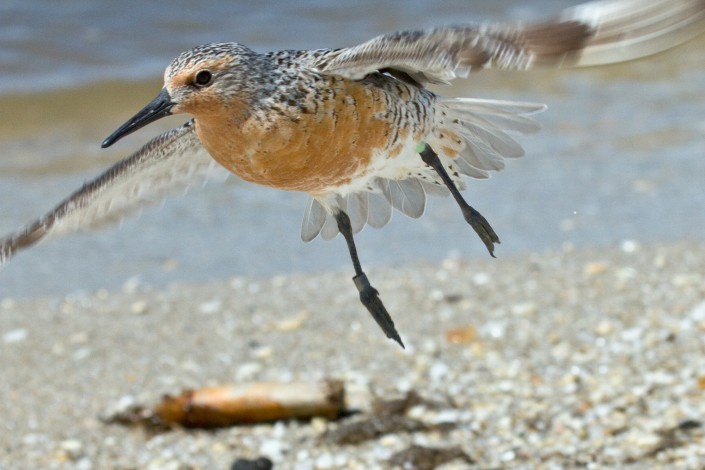
Red Knot Photo by: Jan van der Kam


In all the places studied by this author — Tierra del Fuego, the Arctic, and many places in between — knots distinguish themselves as highly selective habitat specialists. There are many practical reasons for this: usually knots occur in flocks and thus require more space than many other species. More importantly, as they put on weight for their incredibly long-distance flights, they often push the limit of safe wing-loading (body weight to wing area). This makes them vulnerable to predators, both real and imagined. They need more flying space, more space for advance warning of a predator’s presence. They demand special roost habitats as well, especially night roosts that are free from disturbance and have good sight distances. Altogether they need more.
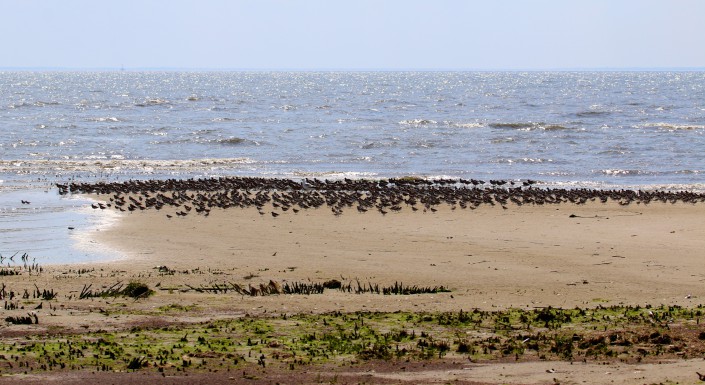
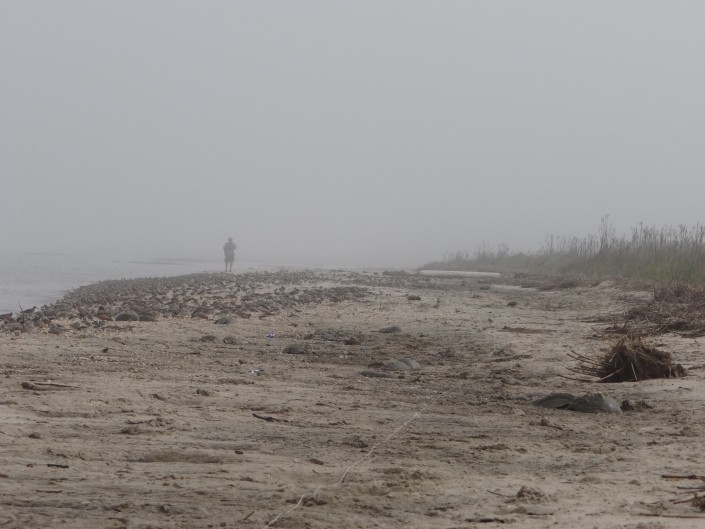
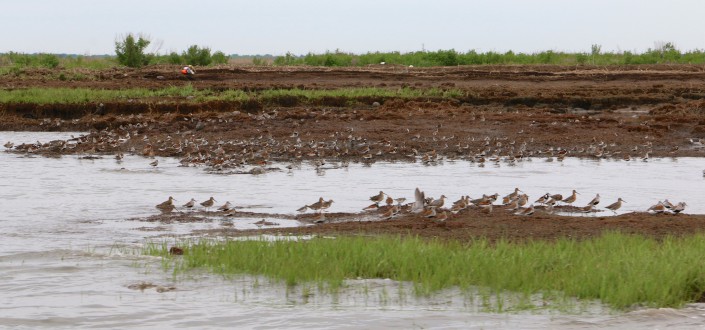
Red knots roost on a sandy spit on Egg Island, one of the largest contigous area of marsh in the mid Atlantic.   Half of the bay's shorebird population roost on Egg Island and than feed on the various beaches around Fortescue.
Red knots roost on a sandy spit on Egg Island, one of the largest contigous area of marsh in the mid Atlantic. Half of the bay’s shorebird population roost on Egg Island and then feed on the various beaches around Fortescue.


In Delaware Bay, they need all this, but above all they need good horseshoe crab egg densities. In the mid 2000’s when shorebird numbers were high, the demand for those eggs exceeded the production from the rapidly diminishing crab population. Knots wandered the bay like homeless refugees. Competition for eggs drew tens of thousands of birds to places unused by knots in healthier times.
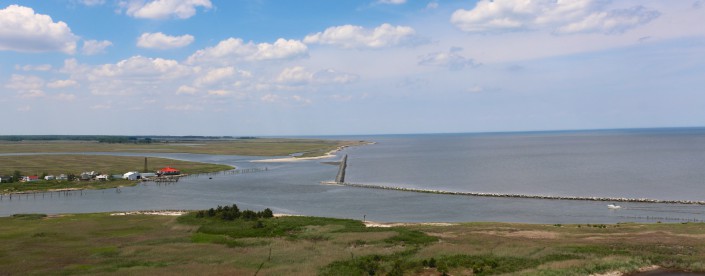
Mispillion Harbor
Mispillion Harbor


Mispillion Harbor, Delaware, for example, in some years supported much of the knot population in the Bay because it acts like a funnel-trap for crabs. Crabs wandered into the harbor through long stone jetties finding themselves in crab breeding heaven, sandy shoals in a closed space, free from wind-generated waves that normally leave them upside down. The egg-laying frenzy caused eggs to reach epic densities, thus preparing many shorebirds for their onward journey to the Arctic. Tens of thousands of shorebird packed into Mispillion Harbor in densities so high that one could smell ammonia off-gassing from the amount of bird waste.


But for knots, Mispillion left a lot to be desired. The same jetties that protect the inner harbor from wind-driven waves also provide low-flying raptors the cover to pounce on flocks before they can easily react. Fat birds make easy prey for peregrine falcons, who themselves struggle to keep up with the insatiable hunger of rapidly growing chicks.
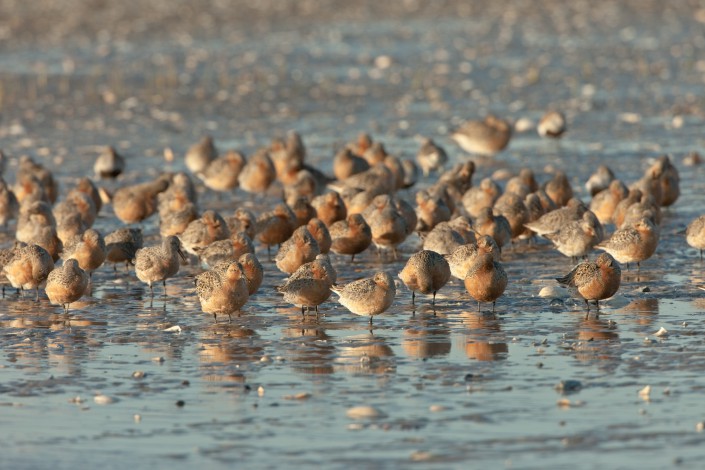
Photo by:  Jan van der Kam
Photo by: Jan van der Kam


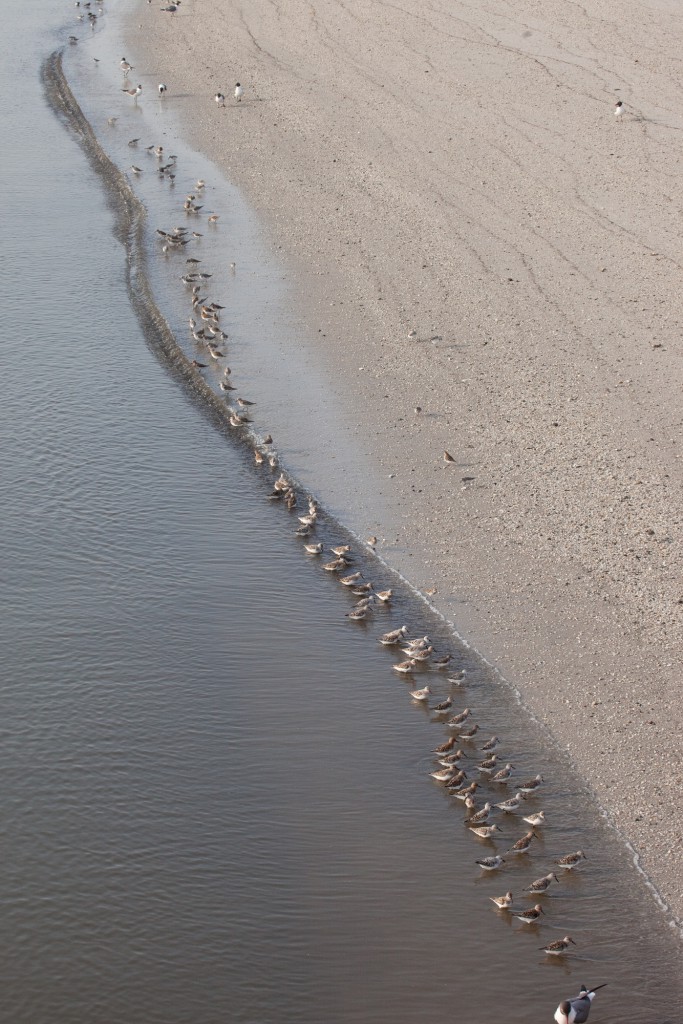
But even as shorebird numbers fell in response to the reduced crab numbers, egg densities improved in other places. Knots reassessed their choices and voted with their wings.


This is why this year’s high count of red knots on the New Jersey side of the Bay are so important.  Two days ago, Mark Peck, Joe Smith and I flew the entire Bay to count knots, ruddy turnstones and sanderlings. We counted over 24,000 knots, with 21,000 of these using the beaches managed by the many groups that take part in shorebird management on the New Jersey shore of Delaware Bay.


I am not saying this is a competition between two states — I’m saying the numbers serve as assurance that all our hard work is paying off. It’s a confirmation that the beach restoration projects, the Shorebird Stewards project, the reTURN the Favor crab rescue project, and more are bearing fruit. These coordinated strategies are led by Conserve Wildlife Foundation of New Jersey, American Littoral Society, Manomet Center for Conservation Sciences,  New Jersey Audubon Society, the Wetlands Institute, Citizens United to Protect the Maurice River, The Nature Conservancy, as well as Downe Township, Maurice River Township, Middle Township and the Division of Fish and Wildlife, New Jersey Department of Environmental Protection. This work is funded by the US Department of Interior, Fish and Wildlife Service, the National Fish and Wildlife Foundation and the Willliam Penn Foundation. Good work all!
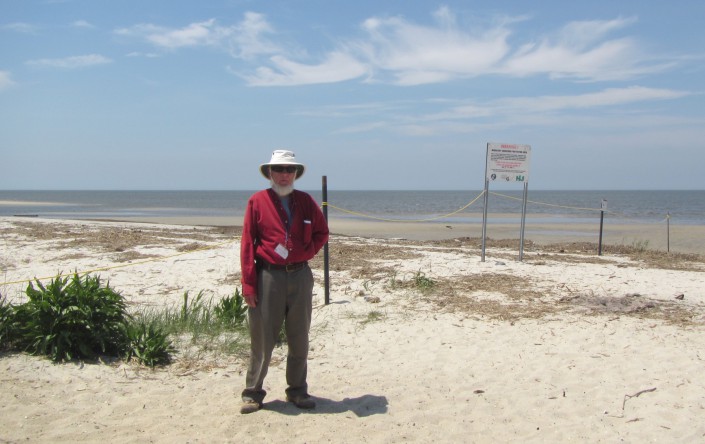
Jim May protect Cook Beach as part of  Conserve Wildlife Foundation of NJ's Shorebird Stewardship Project.  Each year the Division of Fish and Wildlife designates beaches important to shorebirds and protects them from disturbance.  The shorebird stewards alert Conservation Officers if people refuse to comply.  But most of thier job is helping people understand the shorebird migration and the needs of shorebirds and crabs
Jim May protects Cook Beach as part of Conserve Wildlife Foundation of New Jersey’s Shorebird Stewards project. Each year, the Division of Fish and Wildlife designates beaches that are most important to shorebirds and protects them from disturbance. The shorebird stewards alert Conservation Officers if people refuse to comply, but most of their job is helping people understand the shorebird migration and the needs of shorebirds and crabs.

We now near the end of the stopover season at Delaware Bay. Three days of southerly winds are proving irresistible for many birds. Nearly two-thirds have left and the rest will be gone in a few days. Thanks to the people who love birds and the residents of the Bay, they leave well-prepared for the next stage of their challenging and inspiring lives.
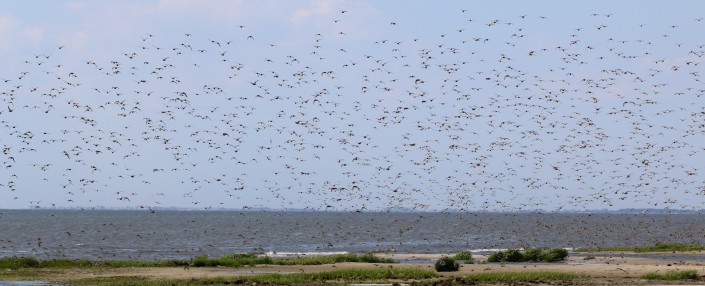
knots in the air

Learn more:

Dr. Larry Niles has led efforts to protect red knots and horseshoe crabs for over 30 years.


19,077 Red Knots Counted – The Most Seen in New Jersey in a Decade

An Update on the 2015 Delaware Bay Shorebird Project

By: Dr. Larry Niles, LJ Niles Associates LLC

Despite the threatening forecast of a cold drizzle and strong winds, our team persevered to complete the first bay-wide count of this season. On the New Jersey side of Delaware Bay, we counted 19,077 red knots – the most seen in the state in a decade. With Delaware’s shorebird team recording 2,000 knots along their entire shoreline, the total knot count of 21,077 is not far from the 24,000 seasonal maximum of the last three years.


Red knot aerial counts


This is good news in either of two completely different ways. One explanation is that perhaps most of the knots have already come to the bay. If so, they are in good time to make weight and are getting close to an on-time departure for the Arctic. The alternative is that even more will arrive and we will exceed our counts of the recent past. Good weights promise good Arctic production; more knots offer new hope.


Knots in formation heading off to the Arctic (c) Jan van de  Kam
Knots in formation heading off to the Arctic (c) Jan van de Kam


The numbers of ruddy turnstones (12,295) and semipalmated sandpipers (56,788) are also close to the seasonal maxima counts of the recent past, so they too may soon brave the long flight to their Arctic homes. Our cannon-net catches of turnstones, sanderlings and knots point to weights building quickly.


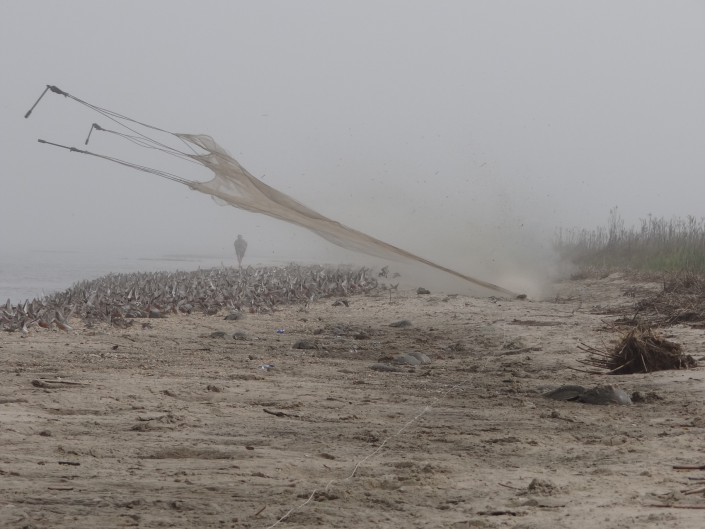
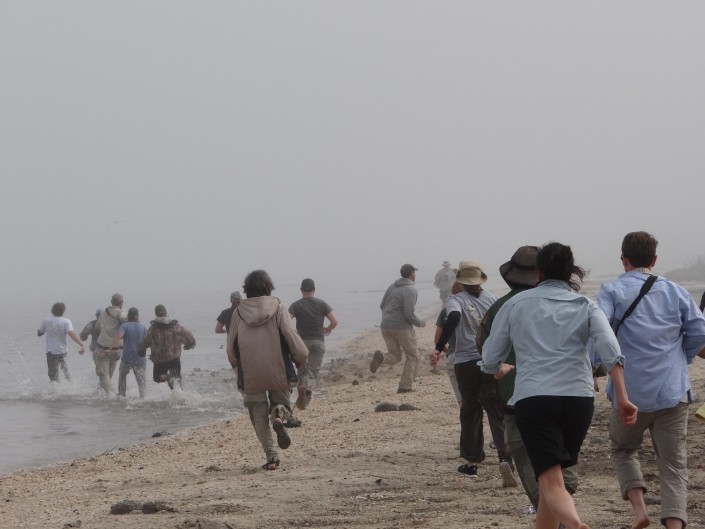
Canon net catch
Canon net catch
Canon net catch
Canon net catch
Canon net catch
Canon net catch

The weather conditions play with our expectations. For the last few days, high westerly winds have generated beach-pounding waves all along the Cape shore. Its north/south orientation is perfectly perpendicular to the strong winds, and the wind-generated waves shut down horseshoe crab spawning. This forces the birds to seek shelter and better egg densities elsewhere.


Right from the start, the disappearance of the shorebirds we had been seeing intrigued us, for a good wildlife mystery gets consumed in this team like a good bottle of beer. Within hours, Mark Peck and Gwen Binsfeld found the knots south of where we would have expected. The knots, turnstones, sanderlings, and semipalmateds were comfortably riding out the wind storm on the vast, sandy intertidal flats in front of Sunray Beach and Villas. We haven’t seen birds gathering in numbers here since the early 2000’s.

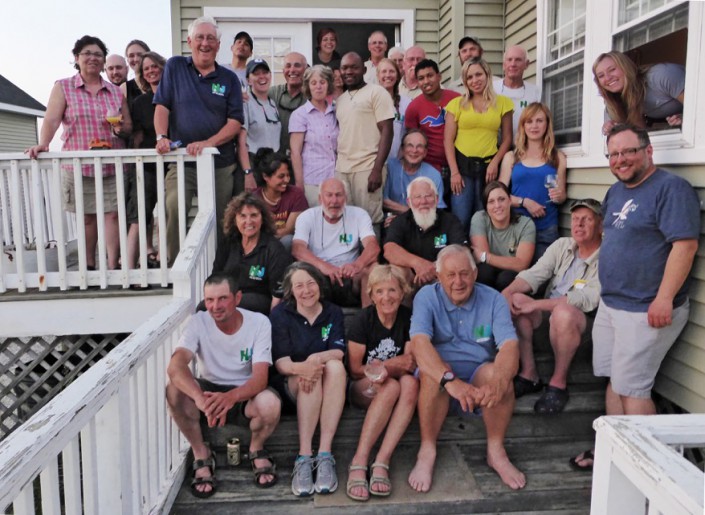
Photo of shorebird team by Kevin Karlson (from bottom right: Mark Fields, Stephanie Feigin, Mark Peck, Clive Minton, Angela Watts, Jeannine Parvin, Christophe Buidin, Alinde Fojtik, Dick Veitch, Barrie Watts, Joanna Burger, Arie Manchen, Steve Gates, Phillipe Sitters, Ana Paula Sousa, Reydson Reis, Chege Wa Karuiki, Susan Taylor, Mandy Dey, Peter Fullagar, Deb Carter, Gwen Binsfeld, Nick Smith, Clara Kienzi, Joe Smith, Larry Niles, Humphrey Sitters, Stefanie Jenkinson, Ally Anderson, David Stallneckt, Gerry Binsfeld, Christian Friis, Chris Davey)

But back to the count. We found shorebirds all along the Bayshore with three areas of concentration. The first was the aforementioned Villas flats. The second was in the Pierces Point to Reeds Beach area, with most in the more southerly portion of the sector. “Not-knots” (mostly semipalmated sandpipers) were seen there in big numbers during the boat survey by Yann Rochpault, Christophe Buidin and Tom Baxter. They saw 12,000 shorebirds along this mostly unpopulated shoreline.


Semi palmated sandpipers along shoreline (c)Jan van de Kam


But the real shorebird wonderland of the bay continues to be Egg Island. Few people see this this vast intertidal marsh, and fewer still appreciate its wonder. Egg Island – actually a peninsula – juts miles out into the bay, nearly to the shipping channel. The marsh cradles one of the most diverse bird faunas of the mid-Atlantic. All along its mucky eastern flank, short-billed dowitchers, dunlin, semipalmated sandpipers, black-bellied plovers, and semipalmated plovers comb the eroded banks for crab eggs drifting in the water column from better crab breeding sites. The crabs themselves attempt to breed in the overhanging edges of the spartina marsh, a lost cause; however, because the muck lacks oxygen and the eggs cannot develop. This is bad for crabs but good for shorebirds because most of the eggs end up on the sod banks, easy prey for shorebirds.


birds on sod


But this week, the wonders of Egg Island overwhelmed us. Our team – Humphrey Sitters, Phillipa Sitters and this blog’s author – wove along the shallow shoreline in our intrepid 17-ft Carolina skiff, counting thousands of shorebirds – 8,226 knots, 4,125 ruddy turnstones, 3,000 sanderlings, and 21,000 semipalmated sandpipers. The flocks swirled around the   peninsula’s sandy western shore, alighting, then flying, and then alighting again. It was a shorebird dance that was a wonderful sight for increasingly tired-out shorebird scientists.


Learn more:

Dr. Larry Niles has led efforts to protect red knots and horseshoe crabs for over 30 years.
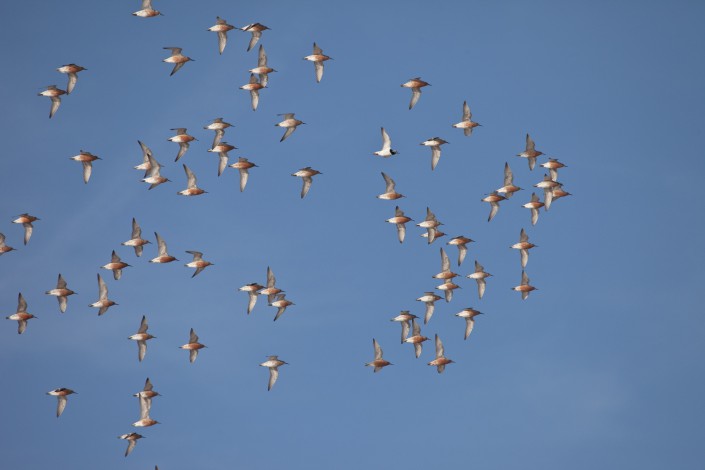
Photo from the Field: First falcons of 2015

Monitoring for hatching at Peregrine falcon nests

by Ben Wurst, Habitat Program Manager

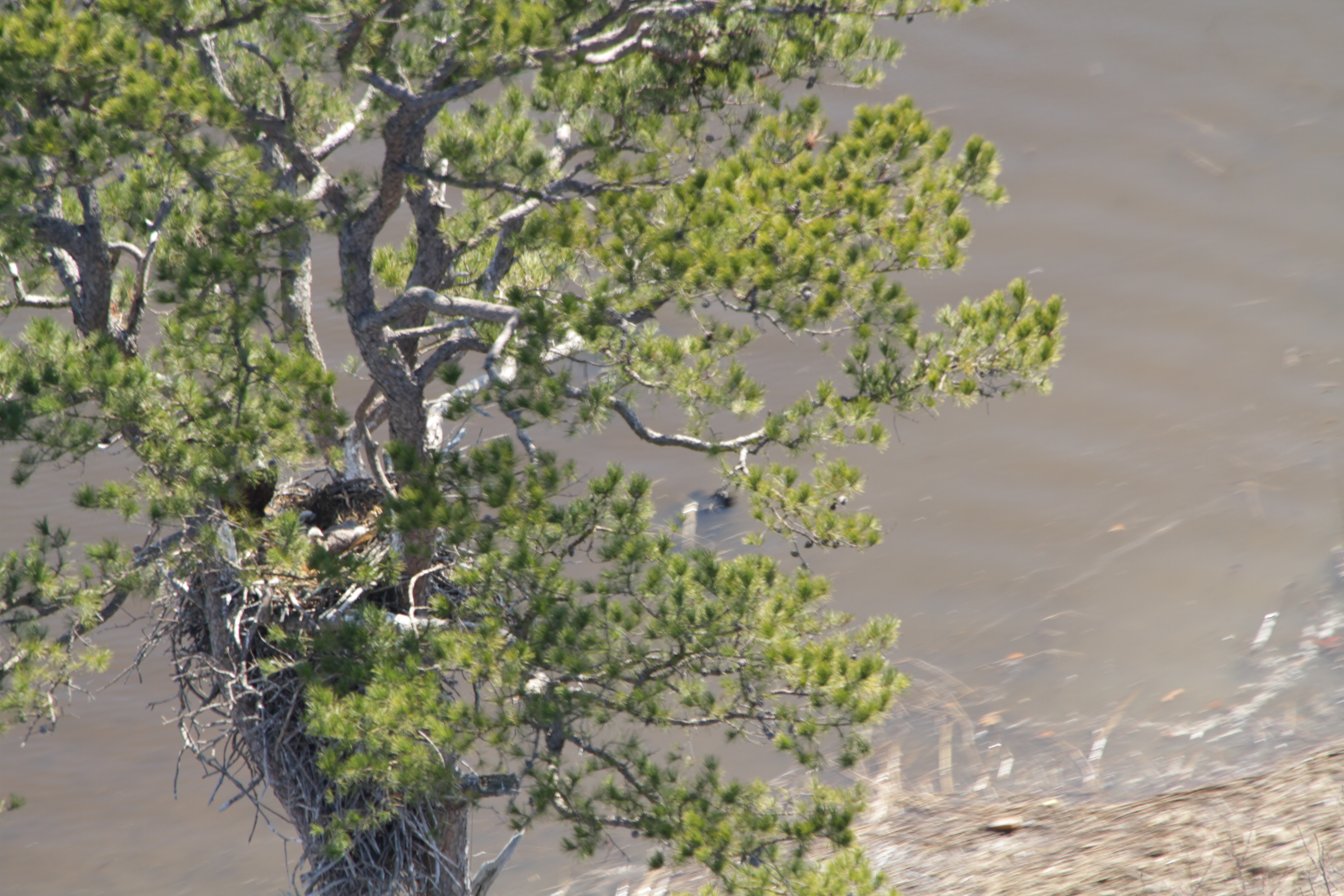
Four 14 day old peregrine falcon nestlings. Photo by Ben Wurst
Four 14 day old peregrine falcon nestlings. Each spring we visit all known falcon nests to check for hatching. At the time we age the young and then inspect them for any parasites and treat them. Then our final visit is to band the young for future tracking. Photo by Ben Wurst

Photos from the Field: Bald Eagle Aerial Survey

Never Say “No” When You’re Asked to Participate in an Aerial Survey

By: Ben Wurst, Habitat Program Manager

I always feel lucky when my feet leave the ground, by ladder and especially by helicopter. Last week, I joined Kathy Clark, Supervisory Zoologist with the NJ Division of Fish and Wildlife’s Endangered and Nongame Species Program to conduct a short aerial survey of several bald eagle nests over southern New Jersey. The day started by driving to Coyle Field, which is managed by the NJ Forest Fire Service.


I met with pilot John Whimberg and we flew south to Woodbine to pick up Kathy. From there we proceeded south towards the Delaware Bay. We were searching for existing nests to determine if they are active or not and if they had young. Most of these nests were not accessible to the Bald Eagle Project volunteers who watch nests during the nesting season. Here is a summary of what we found:


  • 13 nests checked (searched for an additional 3 nests around Heislerville).
  • We documented 3 chicks in 1 nest, and 2 chicks in 3 nests. (chick ages in the 3 to 4 week range).
  • Six nests had adults sitting close (on eggs or possibly hatchlings).
  • Three nests already failed.


Kathy believes that the failure rate may be a bit higher this year because of the extreme cold weather we had in February, which is when most birds are incubating or have hatchlings. Overall the eagle population has done quite well in recent years, so if there is any reduction in productivity it should not affect the long term trend in the growth of their population.


One of the most amazing things that anyone flying above the ground in New Jersey can see is how much forested land we still have. Many bald eagles nest very close to people and near water. Preserving this habitat is essential to the long term sustainability of the bald eagle population in New Jersey.


We are lucky to have in-kind support from the NJ Forest Fire Service who donated their time and equipment for us to complete this important survey. We thank them for their support of the Bald Eagle Project!

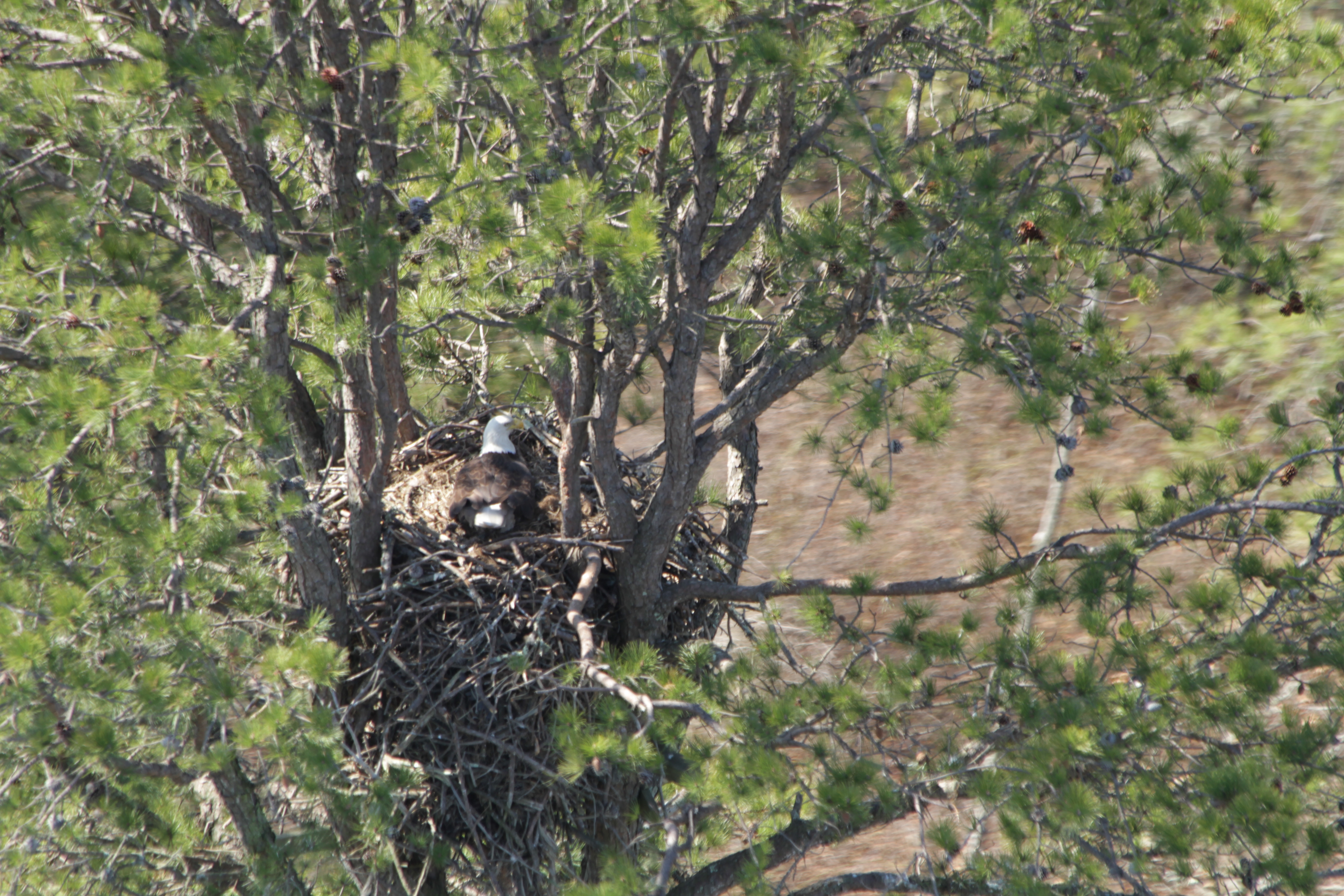
A bird sitting tight means that it is still incubating.
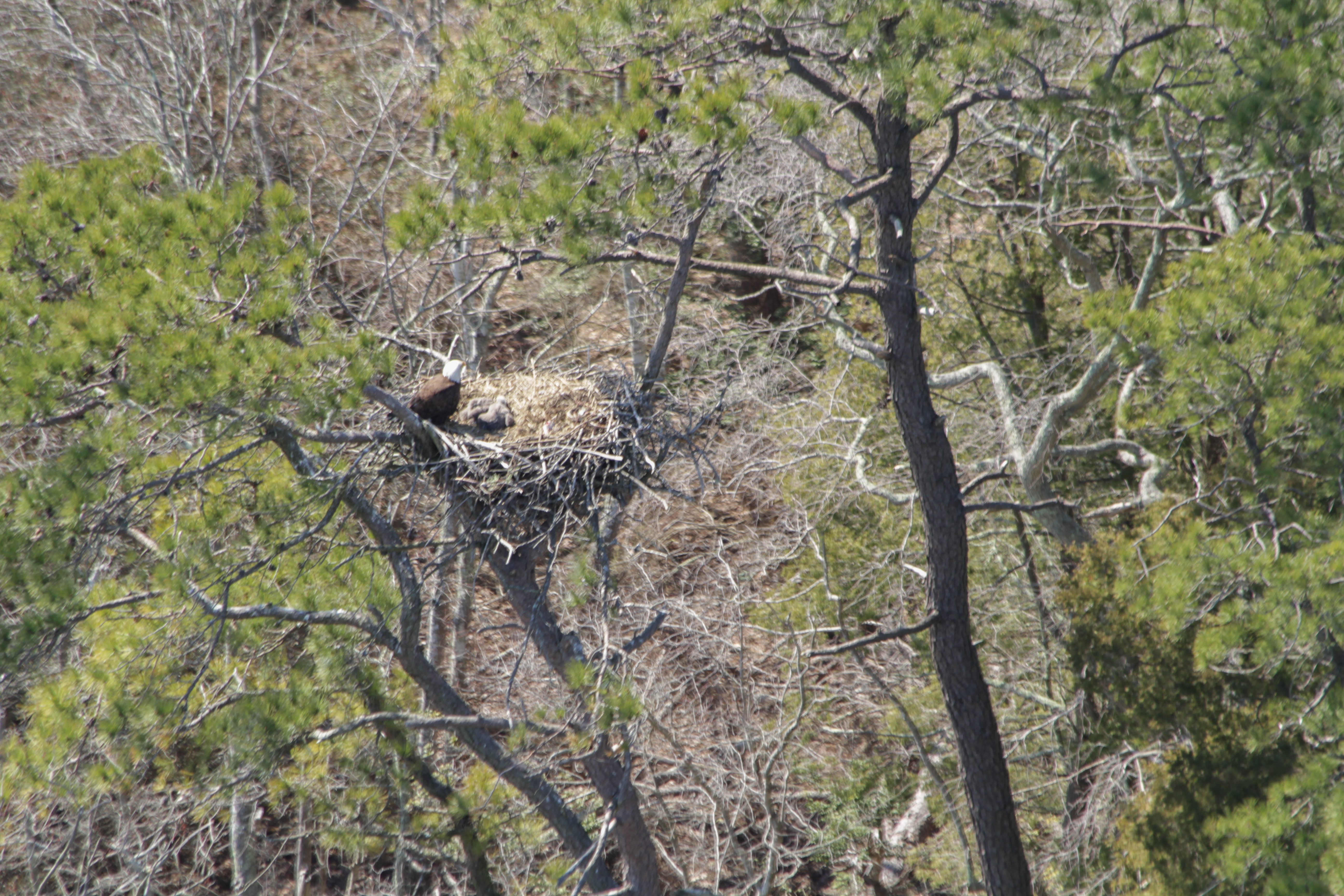
Two young can be seen in this nest!
How many young can you spot in this nest?

Conserve Wildlife Foundation of New Jersey “2014 Annual Report” Released

CWF Releases its First Annual Report Ever Using a Story Map Format: “2014 Annual Report“

By David Wheeler, Executive Director

Technology has proven to be vital to Conserve Wildlife Foundation’s work protecting rare wildlife species over the years. Our biologists depend greatly on modern technologies to band, track, and share online the journeys of wildlife. Our webcams broadcast the most intimate behaviors of nesting birds and bats across the web. And we seek out ever-evolving communications technologies to spread the word about the inspiring stories of wildlife, from social media and infographs to e-books and Story Maps. These technologies offer newfound abilities to share complex data on multiple levels, while still incorporating the awe-inspiring photography and videos that bring wildlife’s stories to life.

Conserve Wildlife Foundation of New Jersey is excited to offer our 2014 Annual Report in a unique format that utilizes one of those technologies – Story Maps. In the past year, we have explored the wonders of American oystercatchers with our first Story Map – and now the annual report allows all of our projects to be highlighted in this interactive format.

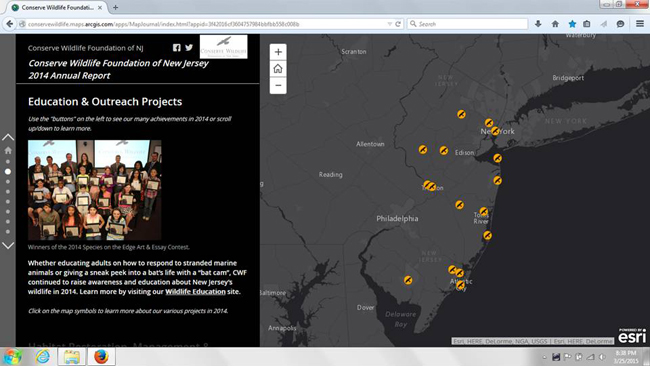
A screen capture of one of the pages of the CWF 2014 Annual Report Story Map.

Visit the multiple pages within this Story Map to learn about Conserve Wildlife Foundation’s many projects and partnerships in 2014, and the imperiled wildlife species in need of our help. Find examples of the innovative and dedicated leadership of our biologists and volunteers. And take an online journey across the state to learn how our projects made a difference in all corners of New Jersey in 2014 – a great year for wildlife in the Garden State!


Project RedBand: 04/C from LBI to Trinidad and Tobago!

Auxiliary bands help link Barnegat Bay ospreys to their wintering grounds

by Ben Wurst, Habitat Program Manager

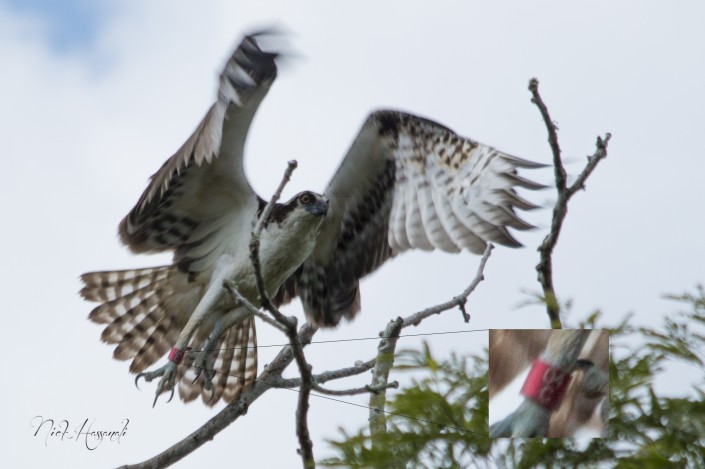
04/C was banded at a nest on LBI and re-sighted on the island of Trinidad and Tobago by Nicholas Hassanali.

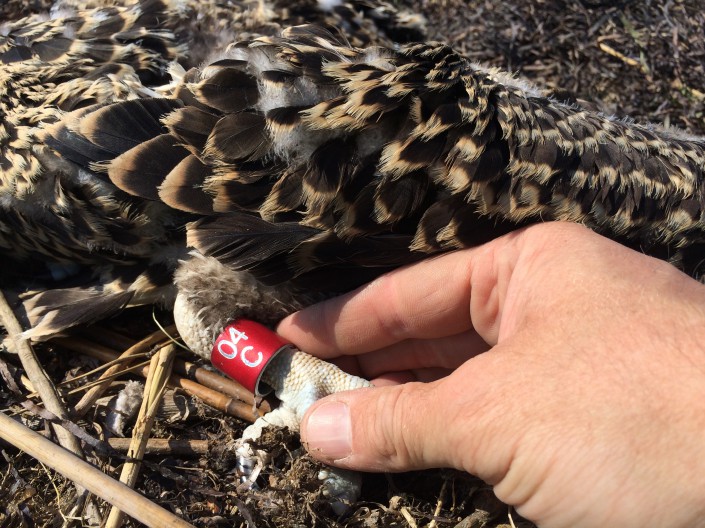
When I started work on Monday morning I got some amazing news (at least for an osprey lover). One of the young ospreys that I banded on Barnegat Bay was re-sighted on the Caribbean island of Trinidad and Tobago!! To top that cake, the osprey was photographed to confirm its sighting. YES!! Nicholas Hassanali took the above photo and enlarged the red band to read the alpha-numeric code which reads “04/C.” I looked up in my banding records and saw that 04/C was produced at a nest behind the Long Beach Island Foundation for Arts & Sciences in Loveladies, Long Beach Island.

04/C after being banded. He was around 4 weeks old on July 7, 2014.

I banded him (I can tell its a male by the size of the band on its leg and the lack of a brown necklace of feathers on its breast) on July 7th with a CWF donor Bill C. We ventured to four nests by kayak. This was the first survey where I started to deploy the red auxiliary bands on young ospreys. I remember that it was a pleasant day. Not too hot or windy. As we made our way from one sheltered nest on a lagoon to another out on the bay we felt the winds kick up from the south making paddling difficult (especially when you’re towing another kayak with a ladder on top!).

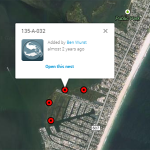
125-A-032: 04/C's nest.
125-A-032: 04/C’s nest.

We decided to return to Bill’s house and take my truck to survey the next two nests, since we could walk to them from a side street. We walked out to one nest and found that it failed, i.e. no young were produced. Then we proceeded onto the next, 04/C’s nest. I remember climbing up the ladder to band the young and did not get a chance to take any better photos because I had to be on my way soon. While up there I remember the male dropped a fish (bunker) and Bill got it and we put it back into the nest. One thing that I will not forget about this day is the smell of smoke and burning plastic. I found out later that day that a lawyer’s office in Ship Bottom was on fire when we were out surveying these nests. Luckily no one was hurt in the fire!

I personally cannot wait to get more reports of our red banded ospreys. The young that were banded this year will not return until 2016 and even then they might not return until the late spring/early summer and will not breed. At least I know that there are people out there watching and admiring our ospreys! As Nick said in a comment on his photo on Flickr, “ I have a great love for Ospreys.” 🙂

Partnership is key!

CWF provides assistance for recovery of osprey in Illinois

by Ben Wurst, Habitat Program Manager

Osprey 11D takes flight for the first time at Lake Shelbyville. Illinois Department of Natural Resources photo.

Besides working to protect and manage New Jersey’s osprey, we also consult with organizations throughout the country to assist with other ongoing recovery projects. One particular project is in Ilinois. Here the osprey is listed as endangered and recovery has been slow. Last year a long-term recovery project was started and we provided assistance by mapping suitable nest platform locations along the Kankakee River at the Exelon Generation/Dresdan Station (SW of Chicago). The recovery project has a huge amount of support and partners. This was how our osprey recovery project was so successful in the 1980s, by partnering with many different organizations. We provided technical guidance on platform construction and installation to Michael Campbell (System Engineer at Exelon). Michael led the hack box construction effort and assisted with building/installing nesting platforms at the Dresdan Station. A total of ten young ospreys were successfully hacked this year. The young were collected at Joint Base Langley-Eustis in Virginia and driven to IL. Michael was awarded for his efforts to help the osprey recover in Illinois and we are honored that he chose Conserve Widlife Foundation as a receipent for a $3,750 grant! Thank you!

Looking to help make a difference? We provide recources for you to help our ospreys in New Jersey. We offer technical assistance to private consulting firms, individuals, school groups, environmental commissions, Boy Scouts, Girl Scouts, and anyone else who is interested in constructing and installing osprey nesting structures.

In New Jersey, we work with the NJ Division of Fish and Wildlife to help manage and monitor a very large database of existing nesting structures. We can help you choose the most suitable location to place a platform so it will not negatively impact any other species that live in the coastal area of the state. We can provide maps, platform plans (see link below), and in some cases an actual platform. Please do not hesitate to contact us for more information or if you have a question.

Story Map Brings Oystercatchers to Life Online

CWF Celebrates World Shorebirds Day With Release of Our First Story Map: “American Oystercatchers Through the Seasons”

By Michael Davenport, GIS Program Manager

Conserve Wildlife Foundation (CWF), today released a new interactive “Wildlife Story Map” in support of this Saturday’s first annual World Shorebirds Day! The Story Map can be viewed here!

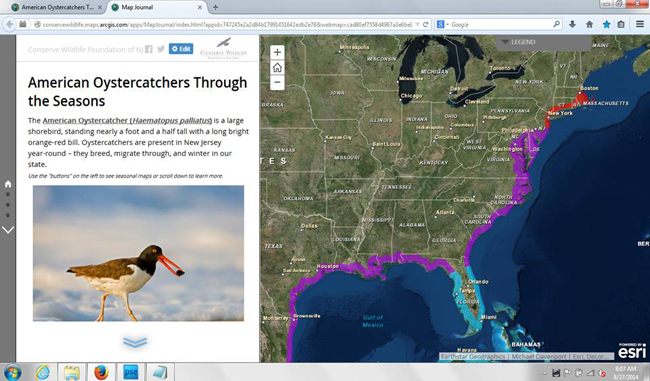
ScreenCapture

A Story Map is a web-based interactive GIS map embedded with multimedia content, such as text, photographs, and video. CWF, working with GIS software developer ESRI and with financial assistance provided by a grant from the New Jersey Division of Fish & Wildlife, plans to make this Story Map the first of many, helping engage the public about New Jersey’s rare wildlife in a dynamic and interactive way.

 “American Oystercatchers Through the Seasons” tells the story about a species of migratory bird, the American Oystercatcher, which spends the summer breeding season along the New Jersey coast, but is present year-round along the southern New Jersey coast. Our state represents the northern limit of the species’ winter range. While some New Jersey birds migrate during the winter to Florida, those that breed in New England during the summer may end up spending their winter here in New Jersey.

This Story Map also provides stories about individual banded birds, which have been tracked on journeys between New Jersey and southern states such as Florida, as well as between New Jersey and more northern states, such as Massachusetts.

Make a donation today to support additional Story Maps!


How to Use the Story Map:

On the left side of the Story Map page are several “buttons” which will allow you to flip through the different seasons in an oystercatcher’s life: Breeding, Migration, and Wintering.  Each page provides information and photos and a map specific to that portion of the bird’s life cycle. By clicking on an individual point within the map, a box containing more specific information, and a photo in some cases, will pop-up. The map also provides the ability to zoom-in and out in order to see areas of interest in more detail.

This Story Map is especially exciting since it helps celebrate the first annual World Shorebirds Day. This event seeks to “…raise global public awareness about the conservation of, and research about, shorebirds. About half of the world’s shorebird populations are in decline, and the rate of habitat loss is worse than ever before” (World Shorebirds Day 2014).

World Shorebirds Day hopes to accomplish the following:

  • To raise public awareness about the need to protect shorebirds and their habitats throughout their life cycles;
  • To raise public awareness about the need for ongoing shorebird research;
  • To connect people with shorebirds through important shorebird sites around the world;
  • To get shorebird enthusiasts to introduce shorebirds to more birdwatchers;
  • To raise awareness about the need for increased funding for shorebird research, monitoring and conservation.

CWF’s shorebird leadership ranges from the American Oystercatcher celebrated in this Story Map, to the beach nesting birds along the Atlantic Coast, to the red knots and ruddy turnstones along the Delaware Bay.

Your support can help CWF develop additional Story Maps on other rare wildlife. Support our work on Story Maps on the American Oystercatcher and other important shorebirds in honor of World Shorebirds Day by supporting research, education, and public awareness efforts carried out by CWF:

We hope that this will be the first of many Story Maps that CWF will use in order to communicate the many fascinating stories that New Jersey’s wildlife have to tell.

Make a donation today to support shorebirds today!


Project RedBand is a go!

Time to get outside and watch some ospreys!

by Ben Wurst, Habitat Program Manager

A pair of ospreys produced at a nest on Barnegat Bay were banded with a red auxiliary band. © Northside Jim

A lot has changed throughout the 40 project history of the New Jersey Osprey Project. From a low of only 53 osprey pairs (statewide) in 1973, today there are more than 540 pairs that return here each year to feed, nest, and raise young. In the beginning work to re-establish their population was a trementous undertaking. Ospreys, a  were loaded with environmental contaminents (DDT, which caused the thinning of egg shells), their habitat was bulldozed, and early on birds were shot for their feathers and eggs. Once the Endangered Species Conservation Act of 1973 ospreys were afforded protection they deserved, and work by biologists like Pete McLain were underway to restore the population in New Jersey.  Continue reading “Project RedBand is a go!”

How To Identify and Find Barn Owl in New Jersey


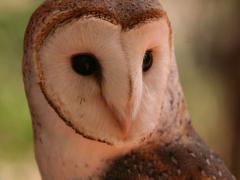
barn owlMichael Britt, avid birder and writer, highlights the Barn Owl (Tyto alba). This medium-sized owl, most widely known for its ‘heart-shaped’ face, is the only member of the Tytonidae family found in North America. In this story, he shares how to identify these owls, when are where to look for them, and offers personal accounts of his most memorable encounters with these beautiful birds.

  • To read the full story, click here.
  • For more information on barn owls and CWF’s efforts to protect these birds, click here.