Warming weather brings out one of New Jersey’s most misunderstood species
By: Michael Davenport, GIS Program Manager
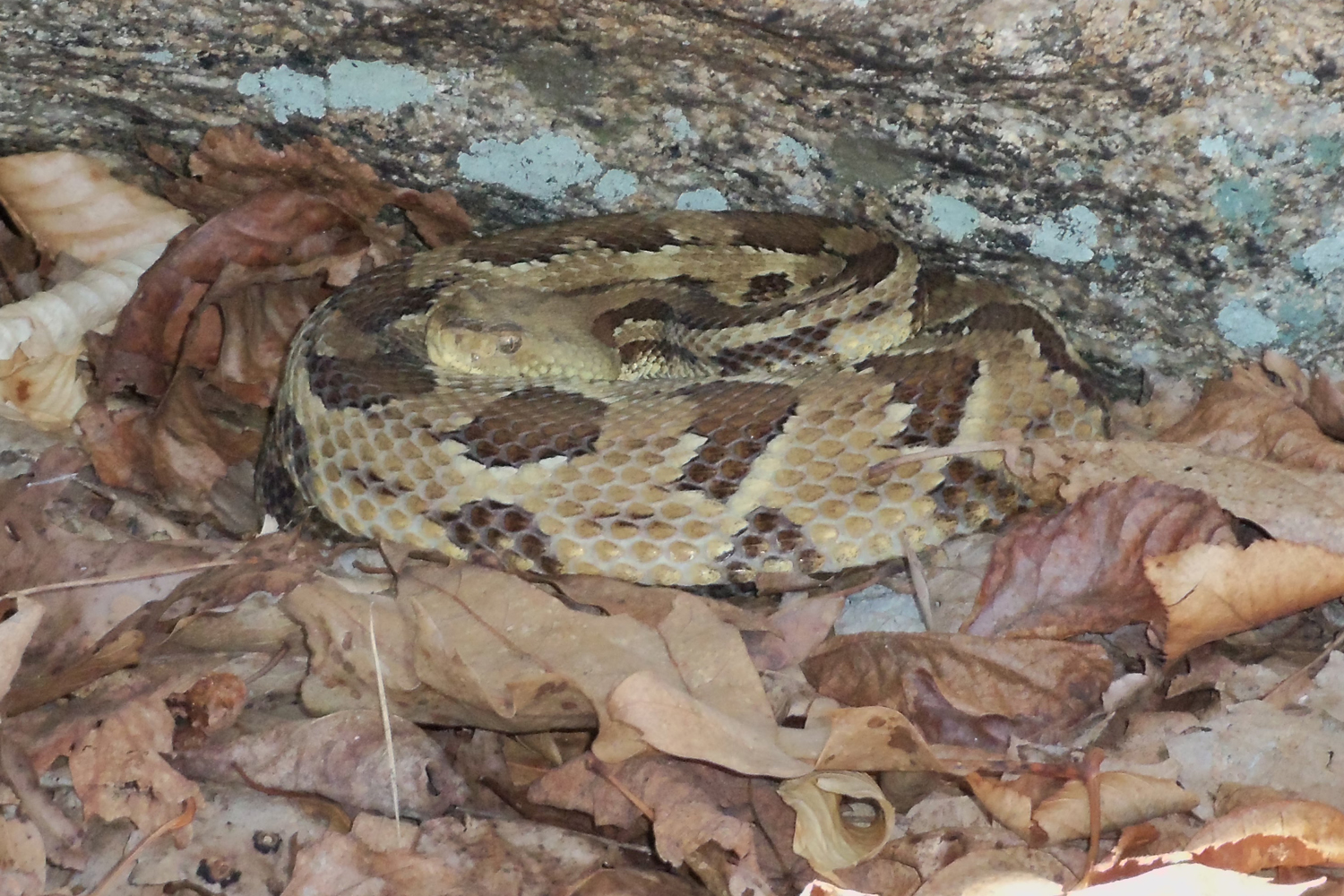
I recently had the opportunity to accompany Kris Schantz, a biologist with the NJ Endangered and Nongame Species Program, to search for timber rattlesnakes (and northern copperheads) emerging from their dens in northern New Jersey.
Many New Jersey residents are surprised to learn that we have venomous snakes within our state, the most densely populated state in the U.S. We have two venomous species, in fact.
The timber rattlesnake is an Endangered species in New Jersey, while the northern copperhead has a status of Special Concern. To learn more about venomous snakes in New Jersey, please read my blog entry from May 13, 2011 and visit our online field guide:
Restoring Critical Delaware Bay Habitat for Migratory Shorebirds
By: Kelsey Lawler, Spring 2015 Intern
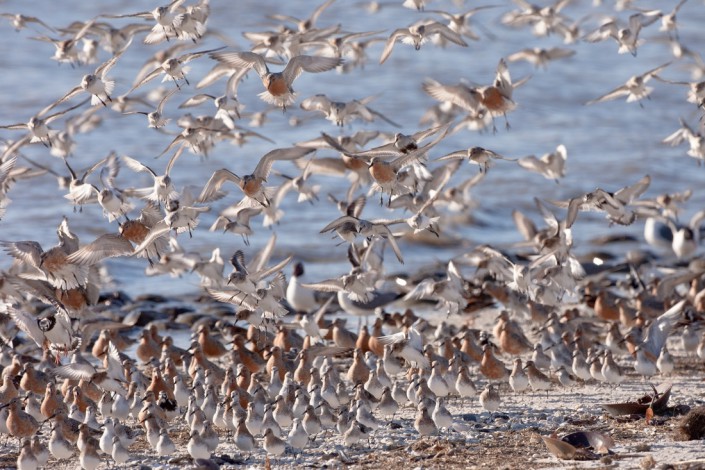
Photo Credit: Jan Van der Kam
Saturday, May 9 is International Migratory Bird Day (IMBD) 2015! It is time to celebrate and bring awareness to the spectacular event that is bird migration. Since 1993, IMBD has been serving as a celebration as well as a call to action for migratory bird conservation.
Conserve Wildlife Foundation of New Jersey has been doing their part for bird conservation. We have developed a range of programs to increase the numbers of endangered migratory birds, like the Red Knot, since their decline in the late 1990’s.
Red Knots use New Jersey’s Delaware Bayshore as a stopover for feeding after their long journey from the Arctic and South America. Delaware Bay plays a major part in the Red Knot life cycle, so we’ve focused our efforts on restoring this critical habitat. The Red Knot migration is timed to take advantage of the spawning of the horseshoe crabs that use the same beaches as breeding grounds. Their eggs provide a rich food source for the Red Knots at a time when they are in desperate need of nutrients.
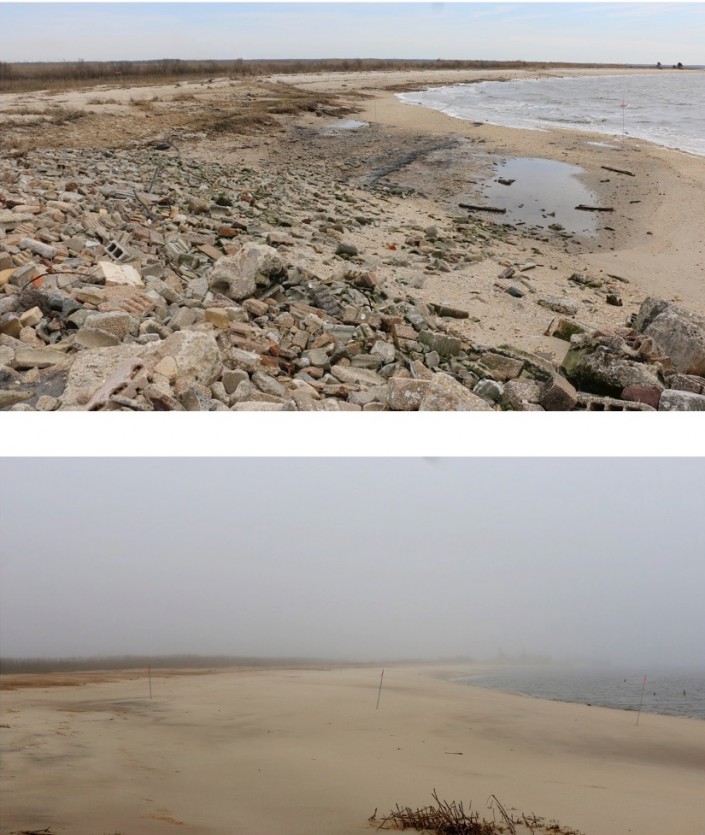
We have been working to benefit both horseshoe crabs and the migratory shorebirds that feed on their eggs, like the Red Knot, through our beach restoration projects, oyster reef construction and monitoring projects. Since Superstorm Sandy, we have successfully restored over a mile of impacted horseshoe crab habitat. We’re working to further protect these beaches from erosion and to create calmer waters for horseshoe crabs through our oyster reef construction experiments. To learn more about our restoration work in Delaware Bay, visit RestoreNJBayshore.org.
Of course, we haven’t been able to do this work alone. Volunteers are one of the reasons why these projects are possible!
Celebrate International Migratory Bird Day by getting involved in migratory bird conservation:
A Look at the Pilesgrove Eagles Nest Over Time (2009-2015)
By:Larissa Smith, Wildlife Biologist and Volunteer Manager
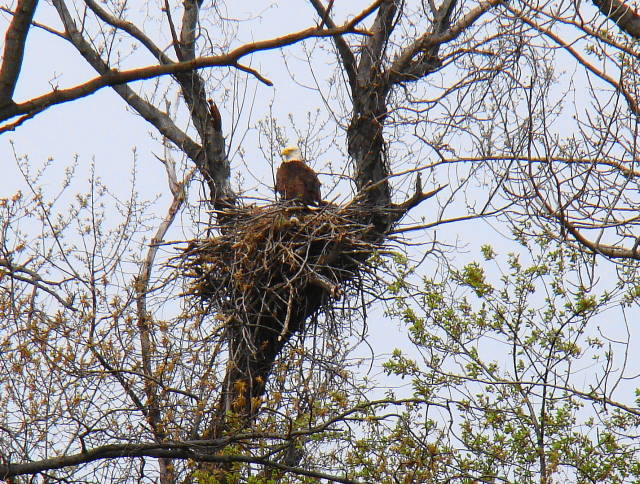
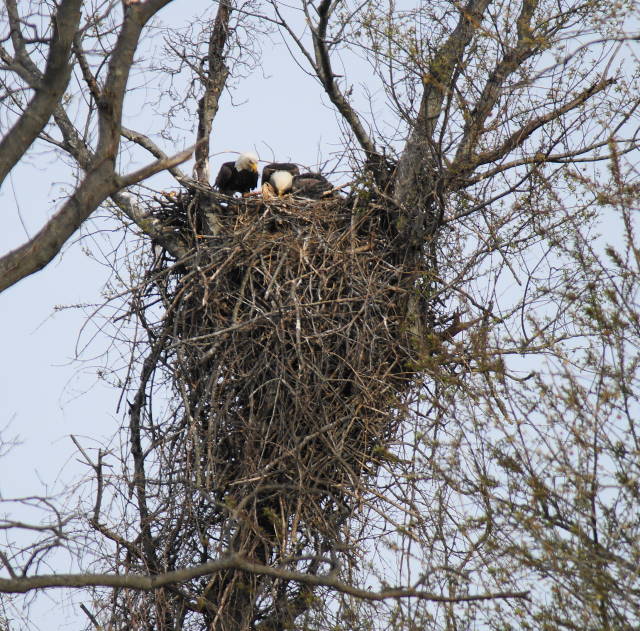
New Jersey Bald Eagle Project Volunteers Jeffrey and Cathy White have been monitoring the Pilesgrove eagle nest since the pair’s first nesting season in 2009. The pair has successfully raised and fledged 9 young for the past six years. This season the pair has two chicks which are currently six weeks old. Jeffrey took a photo of the nest on April 19, 2015. He then went back through his photos and found one that he taken on the same date April 19, 2009 in their first nesting season. This comparison really shows just how large eagle nests can get after years of use.
CONTINUING THE 2015 RESTORATION SEASON AT FORTESCUE AND THOMPSON’S BEACH
By: Lindsay McNamara, Communications Coordinator
Spring on the Bayshore is in full swing, there are ospreys hunting in Dividing Creek.
Conserve Wildlife Foundation of New Jersey and American Littoral Society are moving right along with this season’s restoration work in Delaware Bay! Currently, we are working on projects on Fortescue Beach and Thompson’s Beach. Read more about our restoration work on RestoreNJBayshore.org.
Dr. Larry Niles of LJ Niles Associates LLC, a leader in efforts to protect red knots and horseshoe crabs for over 30 years, has shared updates throughout the month of April on the blog of RestoreNJBayshore.org:
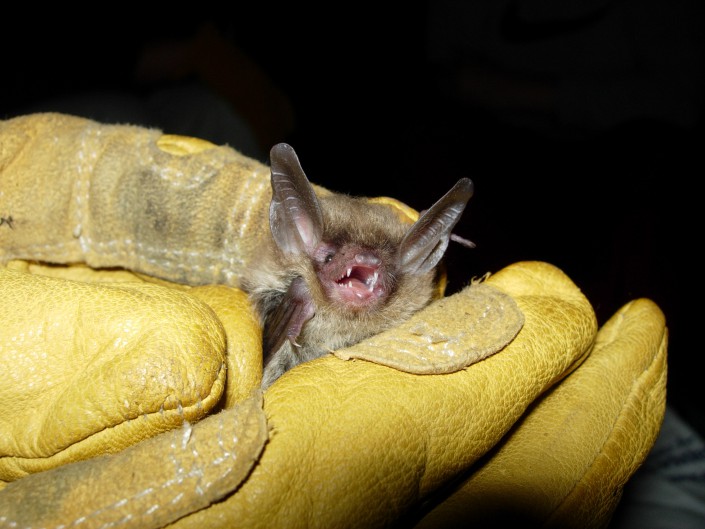
Remember back in late November when we wrote a blogencouraging our supporters to help the Northern Long-Eared Bat become listed as an Endangered Species? Thanks to those of you who submitted comments to the U.S. Fish and Wildlife Service, it was announced today that the Northern Long-Eared Bat will be listed as threatened and protected under the Endangered Species Act.
The U.S. Fish and Wildlife Service has cited declines caused by White-Nose Syndrome as well as continued spread of the disease, as the primary threat to the species. Under the protections of the Endangered Species Act, the Northern Long-Eared Bat now has increased priority for funds, grants, and recovery opportunities.
Also announced today, the U.S. Fish and Wildlife Service issued an interim 4(d) rule that will provide maximum protection to the Northern Long-Eared Bat in areas where their populations have drastically declined due to White-Nose Syndrome, but will limit regulatory burden on the public in parts of the country where the bat species is not affected by the disease and the populations are stable. The U.S. Fish and Wildlife Service invites the public to comment on this interim rule until July 1, 2015.
How Can You Help Protect Northern Long-Eared Bats?
Do Not Disturb Hibernating Bats
Leave Dead and Dying Trees Standing: Where possible and not a safety hazard, leave dead or dying trees on your property. Northern long-eared bats and many other animals use these trees.
Install a Bat Box: Dead and dying trees are usually not left standing, so trees suitable for roosting may be in short supply and bat boxes can provide additional roost sites.
Beach nesting birds and New Jerseyans who live along the coast both depend on a resilient shoreline — and plenty of sand.
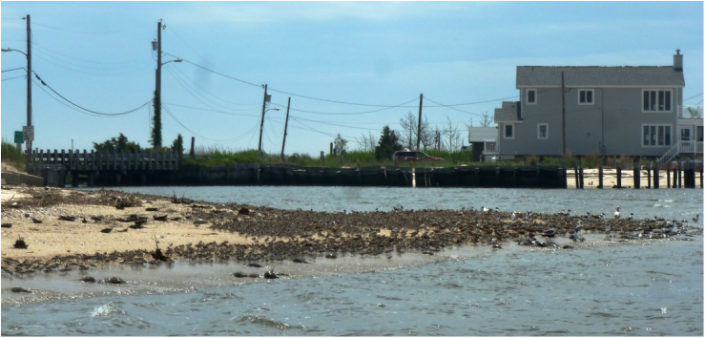
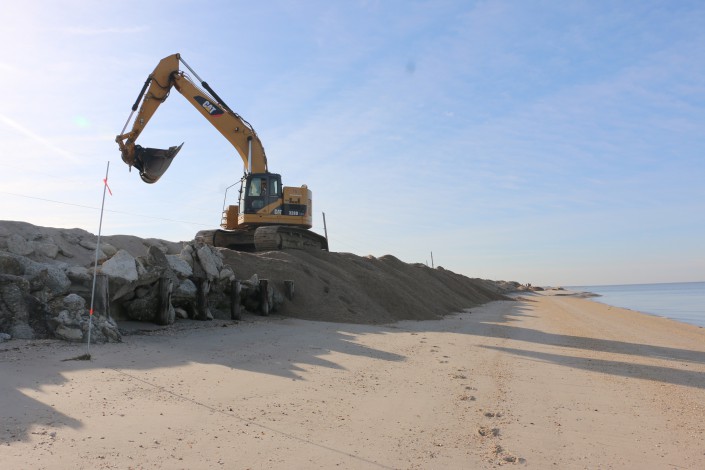
This season, thanks to a grant from the National Fish and Wildlife Foundation (through their Hurricane Sandy Coastal Resiliency Grants Program), a team led by New Jersey Audubon worked with Conserve Wildlife Foundation of New Jersey, The Wetlands Institute, New Jersey Division of Environmental Protection, and the US Fish and Wildlife Service to make the beach community of Stone Harbor Point more resilient for birds and people alike.
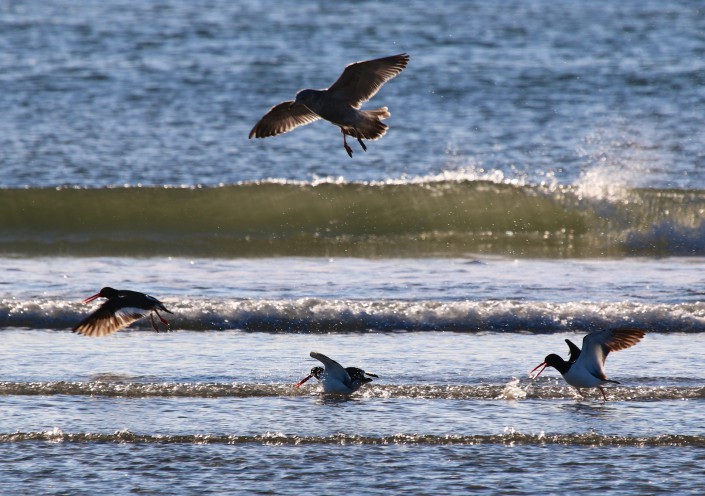
Conserve Wildlife Foundation of New Jersey collaborated with New Jersey Audubon to improve beach habitat for Piping Plovers (endangered in New Jersey), American Oystercatchers and the colonially nesting Least Terns and Black Skimmers. Sand from the southernmost tip of the point was moved to create three areas of higher elevation. The new landscape is expected to benefit Red Knots, Semipalmated Sandpipers, Sanderlings, Semipalmated Plovers, Black-bellied Plovers and others.
Stone Harbor, a small beach town along the New Jersey shoreline will see added coastal resiliency benefits and flood protection due to this innovative project that combined the needs for shorebirds with the needs for shore residents. The Stone Harbor project also included the construction of a wide berm of sand near the beachfront parking lot at the far south end of the town. This aspect of the projects aims to increase flood protection for the residents on the developed area of the island.
The National Fish and Wildlife Foundation (NFWF) is a non-profit organization created by Congress to preserve and restore our nation’s native wildlife species and habitats. NFWF is one of the largest funders of wildlife conservation in the world. They fund science-based projects and community-driven solutions.
Lindsay McNamara is the Communications Coordinator for Conserve Wildlife Foundation of New Jersey.
Conserve Wildlife Foundation of New Jersey and American Littoral Society have started this season’s restoration work in Delaware Bay! Currently, we are working on projects on Fortescue Beach and Thompson’s Beach. Read more about our restoration work on RestoreNJBayshore.org.
Dr. Larry Niles of LJ Niles Associates LLC, a leader in efforts to protect red knots and horseshoe crabs for over 30 years, has shared updates throughout the month of March on the blog of RestoreNJBayshore.org:
A Closer Look into the Relationship between Amphibians and Their Habitats
Conserve Wildlife Foundation is excited to celebrate Amphibian Awareness Month during March 2015! Follow us on social media and be sure to check your email (sign up for our list) for weekly stories on the amphibians of the Garden State and our work to protect them.
Amphibians are unique group in the animal kingdom, they have porous skin! This permeable skin allows water and air to pass directly pass into their body without filtering through their stomach.
While their permeable skin and soft eggs give amphibians an advantage to take in more oxygen, it also makes them more susceptible to pollutants. Amphibians therefore can serve as “canaries in the coal mine” for water quality. Biologists throughout the world are concerned about the health of amphibians because their health can be linked to the health of the environment they live in.
Water pollutants, such as, road salts, pesticides, metals and other sources of runoff from agriculture and cities can have negative effects on overall health and reproduction of these critters. Water quality degradation has been linked to physical malformations in amphibians and may also reduce their ability to fight off pathogens, leading to reduced reproduction and mortality. These issues linked with water quality and amphibians may also have a larger implication of the health of the ecosystem, including human health.
Therefore, it is important that populations of amphibians and other wildlife are carefully monitored and protected. In order to protect our water quality in and around our homes it is important to limit sidewalk salts, garden fertilizers and pesticides as much as possible. Make sure to follow label instructions and application rates. Amphibians are also beneficial as they eat insects, including agricultural pests and serve as food to other wildlife. They have also been an important role in research and medicine. Each day, consider taking small steps in your own house to help the amphibians that call the Garden State home.
CWF Releases its First Annual Report Ever Using a Story Map Format: “2014 Annual Report“
By David Wheeler, Executive Director
Technology has proven to be vital to Conserve Wildlife Foundation’s work protecting rare wildlife species over the years. Our biologists depend greatly on modern technologies to band, track, and share online the journeys of wildlife. Our webcams broadcast the most intimate behaviors of nesting birds and bats across the web. And we seek out ever-evolving communications technologies to spread the word about the inspiring stories of wildlife, from social media and infographs to e-books and Story Maps. These technologies offer newfound abilities to share complex data on multiple levels, while still incorporating the awe-inspiring photography and videos that bring wildlife’s stories to life.
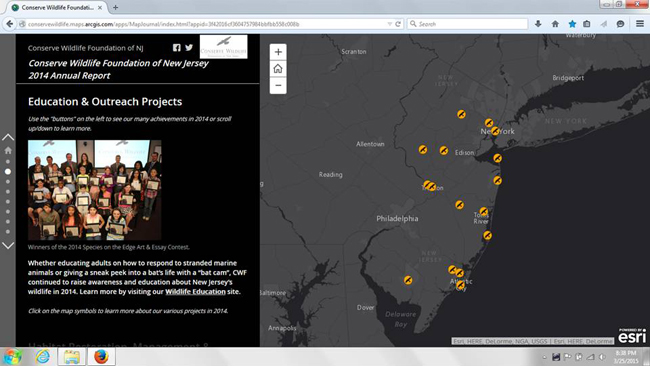
Conserve Wildlife Foundation of New Jersey is excited to offer our 2014 Annual Report in a unique format that utilizes one of those technologies – Story Maps. In the past year, we have explored the wonders of American oystercatchers with our first Story Map – and now the annual report allows all of our projects to be highlighted in this interactive format.
A screen capture of one of the pages of the CWF 2014 Annual Report Story Map.
Visit the multiple pages within this Story Map to learn about Conserve Wildlife Foundation’s many projects and partnerships in 2014, and the imperiled wildlife species in need of our help. Find examples of the innovative and dedicated leadership of our biologists and volunteers. And take an online journey across the state to learn how our projects made a difference in all corners of New Jersey in 2014 – a great year for wildlife in the Garden State!
Road Closures Help Amphibians Migrate to Vernal Pools to Breed
Conserve Wildlife Foundation is excited to celebrate Amphibian Awareness Month during March 2015! Follow us on social media and be sure to check your email (sign up for our list) for weekly stories on the amphibians of the Garden State and our work to protect them.
On the night of March 14, Conserve Wildlife Foundation Communications Coordinator Lindsay McNamara attended the first closure of Beekman Road this season. Beekman Road, in East Brunswick, New Jersey, is closed to traffic about two or three nights for six to twelve hours each spring by Friends of the East Brunswick Environmental Commission(Friends of EBEC). Friends of EBEC organizes these road closures to maintain local biodiversity.
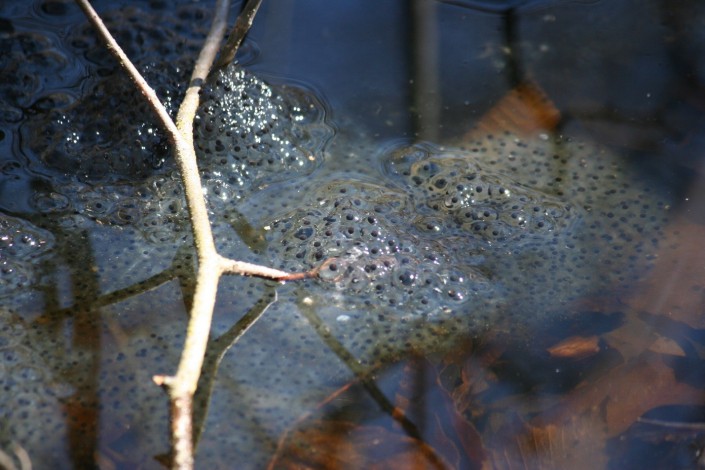
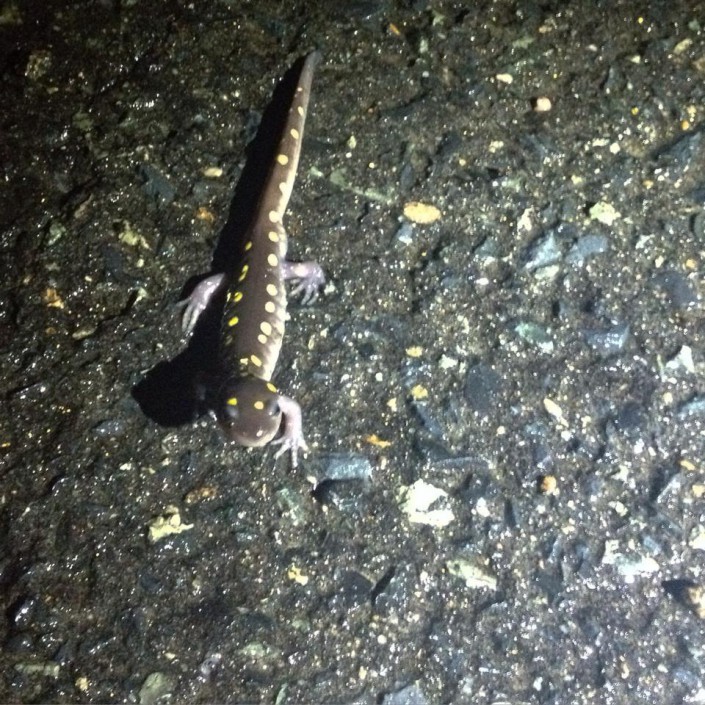
In the woods on either side of Beekman Road, vernal pool habitat exists. Vernal pools are temporary woodland ponds that fill with water during the winter and spring and dry out in the summer. These vernal pools are extremely important for a number of amphibians in the area. Spotted salamanders, wood frogs, green frogs, spring peepers, Fowlers toads and chorus frogs all rely on the vernal pools for breeding.
Some amphibians, like spotted salamanders and wood frogs are entirely dependent on the vernal pools for breeding. They leave their winter hibernation spots in upland forests and migrate (often in large groups) to the vernal pools. Research suggests that these species follow the same migratory paths each year, often traveling distances of as much as 1,000 feet from their hibernation spots.
At the vernal pool, mating occurs, eggs are deposited by the females, and the adults leave the habitat and venture to the surrounding woods. The adults spend their summer in these wooded areas before slowly retreating back to their winter hibernation areas, and the natural cycle begins again.
Unfortunately, the migrating amphibians need to cross Beekman Road to get from their hibernating spots to their vernal pool breeding grounds. Road kills during this journey significantly reduce salamander and frog populations and can lead to local extinctions at breeding ponds.
Friends of the East Brunswick Environmental Commission has worked together with a number of partners to close Beekman Road to traffic during nights when amphibian migration is extremely likely. These road closures help protect migrating salamanders and frogs as they move across Beekman Road to their breeding vernal pools.
Friends of EBEC consider a number of variables before they decided to close the road. A wide range of factors trigger salamander migration including the amount and timing of rainfall, the date, the temperature of the air, the temperature of the ground, the availability of open water on the vernal pools, the depth the salamanders are migrating, soil moisture and many others. Interestingly, studies have shown that males typically migrate first and arrive at the vernal pools before the females. It seems females need a higher average air temperature to stimulate their movement than the males.
Volunteers are encouraged to come on these rainy nights to help the amphibians cross the road. Bring your friends, your family and don’t forget a flashlight, to the next road closure of the season! Updates are posted on the Friends of the East Brunswick Environmental Commission’s blog.
These road closures are a great way to protect local biodiversity and educate New Jersey residents about wildlife in their state. Conserve Wildlife Foundation, in partnership with the New Jersey Division of Fish & Wildlife’s Endangered and Nongame Species Program, lead a number of Amphibian Crossing volunteer programs across New Jersey. Join us!