The results are in! It wasn’t a great year for upland sandpipers at the McGuire Airfield. Numbers of breeding pairs at this location have decreased to an estimated two pairs. Numbers can be variable from year to year so there is still hope for better news in 2023.
Upland sandpipers typically require a minimum of 100 acres for breeding habitat and so large expanses of open, grassy land is a high priority. Over the past five years, long term efforts have been ongoing to complete a large-scale grassland restoration at the McGuire Airfield. So far, roughly 500 acres have been converted to native warm season grasses with another 100 acres to be completed by next spring. Our goal is to help create and maintain grassland bird nesting habitat for Upland sandpipers and other species.
The cold and dreary winter weather makes for the perfect excuse to curl up with a book. Reading a good book can transport you into new worlds, or, in the case of the following books I’m about to recommend, help you get excited about getting outside to explore your own winter wildland.
My first recommendation is a Field Guide, Tracking and the Art of Seeing: How to Read Animal Tracks and Sign written by Paul Rezendes. Although this is a field guide to tracking wildlife, this book includes personal accounts that make it much more readable cover to cover. The author includes several North American species including rodents, hoofed animals, bears, raccoons, opossums, and members of the weasel, rabbit, dog, and cat families. He describes not only the signs these animals leave but also their ways of life throughout the seasons to help the reader get a fuller picture.
With 2022 coming to a close, Conserve Wildlife Foundation’s staff took a moment to reflect on what they were thankful for this year at work and with regards to New Jersey’s wildlife.
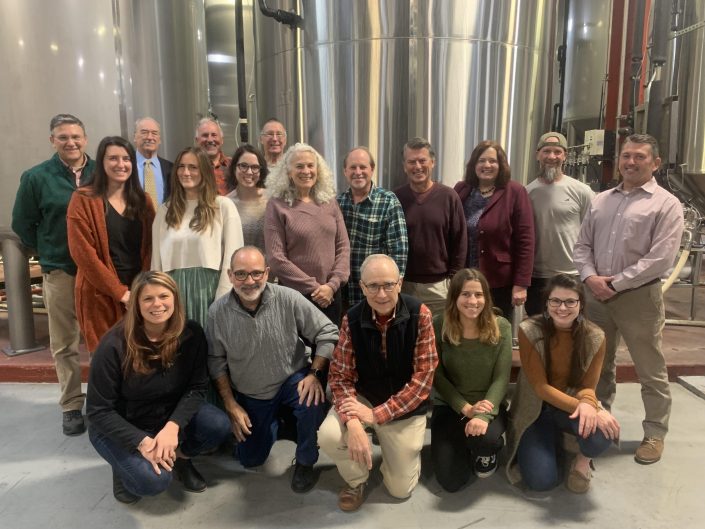
The CWF team (Board and staff) enjoyed a holiday celebration at Flying Fish Brewery.
I’m thankful for New Jersey’s incredible wildlife and my role in protecting so many at-risk species. I owe my greatest appreciation, however, to the dedicated people who carry out and support CWF’s work to strengthen wildlife populations and educate the next generation of environmental stewards. Our Board and staff are truly extraordinary at what they do, and our contributors, volunteers, and partners make all our success stories possible.
Educators and biologists at Conserve Wildlife Foundation of New Jersey are leading educational programs at Ridge Street Elementary School in Newark, New Jersey, for the eighth consecutive year. Comprehensive STEAM curricula that follow New Jersey State Learning Standards for Science were developed by CWF staff for grades K, 3, 5 and 6. These curricula provide a series of classroom lessons, projects, and field trips focused on New Jersey’s wildlife.
While delivery of this program, entitled “Soaring With STEAM,” was adapted to a virtual learning environment during the pandemic, this 2022-23 school year has been presented entirely in-person, allowing staff to meaningfully interact with students and teachers in the classroom.
Earlier this summer, it was announced that the annual range-wide American oystercatcher meeting would be held in December on the Gulf Coast of Florida near Naples. Thrilled to finally be attending in-person after several pandemic years of virtual meetings, my mind immediately pivoted to what other nearby nature sites I could also visit. Or more specifically and not too surprising for those that know me…where could I go to view wintering piping plovers.
In late September, Hurricane Ian made a direct landing in this region of Florida. The meeting had to be scuttled, relocated to the Georgia coast. And just like that, my “add-on” plans – I had arranged a short trip to Outback Key about two hours north of the meeting – fell off the itinerary.
Or maybe not. Georgia borders Florida, right? Six hours of driving for a chance to see 50-60 piping plovers in one spot is reasonable, right? Did I mention at least one New Jersey breeder winters at the site?
So as soon as the oystercatcher meeting wrapped at mid-day, I found myself in a car, along with fellow CWF Biologist Emmy Casper, hurtling toward St. Petersburg, Florida. We arrived at nightfall, woke in what felt like a flash, so we could wait in a line of cars, still in the dark, for Fort DeSoto County Park to open at 7 am. We had a very narrow window for our visit with the morning low tide being optimal shorebird viewing at Outback Key and because we had mid-day flights home.
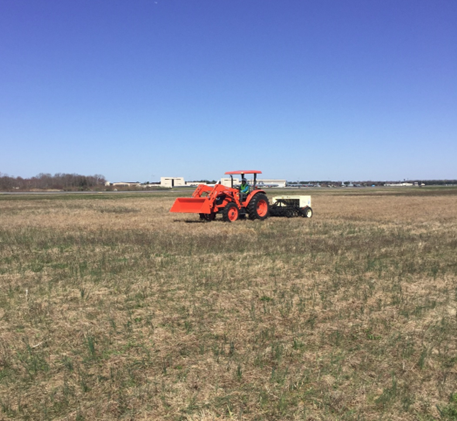
Over the past five years, long term efforts have been ongoing to complete a large-scale grassland restoration at the McGuire Airfield. So far, roughly 500 acres have been treated and seeded to encourage the growth of native warm season grasses with another 100 acres to be completed by next spring. The planting of species like little bluestem, sideoats grama, and blue grama has helped to create grassland bird nesting habitat and conserve existing habitat, while accommodating necessary airfield procedures and safety.
Keeping the vegetation on the airfield short is important to ensure airport safety and to achieve that goal, the fields must be mowed. When the vegetation reaches 12-14 inches, the area is mowed back down to 7 inches. The vegetation before the start of the restoration project was a mix of native and non-native woody, forb, and grass species, with some plants growing at a faster rate than others. The quicker these plants grow, the more frequent mowing must occur. It’s for this reason why native warm season grasses were planted, which have a slower growth rate and tend not to grow more than 12-14 inches. By planting these species and reducing mowing frequency, the grassland birds have less disturbance and human impacts on their nesting season.
This work is done in cooperation with the USFWS New Jersey Field Office, and grassland bird surveys are completed throughout the summer to monitor success. Stay tuned to learn more about our grassland bird results for the 2022 breeding season.
Vegetation must be mowed when grasses exceed 12 inches.
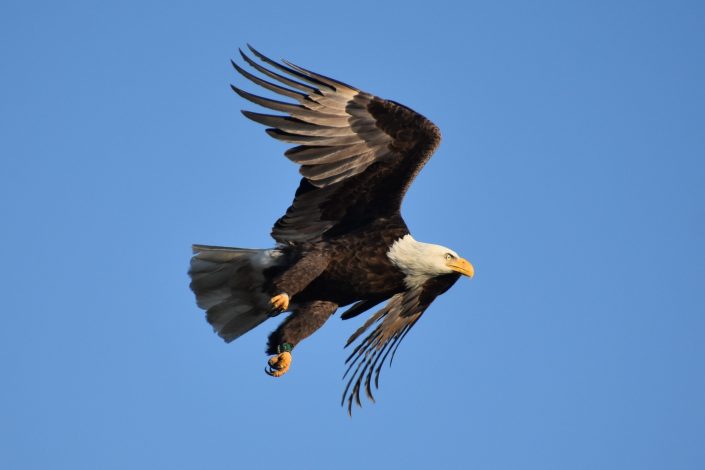
It’s always a good day when we get a resighting of a NJ banded eagle, especially if it was one that had a transmitter attached. On November 1st, 2022 “Oran” was resighted in Stone Harbor, Cape May County, NJ by John Kauterman. This is about 22 miles from where he had fledged along the Delaware Bay in Cumberland County in 2015.
E/17 November 1st, 2022: photo credit, John Kauterman
On May 18th, 2015 a remote eagle nest on the Delaware Bay was visited by biologists with the NJ Bald Eagle Project, from both the NJ ENSP & CWF. There were two eight week old chicks in the nest both and we banded both. The male, banded NJ Green band E-17, was outfitted with a transmitter and he was named “Oran”.
It’s official. The Northern long-eared bat is listed as an endangered species under the U.S. Fish and Wildlife Service’s (USFWS) Endangered Species Act. Earlier this year, the USFWS announced the proposed uplisting due to severe population declines. This uplisting would help to protect and recover this imperiled species and the ecosystems upon which they depend on.
A Northern long-eared bat is held in a gloved hand- these bats are less that 4 inches long with a wingspan of 9-10 inches.
Through the Endangered Species Act, species may be listed as either endangered or threatened. The term “Threatened” means a species is likely to become endangered within the foreseeable future. The term “Endangered” means a species is in danger of extinction throughout all or a significant portion of its range.
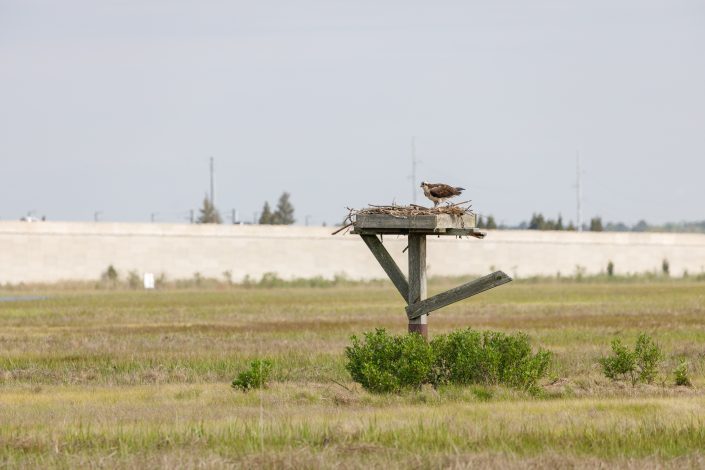
An osprey nest with hatchlings on May 16, 2022. One of many nests that eventually failed to produce young this year.
Whenever we look at how ospreys are faring, weather is always taken into account. When we summarize and report on the results of our summer osprey nesting surveys, we also look at the local climate. Being situated along the Atlantic coast, our weather is influenced by the ocean. As aerial predators of fish, ospreys are reliant on favorable water conditions to forage.
Preliminary results of the 2022 New Jersey Osprey Project Census show that the osprey population was not as productive this year as they have been over the past ~20 years. This was largely due to a low pressure system (nor’easter) that stalled off the coast in early May — when the majority of pairs were incubating eggs. The strong onshore winds caused moderate coastal flooding, windy conditions, increased wave action and water turbidity, which made it more difficult for ospreys to find and catch prey in coastal waters. Males do 100% of the foraging from the onset of egg laying until young begin to fledge, so when they are unable to provide food, females must abandon their nests and eggs to forage for themselves. The nor’easter in May appears to have affected the outcome of many coastal nests and in some cases, complete colonies. Of course there are many other causes for nest failure but this year weather played a major role.
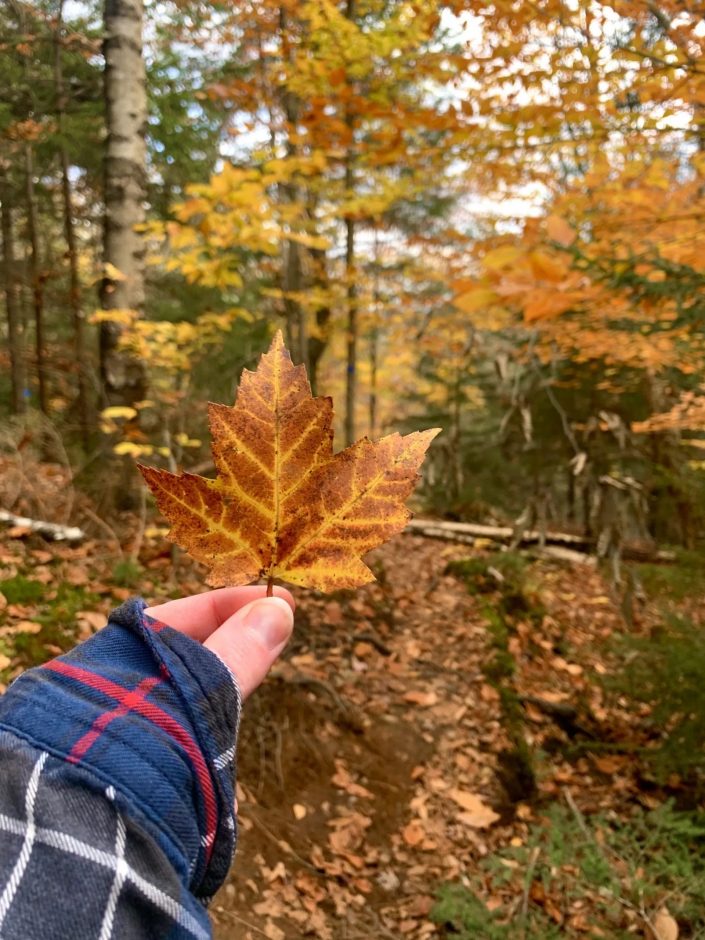
Once leaves fall to the ground, leave them be! Deciding not to rake, blow, and dispose of your leaves not only benefits native wildlife but provides nourishment to your garden and lawn.