Spring is in the air! With the days getting warmer and longer, now is the perfect time to pick a sunny spot outside and read a book. Here are some of my all time favorites that I hope will inspire you to get out in nature. Happy reading!
In honor of Earth Day, which is just a couple weeks away, I’d like to recommend the beautifully written Braiding Sweetgrass by Robin Wall Kimmerer. As a botanist, university professor, and member of Citizen Potawatomi Nation, Kimmerer intertwines her scientific knowledge of plants with an indigenous worldview, culminating in a powerful collection of reflections and teachings about our relationship with nature. Science is often considered an objective field (a scientist observes an object), but Kimmerer offers a more holistic perspective where the objects (in this case, plants) can be teachers, offering wisdom instead of just scientific knowledge. Her stories share a central theme of reciprocity and a reminder that we are responsible to protect the natural world in exchange for its many gifts. In a time when humans have become so disconnected with nature, Braiding Sweetgrass is an important and inspiring book I think everyone could benefit from.
One of my graduate school professors assigned The Invention of Nature by Andrea Wulf as reading material for our Conservation Biology class. Up until that point, I had never heard of Alexander von Humboldt, but the more I thought about it, the more I realized that there are so many things named after him! Humboldt County, Humboldt squid, Humboldt Current…the list goes on. Although Humboldt was a widely famous naturalist and geographer during his lifetime, he remains largely forgotten today. If you aren’t familiar with Alexander von Humboldt, I highly recommend this engaging biography about his life and contributions to science. You’ll follow Humboldt throughout his many explorations and learn how his writings shaped ecology as we know it today. You may be surprised to learn how much his work inspired well known historical figures including Charles Darwin, Henry David Thoreau, Thomas Jefferson, and John Muir! I still think about this biography regularly, and those who know me know I’m a bit passionate about Humboldt – I even named a piping plover chick after him! If you also enjoy the biography, definitely check out the companion illustrated book, The Adventures of Alexander von Humboldt featuring beautiful original artwork by Lillian Melcher interlaced with Humboldt’s original notes and drawings from his journeys in the Americas.
And now a field guide recommendation. Since spring migration is upon us, a bird field guide seems appropriate. I know many birders are die hard fans of Sibley guides. Don’t get me wrong, I also love his illustrations and keep a portable copy of his guide on my phone. That said, The Crossley ID Guide by Richard Crossley is one of my all-time favorite reference resources for birds. Instead of illustrations, this guide features photographs (taken by the author!) depicting each species in various plumages and behaviors. Crossley even layers the photographs on backgrounds depicting the birds’ natural habitats so that the reader can learn what the birds may look like in different behaviors and from various distances (see the American oystercatcher plate above). It’s a very approachable field guide that can be helpful to any birder regardless of skill level.
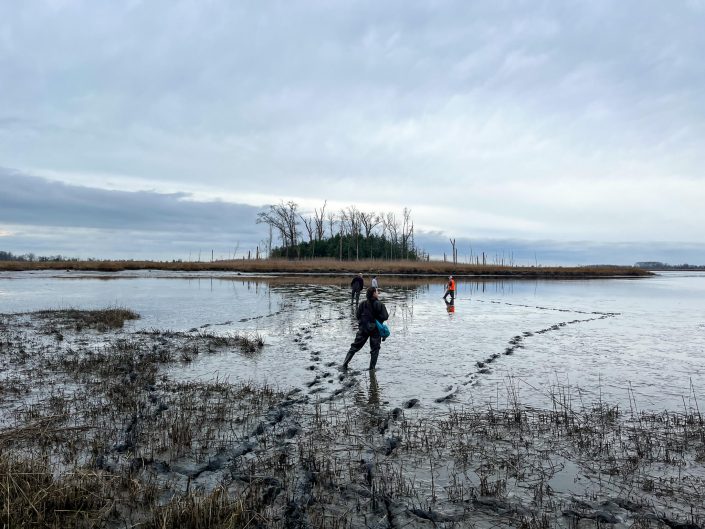
Over the winter, biologists from CWF, Ducks Unlimited, USFWS, and Partnership for the Delaware Estuary visited sites like this marsh in Dix Wildlife Management Area to assess their restoration potential and strategize monitoring plans.
This spring, CWF will begin fieldwork for a new marsh restoration project along the Delaware Bay. The ambitious project, funded by the National Fish and Wildlife Foundation and co-led by Ducks Unlimited and the U.S. Fish and Wildlife Service, aims to implement cost effective and low-tech marsh restoration techniques in New Jersey and Delaware salt marshes. Restoration plans will be designed to create, protect, and/or enhance habitat for multiple marsh-dependent species including black rails and saltmarsh sparrows. As a project partner, CWF will provide two seasons of biological monitoring assistance at the New Jersey sites. This week, WHYY published an article about the project, featuring representatives from CWF and other project partners. Click the link below to read the piece and learn more about some of the important work being done by the Delaware Bay!
Every January, once the confetti has settled from the new year’s celebration, I start thinking a lot about amphibians and preparing for their springtime migration. That behavior, however, is not collectively adopted by all of our local frogs and salamanders. Different species have found different ways to adapt to the challenges of a complex lifecycle that relies on environmental factors to inform physiological changes. Wood frogs, as well as spotted and Jefferson salamanders, have conformed to an early spring breeding strategy. Once the ground thaws and snow melt has raised the water level in vernal pools, they are on the move. Since amphibians in temperate climates hibernate (or more correctly, brumate – the “cold-blooded” equivalent), you might think that their appearance in February and March means that they lead the pack. While this seems a reasonable assumption, it’s actually incorrect.
We’re proud to release results of the 2022 New Jersey Osprey Project Survey, which documented the greatest number of nesting ospreys in the history of the project. Overall, surveys by staff and loyal volunteers recorded a total of 733 occupied nests throughout the state. The majority of ospreys (83%) continue to nest along the Atlantic coast of New Jersey with the remainder nesting along the Delaware Bay and inland locations. Surveys recorded the outcome of 73% of the known population, which allows us to present these results with confidence.
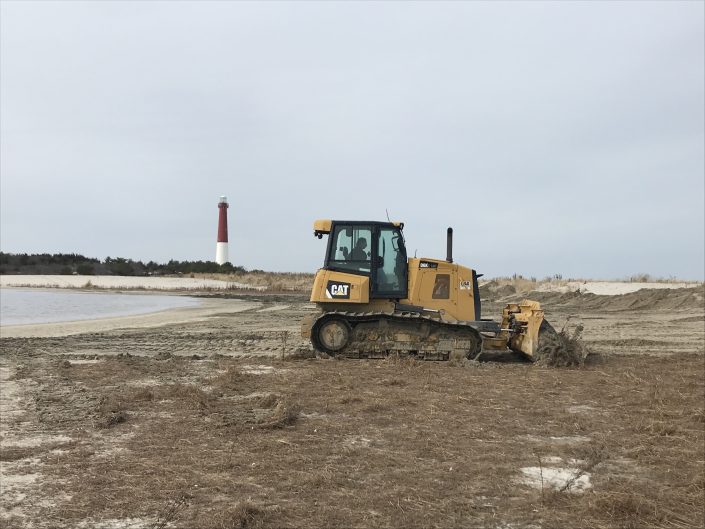
When the Barnegat Light habitat restoration was completed to benefit piping plovers several winters ago, the partners anticipated it would need periodic maintenance to keep it in optimal condition. As it has turned out, the inlet beach site has needed more frequent attention, an annual winter “touch-up” to prep the site for the nesting season. With this in mind, earlier this month, Todd Pover, CWF Senior Wildlife Biologist was on-site for nearly a week to oversee the habitat work.
The maintenance this winter primarily focused on the two foraging ponds, as those features have proved critical to the success of the plovers utilizing the site. Thick vegetation was mechanically removed from about three-quarters of the perimeter of the large pond. Excessive vegetation can obstruct piping plovers, especially their chicks, from using the pond’s edge to feed. The heavy vegetation can also provide cover for predators. Meanwhile, the smaller pond was filled in with sand due to late fall/early winter storms and tidal surge. Although the small pond has needed to be “refreshed” each winter, this was the first time it had to be entirely re-dug. Experience has shown that having two ponds present at the site – giving plovers alternative feeding options if one pond is not accessible or as productive during a portion of the season – has been a key element in boosting productivity, especially as more plovers chose the site to nest. In addition to the pond work, some vegetation thinning or removal was also completed to enhance the suitability of the nesting areas as plovers prefer sparsely vegetated areas to lay their eggs.
Invasive vegetation being removed from the edge of the large piping plover foraging pond.
CWF is excited to announce a new project funded by the National Fish and Wildlife Foundation’s Delaware Watershed Conservation Fund designed to develop and execute management strategies for American oystercatchers along the Delaware Bay. Breeding populations of American oystercatchers (State Species of Special Concern) have been well studied and monitored along New Jersey’s Atlantic Coast since 2003, but very little is known about the oystercatchers that nest on the sandy beaches along the Delaware Bay. In 2021, CWF conducted a near bay-wide window census survey to establish a baseline estimate of the Bayshore population. Thirteen oystercatcher pairs were documented across approximately 35 sites from Cape May Point to Sea Breeze, prompting a need for further research and management. This new project seeks to shed light on this understudied population and add to our scientific understanding of their management needs.
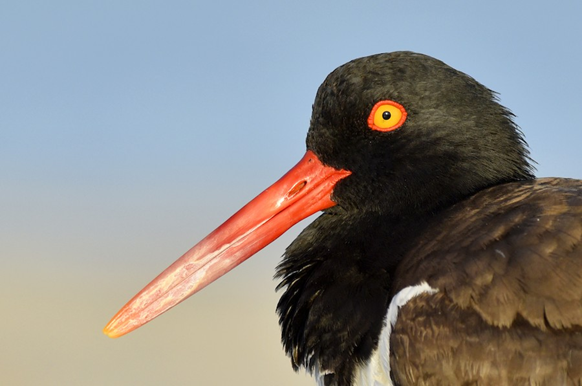
American oystercatcher. Photo courtesy of Daniel Irons
According to an old English proverb, good children should be seen and not heard. If that’s the case, salamanders could be thought of as the epitome of obedience- rarely uttering a sound (though some species are capable, including mole salamanders and newts) and often visible only during migration events or chance encounters along hiking trails. Because they don’t command our attention in the way that flashy birds and charismatic mammals do, they may be easily overlooked. Indeed, amphibians are one of the least studied classes of vertebrates- and the most threatened, with 41% currently facing extinction. Though staggering, that statistic is likely quite conservative as almost a quarter of species known to science are considered data deficient by the International Union for the Conservation of Nature (IUCN). This is concerning- not only for supporters of the intrinsic value of wildlife- but also from a practical standpoint…
A 1975 study conducted in Hubbard Brook Experimental Forest, NH, estimated that an average of 2,950 salamanders of five species (primarily red-backed) occurred across each hectare of the site. Using this figure, they calculated the total weight, or biomass, of salamanders and found it to be roughly equivalent to all small mammals and > 2x that of birds present during peak breeding season. Extremely high densities and biomass place a surprising amount of power and responsibility on the shoulders of these small creatures.
While many residents of New Jersey prefer to spend winter days indoors and away from the cold, there are those dedicated birdwatchers that view the wintertime as an opportunity to get outside and observe species they normally wouldn’t see during the rest of the year. New Jersey hosts a variety of migratory birds, some escaping the freezing temperatures of their Arctic breeding grounds during the harsh northern winters. There are many species that both breed and winter in the Garden State and are easier to locate and observe while trees are bare. Located on the Atlantic Flyway, New Jersey is also a prime spot for coastal bird watching during the fall and spring migration, with Cape May being one of the most active bird watching hotspots in the country.
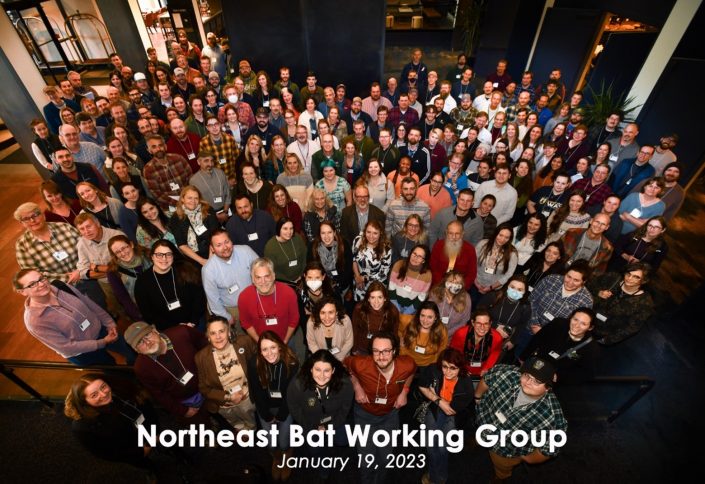
This past week, CWF biologist Meaghan Lyon attended the Northeast Bat Working Group (NEBWG) annual meeting with her fellow U.S. Fish and Wildlife Service (USFWS) New Jersey Field Office colleagues in snowy Burlington, Vermont. The NEBWG meeting brings together scientists, conservationists, educators, and enthusiasts to teach and learn about the most current bat research and tools to help improve our work in the field.
The annual meeting provided opportunities to learn about current research findings through presentations and poster sessions, as well as interact with fellow professionals from across the Northeast. Topics of interest included Myotis species updates for the range, impacts of renewable energies like wind farms, survey techniques, and diseases like white nose syndrome. A special training session was also offered to conference attendees focusing on the use of night vision aids for monitoring bats.
These meetings foster a sense of community among biologists and inspire new approaches for studying and conserving bats.
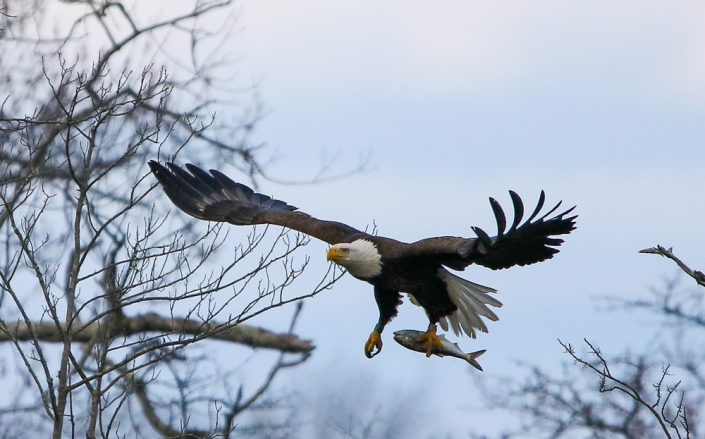
photo by NJ Eagle Project Nest Monitor, Paul Lenzo
Conserve Wildlife Foundation of New Jersey and the New Jersey Department of Environmental Protection’s Fish and Wildlife have released the 2022 New Jersey Bald Eagle Project Report. The 2022 eagle nesting season was a record year for New Jersey’s nesting eagle population with 250 active nests identified.
The 250 active nests (meaning the nests produced eggs) represent an increase of 28 active nests since 2021. Of those nests, 83 percent were successful and collectively produced 335 offspring. The productivity rate for nests with known outcomes was 1.42 young per nest, which is above the range required to maintain healthy population numbers. The 2022 NJ Bald Eagle Report includes details on the nesting season, resightings and recoveries.
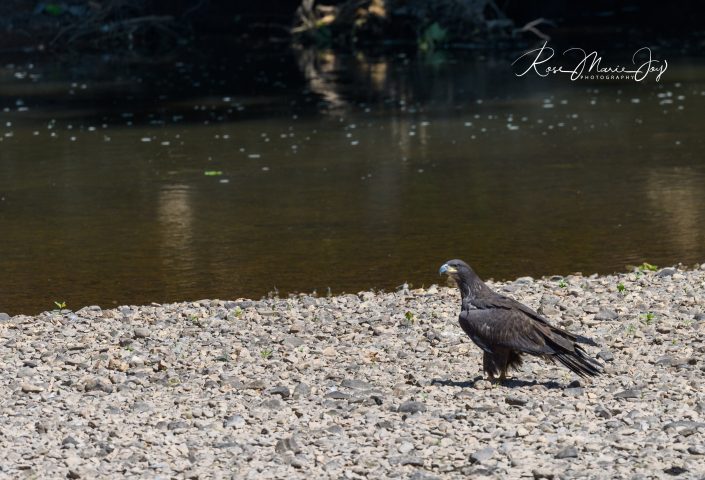
One of the three fledges from the 2022 Manville nest: photo by NJ Nest Monitor, Rose Joy
These numbers could not have been achieved or documented without the dedicated efforts of the 150 New Jersey Eagle Project volunteers who conduct the majority of the nest-observation work vital to tracking the population and nest distribution of our state’s Bald eagles in all 21 counties. CWF is honored to manage these volunteers in partnership with the Endangered and Nongame Species Program and thanks them for their invaluable service.
CWF would also like to thank our partners, who make our bald eagle conservation work possible, including PSE&G, Wells Fargo Advisors, Wakefern Food Corp./ShopRite Stores, Mercer County Parks, Wildlife Center Friends, the American Eagle Foundation, and the Zoological Society of New Jersey.