CWF Biologists and Volunteers Rescue Three Eagle Chicks

Biologists and Volunteers come to the Rescue of Three “Downed” Eagle Chicks

By: Larissa Smith, Wildlife Biologist/Volunteer Manager

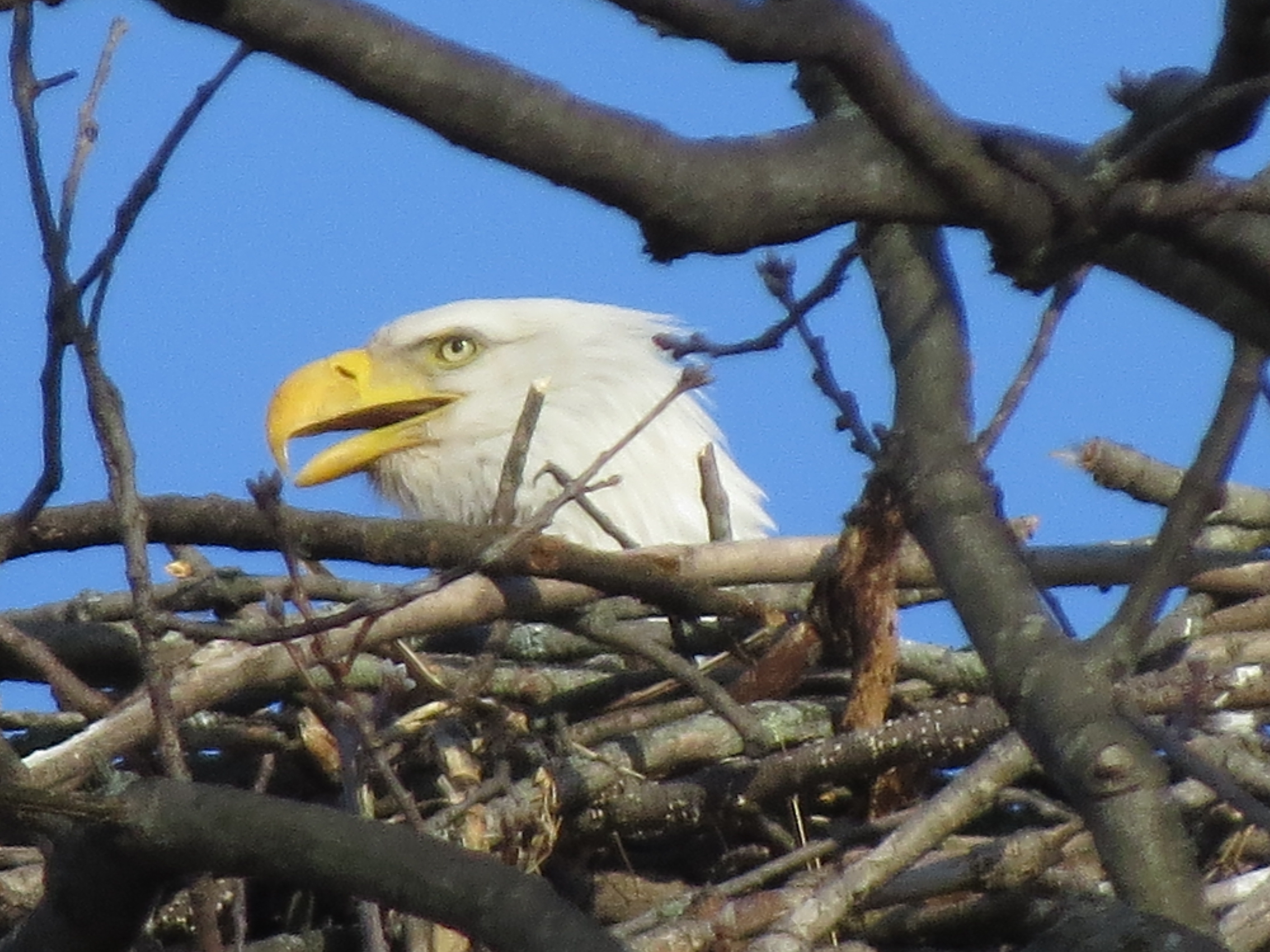
On Saturday the 23rd, I received a call from Eagle Project volunteers Donna and Heiki Poolake. One of the nests that they monitor in Natural Lands Trust’s Glades Wildlife Refuge in Cumberland County had partially fallen and Heiki found all three chicks on the ground, thankfully alive. ENSP Principal Biologist Kathy Clark met them out at the nest site and determined that all three looked uninjured but were weak from lack of food and water. The two smallest were especially docile so the decision was made to take them to Tri-State Bird Rescue & Research in Delaware for a check up and to get needed fluids and food. The largest and strongest bird was given water and fish, and set on a leaning tree (off the ground) in the hope that it would hop up on branches where the adults, still watching from above, would continue to feed it.


The next day we pulled together a crew to install a nest platform for the remaining eaglet. We carried the pre-built nest platform (designed for ospreys) into the marsh, installed it and built a nest of branches and grass, and added perches to make it more roomy for an eagle. We found the eaglet back on the ground, sitting on the remains of the fallen nest. We caught the bird again, banded and took measurements that confirmed this was a female about 9 weeks of age. She gladly ate pieces of fish offered to her as well as some more water. We placed her up in her new “nest,” along with several fish, and she looked quite happy to be off the ground and back up in a nest.
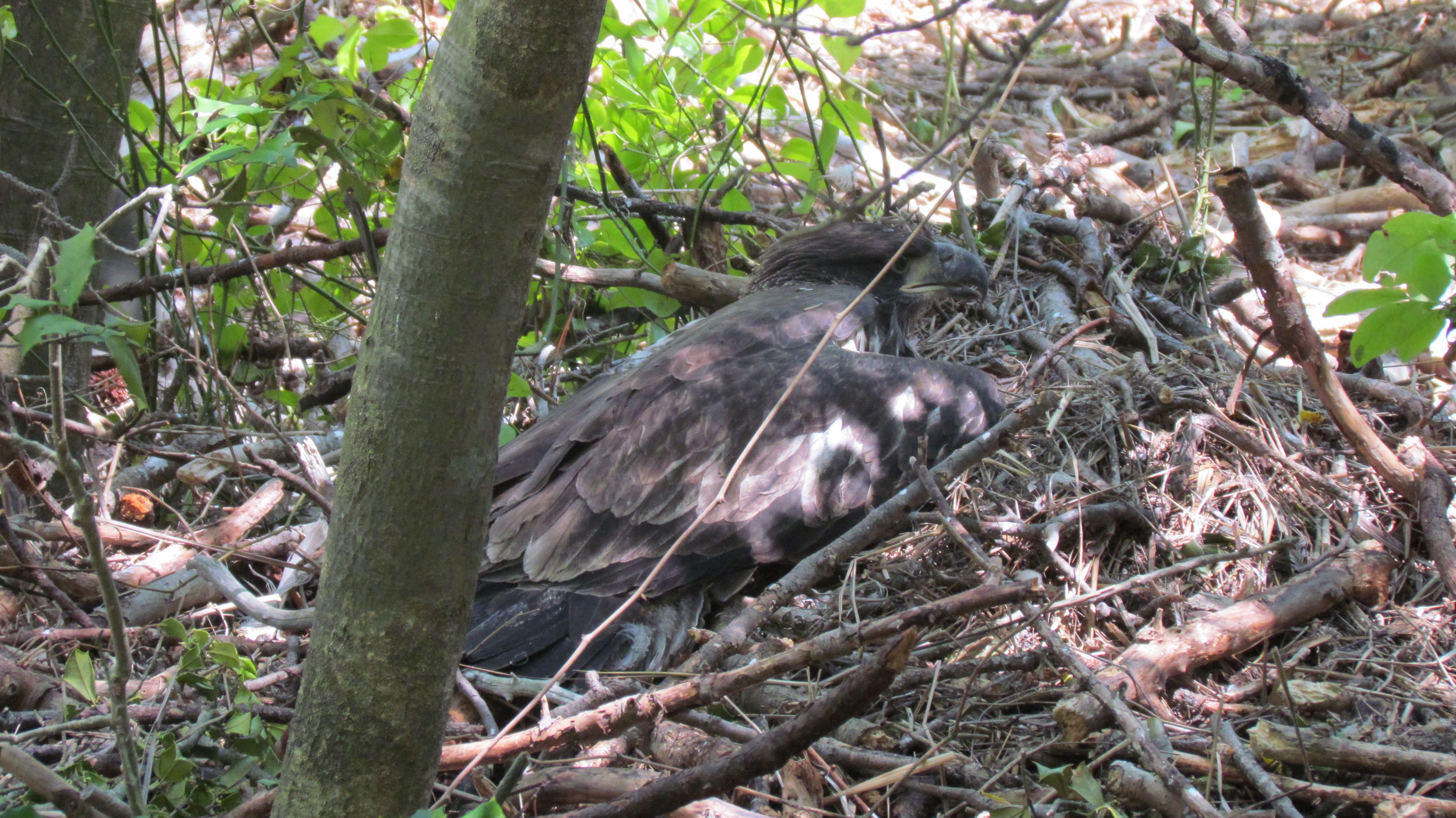
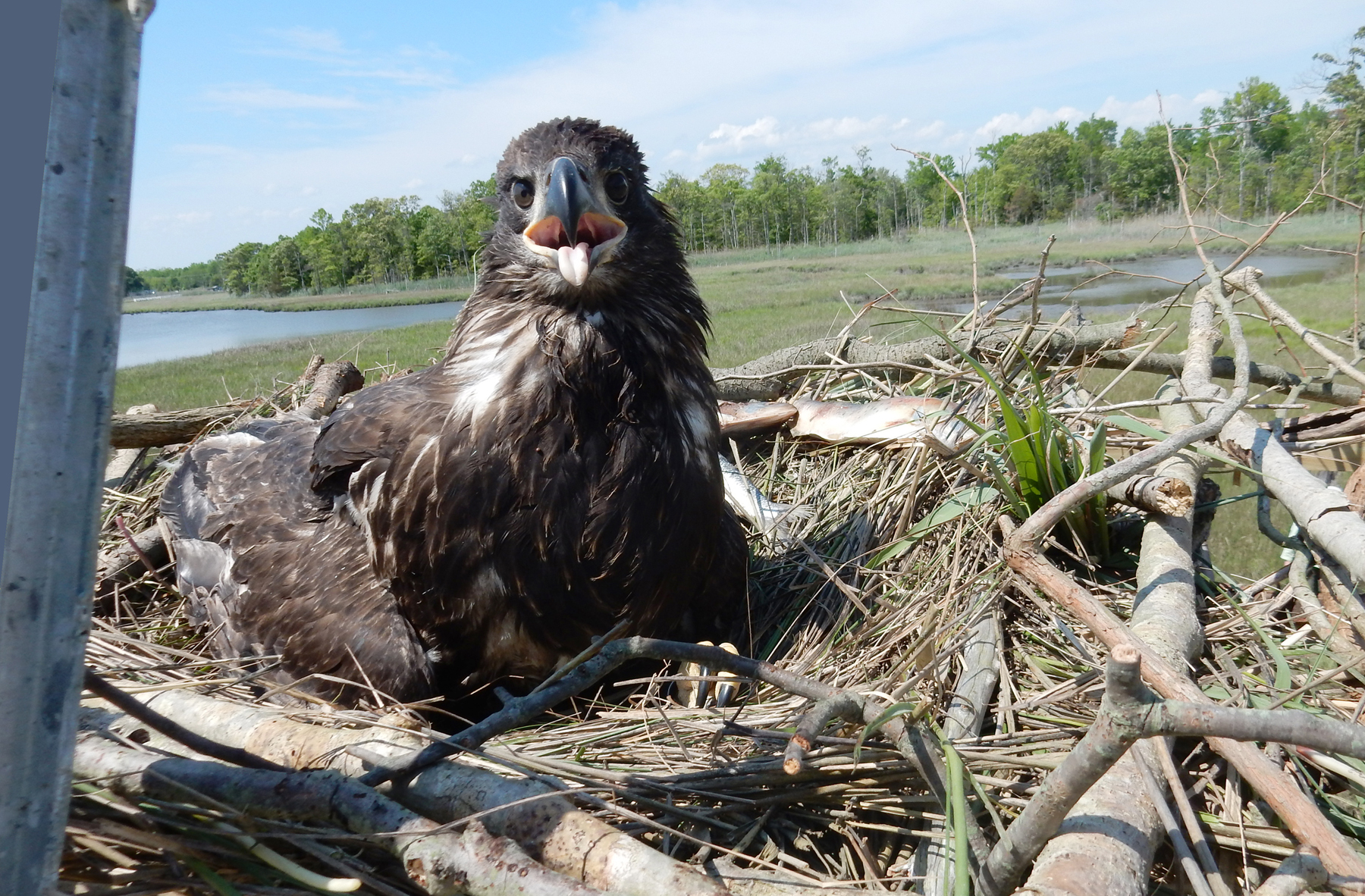
Chick in fallen nest on ground @ Heiki Poolake
Re-nested eagle chick in platform nest @ K. Clark
Re-nested eagle nestling in platform nest Photo by: K. Clark

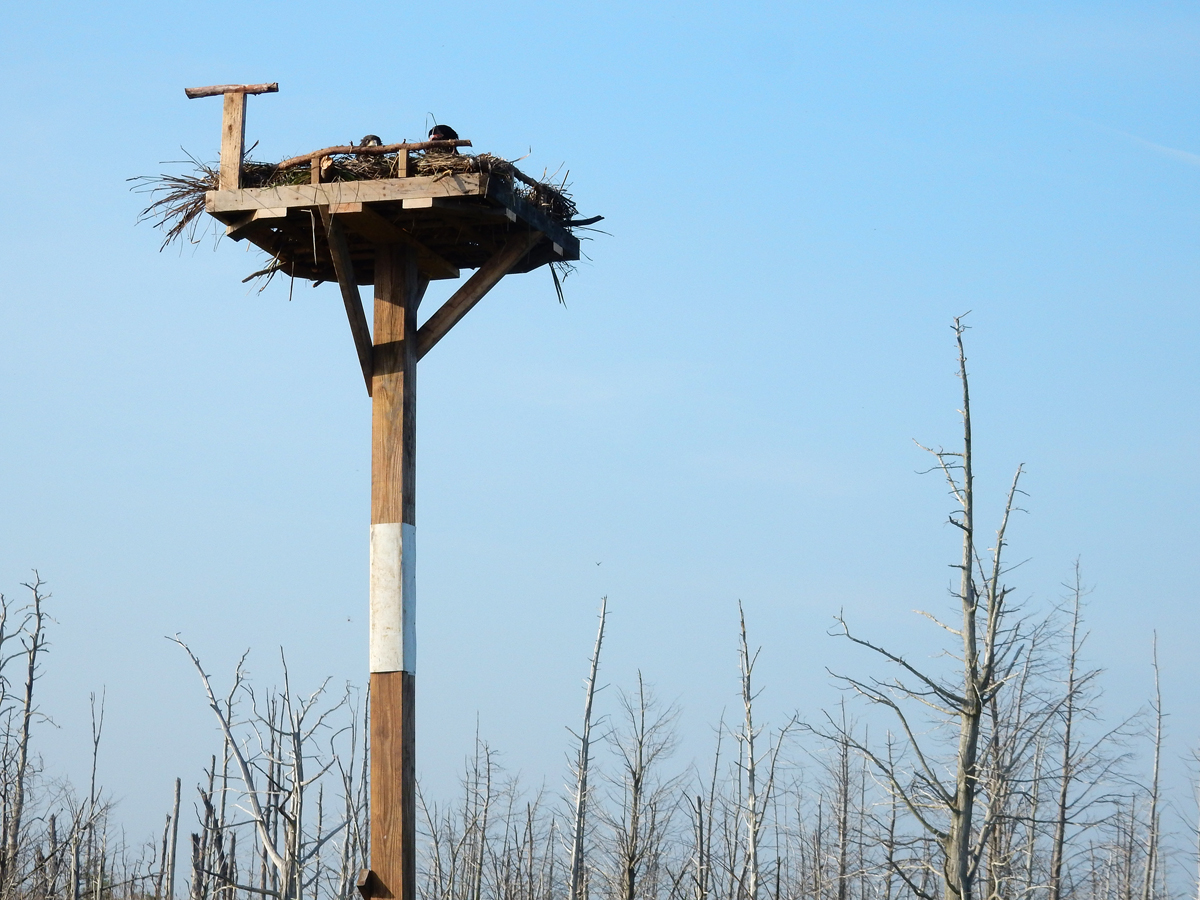
In the meantime, the two eaglets at Tri-State were deemed healthy and ready to return to their parents. The challenge was how to return these two without disturbing their sibling now living in a nest platform built for smaller ospreys. The solution: a second nest platform. This second one was improved by CWF’s Ben Wurst by enlarging the size and adding branches as railings for perching. For a second time, a work crew assembled to use the early morning tide, and we boated the new platform out to within 200 yards of the first. The platform went up, a stick-and-grass nest quickly built, and the eaglets were brought out.


The eaglets, a 9 week old male and a 7.5 week old female, were kept covered until they got settled. When the chicks were uncovered, one of the adults started calling and flew in and perched on a snag within viewing distance. We quickly left and monitored them from a distance. One adult was perched near the platform with one eaglet, and before we left had flown in and perched near the new platform. Kathy went out the next day and reported that all three chicks were fine and using the perches and branches.
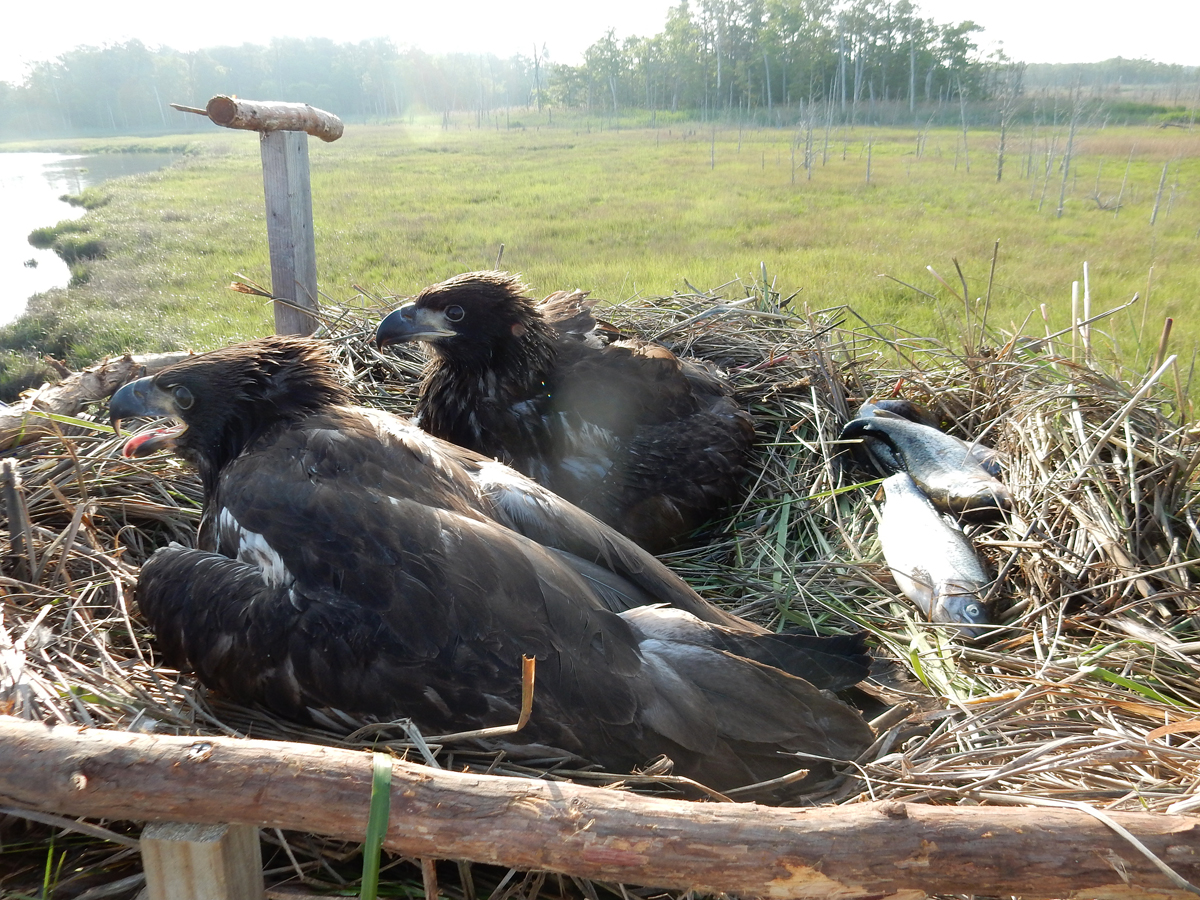
Re-nested chicks in second platform@ K. Clark
Re-nested eaglets in second platform Photo by: K. Clark
eagle chicks in new nest@K. Clark
Eagle nestlings in new nest Photo by: K. Clark

We’d like to thank the following people for their help: Dr. Erica Miller (NJDFW); Todd Vasquez (NJDFW Law Enforcement); Eagle Project volunteers Donna & Heiki Poolake and Matt Tribulski; Steve Eisenhauer (Natural Lands Trust) and local landowners, the Watermans.

Learn more:

Larissa Smith is the Wildlife Biologist/Volunteer Manager for Conserve Wildlife Foundation of New Jersey.
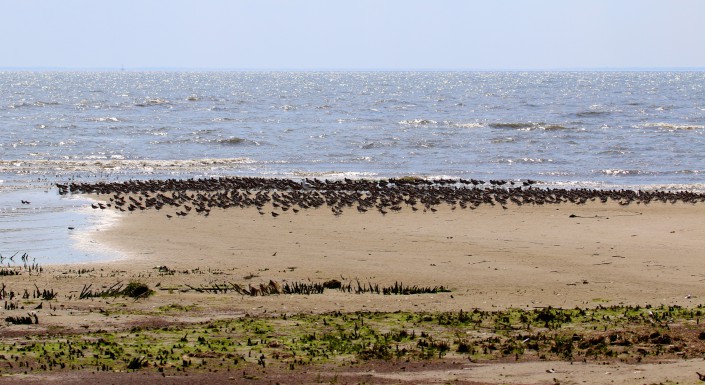
Red Knots “Vote with their Wings”

An Update from the 2015 Delaware Bay Shorebird Project Team

By: Dr. Larry Niles, LJ Niles Associates LLC

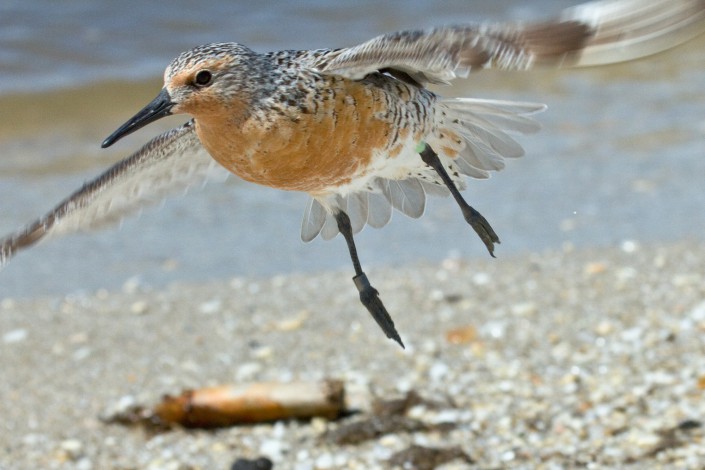
Clive Minton is fond of saying, “the knots vote with their wings” as a way of saying knots concentrate in the best places for knots. Of course it’s true, animals move to the habitats they find most suitable, nature leaves little room for anything but. Sometimes however, animals use a habitat only because they have little choice — in other words, they are making the best of a bad situation. The job of a good wildlife biologist is to understand the difference. Unfortunately, it’s often not obvious.

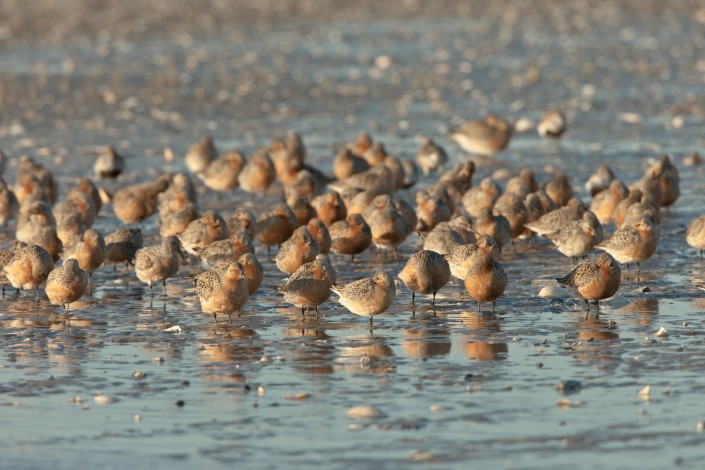
Red Knot Photo by: Jan van der Kam


In all the places studied by this author — Tierra del Fuego, the Arctic, and many places in between — knots distinguish themselves as highly selective habitat specialists. There are many practical reasons for this: usually knots occur in flocks and thus require more space than many other species. More importantly, as they put on weight for their incredibly long-distance flights, they often push the limit of safe wing-loading (body weight to wing area). This makes them vulnerable to predators, both real and imagined. They need more flying space, more space for advance warning of a predator’s presence. They demand special roost habitats as well, especially night roosts that are free from disturbance and have good sight distances. Altogether they need more.

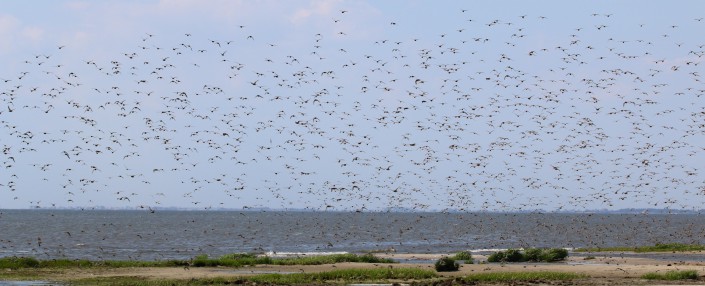
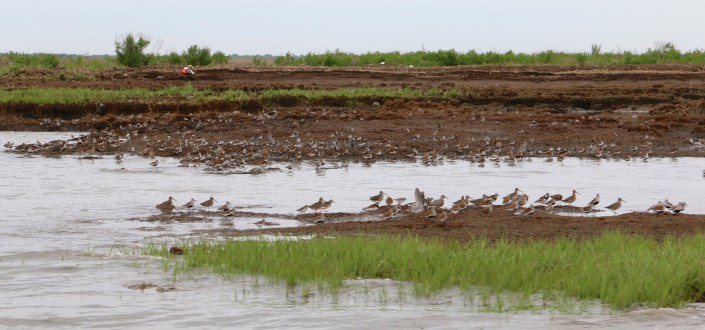
Red knots roost on a sandy spit on Egg Island, one of the largest contigous area of marsh in the mid Atlantic.   Half of the bay's shorebird population roost on Egg Island and than feed on the various beaches around Fortescue.
Red knots roost on a sandy spit on Egg Island, one of the largest contigous area of marsh in the mid Atlantic. Half of the bay’s shorebird population roost on Egg Island and then feed on the various beaches around Fortescue.


In Delaware Bay, they need all this, but above all they need good horseshoe crab egg densities. In the mid 2000’s when shorebird numbers were high, the demand for those eggs exceeded the production from the rapidly diminishing crab population. Knots wandered the bay like homeless refugees. Competition for eggs drew tens of thousands of birds to places unused by knots in healthier times.

Mispillion Harbor
Mispillion Harbor


Mispillion Harbor, Delaware, for example, in some years supported much of the knot population in the Bay because it acts like a funnel-trap for crabs. Crabs wandered into the harbor through long stone jetties finding themselves in crab breeding heaven, sandy shoals in a closed space, free from wind-generated waves that normally leave them upside down. The egg-laying frenzy caused eggs to reach epic densities, thus preparing many shorebirds for their onward journey to the Arctic. Tens of thousands of shorebird packed into Mispillion Harbor in densities so high that one could smell ammonia off-gassing from the amount of bird waste.


But for knots, Mispillion left a lot to be desired. The same jetties that protect the inner harbor from wind-driven waves also provide low-flying raptors the cover to pounce on flocks before they can easily react. Fat birds make easy prey for peregrine falcons, who themselves struggle to keep up with the insatiable hunger of rapidly growing chicks.

Photo by:  Jan van der Kam
Photo by: Jan van der Kam


But even as shorebird numbers fell in response to the reduced crab numbers, egg densities improved in other places. Knots reassessed their choices and voted with their wings.


This is why this year’s high count of red knots on the New Jersey side of the Bay are so important.  Two days ago, Mark Peck, Joe Smith and I flew the entire Bay to count knots, ruddy turnstones and sanderlings. We counted over 24,000 knots, with 21,000 of these using the beaches managed by the many groups that take part in shorebird management on the New Jersey shore of Delaware Bay.


I am not saying this is a competition between two states — I’m saying the numbers serve as assurance that all our hard work is paying off. It’s a confirmation that the beach restoration projects, the Shorebird Stewards project, the reTURN the Favor crab rescue project, and more are bearing fruit. These coordinated strategies are led by Conserve Wildlife Foundation of New Jersey, American Littoral Society, Manomet Center for Conservation Sciences,  New Jersey Audubon Society, the Wetlands Institute, Citizens United to Protect the Maurice River, The Nature Conservancy, as well as Downe Township, Maurice River Township, Middle Township and the Division of Fish and Wildlife, New Jersey Department of Environmental Protection. This work is funded by the US Department of Interior, Fish and Wildlife Service, the National Fish and Wildlife Foundation and the Willliam Penn Foundation. Good work all!

Jim May protect Cook Beach as part of  Conserve Wildlife Foundation of NJ's Shorebird Stewardship Project.  Each year the Division of Fish and Wildlife designates beaches important to shorebirds and protects them from disturbance.  The shorebird stewards alert Conservation Officers if people refuse to comply.  But most of thier job is helping people understand the shorebird migration and the needs of shorebirds and crabs
Jim May protects Cook Beach as part of Conserve Wildlife Foundation of New Jersey’s Shorebird Stewards project. Each year, the Division of Fish and Wildlife designates beaches that are most important to shorebirds and protects them from disturbance. The shorebird stewards alert Conservation Officers if people refuse to comply, but most of their job is helping people understand the shorebird migration and the needs of shorebirds and crabs.

We now near the end of the stopover season at Delaware Bay. Three days of southerly winds are proving irresistible for many birds. Nearly two-thirds have left and the rest will be gone in a few days. Thanks to the people who love birds and the residents of the Bay, they leave well-prepared for the next stage of their challenging and inspiring lives.

knots in the air

Learn more:

Dr. Larry Niles has led efforts to protect red knots and horseshoe crabs for over 30 years.


19,077 Red Knots Counted – The Most Seen in New Jersey in a Decade

An Update on the 2015 Delaware Bay Shorebird Project

By: Dr. Larry Niles, LJ Niles Associates LLC

Despite the threatening forecast of a cold drizzle and strong winds, our team persevered to complete the first bay-wide count of this season. On the New Jersey side of Delaware Bay, we counted 19,077 red knots – the most seen in the state in a decade. With Delaware’s shorebird team recording 2,000 knots along their entire shoreline, the total knot count of 21,077 is not far from the 24,000 seasonal maximum of the last three years.


Red knot aerial counts


This is good news in either of two completely different ways. One explanation is that perhaps most of the knots have already come to the bay. If so, they are in good time to make weight and are getting close to an on-time departure for the Arctic. The alternative is that even more will arrive and we will exceed our counts of the recent past. Good weights promise good Arctic production; more knots offer new hope.


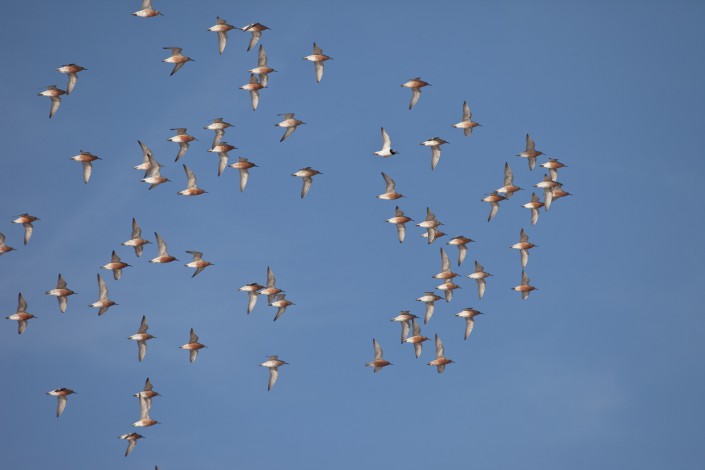
Knots in formation heading off to the Arctic (c) Jan van de  Kam
Knots in formation heading off to the Arctic (c) Jan van de Kam


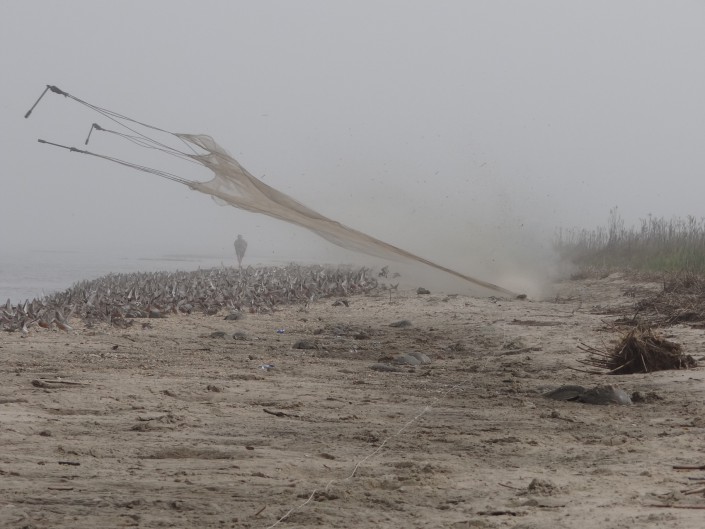
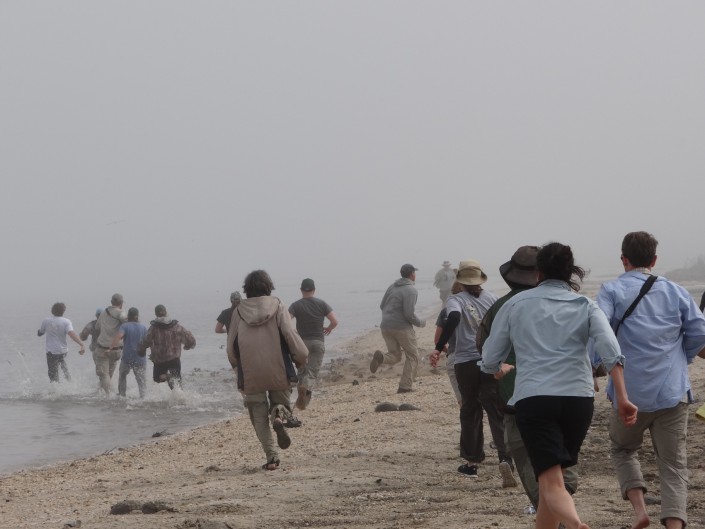
The numbers of ruddy turnstones (12,295) and semipalmated sandpipers (56,788) are also close to the seasonal maxima counts of the recent past, so they too may soon brave the long flight to their Arctic homes. Our cannon-net catches of turnstones, sanderlings and knots point to weights building quickly.


Canon net catch
Canon net catch
Canon net catch
Canon net catch
Canon net catch
Canon net catch

The weather conditions play with our expectations. For the last few days, high westerly winds have generated beach-pounding waves all along the Cape shore. Its north/south orientation is perfectly perpendicular to the strong winds, and the wind-generated waves shut down horseshoe crab spawning. This forces the birds to seek shelter and better egg densities elsewhere.


Right from the start, the disappearance of the shorebirds we had been seeing intrigued us, for a good wildlife mystery gets consumed in this team like a good bottle of beer. Within hours, Mark Peck and Gwen Binsfeld found the knots south of where we would have expected. The knots, turnstones, sanderlings, and semipalmateds were comfortably riding out the wind storm on the vast, sandy intertidal flats in front of Sunray Beach and Villas. We haven’t seen birds gathering in numbers here since the early 2000’s.

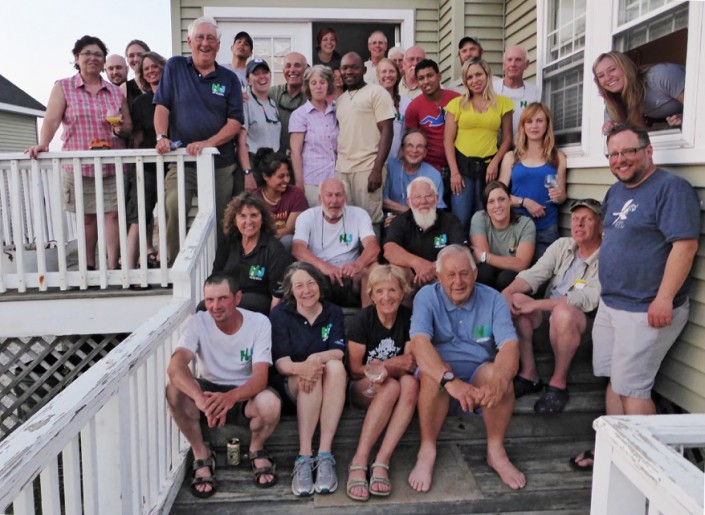
Photo of shorebird team by Kevin Karlson (from bottom right: Mark Fields, Stephanie Feigin, Mark Peck, Clive Minton, Angela Watts, Jeannine Parvin, Christophe Buidin, Alinde Fojtik, Dick Veitch, Barrie Watts, Joanna Burger, Arie Manchen, Steve Gates, Phillipe Sitters, Ana Paula Sousa, Reydson Reis, Chege Wa Karuiki, Susan Taylor, Mandy Dey, Peter Fullagar, Deb Carter, Gwen Binsfeld, Nick Smith, Clara Kienzi, Joe Smith, Larry Niles, Humphrey Sitters, Stefanie Jenkinson, Ally Anderson, David Stallneckt, Gerry Binsfeld, Christian Friis, Chris Davey)

But back to the count. We found shorebirds all along the Bayshore with three areas of concentration. The first was the aforementioned Villas flats. The second was in the Pierces Point to Reeds Beach area, with most in the more southerly portion of the sector. “Not-knots” (mostly semipalmated sandpipers) were seen there in big numbers during the boat survey by Yann Rochpault, Christophe Buidin and Tom Baxter. They saw 12,000 shorebirds along this mostly unpopulated shoreline.


Semi palmated sandpipers along shoreline (c)Jan van de Kam


But the real shorebird wonderland of the bay continues to be Egg Island. Few people see this this vast intertidal marsh, and fewer still appreciate its wonder. Egg Island – actually a peninsula – juts miles out into the bay, nearly to the shipping channel. The marsh cradles one of the most diverse bird faunas of the mid-Atlantic. All along its mucky eastern flank, short-billed dowitchers, dunlin, semipalmated sandpipers, black-bellied plovers, and semipalmated plovers comb the eroded banks for crab eggs drifting in the water column from better crab breeding sites. The crabs themselves attempt to breed in the overhanging edges of the spartina marsh, a lost cause; however, because the muck lacks oxygen and the eggs cannot develop. This is bad for crabs but good for shorebirds because most of the eggs end up on the sod banks, easy prey for shorebirds.


birds on sod


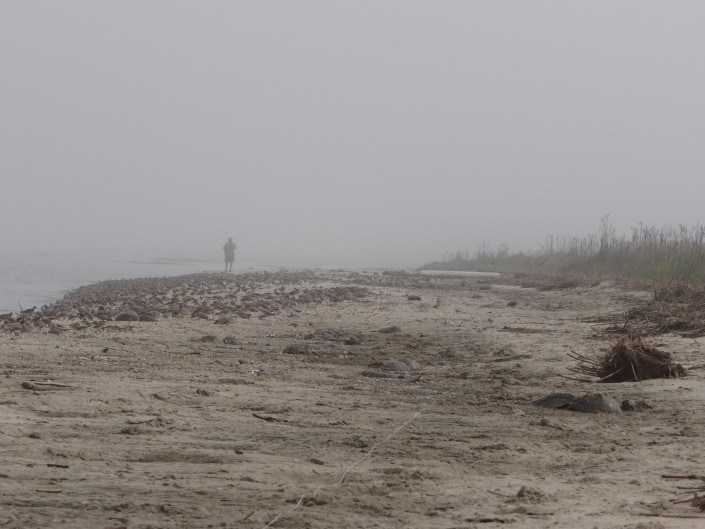
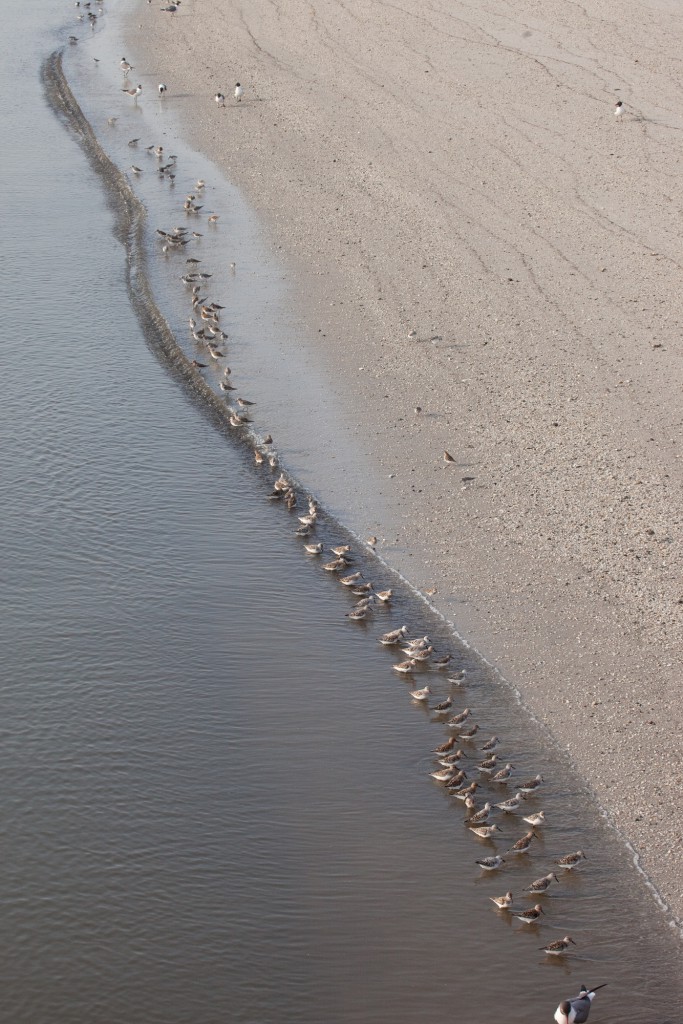
But this week, the wonders of Egg Island overwhelmed us. Our team – Humphrey Sitters, Phillipa Sitters and this blog’s author – wove along the shallow shoreline in our intrepid 17-ft Carolina skiff, counting thousands of shorebirds – 8,226 knots, 4,125 ruddy turnstones, 3,000 sanderlings, and 21,000 semipalmated sandpipers. The flocks swirled around the   peninsula’s sandy western shore, alighting, then flying, and then alighting again. It was a shorebird dance that was a wonderful sight for increasingly tired-out shorebird scientists.


Learn more:

Dr. Larry Niles has led efforts to protect red knots and horseshoe crabs for over 30 years.

The Return of Bald Eagles in New Jersey

Conserve Wildlife Foundation Releases New Story Map: “The Return of Bald Eagles in New Jersey”

By: Brian Henderson, GIS Specialist

Bald Eagle Story Map

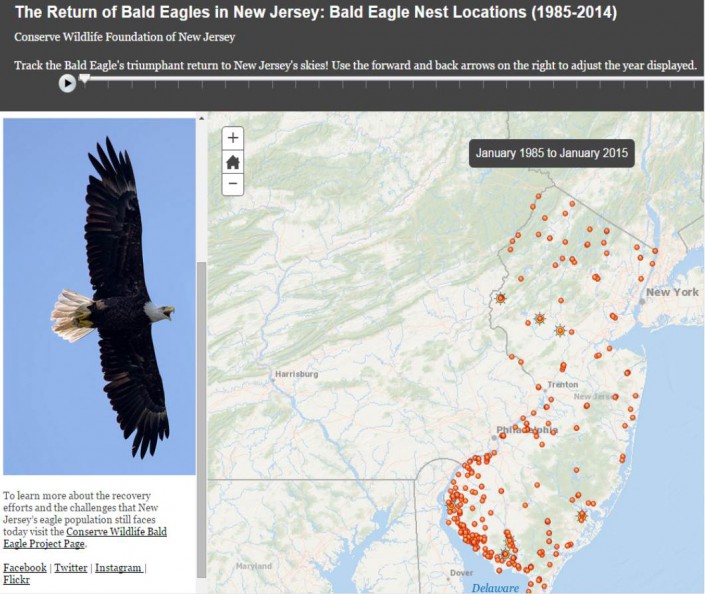
Today, Conserve Wildlife Foundation of New Jersey (CWF) announced the release of “The Return of Bald Eagles in New Jersey” a Story Map that provides a new way to visualize the increasing number of bald eagle pairs nesting in New Jersey over time.


For years, CWF has worked closely with the New Jersey Endangered & Nongame Species Program (ENSP) to track and restore the bald eagle population within the state. It has been a rewarding experience for all involved to witness the return of bald eagles to the garden state, and now the public can appreciate the scope of their return as well.


The recovery of bald eagles nationally and in New Jersey is fairly well known, but some may not realize that as recently as the mid-80’s there was only a single pair of nesting bald eagles in all of New Jersey. The ban of DDT, combined with restoration efforts by ENSP biologists, resulted in population increases to 23 pairs in 2000, 48 pairs by 2005 and 82 pairs in 2010.


In 2014, there were a record 146 active bald eagle pairs nesting in New Jersey. This year, 190 nesting territories are being monitored and currently 88 chicks have been reported at 52 nests; it is still early in the season so we don’t have a count for all nests yet.


“The Return of Bald Eagles in New Jersey” Story Map displays the locations of all the known active bald eagle nests in New Jersey from 1985-2014. Users can choose to view the nests active in a single year or over a longer period of time. By choosing a one year interval and beginning in 1985, it’s possible to watch as nests multiply from a single nest in Bear Swamp to densely populating the Delaware Bay coast and spreading across the southern portion of the state and eventually into almost every county of New Jersey. In 2014, the only counties in New Jersey without an active bald eagle nest were Essex and Hudson.


The Story Map also highlights “featured” nests, or nests of special significance, including the Duke Farms nest which has been featured on a webcam since 2005 and the Millville nest where a juvenile eagle was fitted with a GPS tracking device in 2014. These featured nests include more information, pictures and links to pages that explore related projects in greater depth.


As the bald eagle population has reached record numbers in New Jersey, the raptors have expanded into non-traditional parts of the state, providing more and more people with a chance to glimpse this iconic species. This map highlights the ongoing success of conservation efforts and illustrates that whether you realize it or not, you’re never very far from a bald eagle nest in New Jersey!


Learn more:

Brian Henderson is the GIS Specialist for Conserve Wildlife Foundation of New Jersey.


Dedicated, Passionate Hunterdon County Computer Teacher Wins Statewide Wildlife Education Contest

Contest winner to help band EagleCam chicks at Duke Farms next month

By: Lindsay McNamara, Communications Coordinator

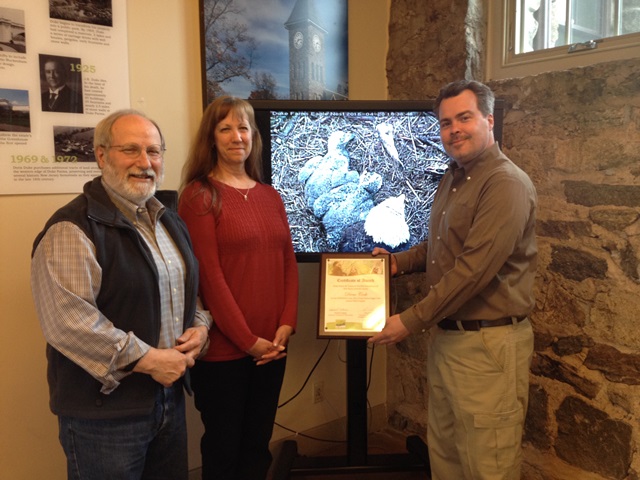
From Left to Right: Duke Farms Executive Director Michael Catania, Contest Winner Diane Cook, CWF Executive Director David Wheeler

Copper Hill School computer teacher Diane Cook was recognized by Duke Farms and Conserve Wildlife Foundation for winning their EagleCam lesson plan contest earlier this week. Cook will join wildlife biologists to help band the new Duke Farms EagleCam chicks next month.


The EagleCam Lesson Plan contest, jointly organized by Duke Farms and Conserve Wildlife Foundation, called on educators to submit lesson plans incorporating the Duke Farms EagleCam into their classrooms. Installed in 2008, the Duke Farms EagleCam, a web cam on a tree adjacent to a Bald Eagle nest, has provided a streaming look into the daily lives of the eagle family for over 10 million viewers.


Diane Cook submitted three creative lesson plans for the contest and is working with the Duke Farms and Conserve Wildlife Foundation EagleCam team to expand the camera’s potential as an educational vehicle.


“Duke Farms is delighted to support dedicated teachers that bring nature to life in their classrooms. Diane Cook’s winning lesson plan featured innovative strategies to teach digital citizenship through student observations of the nesting eagles,” explained Michael Catania, Duke Farms Executive Director. “Her participation in this year’s banding of the Duke eagle chicks will be a highlight for our staff.”


The EagleCam has been a staple of Diane Cook’s classrooms since the webcam was installed in 2008. Cook began blogging about the eagles in 2011 and allows students in grades kindergarten through four to share their thoughts, observations or questions on what they see happening in her computer literacy class. Cook also live streams the EagleCam in her classroom for her students to watch. Her first graders use the webcam as a part of an internet safety unit and her third and fourth graders use the EagleCam to learn how to write blogs themselves.


“Watching the EagleCam gives us all, adults and students, the opportunity to experience nature happening right before our eyes. It opens the way for meaningful discussions and great questions, both at school and at home as families watch together,” said Computer Literacy Teacher and Contest Winner Diane Cook. “This year, I am using the EagleCam to teach how to write a thoughtful and meaningful comments in social media forums. Fourth graders are learning how to blog. They are excited to write about a topic that excites them.”


“As a dedicated and inspiring teacher, Diane Cook is helping us realize the incredible potential for connecting our kids with the natural world around us,” stated David Wheeler, Conserve Wildlife Foundation Executive Director. “The amazing comeback of Bald Eagles across New Jersey mirrors the recovery that our state has made from the devastating legacies of unchecked pollution. Teachers like Diane Cook work so hard to make sure the next generation of leaders understands first-hand how much all of us – humans and Bald Eagles alike – depend on a clean and healthy environment.”


Originally from Branchburg, New Jersey, Cook now resides in Ringoes. She has been an educator at Cooper Hill School in the Flemington Raritan School District for 19 years, teaching first grade, second grade and now computer literacy. Cook gets outside as often as she can, and she enjoys gardening, birding or looking for other wildlife, hiking, walking, fishing, and learning her newest craft of photography.


“I’m hoping to instill in all who learn about the EagleCam in my class a sense of wonder, appreciation for our natural world, and a desire to take care of our world,” explained Cook. “Environmental science is one of my passions. I want to pass along a small part of that to others.”


Lindsay McNamara is the Communications Coordinator for Conserve Wildlife Foundation of New Jersey.

Calling All New Jersey High School Students – Win a Scholarship!

Enter Conserve Wildlife Foundation’s New Species on the Edge 2.0 Contest by May 22, 2015

By: Lindsay McNamara, Communications Coordinator


Attention New Jersey High School Students!


Love experimenting with new multimedia and technology programs? Want to express your concern for New Jersey’s endangered species and help show the public why wildlife protection is important in the Garden State? Make sure to enter our Species on the Edge 2.0 Multimedia Contest!


Open to all New Jersey high school students, this contest invites students to submit a video, app, podcast, digital graphic design, webpage, or other multimedia component showing why wildlife protection is important in New Jersey. Watch the new Species on the Edge 2.0 video, created by 2015 Video Intern Tyler Grimm, to learn more about this great opportunity.


Thanks to PSEG, our generous sponsor, first place, second place and third place entries will be awarded scholarships! For more information, visit Conserve Wildlife Foundation’s website and watch our new Species on the Edge 2.0 video. All entries due by Friday, May 22, 2015.


Lindsay McNamara is the Communications Coordinator for Conserve Wildlife Foundation of New Jersey.


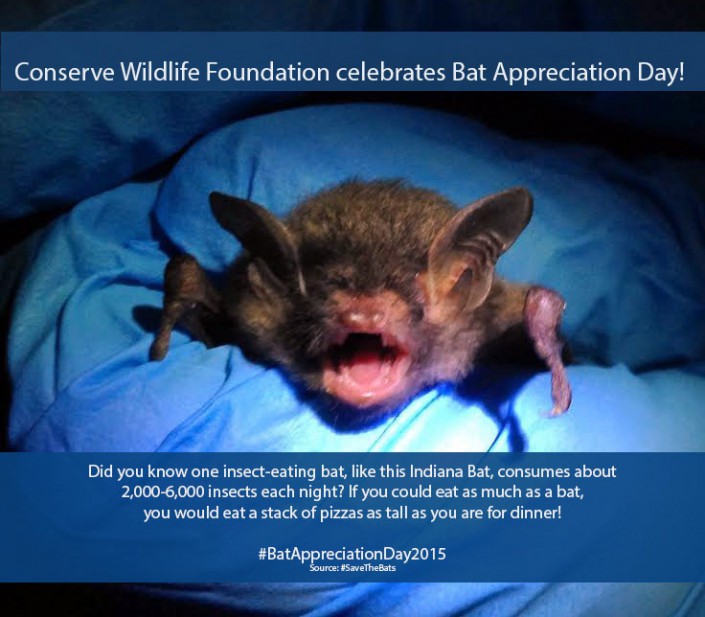
Conserve Wildlife Foundation Celebrates Bat Appreciation Day!

Happy Bat Appreciation Day!

By: Stephanie Feigin, Wildlife Ecologist

Today, Friday, April 17 is Bat Appreciation Day 2015. Join Conserve Wildlife Foundation in celebrating the beloved bats of New Jersey today and every day.


Bats are one of the most beneficial animals to humans. They provide important economic and ecological benefits from eating the bothersome pests like mosquitoes, to devouring the insects that also destroy our agricultural and forest land.


Bats save us millions of dollars in damage each year and play essential roles in keeping populations of night-flying insects in check. Just one bat can eat up to 3,000 insects in a short period of time, and large colonies catch tons of insects nightly.


Unfortunately, these amazing animals continue to face many threats including habitat loss and the devastating disease, White-nose Syndrome. White-nose syndrome, alone, can kill 90-100% of bats in affected caves.


Conserve Wildlife Foundation works hard to protect New Jersey’s bats through on-going research, education and outreach. We provide homes for evicted bats with our Bats in Buildings project as well as collect and record valuable data about the state’s bat population with our Summer Bat Count project, and our acoustic bat surveys.


New in 2015, Conserve Wildlife Foundation will conduct surveys to learn more about the summer distribution and habitat of Northern long-Eared Bats, a species listed under the Endangered Species Act this month.


Also this month, the Bat Cam bats have returned for the spring and summer! We are excited to follow this colony throughout the season and highlight special moments of their lives.


Today, on Bat Appreciation Day, consider supporting Conserve Wildlife Foundation’s Bat Project. Help us help New Jersey’s bats not only survive, but thrive in the Garden State.

Stephanie Feigin is the Wildlife Ecologist for Conserve Wildlife Foundation of New Jersey.

Seal Rescue in Delaware Bay

Harp Seal Stranded on Thompson’s Beach

By: Stephanie Feigin, Wildlife Ecologist

Conserve Wildlife Foundation’s Wildlife Ecologist Stephanie Feigin and Dr. Larry Niles of LJ Niles Associates LLC found a stranded Harp Seal on Thompson’s Beach last week while out monitoring CWF’s Delaware Bay restoration work.


Larry called the Marine Mammal Stranding Center to come out and assess the situation. When the stranding team arrived, they were able to see that the seal had been eating sand, making him/her sick. Sometimes, Harp Seals confuse sand with ice, as their primary habitat is in Arctic waters. In an attempt to re-hydrate themselves when they make their way down to our beaches, they will lick the sand on our beaches, thinking it is the ice they are used to, making them sick.


The Marine Mammal Stranding Center took the seal back with them to nurse him/her back to health and they are optimistic that he/she will make a full recovery.


If you find a stranded seal, always remember to call the Marine Mammal Stranding Center and give professionals the chance to rescue the animal.


Learn more:


Stephanie Feigin is the Wildlife Ecologist for Conserve Wildlife Foundation of New Jersey.

New Jersey Banded Eagle “Jersey Girl” Makes the News

Update on New Jersey eagle nesting in Pennsylvania

By: Larissa Smith, Wildlife Biologist/Volunteer Manager

B/64 "Jersey Girl" 3/27/15@L. Oughton
B/64 “Jersey Girl” 3/27/15@L. Oughton

Back in June of 2014, I wrote a blog when Conserve Wildlife Foundation was contacted by Linda Oughton regarding a New Jersey banded bird nesting in Montgomery County, Pennsylvania. The female referred to as “Jersey Girl” recently made the news in The Reporter.


One correction, the article states that B/64 is from Northern New Jersey, she was actually banded in southern New Jersey, Cumberland County in 2004.


The Pennsylvania pair started incubating on February 14th, 2015 and hatching occurred the weekend of March 21st, 2015. It has been confirmed that the pair has two chicks this season.


Learn more:


Larissa Smith is the Wildlife Biologist/Volunteer Manager for Conserve Wildlife Foundation of New Jersey.
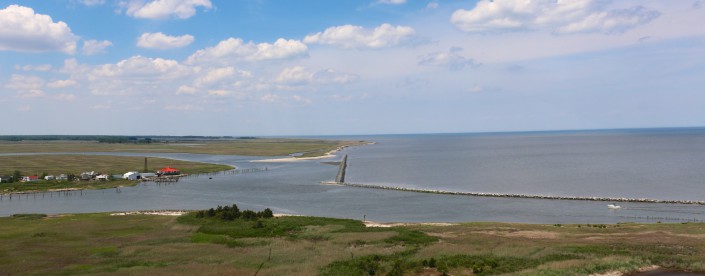
Over 130 Volunteers “Shell-a-Brated” Delaware Bay

Oyster Reef Build on South Reeds Beach a Huge Success

By: Lindsay McNamara, Communications Coordinator

Photo by: Lindsay McNamara

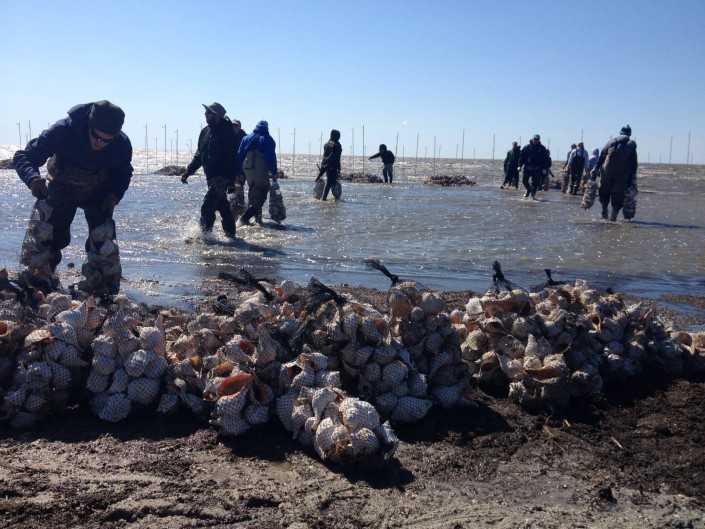
Over 130 volunteers and veterans worked alongside Conserve Wildlife Foundation of New Jersey and American Littoral Society to establish a near-shore whelk shell bar at South Reeds Beach in Cape May Court House on the Delaware Bayshore on Saturday, April 4, 2015. The shell bar was built to prevent sand loss from wind-driven waves. During the “Shell-a-Bration,” an approximately 200-foot oyster reef was constructed offshore to test whether the reef bars help reduce beach erosion and create calmer water for spawning horseshoe crabs.


“We are rebuilding the habitats of Delaware Bay to strengthen its ecology, its communities and its economy. This reef approach will be a key technique which we will try to expand around the Bayshore,” stated Tim Dillingham, American Littoral Society Executive Director.


The South Reeds Beach Oyster Reef is one of the many projects that American Littoral Society and Conserve Wildlife Foundation are working on to restore the ecology and economy of the Delaware Bayshore, thanks to generous funding by the National Fish and Wildlife Foundation.


“The project focuses on creating resiliency in Delaware Bay beaches while improving their usefulness to horseshoe crabs. We have a great challenge: how do we create a reef to protect against damaging Bay storms without stopping horseshoe crabs from getting ashore to breed,” said Dr. Larry Niles, a biologist who leads the beach restoration efforts for Conserve Wildlife Foundation of New Jersey and American Littoral Society, and has studied Red Knots for three decades. “This project is an experiment to help us do both,” he added.


Shorebirds, like the federally listed Red Knot, depend on an uninterrupted supply of horseshoe crab eggs when they stopover in Delaware Bay during their migration. In recent years, countless horseshoe crab eggs have been lost because of the devastating storms that swept away the beaches they depend on.


“The time-honored migration of Red Knots to reach the eggs of these ancient horseshoe crabs is a wildlife spectacle of global significance right here in Delaware Bay,” explained David Wheeler, Conserve Wildlife Foundation of New Jersey Executive Director. “Red Knots come to New Jersey’s Delaware Bay from as far away as the southernmost tip of South America to feed on horseshoe crab eggs. It is vital that we promote coastal resiliency projects like this one to support the largest population of horseshoe crabs in the world, and the human communities of the Delaware Bayshore alike.”


The new oyster reef will attenuate waves but still allow for horseshoe crab breeding. In existing areas where crabs can breed without interruption, like creek mouths protected by sand shoals or rock jetties, egg densities can exceed ten times the egg densities on unprotected beaches.


The projects are being funded by National Fish and Wildlife Foundation (NFWF) through their Hurricane Sandy Coastal Resiliency Grants Program, and are being developed in partnership with U.S. Fish and Wildlife Service and New Jersey Division of Fish and Wildlife.


“The Delaware Bayshore is a perfect location to demonstrate how communities benefit from their connection to a healthy natural resource base – for fishing, boating, wildlife watching and tourism,” said David O’Neill, National Fish and Wildlife Foundation Vice President of Conservation Programs. “The economies of Bayshore towns have historically been intertwined with the bay. And with the NFWF Hurricane Sandy grant, American Littoral Society and Conserve Wildlife Foundation of New Jersey are already restoring shorelines to make Bayshore natural resources and communities more resilient for the future.”


Event guests enjoyed a barbecue and oysters, and family-friendly activities like a “Green Eggs in the Sand” Easter Egg Hunt. In addition, local leaders and biologists spoke to the attendees about the oyster reef project at a mid-day “Whelk-come.”


Learn more:

Lindsay McNamara is the Communications Coordinator for Conserve Wildlife Foundation of New Jersey.