Photography Show to Celebrate Long Beach Island’s Wildlife

Hiding in Plain Sight” to Take Place on Friday, August 14 at Ann Coen Gallery in Surf City

By: Lindsay McNamara, Communications Manager
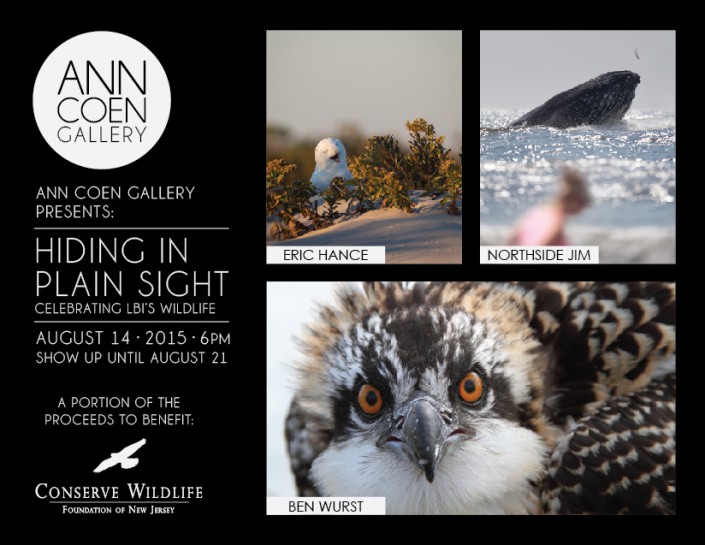
Ann Coen Conserve Wildlife Postcard

On Friday, August 14 at 6 PM, the Ann Coen Gallery will host “’Hiding in Plain Sight:’ Celebrating LBI’s Wildlife,” a photography show featuring three talented local outdoor photographers.


This – free and open to the public – event will feature a clam bar, refreshments, acoustic music, and the work of three local photographers, Eric Hance, Northside Jim and Ben Wurst, including handmade frames.


Despite their different backgrounds, all three shutterbugs are known to brave the elements all four seasons to bring rarely seen perspectives of our coastal species.


Eric Hance is a professionally trained photographer with beautiful fine art wildlife photographs. Northside Jim is an enthusiast with some outrageous and whimsical pictures showing the lives of local wildlife that live on the Island. Ben Wurst is the osprey expert who takes care of LBI’s osprey and habitat and captures stunning images of both in their most intimate moments.


“Hiding in Plain Sight” is a free event, and proceeds from the sale of photographs will benefit the work of Conserve Wildlife Foundation, a private, statewide nonprofit dedicated to protecting New Jersey’s endangered and threatened species. Photos of Humpback Whales, Bald Eagles, Osprey, Piping Plover, Terrapin, Black Skimmers, and other amazing endangered species that can be found on the Island will be on display at the Ann Coen Gallery.


“I am really excited to host this show and these three photographers. The body of work between them should prove to be very eye-opening to locals and vacationers,” explained Gallery Owner Ann Coen. “I don’t think too many people realize the wildlife we have right in our own backyard. When I approached each photographer for the show, they were all in agreement right from the start that a portion of their sales would go right back to Conserve Wildlife Foundation, which really motivated me and showed the importance each photographer places on the conservation of our wildlife here in New Jersey.”


Eric Hance is a photographer for Ann Coen Photography. His goal is to captivate viewers in the simplest form; to capture a specific scene in the strongest way.


Northside Jim is a self-proclaimed “beach bum with a camera,” from North Beach. He uses a camera to experience, to learn about, and to share stories about LBI’s creatures on his popular blog, Readings From The Northside.


Ben Wurst, photographer and Habitat Program Manager for Conserve Wildlife Foundation, is responsible for managing and protecting ospreys as part of the New Jersey Osprey Project. In addition to photography, Wurst is known for his woodworking with reclaimed materials with his small business, reclaimed LLC.


“Being able to utilize my skills to help raise critical funding and awareness for rare wildlife is a dream come true for me,” exclaimed Conserve Wildlife Foundation’s Ben Wurst. “Working with these species in New Jersey is what spawned my interests in both hobbies. Now they have progressed into lifelong passions of mine. I consider myself lucky to be on the roster for this show!”


Doors open at the Ann Coen Gallery, 1418 Long Beach Blvd. in Surf City, New Jersey, at 6 PM on Friday, August 14 for Hiding in Plain Sight: Celebrating LBI’s Wildlife. The show will remain on display until Friday, August 21.


Learn more:


Lindsay McNamara is the Communications Manager for Conserve Wildlife Foundation of New Jersey.
 

Black Rails: Secretive Denizens of our Coastal Marshes

Searching for a Small, Dark Bird at Night, in the Dark

By: Alfred Breed, Field Technician

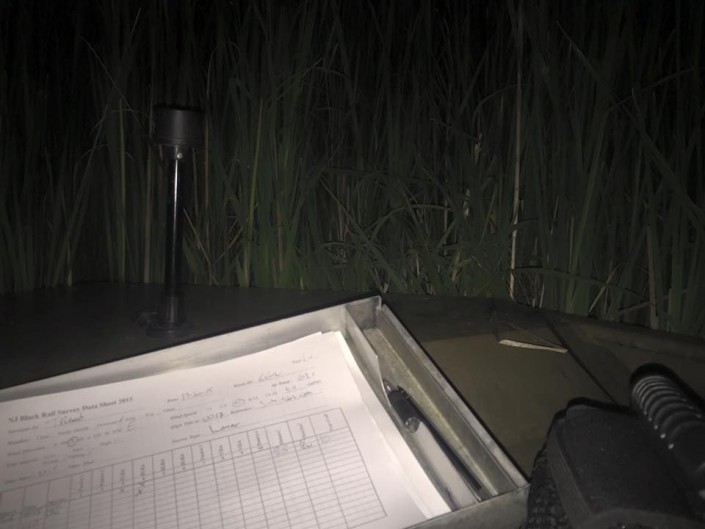
What you can see at night while listening for Black Rail. Shown are the datasheet and speaker that plays the various calls. Photo courtesy of Tom Reed.
The nighttime view while listening for black rails in the marsh. Shown are the datasheet and speaker that plays the various calls. Photo courtesy of Tom Reed.

Shhhhhhhh. Be very, very quiet. Sit perfectly still. Listen. When you are searching at night in the dark for the black rail, the rarest and MOST secretive of the secretive marsh birds, your best sense to use for detection is hearing.


The black rail is a small, darkly-colored marsh bird whose numbers are believed to have declined precipitously in the past few decades, primarily due to habitat loss (when their preferred high marsh habitat was filled and developed), as well as sea-level rise and the loss of salt hay farms (in New Jersey). The breeding population is likely extirpated from both Connecticut and New York, while its continued stability here in New Jersey is in question. Its conservation status varies by state, with full protection as an endangered species in New Jersey and some other states, and only the cursory protection of the Migratory Bird Treaty Act of 1918 in other, mostly southern states. Even in states where they are not listed as threatened or endangered, black rails are rarely seen because of low abundance, their secretive habits, and the inaccessibility of their preferred habitat.


Because of both its rarity and extremely secretive nature, the detailed habits of black rails are little known. Furthermore, historic and current population numbers critical to establishing its conservation status are not well understood. It is thought that they mostly feed during daylight hours, quietly traversing the marsh mud in search of seeds and invertebrate prey, thus remaining largely undetected beneath the dense grass mat. But during the breeding season they call, quite loudly, to each other at night.


This habit, nocturnal vocalization, is what we hope to use to determine the continued presence of black rail here in our coastal marshes, and eventually their abundance and other critical biological information. As part of a cooperative effort by the Conserve Wildlife Foundation of New Jersey, the New Jersey Division of Fish and Wildlife, and New Jersey Audubon Society, staff and volunteers are conducting surveys at points throughout the black rail’s potential breeding range in New Jersey and other states. One purpose of such research is to collect and analyze data in order to establish sound, effective, science-based species management plans coordinated across the species’ entire range.

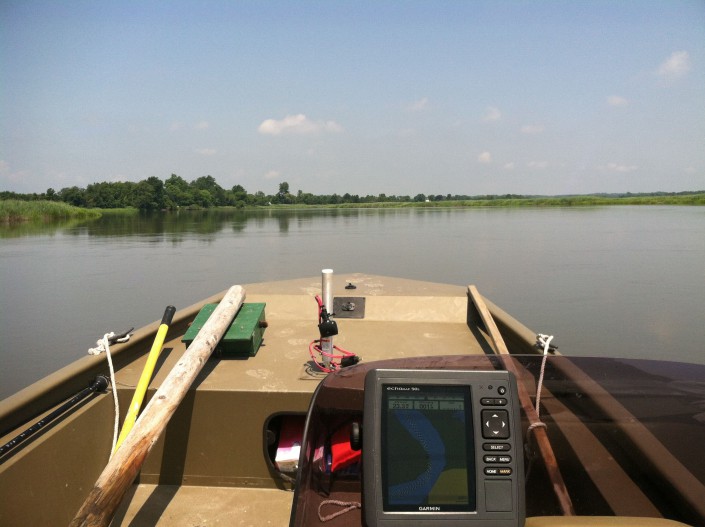
Underway during daylight hours to check-ride new field boat, and deploy an acoustic recording unit that also “listens” for Black Rail.
Underway during daylight hours to check-ride deploy an acoustic recording unit that also “listens” for black rails.

The current phase of the black rail project requires me to transport by boat four expert bird-by-ear surveyors, capable of identifying birds common to the coastal marsh habitat from their song alone, at night. I bring each “listener” to ten randomly selected points within suitable high marsh habitat at the proper tide and during the designated survey period between 10:30 PM and 3 AM. Each 10-point survey route is repeated three times across a six-week period from May-July. Surveyors record all of the identifiable species they hear as well as the direction and estimated distance of the calls from each survey point.


The survey consists of two minutes of passive listening followed by several recorded black rail vocalizations broadcast from a very loud speaker that are interspersed with short silences in order to listen for any response. The black rail calls are followed by calls from Virginia and clapper rails, as they will also sometimes elicit a response from our quarry. Surveys are conducted with winds below 12 mph and in little to no precipitation in order for the sound to carry to both human and bird ears. Absolute silence is critical in order not to miss any of the more distant calls that pierce the darkness. The scrape of a boot on the deck, the crinkle of a snack wrapper, or a sudden sneeze has the potential to drown out the sound of a distant call. Discussions about species, direction and distance are held in a quiet whisper.


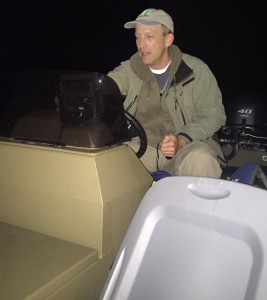
CWF field technician Alfred Breed, the intrepid nocturnal boat pilot for the Black Rail survey project.  Photo courtesy of Tom Reed.
CWF field technician Alfred Breed, the intrepid nocturnal boat pilot for the Black Rail survey project. Photo courtesy of Tom Reed.

This season, our four survey routes encompassed appropriate habitat areas of several of the tributaries to the Great Egg Harbor Bay watershed. In our quiet and isolated marsh stream we are joined only by the birds we hear, many fireflies and less benign insects, spring peepers, croaking bullfrogs, and the occasional splash of a startled muskrat. Periodic traffic noise from the roads that encircle Great Egg Harbor Bay are a reminder that it is difficult to entirely escape civilization here in New Jersey. But listening to the marsh at night, while boating up a narrow isolated tributary that snakes its way toward the transition from marsh to upland, definitely allows for a sense of quiet communion with nature. Because of its extensive lighting, the BL England power plant in Beesley’s Point is truly a bejeweled wonder to behold at night from almost anywhere in the watershed, and the light pollution that emanates from the Atlantic City sky line can be actually quite helpful for nighttime navigation.


As far as this season is concerned, all of the hoped for data was successfully collected from each point during the survey periods, with only one survey transect interrupted by an un-forecast pop-up lightning storm that required a quick race back to the safety of the boat ramp. With the surveys now completed, we look forward to sharing the results when they are available for release.


This is the first of hopefully many seasons of data collection of this type. As each season’s final results are collected and analyzed, we hope to focus our survey efforts from geographically random points within appropriate habitat, to the areas of repeated detection, and to eventually be able to achieve our long term goal: namely a science-based understanding of the black rail population in our state that informs a viable and effective species management plan.


As a result of my participation in this study with four expert surveyors, for three survey nights each, at 10 points per night, and 10 minutes per point, I have had the privilege of intently listening for over 20 solid hours to our nighttime native secretive marsh bird songs in the presence of experts who can teach me what it is we’ve heard. Although I was only able to master a few of the calls with which I was not already familiar, it has truly been a pleasure and a valuable learning experience accompanying these experts into the field. I can’t wait to do it again next season!


The Conserve Wildlife Foundation and New Jersey Division of Fish and Wildlife wish to thank Alf for the excellent logistical, navigation, and boat handling skills he brought to this project. Just as we could not conduct the survey without our observer’s expert ears, we would be equally lost without Alf’s expertise on the water. Thank you, Alf!

Bill Proposed to Encourage Homeowners to Create and Maintain Wildlife-Friendly Yards

Native Species Habitat Bill Passes in the Assembly

By: McKenzie Cloutier, Special Events and Fundraising Intern

Warbler
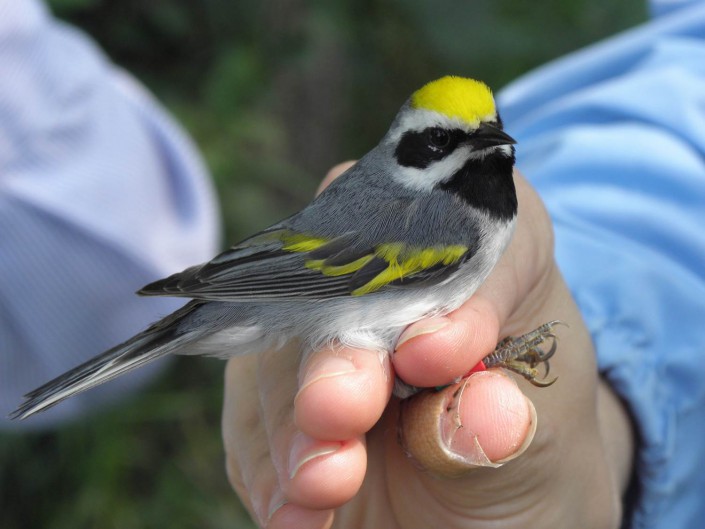
Golden-winged warbler. Photograph by Evan Madlinger

Of great interest to New Jersey homeowners, the Garden State’s General Assembly recently passed a native species habitat bill. This bill, pending further action in the Senate, encourages homeowners to create and maintain more wildlife-friendly yards. In hopes of creating more livable habitats for New Jersey’s wildlife, this bill includes a certificate program that promotes the growth of native plant species in landowners’ yards.


Under the provisions of this bill, landowners would be encouraged to grow and preserve native plant species that provide natural habitats for New Jersey’s other important species. In addition, this bill would also defend certified landowners against any municipal ordinances. For example, the bill would defend a landowner from an ordinance that calls for the removal of certain native plants or “weeds.”
The native species habitat bill not only benefits New Jersey’s wildlife, but homeowners as well, by reducing maintenance and chemical treatment costs. Under this program, yards will require less mowing and maintenance, and pesticide use is discouraged. With such changes, landowners could experience significant reductions in their usual yard maintenance costs, while helping to conserve local wildlife.


The native species habitat bill encourages New Jersey residents to become active participants in the preservation of wildlife. At the Conserve Wildlife Foundation, we encourage landowners to create wildlife-friendly backyards, and we are involved in helping private landowners to do so. Our wildlife biologist Kelly Triece works in partnership with United States Department of Agriculture’s Natural Resource Conservation Service (USDA-NRCS) to assist private landowners in managing existing cropland, forestland, and pastureland to best meet wildlife habitat needs or in establishing new wildlife habitat areas. Depending on the goal of the landowner, these programs can either help create or preserve pollinator, woodland, wetland and grassland habitats for many different wildlife species.

 
In particular, CWF biologists work with forest landowners to enhance young forest habitats on private lands. Young forest habitats are imperative for many birds, especially the Golden-winged warbler, a species of particular concern in New Jersey. The open canopy of a young forest also provides food such as berries, insects and small mammals to newly fledged birds, wild turkey, ruffed grouse, reptiles, black bears, bobcats, and butterflies.


Since 2008, CWF, NRCS and other partners have collaborated with landowners to create or restore over 225 acres of Golden-winged warbler habitat in New Jersey!

 
Want to get involved and help conserve wildlife on your property? Here are ten tips on how to create a wildlife-friendly habitat in your own backyard:

  • Allow native plants to grow.
  • Create a brush pile for ground nesting birds or small mammals such as chipmunks or mice.
  • Install a pond to benefit birds, frogs, salamanders, and aquatic vegetation.
  • Create a meadow for wildlife by choosing not to mow a section of your yard.
  • Plants trees and shrubs to provide food and cover for wildlife.
  • Buy a bird bath.
  • Remove invasive or non-native plants.
  • Refrain from using pesticides. Try composting!
  • Hang bird feeders.
  • Obtain a bird house.


Visit our website for more tips on how to create a wildlife-friendly backyard.


McKenzie Cloutier is the Special Events and Fundraising Intern for Conserve Wildlife Foundation of New Jersey.
Video Showcases EagleCam Lesson Plan Contest Winner Diane Cook

New Video Highlights Diane Cook’s Eagle Banding Experience and Classroom

By: Kathleen Wadiak, Wildlife Conservation Intern


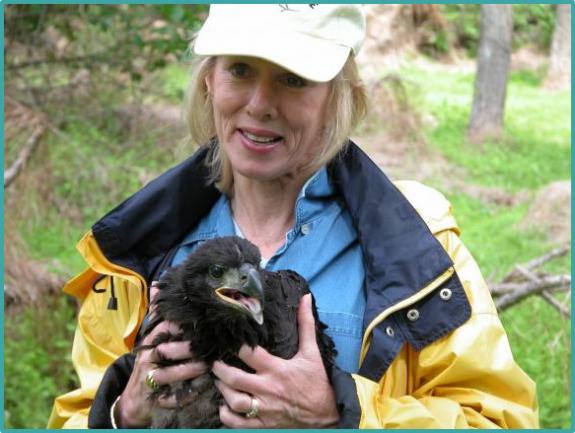
This year, Conserve Wildlife Foundation of New Jersey and Duke Farms worked together to organize a contest in which educators could submit lesson plans based on the Duke Farms EagleCam, a webcam providing a live stream of a bald eagle nest. The winner, computer literacy teacher Diane Cook, had the opportunity to assist biologists in banding the eagle chicks from a nest in Hunterdon County. The new video showcasing Diane gives an up close and personal view into her story and her experience!


Diane has been incorporating the EagleCam into her lessons since the cam first went online in 2008, helping to inspire a respect for the animals and environment in her students from kindergarten to fourth grade. Diane also teaches her students about internet safety, web forums, and writing.


The Duke Farms EagleCam allows educators to connect their lessons to important environmental issues in a way that is interesting to their students. Teachers like Diane Cook are making a difference by encouraging children to care about their impact on local ecosystems and wildlife.


Learn more:


Kathleen Wadiak is a Wildlife Conservation Intern with the Conserve Wildlife Foundation of New Jersey.
Researching Beach Nesting Birds at Edwin B. Forsythe National Wildlife Refuge

Conserve Wildlife Foundation Partners with National Wildlife Refuge to Collect Data on Beach Nesting Birds

Posted by: Lindsay McNamara, Communications Manager


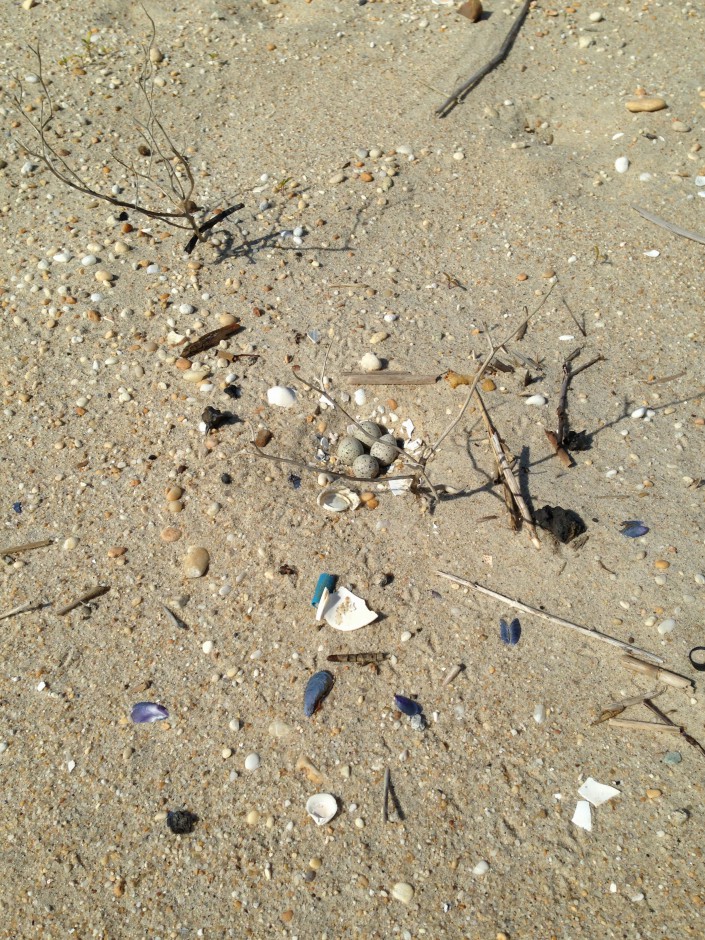
Piping Plover Nest
Piping Plover Nest

Did you know barrier island beach makes up approximately 2% of the Edwin B. Forsythe National Wildlife Refuge? This area is the most productive for beach nesting birds. The federally threatened piping plover and other species such as least tern, black skimmer, and a species of special concern, the American oystercatcher, nest on Holgate Beach. The refuge closes the Holgate unit from April 1st to September 1st every year to provide undisturbed nesting habitat for these important species.


Not only is it important to protect nesting habitat for the birds, but it is also important to provide education opportunities to the public. Each summer, the refuge relies on volunteers during the summer months to talk to the public about the beach closure and bird management, and answer any general questions about Forsythe Refuge.


This year, Conserve Wildlife Foundation of New Jersey partnered with the refuge to assist in the collection of nesting data. “In the past, refuge staff has done all the beach nesting bird monitoring,” said Refuge Manager Virginia Rettig. “This year we are very excited to be working with our partners to monitor the population status of these birds. The work they are doing, combined with the data they collect, will improve our understanding of beach nesting birds on Forsythe Refuge.”


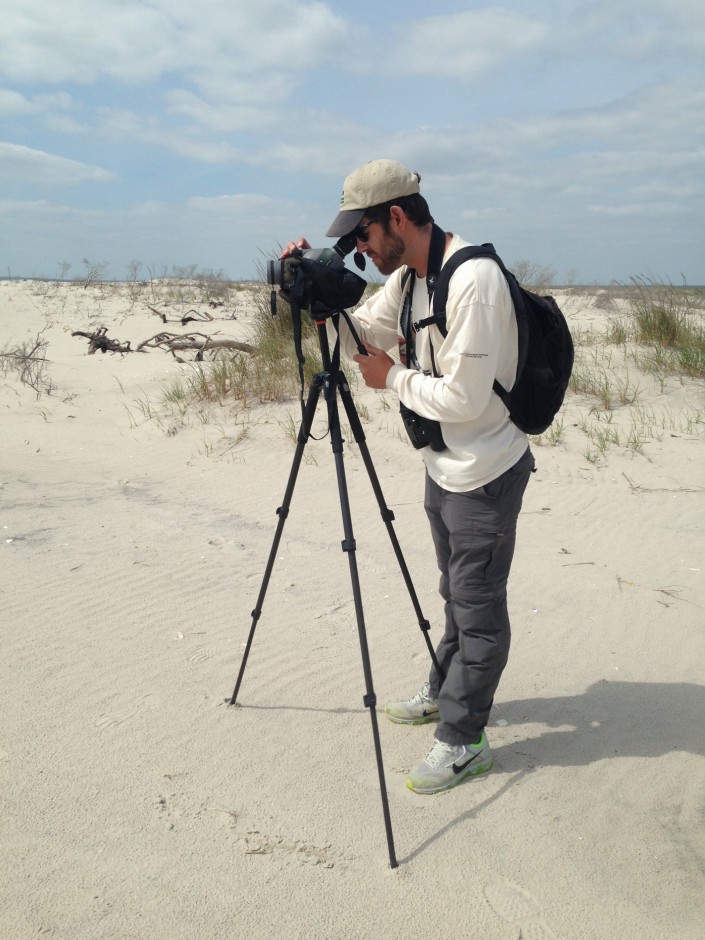
CWF Field Technician Jesse Amesbury tracking piping plovers at Holgate with his scope.

“Holgate provides highly suitable undisturbed natural habitat for at-risk beach nesting birds, especially piping plover – a rarity along the otherwise highly developed and recreated New Jersey Coast,” said Todd Pover, CWF Beach Nesting Bird Project Manager. “Maximizing productivity at this site is a high priority for regional and range-wide recovery efforts.”


Edwin B. Forsythe National Wildlife Refuge protects more than 47,000 acres of sensitive wetlands, marshes, and coastal habitats along the New Jersey shore. It is one of the most important habitats for migrating waterfowl and shorebirds east of the Mississippi River.

Learn more:

Conserve Wildlife Foundation’s Beach Nesting Bird Project
Edwin B. Forsythe National Wildlife Refuge


Lindsay McNamara is the Communications Manager for Conserve Wildlife Foundation of New Jersey.
Nominate an Exceptional Woman for 2015 Women & Wildlife Awards

Women & Wildlife Awards 2015 Nominations Open Until August 10, 2015

By: Liz Silvernail, Development Director

In founding Conserve Wildlife Foundation of New Jersey, past Women & Wildlife honoree Linda Tesauro helped to ensure the protection of eagles and other rare wildlife.

For the 10th year, Conserve Wildlife Foundation of New Jersey will present Women & Wildlife Awards to special individuals for their achievements, the advances they have made for women in their professions, their efforts to increase awareness of rare species and the habitats they depend on, and their contributions to New Jersey’s wildlife.

 
By acknowledging these special individuals, CWF hopes to encourage more young women to strive to make a positive impact on species and habitat protection, especially through the biological sciences. Conserve Wildlife Foundation encourages you to take this opportunity to nominate a woman who has distinguished herself in the service of New Jersey’s wildlife.


Nominations will be accepted in three categories:

  • Leadership
  • Inspiration
  • Education


The nomination period has been extended! The nomination form will now be accepted through Monday, August 10, 2015. Nominations submitted last year will automatically be reconsidered this year.


Save the Date: Tenth Annual Women & Wildlife Awards
Wednesday, October 28, 2015
Duke Farms, Hillsborough, New Jersey


Join us for this year’s very special event with keynote speaker Governor Christine Todd Whitman. We will be honoring outstanding women for their contributions to wildlife conservation at a wonderful cocktail party and silent auction on Wednesday, October 28, 2015, from 6:00 p.m. to 9:00 p.m.

 
Please Save the Date and join us to celebrate New Jersey’s wildlife and the women who protect our unique biodiversity.

 
Tickets will be on sale in August 2015. Proceeds benefit Conserve Wildlife Foundation of New Jersey’s work to protect our rare and imperiled wildlife.


Learn more:


Liz Silvernail is the Development Director for Conserve Wildlife Foundation of New Jersey.
Six Beautiful Butterflies that Call New Jersey Home

A Closer Look at Six At-Risk Butterflies Found in the Garden State

By: Kathleen Wadiak, Wildlife Conservation Intern

New Jersey is home to a number of butterfly species as diverse as the different habitats throughout the state. Whether you live by the shore, a forest, or open fields, you can find a few of these species during their flight period, which usually takes place during the summer months. While it is no secret that the state can be home to well-known butterflies such as the Monarch, here are six butterflies that also call New Jersey home.


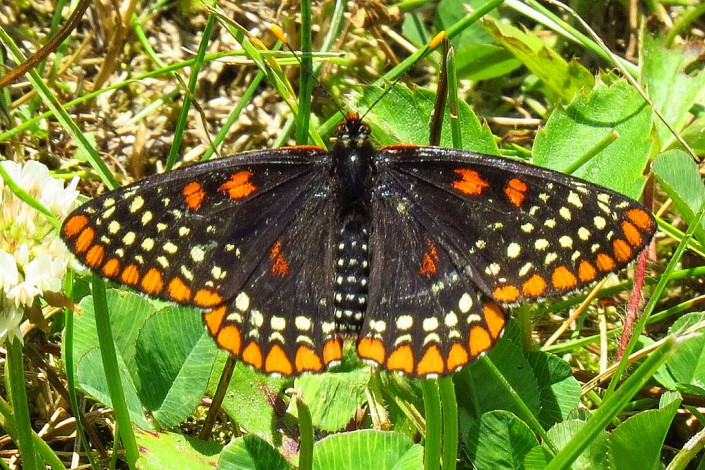
Baltimore Checkerspot

Baltimore Checkerspot
The best time to see a Baltimore checkerspot is early June to early August. This medium-sized butterfly a wingspan of about 1 ½ to 2 ½ inches. They are black with an orange border and speckled with white and orange markings. Checkerspots can be found in the northern half of the state in wet, stream-fed meadows consisting of mostly tall herbaceous growth. White turtlehead is a necessity in its habitat as it is the food source for developing caterpillars. The checkerspot’s unique environmental needs make it particularly vulnerable to habitat destruction and fragmentation.


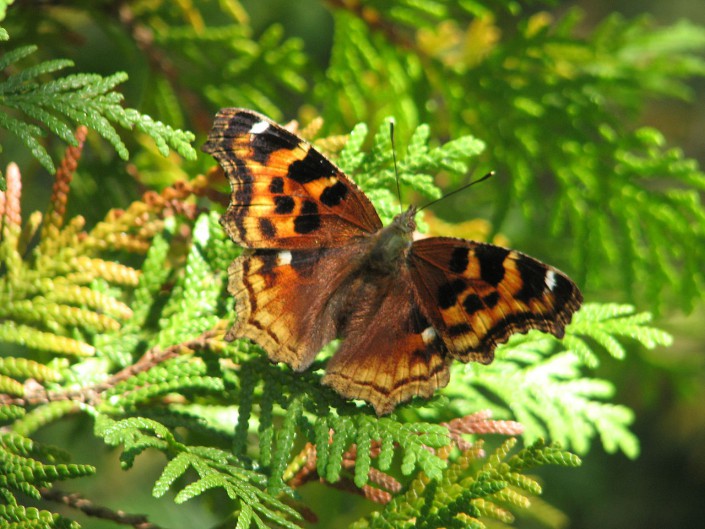
Compton Tortoiseshell

Compton Tortoiseshell
Compton tortoiseshell butterflies have a flight period of March to November, during which they can be found in northeastern New Jersey in mixed and deciduous forests. In the forests, they make use of shelters created by tree cavities and nearby building eaves. Compton tortoiseshells can be identified by their orange-brown, black spotted wings with both the forewings and hindwings having a single white spot on the leading edges. The undersides of the wings are mottled gray brown with a small white “V.” With a wingspan of 2 ½ to 3 inches, they are a relatively large butterfly. The majority of this butterfly’s diet consists of rotting fruit and sap. Populations often fluctuate dramatically from year to year depending on habitat quality and climate factors.


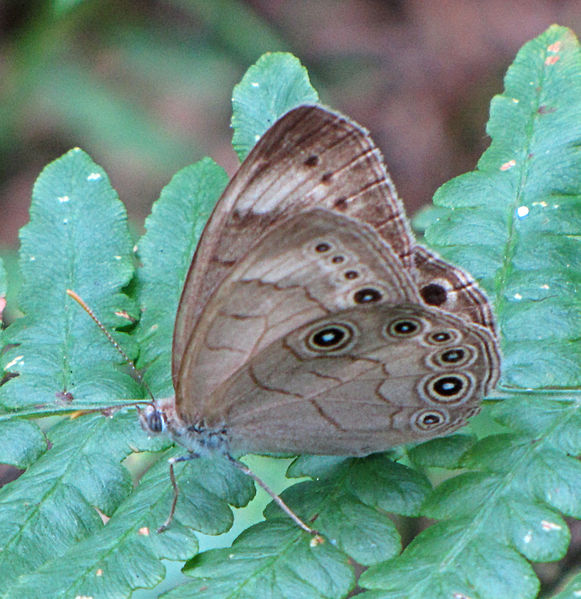
Eyed Brown

Eyed Brown
Sightings of eyed browns occur from early June to late July in northeastern New Jersey, with most reports coming from Sussex County. They occupy open wetlands including sedge meadows, cattail marshes, and tall grasses alongside slow-moving streams where there are sedges for its caterpillars to feed on. Adults feed on rotting fruit, sap, and bird droppings. The eyed brown gets its name from its wings. About 1 ½ to 2 ½ inches across, they are pale brown, with the color darkening toward the body. On both sets of wings, there are black “eye” spots that are larger on the hindwing. The undersides of the wings are also pale brown, but have jagged lines running across them.


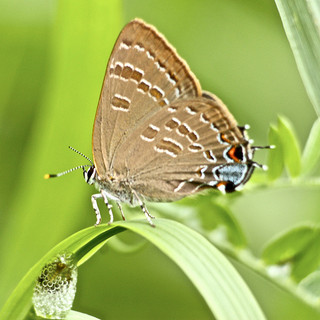
Hickory Hairstreak

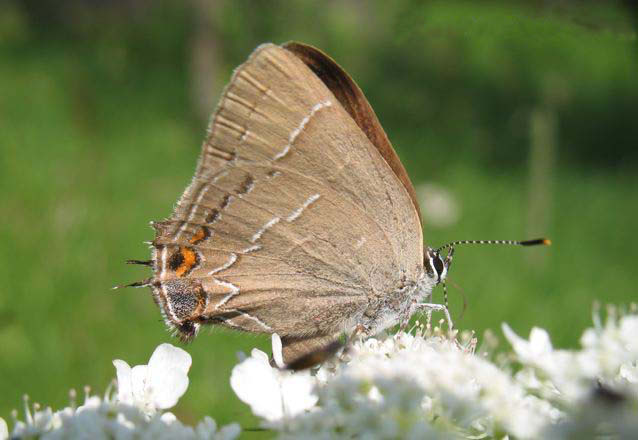
Hickory HairstreakHickory hairstreaks can be seen from mid-June to early August in the northern half of the state. Their habitat consists of deciduous and second growth forests and adjacent fields. The forests in its habitat almost always consist of hickory trees, as they are the primary food plant of its caterpillars. Adult butterflies feed on the nectar of a variety of flowering plants including common milkweed, New Jersey tea, and white sweet clover. The hickory hairstreak is a relatively small butterfly with a wingspan of approximately 1 to 1 ½ inches. It is rarely seen with its wings open and is identified by the dark postmedian “dashes” and white outline on the underside of its grayish brown wings. On the hindwing, there is a pale blue patch that extends inward further than the adjacent orange and black spots. There is one tail on each hindwing.


Northern Oak Hairstreak

Northern Oak Hairstreak
The flight period of the northern oak hairstreak lasts from mid-June to mid-July, during which they can be spotted in southern New Jersey oak forests and adjacent openings. Caterpillars of the northern oak hairstreak feed on the leaves of various oak species while adults feed on the nectar of flowers including New Jersey tea, milkweed, meadowsweet, and maleberry. The northern oak hairstreak is a small butterfly with a wingspan of approximately 7/8 to 1 ½ inches. The underside of the forewing and hindwing is gray-brown and has black and white, narrow postmedian bands, which form an “M” on the hindwing. There is a blue tail spot on the hindwing that is capped by orange and black. Each hindwing has one tail.


Rare Skipper

Rare Skipper
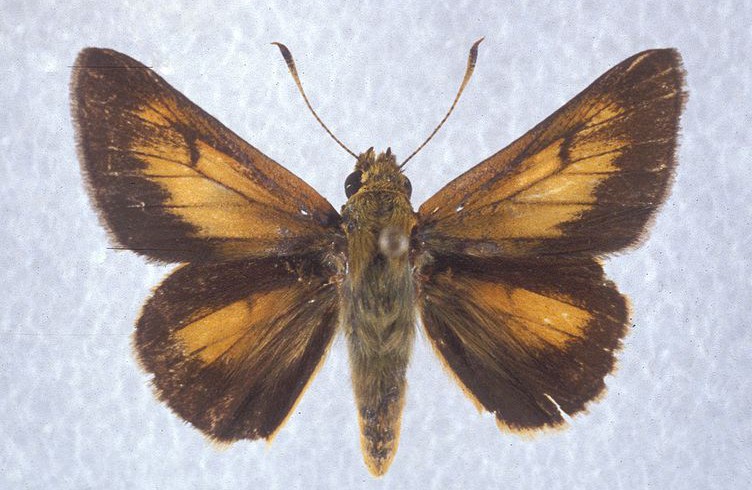
The rare skipper can be found along the southern coastal regions of New Jersey from May to September. Instances of rare skipper populations occur on a very local basis, and very little is known about the species. Their habitat consists of fresh and brackish wetlands along tidal rivers and marshes as well as abandoned rice paddies further inland. Caterpillar host plants include tall cordgrass in northern and coastal habitats and giant cutgrass in some southern wetland areas and abandon rice paddies. Adult rare skippers feed on nectar from wetland flowers such as swamp milkweed and pickerelweed. Rare skippers can be identified by their bright yellow-orange wings with a broad, dark border around the upper-side of the forewing and hindwing.


Kathleen Wadiak is a Wildlife Conservation Intern with the Conserve Wildlife Foundation of New Jersey.
Be Terrapin Aware!

Public urged to use caution while driving in shore areas this summer

By: Ben Wurst, Habitat Program Manager and Stephanie Egger, Wildlife Biologist

A adult female northern diamondback terrapin searches for a suitable nest site along Great Bay Blvd. Photo by Ben Wurst
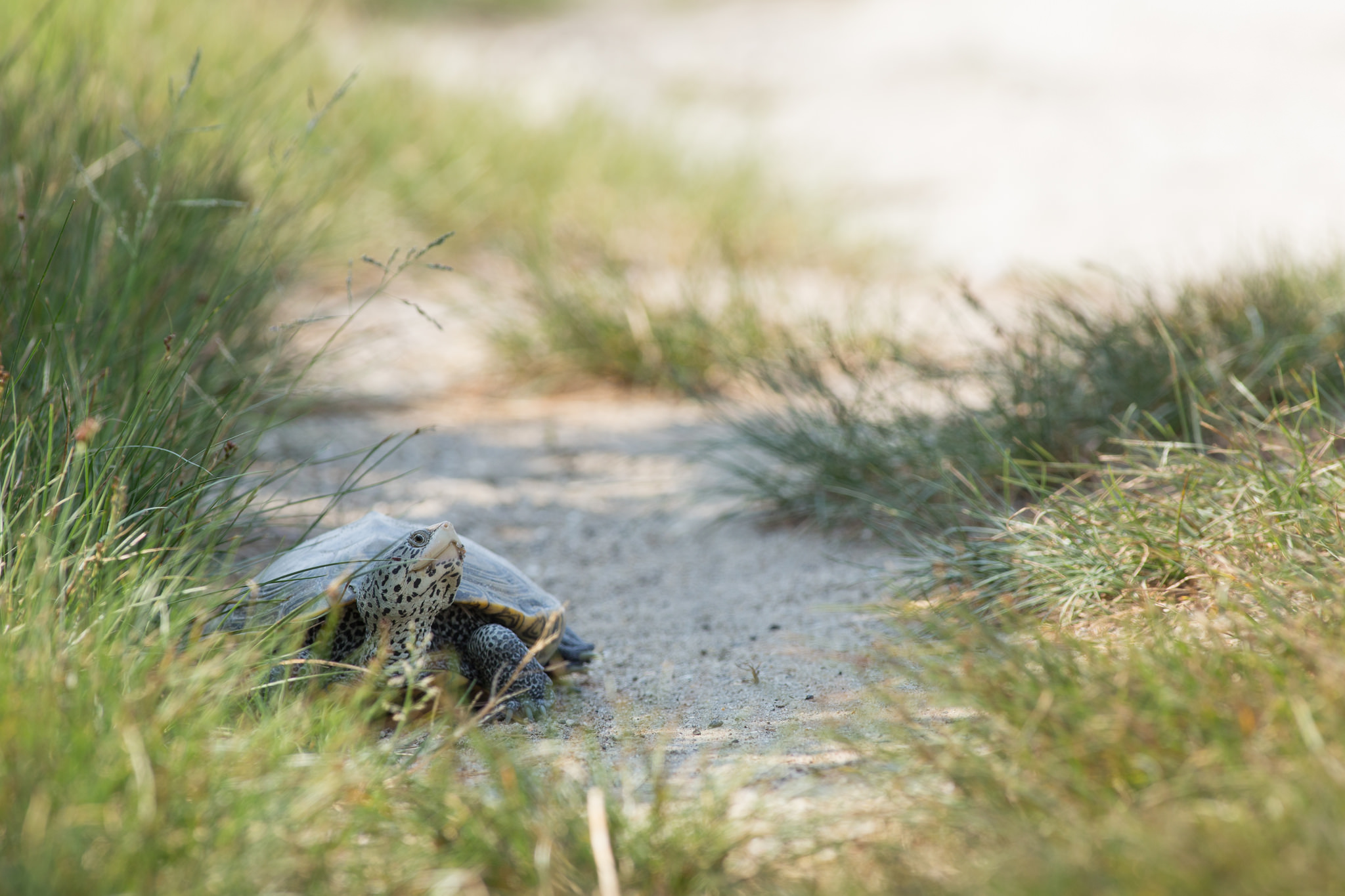
An adult female northern diamondback terrapin searches for a suitable nest site along Great Bay Blvd. Photo by Ben Wurst

Each year in late May and early June the annual nesting season for northern diamondback terrapins begins. This unique species of turtle is the only one to inhabit our coastal estuaries year round. They live exclusively in brackish water.

During this time of year, adult females emerge from the protection of their aquatic habitat to find suitable areas to lay eggs. They seek nesting areas with a sandy gravel type substrate that’s above the high tide line.

Throughout their range along the coast, terrapins face a variety of threats to their survival. Terrapin nesting habitat has been lost due to commercial and residential development, shoreline hardening and flooding which poses a greater threat to these limited nesting areas. Loss of terrapin nesting habitat along marsh systems put terrapins at greater risk of mortality as a result of increased time searching for adequate nesting areas (Winters 2013). Terrapins will utilize roadsides for nesting which increases the threat of being hit by motor vehicles. Roads are essential to our daily life but they often are barriers to wildlife, especially small critters like terrapins. Studies have shown that adult females have become less abundant and smaller from road mortality. (Avissar, 2006).

You can help terrapins several ways during the nesting season. Driving more cautiously from now until mid-July is a simple way to be more aware of terrapins crossing the roads. Nesting peaks during the full and new moon cycles and they’re more active during the high tide (less distance to travel on land to nest sites). We ask drivers in coastal areas to “Be Terrapin Aware” while driving in these areas. If you find a terrapin crossing the road use these steps to help it cross safely:

  • Stay safe. Never put yourself at risk! Make sure that you do not endanger yourself, or others, by walking into traffic.
  • When safe to do so, pull your car over and onto the shoulder, if possible. Turn on your hazard signals.
  • When safe to enter the roadway, approach the turtle and pick it up by grabbing its shell with both hands between its front and hind legs. HOLD ON – Terrapins have strong legs!
  • It is important that you move the turtle in the direction that it is heading. They are not always headed directly towards water. They will turn around if you put them in the wrong direction, so work with their instincts.
  • Place the terrapin off the road onto the soft shoulder (dirt or grass).
  • If you have a GPS or a smartphone then record your location and submit your sighting on our website.
  • Please do not move a terrapin long distances to “somewhere safe!” They have very small home ranges and moving them will only hurt them.

Rescuing a live terrapin (or any other turtle) from the road is a rewarding experience. It’s a great way to engage future generations in caring for our terrapins.

You can also help terrapins during the nesting season by supporting our new “Turtle Gardens” project. CWF, in partnership with the Marine Academy of Technology of Environmental Sciencewill develop and implement an educational initiative to promote terrapin nesting habitat enhancement. These “Turtle Gardens” will raise awareness of the benefit of living shorelines to terrapins and other coastal wildlife, as it relates to sea level rise and coastal flooding within the Barnegat Bay Watershed. Turtle Gardens for terrapins are patches of sandy nesting habitat above the high water line that are less susceptible to flooding. They also reduce the risk of road mortality. We will be having informational training sessions for those that would like to volunteer for monitoring Turtle Gardens or have property that would support a Turtle Garden. Information on these sessions will be announced in mid-June.

In addition, we will also be looking for terrapin sighting information with Project Terrapin in Berkeley and Lacey Townships in Ocean County as part of an initiative to fill in data gaps for this species on the mainland. If you see terrapins in these locations please report your sightings online.

Learn more:


Ben Wurst is the Habitat Program Manager for Conserve Wildlife Foundation of New Jersey and Stephanie Egger is a Wildlife Biologist with Conserve Wildlife Foundation of New Jersey.
2015 Delaware Bay Shorebird Banding Season Comes to a Close

Delaware Bay Shorebird Project Team Finishes 2015 Banding Season

By: Dr. Larry Niles, LJ Niles Associates LLC

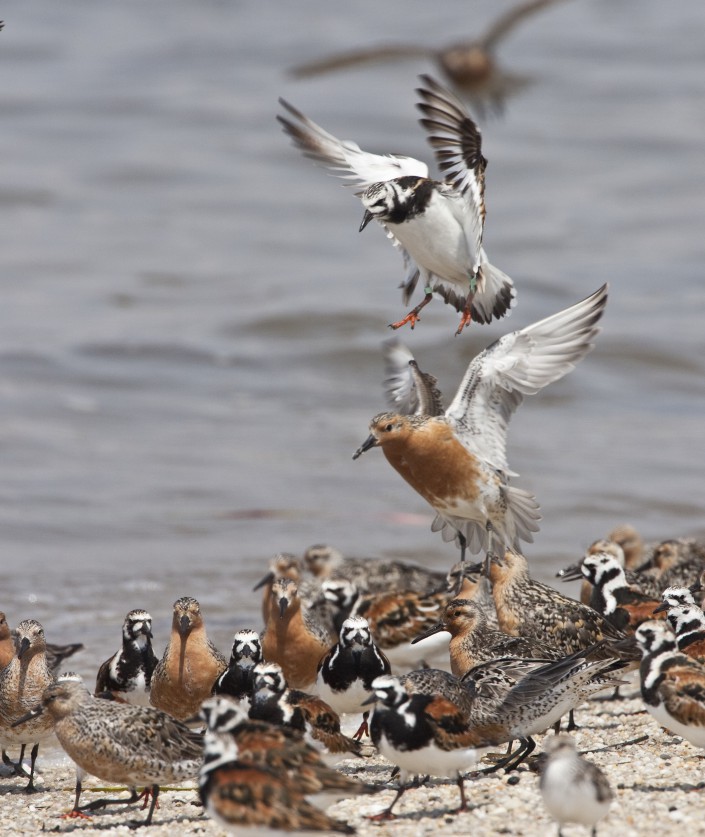
All our efforts to help shorebirds on Delaware Bay this year couldn’t have been better rewarded – nearly every red knot left the bay in good condition and in one of the earliest departures in the 19 years of the Project. We counted just over 24,000 knots in our aerial count of the entire Bayshore on May 26th. Just two days later, most had left and we could find only a few hundred, feeding on eggs like human shoppers feed on bargains at a half-price sale. By May 31st, virtually all were gone, along with the ruddy turnstones, sanderlings and semipalmated sandpipers. The beaches had an odd, deserted feel after the frenzy of the preceding days.

Photo by Jan van der Kam from Life on Delaware Bay

A good thing for birds and all those who love birds. The end of the shorebird stopover season also means the end of our shorebird team – at least for another year. All through the week, we lost team members—the North Americans left by car, those from other continents by air. Those who stayed shifted from research to manual labor: cleaning and storing equipment, closing up the rental houses, and reconnecting lost items to their owners.

Photo by Kevin Karlson

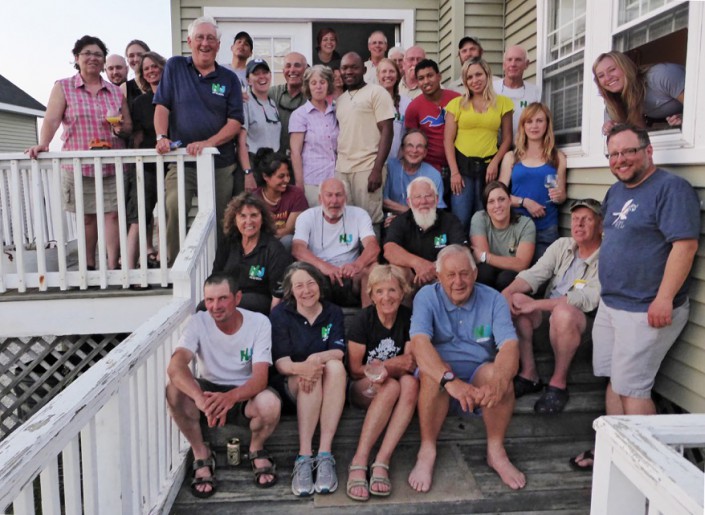
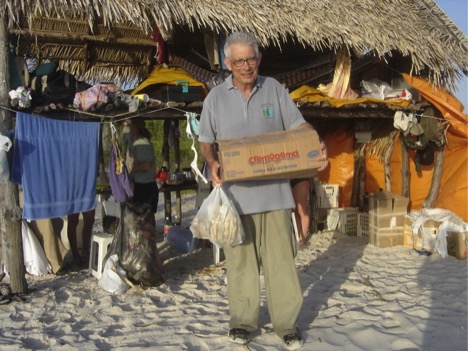
Will our project continue? Now in our 19th year of work on the bay, one must recognize the realities of time’s passage. Clive Minton just cleared 80, and the rest of the original team will soon follow. This author, who started at relatively young 44, is now pushing his mid-sixties. Death visited our team this year with the passing of Allan Baker. Surely the rest of us will start “falling off the perch” as Clive is fond of saying.

Allan Baker, the Senior Curator of Ornithology and Head of the Department of Natural History at Toronto’s Royal Ontario Museum suddenly and unexpectedly died in 2014.  His career included many significant achievements including early work that helped build a scientific case that overharvested horseshoe crabs caused the decline of red knot numbers. Photo from Wader Study.
Allan Baker, the Senior Curator of Ornithology and Head of the Department of Natural History at Toronto’s Royal Ontario Museum suddenly and unexpectedly died in 2014. His career included many significant achievements including early work that helped build a scientific case that overharvested horseshoe crabs caused the decline of red knot numbers. Photo from Wader Study.

And yet, all committed to return for a 20th year. I worry over the fundamentals: our funding remains uncertain, the listing of knots as Threatened in the U.S. creates new regulatory hurdles, and N.J. politics seem to get more fractious every minute. Will there be a 20th year of this project?


The answer starts and ends with the willingness of our team to do it again. It starts there because good ideas and projects always seem to find support; I know we will find a way. It ends there because this team provides the best chance of a strong scientific underpinning for protection. Our team includes some of the most important shorebird scientists in the world. At our dinner soirees (generously provided by Jane Galetto’s Citizens United team), Ph.D.’s are as common as empty beer bottles. It’s no surprise that conversation drills deep into conservation biology, behavioral ecology, migration physiology, stopover ecology, virology and many other subjects of interest to all our team, both scientists, old and young, and lovers of good science.


In many ways, the lives of our team members revolve around birds. The Delaware Bay Shorebird Project provides us a meaningful excuse to pull together once more. Our team members love birds, and do everything they can to help them. It’s been that way for 19 years, and it is this commitment that has led to this year’s results.

p180 red knots
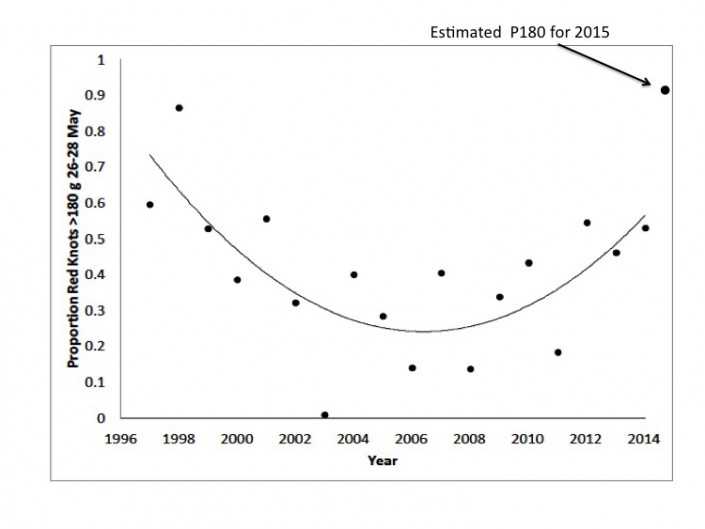
This graph plots the percentage of red knots caught between May 26th and May 28th that have achieved at least 180 grams against the year of the catch. The 2015 result is still an estimate.

For the first time in 19 years, red knots left in a condition similar to the lucky ones migrating through before the fishing industry decimated horseshoe crabs in 1997. After that year, the populations of knots, turnstones, semipalmated sandpipers, and sanderlings fell off a cliff. For the last four years, however, the terribly reduced populations of shorebirds have been in rough balance with equally reduced number of horseshoe crabs breeding on the Bay. Consequently, the percentage of knots reaching the threshold weight of 180 g has climbed. (Knots need at least this weight to reach the Arctic and breed successfully.) From a low of just 5% making weight in 2003, they’ve clawed their way upward 30% in 2010, 50% in 2013 and now this year’s 90%.

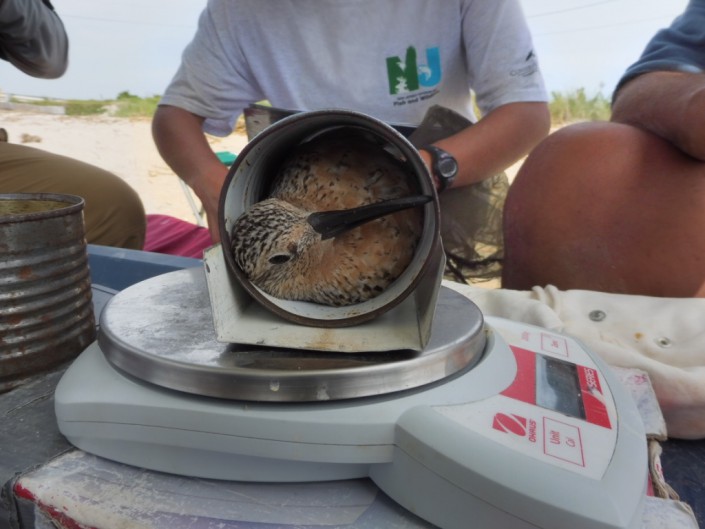
Fat knot on the scale by Philippe Sitters

One must be cautious about the interpretation of this number but the catch of red knots on which it was based were truly fat birds! One weighed 226 grams, nearly 100 grams higher than its fat free weight. Whatever the figure it was a good season for both birds and the people who love them.

Learn more:

Dr. Larry Niles has led efforts to protect red knots and horseshoe crabs for over 30 years.

Fifth Graders from Across New Jersey Honored for Art & Essays on Rare Wildlife

2015 Species on the Edge Art & Essay Contest Winners announced at Awards Ceremony

By: Lindsay McNamara, Communications Manager

2015 Species on the Edge Winners
2015 Species on the Edge Winners with representatives from CWF and PSEG


Today, Conserve Wildlife Foundation of New Jersey celebrated and recognized the winners of the 2015 Species on the Edge Art & Essay Contest, a statewide educational contest open to all fifth-graders, which encourages students to become wildlife biologists through their research and artwork on the endangered and threatened wildlife species in New Jersey.


“The vibrant artwork and passionate essays that we received from fifth-graders across the state reveal just how much these talented children poured their hearts into the Species on the Edge contest,” said David Wheeler, Conserve Wildlife Foundation Executive Director. “We are so thrilled to help connect the next generation of New Jersey conservation leaders with the natural world around them. Through their art and essays, all of us can see the wonders of nature – and the many challenges that we must overcome to help rare wildlife survive in our densely populated state.”


Students were asked to draw a picture of one of New Jersey’s 83 endangered and threatened wildlife species and compose an essay about how the animal became endangered and what can be done to help protect it. The Species on the Edge Art & Essay Contest encourages students to learn about local environmental issues, express their concerns for the world around them, think creatively about ways to improve it, and to consider how their actions impact the natural world.


Abby Miller, a student at T.P. Hughes Elementary School in Union County believes that it is important to protect wildlife in New Jersey because “everything deserves to be saved when they’re endangered.”


Bald Eagle from Mercer County Wildlife Center

This year’s ingenious group of winners was honored at an awards ceremony which was hosted at the New Jersey Education Association, in Trenton, New Jersey. The contest was sponsored by PSEG, NJEA, GAF, Atlantic City Electric, Church & Dwight, ShopRite and Six Flags Great Adventure. Mercer County Wildlife Center brought a live Bald Eagle to the event.


The statewide contest drew over 2,000 entries from across the state. Since 2003, over 10,000 children from across New Jersey have entered the Species on the Edge Art & Essay Contest.


For more information, visit Conserve Wildlife Foundation’s website.


Lindsay McNamara is the Communications Manager for Conserve Wildlife Foundation of New Jersey.