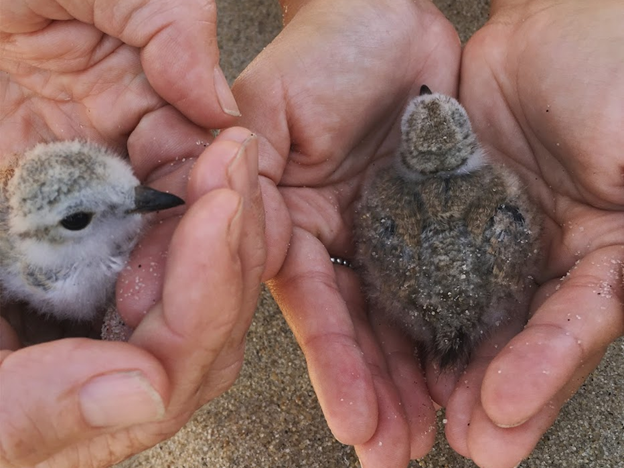
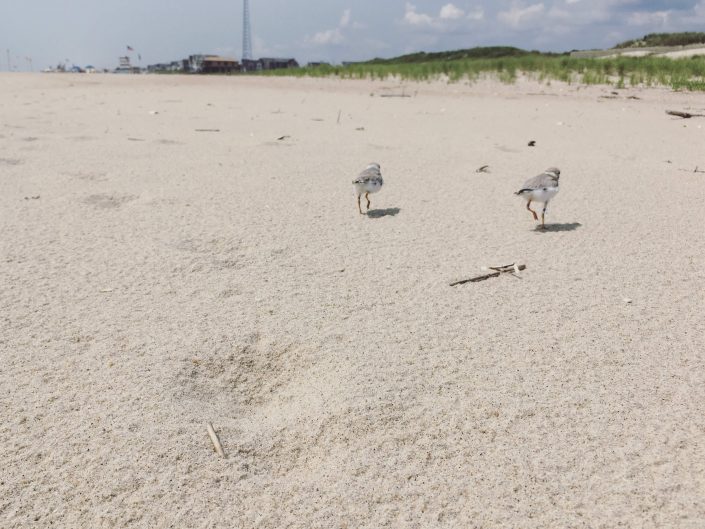
The well-known Piping Plover pair, Joey and Hamlet, has been monitored by Conserve Wildlife Foundation of New Jersey (CWF) at the Sea Girt National Guard Training Center (NGTC) for three nesting seasons (check out our last blog on Joey and Hamlet’s arrival here!
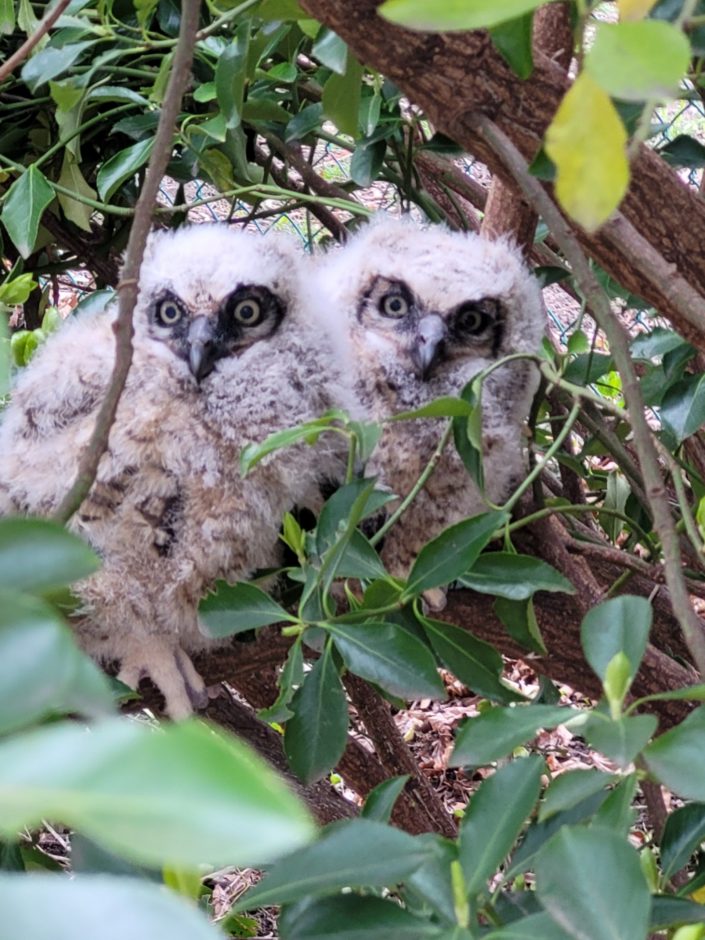
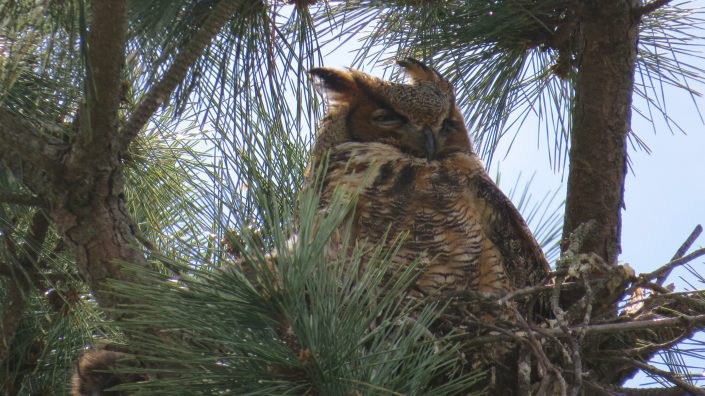
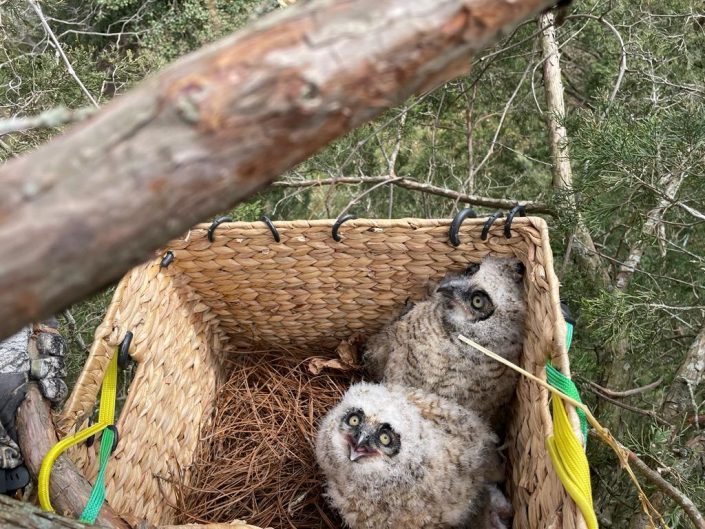
We received a call about a homeowner who found two great horned owlets on the ground. They had fallen out of a nest located in a pine tree in her backyard. The female owl was still sitting in the nest with one chick. Great horned owls use the vacant nests of other bird species and this nest was too small for three growing chicks. At this age the young owls are defenseless from predators, plus a rain/wind storm was predicted for that evening. The plan was to keep the owlets overnight in safe location and renest them the next day.
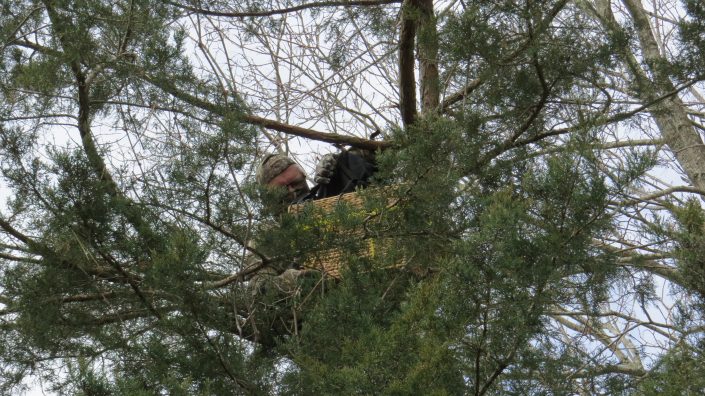
We met Ray Byrant, with Tri-State Rescue & Research, raptor renesting team at the nest site. Due to crowding the owlets would end up on the ground again if placed back in the nest. A basket serving as a substitute nest was secured in a nearby tree that was sturdier than the nest tree. The two nests are close enough that the adults can go back and forth between nests caring for the young. The female owl watched us closely the entire time and the owlets were “clicking” with their bills, so she knew they were there.
The homeowner will keep an eye on the nests to make sure the owlets remain in them until they start to branch. She reports that the adult has been at the basket nest several time since the renest. Thank you to the homeowner for calling to report these owlets, Vicki Schmidt, Matt Tribulski, Ray Byrant and Tri-State Bird Rescue & Research. It takes a team.
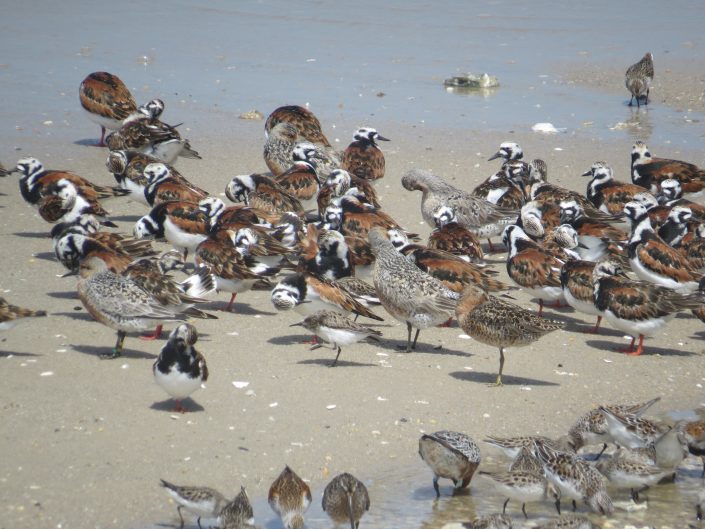
Shorebirds along Delaware Bay: photo by Shorebird Steward Bob Bocci
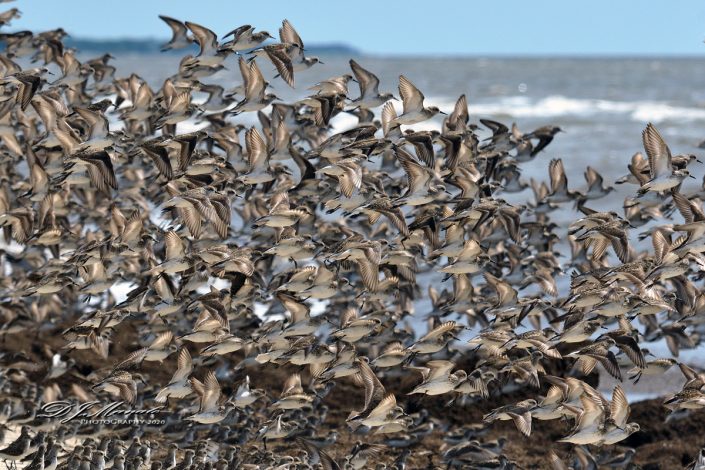
May is wonderful time of year at the Delaware Bay. Horseshoe crabs are spawning and shorebirds stopping over on their migration to feed on the eggs. One of these shorebirds the red-knot, is a federally threatened species. Beaches along the Delaware Bay in New Jersey are extremely important stops in their migration. Many of these beaches have been restricted from May 7th to June 7th to allow the shorebirds to feed undisturbed. They need to gain enough weight to be able to fly non-stop to their breeding grounds in the artic.
photo by Shorebird Steward Dom Manalo
People come from all over to view this natural phenomenon and the Delaware bay is a popular tourist destination. It’s important to have Shorebird stewards on these restricted beaches to educate the public about the crabs and shorebirds. Shorebird stewards support beach restrictions by being present at closed beaches during shorebird season to ensure that resting and foraging shorebirds are not disturbed. This job includes educating beach visitors as to why the beaches are closed and the importance of the beaches to horseshoe crabs and migrating shorebirds.
Stewards are needed short term in May at beaches along the Delaware Bay in Cape May County from the Villas north to Reed’s Beach and beaches in Cumberland.
Please contact Larissa Smith at Larissa.Smith@conservewildlifenj.org for more details.
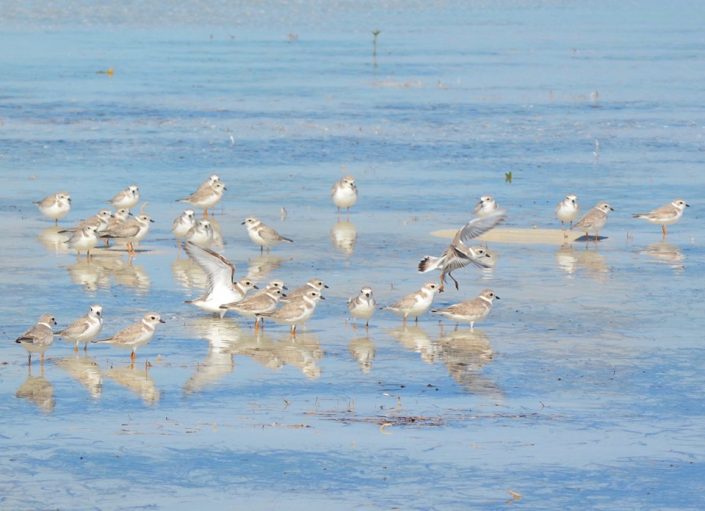
Flock of wintering piping plovers in the Bahamas – plovers grouping close together as the tide closes in on the foraging flat.Photo Coutesy of Keith Kemp.
Just a few hours after landing on the island of Abaco in the Bahamas in early February, I had my scope focused on several dozen piping plovers scurrying across an expansive sand flat. This was good news; the foraging flat still supported a healthy number of wintering plovers. The last time I had been at this site was almost exactly three years ago. A lot has happened since then.
On September 1, 2019, a major Category 5 storm, Hurricane Dorian, struck and lingered over the island of Abaco, and then Grand Bahama, bringing with it sustained winds of 185 MPH and gusts of 220 MPH, the strongest storm on record to hit the Bahamas. As expected from a storm of this intensity, lives were lost and devastating damage occurred to buildings and infrastructure. The natural environment took a beating too. As just one example, the pine forests, typical of these two Bahamian islands, that were in the direct path of the storm were nearly entirely destroyed – even today, 2 ½ years later, the sight of a “ghost forest” as far as the eye can see is a shocking sight.
Although the Sea Girt National Guard Training Center (NGTC) has just a small section of beach to manage, their efforts there with threatened and endangered species has been big. Conserve Wildlife Foundation of New Jersey has been a partner in these efforts, monitoring the piping plovers that nest on this beach during the breeding season and assisting in the planning of habitat enhancements. The protection area at the NGTC has been the nesting site of a piping plover pair for the past three breeding seasons and it is likely they will return again this spring, all while supporting the military and recreational missions of the New Jersey Army National Guard.
E/63 along Hackensack Jan. 28, 2022 photo by Lisa Katz
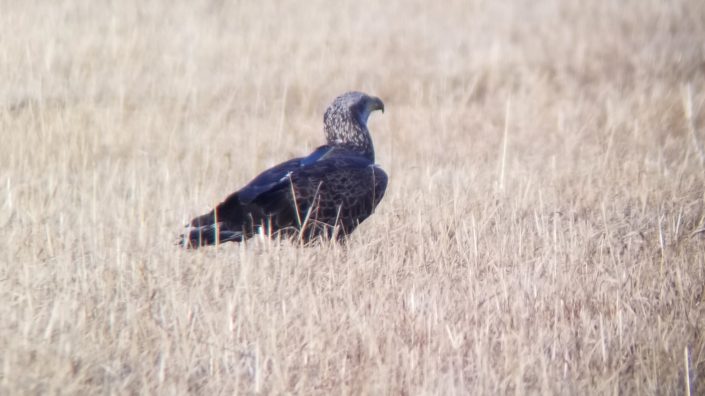
Each year biologists with NJ Fish & Wildlife’s Endangered and Nongame Species Program & CWF venture out to eagle nests to band the chicks, take blood samples and measurements. The chicks are banded with a green NJ band that has a specific code and a silver federal band. At the time of banding the chicks are approximately six weeks old and have a few weeks left in the nest before they fledge. In 2018, we started to publish the re-sightings in the Annual Eagle Report. In 2022, we have already received quite a few re-sightings. E/63 is one of those eagles.
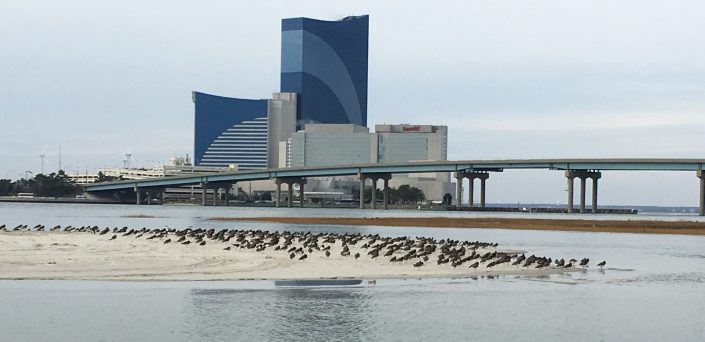
Most people are surprised to hear that American oystercatchers are present in New Jersey in the winter. They usually associate the charismatic shorebird as a breeding species here. Our state’s wintering oystercatchers, a combination of breeders from further north and our own, are at the northern extent of the Atlantic coast wintering range.
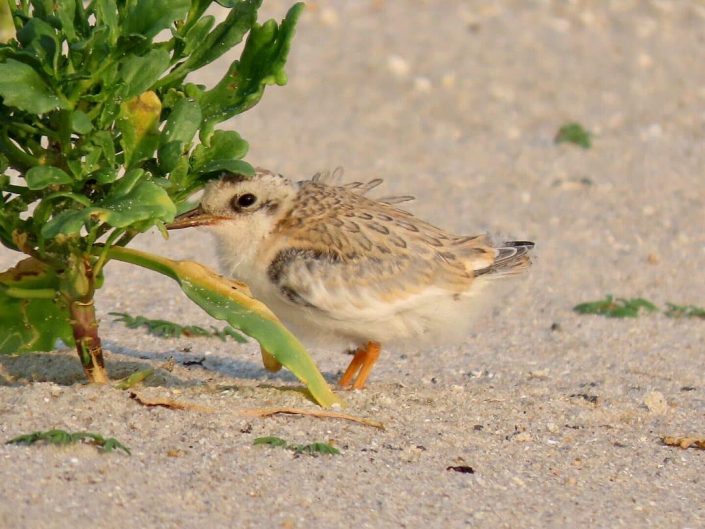
One of the hundreds of least tern chicks at the Pt. Pleasant colony in 2021. Courtesy of Lindsay McNamara.
With 2021 coming to an end, we thought it would be fun to look back at this year’s beach nesting bird season in New Jersey, focusing on some of the surprises.
At the top of the list is the huge jump in our piping plover breeding population, up to 137 pairs from just 103 in 2020, an unprecedented 33% increase in one year and the third highest on record for the state since federal listing. This was a much-needed bump, as productivity has been high over the past few years, but we weren’t seeing any sustained growth in the population as a result as would be typical. So, when the final pair number was tallied this year, we were both relieved and surprised at how big it was! The challenge now will be to maintain that higher level or increase it even more, as it has fluctuated up and down quite a bit in recent years.
A year ago November I began tracking Duke. I was fortunate to see and photograph him more than a dozen times and wrote two blogs for CWF about these adventures.
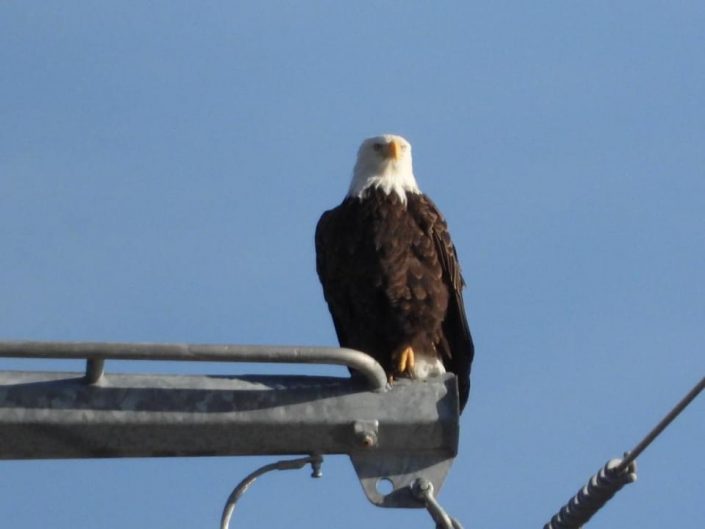
Three Bridges adult perched on tower December 5th 2021 by Lisa Romero
We are happy to announce that the Three Bridges Eagle Cam will go live on December 15th. This fall, the nesting platform atop the transmission tower received some improvements from PSE&G. The perches were moved for a better camera view and replaced with wood to provide better perches for the adults and a second wooden perch was added along one of the sides. A foam baffle was added to the microphone to help buffer wind noise. These improvements will make the platform better for the eagles as well as enhance the viewing experience.