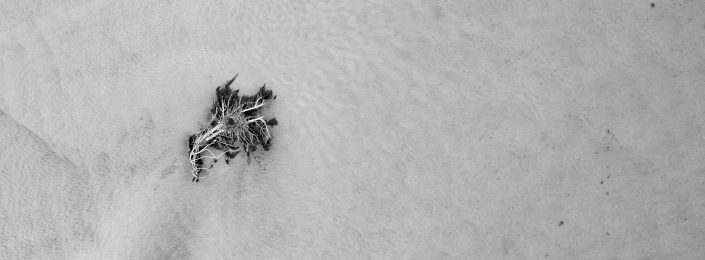
An empty osprey nest on a sandbar located on Barnegat Bay.
In the coming weeks CWF staff, NJDEP Biologists, and a handful of dedicated volunteers will descend onto the coastal saltmarshes of New Jersey to conduct a census of nesting ospreys. The last census was conducted in 2017 when 668 nesting pairs was recorded. They will survey remote areas of back bays by boat. Nests are surveyed in a variety of methods, with ladders being the traditional method, which allow for closer inspection of nests and banding of young for future tracking. Other nests are surveyed from a distance using optics or cameras with telephoto lenses, a mirror, smartphone or GoPro on an extension pole and a sUAS (when operated by a FAA licensed unmanned pilot). The goal is to recorded the total number of nesting pairs throughout the State.
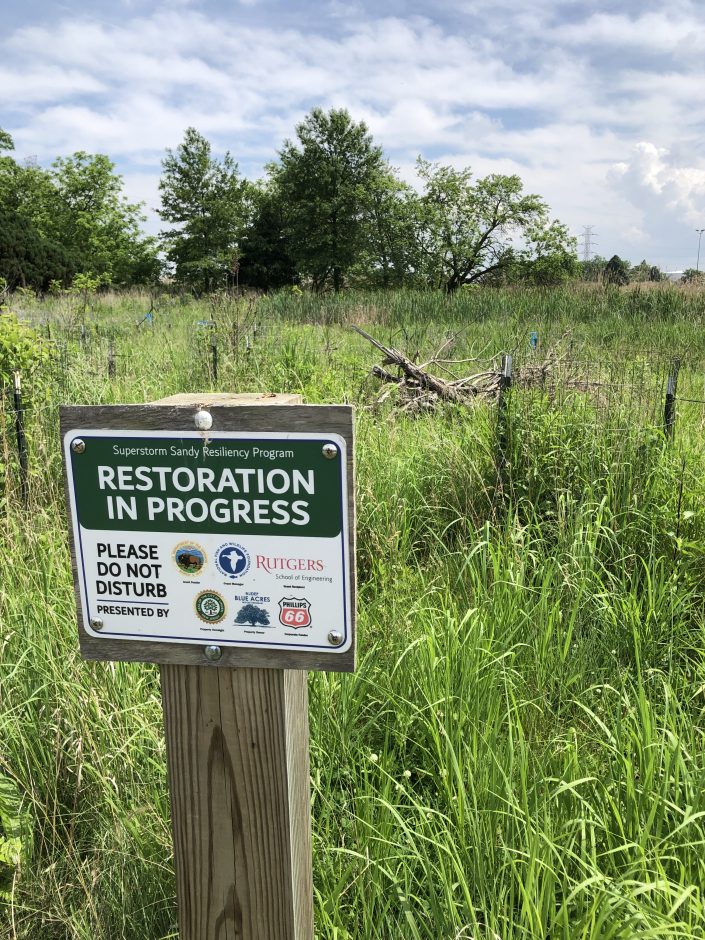
Hurricane Ida. Hurricane Irene. Superstorm Sandy. These weather events represent three of the four most devasting storms recorded in New Jersey history. Though data dates back 218 years, all 3 have occurred within the past 11, substantiating concerns over the effect of climate change on tropical cyclone severity. Therefore, taking measures to safeguard communities from devastating floodwaters is more important now than it ever has been. But who said helping people can’t, in turn, help wildlife?
The Kindergarteners at Ridge Street School in Newark, New Jersey, have been utilizing Conserve Wildlife Foundation’s Soaring with STEAM curriculum in their classrooms. From snakes and turtles to whales and woodpeckers, the students are learning all about the endangered species that call New Jersey home as well as the unique habitats in which they reside. Each lesson includes hands-on activities to drive home what they have learned, with all materials provided by CWF. Students have enjoyed using their creativity to make each lesson activity their own! They have been given the opportunity to build snake dens, design a habitat for their favorite animals, and practice breathing like humpback whales. Kindergarten teacher Aracelys Muniz says students look forward to these lessons each week and call their CWF lesson days the “Best day ever!”. By providing positive experiences for students at such a young age in the realm of wildlife sciences, we hope to engage with and inspire the next generation of environmental stewards. Our goal is for students to remember our lessons beyond the classroom, becoming excited to continue learning on their own and sharing their knowledge with their friends, families, and communities. CWF thanks PSEG Foundation, Victoria Foundation, The Merrill G. and Emita E. Hastings Foundation, David A. and Carol B. Lackland Family Foundation, and the Zoological Society of New Jersey for their generous support for our work with Newark Public Schools.
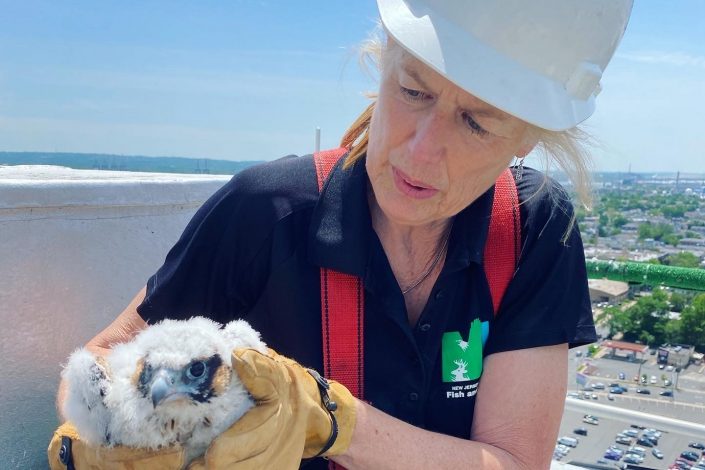
Kathy Clark carefully places a young falcon in a reusable shopping bag.
On May 23, NJDEP Fish & Wildlife Supervisory Zoologist Kathy Clark and myself visited the Union County Courthouse in Elizabeth, NJ to band the three eyases that were produced by the nesting pair of peregrine falcons. We were joined by Union County staff and guests, who assisted with the banding. The nest is located on the roof of the building. As soon as the hatch made a sound, the adults took off and started to defend their nest and flightless young. As we enter their turf, we are dive bombed by the adults — it is clear that the female has become more aggressive — as she flies very close to us on the roof in sweeping dive bomb attacks. As Kathy goes to the nest to grab each young who are placed in reusable shopping bags, I use her trusty feather duster to ward off the adult female. All who enter the roof wear fall arrest harnesses and hard hats. Kathy and I know that the hard hats are not just worn for fall protection, but also from attacks from above. Both of us received bumps from the adult female to our helmets!
Over the past several years, I have worked with LBIF to help guide their efforts to provide habitat for wildlife on their property in Loveladies. We have always wanted to establish another, larger “turtle garden” for nesting female N. diamondback terrapins, since they are a common visitor during summer months. This spring we received a small grant from the Garden Club of Long Beach Island to establish a new turtle garden at LBIF. Late last month we ordered 15 tons of mason sand from a local supplier, which provides excellent nesting habitat, with small grain size and little organic matter. Myself and Jeff Ruemeli, who is the new Director of Sciences at LBIF, worked to install coir logs to hold the sand before spreading it out by hand. I followed up with planting around 30 seaside goldenrod plants at the site to help stabilize sand and provide foraging habitat for pollinators.
Since 2003 Conserve Wildlife Foundation has been coordinating the Delaware Bay Shorebird Stewards. Shorebird Stewards are posted at the beaches with restricted access during the shorebird season. This is done so that the shorebirds can feed undisturbed on horseshoe crab eggs. The beach restrictions are from May 7th to June 7th. The Delaware Bay is an important stopover for these birds on their way north to their breeding grounds. Stewards educate the public about the need for the beach restrictions. Once most people learn about the connection between the horseshoe crabs and shorebirds, they are more than happy to accept the restrictions. This season there were thirty-one stewards on 10 beaches in Cape May and Cumberland Counties. They are dedicated and on the beaches despite the weather, bugs and sometimes lack of shorebirds. Stewards are on beaches through Monday, so stop by and say “hello”.
Thank you Shorebird Stewards
Shorebirds on Thompson’s Beach, photo by: Matt Tribulski
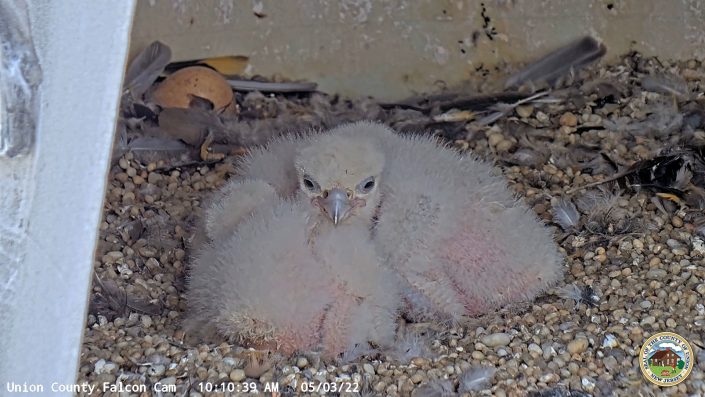
Another season of growth and new life is here! As many species are beginning their annual life cycle to reproduce, some peregrine falcon pairs already have young. The eyases (young falcons) at the Union County Falcon Cam are a prime example. They are now a little over a week old and have been examined and treated for a pigeon borne disease, called trichomoniasis, which adult falcons can transfer to their young. If young falcons would get trich., then they could perish. Kathy Clark, NJDEP Fish & Wildlife Supervisory Zoologist, UC staff and colleague Cathy Malok, w/ The Raptor Trust visited the site to ensure the survival of this brood.
Conserve Wildlife Foundation has successfully completed the restoration of the Certified Wildlife Habitat behind the Trailside Nature and Science Center at Watchung Reservation. The project was initiated last fall with a major clean up of the overgrown and neglected garden. The cleanup included pulling weeds, digging up unwanted and overgrown plants, trimming shrubs and trees, clearing vines from trees, and raking and blowing leaves. As a result, sunlight was let into the garden so that new wildlife-friendly plants could be added. After the cleanup, new native shrubs were planted that attract bees, butterflies, hummingbirds, and other birds. A new deer fence was also installed to protect the plantings from deer browse.
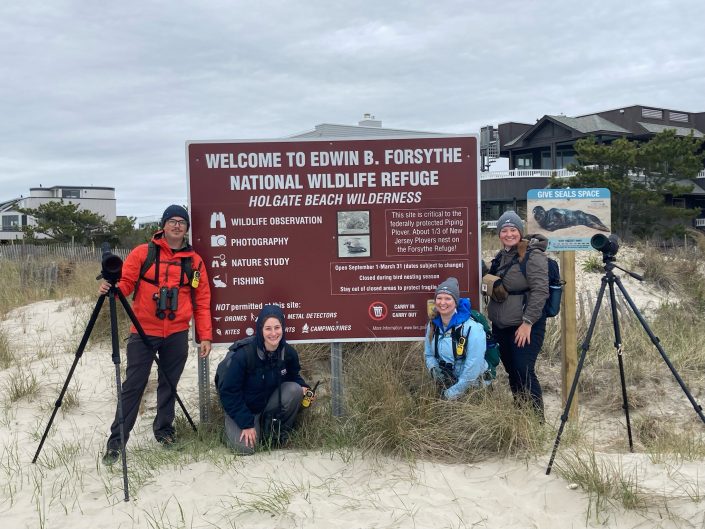
CWFNJ’s 2022 Edwin B. Forsythe NWR Beach Nesting Bird Field Crew. L to R: Jacob Miranda, Lexie Lawson, Amy Kopec, Erin Foley, (missing Dakota Bell).
For the past eight years, CWF has been contracted by the U.S. Fish and Wildlife Service through a cooperative agreement to provide monitoring and management of beach nesting birds at the Edwin B. Forsythe National Wildlife Refuge. The Refuge nesting sites – both the Holgate and Little Beach Island Units – provide some of the only habitat in the state closed to the public and free of human disturbance and detrimental beach management practices. The habitat at the sites is especially suitable for the state endangered piping plover as a result of optimal nesting conditions created by Superstorm Sandy and largely sustained since then through winter storms. As of the 2021 season, the Refuge sites had the highest concentration of piping plovers in the state, with Holgate having by far the most pairs (46). Furthermore, on average in recent years, Holgate has produced a higher fledgling rate than many sites in the state.
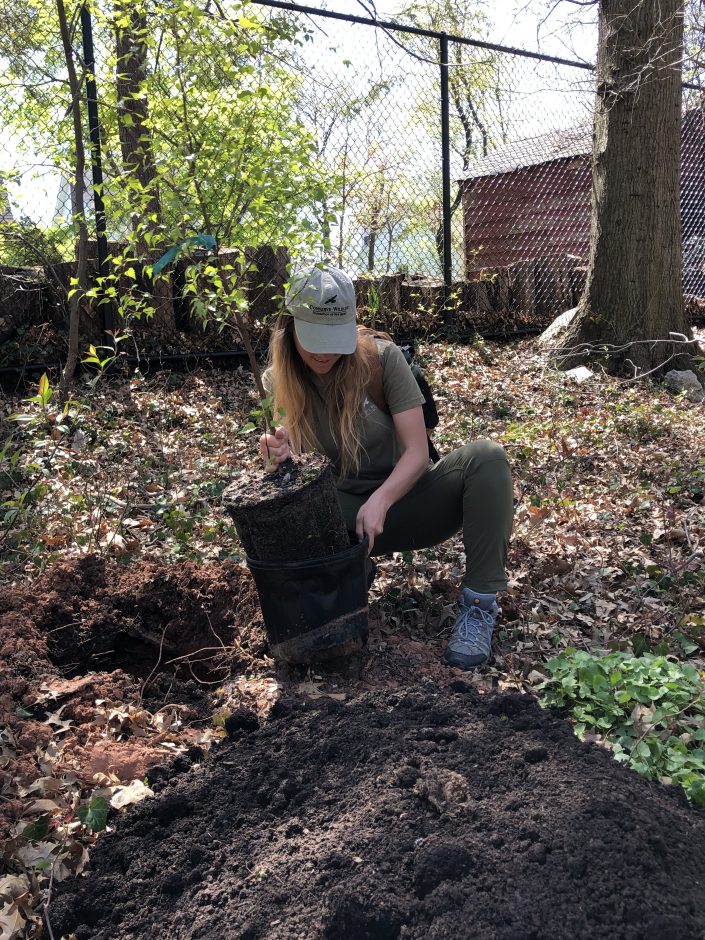
CWF biologist Sherry Tirgrath prepares a river birch sapling for planting
As the coordinator for CWF’s Amphibian Crossing Project, I think it’s safe to say I spend more time than the average person hoping for rain to pop up in springtime forecasts. April 22, however, is always an exception. What could be better than warm and sunny conditions to inspire folks to get outside and celebrate Earth Day by giving back to the planet that gives us, well, everything? Mother Nature certainly came through with the weather last week, handing us one of the most glorious days of the season thus far, while the Elizabeth Mayor Chris Bollwage, Union County Board of County Commissioners, Groundwork Elizabeth, and their partners offered a destination for all the aspiring wildlife warriors: Phil Rizzuto Park.