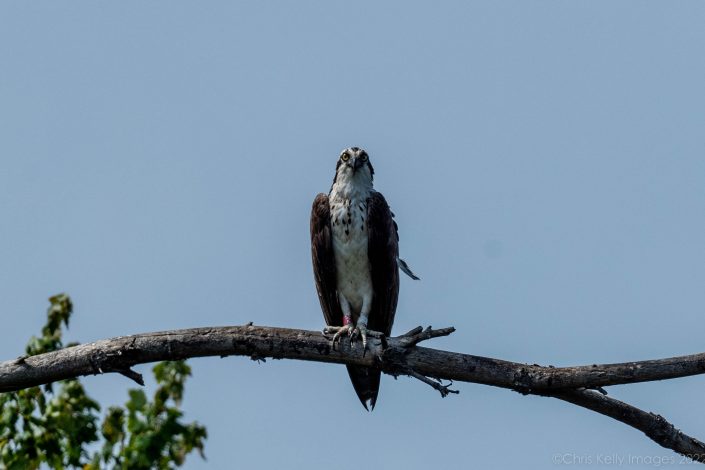
Osprey 52/K. September 5, 2022. Photo by Chris Kelly.
In 2014, we began to band osprey nestlings produced at nests within the Barnegat Bay watershed with auxiliary bands. This was an effort which came about from the interest of Jim Verhagen, a LBI resident and wildlife biographer. He wondered why young ospreys were not banded with color, field readable bands, like some endangered raptors, including bald eagles and peregrine falcons. This spawned Project RedBand, an osprey banding and re-sighting project. The goal of the project was to learn more about ospreys when they are alive while engaging coastal residents in their management. Just under 500 young ospreys were banded with red auxiliary bands from 2014-2020 from nests all along the Barnegat Bay estuary.
An osprey nest with hatchlings on May 16, 2022. One of many nests that eventually failed to produce young this year.
Whenever we look at how ospreys are faring, weather is always taken into account. When we summarize and report on the results of our summer osprey nesting surveys, we also look at the local climate. Being situated along the Atlantic coast, our weather is influenced by the ocean. As aerial predators of fish, ospreys are reliant on favorable water conditions to forage.
Preliminary results of the 2022 New Jersey Osprey Project Census show that the osprey population was not as productive this year as they have been over the past ~20 years. This was largely due to a low pressure system (nor’easter) that stalled off the coast in early May — when the majority of pairs were incubating eggs. The strong onshore winds caused moderate coastal flooding, windy conditions, increased wave action and water turbidity, which made it more difficult for ospreys to find and catch prey in coastal waters. Males do 100% of the foraging from the onset of egg laying until young begin to fledge, so when they are unable to provide food, females must abandon their nests and eggs to forage for themselves. The nor’easter in May appears to have affected the outcome of many coastal nests and in some cases, complete colonies. Of course there are many other causes for nest failure but this year weather played a major role.
An empty osprey nest on a sandbar located on Barnegat Bay.
In the coming weeks CWF staff, NJDEP Biologists, and a handful of dedicated volunteers will descend onto the coastal saltmarshes of New Jersey to conduct a census of nesting ospreys. The last census was conducted in 2017 when 668 nesting pairs was recorded. They will survey remote areas of back bays by boat. Nests are surveyed in a variety of methods, with ladders being the traditional method, which allow for closer inspection of nests and banding of young for future tracking. Other nests are surveyed from a distance using optics or cameras with telephoto lenses, a mirror, smartphone or GoPro on an extension pole and a sUAS (when operated by a FAA licensed unmanned pilot). The goal is to recorded the total number of nesting pairs throughout the State.
A couple weeks ago colleagues with NJ Fish & Wildlife shared a video clip of a dark osprey who landed on a nest platform along the Maurice River near Leesburg, NJ. “Looks like an oiled bird” the text read. Indeed it looked like the bird was exposed to some form of petroleum product, which stained its feathers a dark color. At the time, there was no oil spill reported to NJDEP (this was on May 10) and the video shows that the bird was observed on the nest on May 1, 2021.
Ben Wurst, CWF Habitat Program Manager (right) with local volunteers, AC Electric and DuBois Environmental Staff who helped install this osprey nest platform in Atlantic City.Continue reading “Photo From the Field: #213”
During the peak of my field season last year I exchanged emails with a kind man who reported terrapins nesting in his yard. He wanted to do everything he could to ensure their success. A couple weeks later Bobby reached out to say how much him and mom loved the Barnegat Light Osprey Cam and how “the birds generally wake her up before her alarm.” He also mentioned how she delayed gardening because “dad is due with a fish any minute now. I’m just waiting to note the time then I’ll go play.” She was contributing observations of prey deliveries for research we conducted at the BL Osprey Cam last summer.
Eagle Scout candidate Kyle Agudo and Boy Scout Troop 61 give ospreys a boost in the new year
Ben Wurst, Habitat Program Manager
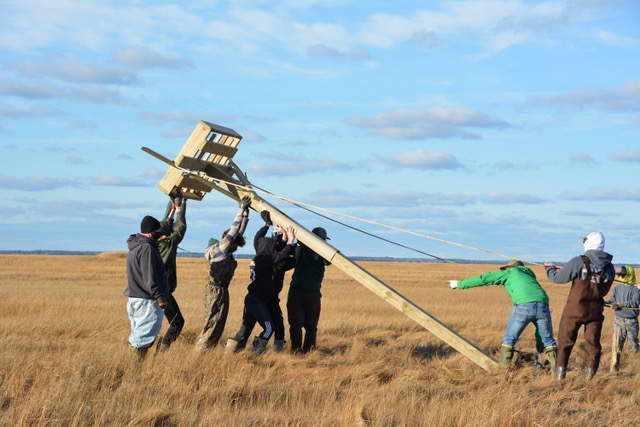
Troop 61 lift an osprey nest platform into place on the coastal saltmarsh. photo by Kathy Agudo.
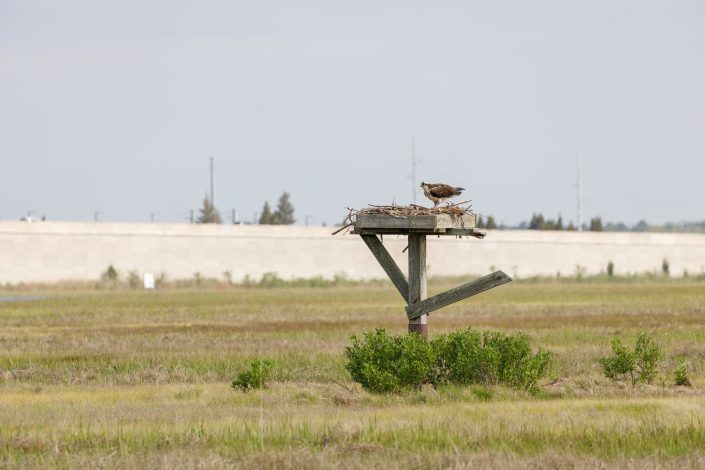
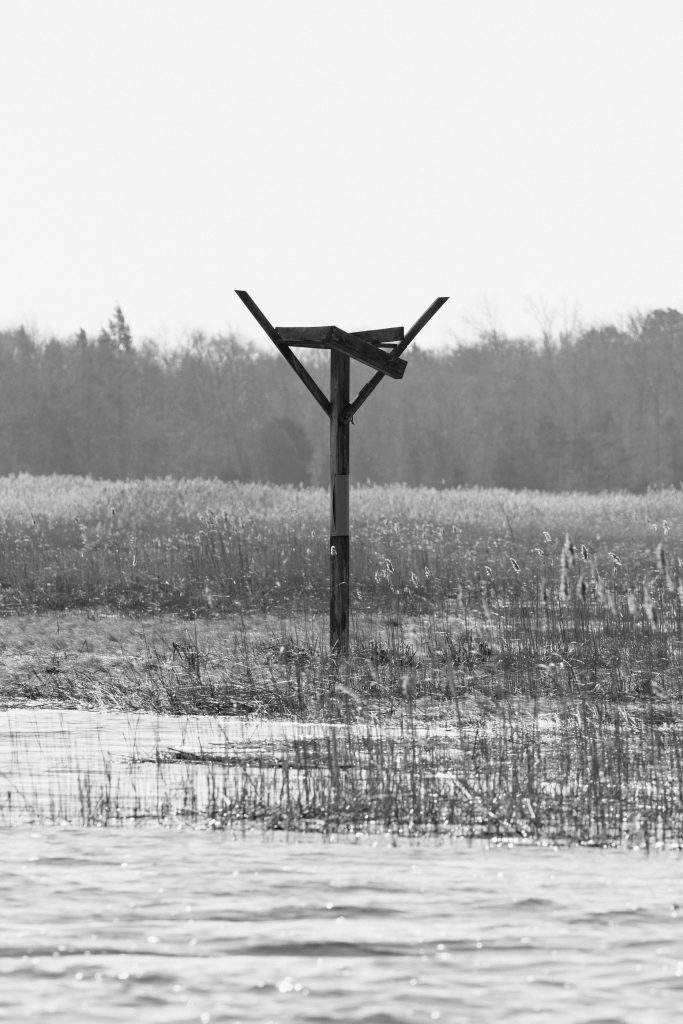
Humans have played a key role in the recovery and stability of nesting ospreys throughout New Jersey and beyond. Today around 75% of the population, close to 500 pairs, rely on nest platforms designed specifically for them. They provide a stable nest platform, adequate perches, and protection from potential ground predators, aka raccoons. Many platforms are located in very close proximity to people, which make for excellent viewing and educational opportunities. Ospreys are a symbol of a healthy coast and resiliency in a dynamic region.
‘Tis the season for osprey nest platform repairs — and being thankful for the volunteers who make it happen!
by Ben Wurst, Habitat Program Manager
AmeriCorps Watershed Ambassadors clean out nesting material from a 20-30 year old nest platform.
After migratory birds depart, leaves fall and northwest winds prevail, a small group of dedicated volunteers descend on our coastal saltmarshes. They’re there to maintain osprey nest platforms. Around 75% of our nesting ospreys rely on these wooden structures to reproduce. They were used to help jumpstart the early recovery efforts of ospreys in coastal New Jersey, where much of their native habitat was lost to development in the 1950-60s. Today many of these platforms are reaching their life span or are very close.