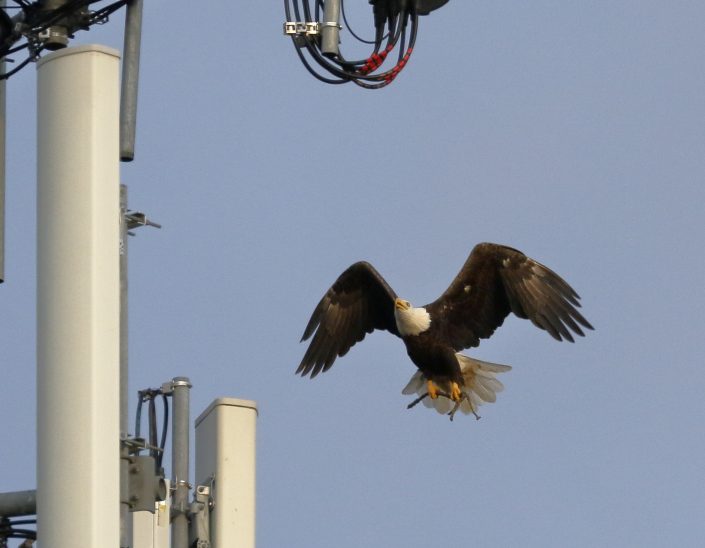
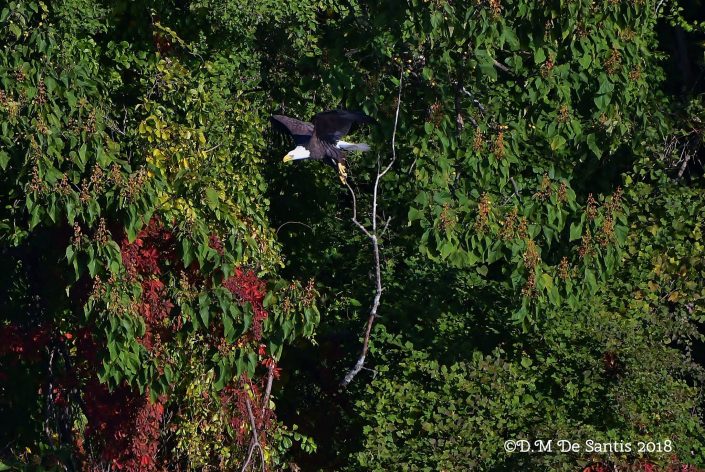
Some of New Jersey’s eagle pairs are getting an early start on the 2019 nesting season. Eagles in NJ will begin incubation anywhere from January through March. NJ Eagle Project volunteers usually report eagles back and working on the their nests in the late fall/early winter. But some pairs have already been spotted sprucing up their nests in preparation for the upcoming nesting season.
Kettle Creek 9/27/18@Alex TongasOverpeck 10/24/18@D.M. De Santis
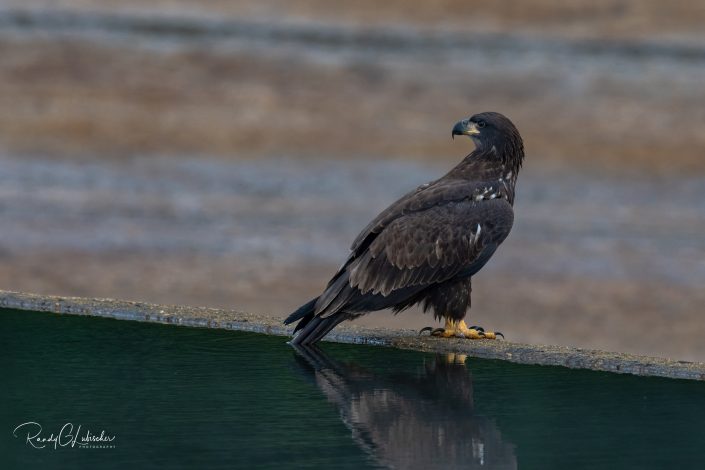
On August 20th, 2018 a resident of Monmouth Beach reported a young eagle that had been perching in the neighborhood and was possibly injured. NJ Eagle Project Volunteer Randy Lubischer, was able to respond and check out the situation. The bird was a hatch year eagle, which means it fledged during this nesting season. The eagle was feeding on a swan carcass and though Randy could get fairly close, the bird was able to fly a short distance and appeared to have an injury to its left leg. The eagle had been seen feeding on the swan carcass for the past few days, so it was assumed that its injury was keeping it from hunting and the bird would only get weaker over time.
The threats are real and these photos should alarm you!
by Ben Wurst, Habitat Program Manager
U.S. Coast Guard assists NJ Fish & Wildlife with recovering an entangled osprey on a channel marker in Cape May Harbor, Summer 2018. photo by Kathy Clark/ENSP
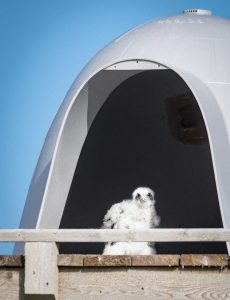
“Northside Jim” Verhagen regularly monitors the peregrine falcon family that resides in and around a new nesting platform in the marsh to the south of the eastbound stretch of the Dorland J. Henderson Bridge. Early last week, after the sole fledgling, named Blue Bonnet, was found dead on the roadway there, he believes her parents, Bridgeboy and Jo Durt, demonstrated mourning. “They do a certain call,” said Verhagen. “Jo Durt landed on the pier with her mate, which is very unusual.”
Despite the young peregrine’s death, as Ben Wurst, habitat program manager for Conserve Wildlife Foundation of New Jersey, pointed out, “This is still kind of a success story.”
So far this season 123 eagle chicks have fledged (taken their first flight). Even after fledging the chicks will stay around the nest area for the next few weeks learning to hunt, fly and survive on their own.
Below are some photos of recent fledges taken by NJ Eagle Project Volunteers
Thanks to dedicated Conserve Wildlife Foundation of NJ staff and volunteers three osprey chicks were saved from what could have been an unhappy fate.
NJ Osprey Project Volunteers Matt Tribulski, Wayne Russell and John King were surveying osprey nests in the Wildwood back bay area this past weekend. They checked on a nest with three chicks and found that the platform top was broken and a strong possibility it could collapse, especially with any heavy rains or winds. The chicks weren’t old enough to fly and would have fallen to the marsh and died. Continue reading “Osprey Chicks Get A Necessary “Home” Upgrade”
An osprey with a balloon ribbon around its leg at Island Beach State Park. Volunteers from the Conserve Wildlife Foundation of New Jersey removed the ribbon and cleaned the osprey’s nest on Tuesday afternoon. Photo by Jeff Goldman, NJ.com
Two volunteer groups and the Seaside Heights public works department teamed to help a baby osprey that had a balloon ribbon tangled around its leg in a nest at Island Beach State Park.
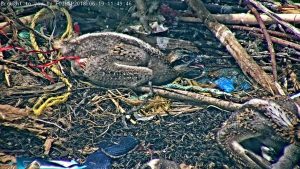
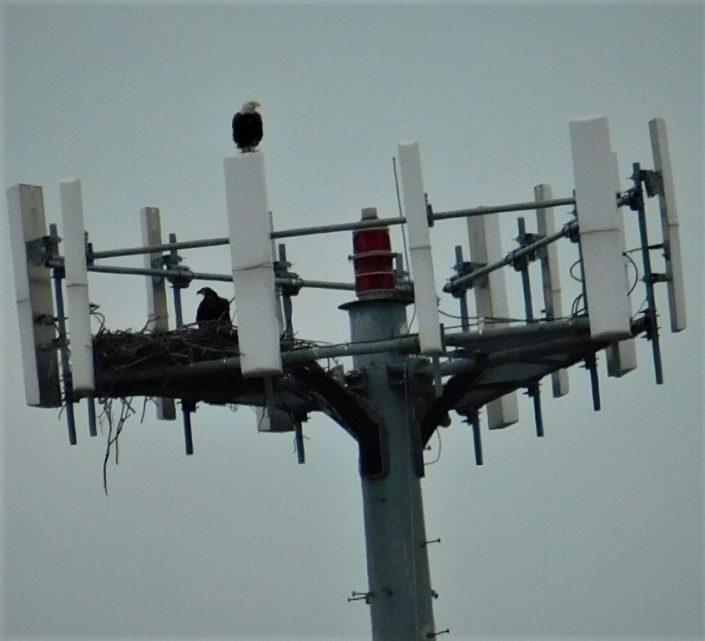
This is a story that shows how individuals and groups work together to help eagles in New Jersey. On May 23rd wildlife rehabilitator, Vicki Schmidt, picked up and transported an injured juvenile eagle to Tri-State Bird Research and Rescue. The eagle had been reported injured and on the ground by a concerned citizen in Hopewell Township, Cumberland County. It was found near a known eagle nest which is located on a communications tower and the injured eagle was assumed to be the chick from that nest. New Jersey Eagle Project volunteer Jim McClain was able to confirm that he last saw the chick on May 19th, perched on one of the tower railings. When he returned on the 23rd and didn’t see the chick, he had assumed it fledged, not knowing that it had been taken to Tri-State.
Young eagles start “branching” (hopping on to branches) as well as; flapping, jumping, and hovering, to strengthen their wings for flight. Eagles fledge around 10- 12 weeks of age. In this case, the young bird most likely took it’s first attempt at a flight and hit an object which injured it’s wing and left it unable to fly. If no one had spotted this bird on the ground it could have been predated or died.
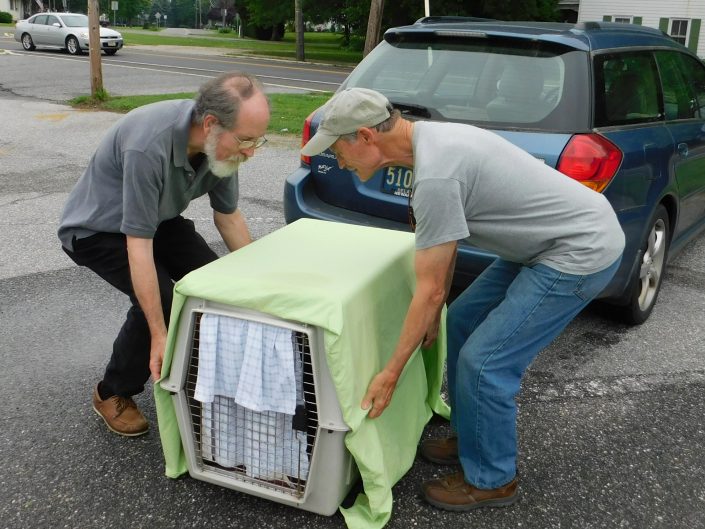
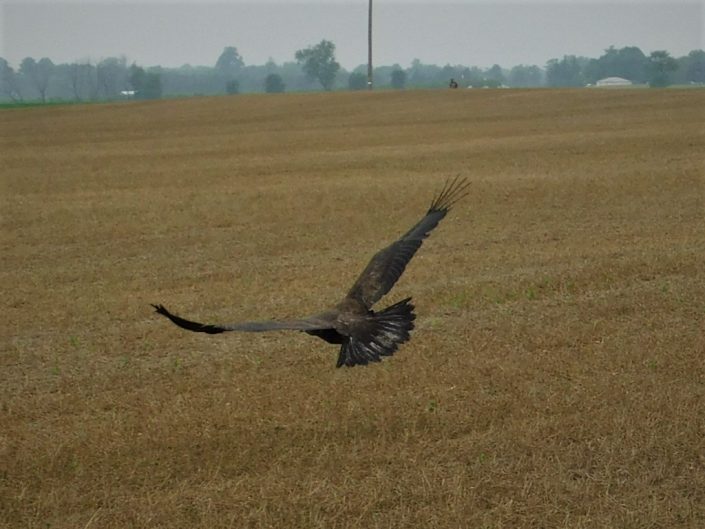
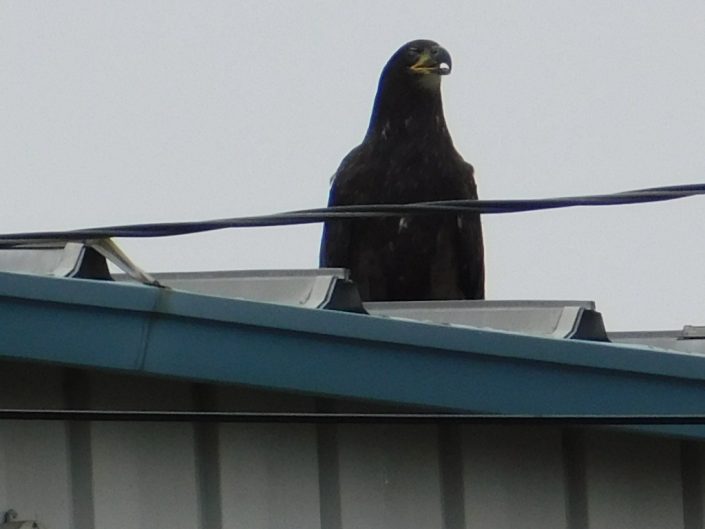
Tri-State reported minor soft tissue damage to the wing, but that the bird was alert and perching. The young eagle continued to recuperate and was banded with a federal band and released on June 1st. Tri-State volunteer Tom Jones transported the bird back to the nest area and with the help of volunteer, Jim McClain, the bird was released. The bird flew and landed on a nearby roof where it perched.
Eagle Release June 1, 2018@J. McClainJune 1, 2018@J.McClaineagle perched after release@J. McClain
Jim reported that the fledgling and both adults were seen at the nest on June 7th and 9th, so we know that the young eagle is doing well. Thank you to all involved in this lucky eagles recovery.