Left: Adult falcon in flight. Right: Peregrine chick ready to be banded. Photos by Eric Sambol.
Peregrine falcons have nested atop the Union County Court House in downtown Elizabeth for many years. Each year, before the young birds fledge, scientists gather up the chicks and band their legs.
The banding was a smaller than usual human affair this year to comply with social distancing and other health restrictions due to the COVID-19 pandemic. But it was a very active avian event with the adult falcons energetically dive bombing the biologists as they brought the eyases (young falcons) indoors for the banding.
CWF biologist Ben Wurst (above), and all our staff and volunteers are practicing social distancing and following all state and CDC guidelines while in the field to prevent the spread of COVID-19.
With the COVID-19 pandemic causing global shutdowns, how has wildlife reacted to the absence of humans in New Jersey – and across the world? What impacts are we seeing so far, and what should we expect in the long-term?
COVID-19 has changed our lives in virtually every possible way over the last few months. Our relationship to wildlife is no different. This three-part series explores the impacts of the COVID-19 pandemic and shutdown on wildlife in New Jersey and across the world. Read Part 1 and Part 2 and check out our podcast on COVID-19 and wildlife.
Part 3 The Threat of COVID-19
No discussion of COVID-19’s impact on wildlife would be complete with its fated beginning and its long-term threats posed by the global economic shutdown. As a zoonotic disease, COVID-19 likely was triggered by a virus in bats that got into a pangolin in a wet market that was then consumed by people, chance encounters made much more likely by a number of destructive human activities.
Clearing primal forests bring people into contact with remote wildlife for the first time, while also changing wildlife behaviors to increase the likelihood of their interaction with humans. Live animal markets offer ideal opportunities for viruses like COVID-19 to emerge. Illegal trafficking incentivizes further habitat clearing and poaching. Trading in exotic wildlife creates a host of problems both to the species themselves and to their ecosystems. (Though underexplored in the popular Tiger King series, the impacts of the exotic wildlife trade could make a fascinating series in its own right).
by: Meaghan Fogarty, Conserve Wildlife Foundation Intern
Photo by Eric Sambol
Note: For the health and safety of our staff, volunteers and the communities where we work, CWF staff and volunteers are practicing social distancing and following all state and CDC guidelines to prevent the spread of COVID-19.
Two days before Governor Murphy announced the statewide stay-at-home order, the first day of spring had sprung. Human life came to a screeching halt, but the natural world nevertheless began its annual transition towards warmer weather, longer days, and new life.
COVID-19 has changed our lives in virtually every possible way over the last few months. Our relationship to wildlife is no different. This three-part series explores the impacts of the COVID-19 pandemic and shutdown on wildlife in New Jersey and across the world. Read Part 1 here, and check out our podcast on COVID-19 and wildlife.
Wildlife from your Window
We have received more reports than ever from people seeing wildlife species they hadn’t seen before, and behaviors they had never previously observed, much of it from their own yards. People are tending to gardens more than ever before, and enjoying seeing the attendant pollinators.
by: Dr. Larry Niles of Wildlife Restoration Partnerships. Dr. Niles is working in Delaware Bay on behalf of Conserve Wildlife Foundation. He has helped lead the efforts to protect at-risk shorebirds and horseshoe crabs for over two decades.
A migratory stopover for arctic nesting shorebirds must provide each bird the energy necessary to get to the next stopover or to the ultimate destination, the wintering or breeding area. Delaware Bay stands out among these shorebird refueling stops because it delivers fuel in the form of horseshoe crab eggs giving birds options. Our telemetry has shown that Red knots, the species we best understand, may leave Delaware Bay and go directly to their Arctic breeding areas, or stopover on Hudson Bay. The choice of going straight to the breeding area or stop at another stopover may be critical to understanding the ecological dramas now underway on Delaware Bay.
COVID-19 has changed our lives in virtually every possible way over the last few months. Our relationship to wildlife is no different. This three-part series will explore the impacts of the COVID-19 pandemic and shutdown on wildlife in New Jersey and across the world. Be sure to also check out our podcast on COVID-19 and wildlife.
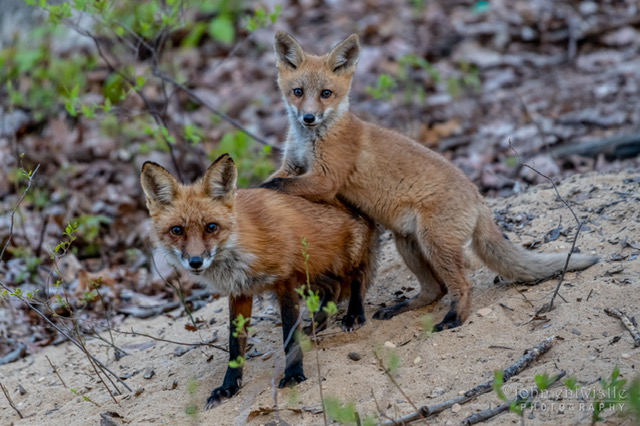
From my car window, I observed as many red foxes in a recent week as I had seen in the previous year combined. And it wasn’t just fox I was seeing more of. Wild turkeys, raccoons, migratory songbirds – I was seeing them all in greater abundance since the COVID-19 pandemic restricted most of us to our homes for nearly all of our waking hours.
When asked to describe the ecological conditions of any one year of our 23 years of work on Delaware Bay, Humphrey Sitters, one of the first biologists to understand the value of Delaware Bay to shorebirds would respond “every year is unprecedented”. And so it seemed until this year.