Help Bats in the Garden State

Build Bat Houses with CWF at the New Jersey WILD Outdoor Expo

by Ian Johansson, Eagle Scout Candidate and Conserve Wildlife Foundation Volunteer

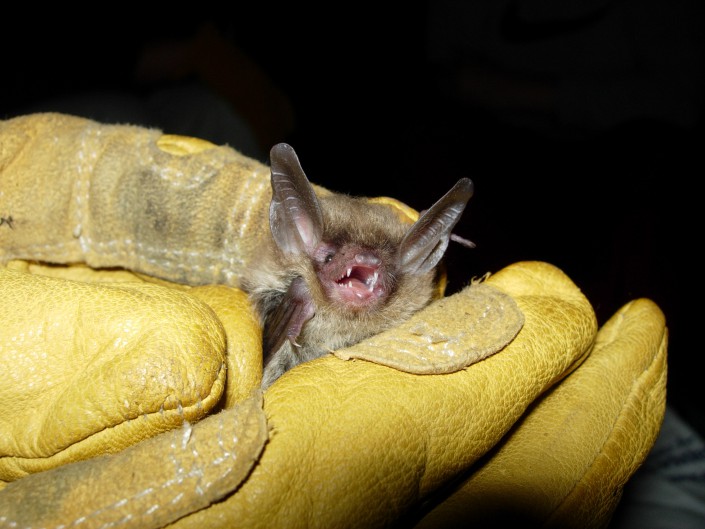
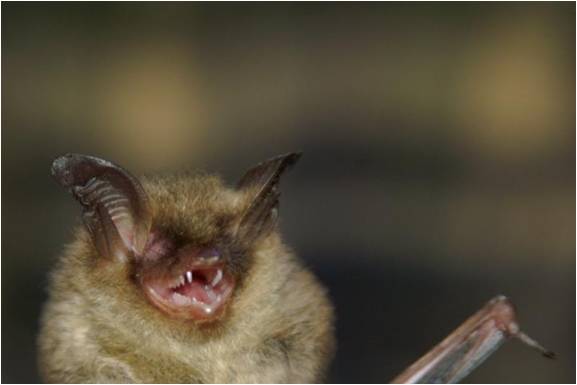
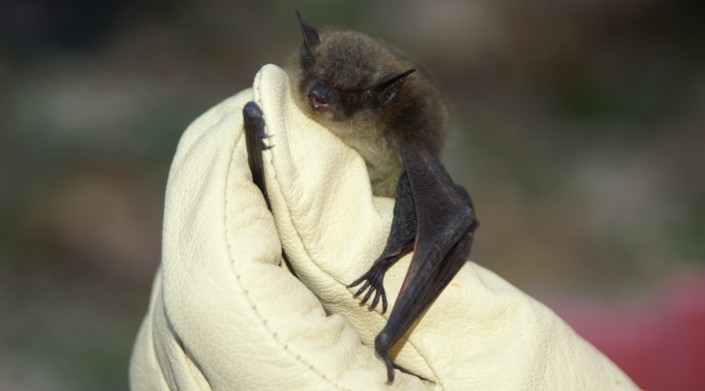
A little brown bat, one of several bat species which will be added to the state's list of Endangered species. Photo by MacKenzie Hall.
A little brown bat. Photo by MacKenzie Hall.

I first met Liz Silvernail when my sister and I were given the unique opportunity to hold an eaglet while biologists from Conserve Wildlife Foundation of New Jersey (CWF) took data. This took place in Brick, New Jersey. After speaking with Liz and explaining that I was beginning to consider what I should do as my Eagle Scout project, she was gracious enough to offer her assistance helping me find a project that I could complete with Conserve Wildlife Foundation.


After introducing me to Stephanie Feigin, I was offered the chance to take on the project of building bat houses. The bat houses will be donated to Conserve Wildlife Foundation of New Jersey to put up before bats are evicted from attics, eaves, and buildings, so they can easily find a new place to roost. The bat houses will then be set up around the state to provide more suitable homes to bats that would otherwise be living in places that they were not welcome in or did not properly meet to their habitat needs.


Bat houses provide necessary roosting locations that cannot be provided in houses and buildings that bats inhabit if a proper living space is not readily available. Bat houses also provide spaces to raise young and hibernate, which is imperative for maintaining healthy bat populations.


Bats in New Jersey are the primary predators of night flying insects. They consume many of the pesky mosquitoes that swarm our backyards. Some bats can consume up to 4,500 insects nightly! A great way to help the bat population in New Jersey grow, is to build a bat house with us at the New Jersey Wild Outdoor Expo this weekend! The workshop is free. Materials are available on a first come, first served basis.


Stop by CWF’s tent at the Expo to learn more about bats and other imperiled wildlife species. You can always pick up plans to buy materials and make bat houses on your own.


Join us for the New Jersey WILD Outdoor Expo:

  • Saturday, September 12 and Sunday, September 13 from 10-5 PM
  • Colliers Mills Wildlife Management Area in Jackson Township, Ocean County
  • For online mapping directions and GPS navigation systems, use the address: 299 East Colliers Mill Road, New Egypt, NJ 08533
Bat houses getting the finishing touches.


Ian Johansson is an Eagle Scout Candidate and Conserve Wildlife Foundation Volunteer.

Tracking a Federally Listed Bat Species across New Jersey

An Update on CWF’s Northern long-eared Bat Statewide Mist Netting Surveys

by Stephanie Feigin, Wildlife Ecologist

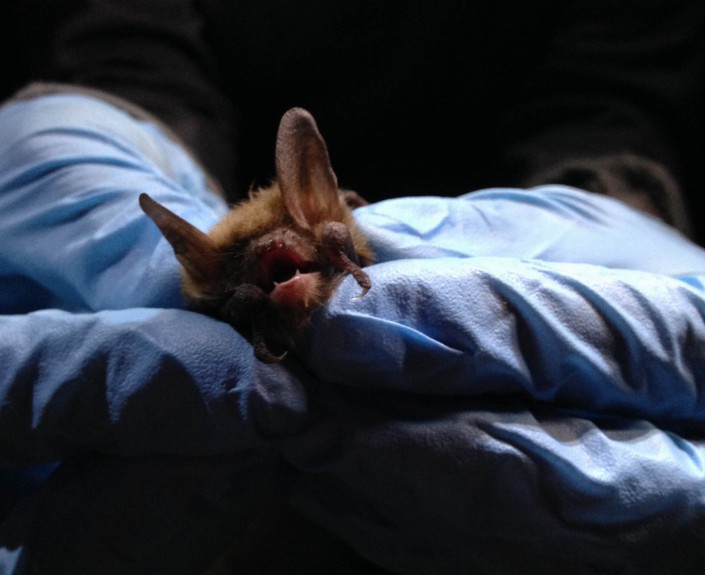
Female Northern long eared bat (c) Ethan Gilardi

White-nose Syndrome (WNS), a fungal disease, has devastated bat populations across the country. Over six million bats have been killed by the disease, which has spread to over 25 states and five Canadian provinces. The Northern long-eared bat is one of the species most affected by WNS, suffering from an overwhelming 99% reduction in numbers in WNS-affected areas.

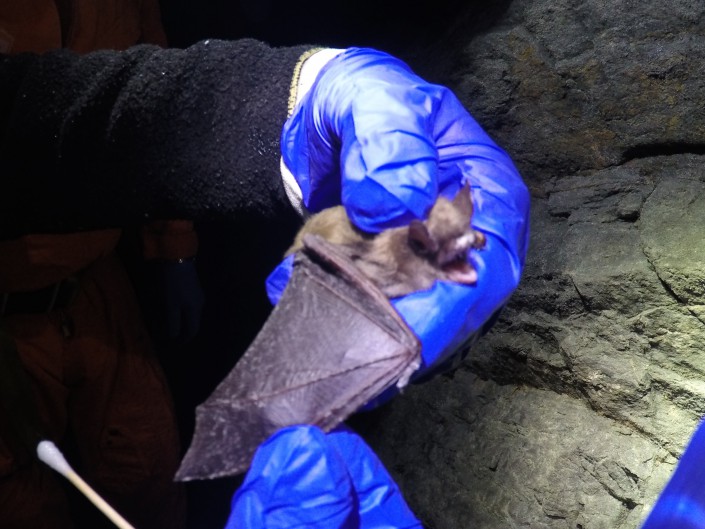
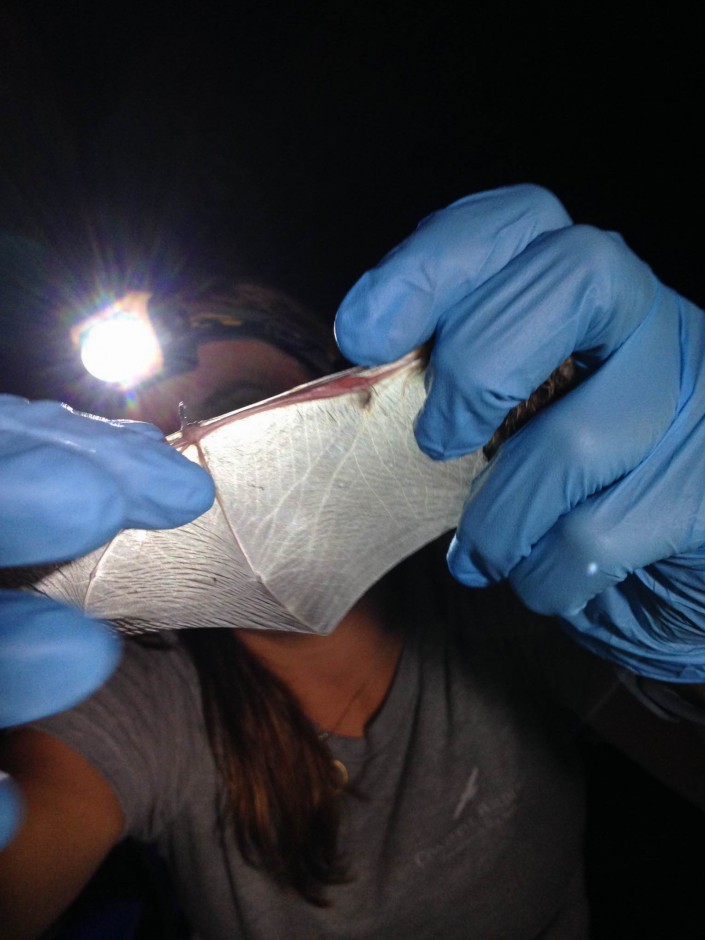
Stephanie Feigin checks wing of a little brown bat for signs of white nose syndrome scarring. (c) Ethan Gilardi
Stephanie Feigin checks wing of a Northern long-eared bat for signs of white nose syndrome scarring. (c) Ethan Gilardi

As a result, in April 2015, the U.S. Fish and Wildlife Service listed the Northern long-eared bat as federally threatened under the Endangered Species Act.


This summer, CWF Wildlife Ecologist Stephanie Feigin teamed up with NJDEP Division of Fish and Wildlife and Rutgers University to conduct a statewide mist netting and radio telemetry project to learn more about the summer distribution and habitat selection of Northern long-eared bats; an important project that can shed light on a species we know all too little about.


Mist-netting surveys began the week of June 1 and continued through the beginning of August. Survey sites included five state parks and Wildlife Management Areas across the state:

  • Sparta Mountain Wildlife Management Area
  • Rockaway River Wildlife Management Area
  • Washington Crossing State Park/Alexauken Creek Wildlife Management Area
  • Brendan Byrne State Forest
  • Wharton State Forest


The team, directed by Feigin, conducted a total of 19 netting nights and 10 tracking days, leading to a total of 63 bats caught, four of which were Northern long-eared bats. All four of the Northern long-eared bats received radio transmitters and were tracked everyday until the transmitter fell off.

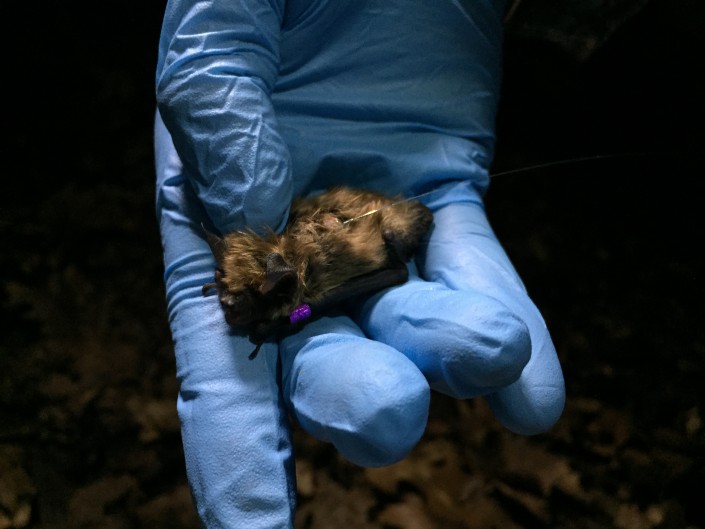
Female Northern long-eared bat with transmitter attached to her back. (c) Stephanie Feigin

After a long night of netting (5pm-2am) the team would set out the next day to track the bat caught the night before. This, however, was not an easy task. The maximum distance the antenna can receive a signal from the transmitter is ¾ of a mile (in perfect conditions). Though tough, the team was able to track the bats to five different roost sites including under the cedar siding of two homes, a narrow four foot stump, a large standing dead pitch pine, and another pitch pine in a recently burned forested area.


The mist netting and tracking study allowed us to collect important data on Northern long-eared bat populations throughout New Jersey. The data collected on habitat requirements and roost locations will help guide our conservation decisions. Ultimately, the study will allow us to better protect the remaining population of Northern-long eared bats in the Garden State.

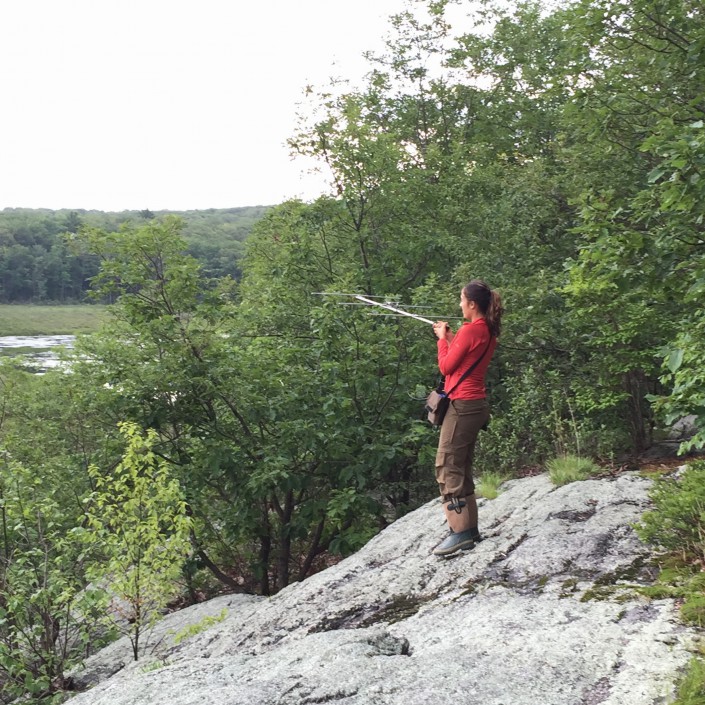
Amanda Bevan, Rutgers University graduate student, scans area with ATS scanning receiver and Yagi 3-element antenna for a signal from the transmitter (c) Stephanie Feigin

This work was made possible with the support from the Franklin Parker Conservation Grants, EarthColor, and the Conserve Wildlife Matching Grant Program. Thank you to our supporters!

Learn more:


Stephanie Feigin is a Wildlife Ecologist for the Conserve Wildlife Foundation of New Jersey.

Lights, Camera, Action: Conserve Wildlife Foundation Releases New Video

New Video Showcases CWF’s Work to Protect the Garden State’s Wildlife

By: Lindsay McNamara, Communications Manager

Conserve Wildlife Foundation is thrilled to release a new video as an “introduction” to our work, keeping New Jersey’s wildlife in our future! We are a private, non-profit organization dedicated to the protection and preservation of New Jersey’s endangered and threatened wildlife and the habitats they depend on.


As the video demonstrates, we utilize science, research, wildlife management, habitat restoration, education and volunteer stewardship to help conserve and protect a variety of at-risk species of wildlife in New Jersey, the most densely populated state in the nation.


The video was produced by Tyler Grimm, a video intern with Conserve Wildlife Foundation.


Want to get involved? Learn more about Conserve Wildlife Foundation on our website.


Lindsay McNamara is the Communications Manager for Conserve Wildlife Foundation of New Jersey.
 

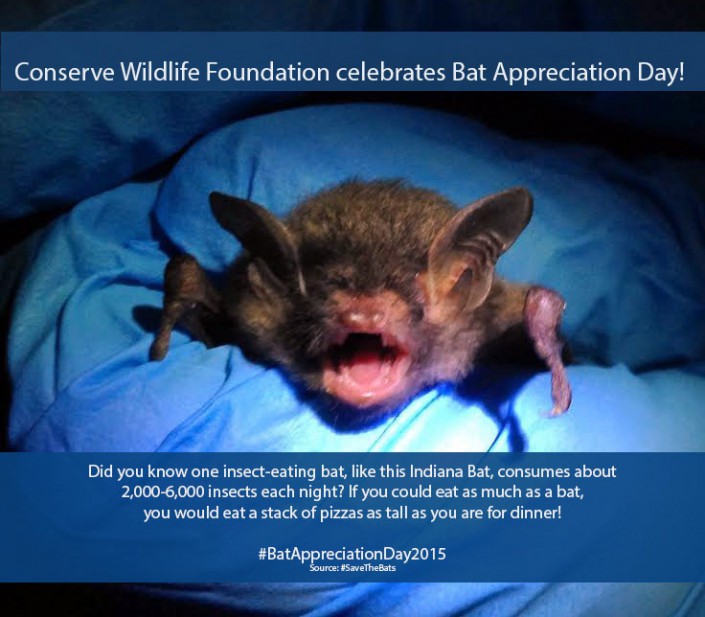
Conserve Wildlife Foundation Celebrates Bat Appreciation Day!

Happy Bat Appreciation Day!

By: Stephanie Feigin, Wildlife Ecologist

Today, Friday, April 17 is Bat Appreciation Day 2015. Join Conserve Wildlife Foundation in celebrating the beloved bats of New Jersey today and every day.


Bats are one of the most beneficial animals to humans. They provide important economic and ecological benefits from eating the bothersome pests like mosquitoes, to devouring the insects that also destroy our agricultural and forest land.


Bats save us millions of dollars in damage each year and play essential roles in keeping populations of night-flying insects in check. Just one bat can eat up to 3,000 insects in a short period of time, and large colonies catch tons of insects nightly.


Unfortunately, these amazing animals continue to face many threats including habitat loss and the devastating disease, White-nose Syndrome. White-nose syndrome, alone, can kill 90-100% of bats in affected caves.


Conserve Wildlife Foundation works hard to protect New Jersey’s bats through on-going research, education and outreach. We provide homes for evicted bats with our Bats in Buildings project as well as collect and record valuable data about the state’s bat population with our Summer Bat Count project, and our acoustic bat surveys.


New in 2015, Conserve Wildlife Foundation will conduct surveys to learn more about the summer distribution and habitat of Northern long-Eared Bats, a species listed under the Endangered Species Act this month.


Also this month, the Bat Cam bats have returned for the spring and summer! We are excited to follow this colony throughout the season and highlight special moments of their lives.


Today, on Bat Appreciation Day, consider supporting Conserve Wildlife Foundation’s Bat Project. Help us help New Jersey’s bats not only survive, but thrive in the Garden State.

Stephanie Feigin is the Wildlife Ecologist for Conserve Wildlife Foundation of New Jersey.

Northern Long-Eared Bat Protected Under Endangered Species Act

The U.S. Fish and Wildlife Service Announced Bat as Threatened, Primarily Due to White-Nose Syndrome

By: Lindsay McNamara, Communications Coordinator

Northern Long-Eared Bat © Lance Risley

Remember back in late November when we wrote a blog encouraging our supporters to help the Northern Long-Eared Bat become listed as an Endangered Species? Thanks to those of you who submitted comments to the U.S. Fish and Wildlife Service, it was announced today that the Northern Long-Eared Bat will be listed as threatened and protected under the Endangered Species Act.


The U.S. Fish and Wildlife Service has cited declines caused by White-Nose Syndrome as well as continued spread of the disease, as the primary threat to the species. Under the protections of the Endangered Species Act, the Northern Long-Eared Bat now has increased priority for funds, grants, and recovery opportunities.


Also announced today, the U.S. Fish and Wildlife Service issued an interim 4(d) rule that will provide maximum protection to the Northern Long-Eared Bat in areas where their populations have drastically declined due to White-Nose Syndrome, but will limit regulatory burden on the public in parts of the country where the bat species is not affected by the disease and the populations are stable. The U.S. Fish and Wildlife Service invites the public to comment on this interim rule until July 1, 2015.


Learn more about the listing and 4(d) rule:


CWF Field Guide: learn more about the Northern Long-eared Bat


How Can You Help Protect Northern Long-Eared Bats?

  • Do Not Disturb Hibernating Bats
  • Leave Dead and Dying Trees Standing: Where possible and not a safety hazard, leave dead or dying trees on your property. Northern long-eared bats and many other animals use these trees.
  • Install a Bat Box: Dead and dying trees are usually not left standing, so trees suitable for roosting may be in short supply and bat boxes can provide additional roost sites.
  • Get involved with Conserve Wildlife Foundation’s Bat Project!


Lindsay McNamara is the Communications Coordinator for Conserve Wildlife Foundation of New Jersey.
Conserve Wildlife Foundation of New Jersey “2014 Annual Report” Released

CWF Releases its First Annual Report Ever Using a Story Map Format: “2014 Annual Report

By David Wheeler, Executive Director

Technology has proven to be vital to Conserve Wildlife Foundation’s work protecting rare wildlife species over the years. Our biologists depend greatly on modern technologies to band, track, and share online the journeys of wildlife. Our webcams broadcast the most intimate behaviors of nesting birds and bats across the web. And we seek out ever-evolving communications technologies to spread the word about the inspiring stories of wildlife, from social media and infographs to e-books and Story Maps. These technologies offer newfound abilities to share complex data on multiple levels, while still incorporating the awe-inspiring photography and videos that bring wildlife’s stories to life.

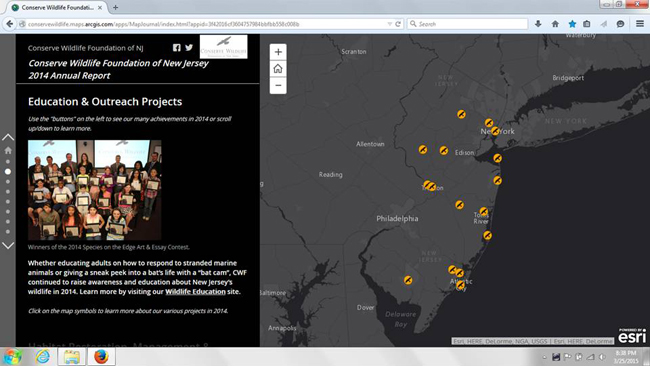
Conserve Wildlife Foundation of New Jersey is excited to offer our 2014 Annual Report in a unique format that utilizes one of those technologies – Story Maps. In the past year, we have explored the wonders of American oystercatchers with our first Story Map – and now the annual report allows all of our projects to be highlighted in this interactive format.

A screen capture of one of the pages of the CWF 2014 Annual Report Story Map.

Visit the multiple pages within this Story Map to learn about Conserve Wildlife Foundation’s many projects and partnerships in 2014, and the imperiled wildlife species in need of our help. Find examples of the innovative and dedicated leadership of our biologists and volunteers. And take an online journey across the state to learn how our projects made a difference in all corners of New Jersey in 2014 – a great year for wildlife in the Garden State!


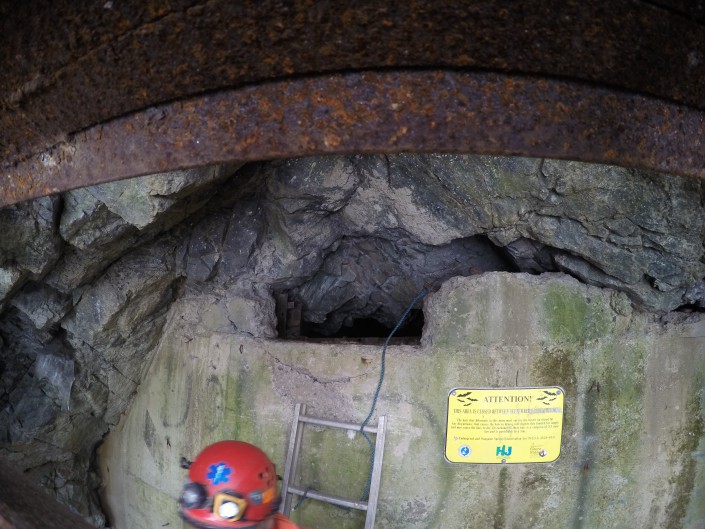
Photos From the Field: Little Brown Bats in Hibernia Mine

Data Collected for White-nose Syndrome Research

By: Stephanie Feigin, Wildlife Ecologist 

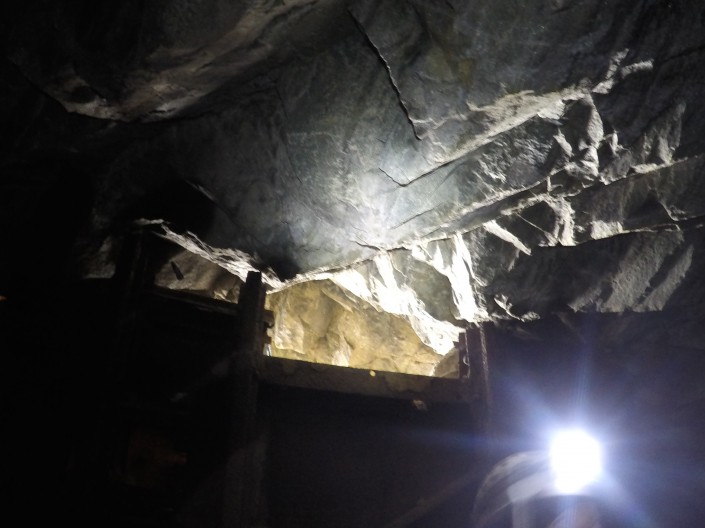
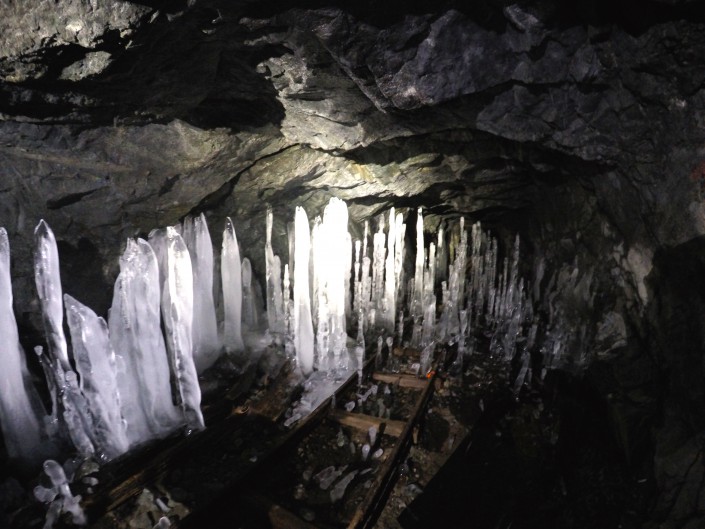
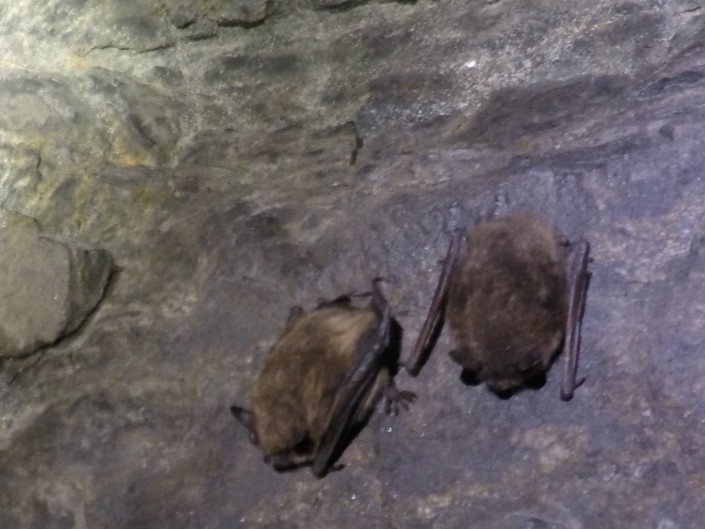
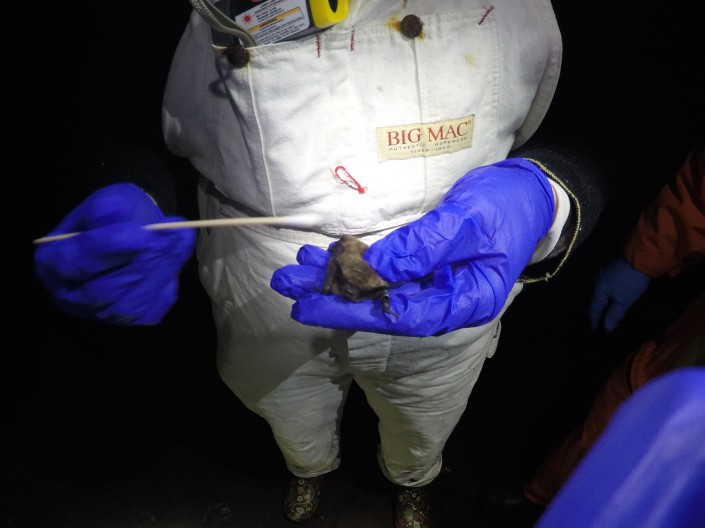
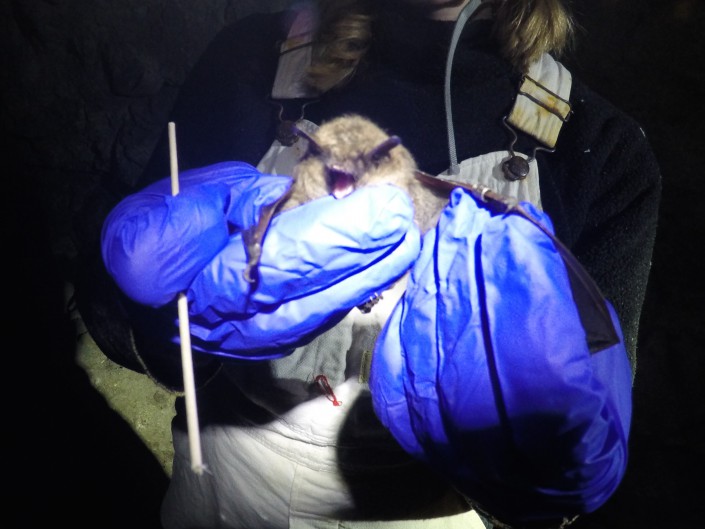
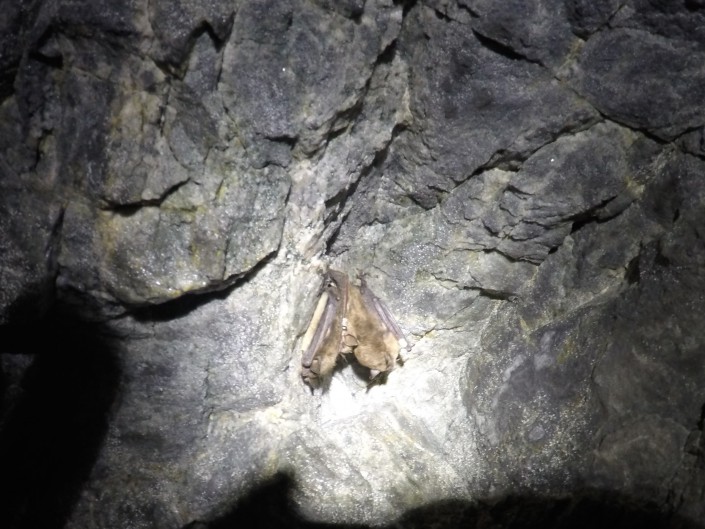
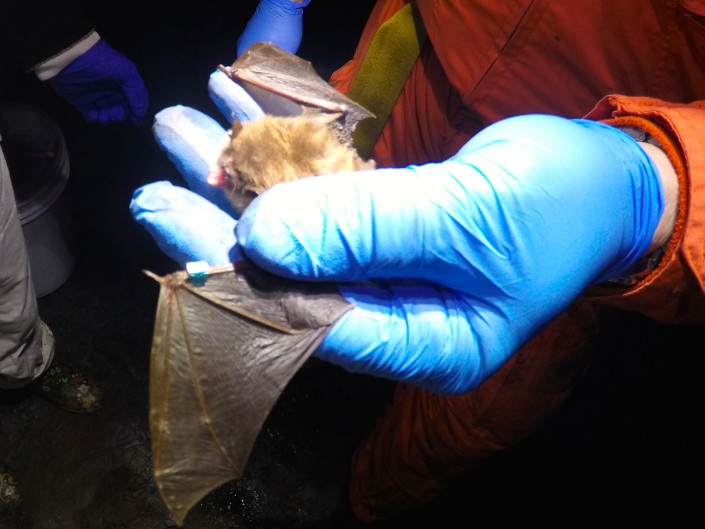
This week, Conserve Wildlife Foundation’s Wildlife Ecologist Stephanie Feigin went into Hibernia Mine with New Jersey Division of Fish & Wildlife Endangered Species and Nongame Program (ENSP) Biologist MacKenzie Hall and John Gumbs with BATS Research Center. The group collected data for important research studies on the fungus responsible for White-nose Syndrome (Pseudogymnoascus destructans) and White-nose Syndrome itself. The data will be used in a UC Santa Cruz University study led by Dr. Winifred Frick, as well as a Rutgers University study led by 2014 Women & Wildlife Education Award Winner Dr. Brooke Maslo.

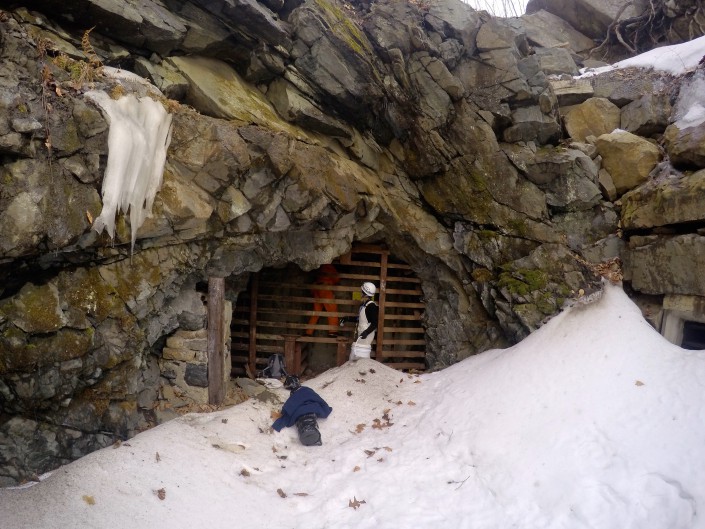
Hibernia Mine (c) Stephanie Feigin
Hibernia Mine Entrence (c) Stephanie Feigin
Hibernia Mine Entrance (c) Stephanie Feigin
Hibernia Mine Entrance from Inside Cave (c) Stephanie Feigin
Stalagmites in Hibernia Mine (c) Stephanie Feigin
Little Brown Bats (c) Stephanie Feigin
Little Brown being swabbed for study (c) Stephanie Feigin
Little Brown Bat (c) Stephanie Feigin
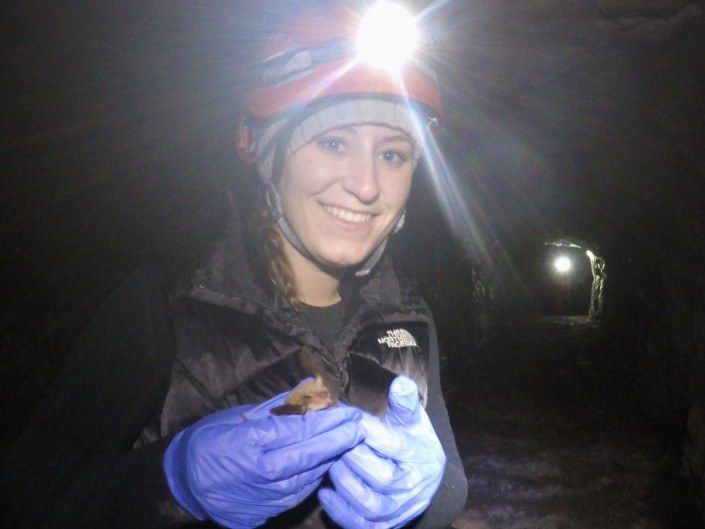
ENSP Biologist MacKenzie Hall with Little Brown Bat (c) Stephanie Feigin
Little Brown Bats (c) Stephanie Feigin
Little Brown Bat (c) Stephanie Feigin
Little Brown Bat shows significant signs of White Nose Syndrome on wings and nose (c) Stephanie Feigin
CWF Wildlife Ecologist Stephanie Feigin holding Little Brown Bat (c) Stephanie Feigin

Learn more:


Stephanie Feigin is a Wildlife Ecologist for the Conserve Wildlife Foundation of New Jersey.
 

Why are You Thankful for New Jersey’s Wildlife?

By: Lindsay McNamara, Communications Coordinator

BannerTGiving

This holiday season, Conserve Wildlife Foundation of New Jersey asked our friends, supporters and volunteers, What is special about NJ’s wildlife to you? Why are you thankful for New Jersey’s wildlife? Friends of wildlife shared their thoughts by tweeting us, leaving us a comment on our Facebook page or sending us an email at info@conservewildlifenj.org. We encouraged everyone to use:  #thanksnjwildlife 
Here is a collection of some of the responses we received:

Bill Nigh on Twitter shared that “wildlife gives me perspective.”

Judy Floam wrote over e-mail, “I only spend one week a year in New Jersey (at the beach) but I love to watch the gulls and sandpipers, and go on seine netting expeditions at Island Beach State Park.”

“Why are we thankful for New Jersey’s wildlife? Each and every creature is special to us although the coyote and the bats have a special place in our hearts. We’re grateful to the bats for keeping insect pests at bay and enjoy watching them leave their roost at dusk. Amazing. The coyotes are very musical and we appreciate their part in balancing nature. We’re grateful that the staff and volunteers at Conserve Wildlife work diligently to protect natural habitats. Thank you!”
— Joe & Linda Jedju shared through e-mail.

“Is this really New Jersey? It’s a question I have asked myself numerous times while living in NJ but never so much as over the last three years. It was three years ago that we purchased a small house on a lake in Sussex County. The waters of the lake are pristine and they teem with beavers, herons, numerous waterfowl, and too many different fish to mention. We watch amazing sunsets over the Appalachian Trail. We sit awe struck as foxes and bears routinely traverse our yard. Hummingbirds and beautiful finches occupy our yard and the wildflowers that grow there. We have watched as Bald Eagles circle high above and slowly spiral down to snatch a fish from the surface of the lake. We have sat in the cool evenings and watched the Milky Way appear as a swath of white across a darkening night sky. We watch as some of our endangered friends the bats dance crazy patterns in the night air, feasting on insects. Is this really NJ? Is it the stereotype of landfills, factories, pollution, and exits on the Parkway? Most definitely not! The rich diversity of animal and plant life leave us awe struck on a daily basis. I could also go on and on about our beautiful shoreline, Island Beach State Park, the Pine Barrens, and numerous other ecosystems that make our state so incredible. NJ’s amazing Wildlife is not limited to amusement parks and bars!
David Claeys shared his story over e-mail.

Love what you’re reading? Feeling inspired? Consider getting involved with Conserve Wildlife Foundation:

Lindsay McNamara is the Communications Coordinator for Conserve Wildlife Foundation of New Jersey.
Help Northern Long-Eared Bats Become Listed as Endangered Species

By: Lindsay McNamara, Communications Coordinator

Photo Credit: MacKenzie Hall


The U.S. Fish and Wildlife Service has reopened the public comment period on a proposal to list the northern long-eared bat as endangered under the Endangered Species Act (ESA).  Comments will be accepted through Thursday, December 18, 2014.


The public is invited to submit comments one of two ways:

(1)  Electronically:  Go to the Federal eRulemaking Portal: www.regulations.gov.  In the Search box, enter Docket No. FWS–R5–ES–2011–0024. You may submit a comment by clicking on “Comment Now!”

(2)  By hard copy:  Submit by U.S. mail or hand-delivery to:  Public Comments Processing, Attn:  FWS–R5–ES–2011–0024; Division of Policy and Directives Management; U.S. Fish and Wildlife Service, MS: BPHC; 5275 Leesburg Pike, Falls Church, VA 22041-3803.

During the previous comment period, from June 30 to August 29, 2014, USFWS received over 65,800 comments on this issue!


Why is it so important?

The Northern Long Eared Bat, like many other bat species in the United States, is in danger of extinction due to White-Nose Syndrome, impacts to hibernacula, summer habitat loss and wind farm operation. Listing a species as endangered, under the protections of the Act, increases the priority of the species for funds, grants, and recovery opportunities.


How Else Can You Help Protect Northern Long-Eared Bats?
These tips were pulled from U.S. Fish & Wildlife Service’s Northern Long-Eared Bat Fact Sheet:

  • Do Not Disturb Hibernating Bats
  • Leave Dead and Dying Trees Standing: Where possible and not a safety hazard, leave dead or dying trees on your property. Northern long-eared bats and many other animals use these trees.
  • Install a Bat Box: Dead and dying trees are usually not left standing, so trees suitable for roosting may be in short supply and bat boxes can provide additional roost sites.


Learn more:

Lindsay McNamara is the Communications Coordinator for Conserve Wildlife Foundation of New Jersey.
Read All About It: Newsworthy BatCam Big Brown Bats

By: Lindsay McNamara, Communications CoordinatorStephanieBatCamABC7

BatCam, the live-action camera that captures a colony of big brown bats living in a family home in Flemington, received plenty of media attention this week. BatCam is hosted on Conserve Wildlife Foundation‘s website, thanks to the Williams family.

The bats’ unusual choice of a summer roost has given this family a unique peek at their lives, from knowing exactly when the bats return from hibernation each spring, to watching them give birth and care for their pups though the summer.

The bats also caught the attention of New Jersey media. Read about the colony of big brown bats:

Learn more about Conserve Wildlife Foundation’s work to help protect NJ’s bat population:

Lindsay McNamara is the Communications Coordinator for Conserve Wildlife Foundation of New Jersey.